Best Electric Kettle for Seniors: Safer Boiling Made Simple
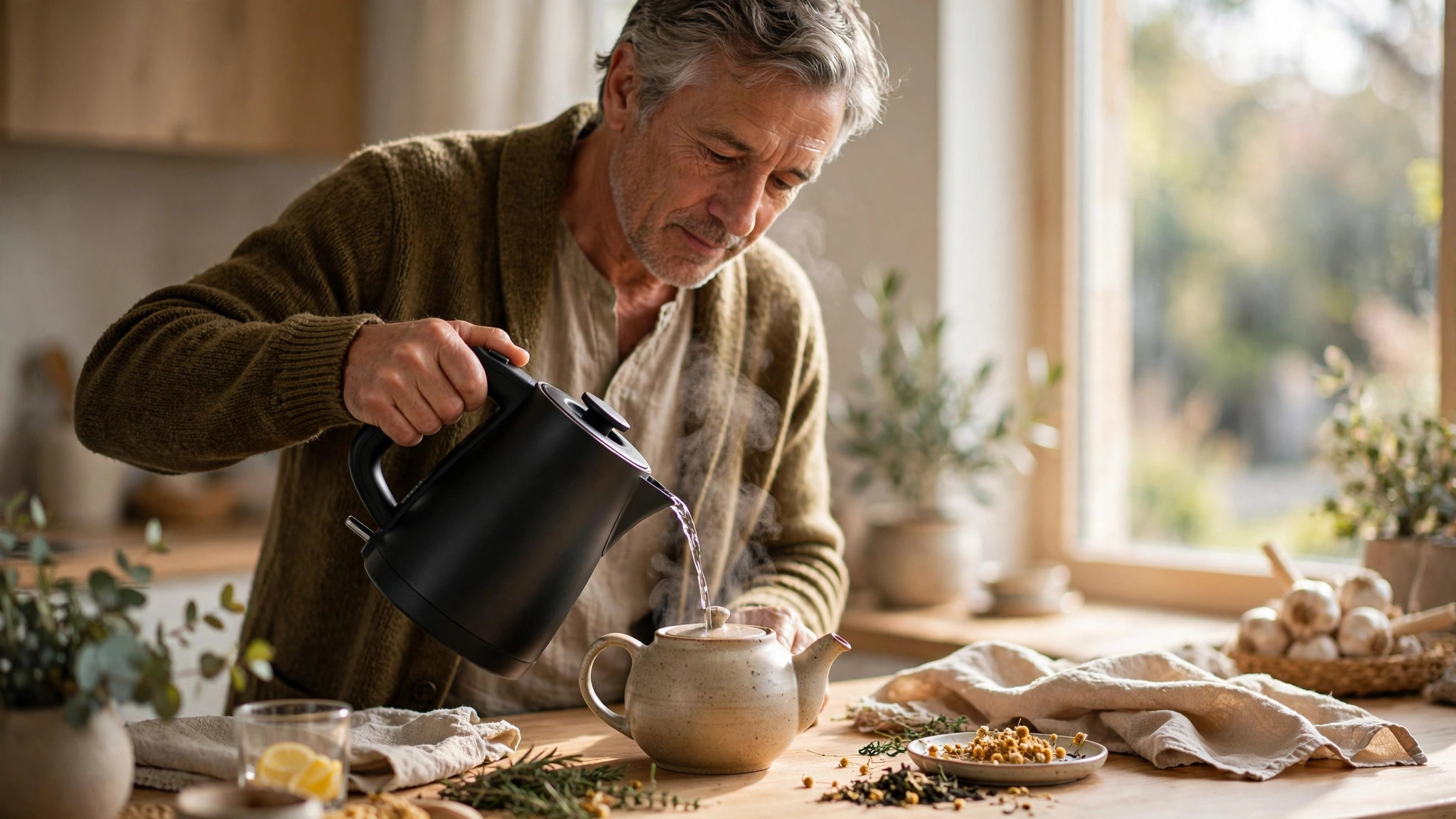
A good cup of tea starts with hot water — but for many adults over 60, boiling that water is one of the riskiest little chores in the kitchen. A heavy pot lifted off a lit burner, a whistling stovetop kettle forgotten while the phone rings, a scorching metal side grabbed by accident: small moments, real burns.
An electric kettle solves most of these problems by design. It heats water on a cordless base, shuts itself off when the water boils, and many models stay cool enough to touch on the outside. There is no open flame and no gas knob to fumble with. But not every kettle is built with older hands, older eyes, and older reflexes in mind. This guide walks you through the types, the features that genuinely matter after 60, and the habits that keep boiling water safe — so you can choose a kettle that is simple, dependable, and a small daily pleasure.
Why an Electric Kettle Is a Smart Pick After 60
The biggest advantage is what you no longer have to do. A stovetop kettle demands attention: you light the burner, wait, listen for the whistle, and lift a heavy, steaming pot. An electric kettle asks almost nothing — fill it, press a button, walk away. The auto shut-off handles the rest, which matters on days when the doorbell rings or a grandchild calls mid-morning.
Electric kettles also boil water noticeably faster than most stovetops, and because the heating element sits inside a sealed body on a stable base, there is no open flame heating the surrounding air. For anyone with mild arthritis, reduced grip strength, or a healthy respect for boiling water, that combination — speed, a shut-off that cannot forget, and no flame — makes the electric kettle one of the most senior-friendly appliances in the kitchen.
The 3 Big Decisions: Kettle Types Compared
1. Spout: Gooseneck vs. Standard
A gooseneck kettle has a long, thin, curved spout that pours a slow, precise stream. Pour-over coffee lovers adore it, and it gives you fine control when brewing delicate teas. The trade-off: it pours slowly, and the slim profile can feel less sturdy in the hand.
A standard spout is wider and pours faster and more generously — better for filling a teapot, a soup mug, or a hot-water bottle quickly. For most older adults, the standard spout is the more practical choice: simpler, faster, and easier to aim.
Whichever you choose, insist on a drip-free spout. A spout that dribbles hot water down the side of the kettle when you pour is not a minor annoyance — it is a burn hazard.
2. Body: Glass vs. Stainless Steel
Glass kettles let you see the water level at a glance, which is genuinely helpful for aging eyes — no squinting at a tiny window. They look elegant on the counter, too. The catch: single-wall glass gets hot, so look for a heat-resistant handle and a body that stays manageable to touch.
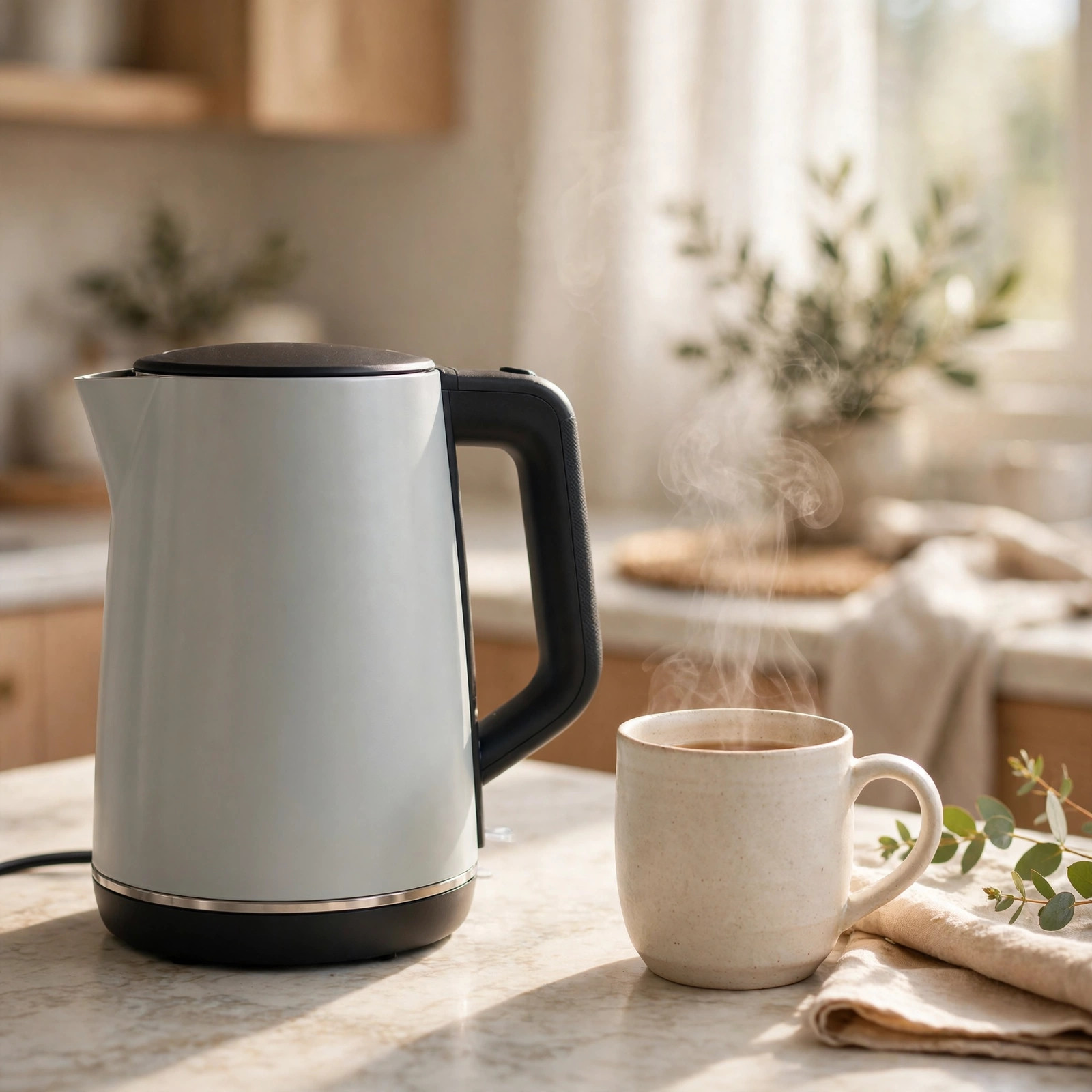
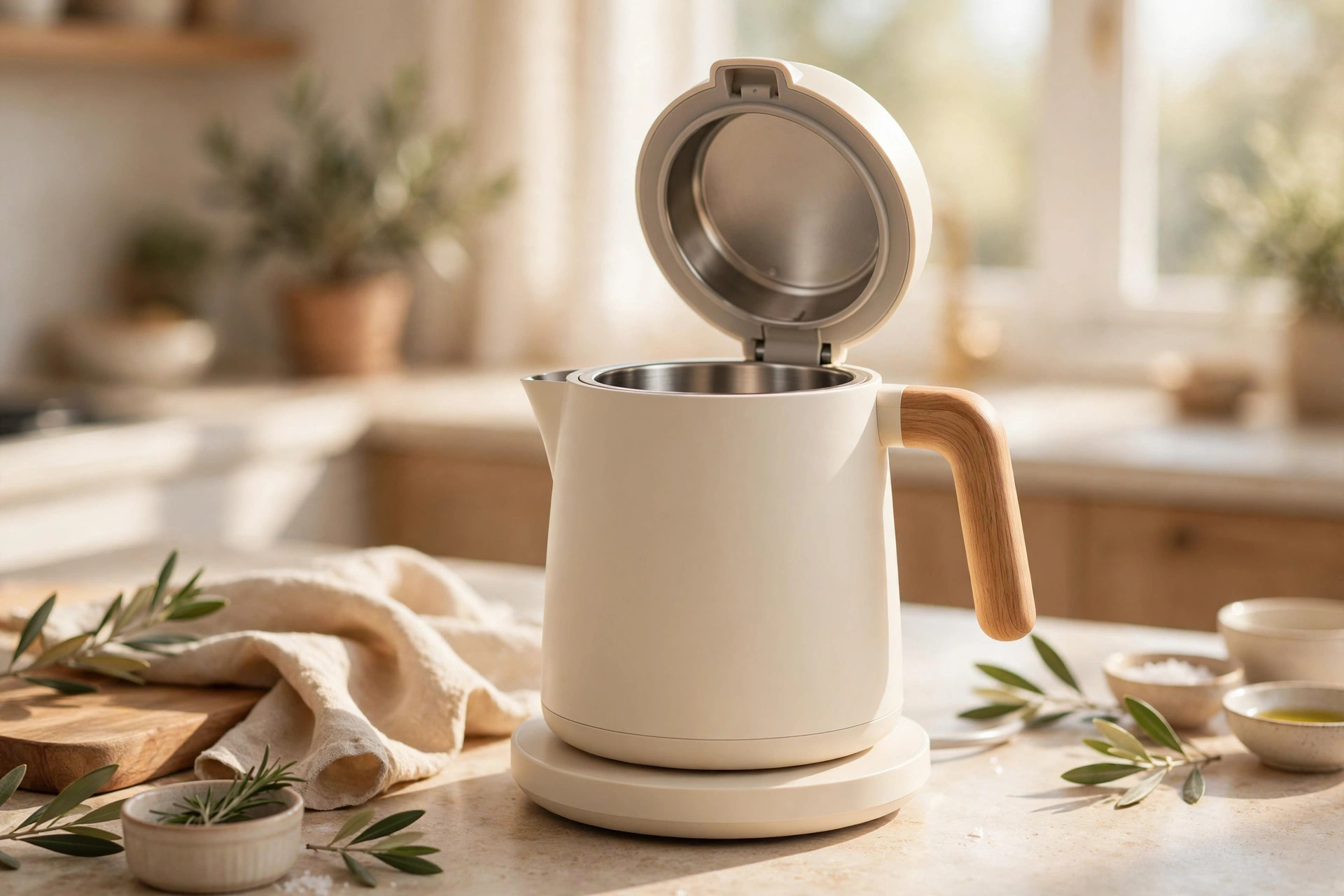
Stainless steel kettles are tougher and keep water hot longer after boiling. Many are built with double walls — an insulated air gap between two steel layers — so the outside stays cool to the touch even when the water inside is at a rolling boil. That cool-touch construction is one of the best safety features you can buy.
Either material can serve you well for years. Prioritize a cool-touch double wall (or a well-insulated handle on glass) and a clear, easy-to-read water level window over how the kettle looks on the shelf.
3. Temperature: Variable Control vs. Single Boil
A single-temperature kettle does one thing: it boils water and shuts off. One button, zero decisions. If your main need is boiling water for tea bags, instant oatmeal, or soup, this simplicity is a genuine virtue — there is nothing to mis-set.
A variable-temperature kettle lets you choose lower temperatures for different drinks. Many tea drinkers prefer brewing green tea below a full boil for a smoother, less bitter cup, and a keep-warm function holds the temperature until you are ready to pour. The trade-off is complexity: more buttons, a digital display, and settings to learn. If you love tea and enjoy a little ritual, it may be worth it; if simple technology is your priority, a single-boil kettle with reliable auto shut-off is the wiser pick.
One habit applies no matter which type you choose: give very hot drinks a moment to cool before sipping. Water straight off a rolling boil is uncomfortably hot for the mouth, and a short pause makes every cup safer and more enjoyable.
Safety Checklist: 9 Features That Matter Most After 60
Treat the first two as non-negotiable. The rest turn a decent kettle into a genuinely senior-friendly one.
Must-haves
- Auto shut-off. The kettle turns itself off the moment the water boils. This is the single most important safety feature — it means a forgotten kettle cannot boil itself dry.
- Boil-dry protection. A backup sensor that switches the kettle off if it is ever turned on with too little water or none at all. Accidents happen; this is your second layer of defense.
Strongly recommended
- Cool-touch double wall. An insulated exterior that stays safe to grab even with boiling water inside. If you ever touch a kettle’s side by reflex, this feature is what saves you.
- Lightweight when full. A 1.7-liter kettle full of water weighs over 3 pounds before you count the kettle itself. If lifting that feels like a strain, choose a smaller 1-liter model and refill it instead. Lighter is safer.
- Easy-grip handle. Look for a wide, heat-resistant handle that your whole hand can wrap around comfortably — a real help for arthritic hands. If you can try the kettle in a store, do: the grip test takes five seconds.
- Quiet boiling. Some kettles roar like a small engine; others hum politely. Quieter boiling is calmer on sensitive ears and less startling if you are hard of hearing and the sudden noise catches you off guard.
- Cordless 360-degree base. The kettle lifts off its powered base in any direction — convenient for left-handed users — and there is no cord trailing across the counter to snag.
- The right capacity. Most kettles hold 1 to 1.7 liters. For one or two people, 1 liter is plenty and keeps the weight down; for tea with guests, 1.7 liters saves repeat trips.
- Wide lid opening and a clear water window. A wide mouth makes filling easy without splashing and lets you reach inside to clean; a large, clearly marked water window lets you check the level without lifting the kettle.
How to Use Your Kettle Safely: 7 Everyday Habits
Even the best kettle needs sensible habits behind it:
- Fill between the minimum and maximum lines. Never overfill — boiling water can spit from the spout — and never run the kettle near-empty, even with boil-dry protection.
- Close the lid fully before switching on. An open or half-closed lid lets a jet of steam escape upward, right where your hand reaches for the handle.
- Set it on a stable, dry counter away from the sink edge. Keep the cord tucked behind the kettle so it cannot be snagged by a sleeve or a passing elbow.
- Pour slowly and steadily. Tilt gently, keep your face and free hand clear of the spout, and never try to catch a drip with your fingers.
- Switch it off or unplug it after use. Many kettles sit on a live base that keeps them warm; making “off” a habit beats relying on memory.
- Descale regularly. Mineral buildup from hard water slows boiling and strains the heating element. Descale according to the manufacturer’s instructions — a vinegar or citric-acid solution is the usual recommendation — and your kettle will boil faster and last longer.
- Know what to do if hot water splashes you. For a minor burn, the Mayo Clinic advises running cool — not cold — water over the area for about 10 minutes, and never putting butter, toothpaste, or oil on a burn. If a burn blisters badly, looks deep, or covers a larger area of skin, seek medical care promptly.
A Simple Kettle Habit That Supports Healthy Hydration
Here is the quiet health argument for owning a good kettle: older adults are at greater risk of dehydration than younger people, according to both the NHS and the U.S. National Institute on Aging. The sense of thirst dulls with age, some medications increase fluid loss, and the consequences — dizziness, confusion, fatigue, dark urine — are easy to mistake for “just getting older.” The NHS advises drinking fluids regularly through the day, enough that your urine stays a pale color.
A kettle you enjoy using turns hydration into a ritual instead of a chore: a pot of green tea in the morning, warm water with lemon mid-morning, an herbal tea in the afternoon. That habit pairs nicely with what research suggests about tea itself. Harvard Health notes that tea contains substances linked to a lower risk of heart disease and cancer, that green tea is especially rich in antioxidant compounds called polyphenols and catechins, and that large long-term studies have found tea drinkers less likely to develop diabetes over time — while cautioning that it remains unclear whether tea itself causes these benefits. Tea fits well into a healthy lifestyle, but it is not a magic fix, and sweetened bottled teas can offset the good.
To go deeper on both halves of that habit, see How Much Water Do Older Adults Really Need? and Green Tea Benefits After 60: What the Latest Research Says.

When to See a Doctor
A kettle cannot fix a medical problem, so know the warning signs. If you feel dizzy, unusually tired, or confused — especially in hot weather — or notice dark yellow urine and a dry mouth that do not improve after drinking fluids, see your doctor; these can be signs of dehydration, and the NHS advises seeking prompt care when such symptoms do not ease. Likewise, have any burn checked that blisters badly, looks white or charred, or covers a larger area of skin — and remember that older adults should seek care for even minor burns sooner rather than later.
Sources
- National Institute on Aging (NIA), “Hot Weather Safety for Older Adults” — https://nia.nih.gov/health/safety/hot-weather-safety-older-adults
- Mayo Clinic, “Burns: First Aid” — https://www.mayoclinic.org/first-aid/first-aid-burns/basics/art-20056649
- Harvard Health Publishing, “Tea: A cup of good health?” — https://www.health.harvard.edu/healthy-aging-and-longevity/tea-a-cup-of-good-health
- NHS, “Dehydration” — https://www.nhs.uk/conditions/Dehydration/
This article is for general information only and is not medical advice. Talk to your doctor about your personal health needs.