Best Grab Bars for Seniors: Bathroom Safety That Actually Holds
Every year, more than one in four adults age 65 and older falls, according to the CDC, the National Institute on Aging, and Mayo Clinic. The bathroom — wet tile, hard surfaces — is one of the places a fall is most likely to turn serious. A well-placed grab bar is one of the simplest defenses: Mayo Clinic lists “grab bars for the shower or tub” among its core fall-prevention measures, and the NHS advises older adults to “consider fitting grab rails in the bathroom.”
But here is the honest part most buying guides bury: a grab bar is only as strong as what it is attached to. Not the brand or the finish — whether it was anchored into a wall stud or merely stuck to tile. This guide covers the types, the specs that matter, where each bar goes, and how to install them so they actually hold when it counts.
Why grab bars belong in your bathroom after 60
Falls are a leading cause of injury among older adults, and the encouraging news is that many are preventable — the bathroom is one of the highest-return places to start. Properly installed hardware gives you a handhold exactly where footing is worst: stepping over the tub wall, rising from the toilet, steadying yourself on a wet shower floor.
Grab bars also protect your confidence. Fear of falling makes people restrict their activities, and restricted activity leads to weaker muscles and worse balance — a cycle the NIA warns against. A solid bar by the toilet or shower is independence you can grip. Pair it with strength work (see Balance Exercises to Prevent Falls After 60) and you address both sides of the problem.
The golden rule: a grab bar is only as strong as its installation
Before comparing types, burn this into memory:
- Towel racks, soap dishes, and shower-door frames are NOT grab bars. They are designed for light loads, not body weight — one can pull straight out of drywall in a slip, and the fall that follows is often worse than no bar at all. If you lean on a towel rack for balance today, replacing it with a real grab bar is one of the highest-value safety upgrades you can make.
- Drilled-in bars anchored into wall studs are the gold standard for fall prevention. Screwed into solid wood (or proper blocking), they become part of the wall itself.
- Suction-cup bars are balance aids, not weight-bearing supports. They press onto smooth tile in seconds and can help steady you, but their hold can weaken over time and they do not meet ADA structural requirements. Treat them as a light assist — never as the thing that catches your full weight.
The 4 types of bathroom grab bars
1. Drilled-in (screwed) wall-mounted bars
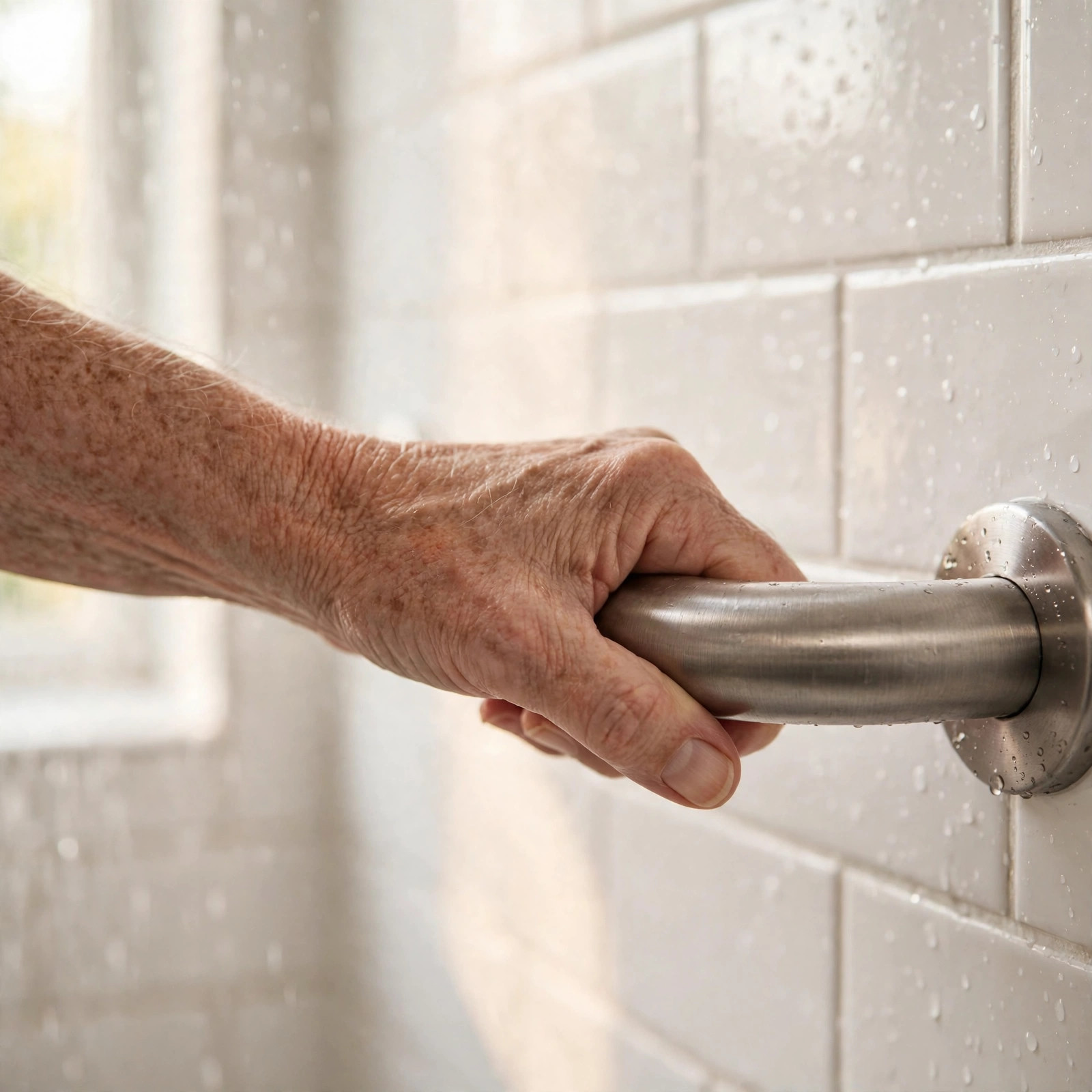
The gold standard. These bars bolt through the wall into studs or solid backing and, installed correctly, meet the ADA’s 250-pound minimum structural load. They come in straight, angled, and wave shapes from 12 to 42 inches, and there is nothing to check or re-press once they are in. Choose this type anywhere you might catch your full weight — beside the toilet, in the shower, at the tub edge.
2. Suction-cup grab bars
No drilling, no tools: levers press the cups onto smooth, flat, non-porous tile or fiberglass — a reasonable temporary or travel option, or a stopgap in a rental where drilling is forbidden. But the airtight seal can degrade with steam, soap film, and time, and most safety experts classify these as balance aids, not weight-bearing supports. Never make them your primary fall protection, and test the grip before every use.
3. Clamp-on tub rails
These clamp over the side of the bathtub (no drilling) and give you a handhold at the riskiest moment: stepping over the tub wall. They suit a standard tub with a sturdy rim. They are not a substitute for wall-mounted bars inside the shower, but they solve one specific, dangerous movement well.
4. Floor-to-ceiling transfer poles
A tension-mounted vertical pole wedged between floor and ceiling, placed beside the toilet, tub, or bed. It needs no wall drilling, and some models are rated for full weight-bearing use — the strongest no-drill option. It does need a solid, level floor and ceiling, so check your space first.
Horizontal, vertical, or angled: where each bar goes
Orientation matters as much as location, because each direction supports a different movement:
- Horizontal bars support side-to-side steadying — the classic choice for shower walls and beside the toilet.
- Vertical bars help you pull up or lower down — ideal at the tub edge for stepping in and out, or near the shower entrance.
- Angled bars (usually 45 degrees) give you a bit of both: a natural grip for the sit-to-stand transition beside the toilet.
As a starting point, the 2010 ADA Standards for Accessible Design (U.S. Access Board) specify grab bars 33 to 36 inches above the floor, measured to the top of the gripping surface, for toilets, tubs, and showers. Treat that range as a baseline and adjust to the user’s height and reach:
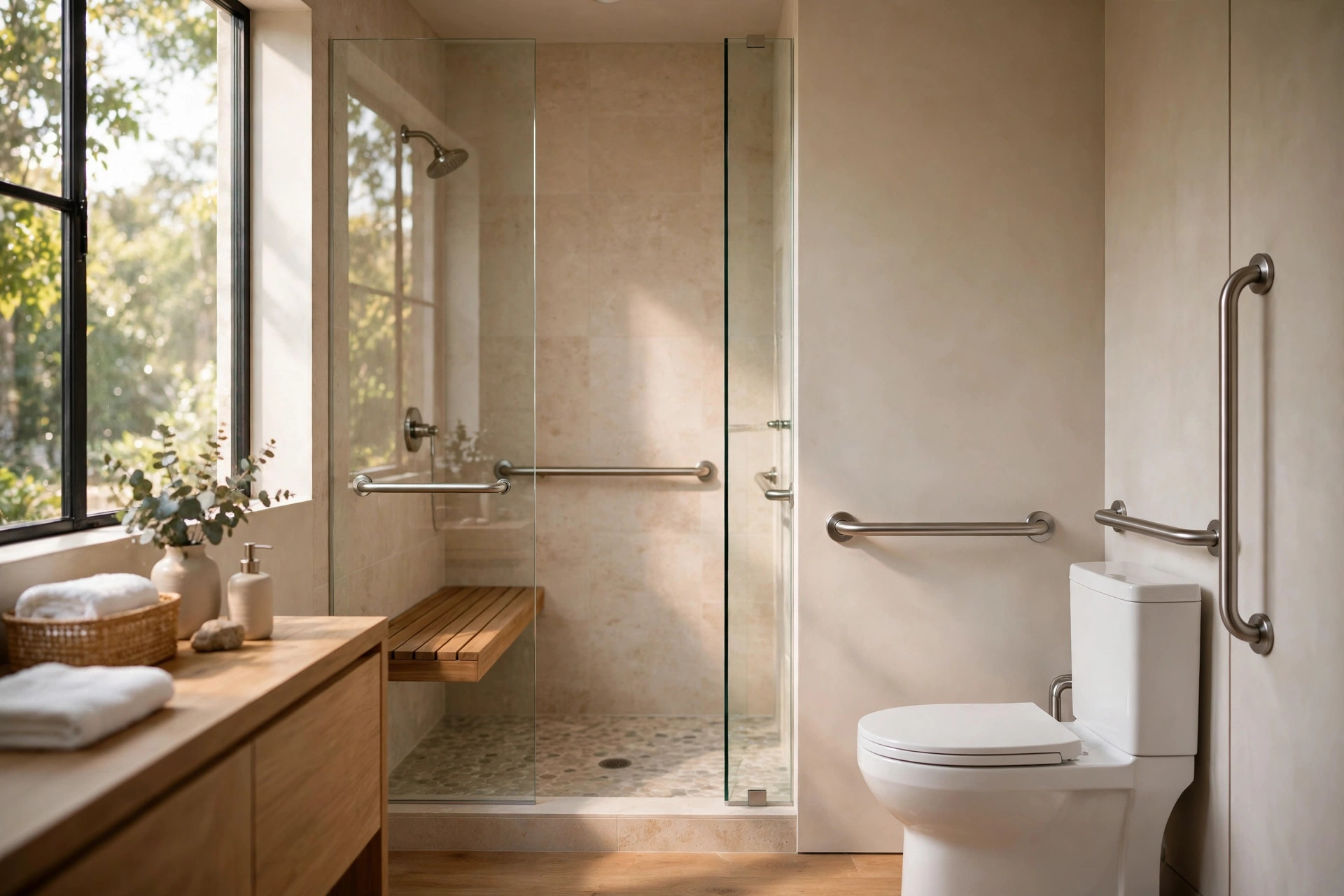
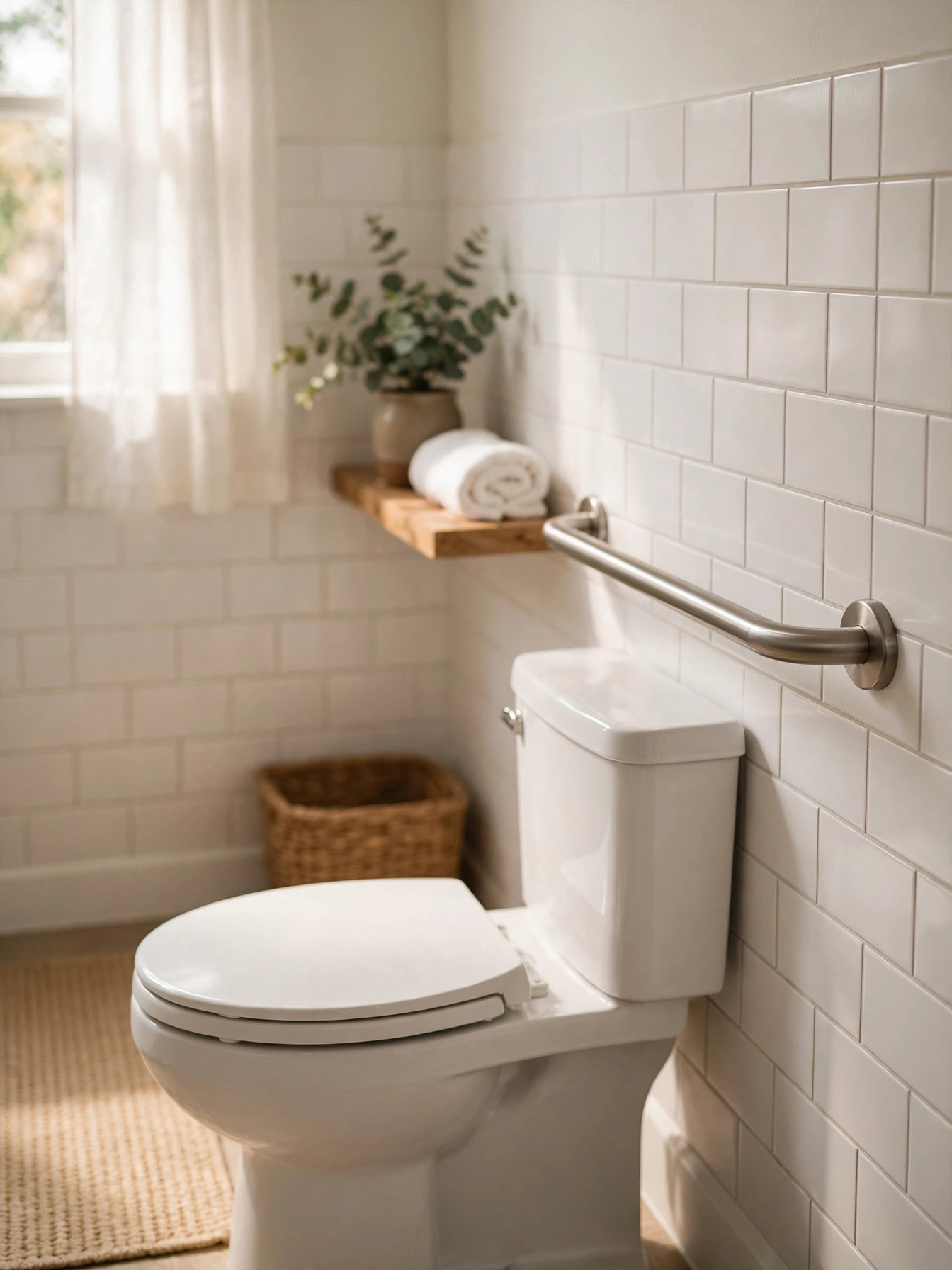
- Beside the toilet: a horizontal bar on the side wall within the 33–36-inch range; add a short vertical or angled bar if space allows, to assist sit-to-stand.
- In the shower: a horizontal bar on the side wall at 33–36 inches, within easy reach of where you stand.
- At the tub edge: a vertical bar near the outer edge to grip while stepping over the wall — a clamp-on tub rail works here if you cannot drill.
- Shower entrance: a short vertical bar just outside the door or curtain for the step in and out.
These are general ranges, not prescriptions — if your layout is unusual, bring in a professional installer or occupational therapist rather than guess.
The buying checklist: 6 things to compare
- Grip diameter — 1.25 to 1.5 inches. The ADA Standards allow circular bars from 1.25 to 2 inches; for home use, 1.25–1.5 inches suits most adult hands, including arthritic ones — too thick and a weaker grip cannot close around it, too thin and it digs into the palm.
- Texture and finish — peened vs. smooth. “Peened” means a lightly dimpled surface that stays grippy when wet — worth prioritizing for the shower. Smooth polished bars can get slippery with soap and water; brushed or satin finishes hide water spots better.
- Weight rating — typically 250 to 500 lbs on the packaging. The ADA’s structural minimum is 250 pounds applied in any direction, and most quality drilled-in bars carry manufacturer ratings between 250 and 500 pounds. Read the printed rating — and remember it is only real if the installation behind it is: a 500-pound bar screwed into drywall alone will not hold 500 pounds.
- Length — 12 to 42 inches. Shorter bars (12–18 inches) suit tight spots like the tub edge; longer bars (24–42 inches) give more hand positions along a shower wall or beside the toilet. When in doubt, longer is more forgiving.
- Material — stainless steel vs. plastic. Stainless steel (look for 304-grade) resists rust and is the standard for permanent installations. Heavy-duty plastic or nylon bars are lighter and warmer to the touch; check that the mounting hardware is metal, since the mounts carry the load.
- ADA-compliant labeling. A bar marketed as “ADA compliant” has been designed around the Standards’ dimensions (diameter, clearance, load). It is a useful quality filter — but compliance describes the bar, not your installation. A compliant bar installed into drywall alone is still a dangerous bar.
Installation: getting it right (or knowing when to call a pro)
This is where grab-bar projects succeed or fail, so be honest about your skill level.
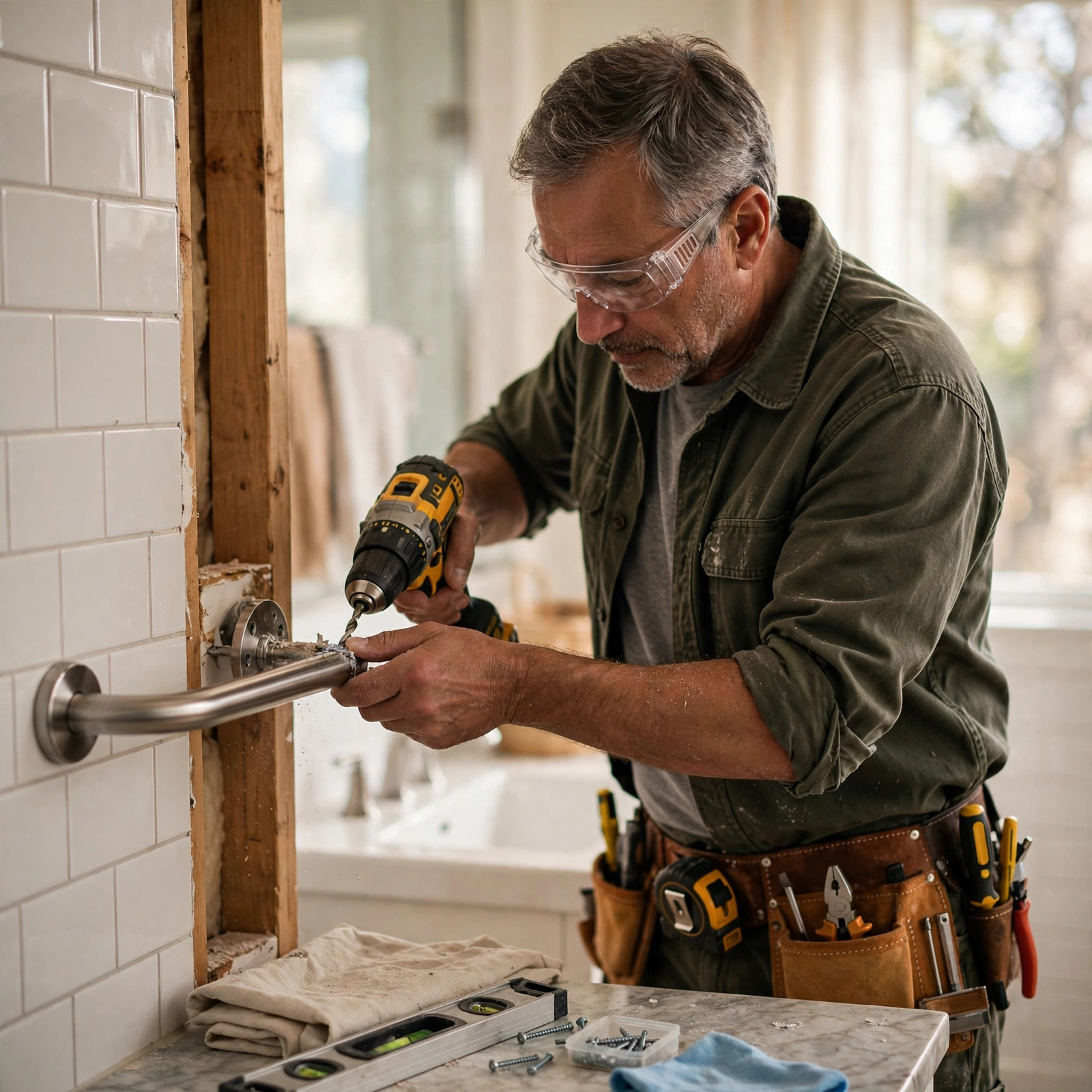
- Find the studs first. A stud finder is inexpensive and essential: mounting flanges must land on solid wood, so mark both edges of each stud. If the ideal position has no stud behind it, do not improvise with drywall anchors — reposition the bar, add blocking, or call a professional.
- Tile demands caution. Use a diamond or carbide bit at low speed — rushing cracks tiles. Drill through the grout line when possible, and seal every penetration with silicone so moisture cannot reach the wall behind.
- Respect the clearances. The ADA Standards call for about 1.5 inches of space between the bar and the wall — enough for a full grip, and enough that a hand cannot get trapped. Keep the gripping surface clear of towel hooks and dispensers.
- When to hire a professional. Call a licensed contractor or handyman if: studs are not where you need them, the walls are tile over unknown backing, the surround is fiberglass or acrylic, or the user has significant mobility limitations. An occupational therapist can assess the bathroom and specify placements — some programs cover the visit.
Pair your grab bars with a shower chair
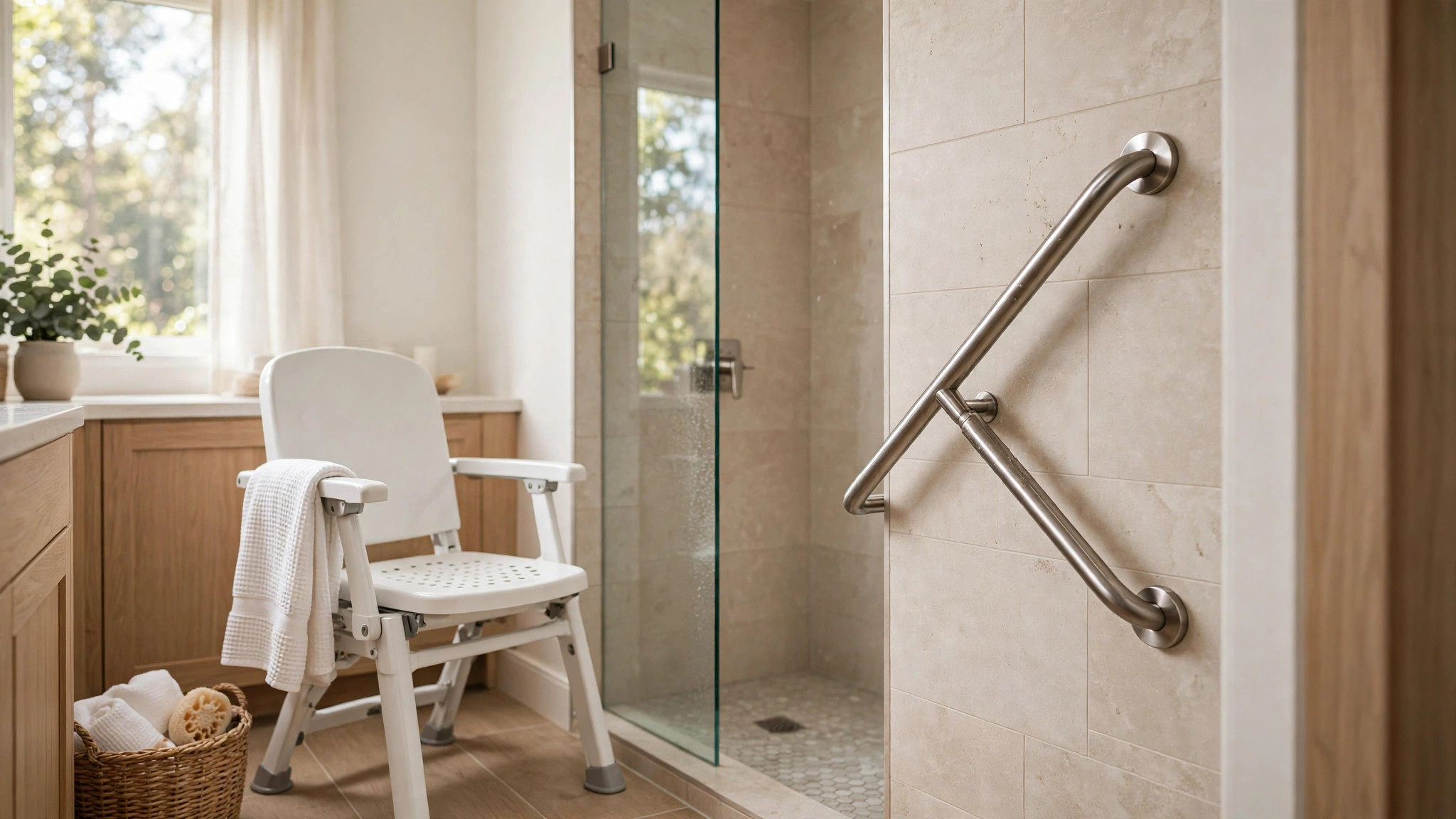
Grab bars give you something to hold; a shower chair removes the need to stand on a wet surface at all. For anyone who feels unsteady, gets dizzy, or tires quickly, the two together are considerably stronger than either alone — the chair handles standing, the bars handle the transitions in and out. See our companion guide, Best Shower Chair for Seniors: Bathing Safety Without the Slip Risk, for seat types, weight ratings, and drainage features.
When to see a doctor
Grab bars are safety equipment, not treatment — and needing them is worth discussing with your doctor. Make an appointment if:
- You have fallen in the past year, even without injury — a fall can flag medication side effects, vision changes, or blood-pressure drops.
- You feel dizzy, lightheaded, or unsteady when standing up or walking.
- You need furniture or walls to steady yourself around the house.
- Your medications cause drowsiness, dizziness, or confusion.
- You have osteoporosis, since even a minor fall can cause a fracture.
Your doctor may review your medications, check your vision and blood pressure, assess your gait and balance, or refer you to physical or occupational therapy. As the NIA notes, reporting even a painless fall helps them spot correctable causes before the next one.
Sources
- National Institute on Aging, “Falls and Fractures in Older Adults: Causes and Prevention” — https://www.nia.nih.gov/health/falls-and-falls-prevention/falls-and-fractures-older-adults-causes-and-prevention
- Mayo Clinic, “Fall prevention: Simple tips to prevent falls” — https://www.mayoclinic.org/healthy-lifestyle/healthy-aging/in-depth/fall-prevention/art-20047358
- Centers for Disease Control and Prevention, “About STEADI — Older Adult Fall Prevention” — http://cdc.gov/steadi/about/
- National Health Service (UK), “Falls” — https://www.nhs.uk/conditions/falls/
- U.S. Access Board, “ADA Accessibility Standards” (2010 ADA Standards for Accessible Design, Section 609) — https://www.access-board.gov/ada/
This article is for general information only and is not medical advice. Talk to your doctor about your personal health needs and home-safety options.