
Best Reacher Grabber Tools for Seniors: Picking Things Up Without Bending
Dropping your keys behind the sofa, a sock on the bedroom floor, a can on a high shelf — small moments like these can turn into a real problem when bending down or stretching up hurts, or when your doctor has told you to avoid it for a while. A reacher grabber tool is a simple, lightweight device that extends your arm so you can pick things up from the floor or a shelf without bending, crouching, or climbing.
For many adults over 60, a grabber tool is one of the most useful low-cost aids around the house. It is not a medical device that treats any condition, and it will not replace good balance, strength, or professional advice. But used well, it may help you stay independent with everyday tasks while you recover from surgery, manage a sore back, or simply protect joints that no longer bend as easily as they once did.
This guide explains the main types of reacher grabbers, what to look for when choosing one, and how to use one safely.
Why Bending and Overreaching Become Risky After 60
As we age, joints can become stiffer, muscles may lose some strength, and balance may become less steady. Bending forward from the waist, twisting while reaching, or standing on tiptoe to grab something from a high shelf can shift your centre of gravity and make a stumble more likely. For people recovering from hip or knee surgery, bending past a certain point may also be against their surgeon’s advice for a period of time. Others living with back pain may find that repeated bending leaves them sore for hours afterwards.
A reacher tool helps by letting you keep a more upright posture. Instead of folding forward, you stand or sit in a comfortable position, point the tool at the item, squeeze the handle, and lift. It does not remove all risk — you still need to move carefully and keep your feet planted — but it may help reduce the number of times each day you need to bend or stretch awkwardly.
It is worth thinking about the reacher as one part of a safer home, not a complete solution on its own. Good lighting, clear walkways, and well-placed support in risky spots such as the bathroom all matter too. If you are making your bathroom safer, our grab bars bathroom safety guide covers where supports are most helpful. And if walking itself feels unsteady, a walking cane buying guide for seniors may help you choose the right support for getting around.
The Main Types of Reacher Grabbers
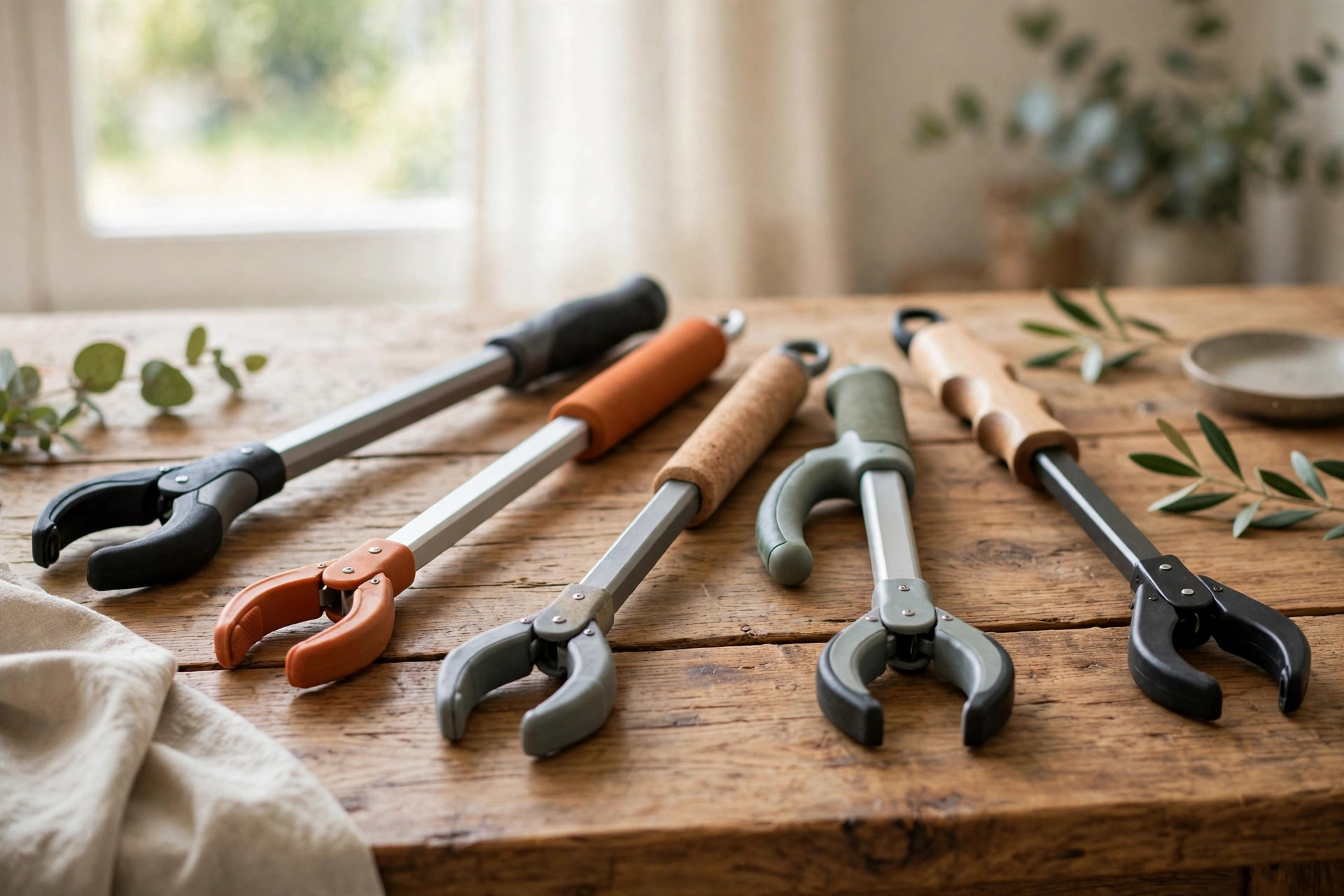
Most reacher grabbers share the same basic design: a long shaft, a handle with a trigger or squeeze grip at one end, and a jaw or claw at the other. The differences lie in the details, and those details matter more than brand names.
Standard fixed-length grabbers are the most common type. They usually measure around 26 to 32 inches, are light, and suit everyday jobs such as picking up clothes, mail, or light household items from the floor. They are simple, sturdy, and easy to keep by a chair or bed.
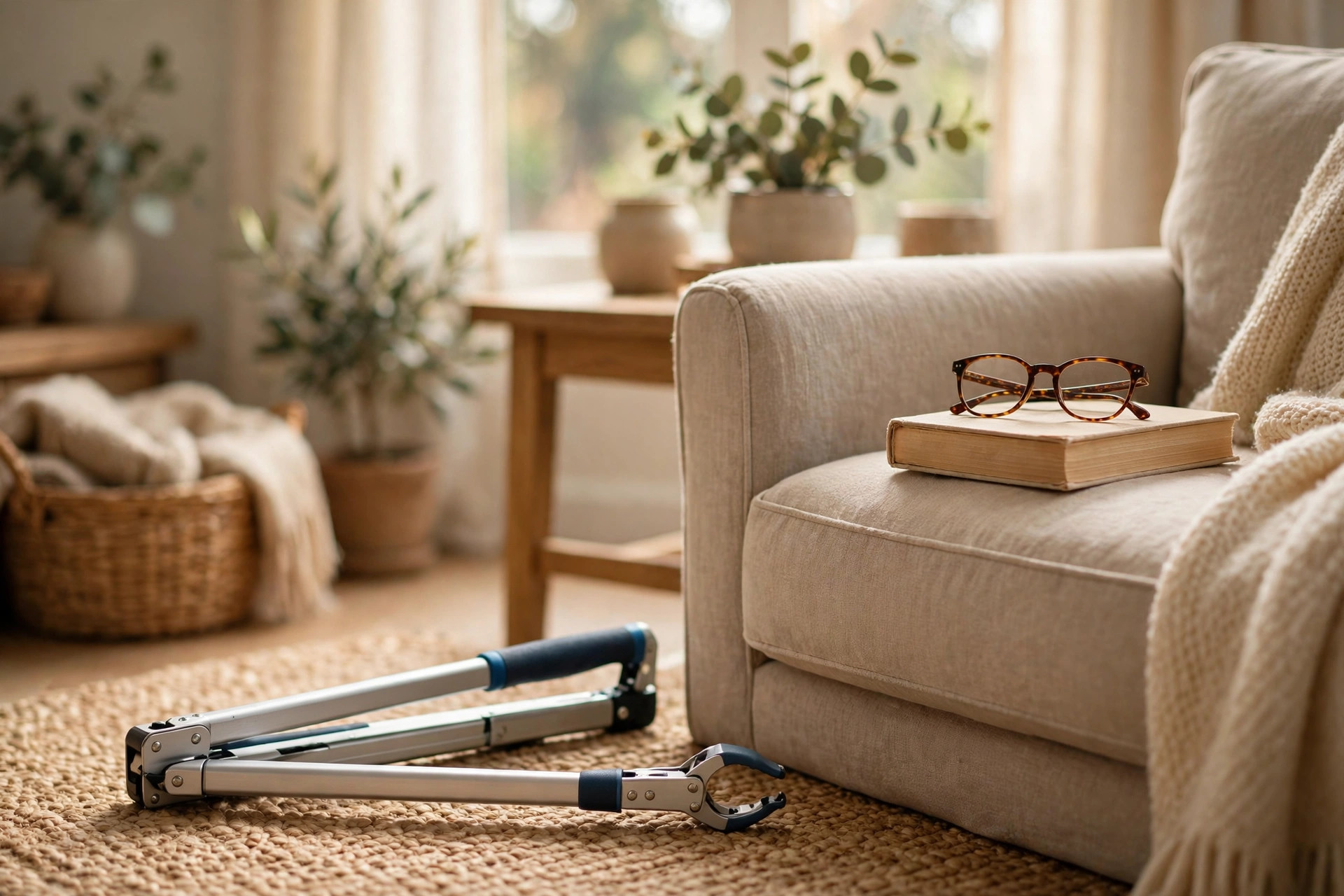
Folding grabbers fold in half for storage or travel. They are handy if you want to carry one in a bag, keep one in the car, or take one on holiday. The folding joint adds a little weight and a moving part that may wear over time, so check that it locks firmly open before use.
Rotating jaw grabbers let the claw turn, often a full 90 degrees, so you can pick up items lying flat or at an angle without twisting your wrist. This feature may help people with wrist stiffness or arthritis, since you can line up the jaw with the object rather than forcing your hand into an uncomfortable position.
Magnetic tip grabbers have a small magnet at the tip for picking up pins, screws, keys, or other small metal items. The magnet is a bonus, not the main grip — it will not hold heavy metal objects, and you should still rely on the jaw for most tasks.
Dressing aid grabbers are related tools rather than true reachers. Long shoe horns, sock aids, and dressing sticks help with getting dressed without bending. If bending to put on socks or shoes is your main problem, a dressing aid may help more than a general grabber, and many people use both.
How to Choose the Right One
Choosing a reacher is less about finding the “best” model and more about matching the tool to your body, your grip strength, and the jobs you do most often.
Length. A grabber that is too short will still leave you bending; one that is too long may feel clumsy indoors. As a rough guide, measure from your hand to the floor while standing comfortably, then choose a length close to that distance. Longer models, around 32 inches, suit taller people or reaching into the garden, while shorter models around 26 inches are easier to control in tight rooms.

Grip strength needed. Some handles need a firm squeeze to hold the jaw closed, which can be tiring or painful if you have arthritis or weak hands. Look for a handle that is easy to squeeze and stays closed without constant force. A trigger-style handle suits some people, while a full-hand squeeze grip suits others — if possible, try both styles before deciding.
Jaw width and design. Wide, rubber-lined jaws grip larger or slippery items better, such as a bottle or a rolled magazine. Narrow jaws are better for small items like coins or pills dropped on a table. Rubber tips help prevent items slipping, but check that the rubber is firm and replaceable, since worn tips lose their grip.
Weight capacity. Most household grabbers are designed for light items — a pound or two at most. The manufacturer usually states a limit, and it is wise to respect it. A reacher is not a lifting device. Trying to lift a heavy pan, a full watering can, or a bag of shopping may bend the shaft or cause you to drop the item, possibly onto your foot.
Handle type for arthritis. If your hands are stiff or sore, look for a soft, cushioned, easy-to-hold handle with a shape that fits your whole hand rather than just your fingers. Some handles rotate with the jaw, which may help you keep your wrist in a neutral position. Avoid handles that are very thin or hard, since they can be painful to squeeze repeatedly.
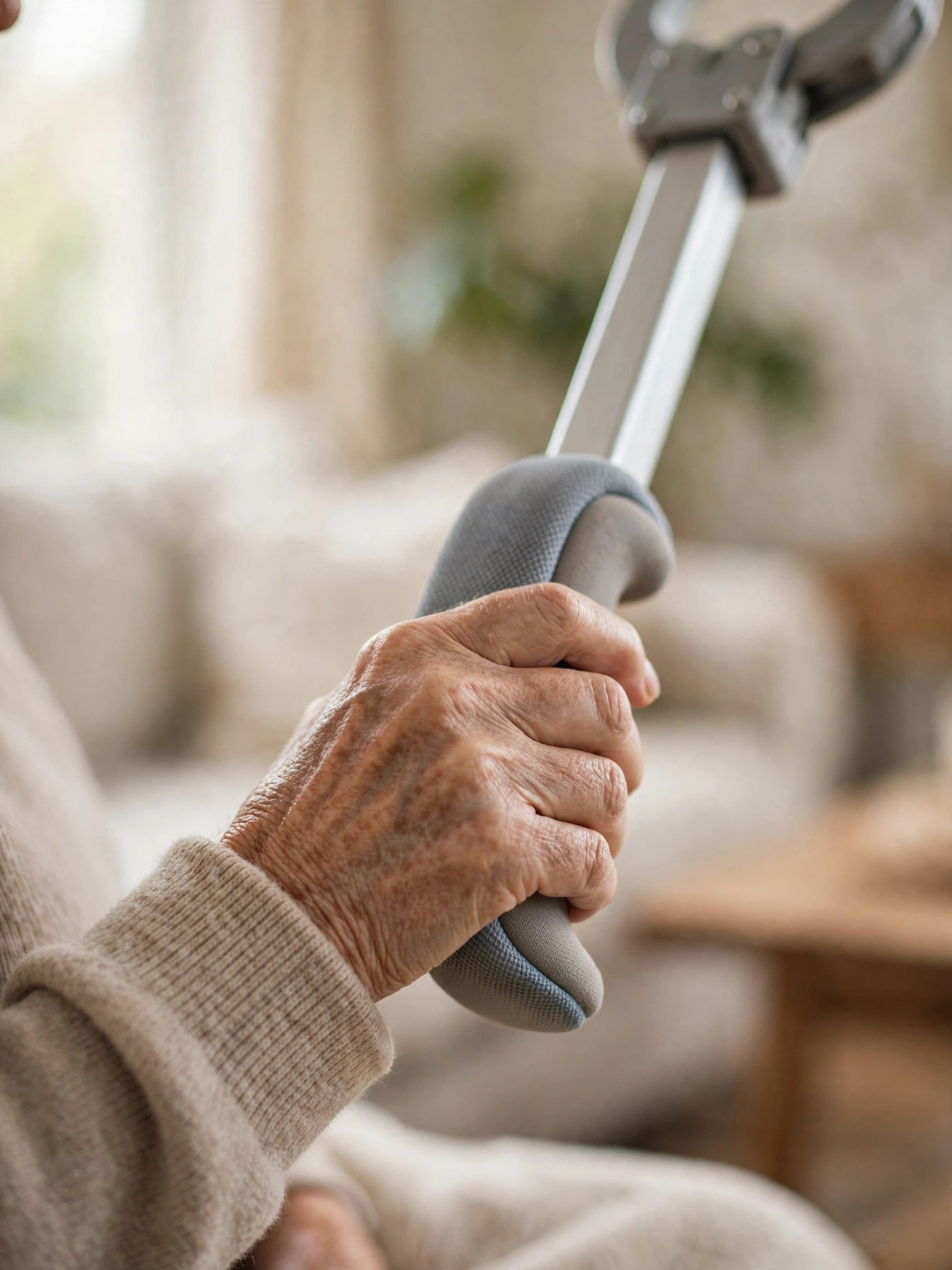
Weight of the tool itself. A grabber should feel light in your hand — most weigh well under a pound. A heavier tool may tire your arm quickly, especially if you hold it at arm’s length. If you plan to use it many times a day, lightness matters as much as length.
Folding versus fixed. Choose folding if you travel or have limited storage, and fixed if you mainly use it at home and want the simplest, sturdiest option. A fixed model has fewer moving parts and is often the better choice for daily, heavy use around the house.
Safe-Use Tips
A reacher is only helpful if it is used within its limits. Keep these habits in mind:
- Light items only. Use the grabber for socks, letters, remote controls, light clothing, and similar items. Never use it to lift heavy objects, pull yourself up, or lean on it for support — it is not built for that, and it may bend or snap.
- Keep items within comfortable reach. Do not stretch far overhead or lean sideways out of a chair while using the grabber. Move your body closer to the item first, keep your feet flat, and reach straight ahead where possible.
- Check the grip before lifting. Squeeze firmly, lift slowly, and pause to make sure the item is held well before moving it. If an item slips, let it fall rather than lunging after it.
- Inspect the tool regularly. Check the rubber tips, the jaw hinge, and the folding lock. Replace worn tips and retire a tool that wobbles, sticks, or no longer grips well.
- Keep it where you need it. A grabber left in another room will not help. Many people keep one by their favourite chair and one by the bed, so it is always within arm’s reach.
- Mind the drop zone. Pick items up over a table or bed where possible, rather than over hard floors or your feet, so a slip causes less trouble.
- Combine with other safety steps. If you have had a fall, or worry about falling, read our guide on what to do after a fall and talk with your doctor about a broader falls-prevention plan, including strength and balance exercises.
When to See a Doctor
A reacher tool may help with everyday convenience, but it is not a substitute for medical care. See your doctor or physiotherapist promptly if you notice any of the following:
- New or worsening back, hip, or knee pain that limits your movement
- Numbness, tingling, or weakness in your legs, arms, or hands
- Repeated falls, near-falls, or a growing fear of falling
- Dizziness, unsteadiness, or balance problems that are new or getting worse
- Pain or swelling after surgery that does not settle as expected
- Difficulty gripping, holding objects, or using your hands that is new or worsening
If you have recently had surgery, ask your surgeon or physiotherapist which movements to avoid and for how long, and whether a reacher is suitable for your recovery stage. They may also suggest other aids, or a referral for strength and balance training, that fit your situation better.
Sources
- Centers for Disease Control and Prevention — guidance on preventing falls in older adults and making homes safer
- National Institute on Aging — information on falls and fractures in older adults, and steps to reduce risk at home
- NHS — guidance on falls prevention, mobility aids, and staying steady on your feet
- Mayo Clinic — general guidance on back pain, safe movement, and when to seek care for musculoskeletal symptoms
- Cleveland Clinic — patient guidance on hip and knee replacement recovery, including movement precautions and everyday aids
This article is for general information only and is not medical advice. Talk to your doctor or a qualified health professional before making changes related to your health.