
What to Do After a Fall: A Safety Guide for Adults Over 65
Falls are one of the most common — and most serious — health risks for adults over 65. According to the U.S. Centers for Disease Control and Prevention (CDC), more than one in four adults aged 65 and older falls each year, and falls are the leading cause of injury-related death among older adults. Most falls happen at home, during ordinary daily activities: getting out of bed, walking to the bathroom at night, reaching for something on a shelf.
Knowing what to do after a fall makes a real difference — it reduces panic, protects you from making an injury worse, and gets you the right help at the right time.
The First Moments: Stay Calm and Assess
The instinct after a fall is often to jump back up quickly, sometimes out of embarrassment or fear of being a burden. Resist that urge. The first thing to do is stop and stay where you are for a moment.
Take a few slow, deep breaths — staying calm helps you think clearly and notice what hurts. Then, without moving too much, run a quick mental check over your body:
- Is anything bleeding? Can you feel sharp or severe pain anywhere?
- Did you hit your head? Are you feeling dizzy, confused, or nauseated?
- Can you move your arms and legs? Try wiggling your fingers and toes gently.
- Does anything feel broken, twisted at an odd angle, or numb?
If you feel a sharp pain in your hip, wrist, shoulder, or back, or if you suspect something is broken, do not try to get up. Stay still and call for help immediately. Trying to stand on a fractured hip or wrist can turn a manageable injury into a far worse one.
If you are outdoors in the cold and must wait for help, try to cover yourself or move to a warmer spot — but only if you can do so without pain.
How to Get Up Safely (If You’re Not Hurt)

If your quick self-check finds no severe pain, bleeding, or signs of a broken bone, you can try to get up — slowly and in stages. The U.S. National Institute on Aging (NIA) recommends using furniture for support rather than strength alone:
- Roll onto your side and rest for a moment.
- Push up onto your hands and knees. If anything starts to hurt, stop.
- Crawl to a sturdy chair or sofa — something heavy that won’t slide.
- Put both hands on the seat, kneel with one knee up and that foot flat on the floor, then push up with the chair and your stronger leg. Sit down once you’re up and catch your breath; if dizziness persists or you feel faint, call someone for help.
If you can’t get up on your own, don’t keep struggling. Stay put, keep warm, and call for help.
When to Call Emergency Services vs. a Family Member
Knowing who to call depends on how serious the situation is. Call emergency services (911 in the U.S., 999 in the UK, or your local emergency number) right away if:
- You cannot get up on your own and no one is nearby.
- You hit your head, even if you feel okay — head injuries can show delayed symptoms.
- You lost consciousness, even briefly.
- You suspect a broken bone, especially in the hip, wrist, or back.
- You are bleeding heavily or feel severe pain anywhere.
- You feel faint, very dizzy, or confused.
Calling a family member, friend, or neighbor is appropriate when you’ve gotten up, checked yourself over, and feel mostly fine — but you want someone to know what happened. Even a “small” fall is worth reporting, because falls are a warning sign worth tracking.
If you live alone, consider a personal emergency response system — a wearable button or automatic fall-detection device. Asking about one at your next checkup is a sensible step.
After You’re Up: Checking Yourself Over
Once you’re sitting safely, give your body a second, more careful check. Adrenaline can mask pain in the first minutes after a fall, so problems sometimes become noticeable only after you’ve calmed down:
- Gently move each joint and note any pain, swelling, or stiffness that appears.
- Check for cuts, scrapes, or bruises, and clean any broken skin with soap and water.
- Note the time of the fall and what you think caused it — write it down while it’s fresh.
Then rest with some water for 20–30 minutes before anything strenuous. Many people feel sore the next day even when nothing is broken — that’s normal, but worth attention too.
What to Watch For in the Next 24–48 Hours
Some consequences of a fall don’t show up right away. Over the next day or two, pay attention to:
- Head symptoms: headache that worsens, repeated vomiting, growing drowsiness, slurred speech, or unequal pupils — seek emergency care immediately.
- Increasing pain or swelling in a hip, wrist, shoulder, or back — this may indicate a fracture that wasn’t obvious at first.
- Numbness, tingling, or weakness in any limb.
- New difficulty walking or bearing weight on a leg.
- Mood changes: fear of falling again is extremely common. If anxiety about falling starts limiting your daily life, bring it up with your doctor.
Keep a short note of anything unusual — it will be genuinely useful when you describe the fall to your doctor.
When to See a Doctor
Not every fall needs a doctor’s visit, but many do — and some need urgent care. See a doctor promptly (or go to urgent care / the emergency department) if any of the following apply:
- You struck your head, or lost consciousness at any point.
- You have hip, groin, wrist, or back pain — these are the most common fracture sites after a fall.
- You cannot bear weight on a leg or you can’t move a joint normally.
- You felt dizzy, faint, or had heart palpitations before or during the fall — this may point to a blood pressure or heart-rhythm problem that needs checking.
- You are taking blood thinners and hit your head — tell your doctor even if you feel fine, because bleeding risk needs professional assessment.
- You’ve fallen more than once in the past year, or this is your first fall and you’re unsure why it happened.
Even when the fall seemed minor, mentioning it at your next appointment is worthwhile. A single fall is one of the strongest predictors of future falls, and your doctor can help figure out why it happened. The CDC’s STEADI initiative (Stopping Elderly Accidents, Deaths & Injuries) encourages screening older adults for fall risk during routine visits — so prevention starts before the next fall, not after.
Preventing the Next Fall
The best outcome of a fall is that it becomes the last one. Evidence suggests many falls can be prevented with practical, manageable changes. The Mayo Clinic, CDC, and NHS all emphasize the same core strategies:
Make your home safer. Most falls happen at home. Remove loose rugs or secure them with tape, clear clutter from walkways, add grab bars in the bathroom, improve lighting on stairs and night paths to the bathroom, and keep frequently used items within easy reach so you don’t need a step stool.
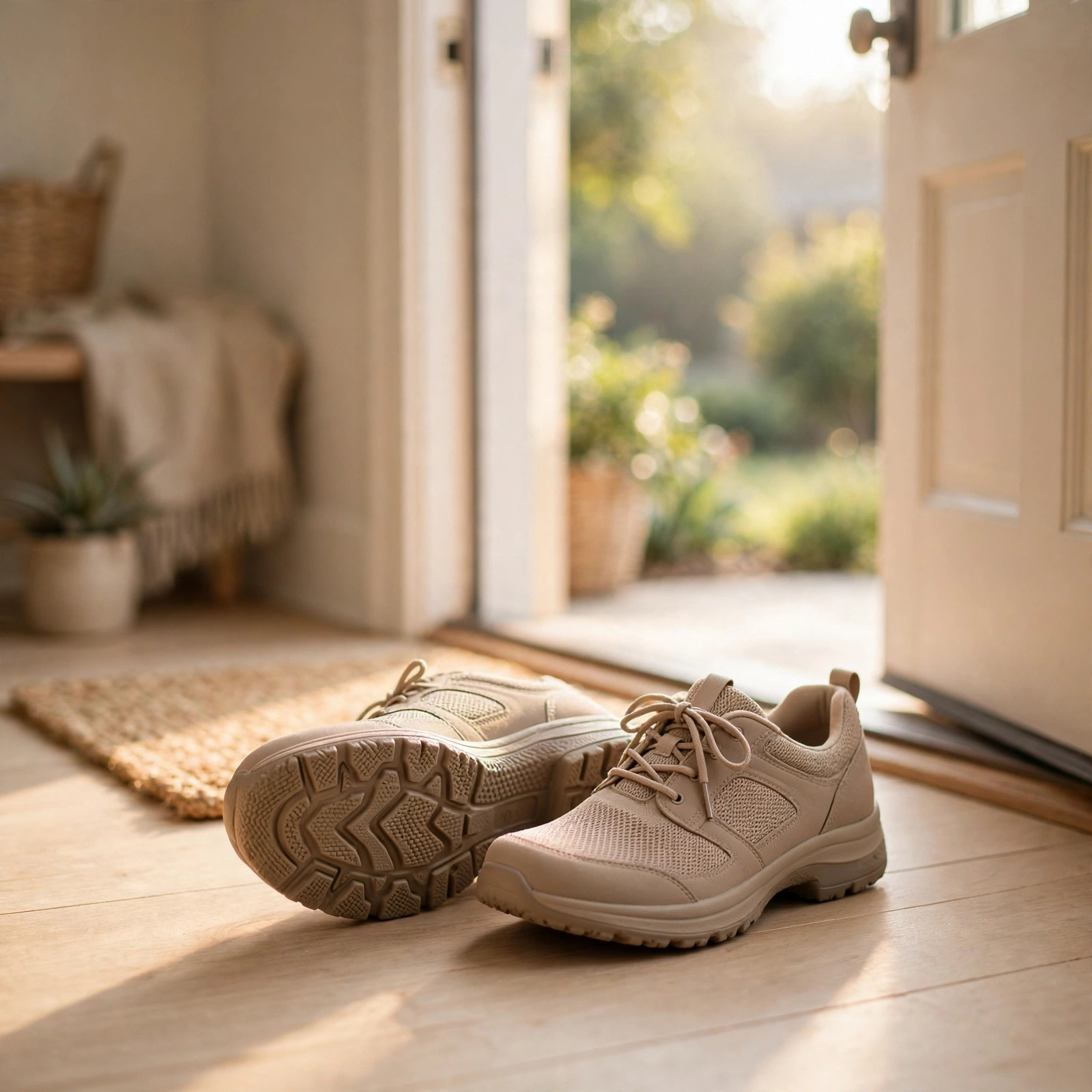
Wear sensible footwear. Supportive, non-slip shoes with low heels are far safer than socks on hard floors, worn-out slippers, or high heels. The NHS advises avoiding walking in socks or tights on smooth surfaces.
Have your vision checked. Poor vision is a major fall risk factor. If your glasses prescription is outdated — or if you’ve been putting off cataract treatment — fixing it can noticeably reduce your risk.
Review your medications. Some medicines cause dizziness, drowsiness, or drops in blood pressure. Ask your doctor or pharmacist to review your full medication list specifically for fall risk. Never stop or change a medication on your own — do this review together with your clinician.

Build strength and balance. Balance and leg-strengthening exercises are among the most evidence-backed fall prevention strategies. Programs like tai chi have been linked to fewer falls in older adults in multiple studies. Start with our guide to balance exercises that prevent falls, and see staying active after 60 for a safe routine. If joint pain holds you back, see joint pain after 50 for ways to manage it.
Use support when you need it. A cane or walker is a tool, not a weakness — use one if your doctor or physical therapist recommends it.
Talk to Your Doctor About a Fall Assessment
If you’ve fallen — even once — ask your doctor for a fall-risk assessment. This usually involves reviewing your medications, checking your blood pressure (including while standing), testing your balance and gait, and checking your vision. Low vitamin D is also linked to muscle weakness and falls, so your doctor may check that too. Many people find a specific, fixable cause — a medication side effect, a blood pressure dip, an out-of-date glasses prescription — and addressing it genuinely lowers their risk of the next fall.
A fall can shake your confidence, but it doesn’t have to shrink your life. Stay calm in the moment, get checked when something feels wrong, and use what you learn to make the coming year steadier than the last.
Sources
- U.S. Centers for Disease Control and Prevention — Older Adult Fall Prevention and the STEADI (Stopping Elderly Accidents, Deaths & Injuries) initiative: more than 1 in 4 adults 65+ falls each year; falls are the leading cause of injury-related death in older adults.
- National Institute on Aging (NIA), NIH — “Falls and Fractures in Older Adults: Causes and Prevention,” including how to get up safely after a fall.
- Mayo Clinic — “Fall prevention: Simple tips to prevent falls”: home hazards, medications, vision, and physical activity.
- National Health Service (NHS, UK) — “Falls” guidance: home safety, footwear, and when to seek medical help.
- Cleveland Clinic — “Falling: When to Worry and How to Prevent Falls”: warning signs needing prompt medical evaluation.
This article is for general information only and is not a substitute for professional medical advice. If you are injured or unsure, seek medical care promptly. If this is an emergency, call your local emergency number immediately.