Blood Pressure After 60: Normal Numbers, Risks, and Daily Habits
If you are over 60, your blood pressure reading probably looks a little different than it did at 40 — and you may have wondered whether that is simply “normal for your age.” Blood pressure does tend to rise as we get older, but that does not mean a high reading should be ignored. Understanding what your numbers mean, what range to aim for, and which daily habits genuinely support healthy blood pressure can make a real difference to your heart, your brain, and your independence in the years ahead.
This guide explains everything in plain language: what the two numbers in your reading actually mean, what counts as normal after 60, how common high blood pressure really is, why it rises with age, how to measure it correctly at home, and the evidence-backed daily habits that may help keep it in a healthy range. It is written for information and awareness — not as medical advice — so always talk to your doctor about your own readings and treatment.
What Your Blood Pressure Numbers Mean
Every blood pressure reading has two numbers, written like this: 120/80. They measure the force of blood pushing against the walls of your arteries, expressed in millimeters of mercury (mmHg).
- Systolic pressure (the top number) measures the pressure when your heart beats and pushes blood out. This is the number that tends to climb with age.
- Diastolic pressure (the bottom number) measures the pressure when your heart rests between beats.
Both numbers matter. A reading where only the top number is high has its own name — isolated systolic hypertension — and it is the most common pattern in older adults. Even when the bottom number looks perfectly fine, a high top number still signals that your arteries are under extra strain, so it deserves attention rather than dismissal.
One thing to know: a single high reading does not mean you have hypertension. Blood pressure fluctuates through the day — it rises when you are stressed, active, or just had coffee, and falls when you rest. Doctors typically diagnose high blood pressure only after repeated elevated readings taken on different days, following a proper technique (which we cover below).
What’s Considered Normal After 60?
A common myth is that higher blood pressure is simply “normal for your age” and nothing needs to be done about it. The official thresholds do not change with age. The categories below come from the 2017 ACC/AHA (American College of Cardiology / American Heart Association) guidelines, which lowered the definition of hypertension from 140/90 to 130/80:
- Normal: below 120/80 mmHg
- Elevated: 120–129 systolic with diastolic below 80
- High blood pressure (hypertension), Stage 1: 130–139 systolic or 80–89 diastolic
- High blood pressure (hypertension), Stage 2: 140 or higher systolic, or 90 or higher diastolic
- Hypertensive crisis: above 180/120 mmHg — seek emergency care (more on this later)
So even at 65, 70, or 80, a reading of 140/90 is still considered high blood pressure, not a natural consequence of aging. That said, your doctor may set a personal treatment target that accounts for your overall health, other conditions, and how well you tolerate medication. Research such as the landmark SPRINT trial (Systolic Blood Pressure Intervention Trial, funded by the NIH) found that targeting a systolic pressure below 120 reduced heart attacks, strokes, and cardiovascular deaths compared with a target below 140 — and this informed guidance often aiming for below 130/80 in adults who tolerate treatment well. However, very aggressive lowering can cause dizziness, lightheadedness on standing, and falls in some older adults, so many doctors individualize the target — sometimes accepting a slightly higher range in frail adults. This balancing act is a decision to make with your own clinician, based on your readings over time rather than a single number.
The key takeaway: age does not rewrite the definition of normal. What changes is how carefully and individually the treatment goal is chosen.
How Common Is High Blood Pressure? (The Numbers May Surprise You)
If your readings have been creeping up, you are far from alone. A large analysis of England-based data from 2022 to 2025, conducted by Oxford Population Health and covering about 1.4 million adults, found that more than 1 in 3 adults (37%) had hypertension — defined by WHO criteria as systolic pressure of 140 or higher, diastolic of 90 or higher, or being on blood-pressure-lowering medication.
The age gradient was striking: hypertension affected just 15% of adults aged 18–39, rising steadily to 71% of adults aged 80 and above. Men were affected about 50% more often than women (42% versus 29% after age standardization).
Perhaps most surprising of all: 59% of those with hypertension had never been diagnosed and were not on medication — they simply did not know. And among people who were already taking blood pressure medication, about half still had readings at or above 140/90, suggesting their treatment was not yet bringing their pressure fully under control.
Sources: https://scitechdaily.com/more-than-1-in-3-adults-had-high-blood-pressure-most-didnt-know-it/ and https://medicalxpress.com/news/2026-09-thirds-adults-uk-high-blood.html
This is why high blood pressure is so often called the “silent killer.” It usually has no symptoms at all, yet it steadily damages arteries, the heart, the brain, and the kidneys. The good news hidden in these numbers is that a huge share of cases can be found with a simple check — a home monitor, a pharmacy machine, or a routine appointment.
Why Blood Pressure Rises With Age
Blood pressure is not higher in older adults by accident; several age-related changes combine to push it upward:
- Arteries stiffen. Young, elastic arteries expand to absorb each heartbeat’s pressure wave. With age, artery walls gradually lose elasticity — partly from the natural aging of connective tissue and partly from the slow buildup of plaque (atherosclerosis). Stiffer arteries mean higher systolic pressure with each beat.
- The body’s pressure sensors become less sensitive. Specialized sensors in your neck and chest (baroreceptors) help fine-tune blood pressure moment to moment. They become less responsive with age, which is one reason older adults are more prone to sudden drops in pressure when standing up — and to dizziness.
- Kidney function gradually declines. The kidneys help regulate blood pressure by managing salt and fluid balance. As kidney filtering capacity eases with age, the body may hold on to more sodium, nudging pressure upward.
- Hormonal shifts. Changes in hormones that regulate fluid balance and blood vessel tone can contribute to higher readings in later life.
- Accumulated lifestyle effects. Decades of higher sodium intake, less physical activity, weight gain, poor sleep, and stress all add up. The habits that “got away with it” at 30 start showing their effects at 60 — which also means that improving them now still matters.
None of this means rising blood pressure is harmless. The fact that a change is common does not make it safe — and importantly, the lifestyle factors behind it are still modifiable at any age.
The Risks of Uncontrolled High Blood Pressure
High blood pressure earns its “silent” reputation because it can damage the body for years without any warning signs. Over time, uncontrolled hypertension raises the risk of several serious conditions:
- Heart attack and heart failure. Constant high pressure forces the heart to work harder. The heart muscle may thicken and weaken over time, and damaged arteries are more likely to develop the blockages that cause heart attacks.
- Stroke. High blood pressure is the single biggest risk factor for stroke — it can damage or weaken brain arteries, leading to blockages or bleeding in the brain.
- Kidney disease. The kidneys’ tiny blood vessels are vulnerable to high pressure; long-standing hypertension is a leading cause of kidney failure.
- Vision loss. High blood pressure can damage the small vessels in the eyes (hypertensive retinopathy), threatening vision.
- Cognitive decline and dementia. Growing evidence links mid- and late-life hypertension to a higher risk of cognitive decline. The SPRINT MIND study, an extension of the SPRINT trial, suggested that more intensive blood pressure control was associated with a lower risk of mild cognitive impairment. Evidence suggests that protecting your blood vessels may also help protect your thinking — another reason not to shrug off rising numbers.
These risks develop silently, but the flip side is encouraging: studies consistently show that lowering blood pressure — through lifestyle changes and, when needed, medication — reduces the risk of stroke, heart attack, and heart failure. It is genuinely never too late to benefit.
How to Measure Your Blood Pressure Correctly at Home
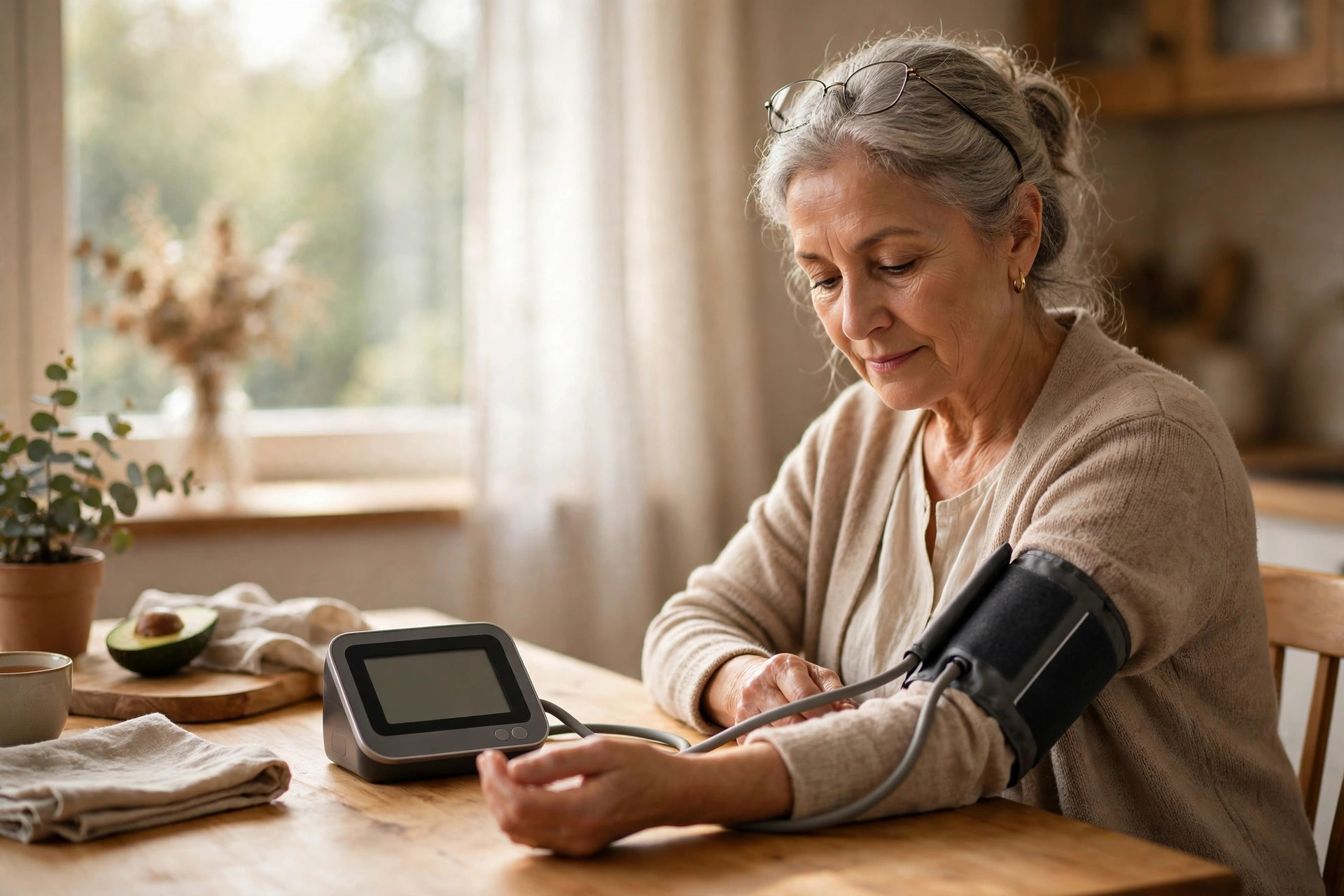
Home monitoring is one of the most powerful tools you have, because it shows how your pressure behaves in everyday life — not just in a doctor’s office, where “white coat” nervousness can inflate the reading. But technique matters enormously. A sloppy measurement can be off by 10 or more points. Follow these steps, based on guidance from the AHA and Mayo Clinic:
- Use a validated upper-arm monitor. Wrist and finger devices are less reliable. Look for a cuff that fits your arm — too small a cuff can overestimate your pressure.
- Rest first. Sit quietly for at least 5 minutes before measuring. Avoid exercise, caffeine, smoking, and a full bladder for at least 30 minutes beforehand, since all of these can raise the reading temporarily.
- Sit properly. Sit with your back supported, feet flat on the floor, and legs uncrossed. Support your arm on a table so the cuff is at heart level.
- Take two readings. Measure twice, about a minute apart, and note both. If the readings differ a lot, take a third.
- Measure at consistent times. Many doctors recommend checking in the morning before medication and in the evening, on several days — then averaging the results. A log of readings over a week or two is far more informative than any single number.
- Bring your log to appointments. Your doctor can compare home and office readings and get a truer picture. Some people have “masked hypertension” (normal at the doctor’s, high at home) — home logs catch what office visits miss.
Do not adjust or stop medication based on a single home reading. One high number after a stressful morning is not an emergency; a pattern over days is what guides decisions.
Daily Habits That Support Healthy Blood Pressure
Medication is important for many people, but daily habits are the foundation — and they may help whether or not you take prescription drugs. Here is what the evidence supports:
Eat the DASH way

The DASH diet (Dietary Approaches to Stop Hypertension), developed through NIH-funded research, is one of the most studied eating patterns for blood pressure. It emphasizes fruits, vegetables, whole grains, legumes, nuts, and low-fat dairy, while limiting red meat, added sugars, and saturated fat. Studies have found that following DASH can lower systolic blood pressure noticeably — evidence suggests the effect is strongest when combined with lower sodium intake. Fiber plays a supporting role too; if you want ideas for heart-friendly fiber, see our guide on fiber-rich foods.
Cut back on sodium — and get enough potassium
Excess sodium makes the body hold on to water, raising blood volume and pressure. The American Heart Association recommends no more than 2,300 mg of sodium per day, with an ideal limit of 1,500 mg for most adults. Most sodium does not come from your salt shaker — it comes from bread, processed meats, canned soups, sauces, and restaurant meals. Reading labels is the single most effective habit here. At the same time, potassium-rich foods (bananas, beans, leafy greens, potatoes) may help the body excrete more sodium — unless your doctor has advised you to limit potassium because of kidney problems or certain medications, in which case follow their guidance.
Stay active

Regular aerobic activity strengthens the heart so it pumps more efficiently, which can lower the pressure on your arteries. The CDC recommends at least 150 minutes of moderate-intensity activity per week for older adults — brisk walking counts, and it can be broken into short bouts. Evidence suggests consistent activity can lower systolic pressure by several points on average. For safe ways to build the habit, our guide to staying active after 60 walks through a practical routine.
Maintain a healthy weight
Blood pressure often rises with weight gain and falls with weight loss. Even a modest reduction — a few percent of body weight — may help bring readings down. The combination of balanced eating and regular activity described above is the most sustainable route, rather than any extreme or rapid approach.
Prioritize sleep

Poor sleep and high blood pressure are closely linked. Adults who regularly sleep less than 7 hours, or who have untreated sleep apnea, are more likely to develop hypertension. Sleep patterns naturally shift after 50 — our article on sleep changes after 50 explains what is normal — and simple evening adjustments can improve rest; see evening habits that ruin sleep for the most common culprits, including late caffeine, heavy meals, and screen time in bed. If you snore loudly or often wake up gasping, ask your doctor about sleep apnea, which is a known driver of resistant high blood pressure.
Limit alcohol
Drinking too much alcohol can raise blood pressure and reduce the effectiveness of blood pressure medications. If you drink, keeping it modest is the safer choice — and cutting back is one of the quicker lifestyle changes that may show up in your readings within weeks.
Quit smoking
Every cigarette causes a temporary spike in blood pressure, and the chemicals in tobacco damage artery walls over time, accelerating the stiffening described earlier. Quitting is one of the most powerful single steps for heart health at any age — the benefits begin within days and keep growing.
Manage stress
Chronic stress does not directly cause long-term hypertension by itself, but stress-driven behaviors — poor sleep, overeating, alcohol use, skipping exercise — certainly can, and acute stress spikes pressure in the moment. Relaxation practices such as slow breathing, gentle walking, meditation, or time in nature may help smooth out those spikes and support the other habits on this list.
A Note on Blood Pressure Medications
Many adults over 60 need medication to reach a healthy range, and that is completely normal — it is not a personal failure. Several types of blood pressure drugs exist (such as ACE inhibitors, calcium channel blockers, and diuretics), and doctors often combine them to get the best effect with the fewest side effects.
Three rules matter here:
- Take your medication exactly as prescribed, at the same time each day.
- Never stop or skip doses on your own, even if your readings look good — good readings often mean the medication is working, not that it is no longer needed. Stopping suddenly can cause a dangerous rebound rise in pressure.
- Report side effects such as persistent dizziness, swelling, or a dry cough to your doctor rather than quietly quitting. There are usually alternatives or dose adjustments that solve the problem.
Lifestyle habits and medication are partners, not competitors. The habits in this guide may help your medication work better — and in some cases, sustained lifestyle improvement allows a doctor to reduce the dose. That decision belongs to your doctor, based on your readings over time.
When to See a Doctor
Make an appointment promptly if:
- Your home readings are consistently at or above 130/80 and you have not discussed them with a doctor yet.
- Your pressure was previously well controlled but is creeping upward despite medication.
- You experience frequent dizziness, lightheadedness when standing, or fainting — these can signal pressure that is too low as well as too high, or a medication side effect.
- You have symptoms that can accompany severely elevated pressure: severe headache, chest pain, shortness of breath, back pain, numbness or weakness, vision changes, or difficulty speaking.
Seek emergency care immediately if your reading is above 180/120 mmHg, especially with any of the symptoms above — this may be a hypertensive crisis requiring urgent treatment. Do not wait to “see if it comes down on its own.”
If you are already being treated for high blood pressure, keep your regular follow-up appointments even when you feel fine. Remember the Oxford data: half of treated adults still had elevated readings — regular monitoring is how you and your doctor catch that and adjust.
Sources
- American Heart Association — High Blood Pressure: https://www.heart.org/en/health-topics/high-blood-pressure
- 2017 ACC/AHA Guideline for the Management of High Blood Pressure in Adults (hypertension defined as ≥130/80)
- National Heart, Lung, and Blood Institute (NHLBI) — High Blood Pressure: https://www.nhlbi.nih.gov/health/high-blood-pressure
- SPRINT Research Group — Systolic Blood Pressure Intervention Trial (NIH-funded)
- Centers for Disease Control and Prevention — High Blood Pressure: https://www.cdc.gov/high-blood-pressure/
- Mayo Clinic — High blood pressure (hypertension): https://www.mayoclinic.org/diseases-conditions/high-blood-pressure/
- NHS — High blood pressure (hypertension): https://www.nhs.uk/conditions/high-blood-pressure-hypertension
- Oxford Population Health hypertension prevalence analysis (England, 2022–2025, ~1.4 million adults): https://scitechdaily.com/more-than-1-in-3-adults-had-high-blood-pressure-most-didnt-know-it/ and https://medicalxpress.com/news/2026-09-thirds-adults-uk-high-blood.html
This article is for informational purposes only and is not medical advice. Blood pressure targets and treatment decisions are personal — always consult your doctor before making changes to your diet, exercise routine, or medications.