
Ankle Swelling After 60: Common Causes and When to Worry
You take off your shoes at the end of the day and notice your socks have left a deep ring around your ankles. It is common after 60, and it is understandable to wonder whether it is just a long day — or something that needs attention.
In most cases, ankle swelling is a build-up of fluid in the tissues, known as edema. It often goes away on its own, especially after a hot day, long sitting, or a lot of time on your feet. But the pattern matters: swelling in both ankles after a predictable trigger is often different from swelling that appears suddenly in one leg, comes with pain or breathlessness, or keeps getting worse.
This guide explains the common causes, the warning signs that should not wait, and everyday habits that may help mild swelling settle. It is general information only, not a diagnosis — if you are unsure, ask a clinician who knows your health history.
Why Ankles Swell in the First Place
Your body constantly balances fluid between your blood vessels, your lymph system, and the tissues around them. When that balance is disturbed, tiny blood vessels can leak fluid into nearby tissues, and the fluid collects where gravity pulls it — often around the ankles and lower legs.
Age can make this more likely: vein valves that push blood back toward the heart may weaken over time, and calf muscles, which act like a pump when you walk, may do less work if you sit for long stretches. That is why context matters: what you did that day, how hot it was, what medicines you take, and whether anything else changed.
Common, Often Harmless Causes
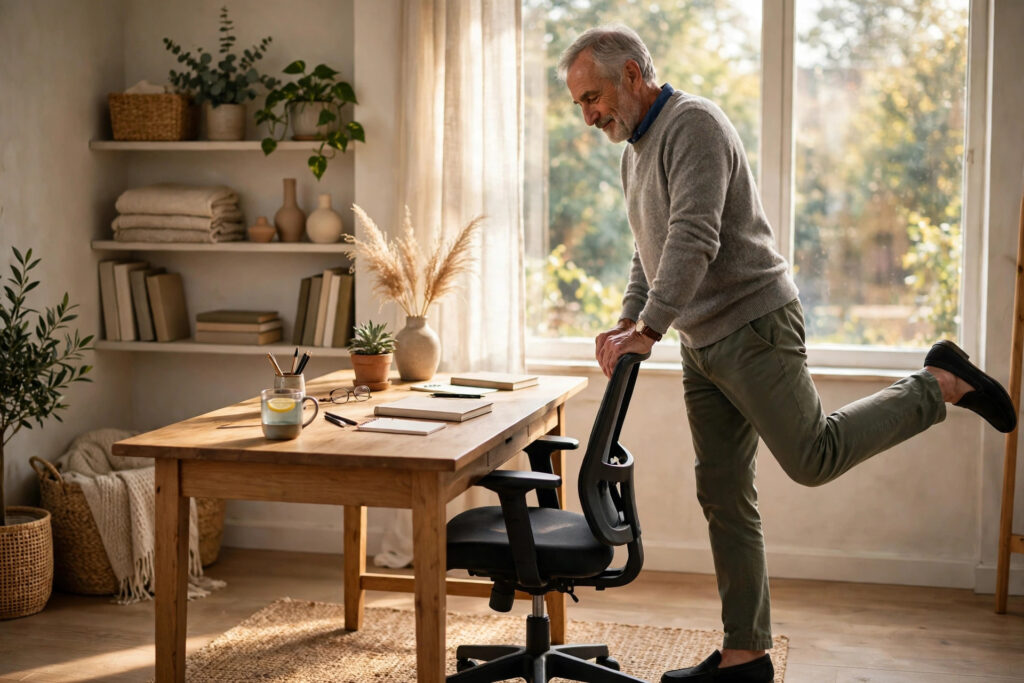
Sitting or standing for a long time
Staying in one position for hours — on a long car ride, a flight, at a desk, or on your feet — is one of the most common causes of mild ankle swelling. Without regular movement, the calf muscles pump less blood upward, and fluid settles in the lower legs. This swelling often affects both ankles, feels like tightness or heaviness, and tends to ease after you move around and rest with your legs raised.
Heat and salt
Warm weather can widen blood vessels and encourage fluid to collect in the legs, so ankles may swell more in summer or after a hot day outdoors. Eating more salt than usual can also encourage the body to hold on to fluid, with swelling following a day later. Both patterns are often mild, affect both sides, and fade as you cool down and your routine returns to normal.
A minor injury
A twisted ankle, a bump, or a strain can cause swelling limited to the injured area. This kind of swelling usually comes with a clear cause, may be tender to touch, and improves gradually over days as the injury heals. Swelling after a fall deserves extra care, especially if you cannot bear weight on the ankle — our guide on what to do after a fall explains the first steps to consider.
Venous insufficiency
When the valves in the leg veins do not work as well as they should, blood can leak backward and pool in the lower legs. This condition, called venous insufficiency, is a common cause of persistent ankle swelling in older adults, often bringing heaviness or aching after standing for a long time. It is not an emergency in itself, but it deserves a clinician’s assessment, because ongoing pressure in the veins can affect the skin over time.
New or changed medicines
Some medicines are linked to fluid retention as a side effect, including certain blood pressure medicines, some diabetes medicines, steroids, and anti-inflammatory pain relievers. If ankle swelling starts soon after a new medicine or a dose change, that timing is worth noting — but do not stop a prescribed medicine on your own. Talk to the clinician who prescribed it, or to your pharmacist, about what you have noticed.
Causes That Need a Closer Look
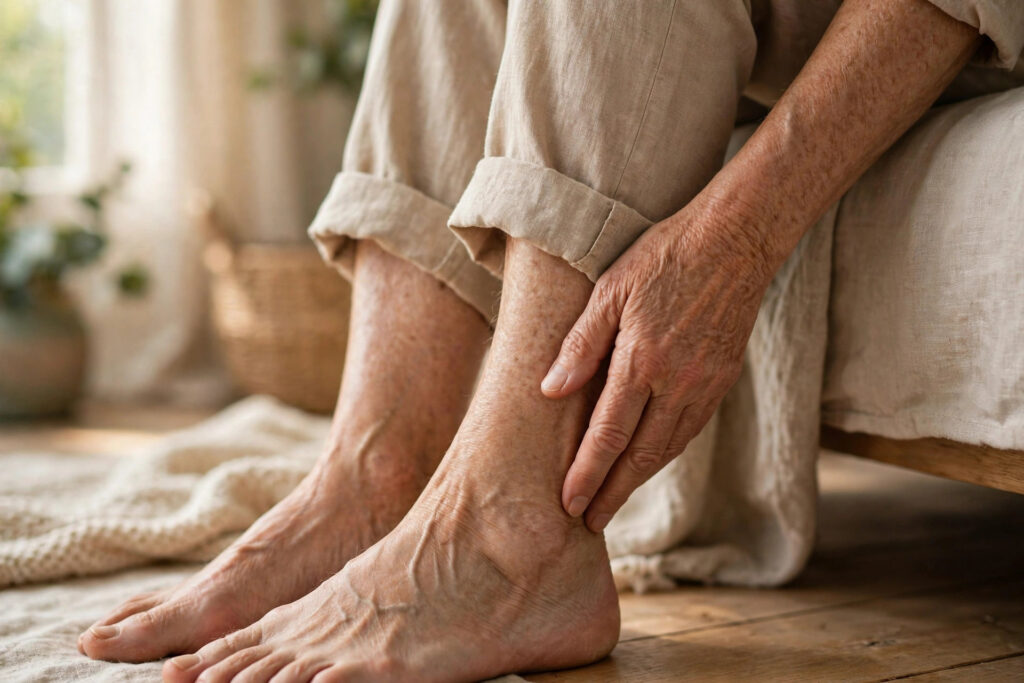
Some patterns suggest a condition that needs prompt assessment, even when the swelling itself does not feel dramatic.
Swelling linked to the heart is one example. When the heart does not pump as effectively as it should, blood can back up in the veins and fluid can collect in the legs, ankles, and feet. This kind of swelling is often in both legs and may come with breathlessness or fatigue. It does not mean every case of ankle swelling is a heart problem — far from it — but swelling with breathing difficulty should always be checked promptly.
Kidney and liver problems can also lead to fluid retention, as can problems with the lymph system, which drains fluid from tissues. These conditions usually bring other clues as well — swelling in other parts of the body, changes in urination, unusual tiredness, or abdominal swelling — and they are reasons to book a medical appointment rather than simply waiting.
A blood clot in a deep leg vein, known as deep vein thrombosis, is a rarer but important cause. It typically affects one leg, and the swelling may come with pain, tenderness, warmth, or redness. It is more likely after long immobility, surgery, or a long journey, but it can occur without an obvious trigger. Because a clot can, in some cases, travel to the lungs, one-sided swelling with pain should not be watched at home for days.
An infection of the skin or soft tissue is another cause to take seriously. If the swollen area is red, hot, and painful, and you also have a fever or feel generally unwell, that combination points toward infection rather than simple fluid retention. People with diabetes should be especially careful about foot or ankle swelling, since skin breaks and infections can develop more easily and heal more slowly.
Red Flags: Get Care Promptly

Seek urgent medical care — or emergency care if symptoms are severe — if ankle swelling comes with any of the following:
- Swelling in only one leg, especially if it starts suddenly and comes with pain, tenderness, warmth, or redness
- Breathlessness, difficulty breathing, chest pain, or chest tightness
- A heartbeat that feels noticeably faster, irregular, or pounding — see our article on heart palpitations after 60 for what to notice and report
- Swelling that starts very suddenly, is severe, or gets rapidly worse
- A swollen area that is red, hot, or painful, with a fever or feeling hot, cold, or shivery
- Swelling in other parts of the body, such as the face or abdomen, at the same time
- Dizziness, lightheadedness, or fainting alongside the swelling — see our guide to low blood pressure after 60
- Swelling that does not improve after a few days of simple self-care, or that keeps coming back
If you feel short of breath, have chest pain, or feel faint, call your local emergency number rather than driving yourself.
Everyday Habits That May Help Mild Swelling

If your swelling is mild, affects both ankles, has an obvious everyday cause, and comes without any red flags, several simple habits may help it settle. These are comfort measures, not treatments — if swelling persists, a clinician should still check it.
Move little and often. Short walks, ankle circles, and flexing your feet up and down while seated may help the calf muscles pump fluid upward. If you sit for long periods, try to stand and move at regular intervals rather than staying still for hours at a time.
Raise your legs. Resting with your feet raised on pillows, above the level of your heart, may help fluid drain from the lower legs. Even a short rest in this position after a long day on your feet can make a difference.
Watch the salt. Cutting back on obviously salty foods — processed meats, ready meals, takeaways, and salty snacks — may help reduce fluid retention over time. Drink water normally; restricting fluids without medical advice is not recommended.
Keep your legs comfortable and protect your skin. Avoid tight socks or clothing that dig into the calf or ankle. Swollen skin can stretch and become dry or fragile, so keep it clean and moisturized, watch for cracks or small cuts, and seek care promptly if the skin breaks, reddens, or becomes painful — especially if you have diabetes or poor circulation.
About compression stockings. Compression stockings may help some people with venous problems, but they are not right for everyone. If you have poor circulation in the arteries, a skin infection, or swelling from an undiagnosed cause, compression could do more harm than good. Ask a clinician whether compression is suitable for you, and what type and fit to use, before buying a pair.
The Bottom Line
Ankle swelling after 60 is common, and often it has a simple explanation: a long day sitting or standing, warm weather, a salty meal, a minor knock, or veins that no longer return blood quite as efficiently as they once did. Mild, two-sided swelling that settles with movement and leg elevation is usually less worrying than swelling that is one-sided, painful, rapid, or joined by breathlessness, chest discomfort, fever, or redness.
The pattern is the message: one leg or both, a clear trigger or not, better with rest or not, and anything else that changed. Share that pattern with a clinician, and it becomes a clear next step.
When to See a Doctor
Make an appointment with your doctor or another qualified health professional if you notice:
- Swelling that lasts more than a few days, keeps coming back, or gets worse over time
- Swelling in only one ankle or leg, without an obvious injury to explain it
- Swelling with pain, redness, warmth, or skin changes around the ankle
- Swelling that started after a new medicine or dose change
- Swelling alongside breathlessness, fatigue, or abdominal swelling
- Any foot or ankle swelling if you have diabetes, heart disease, or kidney disease
Seek urgent or emergency care right away for breathlessness, chest pain, fainting, sudden one-sided swelling with pain, or a hot, red, painful swollen area with fever. When in doubt, ask promptly rather than waiting.
Sources
- Mayo Clinic — Edema: symptoms, causes, and when to see a doctor
- National Health Service (NHS) — Swollen ankles, feet and legs (oedema)
- Cleveland Clinic — Chronic venous insufficiency
- Centers for Disease Control and Prevention (CDC) — Heart failure guidance for older adults
- American Heart Association — Heart failure and fluid build-up
- National Heart, Lung, and Blood Institute (NHLBI) — Blood clots in deep veins
This article is for general information only and is not medical advice. Talk to your doctor or a qualified health professional before making changes related to your health.