Grandparenting and Healthy Aging: Staying Active With Grandkids
There is a particular kind of tired that comes from a good afternoon with a grandchild — the happy ache in your legs after a walk to the park, the sticky hands, the story read three times because it was requested three times. For many grandparents, that tiredness feels different from ordinary fatigue. It feels earned, and it feels alive.
Time with grandchildren is not a workout plan, and it is not a prescription. But it may help older adults stay more active, more connected, and more engaged with daily life — if you choose activities that fit your energy, protect your body while you play, and know when to rest.
How Grandparenting May Support Movement, Mood, and Purpose
The U.S. Centers for Disease Control and Prevention (CDC) recommends that adults 65 and older get at least 150 minutes of moderate-intensity aerobic activity each week, plus muscle-strengthening activities on at least two days. Playful time with grandchildren will not cover all of that on its own, but it can contribute: a brisk walk to school, a game of catch, or an afternoon in the garden all count, and they tend to be easier to stick with than exercise done alone. Our guide to staying active after 60 covers walking, strength, and balance in more detail.
The mood and purpose side of grandparenting may matter just as much. Research published in the Journal of Marriage and Family followed more than 11,000 U.S. adults aged 50 and older over nearly two decades and found that grandparents who provided care to grandchildren tended to have better cognitive functioning than those who did not. The researchers suggest that caring for grandchildren may support the brain by providing social engagement and emotional meaning. That is an association, not proof of cause and effect — healthier grandparents may simply be more able to help out — but it fits a wider pattern: staying socially engaged and feeling needed is linked to better well-being.
A large Australian study of more than 12,000 adults aged 70 and older, published in 2025, found a similar pattern. Older adults who regularly engaged in childcare reported more social contacts and community participation, and men who helped with childcare weekly showed lower mortality over the follow-up period. The same study also found trade-offs: women reported more bodily aches and slightly slower walking speed, a reminder that grandparenting is physical work and that the body needs care too.
Purpose may be the quietest benefit of all. A grandchild who asks for your stories, your cooking, or simply your company gives the week a shape. Like volunteering, grandparenting offers a role — someone is counting on you, and that can be a powerful reason to get up and get out of the house.
None of this means grandparenting is good for every grandparent in every situation. Intensive, full-time caregiving can be draining, especially when it arrives without warning or support. Research from the English Longitudinal Study of Ageing found that the well-being effects depended heavily on why grandparents were helping: care given willingly, to help a grandchild grow, was linked to better quality of life, while care that felt difficult to refuse was linked to worse mood. The difference between joyful and exhausting grandparenting is often a matter of choice, limits, and rest.
Activity Ideas by Energy Level
The best grandparent-grandchild activity is one you both enjoy and that leaves you pleasantly tired, not wiped out.
Gentle days: low energy, high connection
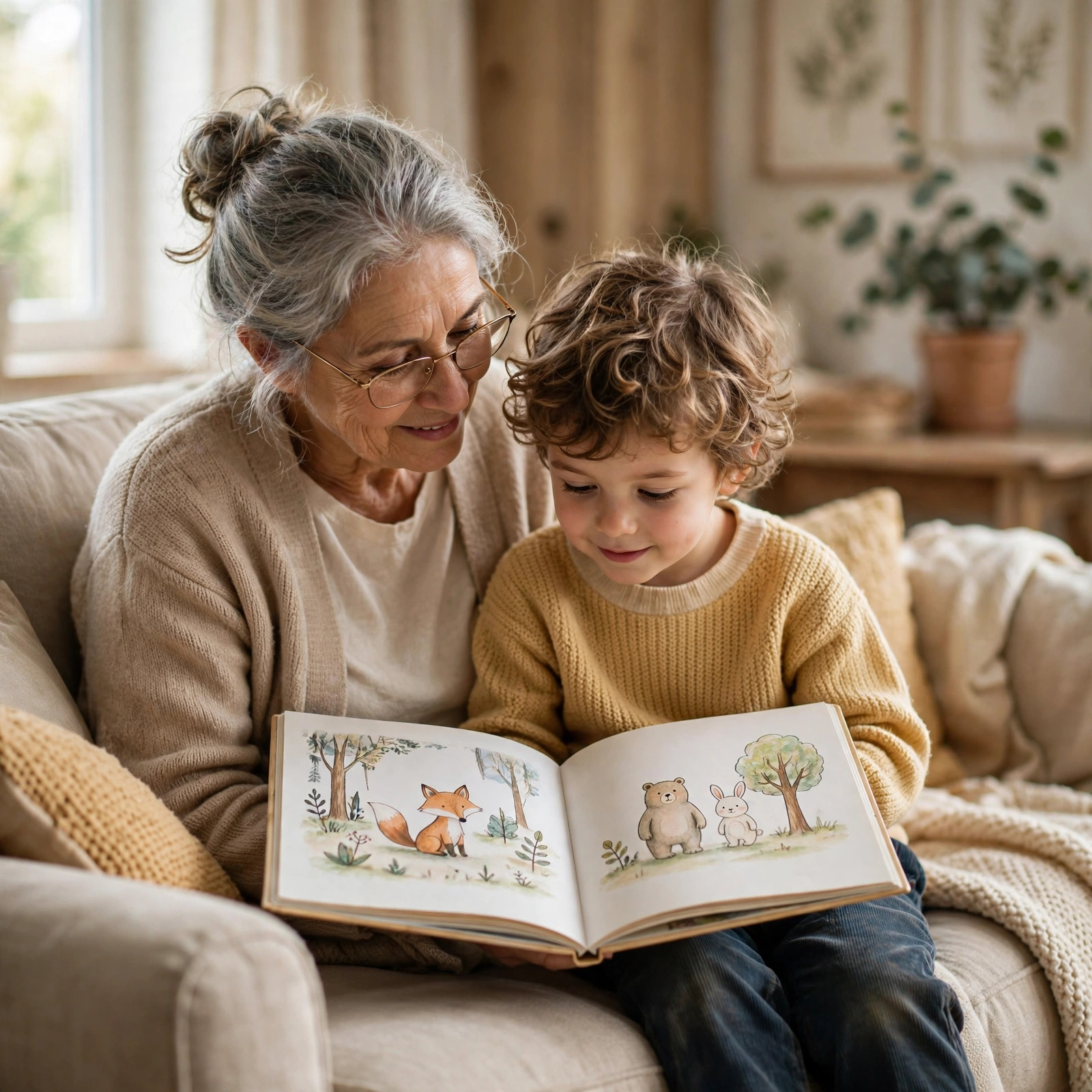
- Read together. Picture books, chapter books, or a grandchild reading to you — a calm, seated activity with real warmth.
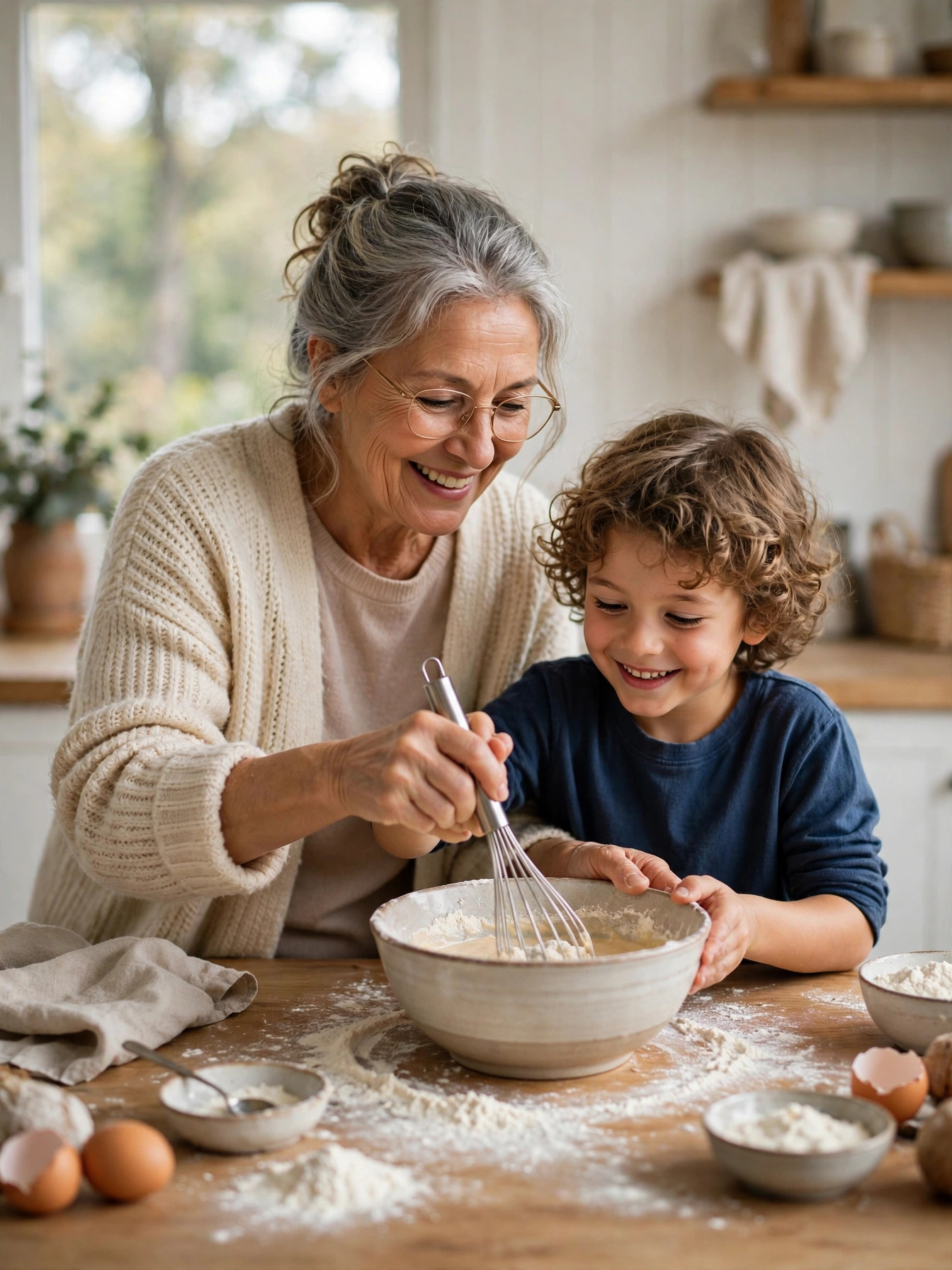
- Cook or bake a simple recipe. Stirring, measuring, and tasting are gentle movements, and the result is something to share. Let the grandchild do the messy parts while you supervise from a stool.
- Play board games, cards, or puzzles. These keep the mind engaged and the conversation flowing, and they work well on rainy days.
- Tell family stories. Children love hearing about when their parents were small. Storytelling is a gift only you can give, and it costs no energy at all.
Moderate days: moving together
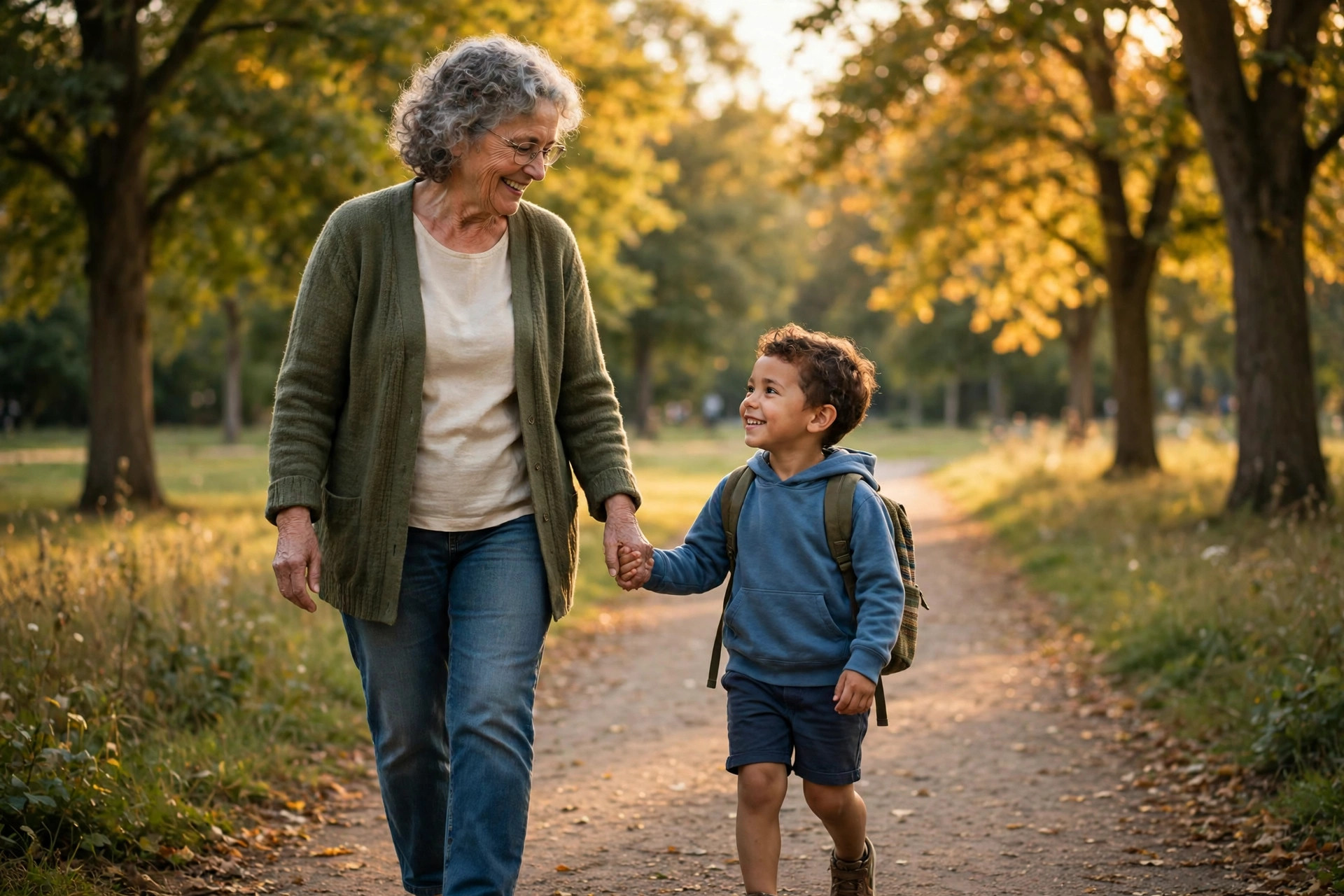
- Walk somewhere with a destination. A walk to the library, the park, or an ice cream shop feels like an adventure rather than exercise. Bring water, wear supportive shoes, and choose a route with benches.
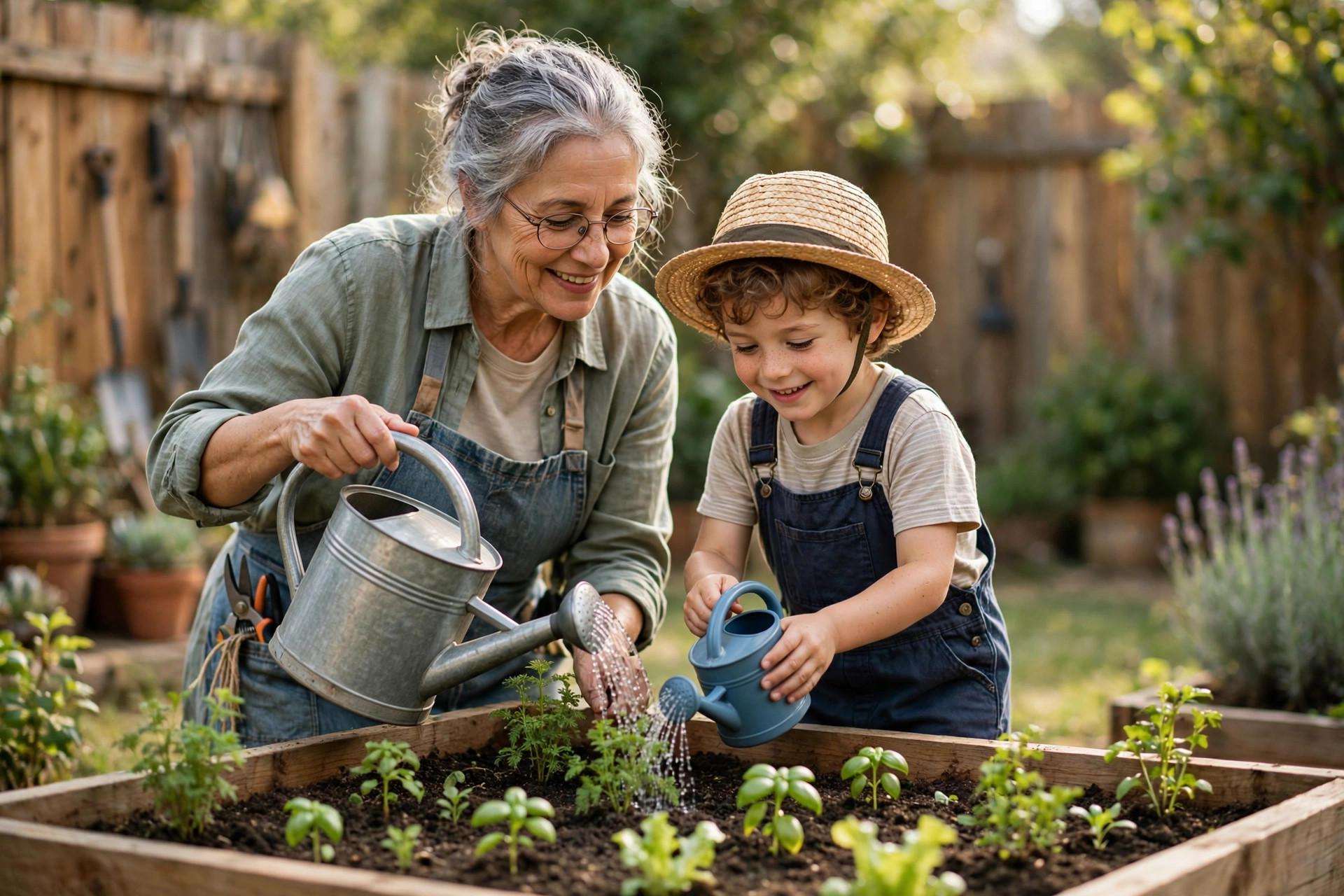
- Garden together. Digging, watering, and picking vegetables are real physical activity, and children love watching things grow. Our article on gardening and brain health explains why this hobby suits older adults so well.
- Play at the playground — your way. You do not need to climb the frame. Push a swing, supervise the slide, or join a game of catch on the grass. Bring a folding chair so you can sit between rounds.
- Explore a museum, zoo, or nature center. These outings offer walking at a gentle pace with plenty of places to sit, and they give you both something to talk about afterward.
High-energy days: when you feel strong
- Swim together. Water supports the joints and lets you move freely. Many community pools have family swim sessions and shallow areas for younger children.
- Ride bikes or scooters on a flat, paved path. Choose a route away from traffic, wear a helmet, and keep the ride short the first few times.
- Dance in the living room. Put on music from your era and theirs, and take turns choosing songs. It is joyful, it raises the heart rate, and nobody is keeping score.
Whatever the energy level, plan one main activity per visit rather than a packed schedule. Children are often happiest with one good outing and plenty of unstructured time.
Energy Management and Boundaries
Grandparenting is a marathon, not a sprint, and the grandparents who enjoy it most tend to be the ones who protect their energy.
Schedule rest into the visit. If the grandchildren are with you for the afternoon, build in a quiet hour — reading, drawing, or a short nap for younger children while you put your feet up. Rest is not laziness; it is what lets you enjoy the next hour too.
Be honest about lifting and carrying. Toddlers are heavier than they look, and a sudden lift from the floor can strain a back or a knee. Whenever possible, lift a child from a chair or a step rather than from the ground, bend your knees instead of your waist, and hold the child close to your body. It is perfectly fine to say, “Grandma’s arms need a rest — let’s hold hands instead.”
Watch the floor. Toys, shoes, and stray building blocks are tripping hazards. Ask grandchildren to help keep walkways clear — make it a game — and wear sturdy, closed-toe shoes indoors if your balance is not what it used to be.
Say no without guilt. You can love your grandchildren deeply and still decline a request. “Not today, love — Grandpa needs a quiet afternoon” is a complete answer. Research suggests that care given willingly supports well-being, while care that feels forced can drain it — so protecting your willingness is part of protecting your health.
Talk with the parents. Agree in advance on how often you will help, what hours suit you, and what you will and will not do. A short, kind conversation prevents most misunderstandings.
Keep your own routines. Your walk, your medications, your sleep schedule, and your social life still matter. Fitting grandparenting around your health routines — rather than replacing them — keeps the arrangement sustainable for years.
Staying Connected When Grandkids Live Far Away
Not every grandparent lives around the corner. Distance changes grandparenting, but it does not have to end it.
- Set a regular video call. A short call every week, at a time the child expects, builds a stronger bond than occasional long ones. Read a story over video, show them your garden, or cook the same simple recipe together in two kitchens.
- Send small things by post. A postcard, a photo, a pressed flower, or a drawing you made. Children love receiving mail, and it gives them something physical to remember you by.
- Plan visits around one special activity. A yearly trip to the beach, a holiday baking day, or a summer camping weekend gives everyone something to look forward to and builds memories that last.

Distance can also bring loneliness, especially after a visit ends and the house goes quiet again. If that feeling lingers, it is worth taking seriously — our article on loneliness after 60 explains how social isolation can affect health and what may help.
When to See a Doctor
Grandparenting should leave you pleasantly tired, not unwell. Talk to your clinician if you notice any of the following:
- Fatigue that does not lift after a good night’s sleep, or that keeps getting worse over several weeks.
- New or worsening joint pain, back pain, or stiffness after lifting, carrying, or playing.
- Shortness of breath, chest discomfort, or dizziness during activity that used to feel easy.
- Low mood, anxiety, or trouble sleeping that lasts more than a couple of weeks, especially if caregiving feels overwhelming.
- A fall, even a minor one, or growing worry about your balance when you are with small children.
Bring a brief note of what changed and when — it helps your clinician sort out whether the cause is overexertion, a medication, or something that needs attention. And if you are a grandparent raising grandchildren full time, mention that too: you may be eligible for local support services or respite care, and your clinician or a social worker can point you toward them.
Grandparenting at its best is a two-way gift. Grandchildren get attention, stories, and a steady adult who is simply glad to see them. Grandparents get movement, laughter, and a reason to stay engaged with the world. Protect your energy, choose activities that fit the day you are having, and say yes to the moments that matter.
Sources
- Centers for Disease Control and Prevention. “Older Adult Activity: An Overview.” https://www.cdc.gov/physical-activity-basics/guidelines/older-adults.html
- Caputo, J., Cagney, K. A., & Waite, L. “Keeping Us Young? Grandchild Caregiving and Older Adults’ Cognitive Functioning.” Journal of Marriage and Family, 2024. https://pmc.ncbi.nlm.nih.gov/articles/PMC11045009/
- “Childcare engagement among older adults in Australia and subsequent physical, psychosocial, and behavioral health outcomes.” Annals of Behavioral Medicine, 2025. https://pubmed.ncbi.nlm.nih.gov/41143543/
- Glaser, K., and Di Gessa, G. “Grandparental childcare and subjective well-being: The role of activities and reasons for care.” Social Science & Medicine, 2025. https://pubmed.ncbi.nlm.nih.gov/39862799/
This article is for general information only and is not medical advice. Talk to your clinician about any health concerns.