Night Sweats and Sleep After 60: Causes and What Helps
Waking up with damp nightclothes and clammy sheets is unpleasant — and after 60, it is a complaint many people quietly live with. One sweaty night after a warm evening is usually nothing to worry about, but when drenching sweats keep waking you up, night after night, they fragment your sleep and leave you tired the next day. The causes range from a bedroom that is too warm to hormone changes, a new medicine, or an infection. This article explains what night sweats are, why they often appear after 60, which habits may help, and the warning signs that should prompt a visit to your doctor.
What Are Night Sweats?
Night sweats are repeated episodes of very heavy sweating during sleep, heavy enough to soak your nightclothes or bedding. That is the definition used by the Mayo Clinic, and the “soaking” part matters: light perspiration on a warm night is normal, but true night sweats drench you even when the room feels cool, and they often wake you up.
It helps to separate two situations: overheating from a warm room, a heavy duvet, or thick pyjamas — fix the environment and the sweating usually stops — and sweating that happens in a cool room, under light bedding, night after night. That pattern is more likely to be linked to a change in your body and deserves a closer look.
The Mayo Clinic notes that night sweats usually happen alongside other symptoms, such as fever, weight loss, pain in a particular area, a cough, or diarrhoea. What matters most is the pattern — how often the sweats happen, how heavy they are, and whether anything else changed at the same time, such as a new medicine.
Why Night Sweats Often Appear After 60
Sleep itself changes with age: deep sleep becomes lighter and shorter, and many people wake more easily during the night, as described in our guide to how sleep changes after 50. Lighter sleep means you are more likely to be woken by a hot flush that a younger, deeper sleeper might have slept through.
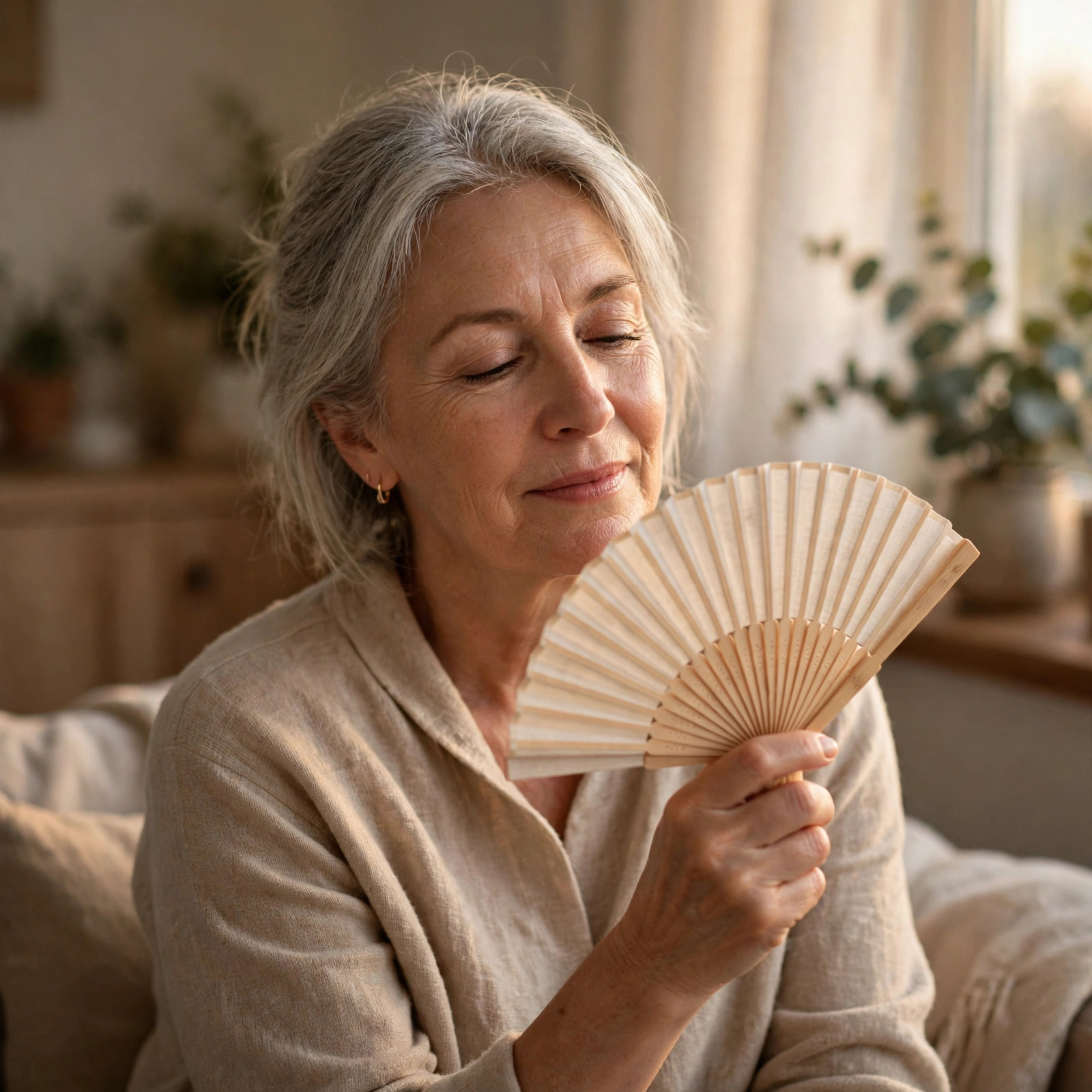
Hormone changes are the other big piece of the picture, especially for women. The National Institute on Aging explains that hot flashes and night sweats — together called vasomotor symptoms — are among the most common symptoms of the menopausal transition. As estrogen levels fall, the brain’s temperature control becomes more sensitive, and the body may overreact to small rises in temperature by sweating heavily to cool down. Cleveland Clinic notes that as many as 3 in 4 people have hot flashes in the years leading up to menopause, and for many women these symptoms continue into their 60s. Most hot flashes last between 30 seconds and 10 minutes, according to the National Institute on Aging — brief, but enough to wake you.
Men are not exempt either: testosterone declines gradually with age, and some men notice hot flashes or night sweats, particularly during prostate treatment. None of this means night sweats are simply “part of getting older” — it means there are more possible explanations to sort through.
Common Causes of Night Sweats After 60
A bedroom or bedding that is too warm
This is the simplest cause and the first one to rule out. A room that feels fine at bedtime can grow warm overnight, especially if the heating comes on and the duvet traps body heat. If your sweats stop on cooler nights or under lighter covers, the environment is the likely explanation — see our guide to the best bedroom temperature for sleep in older adults.
Hormone changes
For women, the menopausal transition is the most common cause. The National Institute on Aging notes it most often begins between the ages of 45 and 55, but symptoms can persist for years afterwards, and some women still have hot flashes and night sweats well into their 60s. An overactive thyroid can also disturb temperature control in both women and men, and it is easy to test for.
Medicines
Many commonly used medicines list sweating as a side effect: the NHS names some antidepressants, steroids, and painkillers, and the Mayo Clinic and Cleveland Clinic lists add medicines for low blood sugar, some blood pressure medicines, hormone therapies, and certain migraine medicines. If your sweats began within a few weeks of starting a new medicine or changing a dose, tell the clinician who prescribed it. Never stop a prescribed medicine on your own — a clinician may adjust the dose, change the timing, or switch you to an alternative.
Infections and illness
Infections are a well-known cause. The Mayo Clinic lists conditions such as tuberculosis, inflammation of the heart valves, bone infection, and HIV among the possibilities, and notes that night sweats often arrive with fever or other symptoms. Most infections that cause night sweats are treatable once found — but sweats with a persistent fever, a cough that will not clear, or unexplained weight loss should be checked promptly rather than watched for months.
Anxiety, stress, and sleep apnoea
Anxiety and stress can raise body temperature and trigger sweating at night, and worrying about another bad night can itself make sleep lighter. Obstructive sleep apnoea — breathing that pauses repeatedly during sleep — is also listed by the Mayo Clinic as a possible cause. If you snore loudly, wake up gasping, or feel unrefreshed despite a full night in bed, mention it to your clinician: apnoea is common after 60 and is often treatable.
Alcohol, spicy food, and low blood sugar
Alcohol can disturb temperature control and fragment sleep, and some people find spicy food triggers sweating at night. Low blood sugar overnight is another recognised cause, particularly for people who take insulin or other glucose-lowering medicines — if you have diabetes and wake up sweaty, mention the pattern at your next appointment.
Evening and Bedroom Habits That May Help
You cannot control every cause of night sweats, but you can control the conditions you sleep in — and for many people, that is enough to turn drenching nights into merely warm ones.
Cool the room before bed. A slightly cool bedroom helps your body temperature fall naturally as you drift off. Open a window in the evening, or set the heating to switch off before bedtime. A small fan can help too, and the gentle air movement may make a sweaty night more bearable.
Choose light, breathable bedding. Cotton or linen sheets and a light duvet or layered blankets let heat escape and make it easy to push a layer aside. Keeping a spare dry top and a glass of water within reach means a 3 a.m. sweat does not have to mean a fully broken night.
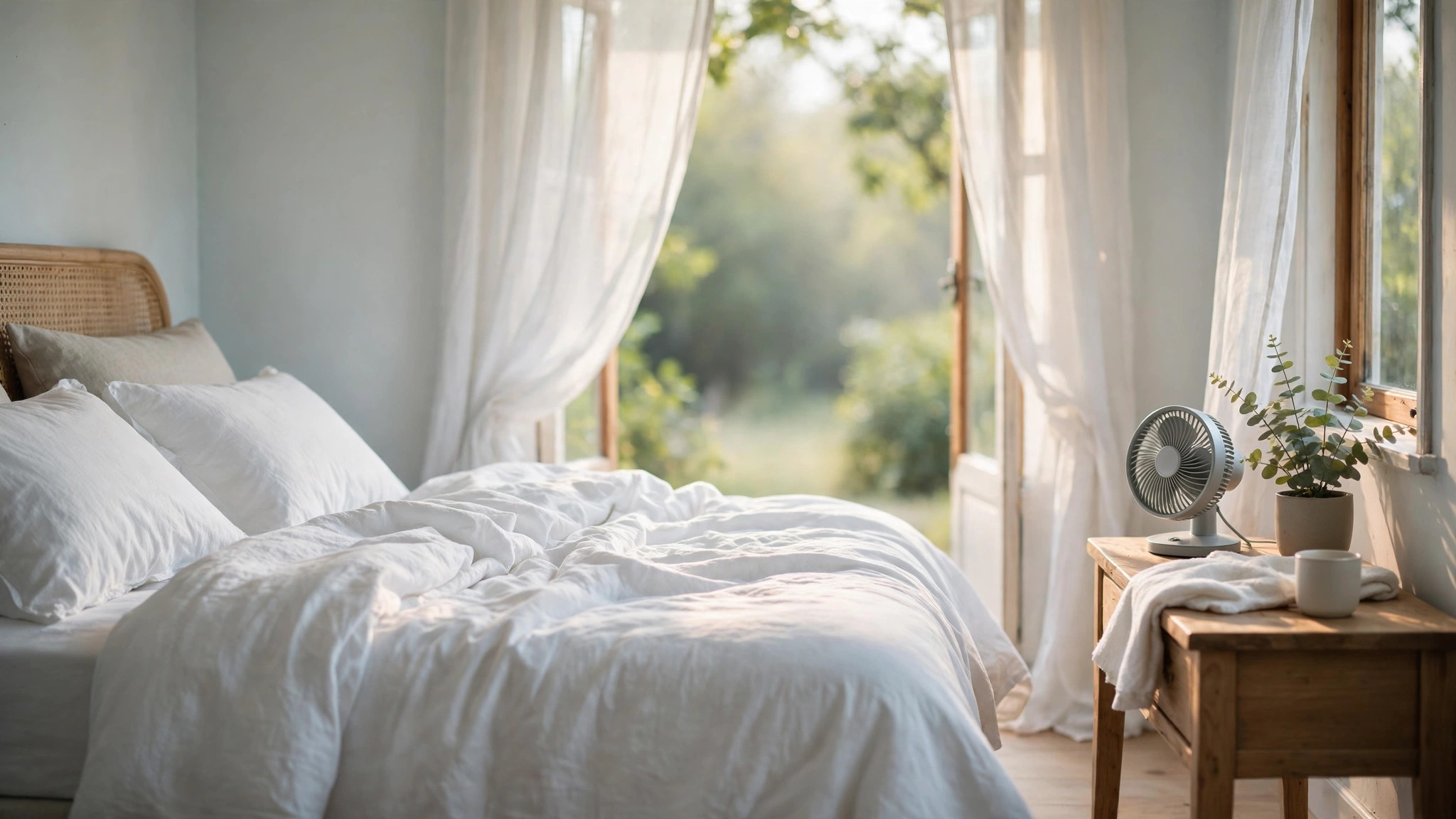
Keep evenings calm and cool. Heavy meals, spicy food, caffeine late in the day, and alcohol in the evening are all linked to lighter, more broken sleep, and some people find they make night sweats worse. A lighter evening meal, finished a few hours before bed, and a warm (not hot) shower an hour before bedtime may help your body cool down gradually. Our guide to evening habits that disturb sleep covers the routine changes that matter most.
Wind down the same way each night. A regular wind-down — dim lights, a book or gentle stretching, screens put away — signals to your body that sleep is coming. If worries keep you awake after a sweat, get up for a few minutes, sit somewhere cool and dim, and return to bed when you feel drowsy again. If you regularly find yourself waking up at 3 a.m., that pattern may be worth a closer look on its own.
Track the pattern for two weeks. Each morning, note whether you sweated, how heavy it was, and what you ate, drank, or took the evening before. Patterns often show up within a fortnight, and the notes give your clinician something concrete to work with.

When to See a Doctor
Most night sweats have a harmless or manageable explanation, but some patterns should be discussed with a clinician. The NHS advises seeing a GP if you regularly wake up with soaking wet sheets, if the sweats wake you or worry you, or if they come with a very high temperature, a cough, or diarrhoea.
Book an appointment promptly — and seek same-day or urgent care if the symptom is severe — if you notice any of the following:
- Drenching sweats that persist for weeks, especially if they started suddenly and do not improve in a cool room with light bedding.
- Fever that keeps coming back, or sweats together with a cough, diarrhoea, or feeling hot and shivery.
- Unexplained weight loss — losing weight without trying, alongside night sweats, is a sign the NHS specifically highlights.
- Sweats with chest pain, breathlessness, or a racing heartbeat. Sudden heavy sweating with these symptoms needs urgent attention.
- A new lump, pain in one area, or any other new symptom that appears at the same time as the sweats.
- Sweats that began soon after a new medicine, or sweats in someone with diabetes that may be linked to low blood sugar overnight.
When you go, bring your two-week note of when the sweats happen, a list of your medicines, and a note of any other symptoms. That helps your clinician decide quickly whether simple tests — such as blood tests or a thyroid check — are worth doing, or whether a change of medicine may help. Clinicians hear about night sweats often, and it is a symptom they take seriously.
The Bottom Line
Night sweats after 60 are common, and they are often linked to something straightforward: a warm room, hormone changes, a medicine, or a restless evening. Cooling the bedroom, lightening the bedding, and keeping evenings calm may help you sleep through the night more often. But drenching sweats that persist for weeks, or sweats that arrive with fever, unexplained weight loss, or chest pain, are worth mentioning to a clinician — a short conversation may find the reason, and a way forward.
Sources
- Mayo Clinic. “Night sweats: Causes.” https://www.mayoclinic.org/symptoms/night-sweats/basics/causes/sym-20050768
- National Institute on Aging (NIH). “What Is Menopause?” https://www.nia.nih.gov/health/menopause/what-menopause
- Cleveland Clinic. “Night Sweats: Menopause, Other Causes & Treatment.” https://my.clevelandclinic.org/health/symptoms/16562-night-sweats
- Cleveland Clinic. “How To Reduce Hot Flashes at Night.” https://health.clevelandclinic.org/hot-flashes-at-night
- NHS. “Night sweats.” https://www.nhs.uk/conditions/night-sweats/
This article is for general information only and is not medical advice. Talk to your clinician about any health concerns.