Best Mini Exercise Bikes for Seniors: Pedal Exercisers at Home
Some days, getting out for a walk is not practical. The weather turns, knees feel stiff, or energy is low — and the couch starts to look like the plan. A mini exercise bike, also called a pedal exerciser, offers a middle path: gentle, seated movement at home, in your own chair, while you watch the news or listen to the radio.
These machines are not a replacement for walking or a full-size exercise bike — just a low, easy first step to keep legs moving on days when a bigger workout is not on the cards. This guide covers the types available, what to look for before you buy, and how to use one safely after 60.
As an Amazon Associate, we earn from qualifying purchases.
What is a mini exercise bike?
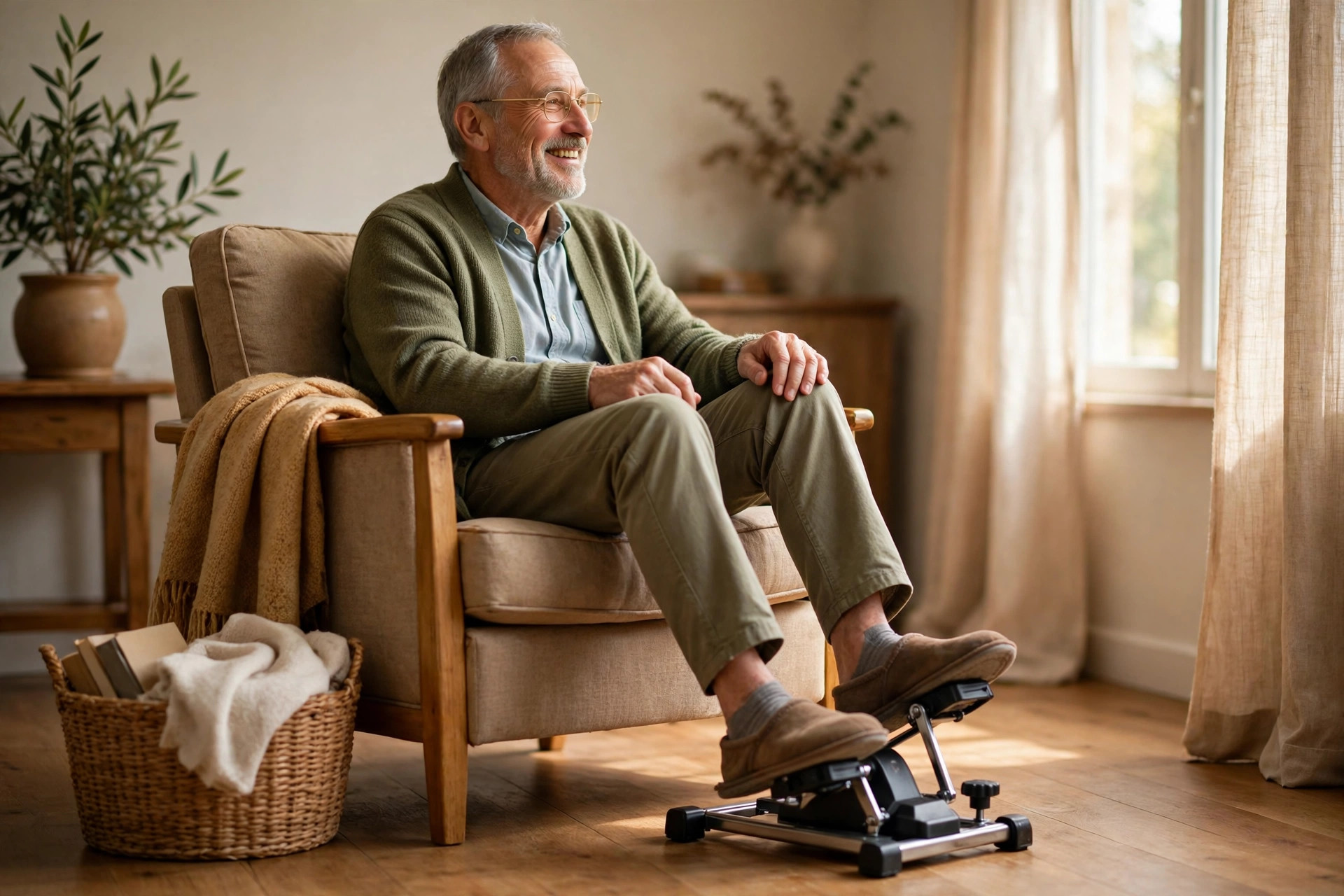
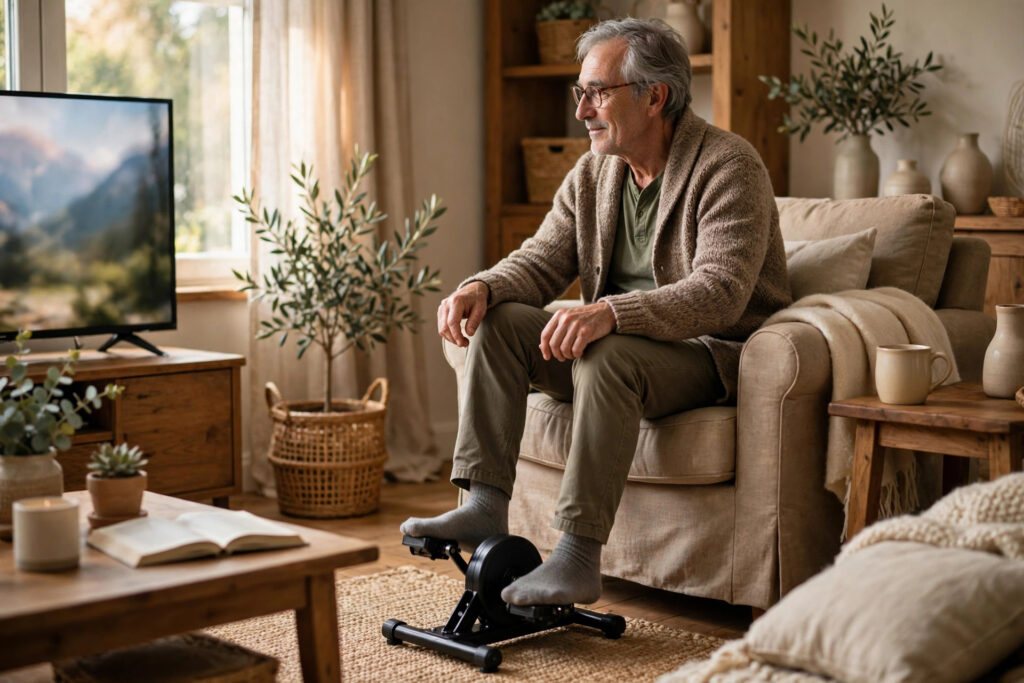
A mini exercise bike is a compact pedal unit with no seat, no handlebars, and no frame to climb onto. You place it on the floor in front of a sturdy chair and pedal with your feet, or set it on a table and pedal with your hands. Most are about the size of a small suitcase and light enough to slide under a bed.
They suit people who want gentle cardio without standing or balancing, who find a full-size bike hard to mount, or who are rebuilding strength after illness, surgery, or a long inactive stretch. They also suit small homes — no spare room required.
The movement is low-impact: feet stay on the pedals, so joints take far less pounding than walking on pavement. Gentle pedaling may help keep leg muscles active and support circulation.
Keep expectations honest. How hard it works you depends on resistance and time. The CDC recommends at least 150 minutes of moderate-intensity activity a week, in smaller chunks if needed. A pedal exerciser fits that pattern: ten minutes here, fifteen there. For more seated movement, see our 15-minute chair exercise routine.
The main types, explained
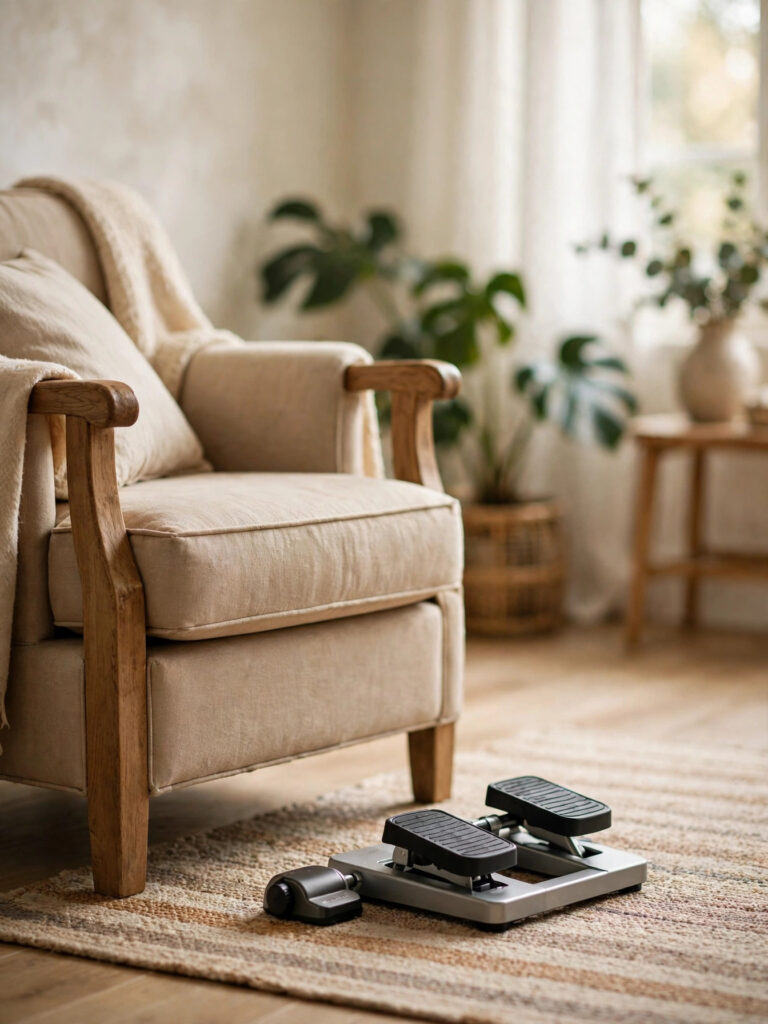
Floor pedal exercisers. The classic design: two pedals on a small frame that sits on the floor, pedaled from your own chair. The simplest and usually the lightest type, and many can also sit on a table for arm pedaling. For one straightforward machine for legs — and occasionally arms — start here.
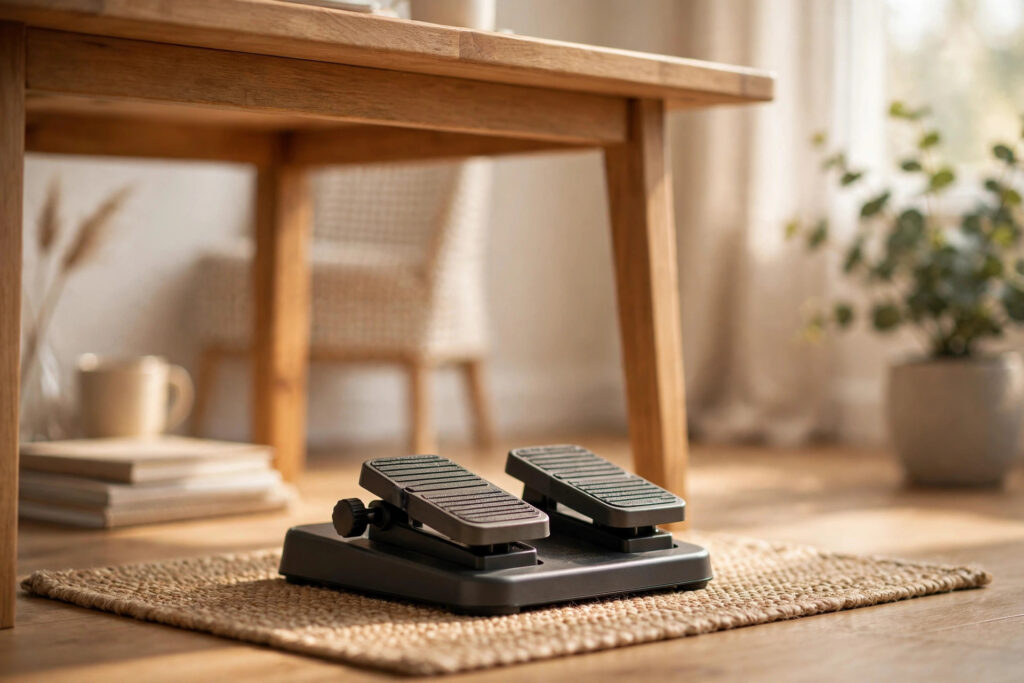
Under-desk pedal cycles. Built to slide under a desk or table so you can pedal while you read or work. Lower than floor models, with a shorter pedal arc so knees do not hit the desktop. Measure the space under your desk first: sit at it, lift one knee as if pedaling, and check the clearance.
Under-desk ellipticals. Instead of a circular stroke, these glide your feet along a flatter, oval path. Many people with sensitive knees find this more comfortable, because the joint bends through a smaller range. The trade-off is a slightly larger footprint — buy from a seller with a fair return policy if you cannot test one first.

MERACH Under Desk Elliptical
Pedal while sitting at your desk — exercise that doesn’t feel like exercise.
Motorized (electric) pedal exercisers. A small motor turns the pedals for you, at a speed set with a dial or remote. They suit people whose legs are very stiff or weak, or who are recovering and cannot yet push the pedals alone. They need a power outlet, weigh more, and cost more — but for the right person, powered motion makes daily movement possible.
How to choose: a 7-point checklist
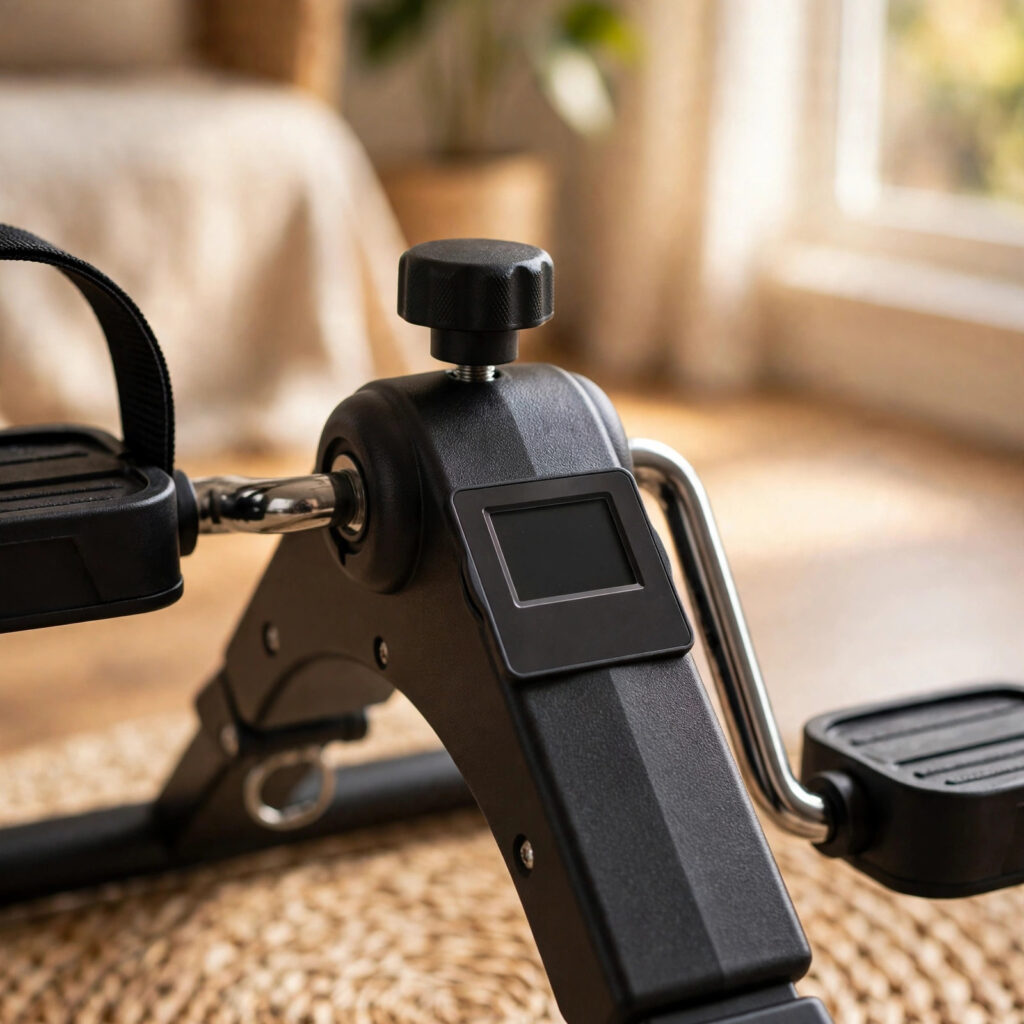
1. Resistance type and noise. Magnetic resistance is the smoothest and quietest, with fine control. Friction (tension-knob) resistance is simple and cheap, but can feel uneven as parts wear. Belt-drive models also run quietly. If you pedal near someone watching television, magnetic is the safer bet — and read reviews that mention sound, since “whisper-quiet” on a box means very little.
2. Stability and a non-slip base. The most important safety feature. Look for a wide base, rubber feet or suction-style grips, and enough weight that the unit stays put. A machine that slides forward on a smooth floor is a fall risk.
3. Pedal size and comfort. Pedals should fit your whole foot, with a textured surface or strap to stop slipping. Check the dimensions in the specifications if you have large feet or sore toes. Adjustable straps help if more than one person will use it.
4. Display and monitor. A small screen showing time, distance, and pedal count turns vague effort into progress you can track. Choose large, high-contrast numbers readable from your chair without glasses. Treat calorie estimates as rough guides.
5. Weight and portability. A lighter machine is easy to carry between rooms. A heavier one is more stable but harder to lift onto a table for arm use. A carry handle helps; if you move it yourself, lighter wins.
6. Desk clearance and fit. For under-desk use, measure twice: the pedal at its highest point must clear the underside of the desk with your knee bent. Low-profile models are made for this — if the numbers are close, choose the lower one.
7. Assembly and upkeep. Many arrive mostly assembled; some need a few bolts and the pedals screwed on. Check whether tools are included. Afterwards, wipe the frame now and then and check bolts stay tight.
A simple starter routine
Week 1 — get comfortable. Sit in a sturdy chair, feet flat on the pedals, resistance at its lowest. Pedal gently for a few minutes, once or twice a day. The goal is simply to learn the motion and check that your knees and chair feel fine.
Week 2 — add a little time. Build to a little longer each session, still at low resistance. Keep breathing easy — you should be able to hold a conversation while pedaling. The NHS describes moderate activity as raising your heart rate while still being able to talk, but not sing. Use that “talk test.”
Week 3 and beyond — add gentle resistance. Turn the dial up one small step and see how your legs feel the next day. Mild muscle tiredness is normal when you start; sharp joint pain is not. Over weeks, work toward short sessions adding up to 30 minutes on most days — the CDC’s 150-minutes-a-week target, reached in pieces.
Pair pedaling with something you already enjoy: the morning news, a radio program, a phone call with family. Pedaling covers the aerobic side only — add strength and balance work on at least two days a week, as the NHS and CDC recommend. Our strength training at home after 60 guide pairs well with a pedal routine.
Safety tips for older adults
- Anchor your chair. Use a heavy, stable chair with four solid legs — not a wheeled office chair or a folding chair. Place it against a wall if it slides backward.
- Start at the lowest resistance. Always begin at the easiest setting, even if you pedaled harder yesterday. Cold muscles and stiff joints need a warm-up.
- Keep your feet flat and your knees soft. Let the pedals carry your feet through the full circle. If your knees ache, lower the resistance or shorten the session.
- Mind hip and knee replacements. If you have had a joint replacement, follow your surgeon or physical therapist’s advice about range of motion and resistance — only your clinician can confirm what is safe for you.
- Wear supportive shoes. Bare feet or loose slippers can slip off pedals. Flat, closed shoes with a grippy sole are the safest choice, even indoors.
- Stop if something feels wrong. Dizziness, chest discomfort, unusual shortness of breath, or sudden sharp pain are all reasons to stop immediately and sit quietly. Do not push through them.
- Keep the area clear and stand up slowly. Cords, rugs, and pets underfoot are trip hazards when you stand up after pedaling. Stand slowly — blood pressure can dip briefly after seated exercise.
Quick answers to common questions
Are pedal exercisers good for seniors? For many older adults, yes. They offer low-impact, seated movement that may help maintain leg strength and circulation, with no balance demands and no need to leave the house. Best as one part of an active routine, alongside walking and strength work.
Can I use a mini exercise bike with arthritis? Many people with arthritis do, because the motion is smooth and the resistance can be set very low. Start gently, keep sessions short, and stop if a joint stays sore after you finish. Ask your doctor or physical therapist if you are unsure whether pedaling suits your joints.
How is a mini bike different from a full-size exercise bike? A full-size bike has a seat, handlebars, and a flywheel, and supports longer, harder workouts — see our exercise bike buying guide for seniors if you are weighing the two. A mini bike trades intensity for size, price, and simplicity — and many households use it more often, because it is always within reach.
When to see a doctor
A pedal exerciser is gentle, but check with your clinician before starting if any of the following apply:
- You have a heart condition, angina, or a history of heart attack or stroke
- You have uncontrolled high blood pressure or diabetes
- You have had a knee or hip replacement, or you are recovering from surgery
- You have balance problems, dizziness, or a history of falls
- You feel chest pain, unusual breathlessness, or faintness during activity
- You take medication that affects heart rate, blood pressure, or balance
Tell your clinician how you plan to use it and for how long. Most are glad to see a patient choosing gentle, seated activity, and can confirm a safe starting point quickly.
The bottom line
The best mini exercise bike for seniors is not the one with the most features. It is the one that is stable on your floor, quiet enough for your home, comfortable for your knees, and simple enough that you will actually use it tomorrow. Start at the lowest resistance, build up in short sessions, and let the habit grow slowly. Small, regular movement — a few minutes at a time, most days — beats an ambitious machine that ends up gathering dust. For ideas beyond pedaling, see staying active after 60.
Sources
- Centers for Disease Control and Prevention, “Adult Activity: An Overview” — https://www.cdc.gov/physical-activity-basics/guidelines/adults.html
- National Health Service (UK), “Physical activity guidelines for older adults” — https://www.nhs.uk/live-well/exercise/physical-activity-guidelines-older-adults/
- National Institute on Aging, “Exercise and Physical Activity” — https://www.nia.nih.gov/health/exercise-and-physical-activity
- Mayo Clinic, “Exercise: 7 benefits of regular physical activity” — https://www.mayoclinic.org/healthy-lifestyle/fitness/in-depth/exercise/art-20048389
- Cleveland Clinic, “Benefits of Exercise” — https://health.clevelandclinic.org/benefits-of-exercise
This article is for general information only and is not medical advice. Talk to your clinician about any health concerns.