Best Ankle Weights for Seniors: A Safe Buying Guide
Ankle weights are soft cuffs that strap around each ankle and add a little resistance to your movements. They are small, inexpensive, and easy to store.
But they are easy to misuse: for adults over 60, helpful versus harmful often comes down to how you use them, not which pair you buy. In a controlled leg exercise, a light ankle weight may help build hip and leg strength; on a long walk, the same weight can change how you move and stress your knees, hips, and back.
This guide covers what ankle weights are, what to look for, safe use after 60, and when to ask a clinician first.
As an Amazon Associate, we earn from qualifying purchases.
What ankle weights are and how they work
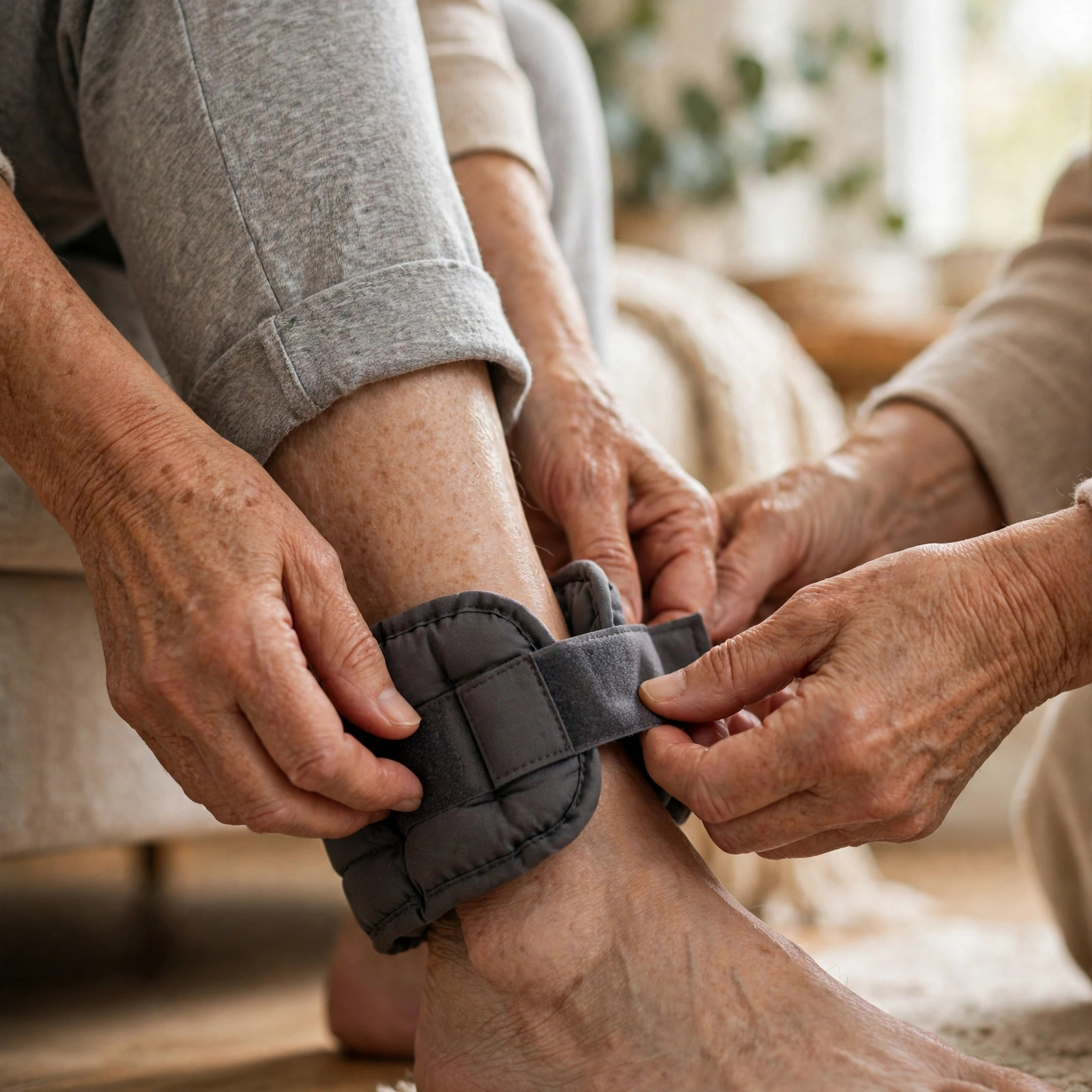
An ankle weight is a padded cuff that fastens around your ankle, usually just above the ankle bone. Inside is ballast — commonly small steel pellets or sand — that adds resistance when you move your leg. Because the weight sits at the far end of your leg, even a light cuff makes your hip and thigh muscles work noticeably harder to lift and control the leg against gravity.
That placement is both the point and the catch: a weight close to your body moves with your center of gravity, while a weight at your ankle acts like a longer lever, multiplying forces on the joints. Hence ankle weights suit slow, deliberate strength movements — not everyday walking.
Used well, they support strength work that matters after 60: the CDC recommends muscle-strengthening activities on at least two days a week for adults 65 and older, alongside aerobic activity and balance work.
The most important safety rule: strength exercises, not walking
Save ankle weights for controlled strength exercises, and take them off for walking, jogging, or aerobic workouts.
Physical therapist Terry Downey of the Harvard-affiliated Spaulding Rehabilitation Network has warned against wearing ankle weights while walking or during aerobic exercise, because they force you to rely more on the quadriceps (fronts of the thighs) and less on the hamstrings (backs of the thighs), which may contribute to muscle imbalance, and because they pull on the ankle joint, posing a risk of tendon or ligament injuries to the knees, hips, and back. Harvard Health, by contrast, describes ankle weights as helpful for leg lifts, where the added load makes the targeted muscles work harder against gravity.
The difference is control: a leg lift is one deliberate movement you can stop the moment form slips, while a walk repeats the same movement thousands of times, swinging extra weight at the end of your leg with every step. For a harder walk, walk faster, add a gentle hill, or use walking poles instead.
What to look for when buying
1. Start light: 1 lb or less per ankle
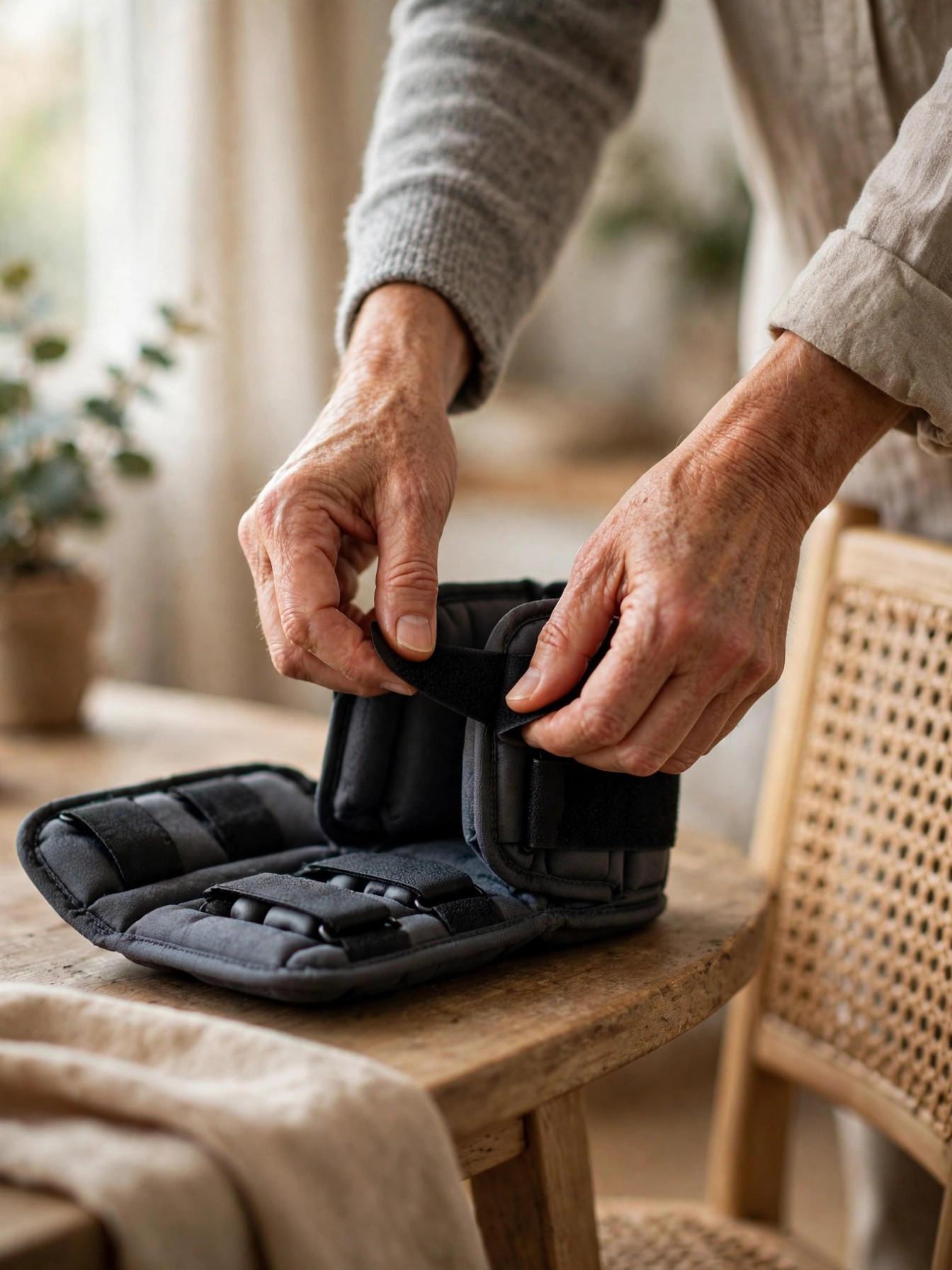
For most beginners over 60, the right starting weight is 1 lb or less per ankle — plenty for the first weeks. The CDC’s Growing Stronger program recommends adjustable ankle weights because they let you add weight gradually, in half-pound or one-pound steps. Test: you should complete repetitions slowly and with good form, feeling the muscles work without pain, limping, or lost balance.
2. Adjustable beats fixed for most people
Adjustable ankle weights have removable weight bars or pouches, so you can change the load in small steps. Fixed-weight cuffs come in one set weight per pair. Adjustable pairs usually cost a little more, but they are the better buy: you start light, progress slowly, and avoid buying a second pair months later.
3. Fit and comfort matter more than looks
A good cuff feels snug but not tight, sits above the ankle bone, and stays put through leg lifts without sliding over your foot. Look for inside padding so the ballast does not press into your ankle bone or Achilles tendon, and a wide strap that spreads pressure.
4. Closure types: hook-and-loop is the easiest
- Hook-and-loop (Velcro-style) straps: easiest to put on, take off, and adjust, especially with weak grip or hand arthritis.
- Buckle closures: secure and durable, but harder to fasten one-handed.
- Slip-on sleeves: simple and comfortable, but not adjustable, and hard to pull over the foot.
For most people over 60, a wide hook-and-loop strap is most practical — and any closure should be easy to remove quickly the moment something feels wrong.
5. Materials, care, and weight labeling
Most cuffs are neoprene or padded fabric. Neoprene is durable and wipes clean but can feel warm and irritate sensitive skin; fabric breathes better but may absorb sweat and need washing. Either is fine if stitching looks strong around the strap and pockets.
Also check weight labeling: a pair labeled “2 lb” may mean 1 lb or 2 lb per ankle. Confirm the per-ankle weight before buying, and weigh both cuffs on a kitchen scale to be sure they match.
Types of ankle weights at a glance
| Type | How it works | Best for | Watch out for |
|---|---|---|---|
| Adjustable (removable bars or pouches) | Add or remove small weight units | Beginners progressing slowly | Pockets must close firmly |
| Fixed-weight cuffs | One set weight per pair | Simple, no-fuss use | You may outgrow them |
| Soft wrap cuffs | Flexible wrap around the ankle | Comfort and a snug fit | Less adjustability |
For most seniors starting out, an adjustable pair starting at 1 lb or less per ankle with a wide hook-and-loop strap is most forgiving.
How to use ankle weights safely after 60

Start with body weight first: if you are new to strength work, practice the movements without weights for a week or two, then add the lightest weight once the movement feels steady.
Pick the right exercises. Ankle weights suit slow, supported movements: seated knee extensions, side-lying leg lifts, standing leg lifts holding a chair or countertop, and seated marching. Move slowly — roughly two counts up, four counts down, as the CDC’s Growing Stronger program advises.
How much, how often. Aim for strength sessions on at least two days a week, with a rest day between sessions for the same muscles. Mayo Clinic’s general guidance is a weight heavy enough to tire muscles after about 12 to 15 repetitions, one set per exercise. Start with one set of 8 to 12 slow repetitions, adding weight only when you finish with good form and no joint pain.
Stop rules. Take the weights off and rest if you feel sharp joint pain, pain that changes the way you move, swelling, numbness, dizziness, or unsteadiness. Mild muscle effort is expected; joint pain is not a goal. If soreness is still above its usual level the next day, you did too much — go back to the previous weight or to body weight only. Keep walking separate: walk unweighted, then exercise as a separate session.
Who should check with a clinician first

Talk to your doctor or physical therapist before buying if any of these apply: balance problems or falls; knee, hip, or ankle arthritis or joint pain; a joint replacement, recent surgery, or recent injury; heart conditions, uncontrolled blood pressure, or diabetes with nerve damage in the feet; osteoporosis with fractures; or use of a walking aid or advice to limit exertion. Extra weight at the ankle changes how your leg moves, may worsen unsteadiness, and increases leverage on sensitive joints.
If you have a chronic condition, take regular medication, or are not sure, ask your doctor or physical therapist — they can check your gait, joints, and balance and advise whether ankle weights suit you.
Ankle weights vs. resistance bands vs. dumbbells
Resistance bands are gentler on joints and often better for people with joint pain or balance concerns — see best resistance bands for seniors. Dumbbells strengthen the arms and upper body, which ankle weights cannot do — see strength training at home after 60. Ankle weights are the most targeted option for hip and leg lifts, but do nothing for arms, balance, or walking fitness, and must not be worn on walks. Balance work deserves its own place too — see balance exercises to prevent falls.
Common mistakes to avoid
- Starting too heavy. A weight you can lift once is not a weight you can control for a full set.
- Wearing them on walks. The riskiest common use — walk unweighted; lift weighted.
- Wearing them all day. Hours of wear add fatigue and joint loading without benefit.
- Buying on weight alone. A cuff that slips or pinches will sit unused.
Shopping checklist
- Per-ankle starting weight of 1 lb or less (adjustable if possible)
- Weight can increase in half-pound or one-pound steps
- Cuff stays put above the ankle bone through slow leg lifts
- Padding over the ankle bone; no pinching or rubbing
- Closure you can fasten and release easily
- Per-ankle weight confirmed — not just the pair total
- A clinician’s go-ahead if you have balance, joint, heart, or bone concerns
One example that fits this checklist is the adjustable pair below. Check the starting-weight and safety advice above before ordering, and keep walks unweighted.

Signature Fitness Adjustable Ankle/Wrist Weights (2-lb Pair)
Adjustable straps that let you start light for slow, controlled leg lifts at home.
When to see a doctor
See a clinician promptly if you notice: chest pain or pressure, unusual shortness of breath, dizziness, or fainting during or after exercise; sharp, swelling, or persistent joint pain; pain, numbness, or tingling that does not settle after you stop exercising; a fall, near-fall, or new unsteadiness after starting ankle weights; or swelling, redness, or skin breakdown where the cuff sits. Seek urgent care for chest pain, fainting, severe shortness of breath, or sudden weakness or numbness.
The bottom line
Ankle weights can be a practical, low-cost addition to a home strength routine after 60 — if you buy light, choose an adjustable pair with a comfortable, easy-to-fasten cuff, and use them only for slow, controlled leg exercises. Start at 1 lb or less per ankle, progress in small steps, keep your walks unweighted, and check with a clinician first if you have balance, joint, heart, or bone concerns.
Sources
- Centers for Disease Control and Prevention, “Older Adult Activity: An Overview” — https://www.cdc.gov/physical-activity-basics/guidelines/older-adults.html
- CDC and Tufts University, Growing Stronger: Strength Training for Older Adults — https://webarchive.library.unt.edu/web/20090115203752mp_/http://www.cdc.gov/physicalactivity/growingstronger/intensity/index.html
- U.S. Department of Health and Human Services, Physical Activity Guidelines for Americans, 2nd edition — https://health.gov/sites/default/files/2019-09/Physical_Activity_Guidelines_2nd_edition.pdf
- Mayo Clinic, “Fitness basics” — https://www.mayoclinic.org/healthy-lifestyle/fitness/multimedia/hlv-20049447?p=1&reDate=28122016
- Harvard Health Publishing, “Wearable weights: How they can help or hurt” — http://health.harvard.edu/staying-healthy/wearable-weights-how-they-can-help-or-hurt
This article is for general information only and is not medical advice. Talk to your doctor or a physical therapist about your needs before starting a new routine with ankle weights.