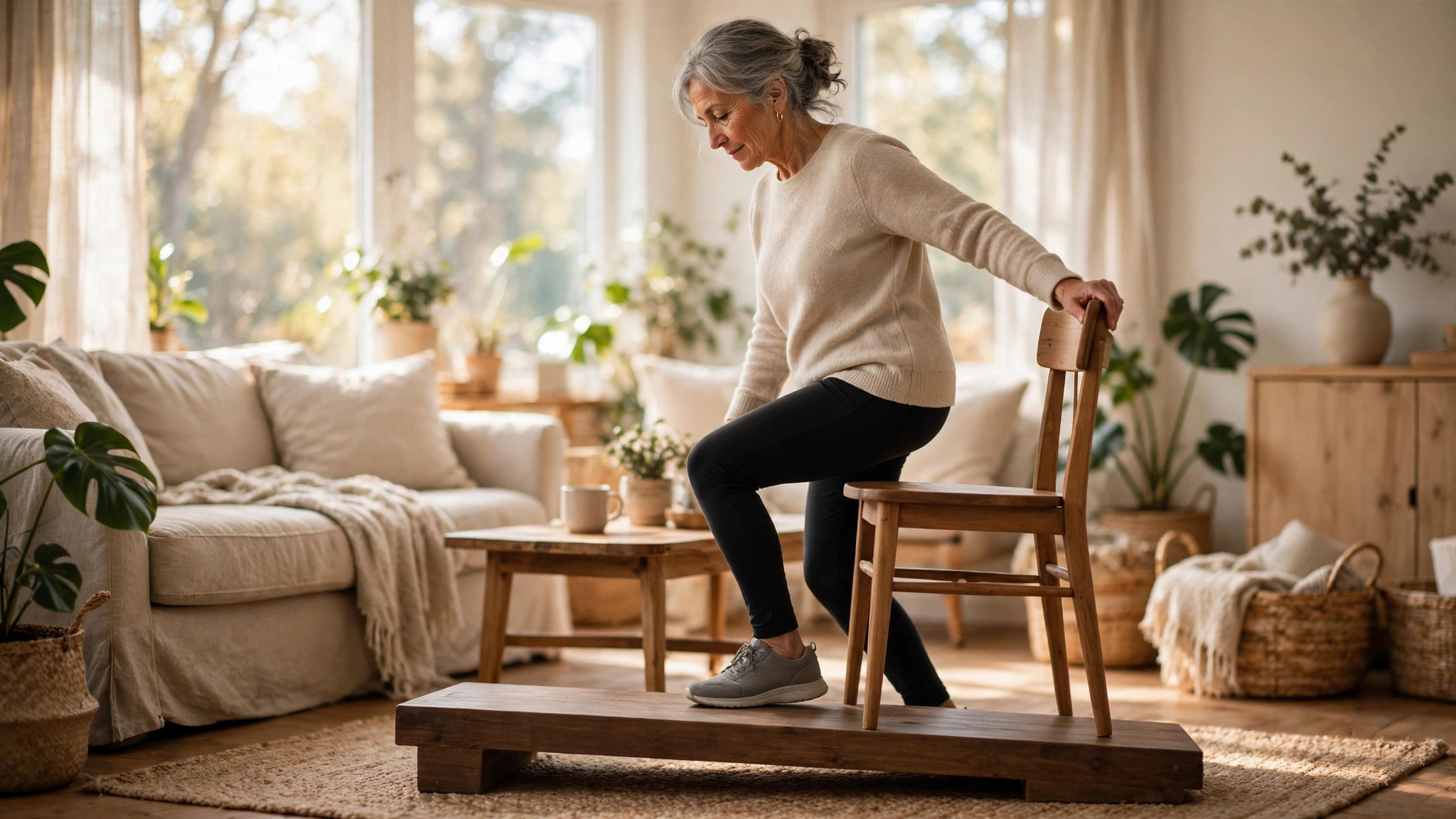
Best Step Platforms for Seniors: Low-Impact Stepping at Home
Climbing stairs keeps you independent — until it starts to feel harder than it used to. A step platform brings that everyday movement indoors, in a controlled form, at a height you choose, with support right beside you.
A step platform is simply a sturdy, flat-topped block you step up onto and back down from, one foot at a time. Fitness versions are usually adjustable: stackable layers or risers let you raise or lower the height. Stepping is low-impact, so it is gentler on knees and hips than running or jumping, and it trains what daily life demands: leg strength for stairs, balance for uneven ground, and stamina for walking further.
This guide explains what to look for when choosing a platform, how to use one safely at home, and a gentle beginner routine. No specific products are recommended here — use the checklist below to judge any platform you consider, and check the “When to see a doctor” section first if it applies to you.
Why low-impact stepping suits older adults
The U.S. Centers for Disease Control and Prevention (CDC) advises adults aged 65 and older to aim for at least 150 minutes of moderate-intensity aerobic activity each week, muscle-strengthening activity on at least 2 days a week, and activities that improve balance. Stepping can contribute to all three: it raises your heart rate gently, works the large leg and hip muscles, and challenges balance in a manageable way.
Strong leg and hip muscles are closely tied to staying steady on your feet. The National Institute on Aging notes that keeping muscles strong can help with balance and reduce the risk of falls and fall-related injuries. For dedicated balance practice, see our guide to balance exercises to prevent falls. That matters because falls are common: the CDC reports that more than 1 in 4 adults aged 65 and older report falling each year. Stepping practice, done slowly and with support, is one practical way to rehearse the up-and-down movement of real stairs in a safe setting.
Stepping also fits easily into a home routine: no special room, no electricity, no gym trip. The Mayo Clinic similarly advises older adults to combine balance training with physical activity and strength work, and to use a stable object such as a table or counter for support when balance feels unsteady.
What a step platform is — and what it is not
A step platform is a firm, flat surface raised a few inches off the floor. You step up with one foot, bring the other foot up beside it, then step back down, alternating the leading foot. That is the whole movement, and its simplicity is the point.
It is distinct from a balance trainer, and the difference matters when you shop. A balance trainer — such as a wobble board or an inflated dome — is deliberately unstable: it tips and shifts underfoot. A step platform is deliberately stable: it should not rock, slide, or flex under your weight. For most people over 60, especially anyone with wobbly knees or a history of falls, the stable platform is the safer starting point.
What to look for when choosing a platform
1. Adjustable height — and start low
Height adjustability is the single most useful feature. Look for a platform that can be set to its lowest position for your first weeks, then raised in small steps as you grow stronger and steadier. A low starting height — roughly the height of a single household stair step or lower — lets you practice the movement without straining knees or hips. If the lowest setting still feels high, the platform is not right for you yet. Raise the height only once the current height feels easy.
2. A genuinely non-slip surface
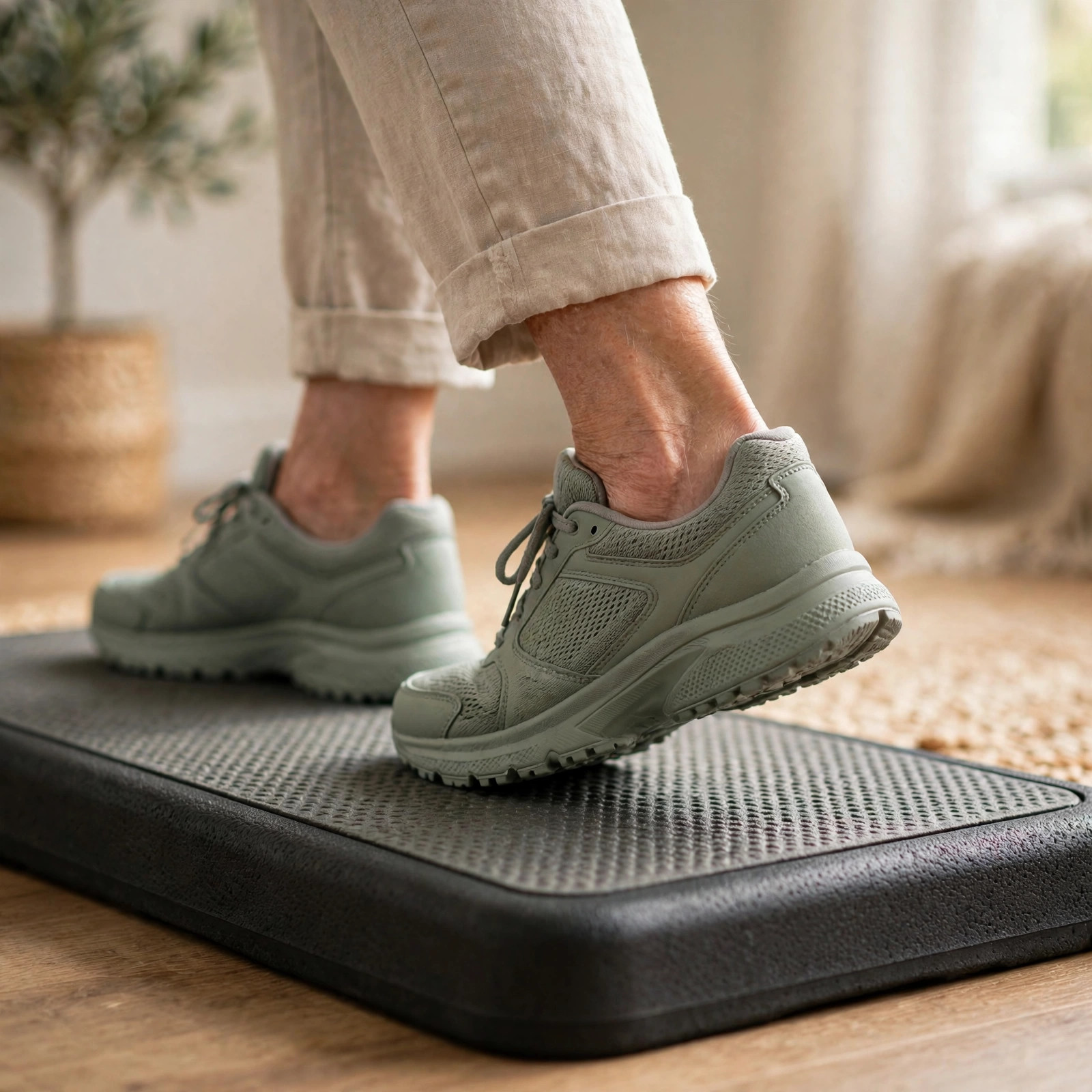
The top surface should feel grippy under bare feet or shoes, even if your feet are slightly damp. Look for a textured or rubberized top rather than smooth plastic. Equally important is the underside: rubber feet or a full rubber base help the platform grip the floor instead of sliding when you push off. Before your first session, test it with a slow step and support nearby. If it shifts, slides, or rocks at all, do not use it.
3. Size and stability: wider is steadier
A wider, longer platform gives you more room to place your whole foot comfortably, which matters if your balance is less certain. A narrow platform forces precise foot placement and leaves little margin for error. A solid, heavier platform also tends to stay put better than a very light one, and it should feel rigid — not springy or hollow — when you stand on it. Check that it sits flat with no wobble before every session.
4. Weight capacity with a comfortable margin
Every platform lists a maximum user weight. Choose one rated comfortably above your body weight, not exactly at it. A generous margin keeps the platform rigid rather than flexing. If a listing states no weight limit clearly, look elsewhere.
5. Materials and build quality
Most platforms are made from dense plastic, sometimes with rubberized surfaces and feet. Look for clean joins, no cracks, no sharp edges, and risers that lock firmly into place without rattling. A riser that can slip out mid-step is a hazard. Wipe the surface clean regularly, since dust and moisture reduce grip over time.
How to use a step platform safely at home
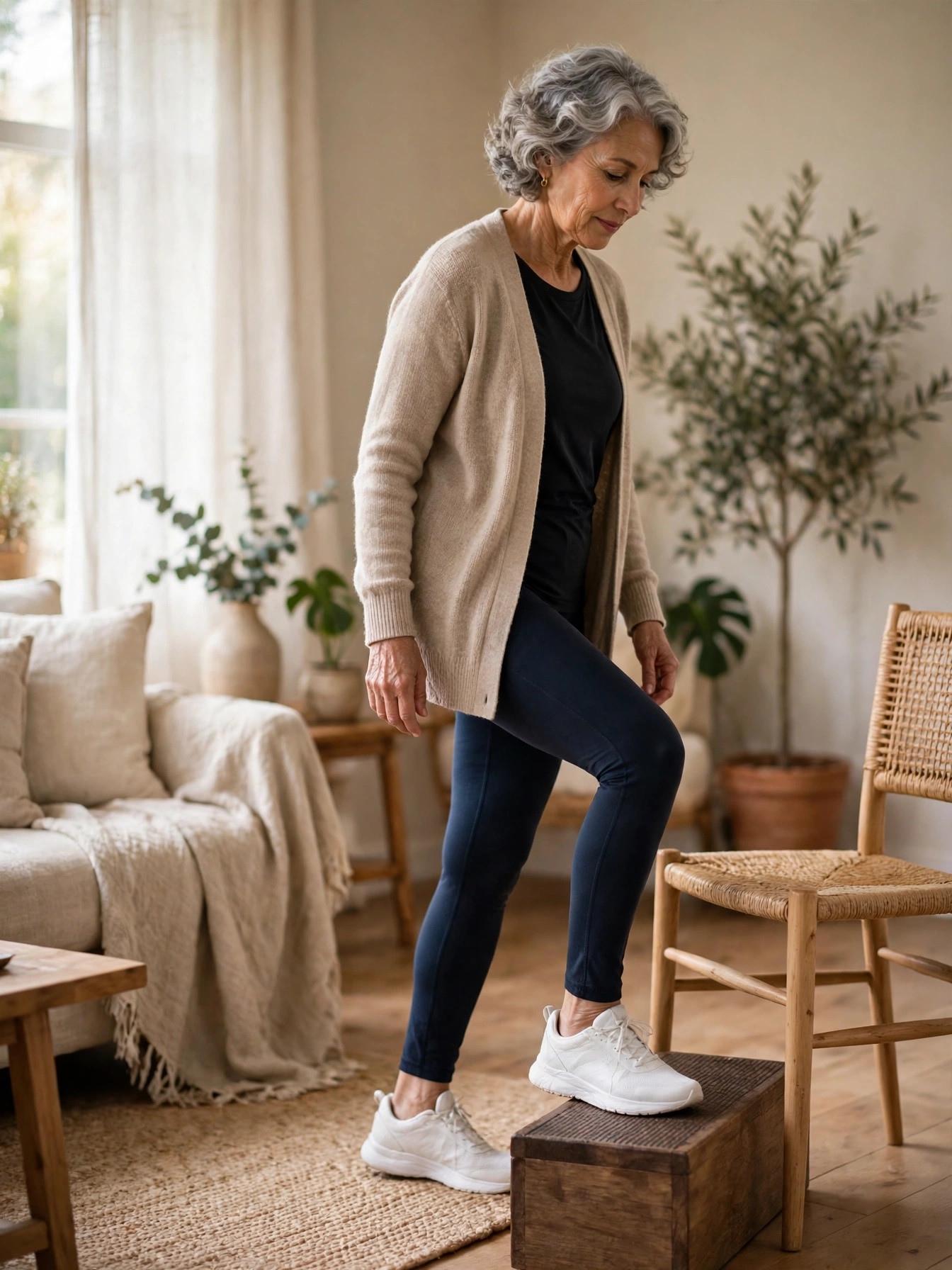
Safety comes before fitness here:
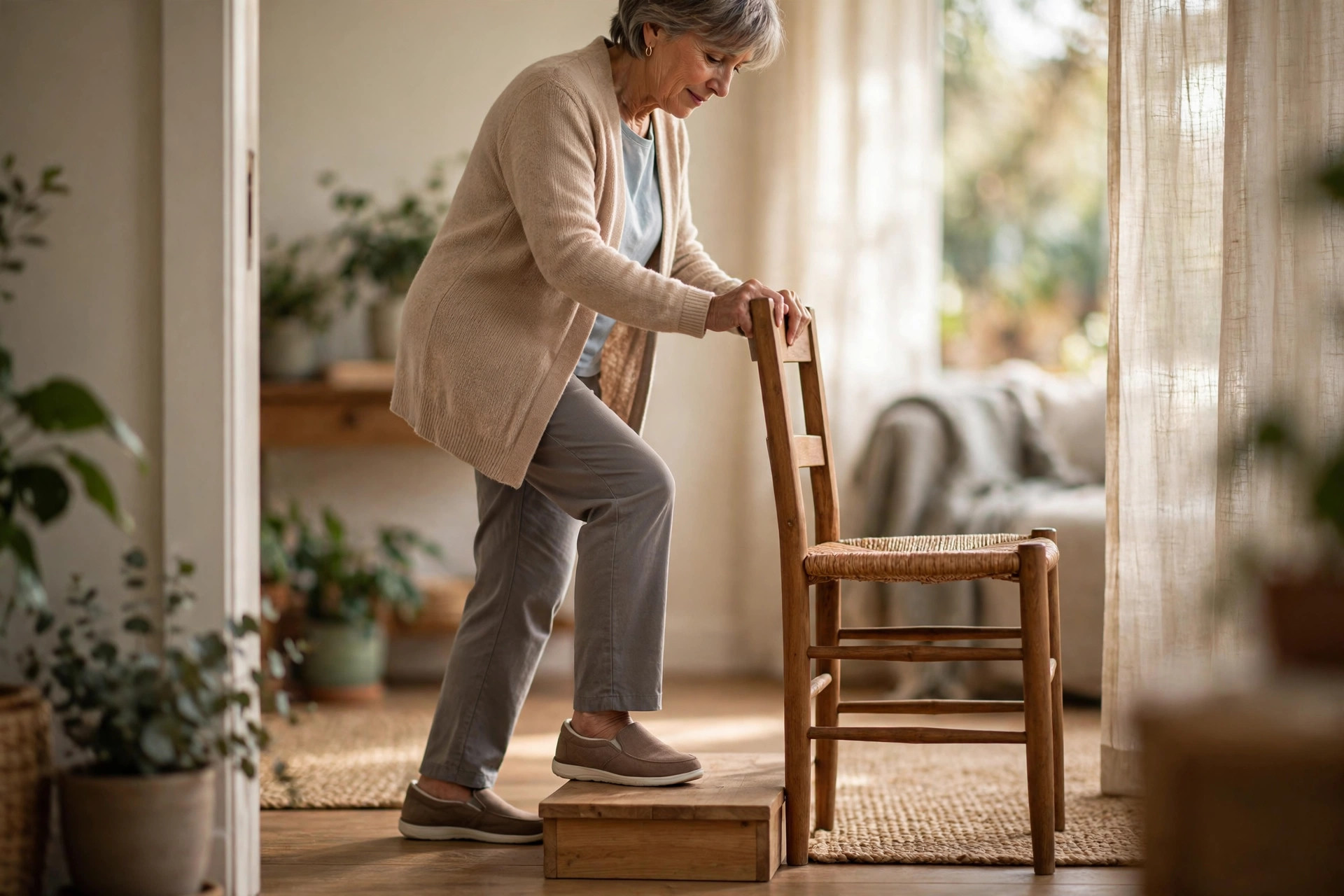
- Always have support within reach. Place the platform next to a sturdy chair back, a kitchen counter, or a wall rail — something fixed that will not slide if you grab it. Keep one hand near support for your first sessions, and keep using it whenever you feel unsteady.
- Wear supportive, closed-toe shoes. Flat, lace-up walking shoes with non-slip soles work well. Avoid socks alone, loose slippers, or smooth-soled shoes.
- Use a firm, flat floor. Hard flooring or a thin, firm mat is best. Avoid thick rugs, deep-pile carpet, or uneven surfaces, which can tilt the platform or catch a foot.
- Clear the area. Move loose rugs, cords, and clutter away, and leave room to step off safely.
- Step up fully, step down fully. Place your whole foot on the platform, not just your toes, and step all the way down rather than dropping off the edge. Keep knees soft and pointing in the same direction as your toes.
- Move slowly and stay upright. Look ahead, not down at your feet, once you know the movement. Slow, controlled steps build strength and balance better than fast ones.
- Stop if something hurts. Mild muscle effort is normal; sharp joint pain, dizziness, chest discomfort, or sudden unsteadiness mean stop and rest.
A simple beginner stepping routine
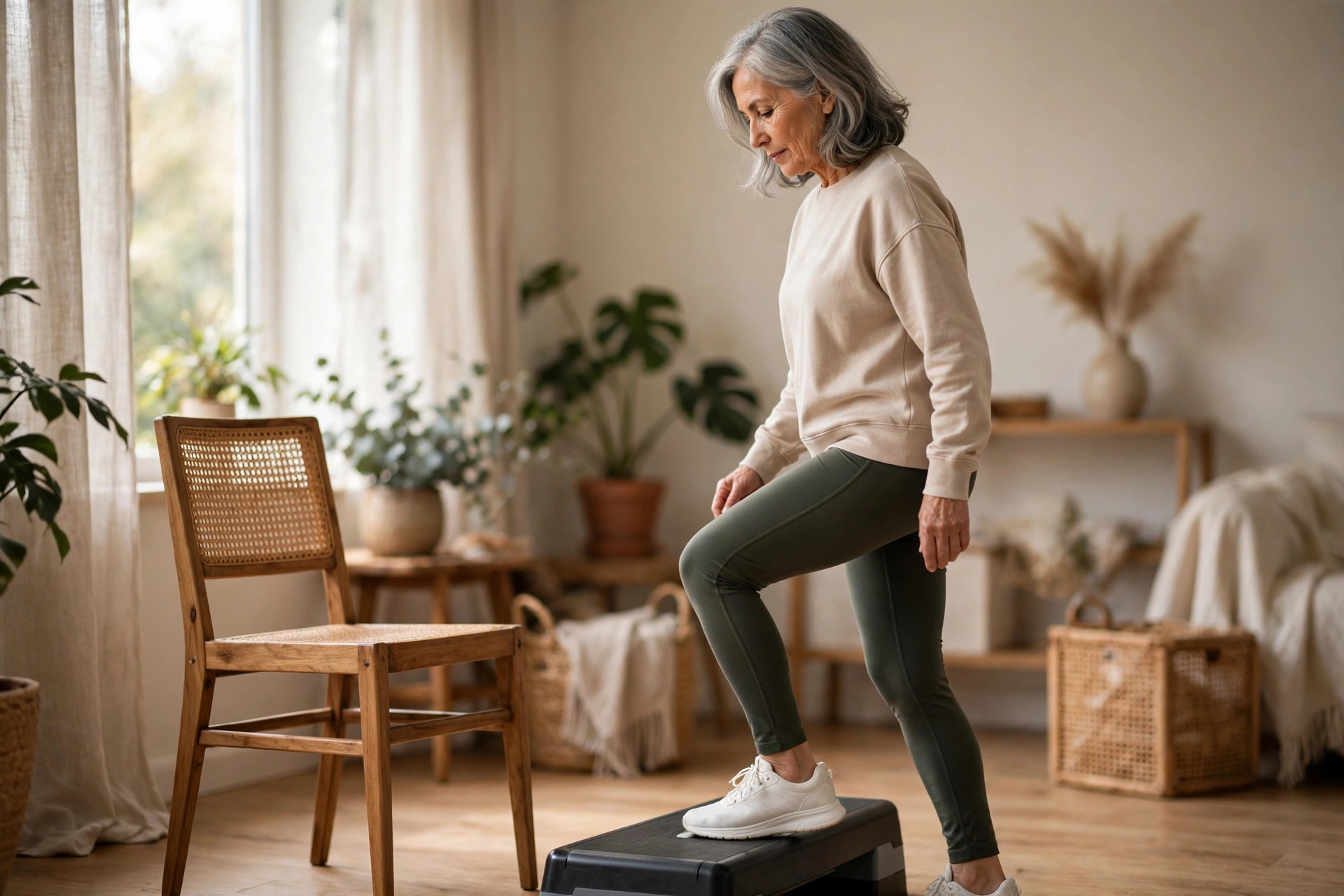
Start with short sessions, two or three times a week, with rest days between them. The outline below is a suggestion, not a prescription — adjust it to your fitness.
Warm-up (3–5 minutes): Walk around the room, march gently in place, and roll your shoulders and ankles.
Basic step-ups (5–8 minutes): At the lowest height, with support nearby, step up with your right foot, bring your left foot up beside it, then step down with your right foot, followed by your left. Repeat, then switch the leading foot. A reasonable first goal is 5 minutes with breaks, building gradually toward 10 minutes.
Side steps (2–3 minutes, optional): Stand beside the platform and step up sideways, then step back down. This works the hip muscles differently. Skip it until the basic step feels easy.
Cool-down (3–5 minutes): Walk slowly, then stretch your calves, thighs, and hips gently, holding each stretch without bouncing.
As weeks pass, progress one variable at a time: add a minute or two, then later a small height increase — never both in the same week. If a new height feels unsteady, drop back down.
Common mistakes to avoid
- Starting too high. A high first step strains knees and invites a misstep. Low and steady wins.
- Skipping support. Keep the chair or counter there until you genuinely do not need it.
- Stepping on a rug or a sliding floor. The platform must sit on a firm, flat surface every single time.
- Bouncing or rushing. Your version should be slow, controlled, and low.
- Ignoring worn surfaces. A smooth, worn top or hardened rubber feet mean less grip. Replace the platform when grip fades.
- Exercising alone without a plan for help. If you live alone, keep your phone nearby during sessions.
When to see a doctor
Check with your doctor or a physical therapist before starting if any of the following apply to you:
- You have fallen in the past year, or you feel unsteady when walking or standing
- You have heart disease, chest pain, shortness of breath at rest, or a recent cardiac event
- You have had a hip, knee, or ankle replacement, or significant arthritis in a weight-bearing joint
- You have diabetes with reduced feeling in your feet, peripheral neuropathy, or foot ulcers
- You have osteoporosis, a history of fractures from minor falls, or a balance-affecting condition such as Parkinson’s disease or an inner-ear problem
- You take medication that causes dizziness, drowsiness, or low blood pressure on standing
- You experience dizziness, chest discomfort, or sharp joint pain during or after exercise
A clinician or physical therapist can confirm a safe starting height and tell you whether stepping suits your condition or whether another activity — such as chair exercises or water-based exercise — would be a better first step.
The bottom line
The best step platform for seniors is not the tallest or the flashiest. It is the one that is low enough to start safely, wide and stable enough to stand on with confidence, grippy enough to stay put, and rated well above your weight. Pair it with support nearby, good shoes, a firm floor, and a slow progression, and stepping becomes a simple way to keep your legs strong and your stairs manageable.
Start low, stay steady, and let consistency — not intensity — do the work. Stepping works best as one part of staying active after 60.
Sources
- Centers for Disease Control and Prevention, “Older Adult Activity: An Overview” — https://www.cdc.gov/physical-activity-basics/guidelines/older-adults.html
- Centers for Disease Control and Prevention, “What Counts as Physical Activity for Older Adults” — https://www.cdc.gov/physical-activity-basics/adding-older-adults/what-counts.html
- National Institute on Aging, “Four Types of Exercise Can Improve Your Health and Physical Ability” — https://www.nia.nih.gov/health/four-types-exercise-can-improve-your-health-and-physical-ability
- Mayo Clinic, “Balance exercises” — https://www.mayoclinic.org/healthy-lifestyle/fitness/in-depth/balance-exercises/art-20546836
This article is for general information only and is not medical advice. Talk to your doctor or a qualified health professional about your personal exercise needs.