Best Ice Packs for Seniors: Reusable Cold Therapy Made Simple
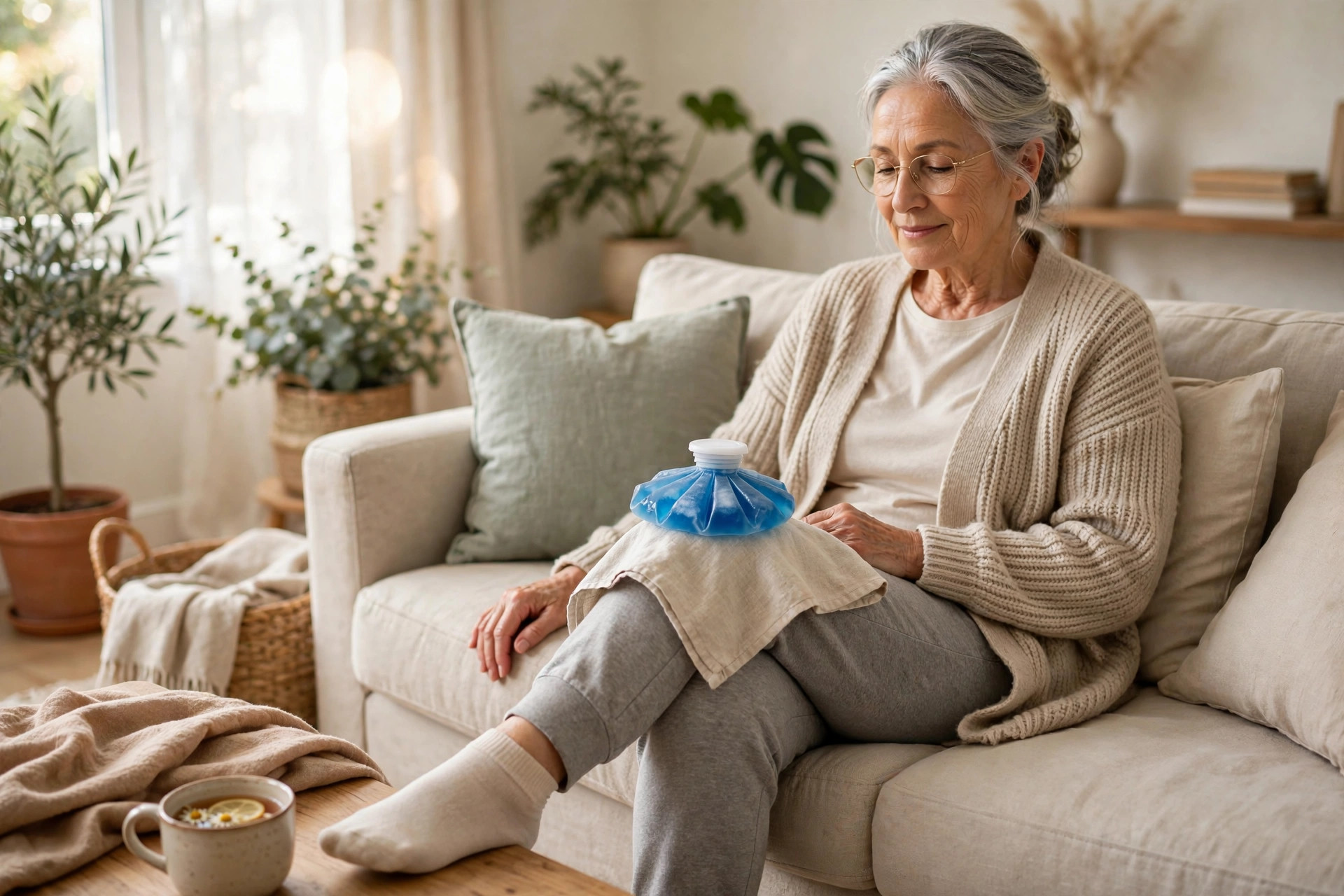
A sore knee after gardening, a swollen ankle after a misstep, a shoulder that aches after a long drive — for many of us past 60, cold therapy is one of the simplest tools in the medicine cabinet. A good reusable ice pack costs little, needs no prescription, and can take the edge off pain and swelling within minutes.
Not all ice packs are equal, though. A stiff pack will not sit properly on a knee, one applied straight to bare skin can cause an ice burn, and for some conditions cold therapy is not suitable at all. This guide compares the main types and the safety rules that matter most after 60.
As an Amazon Associate, we earn from qualifying purchases.
How cold therapy works — and what it can and cannot do
Pressing something cold against an aching area numbs the nerve endings nearby, which is why pain often eases quickly. Cold also narrows the small blood vessels under the skin, which may help limit swelling in the first day or two after a minor injury.
It is worth being clear about the limits. Ice does not cure arthritis or repair a torn ligament. What it can do is make symptoms easier to live with while the body heals, and help you stay comfortable enough to keep moving gently.
Cold therapy works best as part of a wider approach. The UK’s National Health Service (NHS) includes it in the PRICE approach to minor sprains and strains — protect, rest, ice, compress, elevate. If you are unsure whether ice or heat suits your problem, see our guide on ice or heat for arthritis.
Gel vs clay vs instant packs: the three main types
Most reusable ice packs fall into three groups.
Gel packs are the most common type. They contain a thick gel that stays soft and flexible even when frozen, so the pack drapes over a knee or shoulder instead of sitting on top of it like a brick. Look for a soft, wipe-clean outer cover and a sturdy sealed edge — cheaper packs can leak if the seam splits, so inspect the seal when it arrives. Freeze gel packs flat so they are ready when you need them.
Clay packs contain a clay-based filling that tends to hold cold for longer than gel. The trade-off is weight and stiffness: they are heavier and less flexible when first taken from the freezer, softening as they warm. They suit larger, flatter areas — a lower back or a swollen knee — where the pack can rest in place. Check the weight first if grip strength is a concern.
Instant (single-use) cold packs work by squeezing an inner pouch, which triggers a chemical reaction that makes the pack cold within seconds — no freezer needed. They are handy for a car first-aid kit or a travel bag, but they are single-use, so the cost adds up fast, and they usually stay cold for a shorter time than a reusable pack. Keep one as a backup, not your main pack.
For regular home use, a reusable gel pack is the best starting point.
Wrap vs flat pack: which style fits where?
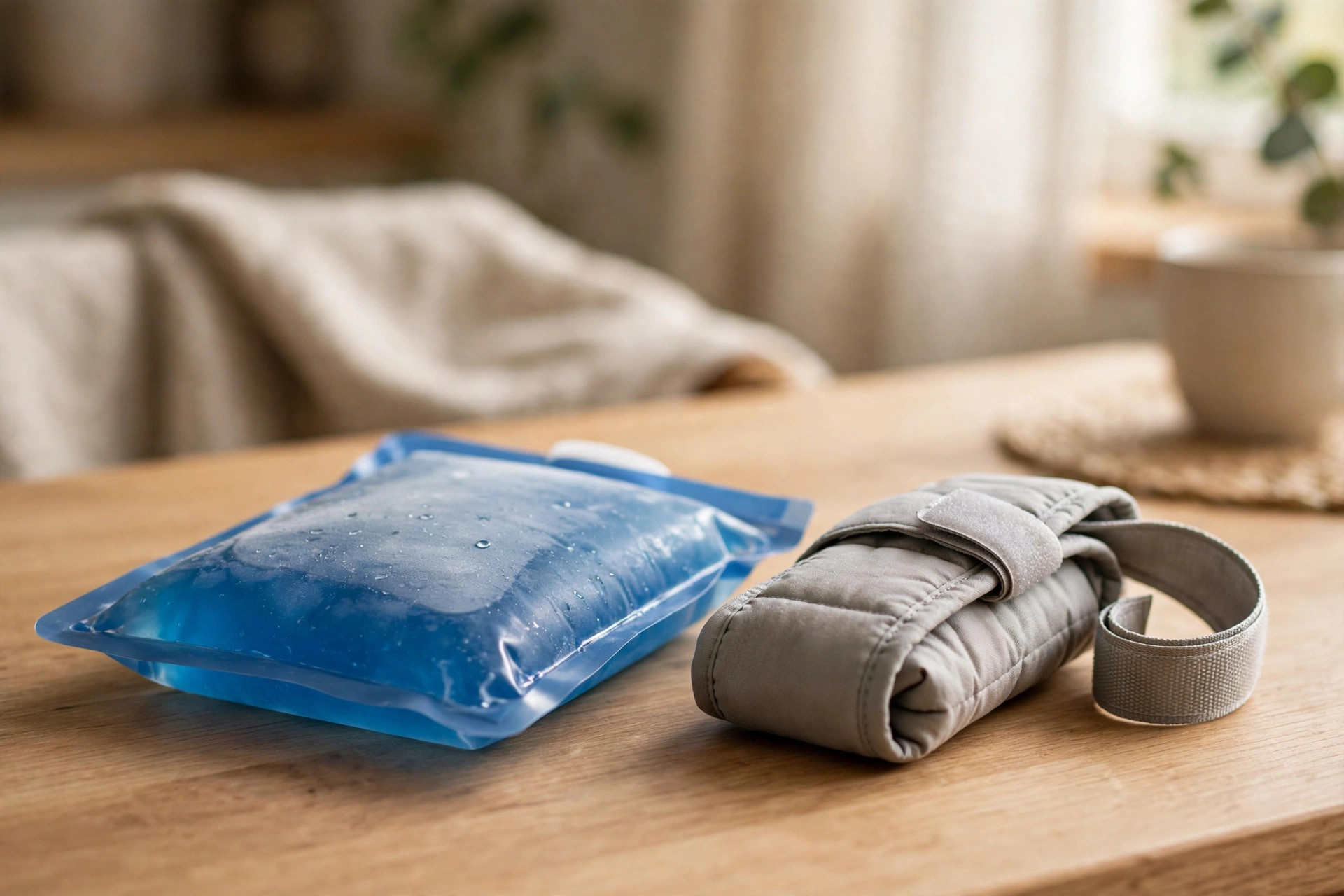
Flat packs are simple rectangles. They are cheap, easy to store, and work well for flat or broad areas — the lower back, a thigh, or the top of a foot. They are less good on curved joints, where they can slide off or leave gaps.
Wrap-style packs come with a strap or elastic band that holds the cold pack against the joint, leaving your hands free. A knee, shoulder, or ankle wrap is worth considering if you ice the same joint often, because it stays in place while you sit and rest. The best wraps have wide hook-and-loop closures that are easy to fasten with stiff fingers.
If you only buy one pack, a medium flat gel pack is the most versatile. If one joint flares up often, a wrap made for that joint is usually money well spent.

TheraICE Knee Ice Pack Wrap
Compression + cold in one wrap – the ice pack that stays where you put it.
How to choose size and cold duration
A pack that is too small cools only part of the painful area; one that is too big is heavy and hard to keep in place.
- Knee: a medium pack, roughly the size of a paperback book, covers the front of the knee. A wrap-style pack is often easier to keep in place.
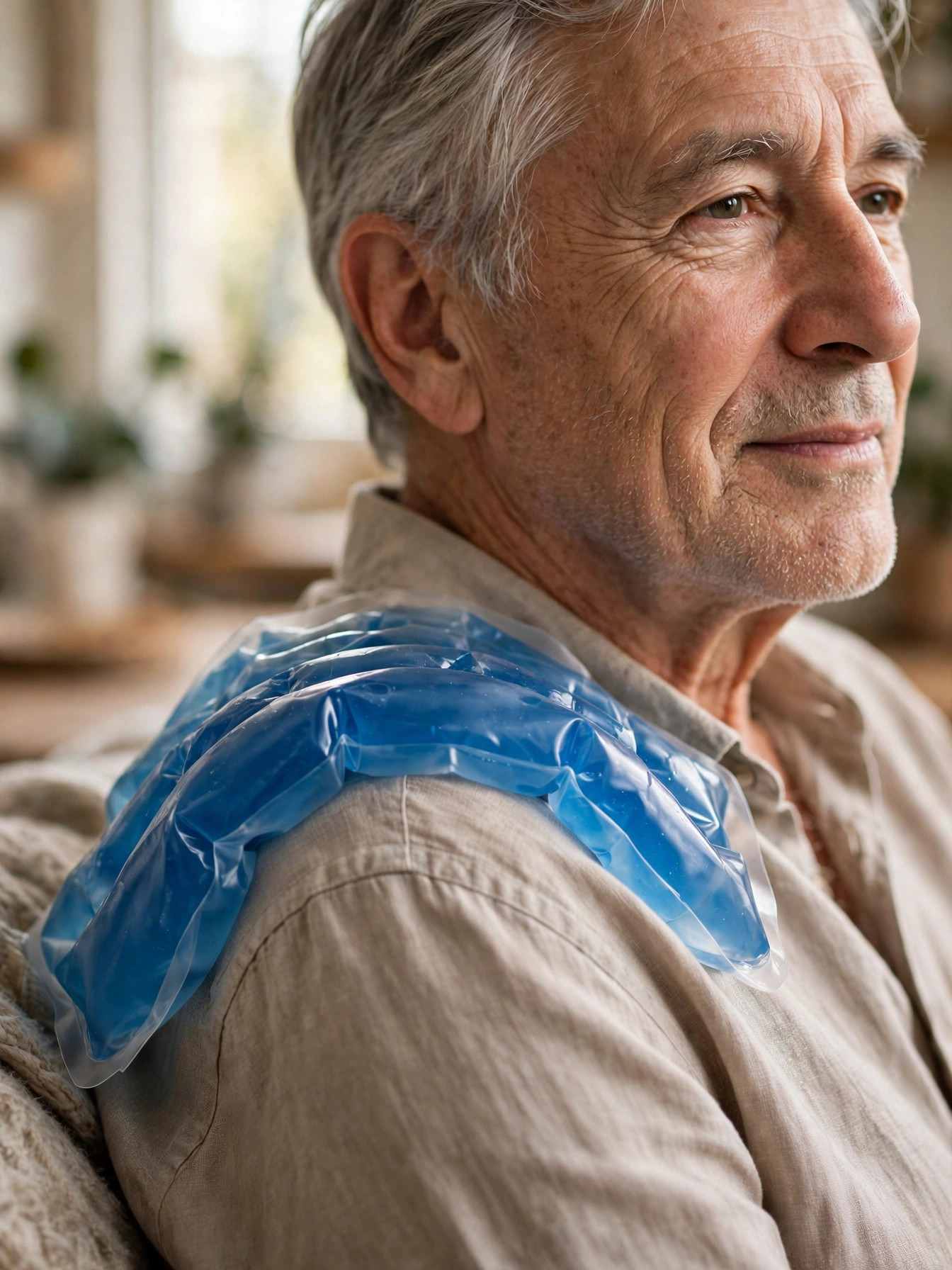
- Shoulder: a medium-to-large flexible gel pack works best, because it needs to drape over the curve of the joint.
- Ankle: a small-to-medium pack is enough. A strap or wrap stops it sliding off while you rest with your foot raised.
- Lower back: a large flat pack covers more ground, and its weight matters less because it rests on the bed or sofa.
- Wrist or elbow: a small pack is plenty — a large one will be clumsy and hard to position.
Cold duration varies with the filling, the thickness, and the room temperature. As a rough guide, a gel pack typically stays usefully cold for one session of 15 to 20 minutes. Clay packs often last longer, which is their main selling point, while instant packs usually cool for a shorter period.
Safe-use rules: the part that matters most
The safety rules are not optional — especially after 60, when skin is thinner and sensation can be reduced.
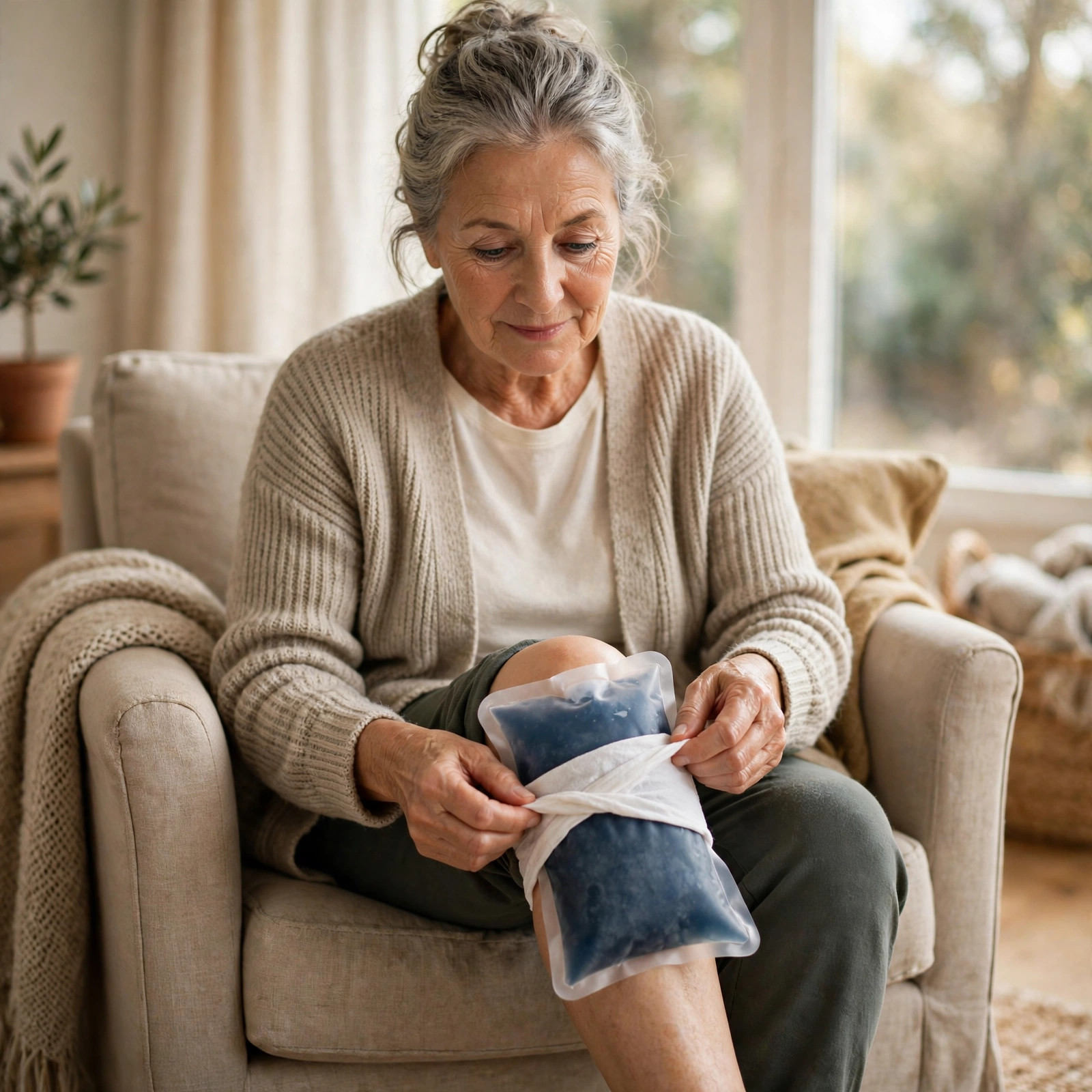
- Always use a barrier. Never place an ice pack directly on bare skin. Wrap it in a thin towel or pillowcase first — direct contact can cause an ice burn or frostbite, and the risk is higher on thin or fragile skin.
- Keep sessions to 15 to 20 minutes. The NHS advises up to 20 minutes at a time, every 2 to 3 hours. Mayo Clinic gives a similar range: 15 to 20 minutes, several times a day for the first 48 hours after an injury. If the area goes numb before 20 minutes, take the pack off straight away.
- Wait between sessions. Give the skin at least 2 hours to warm up before icing the same spot again. More frequent icing does not speed healing — it raises the risk of skin damage.
- Never fall asleep with a pack on. This is one of the most common causes of cold injuries at home. If you feel drowsy, set a timer or ask someone to remove the pack. The same warning applies to heating pads, as we note in our heating pad buying guide.
- Check your skin as you go. If the skin turns very pale, blotchy, or blistered, or if pain increases instead of easing, remove the pack and let the skin warm up slowly. Do not rub the area vigorously.
- Keep the pack clean and intact. Wipe the outer cover after use and check the seal regularly. Throw away any pack that leaks or has a split seam.
- Elevate when you can. For a swollen ankle or knee, resting with the leg raised on pillows while you ice may help swelling settle faster — see our guide to ankle pain after 60.

When cold therapy is NOT suitable
Do not use an ice pack, or check with your clinician first, if any of the following apply:
- Poor circulation or peripheral artery disease. Cold narrows blood vessels further, which can reduce blood flow to an area that already gets too little.
- Diabetes with reduced feeling in the feet or hands. If you cannot feel cold properly, you may not notice a cold injury developing.
- Raynaud’s phenomenon. Cold can trigger painful spasms in the small blood vessels of the fingers and toes.
- Nerve damage or loss of sensation in the area you want to treat, for any reason.
- Open wounds or broken skin. Cold packs should only go on intact skin, with a cloth barrier.
- Stiff, aching joints without swelling. Cold can make stiffness worse. For stiff joints, gentle warmth is often the better choice — see our guide on knee pain after 60 for when heat may help.
- Over the front of the neck or the chest. Avoid icing these areas unless a clinician has specifically advised it.
A simple buying checklist
Before you buy: gel for flexibility, clay for longer-lasting cold, instant only as a backup. Match the size to the joint — medium for a knee, small for an ankle or wrist, large for a back. Choose a flat pack for broad areas and a wrap for a joint you treat often. Look for a soft, wipe-clean outer layer, a strong seam, and straps you can fasten easily with stiff fingers. Buy two packs so one is always frozen, and measure your freezer shelf before ordering a large pack. Store packs flat in the freezer, and replace them if the filling hardens or the seal splits.
When to see a doctor
See a clinician promptly if you notice any of the following:
- Pain or swelling that does not improve after a few days of rest and icing
- You cannot put weight on the joint, it feels unstable, or it looks deformed
- Numbness, tingling, or weakness that does not fade after the pack is removed
- Skin that blisters, turns white or blue, or stays pale after icing
- Swelling in one leg that comes on suddenly, especially with pain in the calf — this needs urgent attention
- A fever alongside joint pain, or a joint that is hot, red, and very tender
The bottom line
A reusable gel ice pack earns its place in almost every home after 60 — as long as it is used with respect. Pick the right type and size for the joint you treat most, always use a cloth barrier, keep sessions to 15 to 20 minutes with at least 2 hours between them, and never fall asleep with a pack on. Used that way, cold therapy may help ease pain and swelling after a minor knock or a long day on your feet — and when it does not help, that is your body telling you to get it checked.
Sources
- NHS, “Sprains and strains” — https://www.nhs.uk/conditions/sprains-and-strains/
- Mayo Clinic, “Sprain: First aid” — https://www.mayoclinic.org/first-aid/first-aid-sprain/basics/art-20056622
- Mayo Clinic, “Using heat and cold for pain” — https://connect.mayoclinic.org/blog/take-charge-healthy-aging/newsfeed-post/using-heat-and-cold-for-pain/
- National Institute of Arthritis and Musculoskeletal and Skin Diseases (NIAMS), “Sprains and Strains” — https://www.niams.nih.gov/health-topics/sprains-and-strains
- Arthritis Foundation, “Heat and Cold Therapy for Arthritis” — https://www.arthritis.org/health-wellness/treatment/complementary-therapies/natural-therapies/heat-and-cold-therapy-for-arthritis
- Cleveland Clinic, “Should You Use Ice or Heat for Pain?” — https://health.clevelandclinic.org/should-you-use-ice-or-heat-for-pain
This article is for general information only and is not a substitute for professional medical advice. Talk to your clinician before starting any new treatment.