Best Heating Pad for Back Pain: A Buying Guide
A heating pad is one of the simplest tools for easing back pain after 45 — but the market is crowded, and not every pad is built with older users in mind. This expert buying guide explains what to look for (moist vs. dry heat, size, safety features) and how to use any heating pad safely if you have reduced sensation, diabetes, or thinning skin. You’ll also find our top product picks at the end, matched to the buying criteria in this guide.
As an Amazon Associate, we earn from qualifying purchases.
How heat therapy helps back pain
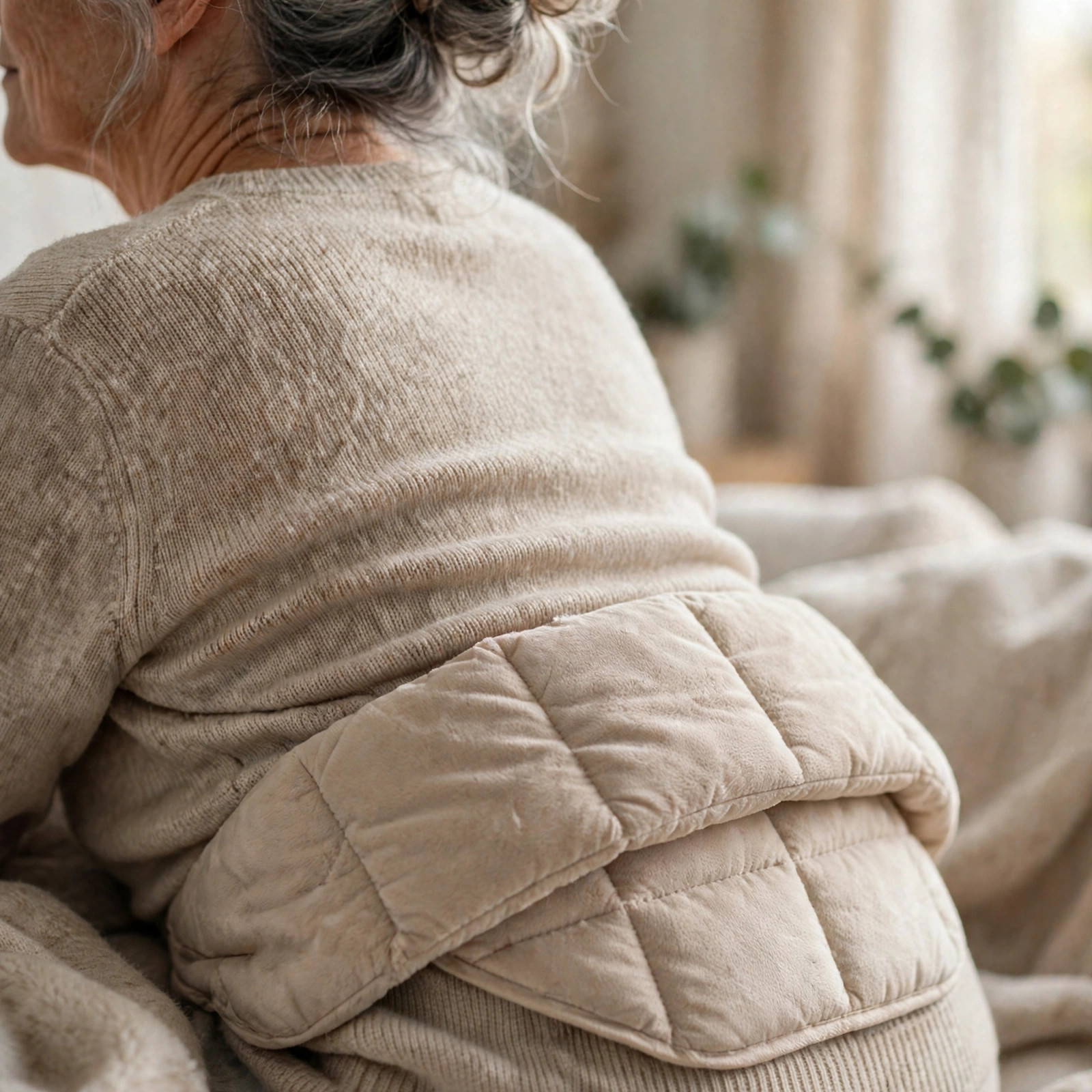
Applying warmth to sore muscles increases blood flow to the area, which may help loosen tight muscles and soothe an aching back. Cleveland Clinic physicians note that heat is particularly useful for muscle knots, arthritis-related stiffness, and general muscle tension, and that moist heat can help loosen joints stiffened by arthritis.
Heat works best on chronic, stiff, or achy pain — the kind that lingers rather than the sharp pain of a fresh injury. For a new strain or sprain, cold is usually the better first step; after the first 48 hours, heat may help with the muscle stiffness that sets in, according to Cleveland Clinic guidance.
The four main types of heating pads
1. Electric heating pads (dry heat). The classic plug-in pad. Most offer several temperature settings and an automatic shutoff timer. They heat up quickly and stay warm as long as they are plugged in — convenient, but also the type with the most burn risk if used carelessly.
2. Electric pads with a moist-heat option. Some electric pads include a dampenable sponge or absorbent insert. They combine the convenience of an electric pad with the deeper-feeling warmth of moist heat.
3. Microwavable pads (grain, flaxseed, or gel). Heated in the microwave, these deliver gentle warmth without cords or electricity. They cool down over 30–60 minutes and need reheating, so they suit shorter sessions.
4. Disposable adhesive heat wraps. Thin, low-heat wraps that stick over the lower back and warm on contact with air, delivering gentle heat for several hours while you move around. Because the heat is mild, they are among the most forgiving options for sensitive skin.
Moist heat vs. dry heat: what the evidence says
The moist-vs-dry debate is one of the most common questions buyers ask. Here is what the evidence suggests:
- Moist heat may reach deeper tissue more effectively. A 2021 study reported by Medical News Today found moist heat wraps targeted muscle pain faster and more effectively than dry heat wraps, and Cleveland Clinic physicians note moist heat can help loosen joints stiffened by arthritis.
- Dry heat is more convenient for daily use. Electric dry-heat pads are the most widely available and easiest to keep clean. With some dry electric pads you can approximate moist heat by lightly dampening a thin cloth cover — check the manufacturer’s instructions first.
- Warmth matters more than type. If a pad is comfortable, the right size, and used consistently, it is likely to help regardless of whether the heat is technically moist or dry.
Bottom line: if deep muscle aches or arthritic stiffness are your main concern, a pad with a moist-heat option is worth considering. For simple everyday back comfort, dry heat is fine.
What to look for: the features that matter after 45
1. Size and coverage for the back. A pad that is too small will cool at the edges before the middle gets warm. For the lower back, look for an extra-large pad or one shaped to wrap around the back.
2. Automatic shutoff. This is the single most important safety feature for older users. Look for a pad that turns itself off after 1–2 hours of continuous use, so it can never stay on all night if you fall asleep on the couch. Set the timer for the shortest session that works for you.
3. Adjustable temperature settings. More heat is not better. Start on the lowest setting and only increase if needed. Multiple settings let you find the mildest warmth that eases pain — older, thinner skin may feel heat more intensely than you expect.
4. Safety certification. Look for a pad tested by a recognized safety lab (such as UL or ETL markings on the packaging). Certification means the pad’s electrical design was independently checked — important for anything worn near the body for long periods.
5. Soft, flexible fabric. The pad should drape across the lower back without stiff creases that create pressure points. Soft microplush or flannel covers distribute heat more evenly.
6. Removable, washable cover. A removable machine-washable cover extends the pad’s life and keeps it fresh. Always use the cover — never use a pad with a missing or damaged cover.
7. Long power cord with no damage. A short cord limits where you can comfortably sit. Check that the cord is thick, flexible, and free of cracks or fraying — worn cords are a fire risk, per the FDA and CPSC.
8. Hands-free options for active days. Some pads include a strap or wrap design so you can move around while using them — useful if sitting still makes your back stiffer, since gentle movement is part of most low-impact exercise routines for older adults.
9. Clear, large controls. If the controller has tiny buttons or a hard-to-read display, it is the wrong pad for an older user. Controls should be easy to operate by touch, even with mild vision or hand-dexterity issues.
Safety rules for older adults
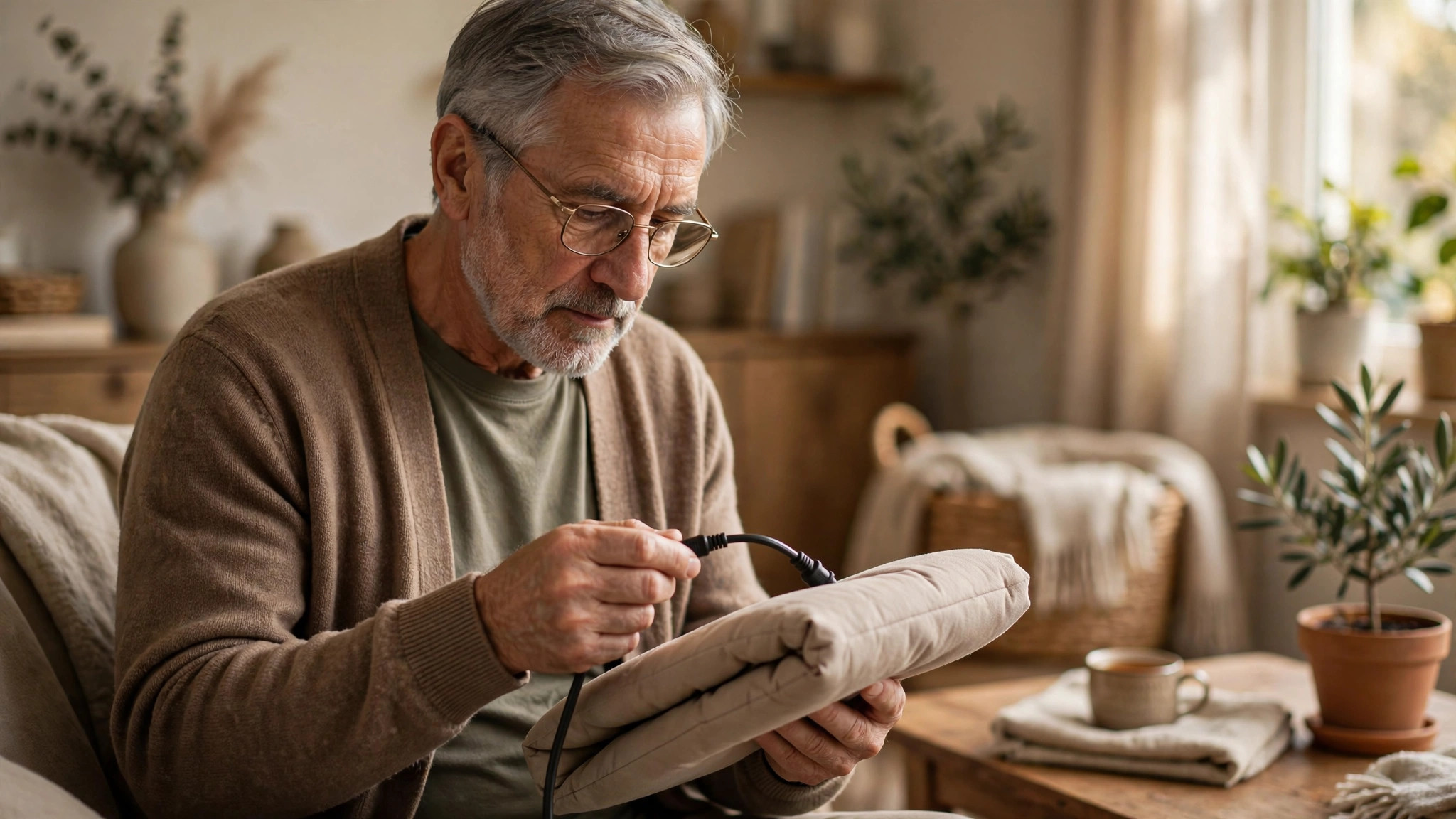
A joint FDA and CPSC safety advisory reports that about 1,600 heating-pad burns are treated in U.S. emergency rooms each year, and roughly 45 percent of those injured are over 65. Most could have been avoided by careful use. Follow these rules:
- Never sleep on or with a heating pad. Prolonged contact can cause a serious burn even on a low setting. The FDA/CPSC advisory explicitly warns against using a pad on a sleeping or unconscious person.
- Set a time limit. Keep sessions to 15–20 minutes and let the skin cool to its normal color before the next session. Use the auto-shutoff timer rather than relying on memory.
- Always start on the lowest setting. Mayo Clinic guidance for back self-care recommends a heating pad on the lowest temperature. Increase only if needed.
- Keep a barrier between the pad and your skin. Place the pad over clothing, or make sure its cover is in place. Never use it on broken or damaged skin.
- Check your skin during use. Stop if the skin becomes red, blotchy, or numb. Skin that is purplish-red, dark red, or spotty after removing the pad may have been overheated.
- If you have diabetes, neuropathy, or reduced sensation, talk to your doctor first. These conditions lower your ability to feel dangerous heat, which sharply raises burn risk.
- Place the pad on top of the body part — not under it. Do not lie or sit on a heating pad; trapped heat can intensify quickly.
- Inspect before every use. Discard the pad if it looks worn, cracked, or discolored, or if the cord is frayed. Unplug it when not in use, and never pull it by the cord.
Heat pairs well with gentle movement for many types of back and joint pain — readers find that heat for joint stiffness and warmth for morning back stiffness work best as part of a broader routine that includes staying active.
When to use heat — and when to skip it
Reach for heat when: the pain is a dull, chronic ache; your back feels stiff (especially in the morning); muscles feel knotted or tight after activity; or you want to warm up before gentle movement.
Skip heat and use cold instead when: the injury is fresh (within the first 48 hours); the area is swollen, red, or inflamed; or you have just had a fall or new trauma.
Check with your doctor first if: you have diabetes, poor circulation, dermatitis, deep vein thrombosis, or an open wound — heat therapy may be unsafe or inadvisable in these cases.
Care, cleaning, and lifespan
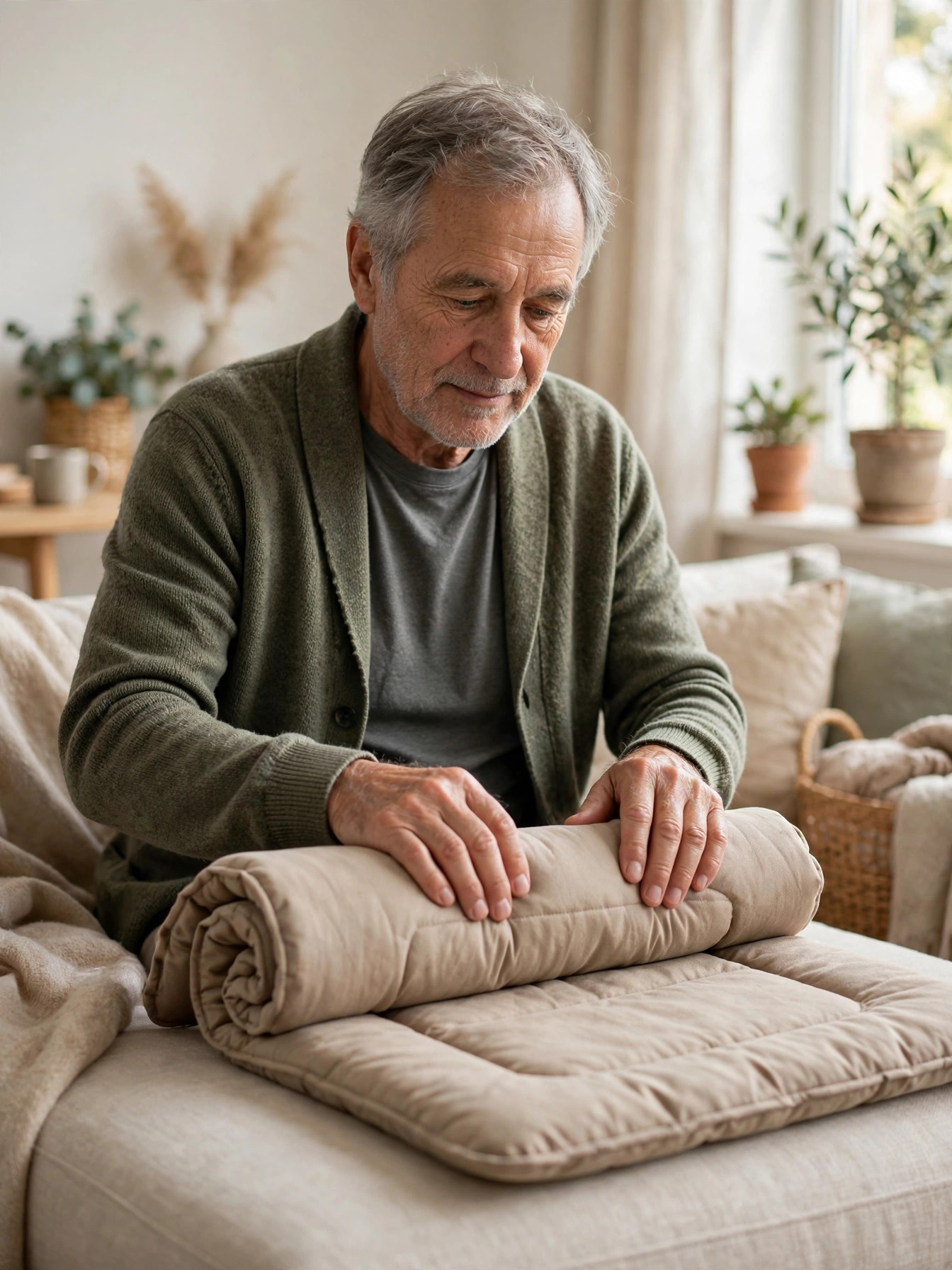
- Remove and wash the fabric cover regularly; never immerse the electrical pad in water. Wipe the pad surface with a barely damp cloth and let it dry fully before plugging it in.
- Store the pad flat or loosely rolled — never folded tightly or crushed, which can damage internal wiring.
- Replace the pad every few years, or sooner if it warms up slowly, develops hot spots, or shows wear. An aging pad is a burn and fire risk, not a bargain.
When to see a doctor
A heating pad manages symptoms; it does not diagnose what is causing your back pain. Seek prompt medical care if back pain:
- Causes new bowel or bladder problems (difficulty starting or stopping urination, leakage, or loss of bowel control) — this can signal cauda equina syndrome, a rare but serious nerve emergency.
- Comes with numbness or tingling in the “saddle” area (inner thighs, buttocks, or genitals).
- Follows a fall or traumatic injury, even a minor one if you have osteoporosis.
- Is intense, constant, or radiates down one or both legs with weakness, numbness, or tingling.
- Comes with unexplained weight loss, fever, or a history of cancer.
- Does not improve within a few weeks despite self-care, or interferes with work, sleep, or daily activities.
Most back pain improves within a few weeks, but these red flags warrant a medical evaluation rather than continued home treatment.
Our top picks
These are real heating pads sold on Amazon that match this guide’s safety criteria – especially automatic shutoff, which matters most for older users. Keep sessions to about 20 minutes and never sleep on a heating pad. Prices change – check the live Amazon page.

1. Sunbeam King Sized Heating Pad (Infrared, 2025 Model)
Infrared heat penetrates deeper than standard pads. King-size coverage for aching backs.

2. Sunbeam AdvancedHeat King-Sized Heating Pad (Graphene)
Graphene heating for fast, even warmth. The high-tech pick for tough pain.

3. Sunbeam XL Heat Therapy Heating Pad with XpressHeat (12" x 24")
Heats up in 30 seconds – 3x faster than standard pads. XL size with 6 heat settings.

4. Sunbeam Premium XL Heating Pad
Microplush fabric, 12×24 coverage, auto shut-off. The cozy, worry-free pick.
Sources
- Cleveland Clinic — “Ice vs. Heat: What Is Best for Your Pain?” (heat increases blood flow and relaxes tight muscles; warming sessions under 20 minutes; moist heat for arthritis; caution with neuropathy): https://health.clevelandclinic.org/should-you-use-ice-or-heat-for-pain-infographic/
- Mayo Clinic — “Sciatica: Diagnosis and treatment” (use a heating pad on the lowest setting; alternate warm and cold for continuing pain): https://www.mayoclinic.org/diseases-conditions/sciatica/diagnosis-treatment/drc-20377441?p=1
- U.S. FDA and Consumer Product Safety Commission — Public Health Advisory: “Hazards Associated with the Use of Electric Heating Pads” (burn and fire injury data; inspection and safe-use precautions): https://webarchive.library.unt.edu/web/20090117005540mp_/http:/www.fda.gov/cdrh/heatpad.pdf
- Herefordshire and Worcestershire NHS Trust — “Managing your back pain” (red flags: bladder/bowel changes, saddle numbness, leg weakness, unexplained weight loss, fever, cancer history): https://www.hacw.nhs.uk/back-pain/
- WebMD — “Cold and Heat Therapy to Treat Pain” (heat boosts blood flow; best for morning stiffness; apply 15–20 minutes several times daily with a skin barrier): https://www.webmd.com/pain-management/when-use-heat-ice?ecd=wnl_gdh_070324&ctr=wnl-gdh-070324_supportTop_cta_1&mb=gKq4AF%2FDjrbXRFspPaCquSpiMzVEF17PeS5HpkOwGA8%3D
- Medical News Today — “Back pain: Can ice or heat therapy help?” (moist heat targets muscle pain faster than dry heat, per a 2021 study; safe application 10–15 minutes with a towel barrier; don’t fall asleep using heat): https://www.medicalnewstoday.com/articles/ice-or-heat-for-back-pain
This article is for general information only and is not medical advice. Talk to your doctor about persistent back pain.