Best Cutting Boards for Seniors: Safer, Easier Food Prep
Chopping vegetables, slicing bread, and trimming a piece of chicken are small jobs, but they ask a lot of your hands. You need to hold the food steady, guide the knife, and keep the board from sliding — all at once. When grip strength fades or joints ache, that combination can turn everyday cooking into something you start to avoid.
A good cutting board will not solve every kitchen problem, but the right one can make food prep noticeably steadier, safer, and less tiring.
Stability First: Non-Slip Bases and How to Steady Any Board
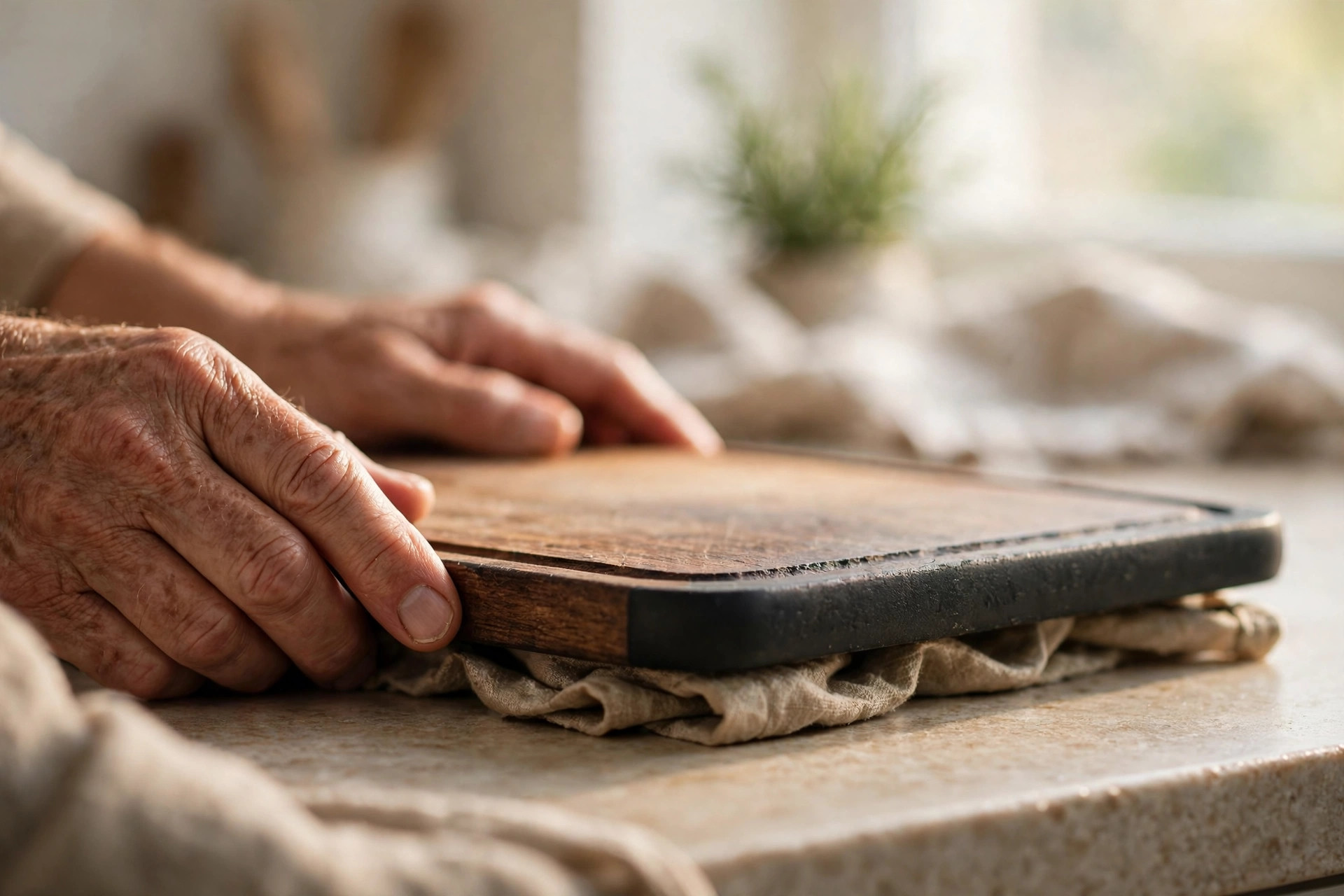
If you remember one feature from this guide, make it stability: a board that moves while you cut is the biggest safety problem in food prep, and the easiest to fix.
Rubber feet or a rubberized edge. Many boards come with soft rubber feet or a rubber border on the underside. These grip the counter and stop the board from travelling as you push the knife forward. Check that the feet are firmly attached and not so tall that the board rocks.
A non-slip mat underneath. If you already own a board you like, a thin non-slip mat or a sheet of grippy shelf liner placed underneath can steady it just as well. This is the cheapest fix for a sliding board, and hand therapists recommend it as a simple way to create stability without buying new equipment. Replace the mat when it stops gripping.
Weight and thickness. A heavier, thicker board tends to stay put better than a thin, featherweight one. But weight is a trade-off: a board you cannot lift comfortably to the sink is not a good board for you, however stable it is. Look for the middle ground — thick enough to feel planted, light enough to carry with one hand when empty.
Size and Weight: Finding Your Sweet Spot
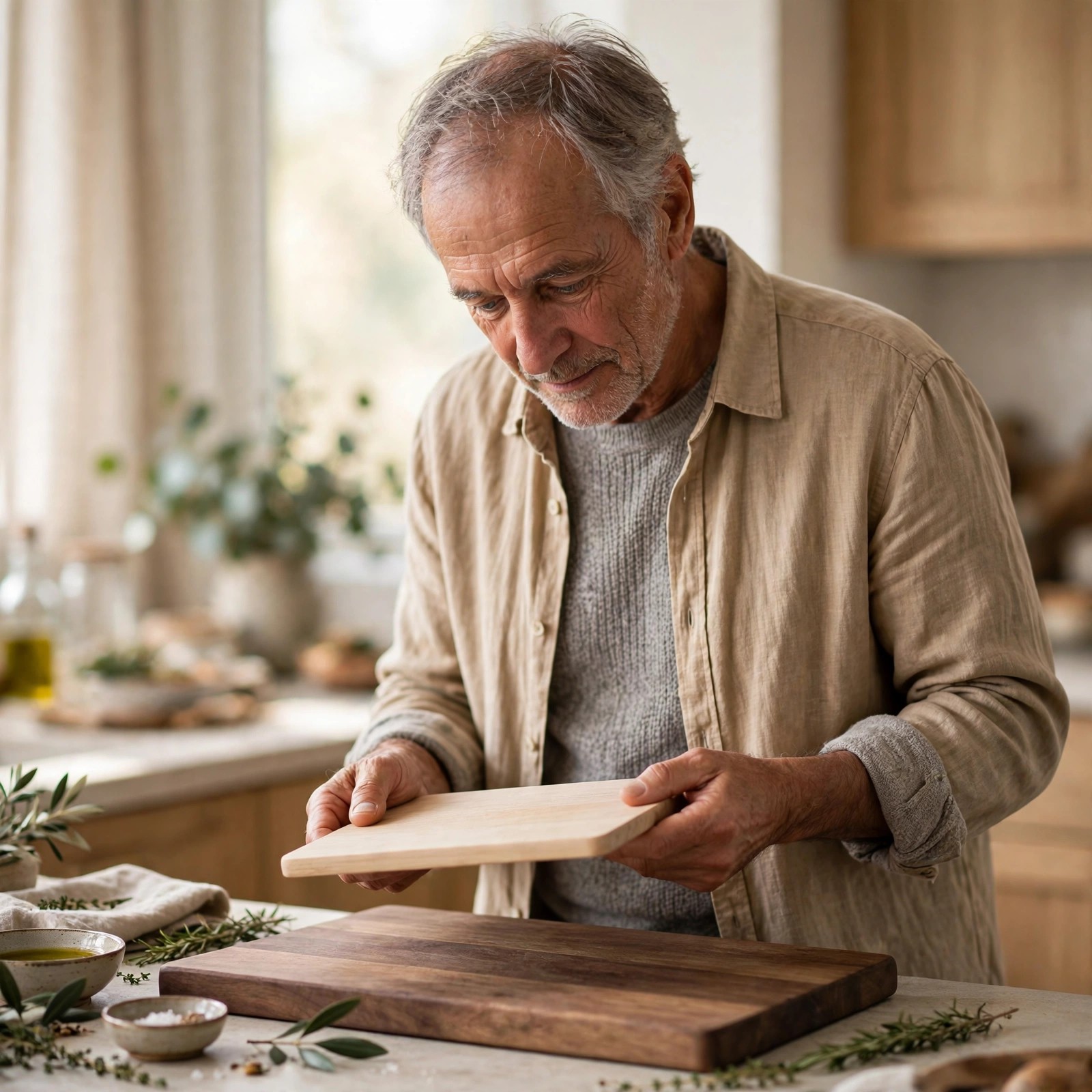
Bigger is not always better. The right size depends on what you cook, how much counter space you have, and how much weight you can manage comfortably.
Everyday boards. For most daily prep — an onion, a couple of tomatoes, a cucumber, herbs — a medium board gives you enough room without becoming unwieldy. You want space to gather chopped food to one side while you keep cutting, rather than chasing pieces off the edge.
Large boards. A larger board earns its keep for a big salad or a whole chicken. The downside is weight and storage: a large hardwood board can be genuinely heavy.
A practical approach. Many older cooks end up happiest with two boards: a medium everyday board for produce, and a second board reserved for raw meat, poultry, and seafood. That second board is also a food-safety habit recommended by the U.S. Department of Agriculture (USDA): use one board for fresh produce and bread and a separate one for raw meat, poultry, and seafood, so bacteria from raw foods do not reach foods that need no further cooking.
When you shop, lift the board the way you would at home — one-handed, from a shelf to the counter, and from the counter to the sink. If it feels awkward empty, it will feel worse when it is wet and covered in food.
One-Handed and Stabilized Designs for Arthritis
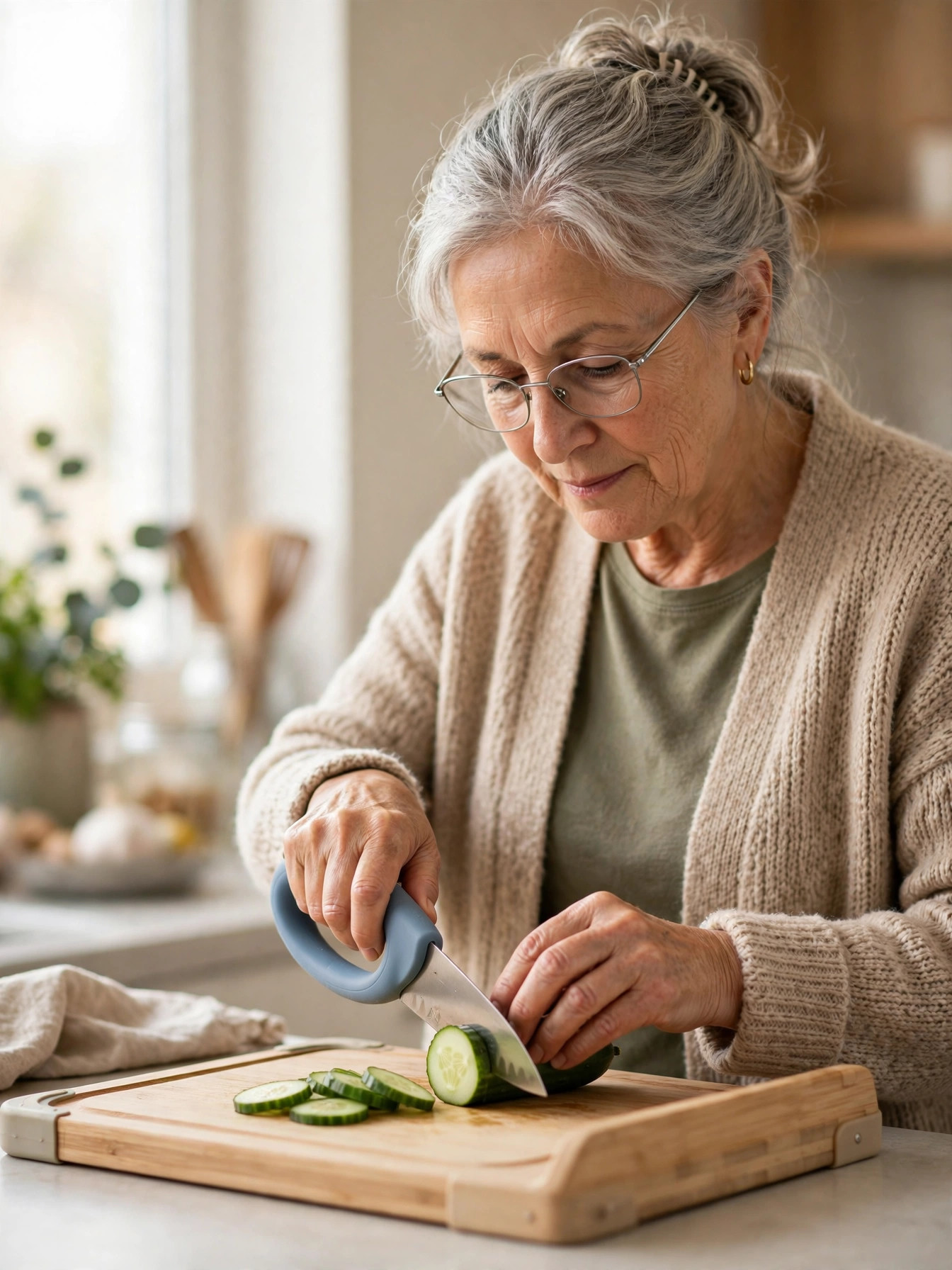
Some boards are designed for cooks who have use of only one hand, or whose grip is too weak or painful to hold food steady. Their features help anyone with sore joints.
Spiked boards. A board fitted with short stainless-steel spikes holds a vegetable or a piece of fruit in place while you cut it, so you do not need to grip the food firmly. You press the item onto the spikes and slice. UK hand therapy services list spiked boards among adaptive devices that may help people with hand osteoarthritis, because they reduce the gripping the task demands.
Boards with a corner guard or food holder. Some designs include a raised corner, a clamp, or a sliding guide that braces food against one edge. These let you cut with one hand while the board itself does the holding. They are especially useful for round items like onions and potatoes that tend to roll.
Raised edges and juice grooves. A groove around the edge catches juices from tomatoes, melons, and raw meat before they run onto the counter.
If you have significant hand weakness, ask an occupational or hand therapist about these designs — they can help match a board to your grip and kitchen.
Materials Compared Honestly
Every cutting board material trades durability, weight, knife care, and cleaning ease.
Wood. Hardwood boards, such as maple or walnut, are kind to knife edges, feel stable under the knife, and last for years with care. They are usually the heaviest option, and they need hand washing and occasional oiling. Never soak a wood board or put it in the dishwasher; choose a medium size so the weight stays manageable.
Plastic (polyethylene). Plastic boards are light, affordable, and easy to wash — many can go in the dishwasher, which is a real advantage if lifting a heavy board to hand-wash it is a chore. They are gentler on knives than glass or stone, though deep cuts can leave grooves that are hard to clean. The USDA advises replacing any board once it becomes excessively worn or develops hard-to-clean grooves.
Bamboo. Bamboo boards are lighter than most hardwood boards and resist moisture better than wood, so they need less maintenance. They are harder than many hardwoods, so they may dull knives a little faster, and cheaper boards can split along glued joints. Look for a solid, well-finished board with no rough seams.
Glass, stone, and marble. These look elegant but are a poor choice for most older cooks: heavy, quick to dull or chip knife edges, and slick enough for a knife to skid. Keep them as serving platters, not everyday cutting surfaces.
For most cooks here, the practical answer is a medium plastic board for everyday produce prep and, if you enjoy wood, a medium hardwood board for bread and general work — with a separate board for raw meat in either material.
Cleaning and Sanitation Without the Strain

A board that is hard to clean will not stay safe for long. Heavy boards are awkward to rinse, and boards with deep grooves trap food.
After every use. Wash boards with hot, soapy water after each use, rinse with clear water, and air-dry or pat dry with a clean towel. The USDA gives exactly this guidance for keeping all cutting boards clean, and it applies whether the board held vegetables or raw meat.
After raw meat, poultry, or seafood. Wash with hot, soapy water, then sanitize. The USDA’s published guidance describes sanitizing with one tablespoon of unscented liquid chlorine bleach per gallon of water, left standing for several minutes, then rinsed. A dishwasher cycle works for nonporous plastic boards; wood boards should be washed by hand and never soaked.
Knife Care and Cutting Habits That Protect Your Hands
The board and the knife work as a pair, so a few habits make both safer.
Keep knives sharp. A dull knife needs more force, and more force means more strain and less control. A simple pull-through sharpener used regularly may help, and many kitchen shops offer professional sharpening if doing it yourself is difficult.
Use the right knife for the job. A large chef’s knife is not always the answer. A smaller, lighter knife can be easier to control for everyday slicing, and a serrated knife handles bread and tomatoes with less downward pressure. A knife with a larger, cushioned handle may be easier to hold, as in our guide to ergonomic kitchen tools.
Let the board carry the weight. Rest the board close to your body, keep your guiding hand relaxed, and use a gentle rocking motion rather than pressing straight down. Take short breaks during long prep sessions rather than pushing through aching hands.
For more ideas on cookware that is kind to sore hands and wrists, see our guide to the best lightweight pans for seniors.
When to See a Doctor
Choosing a better board can make cooking more comfortable, but some symptoms deserve a clinician’s attention rather than a kitchen upgrade. See your doctor or another qualified health professional if you notice:
- Hand or wrist pain that persists, worsens, or keeps coming back
- Grip weakness that makes it hard to hold everyday objects, not just food or knives
- Numbness, tingling, or pins and needles in your fingers or hand
- Swelling, stiffness, or reduced range of motion in the fingers, thumb, or wrist
- Pain that follows a fall or injury, even a minor one
- Difficulty with daily tasks that is getting worse over weeks or months, despite trying easier tools
These symptoms may have many causes, and a clinician can help identify what is going on, including whether a referral to occupational or hand therapy would help. Our article on wrist pain after 60 may also be useful background for that conversation.
The Bottom Line
The best cutting board for you is the one that stays put, fits your counter and your strength, and is easy enough to clean that you clean it properly every time. For most cooks over 55, that means a medium board with a non-slip base, a separate board for raw meat, and a material you enjoy using. If grip is a real problem, a spiked or stabilized board may help more than any ordinary board.
Good tools do not just make cooking easier — they make it more likely you keep cooking the fresh, home-made meals that support your health.
Sources
- U.S. Department of Agriculture (USDA) Food Safety and Inspection Service — guidance on cutting boards and food safety, including separate boards for raw meat and produce, washing with hot soapy water, and replacing excessively worn boards
- National Health Service (NHS) — hand osteoarthritis and adaptive devices guidance, including spiked chopping boards and non-slip materials for kitchen stability
- National Institute of Arthritis and Musculoskeletal and Skin Diseases (NIAMS) — information on arthritis, hand health, and joint care
- Mayo Clinic — guidance on arthritis self-care, hand pain, and wrist pain
- Cleveland Clinic — guidance on hand and wrist pain causes and everyday joint care
- Centers for Disease Control and Prevention (CDC) — food safety guidance on separating raw meat from ready-to-eat foods
This article is for general information only and is not medical advice. Talk to your doctor or a qualified health professional before making changes related to your health.