Best Portion Control Plates for Adults: The Simple Plate Method
Portions have a way of creeping up on us. Plates are bigger than they used to be, restaurant servings have grown, and at home we tend to serve ourselves by habit rather than by plan. After 50, when appetite and metabolism both shift, those extra spoonfuls can add up without you noticing.
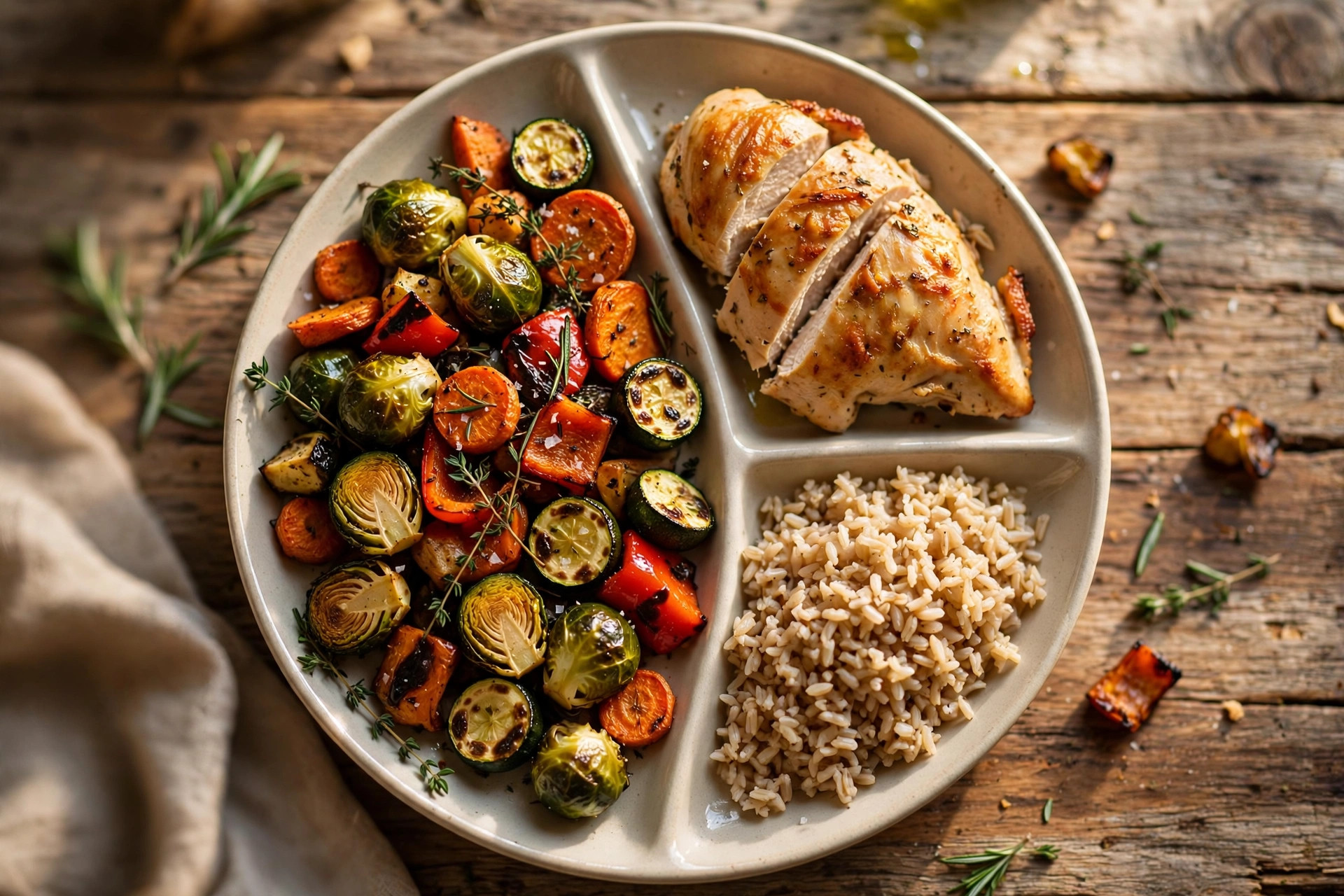
A portion control plate is one of the simplest tools for this. It is not a diet, an app, or a scale — just a dinner plate with built-in sections or printed lines that guide how much of each food group to serve. The design is based on the plate method, a visual approach to balanced meals recommended by major health organizations. Here is what the method is, what kinds of plates exist, and how to pick one that fits your kitchen and your life after 50.
The plate method, in 30 seconds
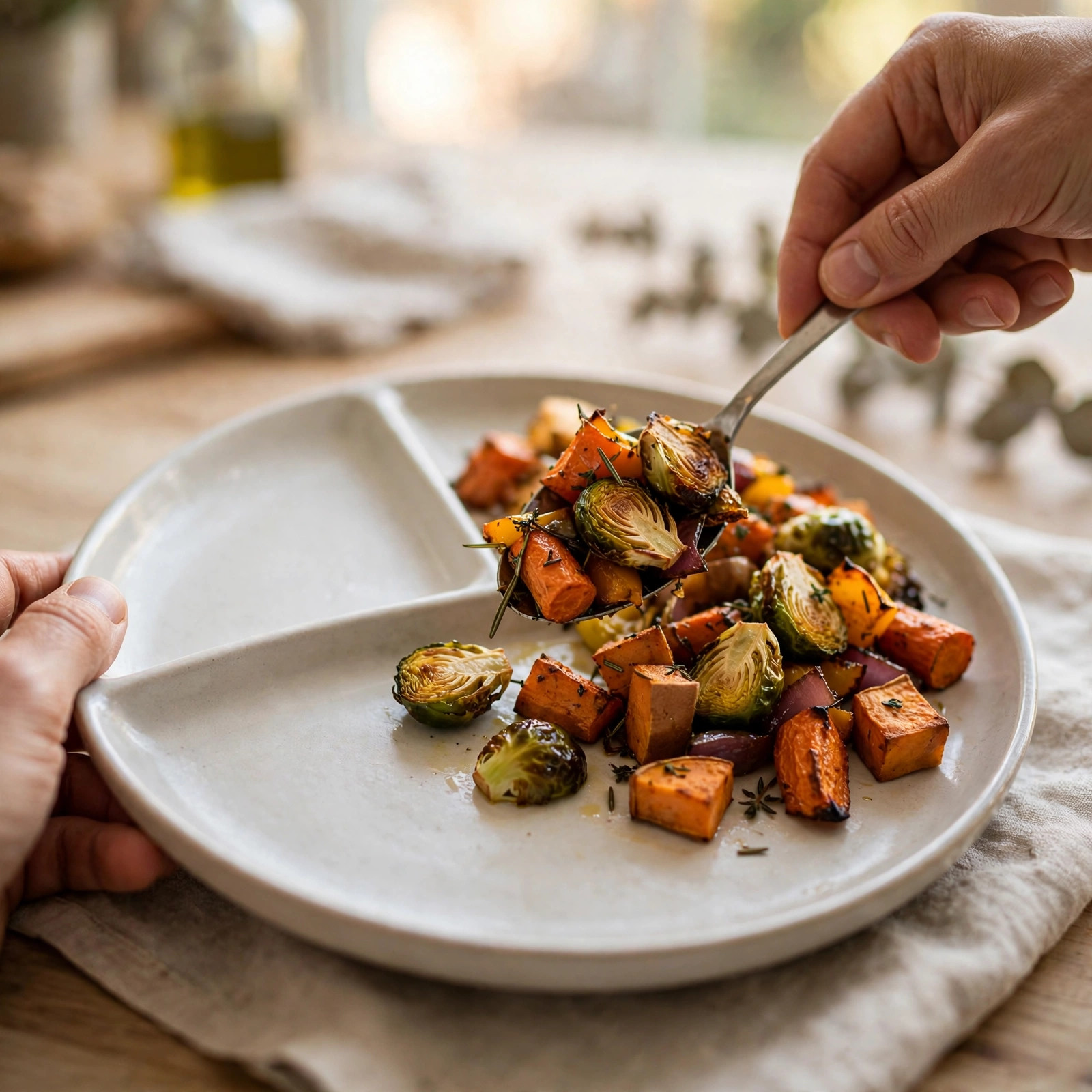
The plate method divides your meal into visual zones, and it is backed by both the USDA (through its MyPlate guidance) and the American Diabetes Association’s Diabetes Plate Method. The formula:
- ½ of the plate: non-starchy vegetables — broccoli, spinach, peppers, green beans, salad greens
- ¼ of the plate: lean protein — chicken, fish, eggs, tofu, beans, lentils
- ¼ of the plate: whole grains or starchy foods — brown rice, quinoa, whole-wheat pasta, potatoes
Add water or an unsweetened drink on the side. The American Diabetes Association describes it as the easiest way to create balanced meals that support healthy blood sugar — no counting, calculating, weighing, or measuring required. A 9-inch plate is the standard size both the ADA and diabetes educators use as the reference.
Why does this matter after 50? Two reasons. First, protein needs rise with age while appetite often falls, so the protein quarter helps you notice when protein is missing from a meal. Second, the vegetable half nudges fiber intake up without any extra effort — fiber that helps with digestion, cholesterol, and feeling satisfied on less food. (If you are still working out what balanced eating looks like day to day, our guide to eating well after 45 covers the nutrition side in depth.)
Do portion plates actually work?
Honest answer: a plate is a reminder, not a treatment. The evidence suggests that visual cues genuinely change how much we serve ourselves. The well-known Delboeuf effect — the same serving looks smaller on a big plate and larger on a small one — is one reason the Mayo Clinic advises using smaller plates and bowls as part of weight management. Studies on downsizing dinnerware have found that smaller plates are linked to modestly smaller servings.
But there are limits worth knowing:
- A plate does not choose your foods. Half a plate of fries is still half a plate of fries. The zones only help if you fill them with the food groups they are meant for.
- The effect fades if the plate fights your routine. Research on adherence shows that people who leave the plate near their cooking area and use it most days get the benefit; people who try it for a week and put it back in the cupboard don’t.
- It is a visual guide, not a calorie prescription. An active person needs more food than a sedentary one, and the plate accommodates that — the proportions stay the same, but the plate itself can be fuller or emptier.
Think of it the way diabetes educators use it: a training wheel for portion sense. Use it for a few weeks, and you may start plating balanced meals correctly even on a regular plate.
The main types: sectioned vs. printed vs. regular

Portion plates come in three broad designs, and the right one depends on how you actually eat.
1. Sectioned (divided) plates. Deep molded compartments — half for vegetables, two quarters for protein and grains. The strongest visual guidance, and high edges make food easy to scoop with a spoon or fork. Downsides: sauces and soups don’t work well, family-style casseroles are awkward, and some people find the compartments feel childish. Look for adult-styled designs with subtle colors rather than cartoonish dividers.
2. Printed-line plates. A flat, normal-looking plate with the ½–¼–¼ zones marked in paint, glaze, or color rings. More flexible — soups, stews, and mixed dishes fit fine — and they look like ordinary dinnerware at a family table. The guidance is weaker than molded sections, so they suit people who already know the method and just want a gentle cue.
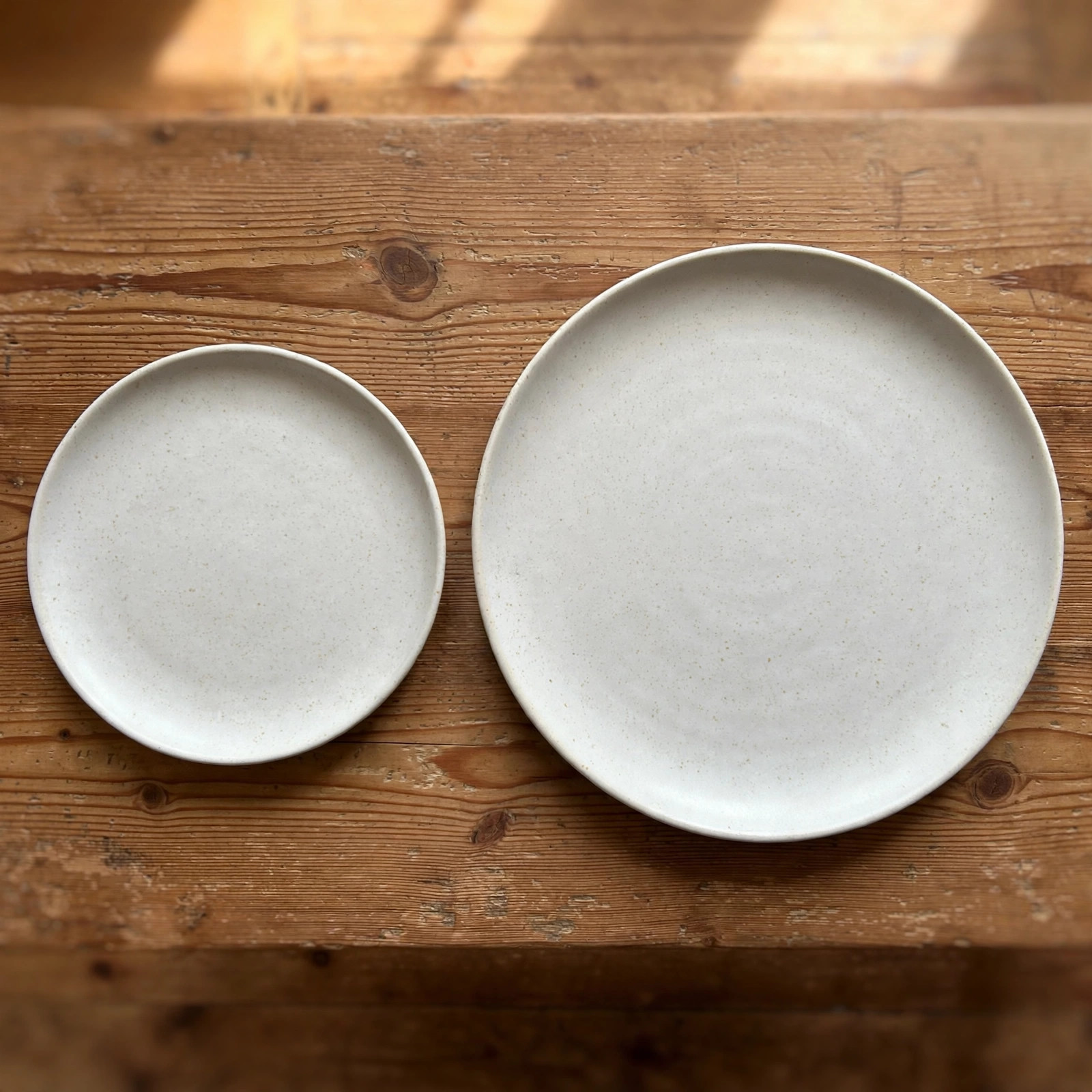
3. Smaller regular plates. Simply switching from 12-inch dinner plates to 9-inch salad plates. No guidance at all, but the plate feels full with less food, and it is the cheapest option — you may already own them. The Mayo Clinic lists smaller dishes among its practical portion strategies.
If you serve yourself from pots at the stove (family style), printed lines usually beat compartments. If you plate individual portions in the kitchen, compartments give the clearest guidance.
What to look for: the buying checklist
Work through these features before choosing — they matter more than the brand name on the box.
Size. Aim for roughly 9 to 10 inches (about 23–25 cm) in diameter. That matches the ADA’s reference plate and keeps total volume in a sensible range. Larger than 10 inches defeats the purpose; smaller than 9 can feel like a snack plate and leave you hungry.
Material. Melamine is light, nearly unbreakable, and common — good if dropping plates is a concern. Porcelain and stoneware look better on a table and feel more like “real” dinnerware. Wheat-straw and bamboo composites are light and eco-flavored, but chip more easily. Whatever you choose, look for “BPA-free” on plastic-based plates.
Dishwasher-safe. Non-negotiable for daily use. A plate that needs hand-washing will stop being your everyday plate within a month.
Microwave-safe — with a caveat. Many portion plates are plastic-based, and melamine in particular should generally not go in the microwave: food-safety agencies advise against microwaving melamine tableware, especially with hot or acidic food. If you reheat leftovers on your plate, choose porcelain, stoneware, or a plate explicitly labeled microwave-safe.
Zone design. Check that the sections actually follow the ½–¼–¼ method. Some novelty plates use arbitrary divisions that don’t match the method. High raised dividers keep foods separate and help scooping; low printed lines are more flexible for saucy food. Pick based on what you cook most.
Weight and grip for hands over 60. A heavy stoneware sectioned plate can weigh over 700 grams empty — awkward with arthritis or a weaker grip. If your hands bother you, prefer lightweight melamine or bamboo-composite designs with a slightly raised rim you can hold.
Looks you’ll keep using. The best portion plate is the one that stays in your rotation. If divided plates make you feel like you’re eating from a school tray, choose a printed-line design in a normal color. Some people buy a set of two — one for home, one for work lunches — which helps consistency.
Set or single. Sets of 2–4 cost less per plate and help if more than one person in the household wants to try. Start with one if you’re unsure the method suits you.
Getting the most out of it: 5 practical tips

- Vegetables first. Fill the vegetable half before anything else goes on the plate. This one habit is linked to higher fiber intake and better portion control across the board.
- Calibrate once. The first time, check that your “quarter of rice” is really a quarter and not half — a quick eyeball check with a measuring cup teaches your eye in one session.
- Keep it visible. Store the plate where you plate food, not behind the fine china. Out of sight means out of use.
- Use it at the hardest meal. For most people that’s dinner, when portions drift largest and mindless refills happen. Even 4–5 evenings a week builds the habit.
- Don’t skip protein. Older adults lose muscle more easily, so the protein quarter matters most. If it regularly ends up empty, that is the meal pattern to fix first — not the vegetable side.
If sugar is the item that keeps creeping onto your plate in the form of desserts and sweetened drinks, our guide on how much sugar is safe after 60 pairs well with this one.
Mistakes to avoid
- Buying a 12-inch “portion plate.” Some products keep the zones but scale the whole plate up — the proportions are right but the portions are not. Check the diameter.
- Using it only on “good” days. Consistency is what trains your eye. An all-or-nothing approach trains nothing.
- Ignoring beverages. The plate guides solids; a large sweetened coffee or juice beside it can undo the good work. Water or unsweetened drinks are part of the method.
- Expecting the plate to do all the work. It guides proportions. You still decide what goes into each zone — and that decision is where the real benefit lives.
When to see a doctor
A portion plate is a kitchen tool, not a medical device. Talk to your doctor or a registered dietitian if:
- You have diabetes, kidney disease, or heart failure — your meal plan may need adjustments the plate method alone doesn’t cover
- You are losing weight without trying, or have very little appetite
- You are taking insulin or glucose-lowering medication and plan to change how you eat
- You suspect an eating disorder or have a complicated relationship with food and portion rules
Sources
- American Diabetes Association, “Eating Well & Managing Diabetes” (Diabetes Plate Method) — https://diabetes.org/food-nutrition/eating-healthy
- Mayo Clinic, “Portion control for weight loss” — https://www.mayoclinic.org/healthy-lifestyle/weight-loss/in-depth/portion-control/art-20045967
- NHS, “The Eatwell Guide” — https://www.nhs.uk/live-well/eat-well/food-guidelines-and-food-labels/the-eatwell-guide/
- USDA, “What is MyPlate?” — https://www.myplate.gov/eat-healthy/what-is-myplate
- University of Georgia Extension, “The Plate Method” — https://site.extension.uga.edu/diabetes/2026/04/the-plate-method/
This article is for general information only and is not medical advice. Talk to your doctor or a registered dietitian about your personal nutrition needs.