Best Lightweight Pans for Seniors: Easier Cooking Without the Strain
Cooking at home is one of the simplest ways to eat well, but it gets harder when your hands and wrists do not cooperate the way they used to. A heavy pan that once felt effortless can suddenly feel like a workout — especially when it is full of food and you need to lift it, tilt it, or carry it to the sink.
The good news is that you do not need to give up home cooking. Choosing a lighter pan, with a handle that suits your grip, can make a real difference to how comfortable and confident you feel in the kitchen. This guide covers what actually matters when you shop: pan weight, handle design, balance, materials, and small cooking habits that take strain off your hands and wrists.
Why Pan Weight Matters More Than You Think
Most people judge a pan by how it feels empty on the store shelf. That is only half the story. A pan that feels fine empty can become a different beast once it holds a couple of servings of stew, a full batch of vegetables, or a pan sauce. The weight of the food, plus the weight of a lid, all adds up — and your wrist bears that load at an awkward angle when you tilt to pour.
For cooks with weaker grip strength or wrist discomfort, that extra load is where problems start. A pan that is too heavy can make you rush a pour, grip harder than is comfortable, or avoid certain recipes altogether. Over time, that avoidance narrows what you cook.
The goal is not to find the lightest pan on the market at any cost. A pan that is too light may slide around on the burner, warp over time, or heat unevenly. The goal is a pan that is light enough to lift comfortably when full, stable enough to stay put while you stir, and balanced so it does not tip forward in your hand.
Materials Compared Honestly
Every pan material trades weight against performance. Here is how the common options compare for a cook who wants less strain.
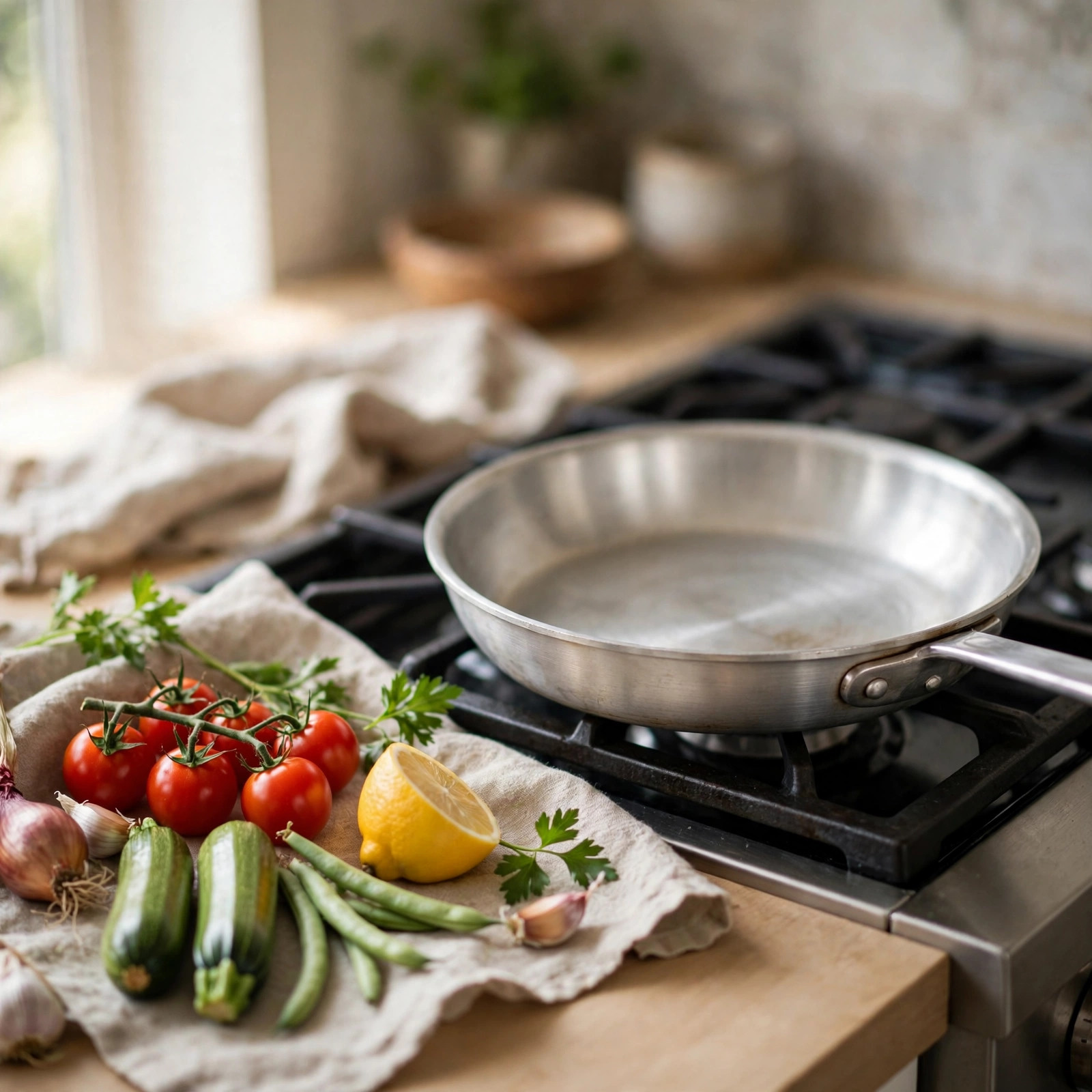
Hard-anodized aluminum is usually the lightest practical choice. It heats quickly and evenly, and a 10- or 12-inch aluminum skillet is often noticeably lighter than the same size in other materials. The trade-off is durability: thin aluminum can warp under high heat, so look for a thicker base and a flat bottom that sits firmly on your burner.
Carbon steel sits in the middle. It is lighter than cast iron, builds a naturally slick cooking surface with use, and lasts for decades when cared for. It does need some seasoning and drying to prevent rust, and it is heavier than aluminum.
Stainless steel with a clad base (usually aluminum sandwiched between steel layers) offers even heating and a tough, low-maintenance surface. It tends to be moderately heavy, and food may stick more than on a nonstick surface unless you learn the right preheating technique.
Cast iron deserves an honest warning here. Traditional cast iron skillets are excellent at holding heat, but they are heavy — often the heaviest pans in the kitchen. If you have wrist pain or reduced grip strength, a large cast iron skillet is probably not the best everyday choice, no matter how well it sears. Enameled cast iron is easier to care for, but it is just as heavy, and its lid adds even more weight.
For most cooks in this guide’s audience, a well-made aluminum or carbon steel pan in a moderate size is the sweet spot between lightness and performance.
What to Look for When You Shop
Empty weight versus full weight. Check the listed weight, but remember food adds a lot. A pan under about 2 pounds empty is a good starting point for a 10-inch skillet; for a 12-inch pan, aim for the lighter end of your chosen material. A 10-inch skillet handles most everyday meals and is far easier to lift than a 12-inch one.
Handle design. This matters as much as weight. Look for a handle that is long enough to give you leverage but not so long that it throws the pan off balance. A handle with a soft, slightly textured grip is easier to hold than smooth bare metal, especially if your hands get tired or damp. Some handles angle slightly upward, which can keep your wrist in a more neutral position. If a handle feels thin or slippery in the store, it will feel worse at home.
Helper handles. A second, smaller handle on the opposite side of the pan is one of the best features for cooks with weaker hands. It lets you lift with both hands, spreading the load and keeping the pan level. Helper handles are common on larger skillets, saucepans, and Dutch ovens — and they are worth seeking out even on mid-size pans.
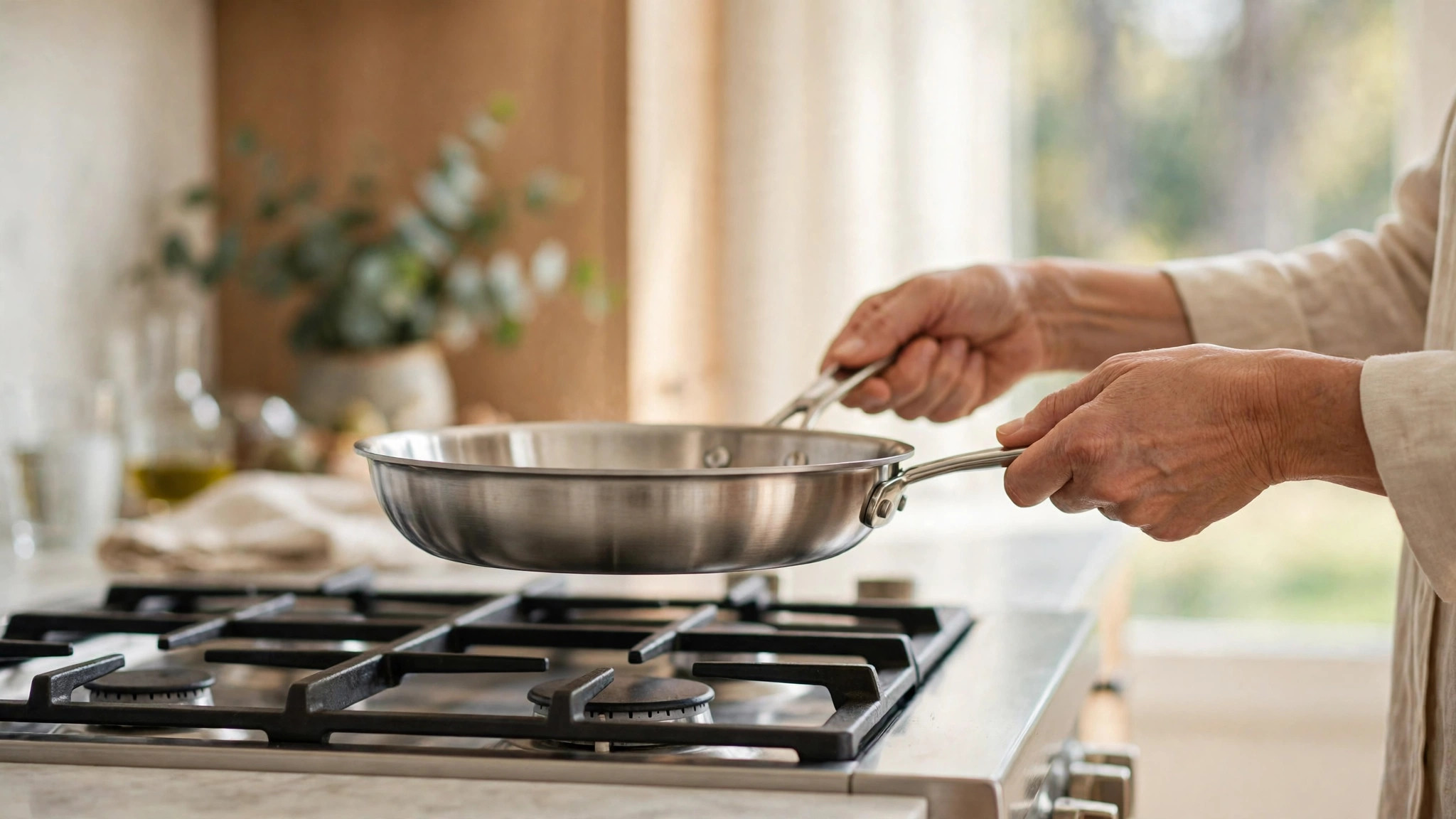
Diameter and depth. A pan that is too wide for your burner heats unevenly and is harder to manage. Match the pan to the burner you actually use most. A deeper skillet with sloped sides helps contain food while you stir.
Induction compatibility. If your cooktop is induction, the pan must have a magnetic base — aluminum pans need a bonded magnetic plate to work. Check the packaging or product description before buying, because a pan that looks perfect is no use if it will not heat on your stove.
Oven safety. Many handles have a temperature limit, and soft-grip coatings may not be oven-safe at high heat. If you like finishing dishes in the oven, confirm the maximum oven temperature before you buy, and remember that a pan coming out of the oven needs a dry towel or mitt.
Pour spouts and lids. A small pour spout can make draining liquids much easier. A heavy glass or cast iron lid adds real weight — a lightweight lid, or cooking without a lid when the recipe allows, keeps the total load down.
Nonstick Care and When to Replace a Pan
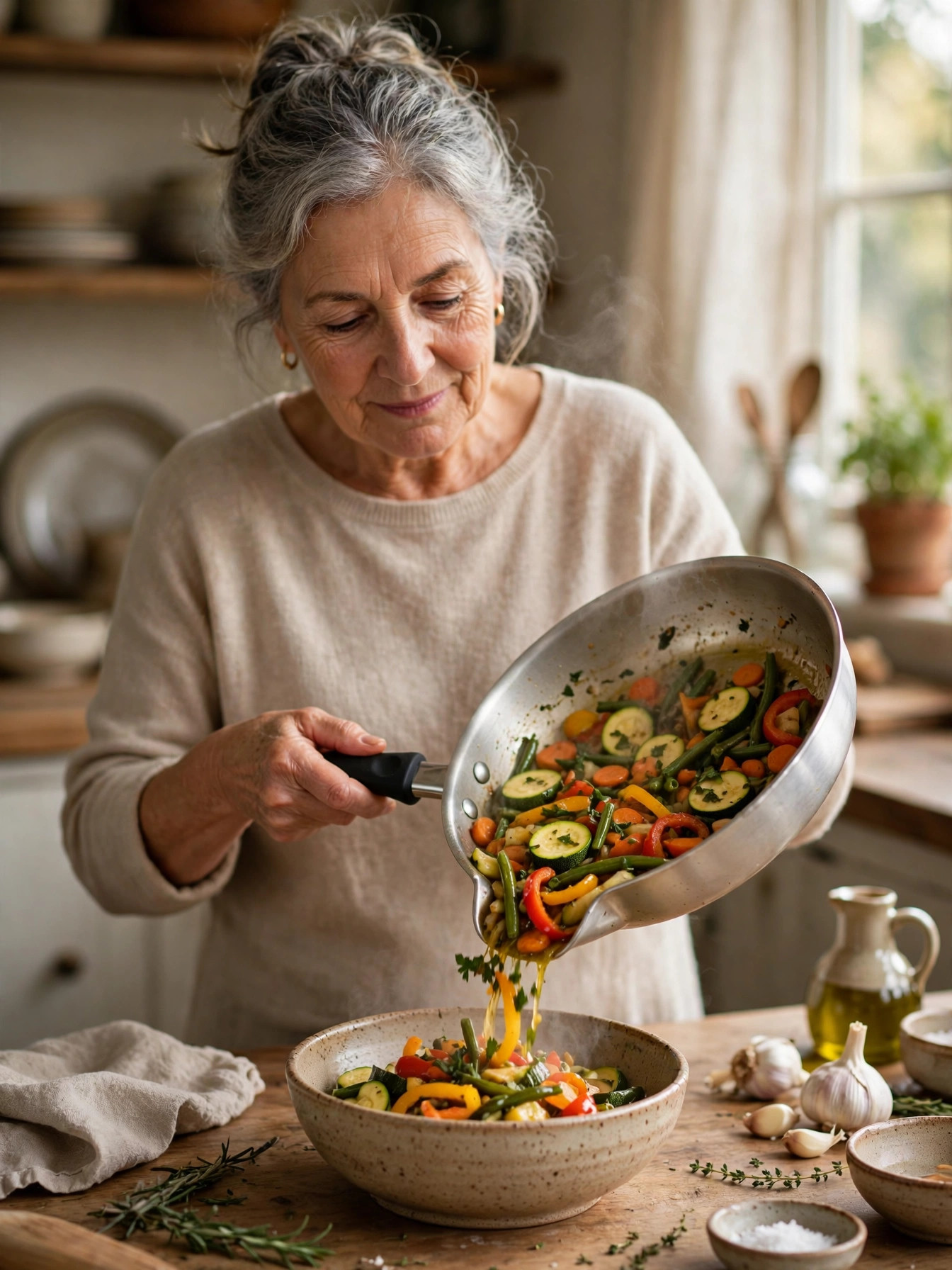
Nonstick pans are popular with older cooks for good reason: food releases easily, which means less scraping, less scrubbing, and less force on your hands.
Use wooden, silicone, or plastic utensils rather than metal ones, which may scratch the surface. Cook on low to medium heat most of the time — very high heat is rarely needed and may shorten the life of the coating. Let the pan cool before washing, and wash by hand with a soft sponge when you can; dishwashers and abrasive pads wear coatings out faster.
Replace a nonstick pan when the coating is visibly damaged — deep scratches, peeling, or flaking, or when food starts sticking badly despite proper care. A damaged coating does not just cook worse; it makes you work harder, which defeats the purpose of choosing a lighter pan.
If you would rather avoid nonstick altogether, well-seasoned carbon steel or a stainless pan used with the right preheating technique can both work well — they simply ask a little more of your technique in exchange for a longer lifespan.
Cooking Habits That Reduce Strain
The right pan helps, but how you cook matters too.
Cook smaller batches. Two smaller batches are easier to lift, stir, and pour than one overloaded pan — and the food often cooks more evenly as well.
Slide instead of lifting. Whenever you can, slide a pan across the stovetop or countertop rather than picking it up. Even a short slide from burner to a nearby trivet beats a full lift.
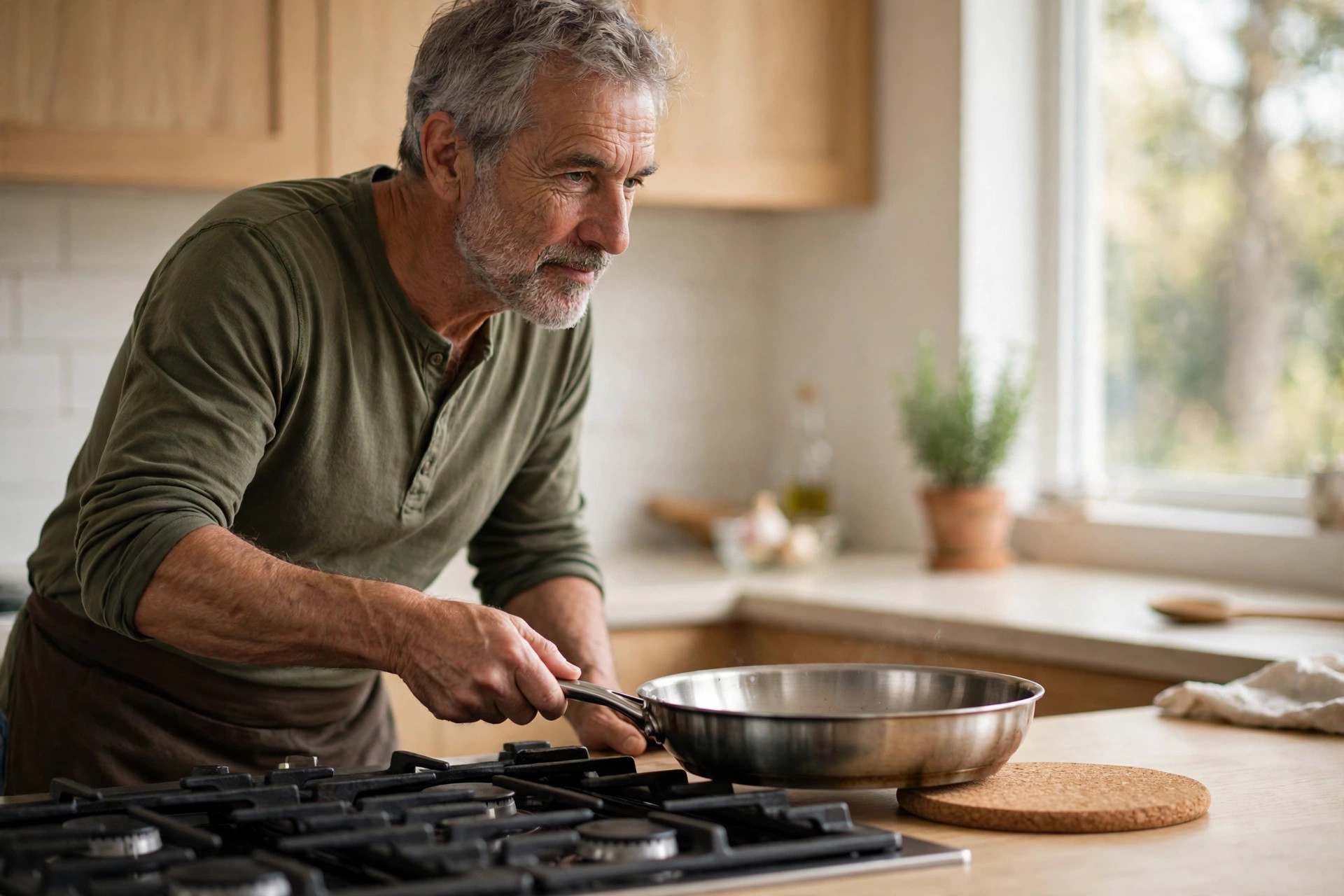
Bring the food to the pan, not the pan to the food. Keep your cutting board and ingredients beside the stove so you are not carrying a full pan across the kitchen. When draining, rest the pan’s edge on the sink rim for support.
Use lids wisely. A lid traps heat and shortens cooking time, but it adds weight. Leave it off when the dish does not need one, and choose the lightest lid that fits when it does.
Keep your workspace close. The shorter the distance between stove, sink, and counter, the less carrying you do. A small kitchen trolley can be a practical workaround if your layout forces long carries.
For more ideas on tools that are kind to sore hands, see our guide to ergonomic kitchen tools, and for other upgrades that make healthy cooking easier, our roundup of the best kitchen gadgets for healthy cooking after 50.
When to See a Doctor
Kitchen strain is usually a matter of better tools and habits, but some symptoms deserve a clinician’s attention. See your doctor or another qualified health professional if you notice:
- Wrist pain that persists, worsens, or keeps coming back
- Grip weakness that makes it hard to hold everyday objects, not just pans
- Numbness, tingling, or pins and needles in your fingers or hand
- Swelling, stiffness, or reduced range of motion in the wrist or fingers
- Pain that follows a fall or injury, even a minor one
These symptoms may have many causes, and a clinician can help identify what is going on and what may help. If wrist pain is a regular part of your life, you may also find our article on wrist pain after 60 useful background for that conversation.
The Bottom Line
The best lightweight pan for you is the one you can lift comfortably when it is full, hold without straining your wrist, and use happily day after day. For most cooks over 55, that means a moderate-size aluminum or carbon steel pan, a comfortable grip, a helper handle where possible, and a lid you can actually lift. Cast iron may stay in the cupboard for special occasions — or find a new home — and that is a perfectly sensible trade.
Good tools do not just make cooking easier — they make it more likely you keep cooking the fresh, home-made meals that support your health.
Sources
- Mayo Clinic — guidance on wrist pain, carpal tunnel syndrome, and arthritis self-care
- National Health Service (NHS) — advice on wrist pain, hand pain, and when to seek medical help
- National Institute of Arthritis and Musculoskeletal and Skin Diseases (NIAMS) — information on arthritis, hand health, and joint care
- Cleveland Clinic — guidance on wrist pain causes, grip weakness, and hand and wrist care
- Centers for Disease Control and Prevention (CDC) — healthy aging and physical activity guidance for older adults
This article is for general information only and is not medical advice. Talk to your doctor or a qualified health professional before making changes related to your health.