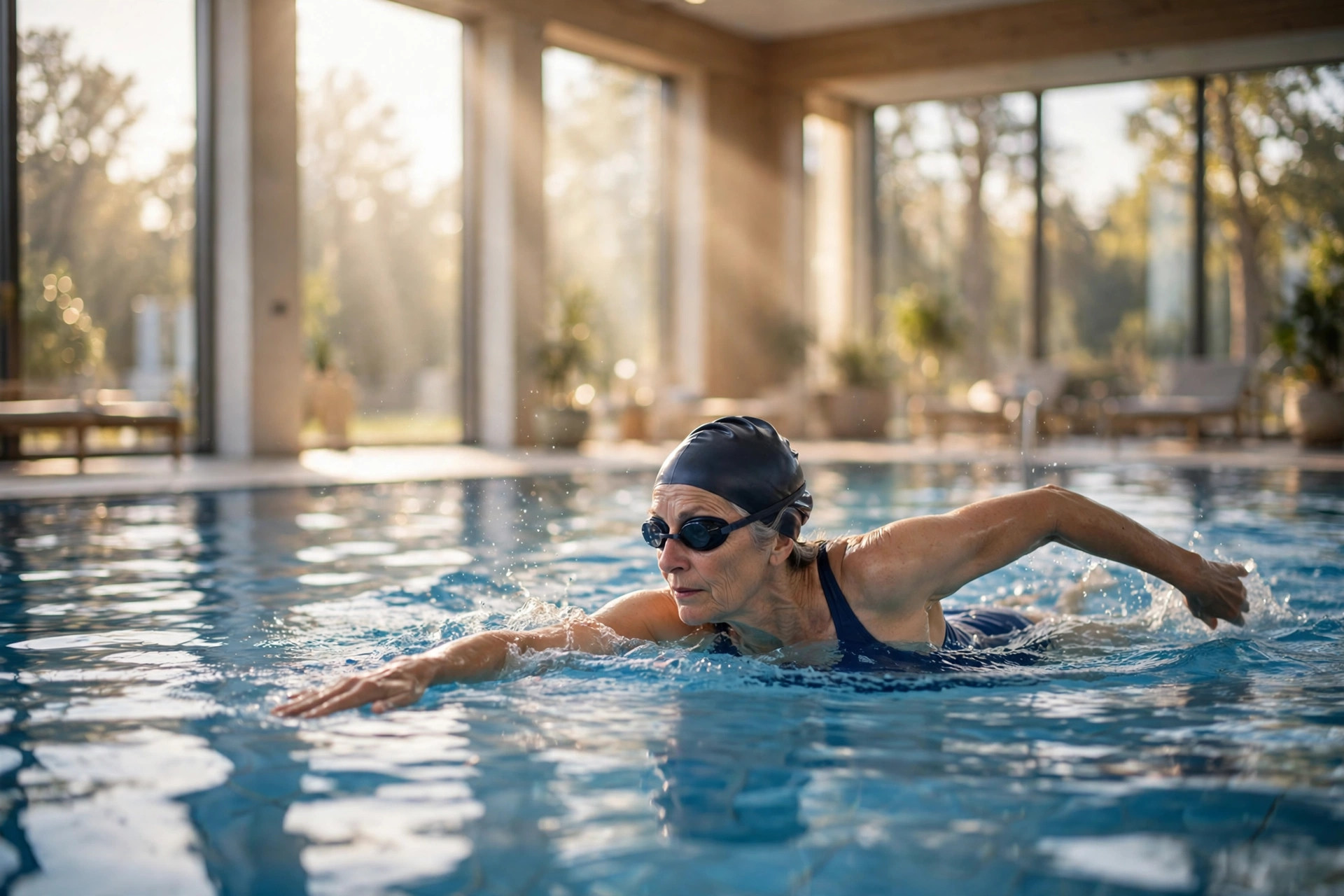
Why Swimming Is the Best Exercise After 60
If your knees complain on stairs, your back aches after a long walk, or the gym feels intimidating, there is good news: some of the best exercise you can do after 60 happens in a pool. Swimming and water exercise are gentle on joints, work the whole body, and are linked to real benefits for heart health, mood, and mobility. This guide covers why water suits older bodies so well, who benefits most, and how to start safely — even if you haven’t swum in decades.
Why water works so well after 60
The magic of the pool comes down to two physical properties: buoyancy and resistance.
Buoyancy takes the load off your joints. When you’re in water up to your neck, buoyancy supports the vast majority of your body weight, so your knees, hips, and spine carry far less stress than they do on land. The Arthritis Foundation notes that water exercise lets people with arthritis move more freely because the water supports painful joints. That means movements that hurt on land — squats, marching, even brisk walking — can feel comfortable in the pool.
Water resists every move you make. Every push, pull, and step in water meets gentle, even resistance, so you’re getting light strength training without dumbbells. Mayo Clinic describes aquatic exercise as a way to build muscle strength and endurance while the water’s buoyancy cushions the joints. The result is a full-body workout: arms, legs, core, and back all contribute, which is hard to match with a single land exercise.
Your heart gets a real workout. Swimming is aerobic exercise. The CDC notes that just 2.5 hours per week of aerobic physical activity — such as swimming, biking, or brisk walking — is linked to a lower risk of chronic illness. For adults 65 and older, current U.S. guidelines recommend at least 150 minutes of moderate-intensity aerobic activity per week, plus muscle-strengthening activities on two or more days. Water workouts can count toward both, which makes them an efficient choice.
It’s easy to cool down — literally. Overheating is a real concern for older exercisers in warm weather. Pool water keeps your body temperature stable, so you can exercise longer and more comfortably than on a hot sidewalk. And many community pools run senior water aerobics classes — showing up regularly with peers is good for consistency, and social connection is linked to better well-being in later life.
Who benefits most
Swimming and water exercise are worth a serious look if any of these sound familiar:
- Arthritis or joint pain. This is the classic case. The Arthritis Foundation specifically recommends water-based exercise for people with arthritis because warm water can ease stiffness while buoyancy reduces impact on sore joints. If you’re wondering how different activities compare, see our guide on whether walking is good for arthritis.
- Bad knees or hips. Pool walking and gentle kicking strengthen the muscles around the knee with minimal pounding. For more ideas, our roundup of 7 low-impact exercises for bad knees covers land-based options that pair well with pool sessions.
- Back pain or spinal stenosis. The horizontal position and weightless feeling in the water can feel like relief for an achy back, though it’s worth checking with your clinician if you have a spinal condition.
- Carrying extra weight. Exercise that is hard on land can be discouraging at a higher body weight. In the pool you move more freely, which makes it easier to build the habit.
- Balance concerns. The pool is one of the safest places to challenge your balance, because a stumble just means a splash. (Pool decks are slippery, though — wear non-slip footwear.)
- Recovering from inactivity. If you haven’t exercised in years, water workouts let you start at a genuinely easy level and progress without soreness derailing you.
If you can’t swim (yet), you can still start
Here’s a secret of water exercise: you don’t need to swim laps to get the benefits. Many older adults never do a single freestyle stroke. Options include:
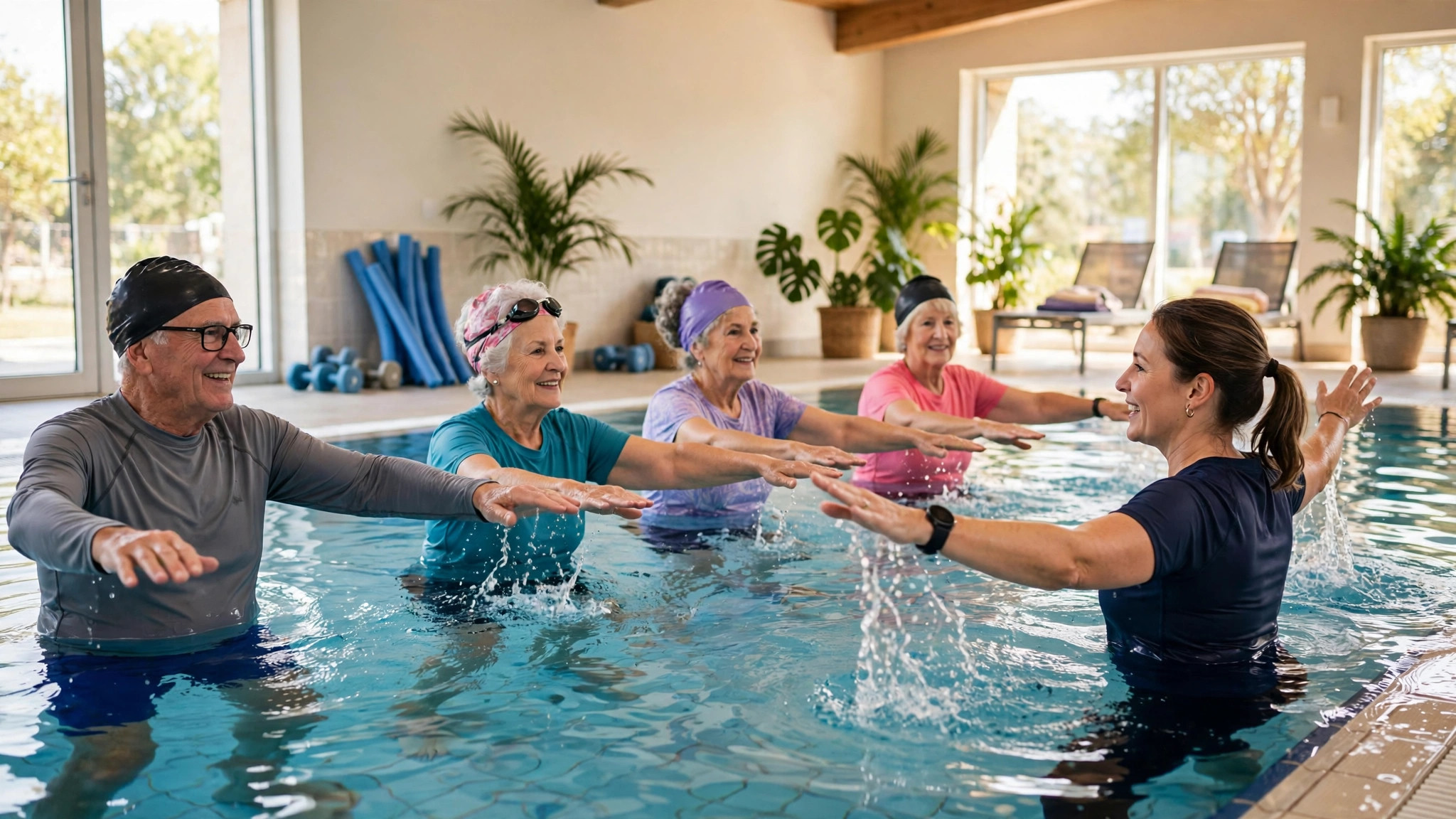
- Water aerobics classes. The easiest entry point. An instructor leads the group through marching, leg lifts, and arm movements in chest-deep water. Most community pools run senior-specific classes, and everything is adjustable to your fitness level.
- Pool walking. Walking laps in waist-to-chest-deep water is excellent exercise. Stand tall, swing your arms, and walk at a steady pace. As it gets easier, add arm movements under the water or short bursts of faster steps.
- Shallow-end routines. You can do a full workout holding the pool edge: leg swings, calf raises, gentle squats, standing marches, and arm pushes. Ten to fifteen minutes is a solid start.
- Flotation aids. Foam noodles, belts, and kickboards keep nervous beginners comfortable in deeper water. Many regulars use them — there’s no shame in it.
If you’d like to actually learn to swim, many pools offer adult beginner lessons, and learning as an older adult is completely normal. But don’t let “I can’t swim” delay you: start with water aerobics or pool walking this week, and consider lessons later if you’re curious.
Your first month in the pool: a beginner workout
Aim for two to three sessions per week, 20–30 minutes each. Rest a day between sessions. Here’s a sample session you can adapt:
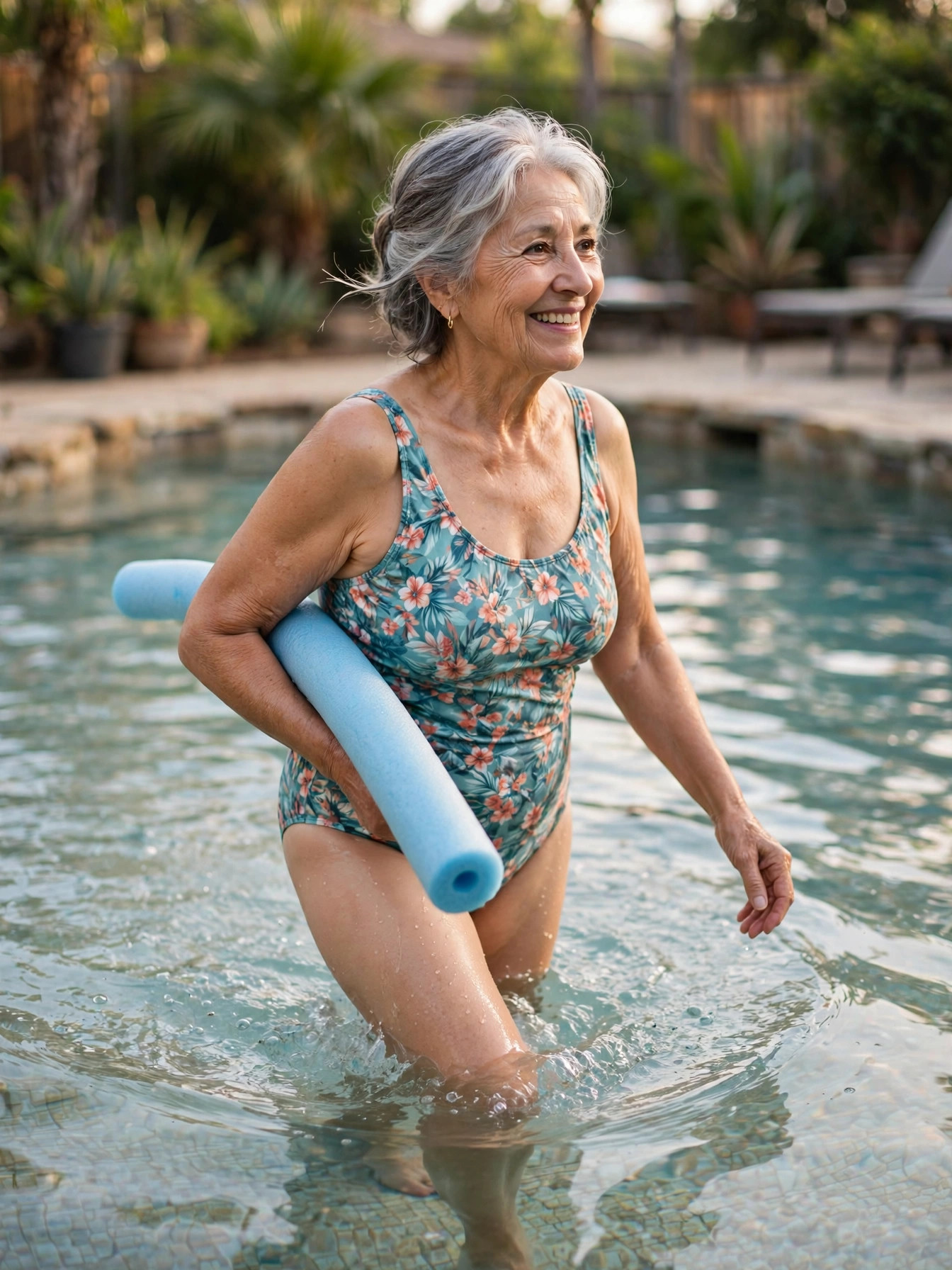
Warm-up (5 minutes): Walk in the shallow end at an easy pace. Add gentle arm circles and shoulder rolls. The goal is to feel warm and loose, not tired.
Main set (10–15 minutes): Alternate one minute of effort with one minute of easy movement. Your “effort” can be any of these:
- Brisker pool walking or marching in place
- Gentle flutter kicks while holding the pool edge or a kickboard
- Arm pushes: stand chest-deep, push your hands forward through the water and pull them back, like a slow breaststroke
- Standing squats in the water (only as deep as feels comfortable)
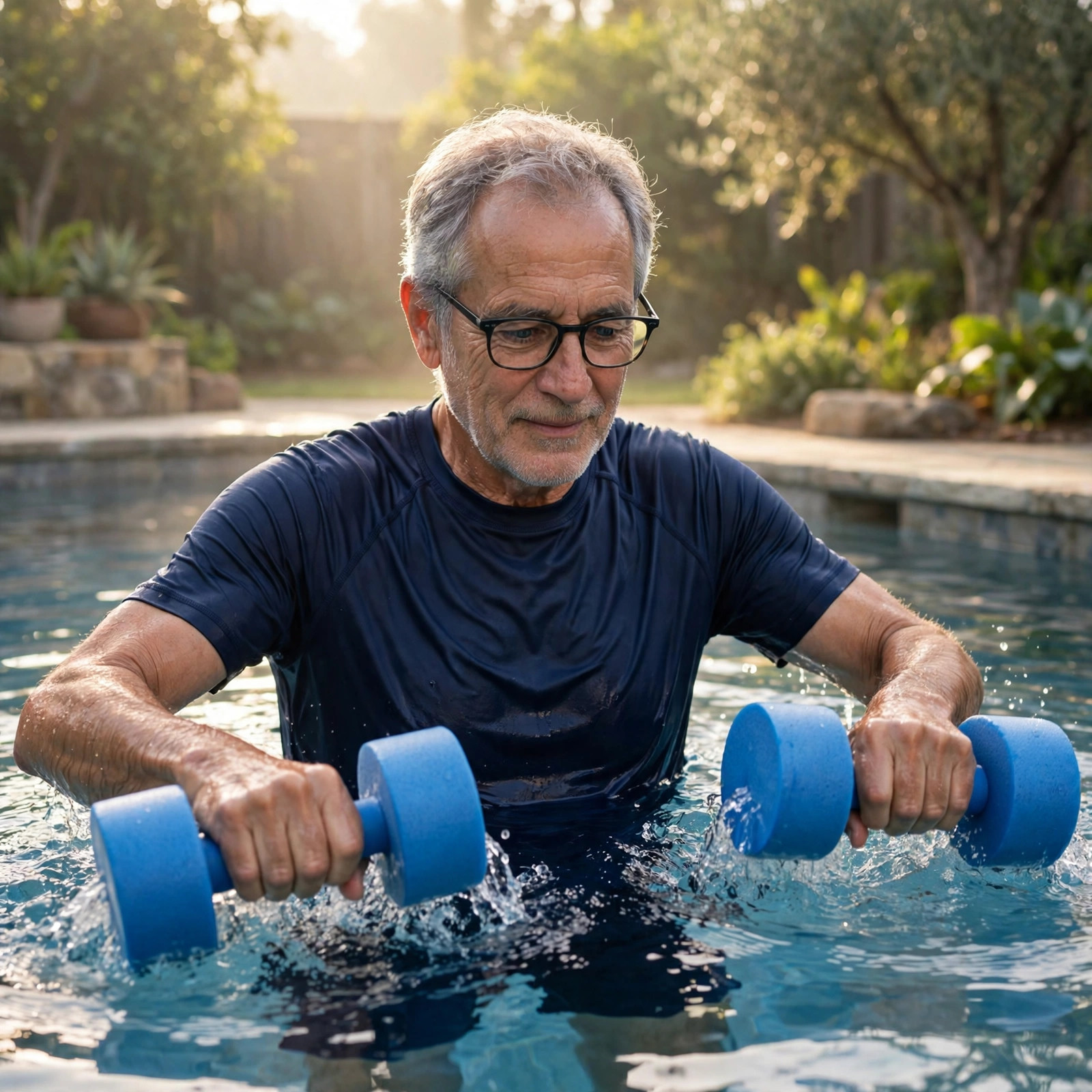
Start with 4–6 rounds and add one round per week as it gets easier. You should be able to hold a conversation throughout — if you’re gasping, slow down.
Cool-down (5 minutes): Easy walking, then gentle stretches against the pool wall: calves, shoulders, and a slow neck roll. Stretching in warm water tends to feel easier than on land.
Progression: After two to three weeks, add five minutes to the main set or try a beginner water aerobics class. Track how you feel rather than chasing numbers — steadier breathing, less morning stiffness, and better sleep are the signs it’s working.
For comparison on land-based cardio goals as you progress, our guide on how much walking is enough after 70 lays out sensible targets that pair well with pool days.
Pool safety rules that actually matter
Water workouts are low-risk, but a few habits keep them that way:
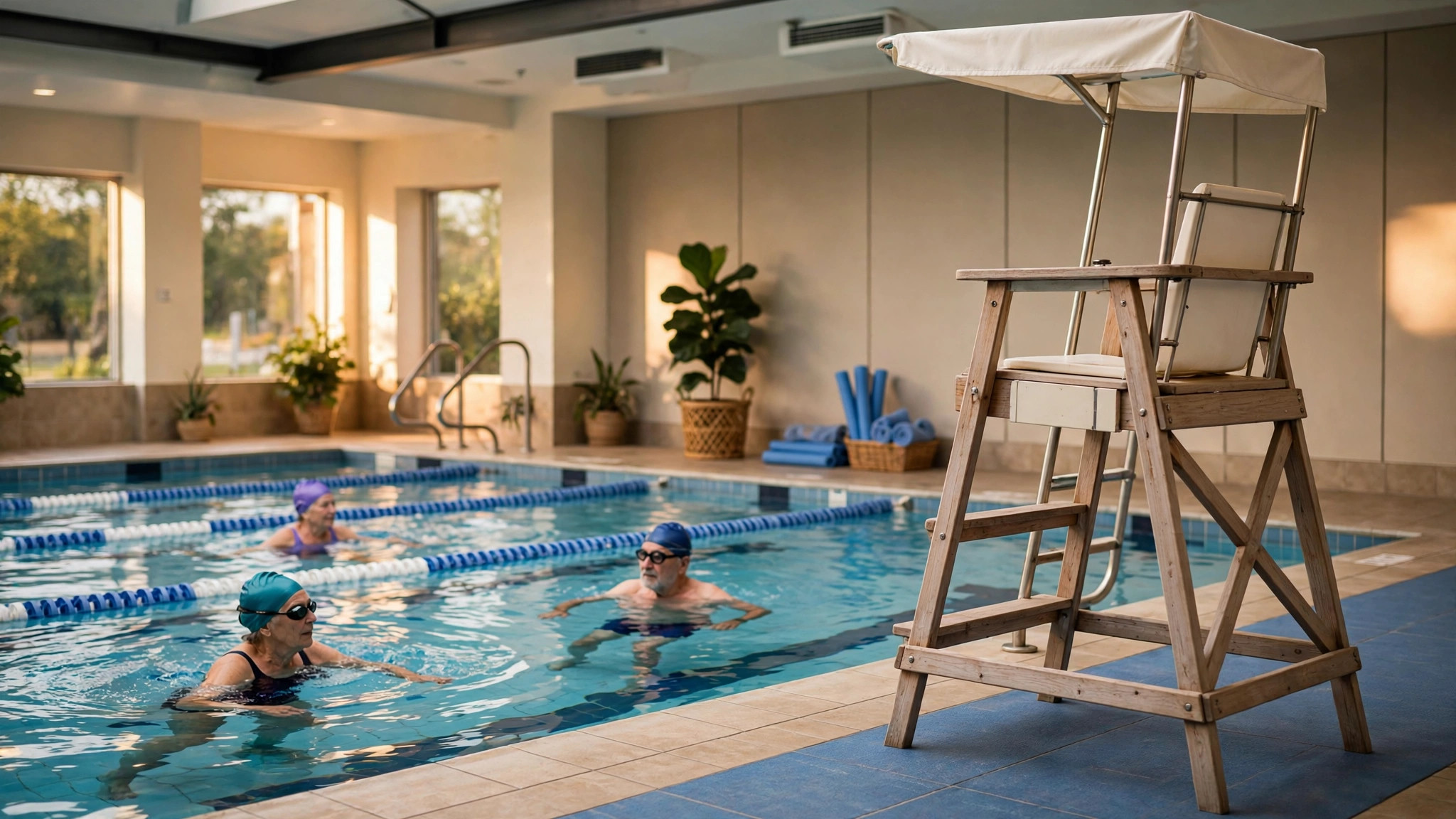
- Choose lifeguarded pools. Swim where a lifeguard is on duty, and never swim alone — this applies at any age, but it’s especially wise after 60.
- Hydrate. You sweat in the pool even though you don’t feel it. Bring water and sip before, during, and after your session.
- Protect your feet. Pool decks are slippery and public showers can harbor athlete’s foot. Wear non-slip pool shoes to the water’s edge, and dry your feet thoroughly afterward.
- Mind chlorine and skin. Chlorine dries skin, which tends to be drier with age anyway. Rinse off after swimming and moisturize. If you have eczema or very sensitive skin, ask your clinician about barrier creams, or look for a saltwater pool.
- Ease into water temperature. Cold water can be a shock and may temporarily raise blood pressure. Warm-water pools (usually 83–88°F / 28–31°C) are ideal for older swimmers; if the water feels cold, enter gradually rather than jumping in.
- Wear what keeps you comfortable. A well-fitting swimsuit and goggles if chlorine bothers your eyes. Comfort is what gets you back next week.
- Tell someone your routine. Let a family member or friend know your pool schedule, and consider a medical alert device poolside if you exercise with a heart condition.
When the pool isn’t right for you
Honesty matters here. Pool exercise may not suit you if you have uncontrolled seizures, open wounds or a healing surgical incision, a severe chlorine allergy, or an inner-ear condition that flares in water. People with certain heart conditions should check with their clinician about water temperature and exertion levels first. If you’re prone to urinary incontinence, check the facility’s policy on waterproof protection so there are no surprises.
The one real downside: bones need impact
Swimming has one genuine limitation worth knowing: because water supports your body, swimming is not a weight-bearing exercise, so it does less for bone density than activities like walking, dancing, or stair climbing. Bone loss accelerates with age, especially for women after menopause, and weight-bearing exercise is one of the best defenses.
The fix is simple: don’t rely on the pool alone. The National Institute on Aging recommends a mix of endurance, strength, balance, and flexibility activities. Think of swimming as your cardio and joint-friendly base, then add weight-bearing movement on other days — even a 20-minute walk counts. A week with two pool sessions and two or three walks covers far more ground than either one alone.
When to see a doctor
Talk to your clinician before starting a pool exercise program if you have a heart condition, uncontrolled high blood pressure, diabetes, severe asthma, epilepsy, or a recent surgery or injury. Seek prompt medical attention if you experience chest pain or pressure, unusual shortness of breath, dizziness, fainting, or an irregular or racing heartbeat during or after exercise. If joint pain sharply worsens during water exercise rather than easing, stop and get it checked rather than pushing through.
Sources
- National Institute on Aging — “Exercise and Physical Activity: Getting Fit for Life”: https://www.nia.nih.gov/health/exercise-and-physical-activity/exercise-and-physical-activity-getting-fit-life
- CDC — “Physical Activity for Older Adults” (150 minutes/week guidance): https://www.cdc.gov/physical-activity-basics/guidelines/older-adults.html
- CDC — “Healthy Swimming / Benefits of Water-Based Exercise”: https://www.cdc.gov/healthywater/swimming/
- Mayo Clinic — “Aquatic exercise: Gentle on your bones, joints and muscles”: https://www.mayoclinic.org/healthy-lifestyle/fitness/in-depth/aquatic-exercise/art-20546802
- Arthritis Foundation — “Swimming as Exercise: Water Workouts for Arthritis”: https://www.arthritis.org/health-wellness/healthy-living/physical-activity/other-activities/water-exercise-benefits-for-arthritis
- NHS — “Swimming for fitness”: https://www.nhs.uk/live-well/exercise/physical-activity-guidelines-older-adults/
This article is for informational purposes only and is not medical advice. Talk to your clinician before starting a new exercise program.