Walking Backwards After 60: Balance Benefits and Safety
It looks odd, and that is exactly the point. Walking backwards — sometimes called retro walking — takes a movement you have done on autopilot for decades and turns it into a small balance puzzle. You cannot see where you are going, so your feet, ankles, and sense of body position have to do more of the work. For some adults over 60, that extra demand may help balance and coordination. For others, it is too risky to try without help.
This article explains what the evidence actually says, who should skip this drill, and how to practise it safely. Safety comes first: walking backwards raises your chance of tripping, so the setup matters more than the exercise itself.
Why walking backwards feels so different
Forward walking is automatic. Your eyes scan the path ahead, your brain predicts each step, and your legs follow a pattern they have repeated millions of times. Walking backwards removes most of that help. You lose visual guidance, so you must rely more on the feeling in your feet and ankles, known as proprioception. The step pattern changes too: you reach back with your toes first, then roll onto the heel, which asks different work of your quadriceps, calves, and hip flexors. The Cleveland Clinic notes that backward walking works the gluteal muscles, quadriceps, and hip flexors more than forward walking, and demands more concentration.
That novelty is why physiotherapists have used backward walking in rehabilitation, usually with supervision and a clear space. It is also why it should never be treated as a casual stroll: the same unfamiliarity that trains balance also makes a fall more likely if you are unprepared.
What the evidence actually says — and what it does not
Honesty first: the evidence for backward walking in healthy older adults is thin. Most studies are small, short, and done in supervised settings, often with people recovering from an injury or living with knee osteoarthritis or stroke. The claims you see online — better memory, stronger knees, sharper thinking — run well ahead of what the research has shown.
- Balance may improve. A 2025 review and meta-analysis included five small trials with 208 adults aged 60 and older. Three of them measured balance on the Berg Balance Scale, where scores improved by an average of about 4.75 points — but results varied widely, so that average should be read with caution.
- Everyday movement may improve too. The same review linked backward-walking training to better functional mobility, and earlier reviews reported a similar pattern.
- Knee comfort may improve for some people. The Cleveland Clinic notes that the toe-first step pattern engages the quadriceps, which help support the knee, and that the cross-training effect of retro walking may suit some people with joint pain and arthritis. This is not a reason to stop any treatment your clinician has prescribed.
- The brain works harder — but “sharper memory” is unproven. Walking backwards demands more attention, and brain studies suggest it activates areas involved in planning and attention. That is a long way from proving it improves memory.
The CDC lists walking backward as an example of a balance activity for adults 65 and older, alongside standing on one leg and walking heel-to-toe. But it is not a CDC recommendation to walk backwards on your own at home, and backward walking is not a proven way to prevent falls. It should sit alongside — never instead of — the balance and strength work with the strongest evidence behind it, such as the exercises in Balance Exercises to Prevent Falls.
Who it may suit — and who should skip it
Backward walking is a drill, not a daily walk. It may suit you if you can already walk on level ground without help and without feeling unsteady, you can stand on one foot briefly while holding a counter, you have a clear indoor space and a partner for support, and you are patient enough to start with a few steps and stop early.
Skip it — or talk to your clinician or a physical therapist first — if any of these apply: you have fallen in the past year or had near-falls; you have severe balance problems, dizziness, or vertigo; you have numbness in your feet from neuropathy, which removes the feedback this drill depends on; you have osteoporosis with a high fracture risk; your vision is poor, or you use a cane or walker; or you have a heart condition, very high blood pressure, or another condition that limits exertion. If you are unsure, a short conversation with your clinician or a physical therapist can settle it — they can test your balance in a few minutes.
Set up safely first
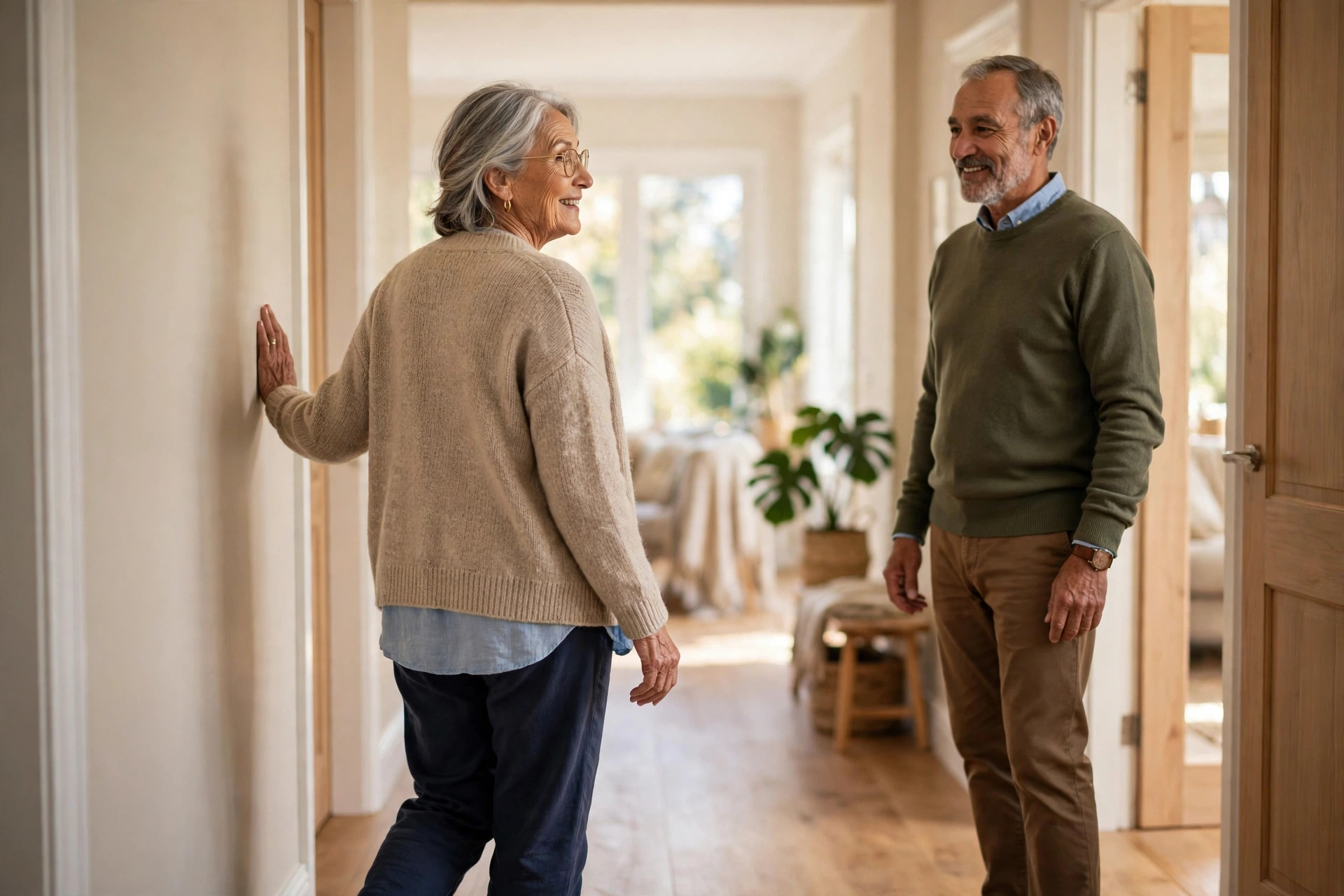
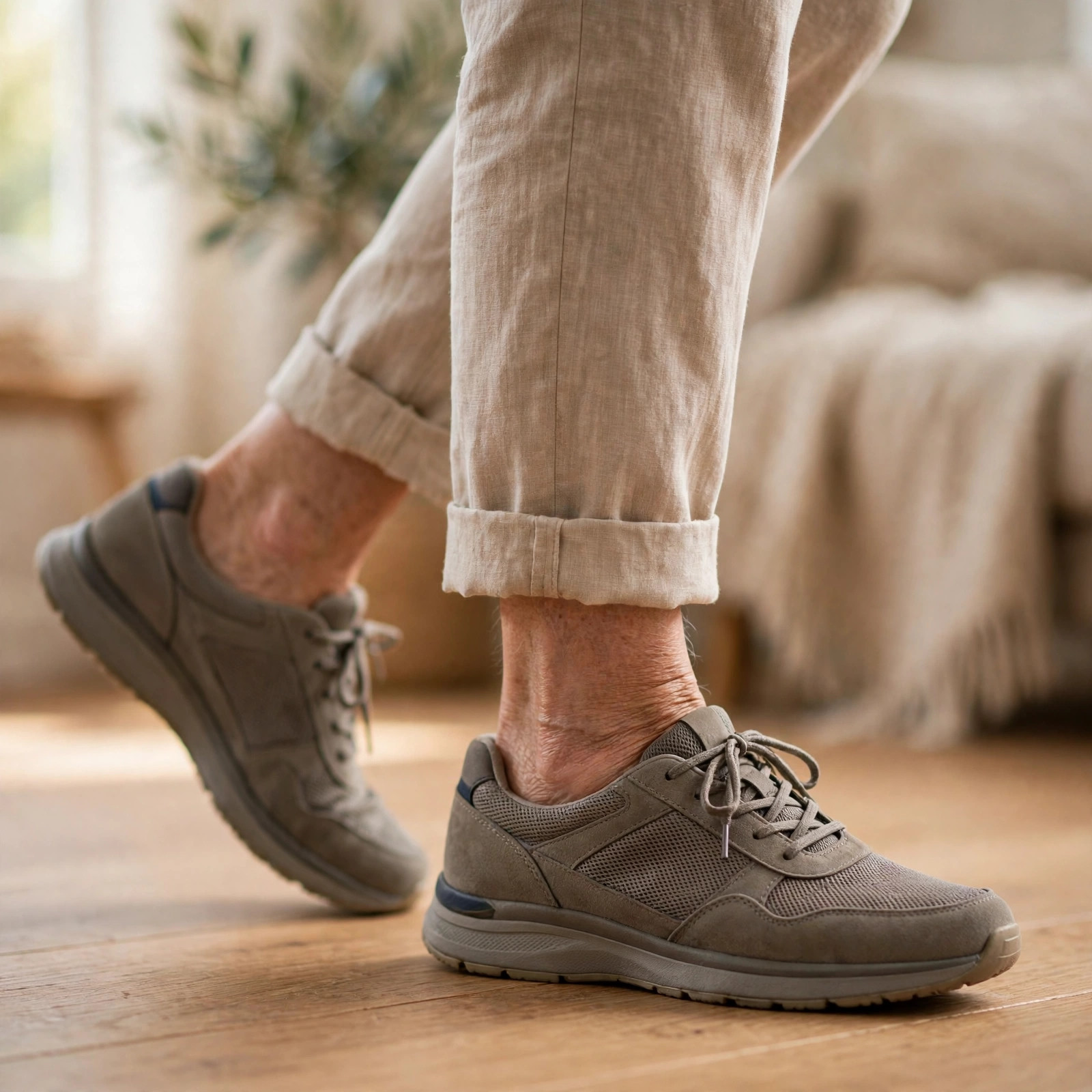
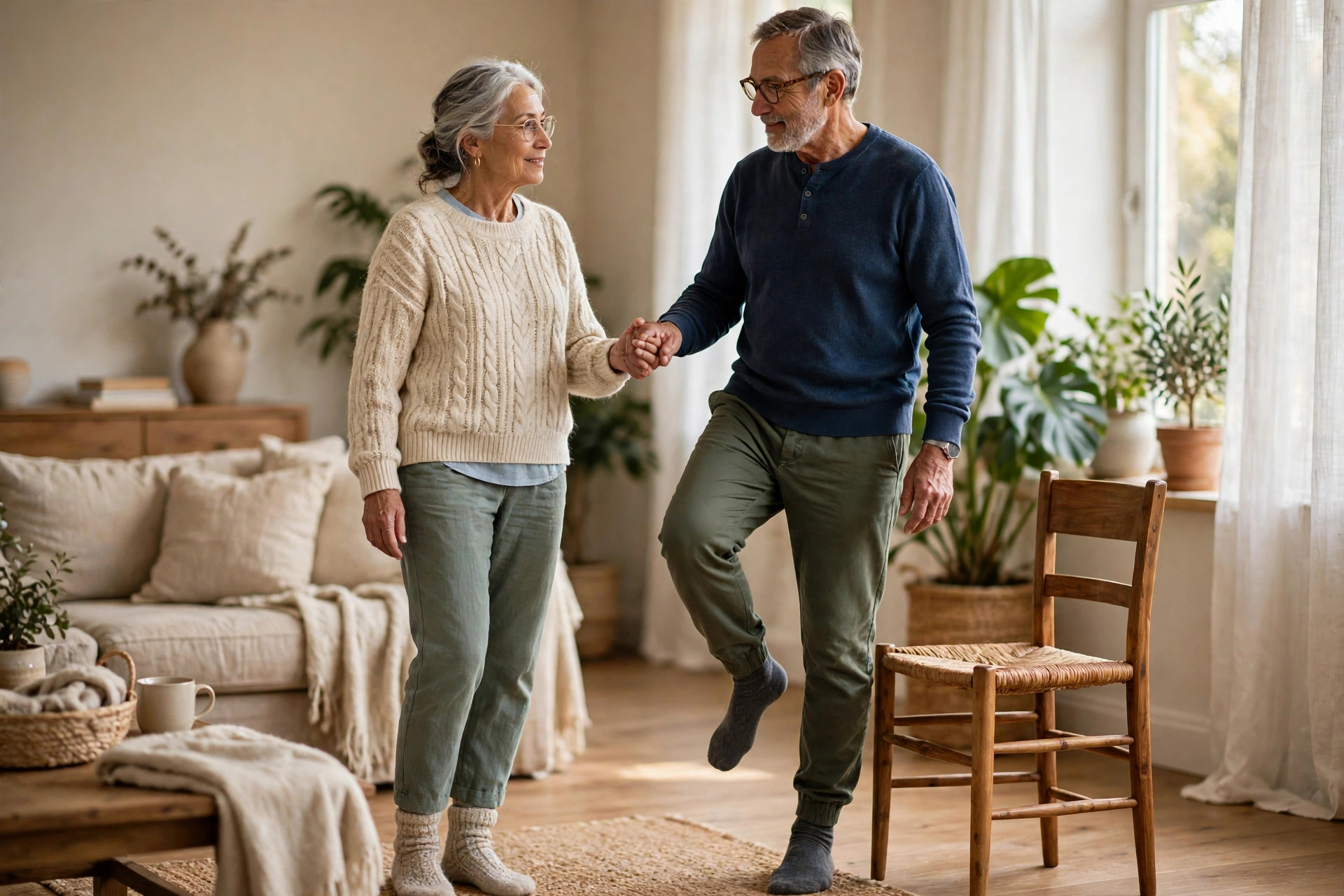
Never practise backward walking in a cluttered room, on uneven ground, or outdoors on your first try. Pick a clear hallway: a straight, flat stretch with nothing on the floor — no rugs, cords, shoes, or pet toys. A hallway with a wall on one side is ideal. Bring a partner for your first sessions, to walk beside you, watch the path behind you, and steady you if needed. Keep a hand near support — walk with one hand lightly touching the wall, or with a sturdy counter within reach. Wear flat, closed shoes with a good grip, and avoid slippers and smooth soles. Practise in daylight or a well-lit room, glance over your shoulder every few steps, and leave the headphones off. Skip the treadmill for now: a moving belt adds speed and risk to a drill that is already unfamiliar.
A slow four-week way to start
This is a suggested gradual plan for healthy adults who have cleared the checks above — not a prescription. Go at your own pace, and stay at any stage for as long as you need. If anything feels unsteady, go back a stage.
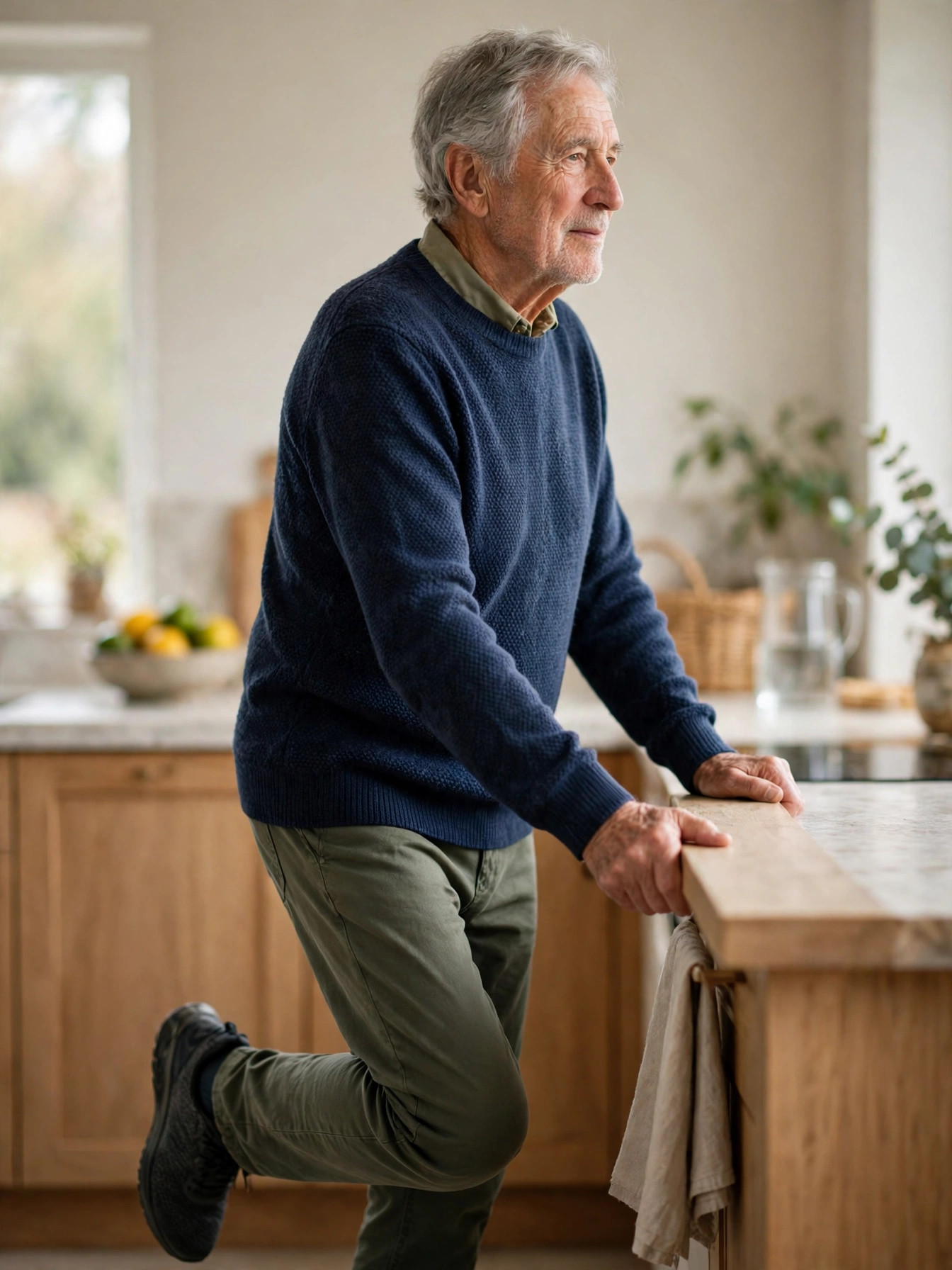
Week 1 — Supported steps. Stand beside a wall or kitchen counter with one hand resting on it. Take five slow steps backwards, pause, then walk forwards back to your start. Repeat three times, two or three times in the week.
Week 2 — Short hallway passes. With a partner beside you and a hand near the wall, walk backwards for about five metres, then turn around carefully and walk forwards back. Rest, then repeat two or three times. Keep steps short and slow.
Week 3 — Less hand support. If the hallway passes feel steady, try walking with just your fingertips brushing the wall, or with your partner beside you and no wall contact. Keep the same short distance. If you wobble, go back to full hand support for another week.
Week 4 — A flat outdoor path, with company. Only if the indoor stages feel easy, try a short stretch on a flat, smooth park path with a companion. Pick a quiet time, check the surface first, and keep it to a few minutes. Never walk backwards outdoors alone.
Stop right away if you feel dizzy, breathless, or unsteady; if your knees or hips hurt; if you stumble; or if your steps get sloppy when tired. Fatigue is when mistakes happen. A good session ends while you still feel steady.
Where it fits in your week
Think of backward walking as a spice, not the main dish. The CDC recommends that adults 65 and older get at least 150 minutes of moderate aerobic activity a week, muscle-strengthening activities on two or more days, and balance activities as well. Forward walking is still the foundation — see Walking After 70: How Much Is Enough? and How Many Steps Per Day After 60 for sensible targets. A realistic week: forward walks most days, strength work twice a week, and two or three short backward-walking sessions of five to ten minutes as part of a balance routine. If you already do tai chi or heel-to-toe walking, backward walking adds variety — it does not replace them. And if you try it and decide it is not for you, that is a good outcome too. The best balance exercise is the one you will do safely and regularly.

Quick answers
Is walking backwards safe for seniors? It can be, for healthy adults who set up a clear space, use hand support, and have a partner nearby. It is not safe for everyone — see the list above — and it carries a real fall risk if done carelessly.
How long should a session last? Start with a few minutes. Five to ten minutes, two or three times a week, is a reasonable target once the early stages feel easy. Short and steady beats long and wobbly.
Does it help knee pain? It may help some people with knee discomfort, since it engages the quadriceps that support the knee. The evidence is small, so do not expect it to ease knee pain on its own.
When to see a doctor
See your clinician promptly if you have fallen or had repeated near-falls; if you feel dizzy, light-headed, or unsteady when you walk or turn; if you have new numbness or tingling in your feet or legs; if you have new or worsening knee, hip, or back pain that does not ease with rest; if you feel chest pain, unusual breathlessness, or a racing heartbeat during exercise; or if you are considering this drill and you have osteoporosis, a neurological condition, or a heart condition.
The bottom line
Walking backwards after 60 is a small, focused balance drill — not a new way to walk, and not a shortcut to steadier legs. The evidence suggests it may help balance and coordination in supervised, short sessions, but the research is small and the fall risk is real. If you are steady on your feet, set up a clear hallway, bring a partner, keep a hand near the wall, and progress slowly. If any warning sign applies to you, skip it and choose a safer balance exercise instead. The goal is to stay steady, confident, and on your feet for years to come.
Sources
- Centers for Disease Control and Prevention, “Older Adult Activity: An Overview” — https://www.cdc.gov/physical-activity-basics/guidelines/older-adults.html
- Centers for Disease Control and Prevention, “What Counts as Physical Activity for Older Adults” (lists walking backward as a balance activity) — https://www.cdc.gov/physical-activity-basics/adding-older-adults/what-counts.html
- National Institute on Aging, “Exercise and Physical Activity” — https://www.nia.nih.gov/health/exercise-physical-activity
- Cleveland Clinic, “5 Unexpected Benefits of Walking Backward” — https://health.clevelandclinic.org/benefits-of-walking-backwards
- “Effects of Backward Walking Training on Balance and Fall Risk in Older Adults: A Systematic Review and Meta-analysis,” Physical Therapy and Rehabilitation Science, 2025 — https://doi.org/10.14474/ptrs.2025.14.4.487
This article is for general information only and is not medical advice. Talk to your clinician before starting a new exercise program.