Best Air Fryers for Seniors: Healthier Cooking Made Simple
If you’ve ever wondered whether an air fryer is worth the counter space after 50, the honest answer is more interesting than the marketing. An air fryer is a cooking tool, not a health intervention. It can’t turn french fries into a health food, but it can genuinely change how much oil your food absorbs, and for older cooks there are real safety and convenience reasons to consider one. This guide covers what the evidence actually says, who benefits most after 50, and how to choose the right model — without naming brands, prices, or pushing a product.
How an Air Fryer Actually Works
Despite the name, an air fryer doesn’t fry at all. It’s essentially a compact convection oven: a heating element warms the air while a powerful fan circulates it rapidly around the food. That fast-moving hot air creates a crisp, browned surface through the Maillard reaction while using a teaspoon of oil or less, instead of submerging food in a deep pot of hot oil.
Is Air Frying Actually Healthier? The Honest Evidence
This is where most articles either hype the benefits or skip the caveats. Let’s look at both sides, because both are backed by real research.
The fat and calorie win — the solid claim
This is the part of the story the evidence supports clearly. Deep-fried food absorbs roughly 8–25% of its weight in cooking oil, while air frying uses somewhere between zero and one tablespoon of oil total for the same amount of food. A 2015 study by Shaker in the International Food Research Journal measured oil uptake directly: about 14.8% in traditionally fried potato strips versus about 0.003% in air-fried ones — and wider comparisons in the literature report roughly 70% less fat with air frying (Santos et al., 2017). In practical terms, swapping one deep-fried serving for an air-fried one can cut roughly 150–200 calories from that dish.
Deep frying also degrades cooking oil through repeated heating, which can create trans fats. Air frying sidesteps that problem entirely — there’s no vat of oil to reuse.
So if air frying replaces deep-fried foods in your weekly routine, that is a real improvement. An important nuance from the research: if air frying replaces steamed or oven-roasted vegetables in your kitchen, it isn’t necessarily any better — the win is relative to deep frying, not to every cooking method.
The acrylamide question — the honest nuance
Acrylamide is a compound that forms when starchy foods like potatoes are heated above about 120°C (248°F). The International Agency for Research on Cancer classifies it as a probable carcinogen, which is why you’ll see confident claims that air fryers “reduce acrylamide by 90%.” One 2015 study by Sansano and colleagues, published in the Journal of Food Science, did find roughly 90% less acrylamide in air-fried potatoes than deep-fried ones, with no pretreatment needed. (The pre-soaks in that study used chemical solutions such as citric acid or sodium chloride — not plain water — and they also cut acrylamide substantially in deep-fried samples.)
But the newer evidence complicates the story. A 2024 study by Navruz-Varlı and Mortaş, published in Frontiers in Nutrition, compared air-fried, deep-fried, and oven-fried potatoes and found slightly more acrylamide in the air-fried batch (12.19 vs. 8.94 μg/kg) — though the difference was not statistically significant, meaning no method clearly won. The same study confirmed that soaking cut potatoes in water for 10 minutes before cooking reduced acrylamide across all methods. For chicken, a 2020 study found that air frying produced lower acrylamide and PAH (polycyclic aromatic hydrocarbon) levels than deep frying.
The bottom line: oil and calorie reduction is the proven win. The acrylamide story is method-dependent, and anyone claiming a simple victory for air fryers on this point is overclaiming. Two practical takeaways that the evidence does support: soak cut potatoes in water for about 10 minutes before cooking, and cook to golden rather than dark brown — longer, hotter cooking drives more acrylamide formation regardless of method.
Who Benefits Most After 50
The strongest case for an air fryer in an older adult’s kitchen isn’t really about trendy health claims — it’s about practicality and safety. Cooking for one or two in a full-size oven wastes energy. An air fryer preheats in minutes, cooks smaller portions evenly, and is far easier to clean than a roasting pan.
The safety angle matters too. Deep frying at home involves a vat of hot oil at over 175°C (350°F) — splatter burns and spilled oil are real hazards that get riskier with slower reflexes. Air frying eliminates the oil bath entirely, which removes splash burns and reused-oil trans fats in one move.
That said, air fryers aren’t risk-free. The exterior surfaces get hot during cooking, some larger units are heavy to move, and the compact size means cooking for a family requires multiple batches. Treat them like any hot appliance: respect the heat, and don’t assume the smaller size means lower risk.
A Practical Buying Guide (No Brands, No Prices)
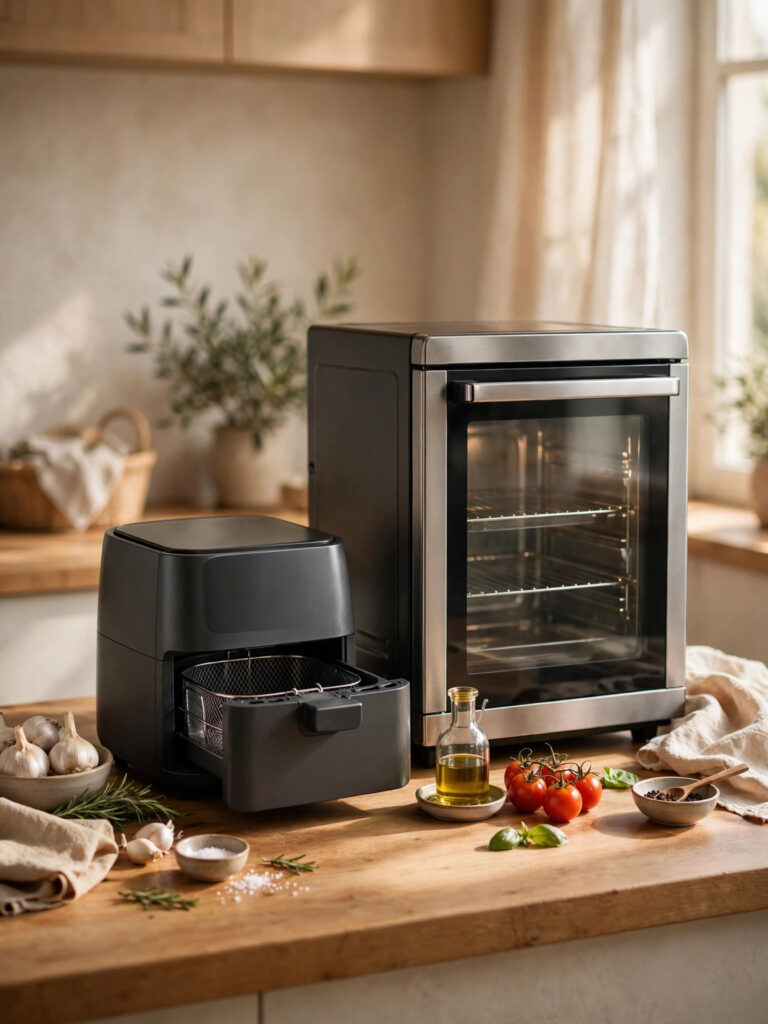
Since this category changes constantly, here’s how to evaluate any model on its merits — the decision framework matters more than any single recommendation.
Basket-style vs. oven-style
Basket-style (drawer) models look like a small coffeepot with a pull-out drawer. They’re compact, intuitive, and ideal for 1–2 people. The trade-off: limited capacity and usually one function — though many do roast and reheat decently.
Oven-style models resemble small toaster ovens with a front door, racks, and often a rotisserie option. They cook larger quantities, fit a whole chicken, and can replace several appliances. The trade-offs: they take up more counter space, weigh more, and the extra settings can overwhelm cooks who just want dinner done simply.
For most adults over 50 cooking for themselves or a partner, a simple basket-style model is usually the more sensible starting point.
Capacity: match it to your household
- 2–3 quarts (litres): enough for one person or light snacking. Lightweight and easy to store.
- 4–5 quarts: the sweet spot for two people — a full meal of protein plus vegetables in one or two batches.
- 6+ quarts / oven-style: family cooking or batch meal prep. Expect a heavier, bulkier unit.
Bigger isn’t automatically better. An oversized fryer you have to lug out of a cabinet is a fryer you’ll stop using.
Presets vs. manual dials
Digital touchscreens with presets (fries, chicken, fish, vegetables) eliminate guesswork — but only if the display text is large and legible. Some cooks strongly prefer the tactile simplicity of two physical dials: one for temperature, one for time. If your vision isn’t what it was, prioritize large, high-contrast markings over feature counts, and look for models with clear audible alerts when cooking finishes.
Wattage and what it means
Most air fryers run between 1,200 and 1,800 watts. Higher wattage generally means faster preheating and crispier results, but check that the unit won’t trip a breaker if it shares an outlet with a microwave or kettle. Wattage alone shouldn’t decide the purchase.
Nonstick coating care
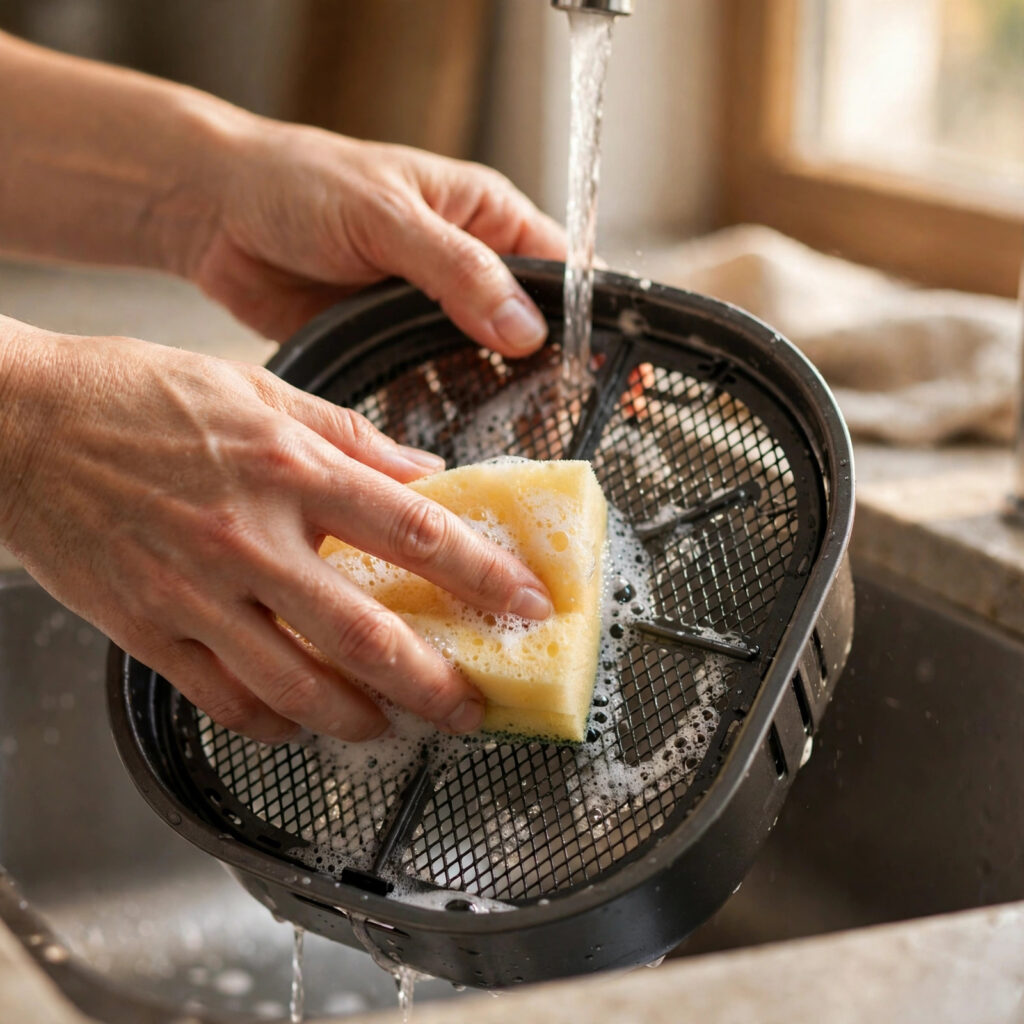
The basket’s nonstick coating is what makes cleanup easy — and what makes coating care matter. Metal utensils scratch it; once scratched, food sticks and cleaning gets harder. Look for baskets labeled dishwasher-safe, use silicone or wooden utensils, and let the basket cool slightly before washing. Some newer models use ceramic coatings marketed as PFAS-free, which some buyers prefer; whatever the coating, the care rules are the same: no metal, no abrasive scouring pads.
Cleaning ease
A removable basket and crisper plate wash in the sink in minutes. Check before buying: do the removable parts separate easily? Are they dishwasher-safe? Can you reach every corner of the basket without a bottle brush? If cleaning looks fiddly in the store or in a video, it will be fiddly at home.
Countertop footprint and weight
Measure your counter before you shop. Air fryers need several inches of clearance behind and above for venting — pushing one against a wall or under a low cabinet is a fire-safety issue, not just a convenience one. Weight matters too: a 13-pound unit that lives on the counter is fine; the same unit stored on a high shelf becomes a hazard every time you lift it down. Keep it where you can reach it without straining.
Safe Use Tips for Older Cooks
- Place it right: flat, stable surface, vents clear, at least a few inches from walls and away from the edge of the counter.
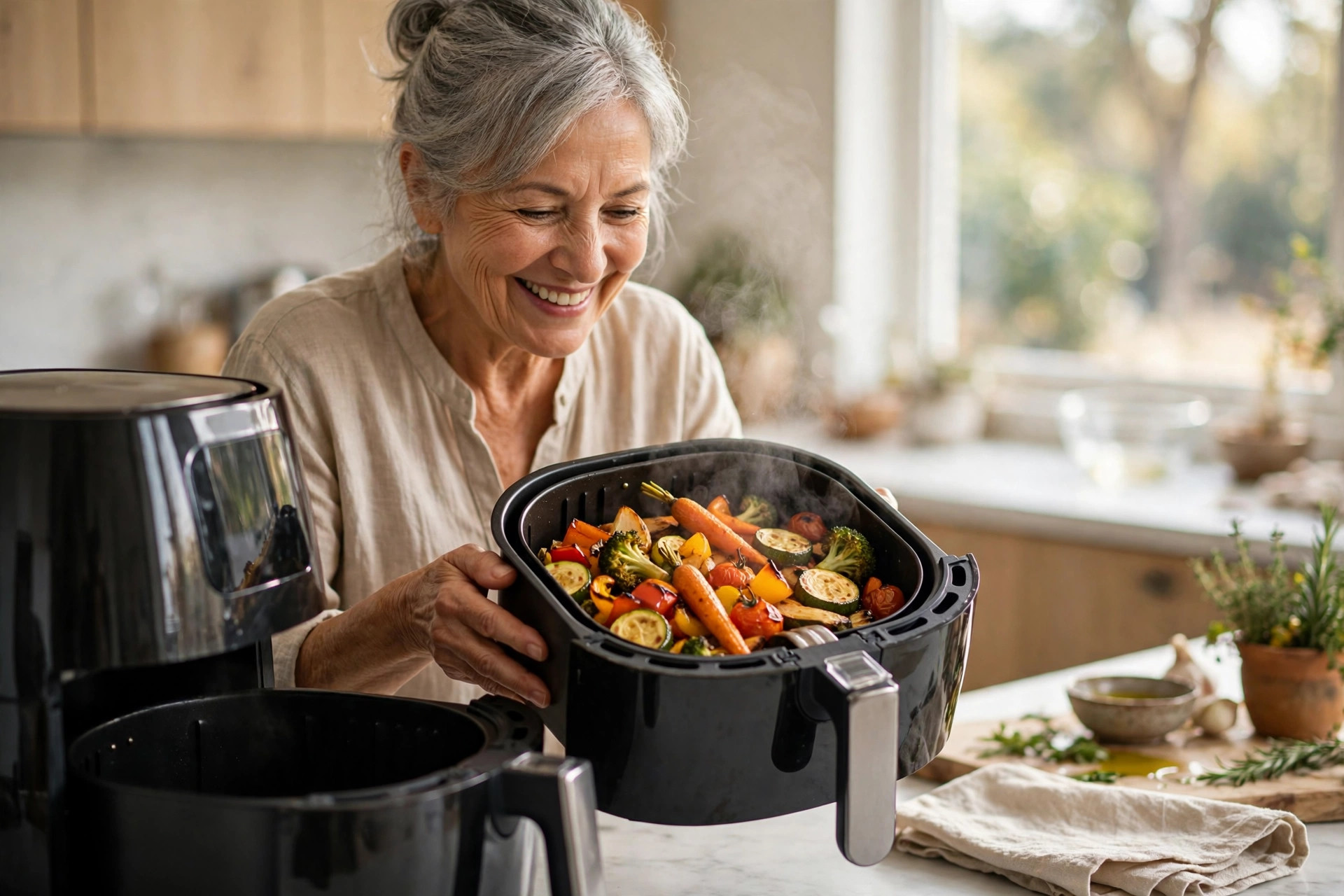
- Expect hot surfaces: the outside gets hot. Use oven mitts or a folded towel to open the drawer, and warn others in the household.
- Don’t overload the basket: food needs airflow to crisp. Overcrowding steams food instead of browning it — cook in batches.
- Unplug when done: a simple habit that removes any doubt. Let it cool before cleaning.
- Shake halfway: most foods crisp more evenly if you shake or flip them midway through cooking. Set a timer so you don’t have to hover.
- Grease management: fatty foods like chicken thighs drip fat into the basket. Tip off excess fat between batches rather than letting it pool.
Foods That Work Well — and a Few That Don’t
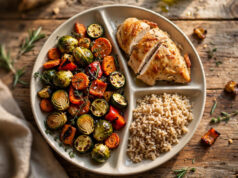
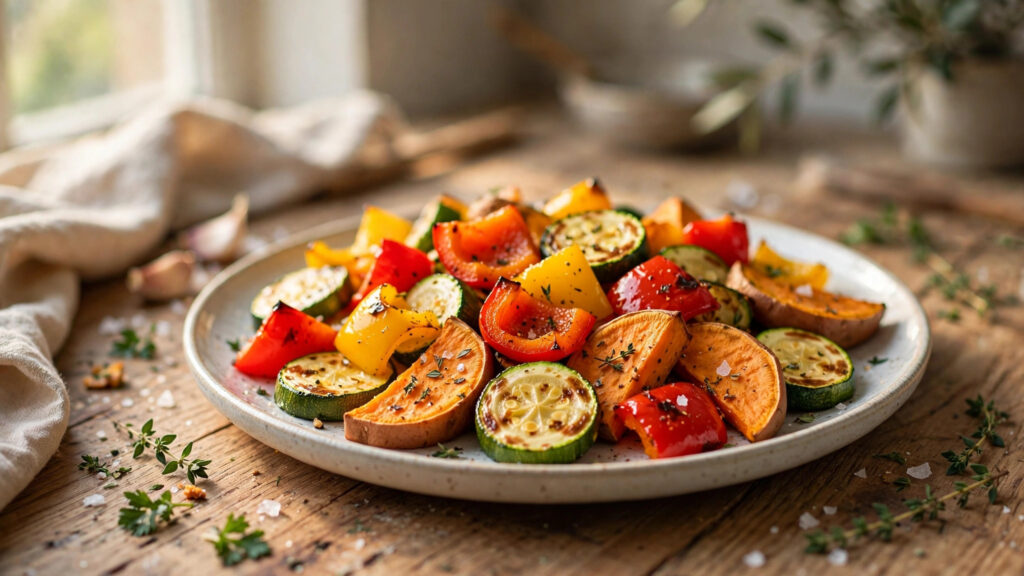
Workhorses: roasted vegetables (broccoli, Brussels sprouts, sweet potato wedges), chicken pieces and wings, salmon fillets, frozen foods that were designed for the oven, reheating pizza and leftovers (often better than a microwave), and whole small potatoes.
Worth trying with adjustments: breaded foods with dry coatings crisp nicely, but wet batters drip through the basket and make a mess — pat coatings dry and stick to breaded, not battered.
Don’t bother: foods that need to boil or steam, large roasts that won’t fit, leafy greens (they fly around in the fan), and anything with very wet batter.
When to See a Doctor
A quick but necessary note for the nutrition side of this topic. If you’re managing heart disease, type 2 diabetes, high blood pressure, or you’re actively trying to lose weight, talk with your doctor or a registered dietitian about how fried-style foods fit into your overall eating pattern. An air fryer doesn’t change what a food is — air-fried fries are still a high-carbohydrate food, and portion size and the rest of your diet matter far more than the appliance. If cooking changes have shifted your eating habits noticeably — or if you have questions about fats, sodium, or blood sugar — that’s a conversation worth having with a professional. For a broader look at what your plate should look like after 45, see our guides on eating well after 45 and the Mediterranean diet after 50.
Sources
- Shaker, M. A. (2015). Comparison between traditional deepfat frying and airfrying for production of healthy fried potato strips. International Food Research Journal, 22(4), 1557–1563.
- Santos et al. (2017). Comparative study of deep-frying and air-frying potatoes with different vegetable oils — reported roughly 70% less fat with air frying.
- Sansano, M. et al. (2015). Effect of Pretreatments and Air-Frying, a Novel Technology, on Acrylamide Generation in Fried Potatoes. Journal of Food Science. doi: 10.1111/1750-3841.12843
- Navruz-Varlı, S. & Mortaş, H. (2024). Acrylamide formation in air-fried versus deep and oven-fried potatoes. Frontiers in Nutrition. doi: 10.3389/fnut.2023.1297069
- Lee, J.-S. et al. (2020). Effects of Thawing and Frying Methods on the Formation of Acrylamide and Polycyclic Aromatic Hydrocarbons in Chicken Meat. Foods, 9(5), 573.
- U.S. Food and Drug Administration — guidance on acrylamide in food. (fda.gov)
- Centers for Disease Control and Prevention — healthy eating and dietary fats guidance. (cdc.gov)
- Cleveland Clinic — health essentials coverage of air fryer benefits and the 2015 acrylamide research. (clevelandclinic.org)
- Medical News Today — “Air fryers: Are they healthy?” overview. (https://www.medicalnewstoday.com/articles/324849)
- Chef Approved Tools — “Air Fryer vs Deep Fryer” balanced comparison covering the 2015 and 2024 findings. (https://www.chefapprovedtools.com/blog/air-fryer-vs-deep-fryer)
This article is for informational purposes only and is not medical advice. Air fryers are cooking appliances, not health treatments — always talk with your doctor or a registered dietitian about diet changes related to a medical condition.