Best Blenders for Seniors: Smoothies After 50 Done Right
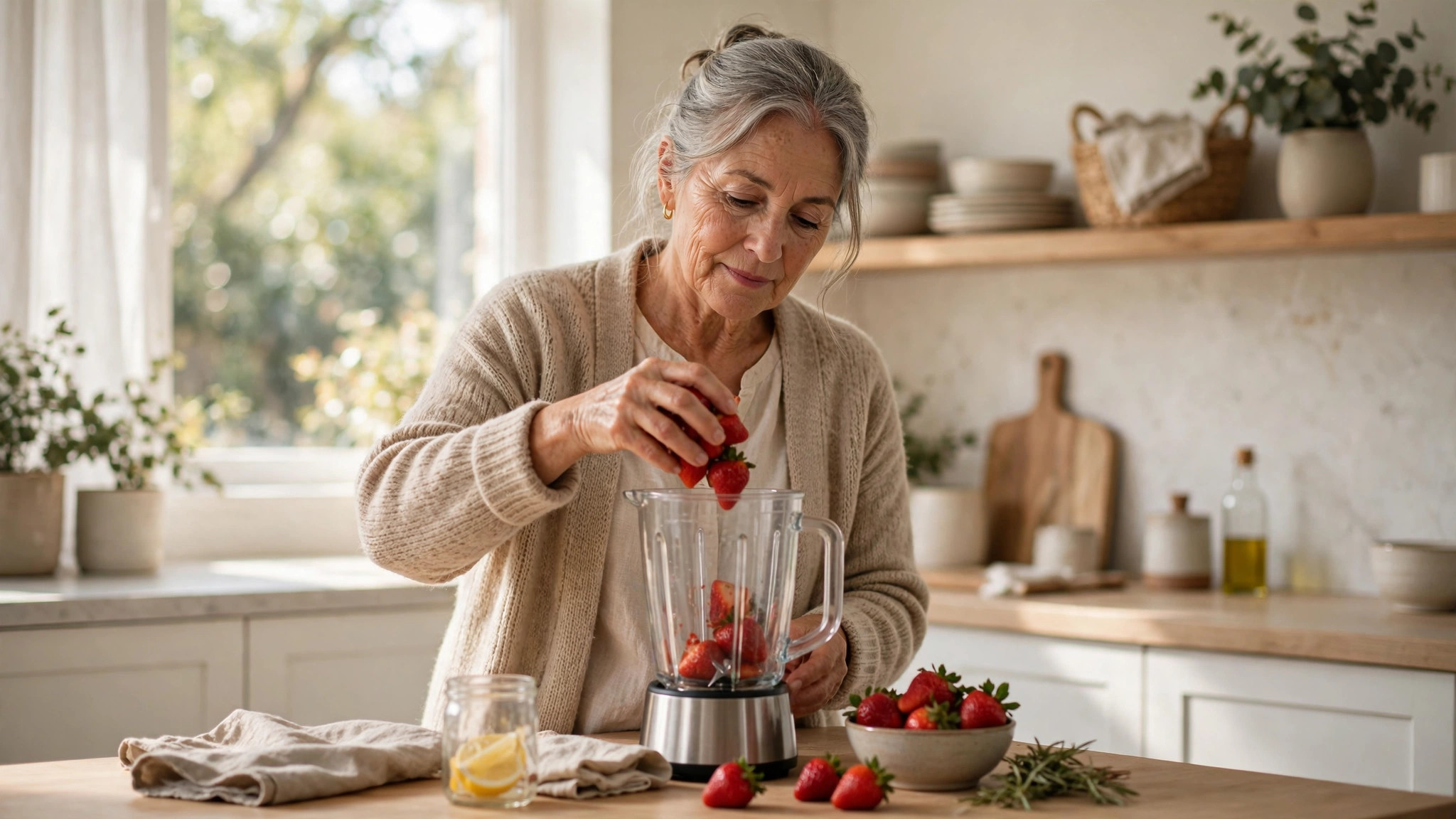
Some days, cooking a full meal just doesn’t appeal. Maybe chewing feels like work, maybe appetite has faded, or life is simply busy. That’s where a good smoothie earns its keep: one glass can carry protein, fiber, healthy fats, and a few servings of fruit in about five minutes. But the blender matters more than most of us think — frozen berries, ice, and nuts separate the machines that make breakfast easy from the ones that make it a chore.
This is a buying guide, not a product review: what to look for — motor strength, jar size and weight, cleaning, presets, noise — then what the research actually says about protein drinks after 50, plus three simple smoothie formulas designed for the job.
Why Smoothies After 50: What the Research Says
Protein matters more as we age, not less. After roughly age 40, adults lose muscle mass at an estimated 1–2% per year, climbing faster past 60 — sarcopenia, linked to weaker grip, slower walking, and higher fall risk. Protein helps, but here’s the honest part: protein drinks only do their job when they show up alongside movement.
A 2026 secondary analysis from the Karolinska Institutet (published in Alzheimer’s & Dementia) looked back at the 12-week OPEN trial of 102 nursing-home residents, who did standing exercises several times a day and drank one to two protein-rich nutritional drinks. The trial had previously shown improved physical function and nutritional status; the new analysis asked whether participants also needed less hands-on care. Across all residents there was no clear difference — but in dementia wards, those in the program needed less care time than the control group. The authors caution these are secondary analyses, so interpret them carefully. The encouraging message stands: a protein-drink habit may support frail older adults — paired with movement, not on its own.
But the counterpoint is just as important. A 2026 Tufts University trial gave 141 healthy, well-nourished adults over 65 either whey protein or a placebo for 24 weeks. Protein alone — without an exercise program — did not build extra muscle or strength compared with placebo. The smoothie is the delivery vehicle, not the engine. Without resistance or functional exercise, extra protein does surprisingly little.
The middle ground is where most of the evidence sits:
- An August 2026 systematic review and network meta-analysis in Frontiers in Nutrition pooled 18 randomized trials with 1,341 older adults who had sarcopenia or were at risk. Protein supplementation added to resistance or functional exercise improved grip strength and limb muscle mass (appendicular skeletal muscle mass index) — though much of the evidence was rated very low certainty, so interpret it cautiously.
- A September 2026 meta-analysis in Medicine (7 trials, 472 participants with sarcopenia) found that strength training combined with whey protein or HMB improved fat-free mass and selected performance measures — “promising rather than definitive,” per the authors, given the small trials.
The takeaway is practical: a protein-rich smoothie can help you hit the protein targets older adults need, and the evidence suggests it may help preserve muscle when paired with regular strength or balance exercise. But a fruit-only blend can spike blood sugar — pair fruit with protein, fat, or fiber, especially if you’re managing diabetes.
The Buying Guide: What Actually Matters After 50
These are the features that decide whether a blender gets used daily or gathers dust.
1. Motor Power: Can It Handle Frozen Fruit and Nuts?
This is the single most important spec. Frozen berries and ice are tough on weak motors — blades stall, jars seize, and you end up shaking the jar free.
- For smoothies with frozen fruit: at least 900–1,000 watts, or a personal blender marketed specifically for frozen blends and ice crushing.
- If you blend nuts or nut butter: aim higher — 1,000+ watts with sturdy stainless-steel blades. Underpowered motors can overheat or burn out grinding almonds.
- A note on wattage: it measures the motor’s appetite, not blade quality. A well-designed 900-watt machine can outperform a cheap 1,400-watt one — read reviews about frozen fruit performance specifically, not just the number.
2. Jar Size — and the Weight of a Full Jar
A 2-liter family jar sounds generous until you try to lift it full of smoothie with arthritic hands. Think in servings:
- One or two servings: a personal blender (roughly 400–700 ml cups) is lighter, quicker to clean, and plenty for a daily protein shake.
- Three or more servings: a full-size jar (around 1.4–1.8 liters) makes sense for couples or for blending soups and sauces too.
- The weight test: glass jars are heavy — a full large glass jar can weigh over 2 kg. Lightweight BPA-free plastic jars cut that substantially. If hand strength is a concern, a smaller plastic jar beats a big glass one.
3. Cleaning the Blade Assembly: The Deal-Breaker
The reason most people stop using their blender isn’t performance — it’s cleaning. Dried smoothie residue cements onto blades fast.
- Self-cleaning designs: add warm water and a drop of dish soap, run 30–60 seconds, rinse. A dedicated cleaning preset makes this genuinely one-button.
- Detachable blade assemblies: bases that unscrew from the jar let you reach the blades; dishwasher-safe parts are a plus.
- Personal blender cups: the cup doubles as the drinking glass — fewer parts, less washing.
If a blender takes more than two minutes to clean, most of us won’t use it. Prioritize cleaning design as much as the motor.
4. One-Touch Presets vs. Manual Controls
After 50, simplicity often wins:
- One-touch presets (smoothie, ice crush, clean) mean pressing a single clearly labeled button — ideal if complicated settings or small dials are a frustration.
- Manual speed dials or buttons give more control for tricky blends (a pulse function helps break up frozen chunks).
- Best of both: a smoothie preset plus one pulse button covers nearly every situation without a learning curve. Avoid touchscreens with tiny icons if eyesight or dexterity is an issue — big physical buttons are kinder to hands.
5. Noise: Your Kitchen (and Your Spouse) Will Notice
Blenders are loud — some models hit 85–90 decibels. If you blend early in the morning, look for models marketed as quiet: dampened motors and sound-shielding bases. They’re rarely silent, but the step down from “conversation-stopper” to “hairdryer hum” is real.
6. Stability and Safety on the Counter
Look for a wide, weighted base with suction-cup or non-slip feet — a lightweight blender that walks across the counter at full speed is a spill waiting to happen. A lid that locks securely matters too.
Three Senior-Friendly Smoothie Formulas
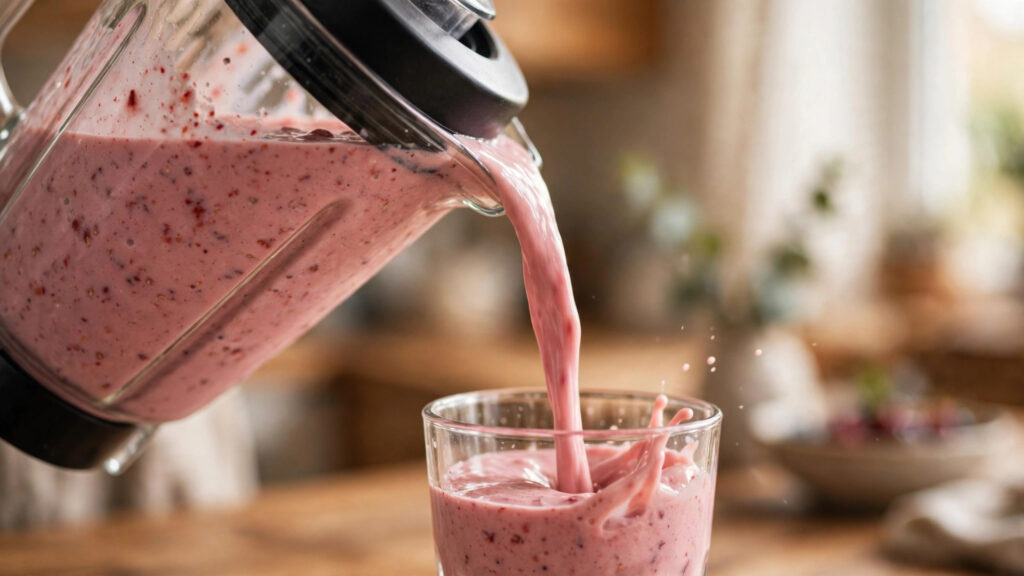
Each formula follows the same winning structure: protein + fiber + healthy fat + fruit, with the sugar awareness built in. Roughly 250–350 ml liquid per serving.
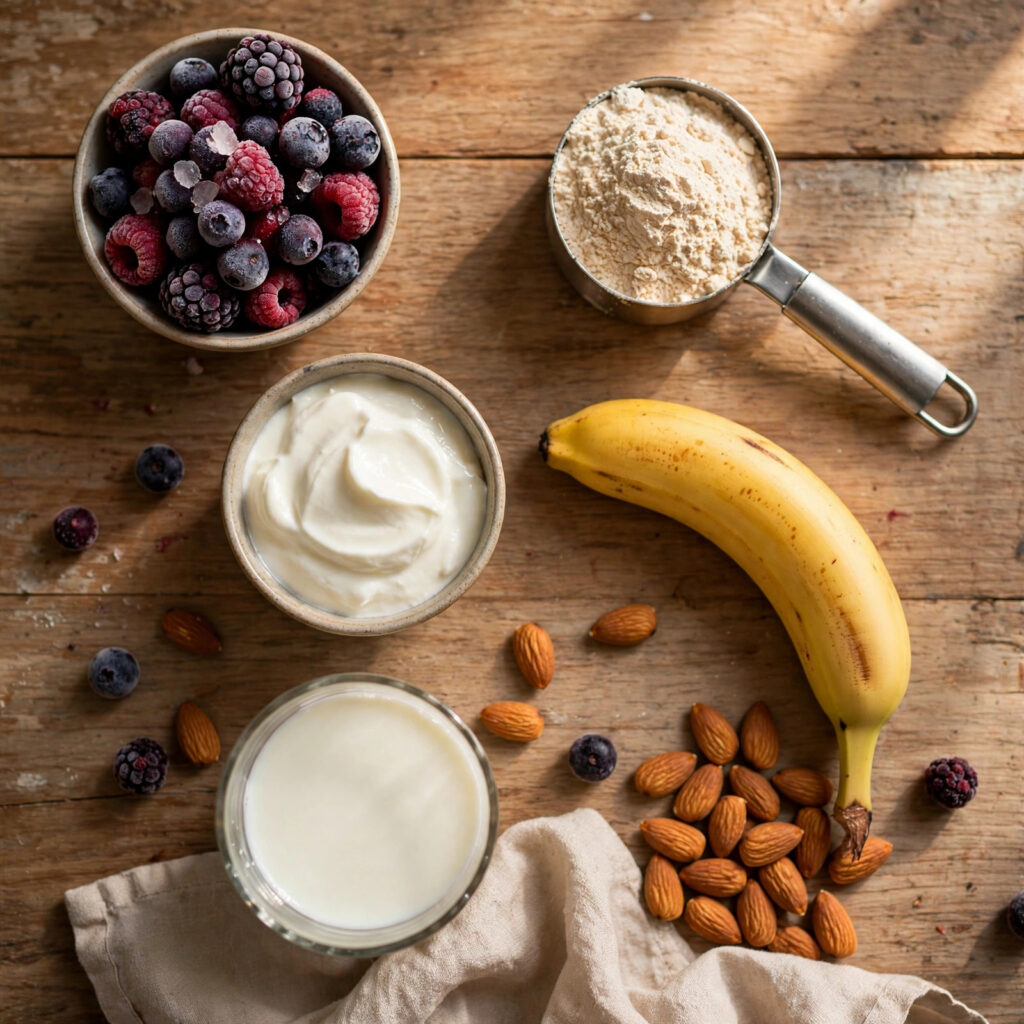
1. The Berry Protein Workhorse Frozen mixed berries (about 150 g), one banana, one scoop of whey or plant-based protein powder, 250 ml milk or a fortified soy drink, and a tablespoon of ground flaxseed. The “delivery vehicle” in a glass: plenty of protein with berries’ fiber, which is linked to steadier blood sugar. See also: High-Fiber Foods That Actually Lower Cholesterol.
2. The Tropical Recovery Blend Frozen mango chunks, half a cup of plain Greek yogurt, a scoop of protein powder, 250 ml water or coconut water, and a small handful of walnuts. Greek yogurt adds protein and calcium; the walnuts add healthy fats that slow sugar absorption.
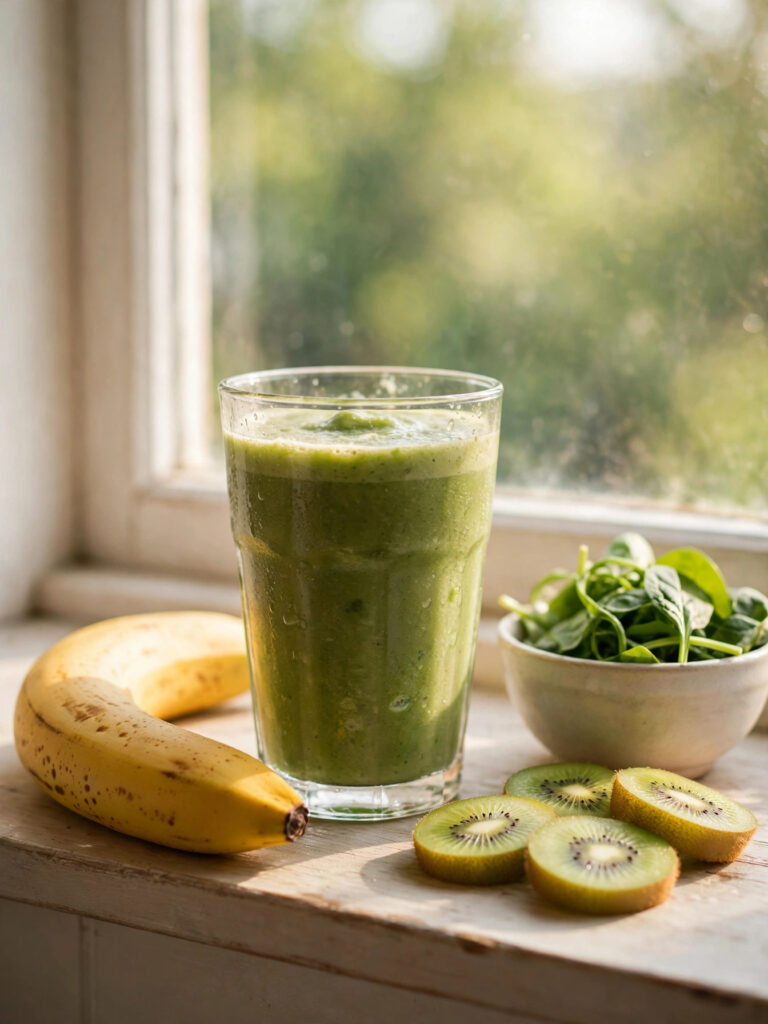
3. The Green Everyday Glass A big handful of baby spinach, half a frozen banana, half a kiwi, one scoop of protein powder, 250 ml milk, and a tablespoon of almond butter. You won’t taste the spinach. If you take blood thinners such as warfarin, keep leafy-green intake consistent and check with your clinician — vitamin K can affect dosing.
Sugar awareness: a fruit-only smoothie can carry 40+ grams of sugar, which may spike blood sugar — pair fruit with protein, fat, or fiber every time, and if you’re managing diabetes, count the smoothie as part of your daily carbohydrate plan.
Blender Safety: Non-Negotiable Rules
- Never blend hot liquids in a sealed jar. Steam pressure can blow the lid off and spray scalding liquid. If you want a blended soup, let it cool for 10–15 minutes first, fill only halfway, remove the lid’s center cap, cover it with a folded towel, and start on low.
- Lock the lid before every blend. An unlocked lid is the most common cause of smoothie splatter.
- Unplug before cleaning blades. Even when the jar is off the base, treat the blade assembly with respect — it doesn’t know you’re cleaning it.
- Don’t overfill. Most jars have a max-fill line; overfilled jars leak and strain the motor.
- Cut frozen fruit into pieces and add liquid first. Liquid at the bottom, frozen items on top, gives the blades something to pull through.
When to See a Doctor
Smoothies are a convenience food, not a medical treatment. Check with your clinician before overhauling your diet if any of these apply:
- You have kidney disease — higher protein intake can be harmful, and your clinician should set your target.
- You have diabetes — smoothies count toward your daily carbohydrates and can raise blood sugar quickly; you may need to adjust medication or meal plans.
- You’ve lost weight without trying, have difficulty swallowing, or feel full after a few bites — these deserve a medical evaluation, not just a bigger shake.
- You’re on blood thinners or other medications affected by vitamin K, potassium, or grapefruit.
And in the spirit of the research: if you’re adding protein drinks to protect muscle, ask your doctor or a physiotherapist about a simple strength or balance program to go with them — that’s where the evidence says the benefit lives.
Sources
- Karolinska Institutet / Alzheimer’s & Dementia (Feb 2026) — exercise plus protein drinks in nursing-home residents. Summary: https://www.news-medical.net/news/20260218/Exercise-and-protein-drinks-improve-function-in-people-with-dementia.aspx
- Tufts University (2026) — whey protein vs. placebo in 141 healthy adults over 65, 24 weeks; strength unchanged. Official summary: https://now.tufts.edu/2026/05/08/older-adults-adding-whey-protein-doesnt-make-more-muscle
- Frontiers in Nutrition (Aug 2026) — systematic review and network meta-analysis: protein supplementation plus exercise in 18 RCTs, 1,341 older adults with sarcopenia or at risk.
- Medicine (Sept 2026) — meta-analysis: strength training plus whey protein/HMB in 7 RCTs, 472 participants with sarcopenia.
4b. Background overview of protein-after-50 research, incl. the two meta-analyses above: https://www.ltcnews.com/articles/protein-after-50-can-whey-protein-help-preserve-muscle-strength-and-independence - National Institute on Aging — “Maintaining a Healthy Weight” and protein guidance for older adults: https://www.nia.nih.gov
- Mayo Clinic — dietary protein and healthy-aging nutrition resources: https://www.mayoclinic.org
This article is for general information only and is not medical advice. Talk to your clinician about your protein needs, especially with kidney disease or diabetes — smoothies can support healthy eating after 50, but they don’t replace whole foods, medical care, or exercise.