How Much Protein Do Older Adults Really Need?
If you look up how much protein you need, you’ll probably find the same number everywhere: 0.8 grams per kilogram of body weight per day. It’s printed on nutrition labels and repeated in textbooks.
There is just one problem: that number was never designed for you. It was calculated from studies of young, healthy adults — and a growing body of research says it’s too low for anyone over 50 trying to keep their muscle, strength, and independence.
This article explains what the evidence actually recommends, why older bodies need more, and how to reach the target without overhauling your diet.
Why the standard number falls short after 50
The 0.8 g/kg figure is the Recommended Dietary Allowance (RDA) — the minimum thought to avoid deficiency in most healthy adults. Minimums, not optimums. And the research behind it largely excluded older people.
After 50, two things change the math:
- Your muscles respond less to protein. Researchers call this anabolic resistance: the same serving of protein that once triggered muscle maintenance now triggers less of it. Older adults need a bigger dose per meal to get the same response.
- You’re already losing muscle. Adults typically lose 3–8% of muscle mass per decade after 30, and the decline accelerates after 60. Less muscle means less strength, worse balance, and a higher risk of falls.
Put those together and the conclusion is hard to avoid: the minimum that keeps a 30-year-old out of deficiency isn’t enough to keep a 65-year-old strong.
What the expert groups actually recommend
Two international expert panels reviewed the evidence specifically for aging:
- The PROT-AGE Study Group recommends 1.0 to 1.2 grams per kilogram per day for healthy older adults — and 1.2 to 1.5 g/kg for those who are ill, injured, or recovering.
- The European Society for Clinical Nutrition and Metabolism (ESPEN) reached a similar conclusion: at least 1.0–1.2 g/kg daily for healthy older people, higher during illness.
What that means in practice (using 1.1 g/kg):
- 60 kg (132 lb) → about 66 g of protein a day
- 70 kg (154 lb) → about 77 g a day
- 80 kg (176 lb) → about 88 g a day
- 90 kg (198 lb) → about 99 g a day
These aren’t bodybuilder numbers. For most people it’s one extra serving of protein a day compared with what they eat now — often just a better breakfast.
It’s not only the total — it’s the per-meal dose
Here’s the part most articles skip: older muscles don’t just need more protein per day, they need enough in a single meal to flip the muscle-maintenance switch.
Research on muscle protein synthesis suggests older adults need roughly 25–40 grams of protein in a meal — with about 2.5–3 grams of the amino acid leucine — to maximally stimulate the process. A study often cited in this area found that evenly distributing protein across breakfast, lunch, and dinner was associated with greater muscle mass and strength than the typical pattern of a tiny breakfast and a huge dinner.
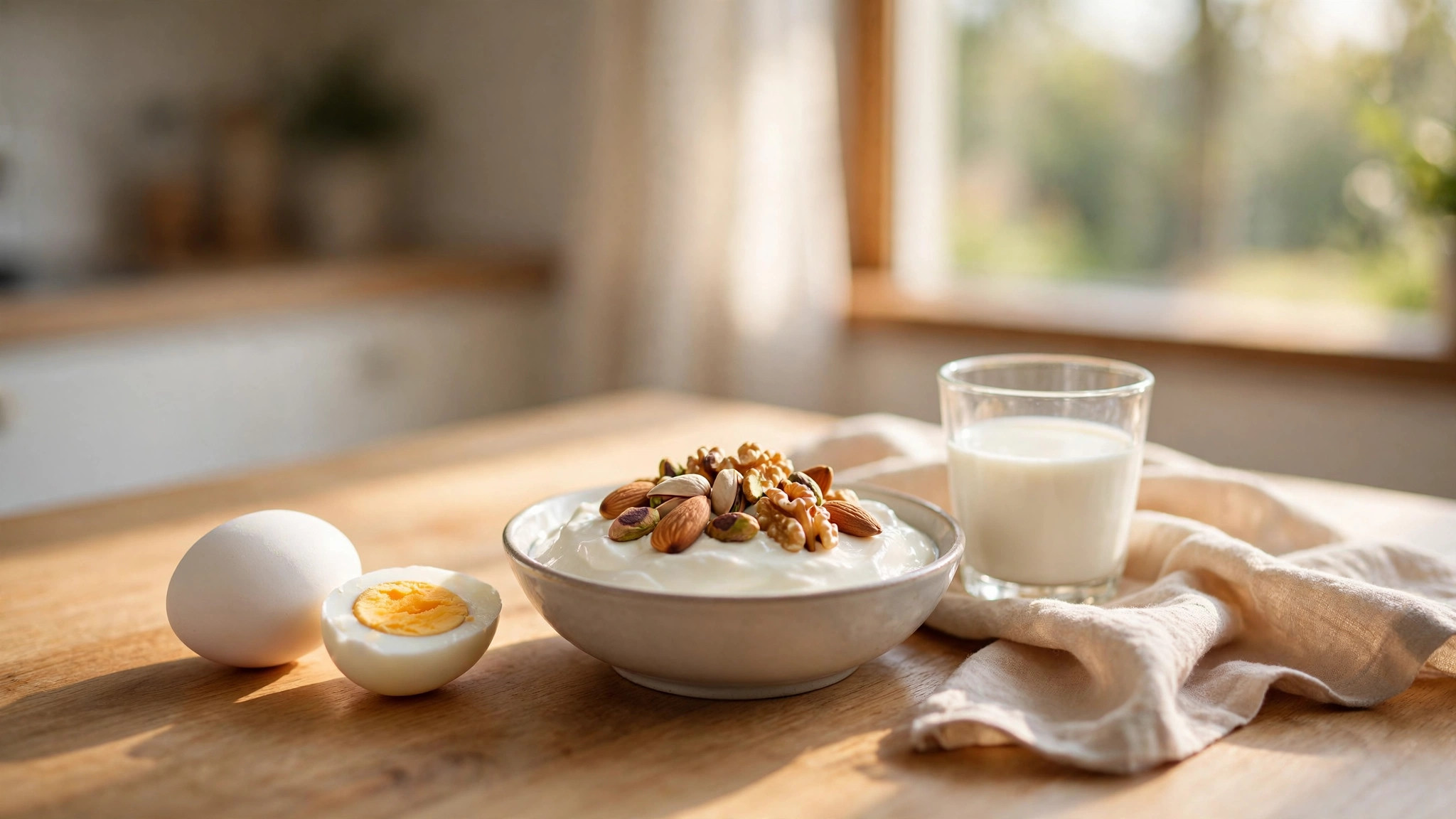
The typical older adult’s pattern is exactly backwards: coffee and toast at breakfast (5–10 g), a light lunch (10–15 g), then most of the day’s protein at dinner. Shifting 20–25 grams to breakfast — eggs, Greek yogurt, or even peanut butter on that toast — may matter as much as the daily total.
Protein quality matters more with age
Not all protein is equal, and the difference matters more when your body is harder to convince. Two things to know:
- Leucine is the trigger. This essential amino acid is the main signal that tells muscles to maintain themselves. Animal proteins (whey, eggs, meat, fish, dairy) are naturally rich in it; most plant proteins contain less per serving.
- Plant proteins can absolutely work — they just need a bit more planning. Soy, lentils, and beans paired with grains across the day cover the amino acid profile. Older adults eating mostly plant-based may want to aim for the higher end of the range (around 1.2 g/kg) to compensate.
You don’t need to memorize amino acid tables. A practical rule: include a solid protein source — roughly the size of your palm — in every meal, and vary it across the week.
Protein plus movement beats protein alone
Protein gives your body the raw material; resistance exercise gives it the instruction to use it. Studies consistently show the two together preserve more muscle than either alone — and the exercise doesn’t need to be extreme. Bodyweight exercises, resistance bands, or light dumbbells two to three times a week are enough to make the protein you eat work harder.
This is also why protein needs rise during recovery from illness, surgery, or a hospital stay: the body is both losing muscle faster and moving less. If you’re in that situation, the 1.2–1.5 g/kg range applies — and it’s worth discussing with your doctor or a dietitian.

The kidney question: what the evidence says
This is the most common worry, so let’s be direct: in people with healthy kidneys, higher protein intakes within the ranges above have not been shown to damage kidney function. The concern comes from studies of people who already have kidney disease, where protein is restricted for a different reason.
The practical rule is simple:
- Healthy kidneys: 1.0–1.2 g/kg is considered safe.
- Diagnosed kidney disease: talk to your doctor before increasing protein — restriction may be part of your treatment.
Don’t let a myth keep you under-eating protein your muscles need.
Making it happen: a practical day
You don’t need a scale or an app. Aim for a palm-sized protein portion at each meal:
- Breakfast: 2 eggs + a cup of Greek yogurt (~29 g) — this alone fixes the most common gap
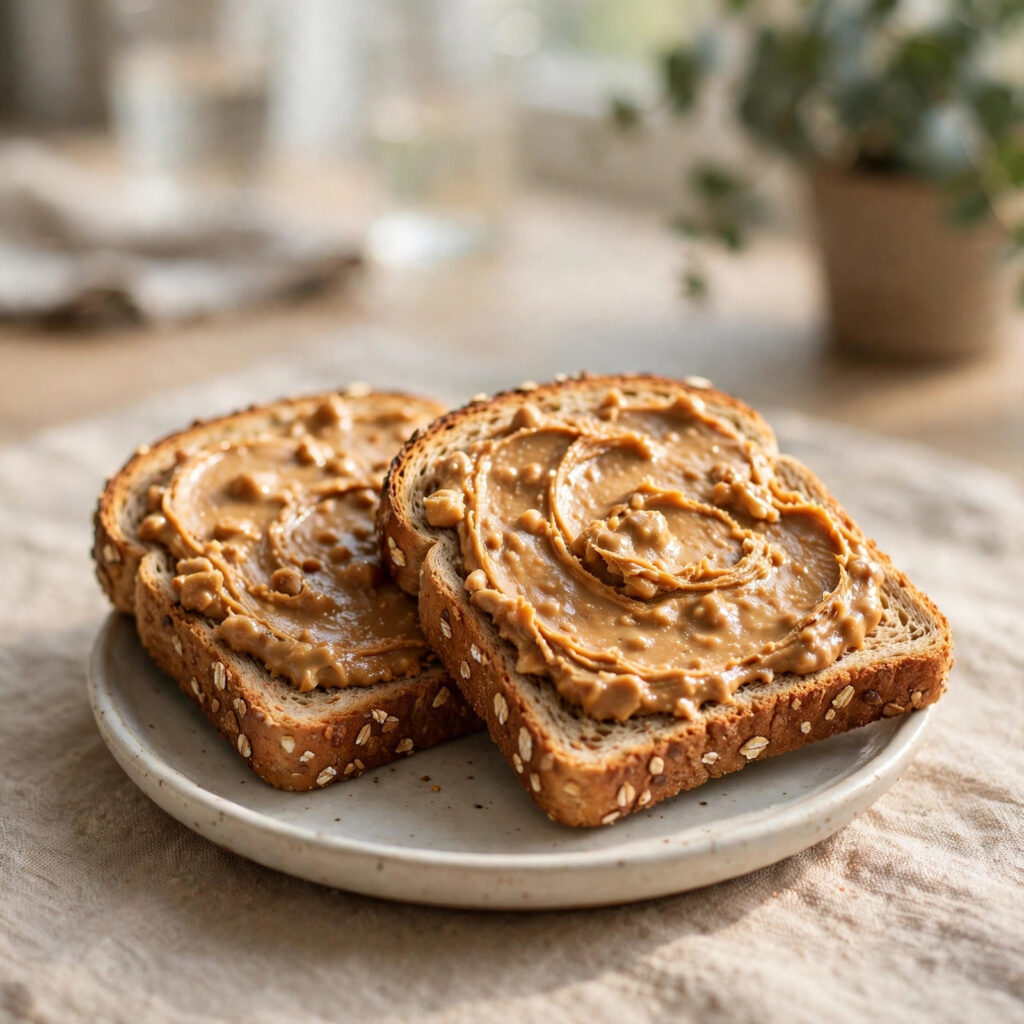
- Lunch: lentil soup or a tuna/chicken sandwich on whole-grain bread (~20–25 g)

- Dinner: a piece of fish, chicken, or tofu with vegetables and rice (~25–30 g)
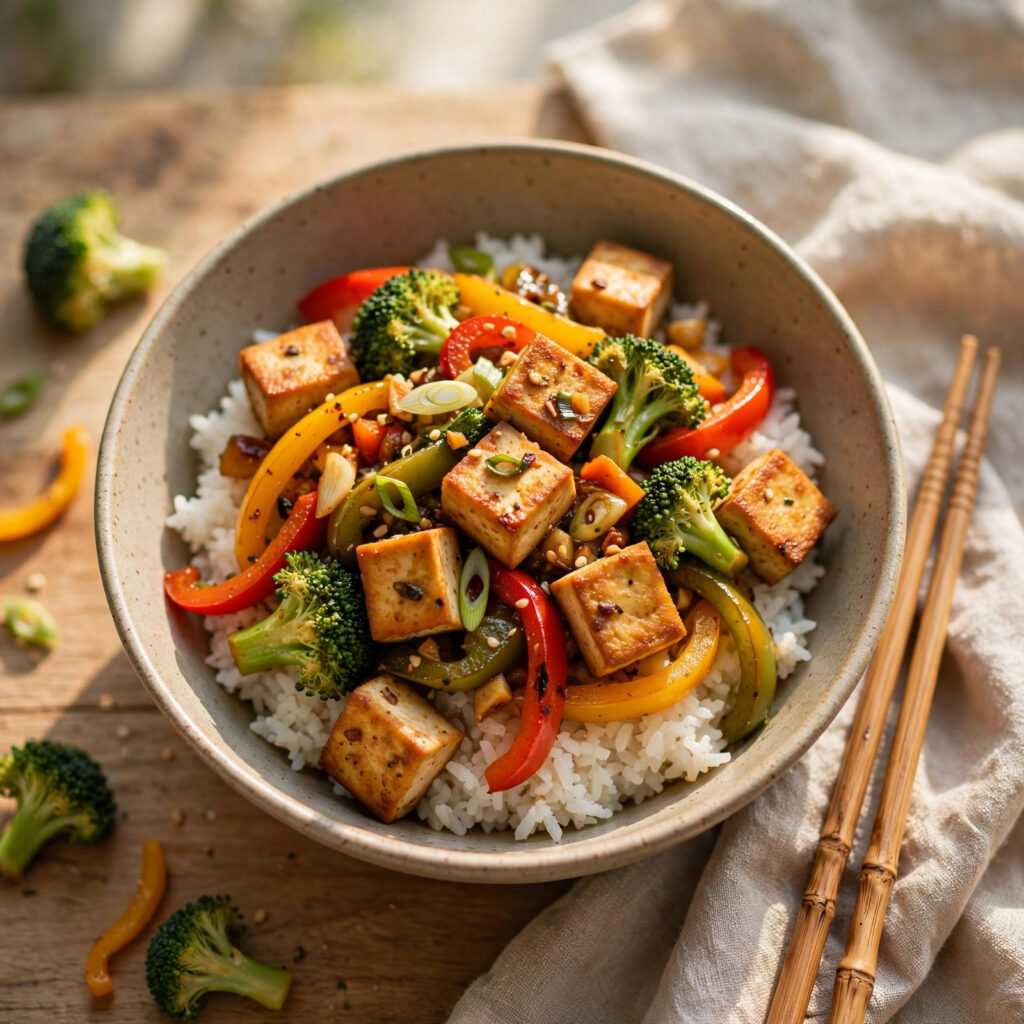
If appetite or chewing is an issue — both common after 70 — softer options help: yogurt, eggs, fish, tofu, well-cooked lentils, and smooth nut butters. Protein powder is a reasonable fallback here, not a requirement: plain varieties without added sugar, used to fill a genuine gap.
Budget note: some of the cheapest proteins are also among the best — eggs, lentils, canned sardines and tuna, plain yogurt, and tofu.
Quick answers to common questions
Is more than 1.2 g/kg ever useful? For healthy, active older adults, going much above 1.2 g/kg shows diminishing returns unless you’re doing serious strength training or recovering from illness. More is not automatically better — consistency beats excess.
Should I eat protein before or after exercise? Total daily intake matters far more than precise timing. That said, having protein within a few hours of resistance exercise is sensible, and spreading it evenly across meals already covers this.
What about protein and bone health? Older advice warned that protein “leaches” calcium from bones. Newer research finds the opposite: adequate protein, combined with enough calcium and vitamin D, is associated with better bone density. It’s another reason not to under-eat it.
I’m vegetarian — can I hit 1.1 g/kg? Yes, with planning. Lentils, beans, soy products, quinoa, nuts, and dairy or eggs (if you eat them) add up. Aim for the higher end of the range and include a protein source at every meal.
When to see a doctor
Most people can adjust protein intake safely on their own, but check with a clinician if:
- You have kidney disease or declining kidney function
- You’ve lost weight without trying, or feel persistently weak
- You have difficulty swallowing or chewing that limits what you can eat
- You’re recovering from surgery, a fracture, or a hospital stay and aren’t sure how much you need
Unintentional weight loss and muscle weakness can have causes beyond diet — they deserve a proper check.
The bottom line
Forget the 0.8 g/kg minimum — it wasn’t built for bodies over 50. The evidence points to 1.0–1.2 grams per kilogram per day, spread across meals with 25–40 grams per meal, paired with some resistance movement. That’s it: a better breakfast, a palm of protein at every meal, and no exotic supplements required.
Sources
- Bauer J. et al., PROT-AGE Study Group, “Evidence-based recommendations for optimal dietary protein intake in older people,” JAMDA 2013 — https://www.jamda.com/article/S1525-8610(13)00326-5/fulltext
- Deutz N.E.P. et al., ESPEN Expert Group, “Protein intake and exercise for optimal muscle function with aging,” Clinical Nutrition, 2014
- Paddon-Jones D. & Rasmussen B.B., “Dietary protein recommendations and the prevention of sarcopenia,” Current Opinion in Clinical Nutrition & Metabolic Care, 2009
- Mamerow M.M. et al., “Dietary protein distribution positively influences 24-h muscle protein synthesis and muscle mass,” Journal of Nutrition, 2014
- National Institute on Aging, “Vitamins and Minerals for Older Adults” — https://nia.nih.gov/health/vitamins-and-supplements/vitamins-and-minerals-older-adults
- Cleveland Clinic, “How Much Protein Do You Need?” — https://health.clevelandclinic.org/how-much-protein-do-you-need
This article is for general information only and is not medical advice. Talk to your doctor or a registered dietitian about your personal nutrition needs.