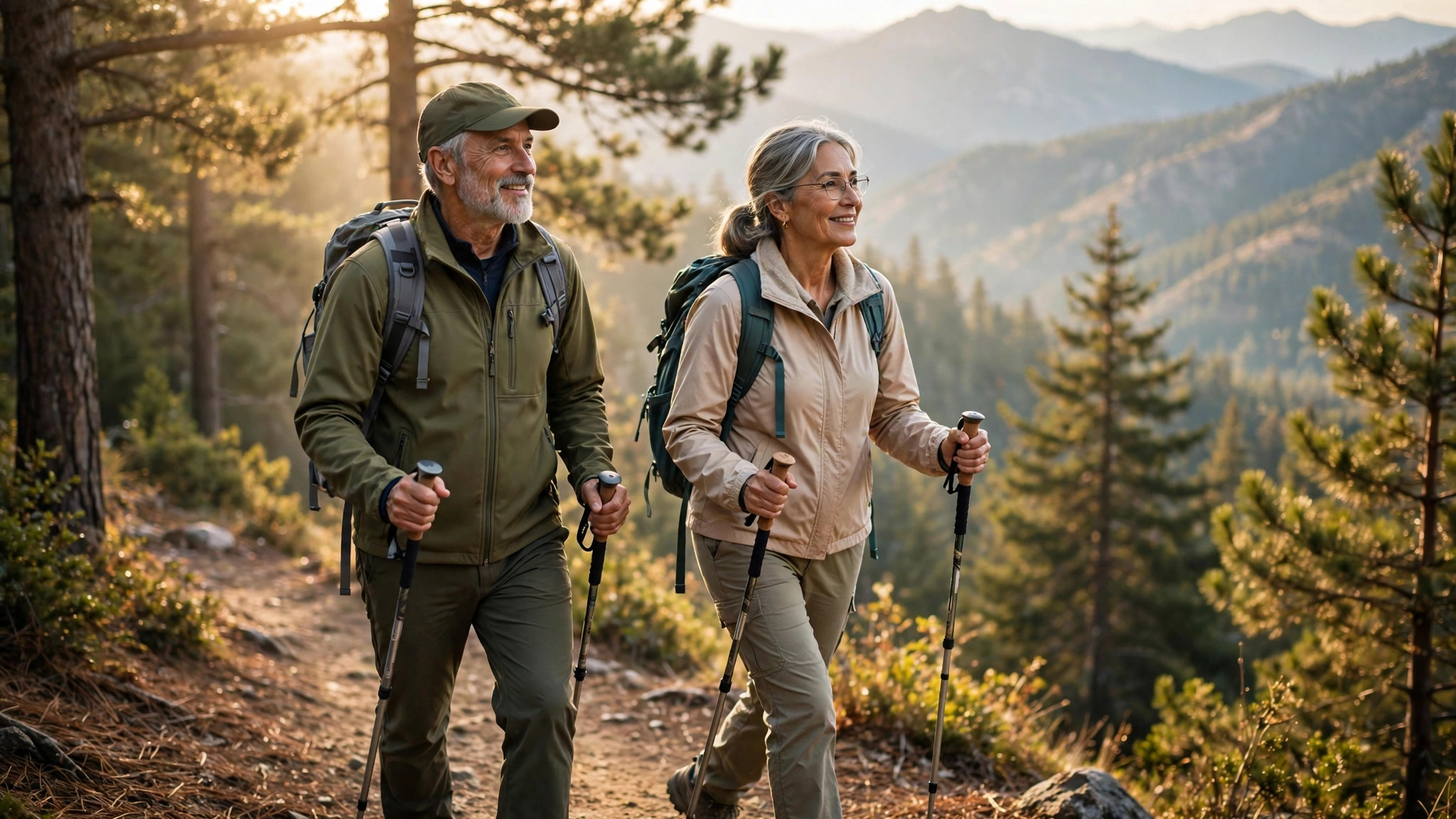
Hiking After 60: Safety Tips for Senior Hikers
There is something about a trail that a treadmill can never match: fresh air, changing scenery, and the quiet satisfaction of reaching a viewpoint under your own power. Plenty of people discover hiking in their sixties and wonder why they waited so long.
Hiking after 60 is about choosing the right trails, gearing up properly, and respecting what your body tells you. This guide covers the practical safety steps that turn a good hike into a safe one.
Why hiking is great after 60
Walking on varied terrain gives you more than a flat sidewalk does. Uneven ground makes your ankles, knees, and core adjust with every step — exactly the work that supports balance — while gentle hills raise your heart rate into the aerobic zone.
That lines up well with the CDC’s guidelines for adults 65 and older: at least 150 minutes of moderate-intensity aerobic activity per week, plus muscle-strengthening on 2 or more days and regular balance activities. A few steady trail walks each week can cover a meaningful share of the aerobic part — and the CDC notes that some activity is better than none, so there is no need to chase the full target in week one.
The broader evidence is encouraging in an honest way. Regular walking is linked to better heart health, blood pressure, bone strength, and balance, and the NIA notes that staying active is associated with lower fall risk in older adults. Time outdoors is also linked to lower stress and better mood. A hike fixes nothing on its own — but it is a genuinely good vehicle for the movement your body needs anyway.
Start with the right trail
Most hiking mishaps for older adults begin before the trailhead — with a trail that was simply too ambitious.
- Start short and flat. Begin with 1 to 2 miles on a well-maintained path and see how you feel the next day. Many recreational senior hikers settle into the 3 to 6 mile range once conditioned.
- Read the description, not just the photos. A 2-mile trail with 800 feet of climbing is a very different outing from a 2-mile riverside loop. Trail apps and park websites usually publish distance, elevation gain, and surface type.
- Favor well-marked, well-traveled paths. Clear signage and other people around add a real safety margin.
- Choose routes with an easy exit. Loops and out-and-back trails let you turn around at any point if your knees start complaining or the weather turns. The NIA’s outdoor exercise guidance adds: pick routes with places to sit, and stay alert for uneven ground, a common tripping hazard.
Use trekking poles
If one piece of gear separates safe senior hiking from risky hiking, it is trekking poles. Two extra points of contact steady you on uneven terrain and descents — where most falls happen — and take load off your knees going downhill.
- Set the right height. With the pole tip on the ground and your hand on the grip, your elbow should bend at roughly a right angle.
- Practice on flat ground first. Get comfortable with the opposite-arm-opposite-leg rhythm before you need it on a rocky descent.
- Use the straps. Thread your hands up through the straps from below so the strap supports your wrist and you can relax your grip.
The NIA’s falls-prevention guidance supports the principle: use an assistive device when you need steadiness, make sure it fits, and ask a physical or occupational therapist to check your technique. If you are deciding between styles, our guide to choosing walking poles for seniors walks through the options in detail.
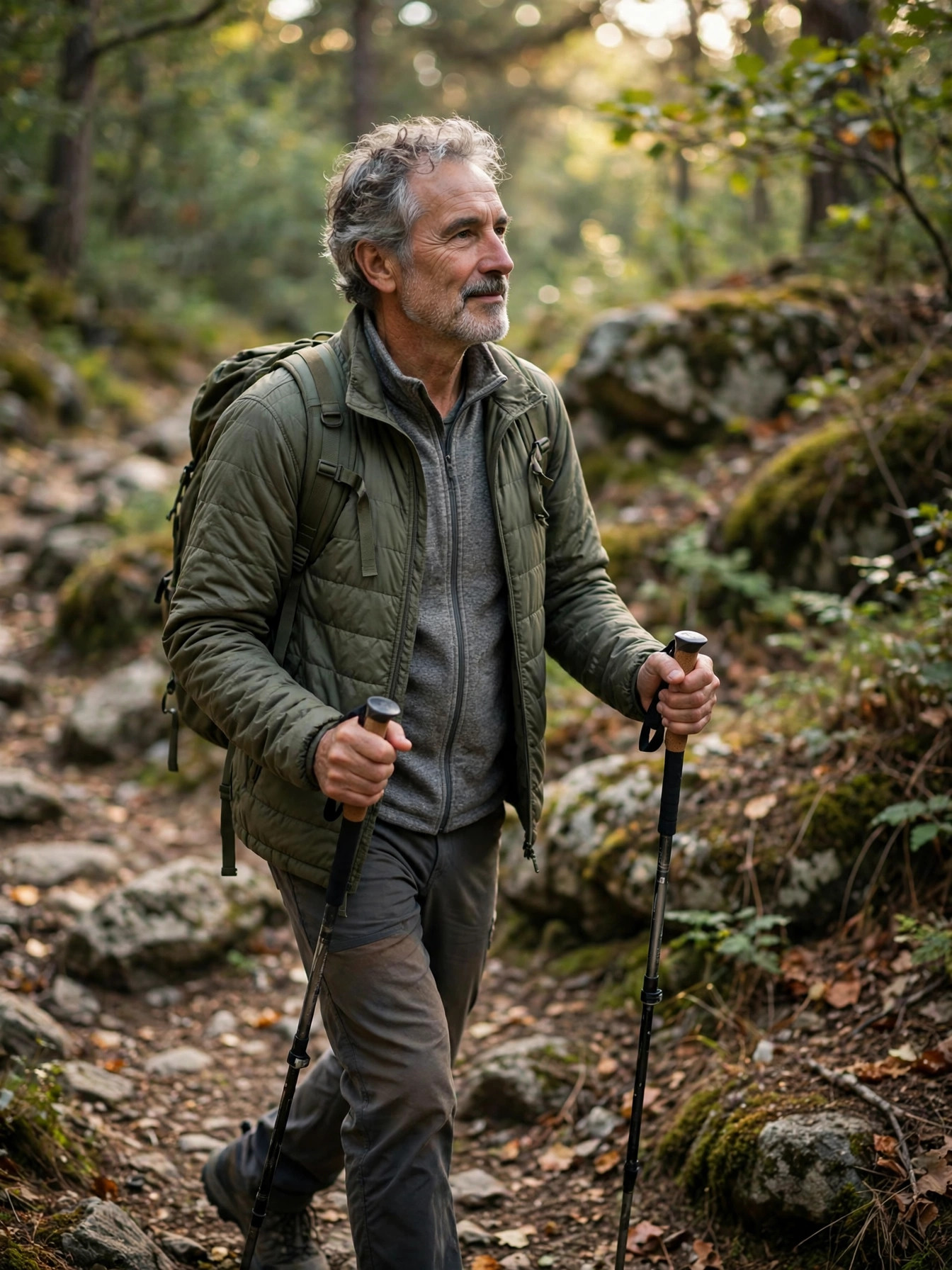
Wear supportive footwear
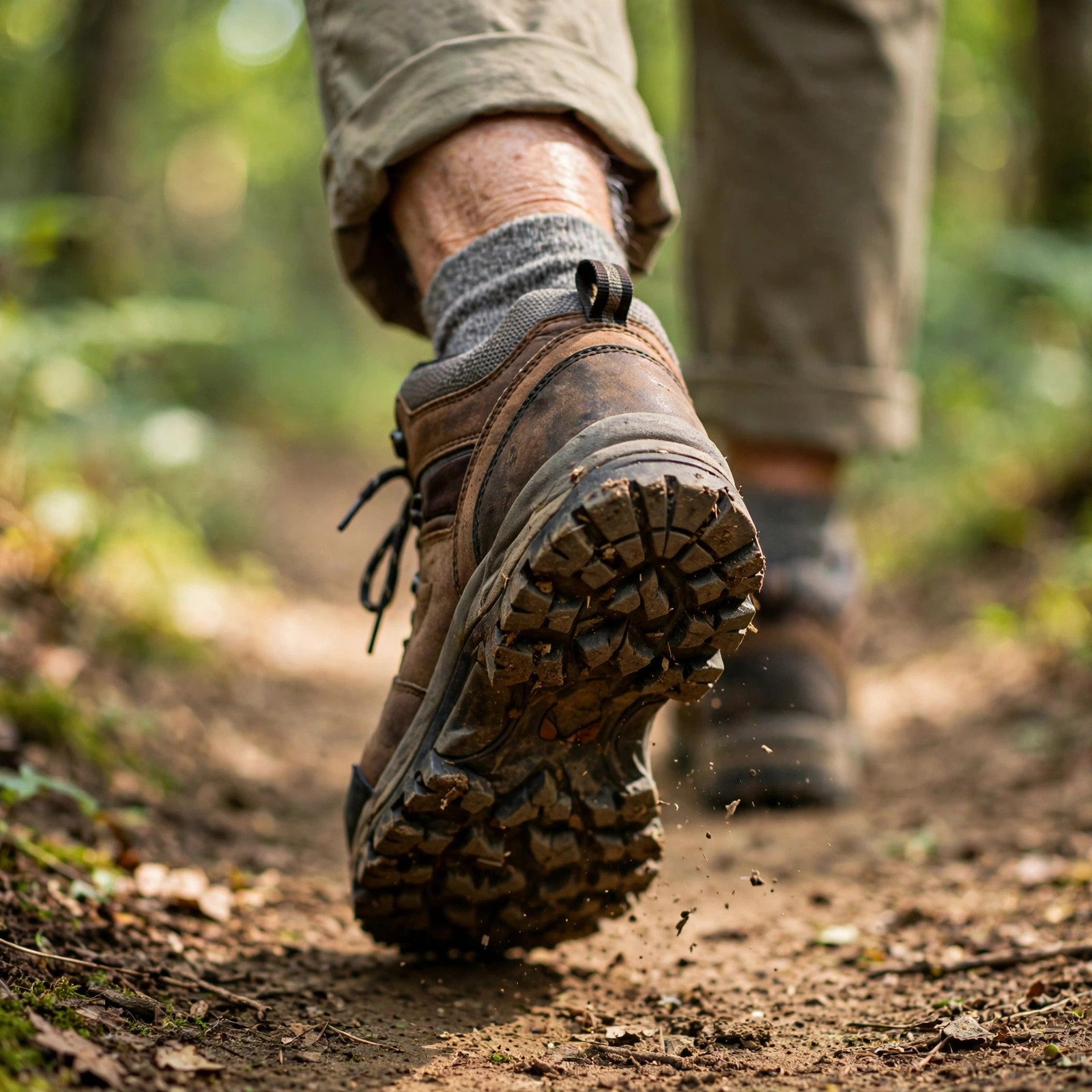
Your shoes are your first defense against slips and rolled ankles — worn sneakers with smooth soles are a common culprit in trail mishaps.
Look for hiking shoes or light hiking boots with grippy, deep-lug tread that bites into dirt and wet rock, a supportive cushioned midsole, and a secure fit with toe room — feet swell slightly on long walks. Many experienced hikers buy trail footwear about a half size larger than their street shoes.
Both the NIA and Mayo Clinic recommend the same fundamentals: sturdy, properly fitting shoes with nonskid, rubber-soled, low-heeled construction. Break new shoes in on short neighborhood walks before trusting them on a real hike.
Pace yourself and rest often
The most reliable safety strategy on any hike is managing your effort.
- Start slower than you think you need to. Give your joints and heart 10 to 15 minutes to warm up before settling into your rhythm.
- Take breaks before you need them. Sit, drink water, eat a snack, enjoy the view. Short, frequent rests beat one long collapse at the turnaround point.
- Turn back at the first real warning sign. Worsening joint pain, dizziness, or unusual shortness of breath mean head back — not push through.
- Budget extra time. Plan to finish well before dark; everything takes longer on the trail than the map suggests.
Build distance gradually rather than jumping from neighborhood strolls to an all-day hike. For a sensible baseline, see how much walking after 70 is considered healthy; trail miles are harder than sidewalk miles, so start below your usual walking distance.
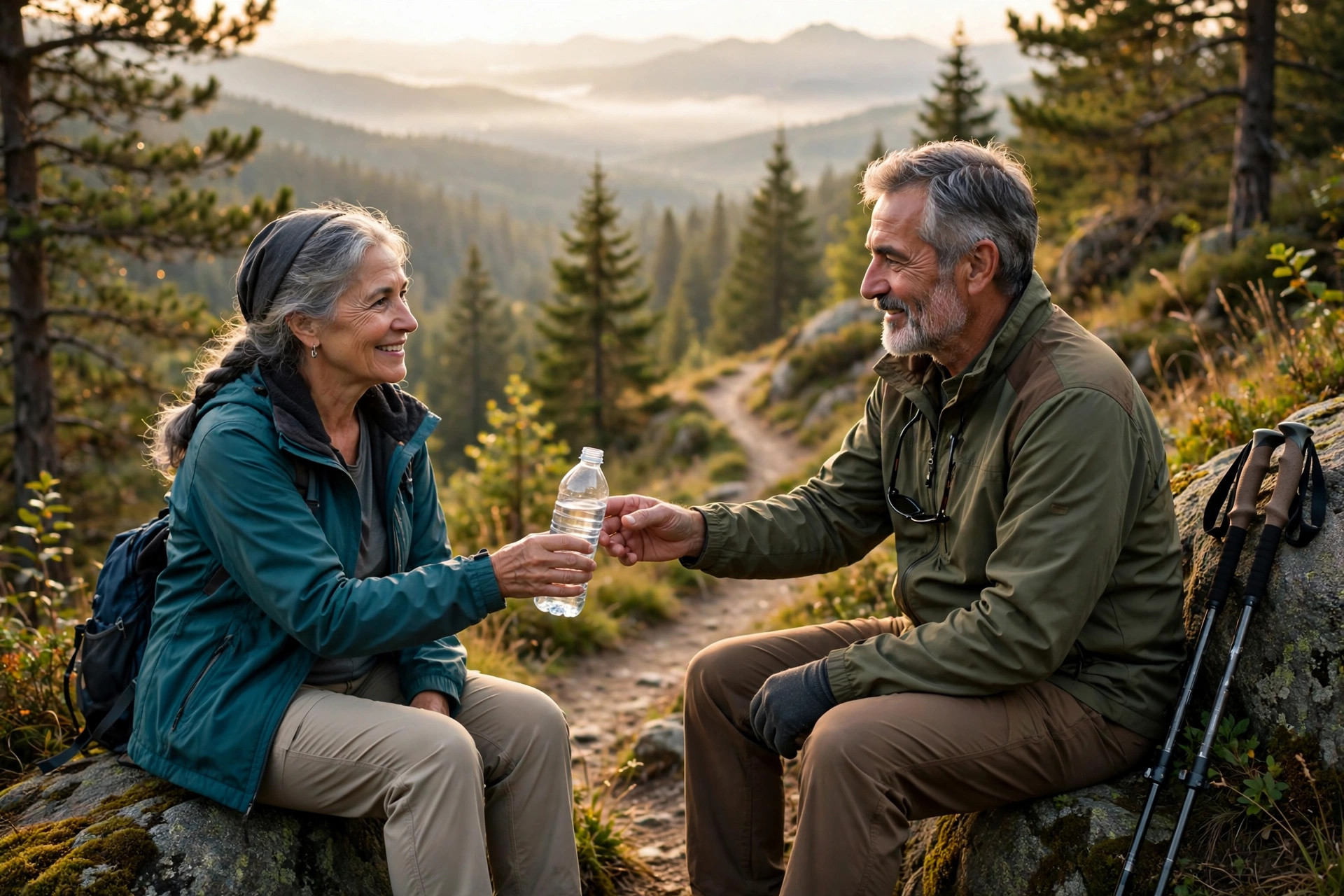
Hydrate and fuel on the trail
Dehydration creeps up quietly, and older adults may feel thirst less reliably — on the trail, low fluids can quickly become a fall risk.
- Carry more water than you think you need. About half a liter per hour of moderate hiking is a common rule of thumb — more in heat.
- Drink on a schedule. A few sips every 15 to 20 minutes keeps you ahead of dehydration better than waiting for thirst.
- Bring real food. Trail mix, a peanut butter sandwich, fruit, or an energy bar keeps energy steady. Avoid hiking on an empty stomach — and avoid heavy meals right before setting out.
- Skip the alcohol. The NIA advises avoiding caffeine and alcohol around outdoor activity in heat. If your doctor has told you to limit fluids, ask what to do on very hot days.
If you take medications affecting fluid balance, blood pressure, or blood sugar, talk with your doctor about managing them on hiking days before you go.
Hike with a buddy — or tell someone your plan
A hiking partner adds protection no gear can replace: someone who can help on a tricky section, share supplies, or call for help. Many communities run hiking clubs with senior-friendly outings, which add a social element too.
Hiking solo? The NIA’s outdoor safety guidance is direct: let others know where you are going and when you plan to be back, and carry your ID with emergency contact information plus a fully charged cell phone. Name the exact trail and trailhead, give an expected return time, and agree on what your contact should do if you are significantly overdue.
One caveat: phone coverage is patchy on many trails. Carry the phone in a waterproof pouch, but also pack a whistle — three blasts is the universal distress signal, and it works without a signal.
Dress for the weather and check the forecast
Bright or light-colored clothing keeps you visible to other trail users, and a small flashlight belongs in your pack in case a hike runs long. Check the forecast the morning of your hike — mountain weather changes fast, so glance again before you leave.
- Dress in layers. A moisture-wicking base layer, an insulating mid-layer, and a wind- or rain-resistant shell let you adjust as you warm up on climbs and cool down on descents. Avoid cotton, which holds sweat and leaves you chilled.
- In heat: drink plenty of water, wear breathable clothing, and use sunscreen, sunglasses, and a hat. Know the warning signs of heat-related illness — heavy sweating, weakness, nausea, dizziness — and head for shade if they appear. When it is very hot, hike early in the morning or pick a shorter, shaded route.
- In cold: wear several loose layers, a waterproof outer layer, and a hat, scarf, and gloves. Watch for ice, warm up your muscles before setting out, and learn the signs of hypothermia (uncontrollable shivering, confusion, drowsiness).
- Be ready to cancel. Storms, extreme heat, or icy conditions? The trail will be there next week. The NIA puts it plainly: if it is very windy, cold, hot, or humid, consider exercising inside instead.
Pack the essentials
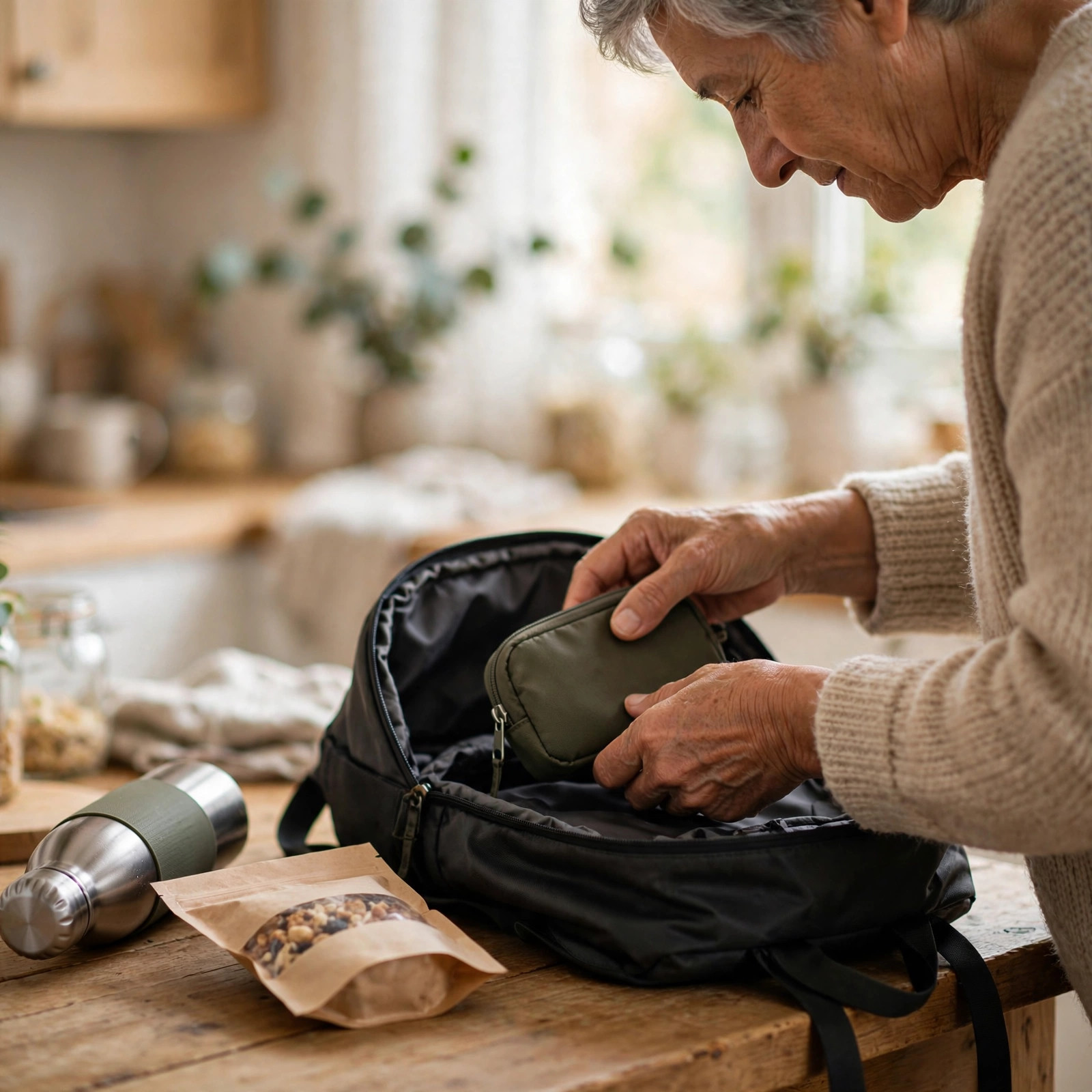
A small daypack with these basics turns a minor trail problem into a minor inconvenience:
- Water — more than you expect to drink.
- Snacks — trail mix, fruit, or energy bars.
- Charged phone and ID with emergency contact information.
- Sun protection — sunscreen, sunglasses, hat.
- A light rain layer or windbreaker, even on clear days.
- A basic first-aid kit — bandages, antiseptic wipes, blister pads, plus any personal medications (bring a little extra in case of delays).
- A whistle and a small flashlight.
- A trail map — downloaded offline or on paper.
Use a backpack rather than carrying things in your hands — the NIA’s falls guidance notes that free hands help you catch yourself if you stumble.
When to see a doctor
Hiking is wonderful exercise, but some conditions deserve a conversation with your clinician first. Check in with your doctor before starting a hiking routine if you:
- Have a heart condition, high blood pressure, or lung disease such as COPD or asthma.
- Experience chest pain, pressure, or unusual shortness of breath during exertion.
- Feel dizzy, lightheaded, or faint during or after activity.
- Have significant joint problems, arthritis that limits movement, or a recent joint replacement.
- Have diabetes, especially if you use insulin or medications that can lower blood sugar.
- Take blood thinners or other drugs affecting bleeding, balance, or blood pressure.
- Have fallen in the past year or worry about your balance — your doctor may suggest a physical therapy evaluation first.
A brief checkup can also confirm your heart, lungs, and joints are ready for hills and uneven terrain if you have not been active in a while. Bring your medication list, since some drugs affect heat tolerance, balance, or hydration.
Sources
- National Institute on Aging. “Exercising Outdoors: Safety Tips for Older Adults.” Reviewed January 14, 2025. https://www.nia.nih.gov/health/exercise-and-physical-activity/safety-tips-exercising-outdoors-older-adults
- National Institute on Aging. “Falls and Fractures in Older Adults: Causes and Prevention.” Reviewed September 12, 2022. https://www.nia.nih.gov/health/falls-and-falls-prevention/falls-and-fractures-older-adults-causes-and-prevention
- Centers for Disease Control and Prevention. “Older Adult Activity: An Overview.” Reviewed December 4, 2025. https://www.cdc.gov/physical-activity-basics/guidelines/older-adults.html
- Mayo Clinic. “Fall prevention: Simple tips to prevent falls.” July 19, 2026. https://www.mayoclinic.org/healthy-lifestyle/healthy-aging/in-depth/fall-prevention/art-20047358
This article is for general information only and is not medical advice. Talk to your doctor about your personal needs before starting a new hiking routine.