Dancing Benefits for Seniors: Balance, Brain, and Joy After 60
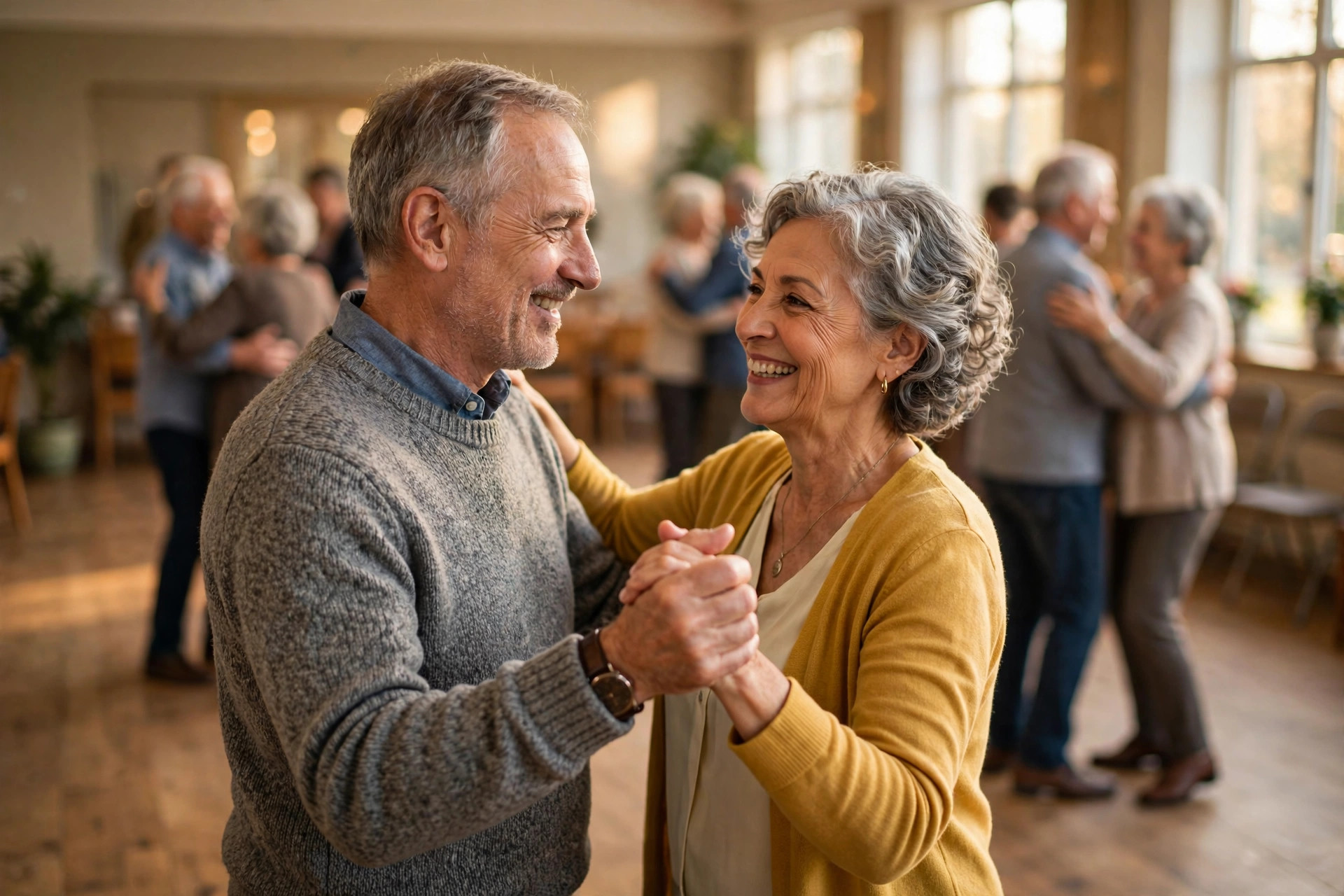
Most exercise advice for older adults sounds like a chore: walk more, lift something, stand on one foot. Dancing quietly does all three at once — and people actually stick with it. A social dance evening is aerobic exercise, a balance workout, a memory exercise, and a social event rolled into one.
This article looks at what the evidence says dancing can — and cannot — do after 60: the fall-prevention data, the honest story on brain health, the social side, and how to start without hurting your joints.
Why dancing is different from most exercise
The CDC recommends that adults 65 and older get a mix of three types of activity each week: at least 150 minutes of moderate-intensity aerobic activity, muscle-strengthening on at least two days, and balance activities. What is easy to miss is that some activities check more than one box at once — and dancing is on the CDC’s own list of aerobic examples. Think about what a simple social dance demands: continuous movement (aerobic), weight shifts and turns (balance), step patterns timed to music (cognitive demand) — usually with other people (social). Few activities load the body, the balance system, and the mind at once while feeling like play.
You do not need to choose between dancing and “real” exercise, either. The CDC counts dancing as moderate-intensity aerobic activity, so a couple of sessions a week contribute directly to the 150-minute target — pair them with strength work (see our guide to staying active after 60) and you have a full week. Dance classes also tend to keep people coming back, and the best exercise for any 60-year-old is the one they will still be doing in six months.
Balance and fall risk: where the evidence is strongest
Falls are the leading cause of fatal and nonfatal injuries among adults 65 and older in the United States, and more than one in four older adults report falling each year, according to CDC surveillance data. Anything that genuinely improves balance in this age group matters.
The evidence for dance is unusually solid here. A 2020 systematic review and meta-analysis in JAMA Network Open pooled 29 randomized trials of dance-based mind-motor activities in healthy older adults. Compared with control groups, the dance programs were associated with a 37% lower risk of falling and a 31% lower rate of falls. Balance improved meaningfully across 15 trials, as did mobility and lower-body strength. The authors concluded that this type of activity “may be useful in preventing falls in this population.”
A 2025 network meta-analysis of 27 trials added detail on styles: creative dance, folk dance, and ballroom dance all showed measurable effects on standard balance tests in older adults. Folk dance ranked best on the Timed Up and Go test, and creative dance on the Berg Balance Scale.
Why would dance work this well? The movement itself is balance training: weight transfers, stepping in different directions, stopping and starting, and reacting to music’s tempo. Our dedicated guide on balance exercises to prevent falls covers the same principles in exercise form — dancing applies them to real movement.
Two honest caveats. First, “may help prevent falls” is not the same as “prevents falls”: these were structured programs, and results vary by style, frequency, and the person. Second, no activity eliminates fall risk on its own — home hazards, vision, and medications matter too.
The brain connection: what the research actually shows
Here is where an honest writer has to slow down, because the story is famous but frequently oversold.
In 2003, a 21-year prospective study from the Albert Einstein College of Medicine, published in the New England Journal of Medicine, tracked leisure activities and dementia risk in 469 adults aged 75 and older. Frequent dancing — three or more times a week — was associated with a 76% lower risk of developing dementia (hazard ratio 0.24), the strongest association among all the physical activities measured.
It is a real, peer-reviewed finding. But it is observational, which means three things a careful reader should know:
- Reverse causation is a real possibility. Early dementia can subtly erode coordination and social confidence years before a diagnosis. People on the path to dementia may simply stop dancing — the disease could cause the inactivity, not the other way around.
- Randomized trials have been mixed. Small experimental studies of dance and cognition in older adults have shown inconsistent results, and several used weak designs.
- Dancing is never one thing. A session blends physical effort, learning, attention to music, and social engagement. Even if the association holds up, nobody knows which ingredient matters most.
So here is the fair summary: dancing may help support brain health, and it is a plausible way to build cognitive reserve — but no study proves that dancing prevents dementia. Enjoy the music; treat any brain benefit as a welcome possibility, not a guarantee.
The social side: joy is a health factor too
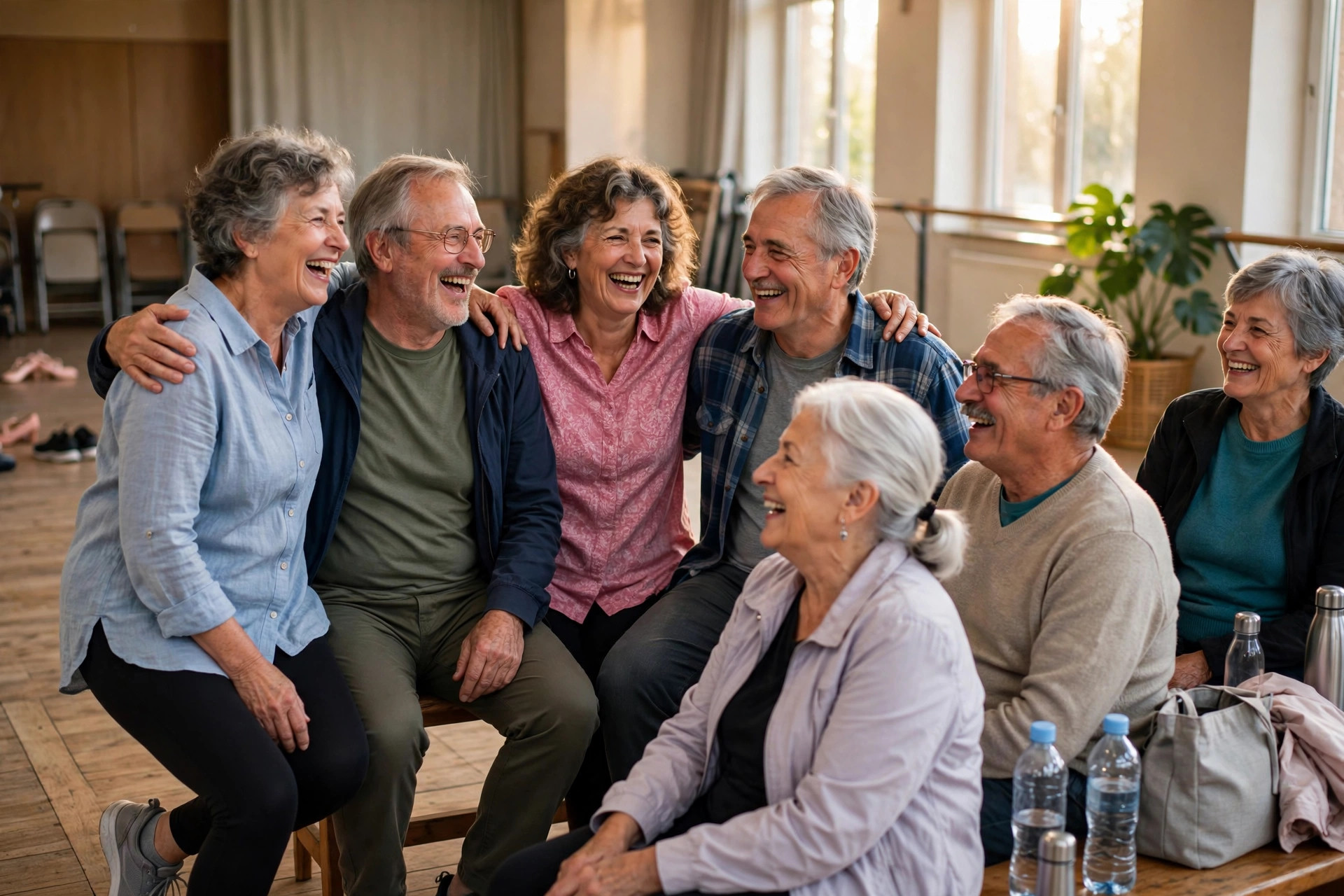
Dancing is almost always social, and that matters. Research on aging keeps finding that feeling connected is linked to better health outcomes: a 2026 Harvard Health summary of 11 long-term studies, for example, found that rising loneliness scores were associated with higher risks of moving from normal cognition to mild cognitive impairment. Our article on loneliness and health after 60 covers this evidence in full.
The link is observational, not proof of cause — but it fits what many older dancers report: the class is the point as much as the steps. A weekly line-dancing group or ballroom social gives you a reason to leave the house, people who notice if you miss a week, and laughter. If exercise adherence is half the battle, enjoyment is a genuine health strategy, not a frill.
Low-impact styles to start with
Not all dancing is equal for older joints and balance. These are the gentlest entry points:
Line dancing. Groups perform repeating step patterns in lines, facing the same direction — no partner needed, and you can watch the row in front of you. This is the most beginner-friendly style in most community centers.
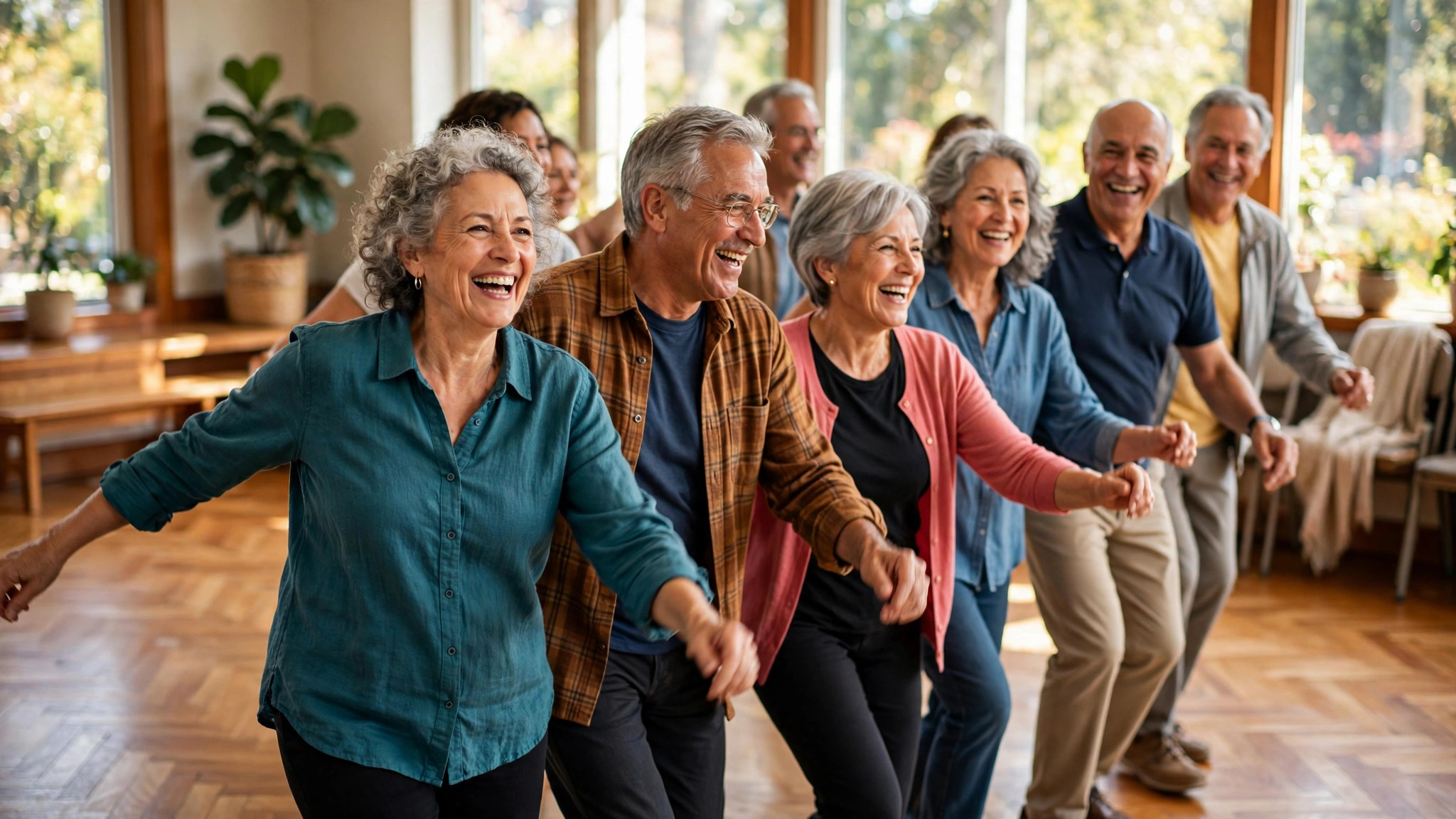
Ballroom basics. Waltz, foxtrot, and rumba basics are built from simple box steps and slow weight shifts — excellent balance training at a controlled pace. Look for “beginner social ballroom” or “senior ballroom” classes rather than competitive programs.
Chair-supported dance. Some programs adapt dance movement for seated or chair-assisted participants: arm movements, footwork, and torso turns with a sturdy chair for support. If your balance is shaky, this is a legitimate way in — and pairs naturally with a 15-minute chair exercise routine on non-dance days.
Cultural and folk dance. Traditional folk styles often involve walking patterns, circle formations, and partner holds — natural balance challenges at a friendly pace. The 2025 network meta-analysis ranked folk dance highly on functional mobility tests.
Styles to approach with caution at first: fast spins and turns (dizzy risk), high-impact jumping, floor work, and anything with rapid direction changes before your balance is ready. You can always progress.
Joint cautions: ankles, knees, and hips
Dancing is low-impact compared with running, but it is not zero-impact. A few precautions protect the joints that complain most after 60:
- Warm up first. Five to ten minutes of marching in place, ankle circles, and gentle leg swings before class — the same principle as any workout.
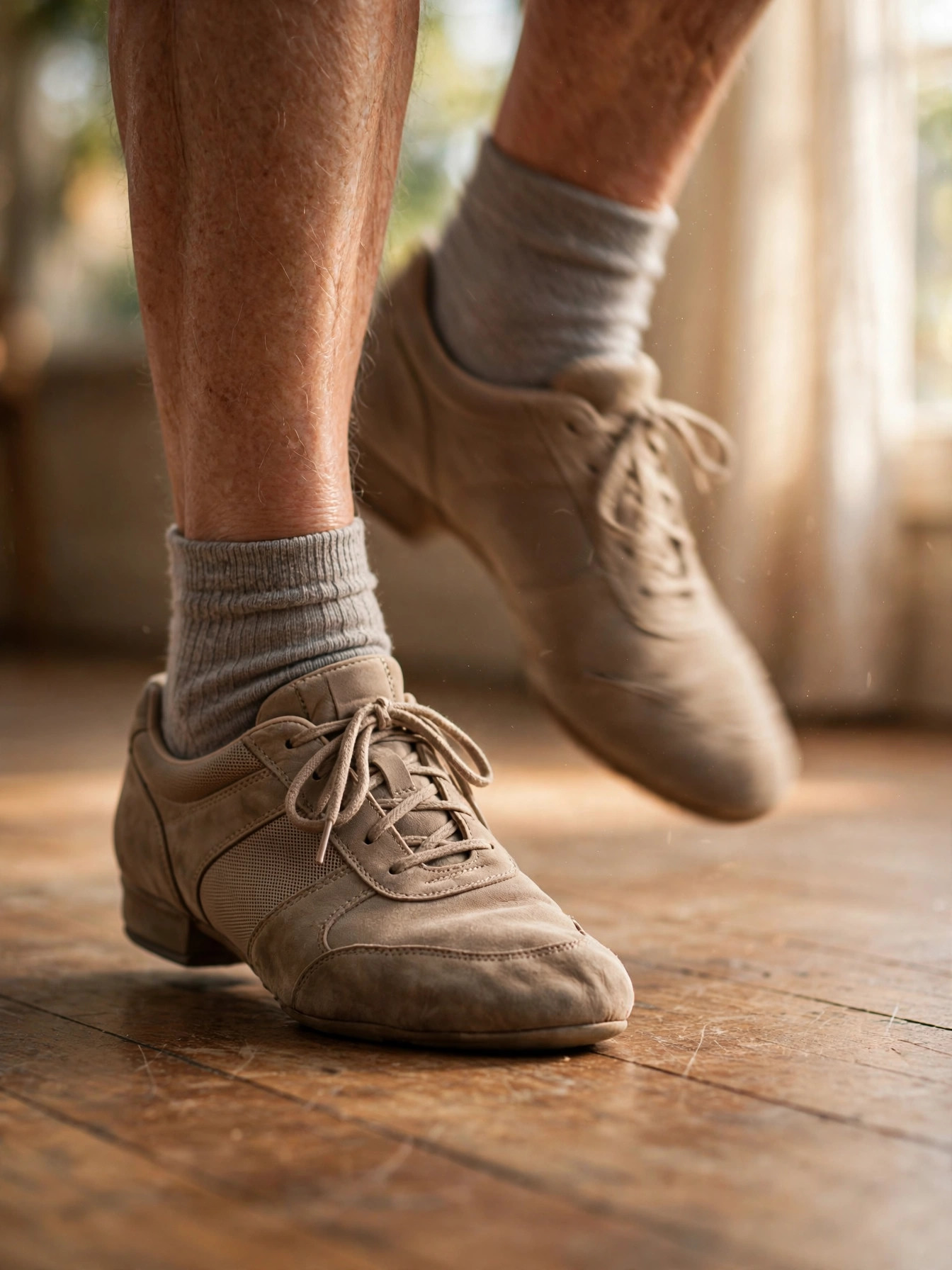
- Footwear matters more than you think. Supportive, well-fitting shoes with a non-slip sole beat thin flat shoes on a slick floor. Dance-specific shoes are unnecessary; comfortable walking or low-heeled court shoes work.
- Mind the ankles. Quick pivots and turns stress ankles, especially on grippy floors. If you have ankle instability or a past sprain, favor styles with straightforward stepping (line dancing) over twist-heavy styles.
- Knees and hips: respect the pain rule. Mild muscle effort is fine; sharp, stabbing, or swelling-inducing pain is not. Twisting a loaded knee — turning while your full weight is on that leg — is the move most likely to irritate arthritic knees. Reduce the turn or take smaller steps.
- Floor surfaces. Sprung wood dance floors are kindest to joints; concrete with thin carpet is the worst. Community centers vary — ask what you will be dancing on.
Getting started safely
- Get the okay. Talk to your clinician first if you have heart disease, uncontrolled blood pressure, severe osteoporosis, a joint replacement, or significant balance problems.
- Start with one class a week. Look for beginner or senior sessions at community centers or dance studios. One trial class tells you more than any article.
- Bring a friend or a water bottle. Both improve adherence, in different ways.
- Progress gradually. Add a second session, or more complex steps, only after a few comfortable weeks.
When to see a doctor
See a clinician if you experience:
- Chest pain, pressure, or unusual shortness of breath during or after dancing
- Dizziness, faintness, or falls during class — these deserve evaluation, not just embarrassment
- Joint pain that is sharp, causes swelling, or lingers more than a day or two after dancing
- New numbness, tingling, or weakness in the legs or feet
- You take blood thinners, heart medications, or multiple prescriptions and have not yet checked whether a new exercise program is appropriate
None of these mean you can never dance — they mean you should get guidance first.
The bottom line
Dancing combines three things the evidence supports independently — aerobic activity, balance challenge, and social connection — into one genuinely enjoyable habit. The fall-prevention data from randomized trials is the strongest part of the case; the brain-health findings are promising but observational, and should never be sold as dementia prevention. Start with a gentle style, protect your joints, and get medical clearance if you have health conditions.
Sources
- CDC, “Older Adults: Adding Activity Recommendations” — 150 minutes of moderate aerobic activity plus muscle-strengthening and balance activities each week — https://www.cdc.gov/physical-activity-basics/adding-older-adults/
- Mattle M. et al., “Association of Dance-Based Mind-Motor Activities With Falls and Physical Function Among Healthy Older Adults: A Systematic Review and Meta-analysis,” JAMA Network Open, 2020 — https://jamanetwork.com/journals/jamanetworkopen/fullarticle/2770956
- Verghese J. et al., “Leisure Activities and the Risk of Dementia in the Elderly,” New England Journal of Medicine, 2003;348:2508–16 — https://www.nejm.org/doi/full/10.1056/NEJMoa022252
- CDC, “Nonfatal and Fatal Falls Among Adults Aged ≥65 Years — United States,” MMWR 2023 — https://www.cdc.gov/mmwr/volumes/72/wr/mm7235a1.htm
- Li Y. et al., “The effects of dance interventions on reducing the risk of falls in older adults: a network meta-analysis,” Frontiers in Public Health, 2025 — https://pubmed.ncbi.nlm.nih.gov/39758210/
- Harvard Health Publishing, “Loneliness linked to cognitive decline and early death” (summary of 2026 JPSP analysis) — https://www.health.harvard.edu/healthy-aging-and-longevity/loneliness-linked-to-cognitive-decline-and-early-death
This article is for informational purposes only and is not a substitute for professional medical advice. Always talk to your doctor before starting a new exercise routine.