How Much Fiber Per Day Do Seniors Need? Targets and Easy Sources
If there is one nutrition gap that affects nearly every older adult, it is fiber. Most people over 50 eat only about half the fiber they should — and the shortfall quietly affects digestion, cholesterol, and blood-sugar control. The good news: closing the gap does not require exotic foods or supplements. It takes a few deliberate choices, repeated daily.
This guide covers the actual targets for adults 51 and older, how far short most people fall, the best food sources with their fiber counts, and how to increase your intake without the bloating that makes so many people give up.
Why fiber matters more after 50
Fiber is the part of plant foods your body cannot digest — and that is exactly what makes it useful. It adds bulk to stool, feeds beneficial gut bacteria, and slows how quickly sugar enters the bloodstream.
Three reasons it becomes more important with age:
- Constipation becomes common. Digestion slows with age, and several common medications — including some pain medicines, iron supplements, and certain blood-pressure drugs — add to the problem. Mayo Clinic notes that fiber, fluids, and movement are the first line of defense for chronic constipation.
- Cholesterol and blood sugar need more help. Soluble fiber (found in oats, beans, and fruit) is linked to lower LDL cholesterol, and high-fiber diets are associated with better glycemic control. After 50, when both readings tend to drift upward, fiber is one of the simplest dietary tools available.
- Gut health feeds overall health. Fiber ferments in the colon into compounds that nourish the gut lining. A varied, fiber-rich diet is linked to a more diverse gut microbiome — and dietitians increasingly treat plant-food variety as the real secret of gut health.
Your daily fiber target: the numbers for 51+
Two authoritative sets of guidelines give the targets for older adults, and they agree within a couple of grams:
| Who | National Academies (Institute of Medicine) | Dietary Guidelines for Americans 2020–2025 |
|---|---|---|
| Women 51 and older | about 21 g/day | 22 g/day |
| Men 51 and older | about 30 g/day | 28 g/day |
Both sets scale fiber to calorie intake (about 14 grams per 1,000 calories), which is why the numbers drop slightly after 50 — older adults typically eat less. A practical rule of thumb for seniors: aim for roughly 25 to 30 grams a day if you are a man, and about 22 to 25 grams if you are a woman. If your appetite is small or you eat fewer than 1,600 calories a day, talk to your doctor or dietitian about a personal target.
The fiber gap: most older adults get only about half
Here is the uncomfortable fact. The Dietary Guidelines for Americans report that more than 90 percent of women and 97 percent of men do not meet the recommended fiber intake — and fiber is officially listed as a dietary component of public health concern. In practice, typical adult intake lands at roughly 10–15 grams a day: about half of what it should be.
Why is the gap so wide? Three culprits:
- Refined grains won the last century. White bread, white rice, and processed breakfast cereals replaced whole grains, stripping out most of their fiber.
- Legumes disappeared from plates. Beans and lentils — the highest-fiber foods in the grocery store — became side dishes people rarely cook.
- Snacking shifted to low-fiber foods. Crackers, chips, and sweets deliver calories without the fiber that fruit, nuts, or vegetables would provide.
The encouraging flip side: because intake is so low, even modest additions — a bowl of oatmeal here, a cup of lentils there — make a measurable difference.
The best fiber sources: grams per serving
All figures below are based on USDA FoodData Central values (via published nutrition tables). Keep this table handy; it is the core of the whole strategy.
Legumes — the fiber champions
| Food | Serving | Fiber (approx.) |
|---|---|---|
| Cooked lentils | 1 cup | 15.6 g |
| Cooked black beans | 1 cup | about 15 g |
| Cooked chickpeas | 1 cup | about 12 g |
| Cooked split peas | 1 cup | about 16 g |

One cup of cooked lentils alone covers more than half of most seniors’ daily target. If legumes cause gas at first, start with a quarter cup and build up; lentils and split peas tend to be the gentlest.
Fruits
| Food | Serving | Fiber (approx.) |
|---|---|---|
| Raspberries | 1 cup | 8 g |
| Blackberries | 1 cup | about 7.6 g |
| Pear | 1 medium | about 5.5 g |
| Apple (with skin) | 1 medium | about 4 g |
| Prunes (dried plums) | 5 prunes | about 2 g |
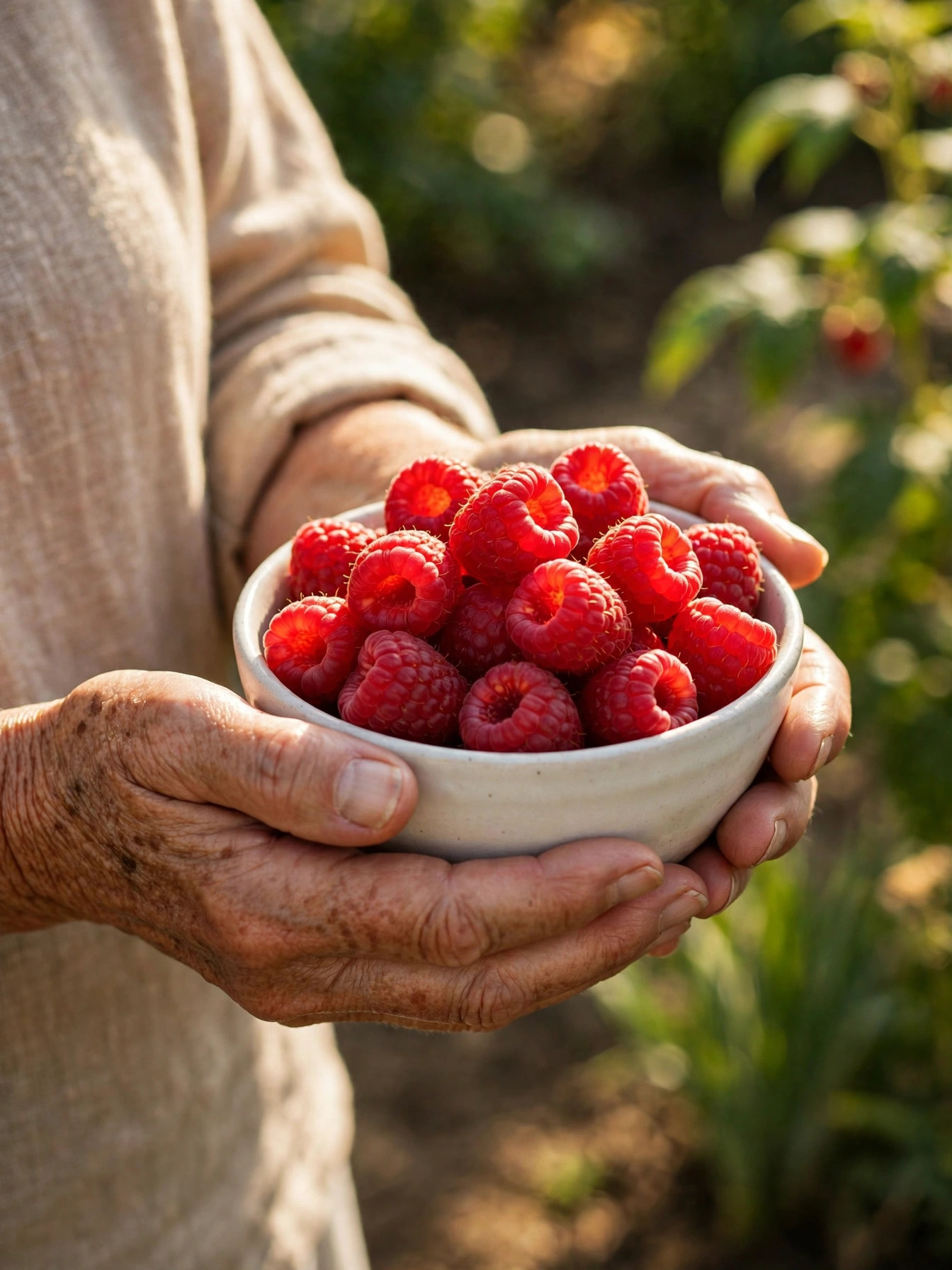
Berries are the standout: a single cup of raspberries gives you 8 grams. Prunes deserve a special mention for seniors — they are the classic remedy for constipation, and studies suggest they support bowel regularity better than their fiber count alone would predict, likely because of sorbitol and other compounds. (A note on sorbitol: it is a sugar alcohol, not a medication, but large amounts can cause loose stools — a small handful is plenty.)
Whole grains
| Food | Serving | Fiber (approx.) |
|---|---|---|
| Oats (old-fashioned, dry) | ½ cup | 4 g |
| Quinoa, cooked | 1 cup | about 5 g |
| Whole-wheat bread | 1 slice | about 2 g |
| Air-popped popcorn | 3 cups | 4 g |
Nuts and seeds
| Food | Serving | Fiber (approx.) |
|---|---|---|
| Chia seeds | 1 oz (about 2 tablespoons) | about 10 g |
| Flaxseeds, ground | 1 oz | about 7–8 g |
| Almonds | 1 oz (about 23 nuts) | about 3.5 g |
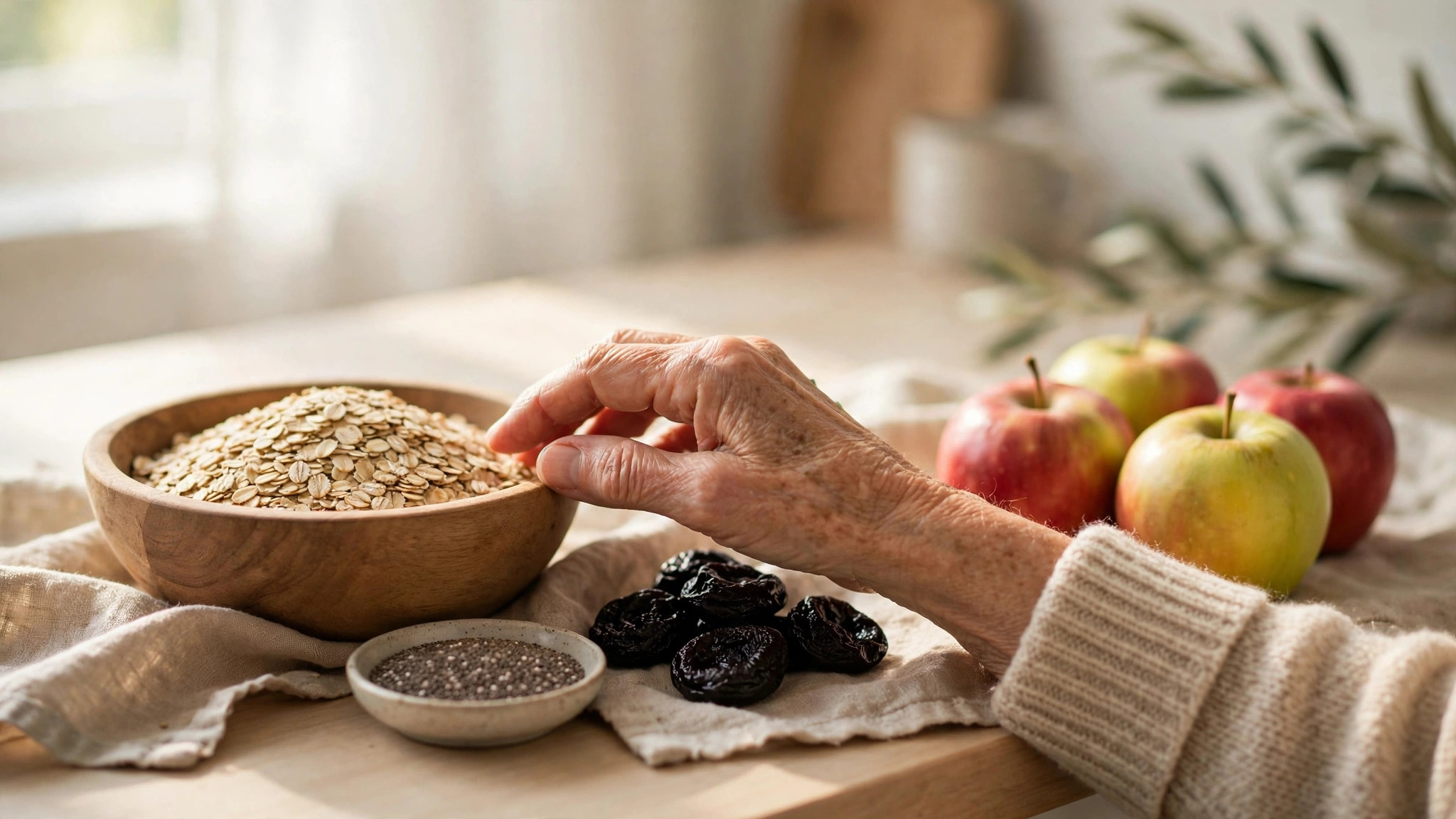
Chia seeds are the quiet overachiever: two tablespoons deliver about 10 grams of fiber with almost no taste, so they disappear into yogurt, smoothies, or oatmeal. Note that nuts and dried fruit are calorie-dense, so keep portions small — a handful, not a bag.
Vegetables worth knowing: a cup of cooked broccoli has about 5 grams, a medium baked sweet potato with skin about 4 grams, and a cup of cooked Brussels sprouts about 4 grams.
A sample day that hits your target
Theory is useful; here is a concrete day for a man over 50 aiming for ~28 grams:
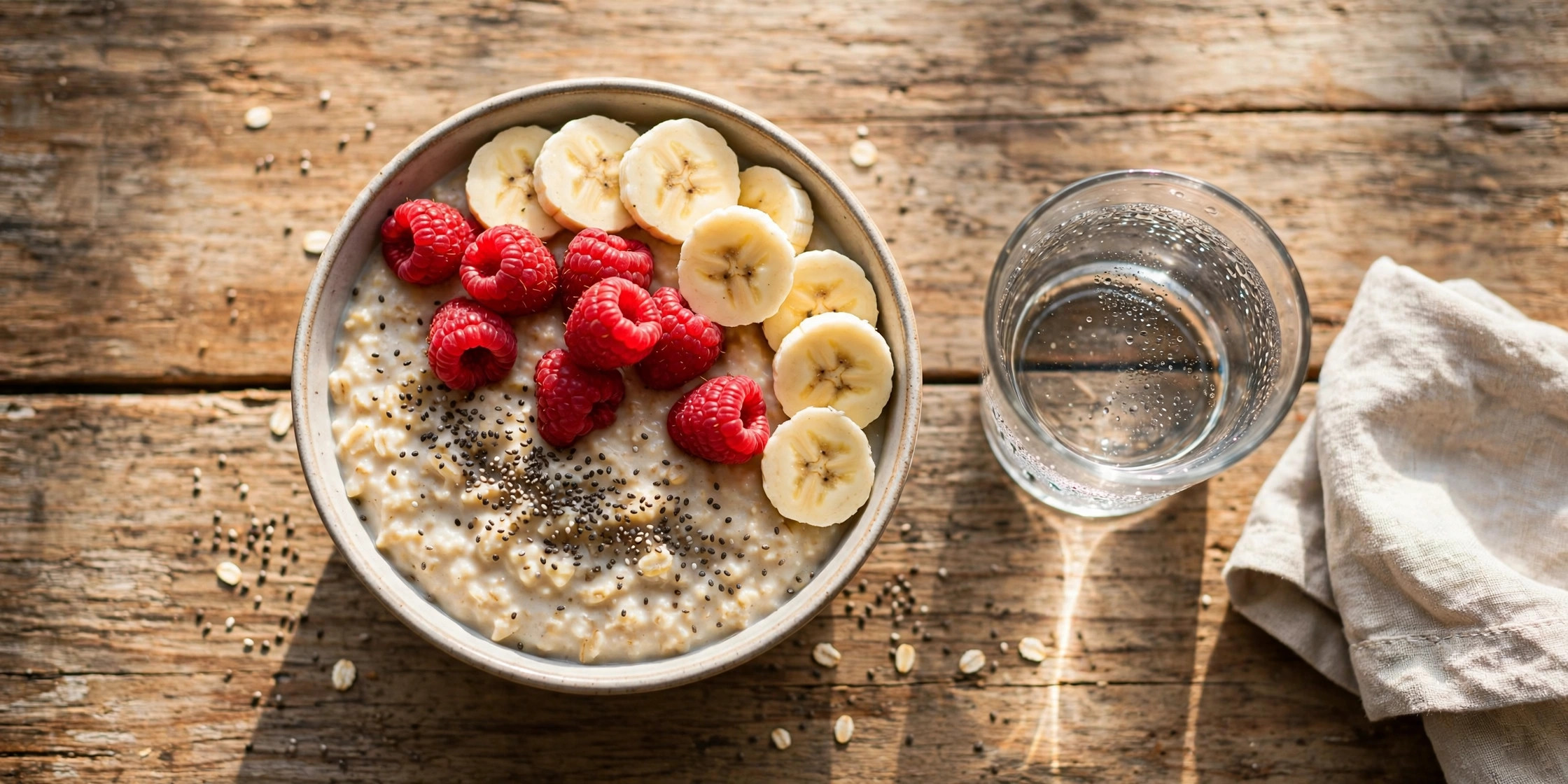
- Breakfast: ½ cup dry oats cooked with milk (4 g), topped with ½ cup raspberries (4 g) and 1 tablespoon chia seeds (5 g) → 13 g
- Lunch: a bowl of lentil soup made with 1 cup cooked lentils (15.6 g) → running total ~28 g… and that is before dinner.
- Dinner: grilled fish, a cup of roasted broccoli (5 g), and quinoa (5 g) — the day lands well over 30 g.
A woman aiming for ~22 grams can drop the chia or use half the lentils and still land comfortably in range. The pattern to copy: one legume serving + one berry serving + one whole-grain serving + one seed serving covers nearly anyone’s target.
Increase gradually — and pair it with water
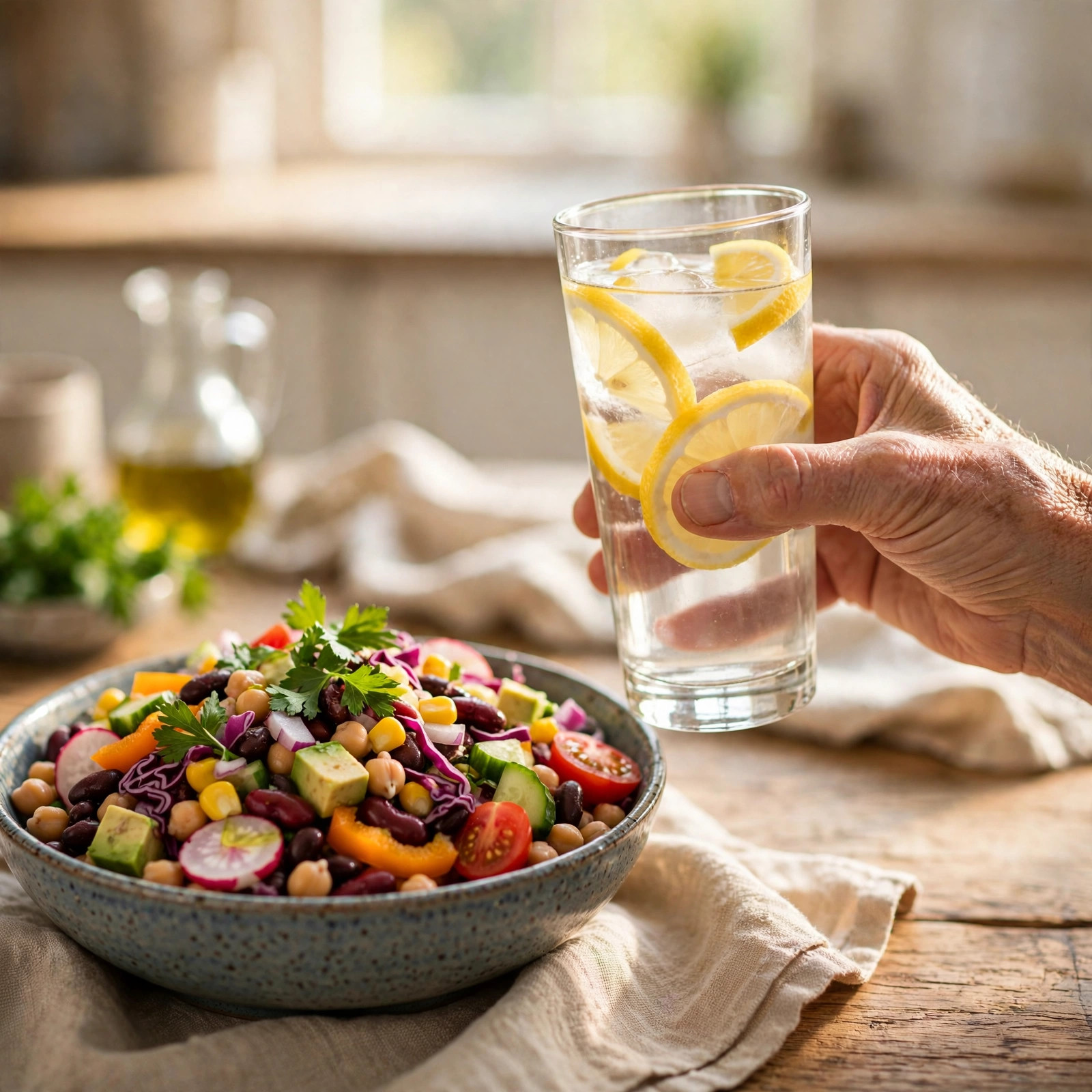
This is where most fiber efforts fail. Adding a large amount of fiber suddenly causes bloating, gas, and cramping — and people understandably conclude “fiber doesn’t agree with me.” Mayo Clinic’s advice: add fiber slowly over a few weeks so the gut bacteria can adjust. One practical method is to increase by about 3 grams a week — roughly one new high-fiber food at a time — and hold each level for a week or so before adding more.
Equally important: drink plenty of water alongside the extra fiber. Fiber works best when it absorbs water; this is what makes stool soft and bulky enough to pass comfortably. Without enough fluid, a sudden fiber increase can actually make constipation worse. If you take medication, note that fiber supplements can affect absorption of some drugs (including thyroid, diabetes, and some heart medications), so take medicines an hour before or two hours after fiber, and check with your pharmacist.
A quick comparison worth knowing: fiber from whole foods beats fiber supplements for most people, because whole foods deliver a mix of fiber types plus vitamins, minerals, and antioxidants. Supplements are a backup plan — talk to your doctor before relying on them.
When to see a doctor
Fiber is powerful, but it is not the answer to everything. See your doctor if you notice:
- Constipation that is new, severe, or lasts more than a few weeks despite diet changes
- Blood in your stool, or stools that are black or tarry
- Unexplained weight loss, persistent abdominal pain, or a change in bowel habits that is new for you
- You take multiple medications and want to add fiber supplements — a pharmacist should review for interactions
- You have a digestive condition (such as inflammatory bowel disease, diverticulitis in a flare, or gastroparesis) — high fiber is not always appropriate
Also worth knowing: constipation that does not respond to diet, fluids, and movement can be a sign of underlying conditions — from thyroid disorders to pelvic-floor problems — that need proper evaluation.
The bottom line
After 51, your fiber target is about 21–22 grams a day for women and 28–30 grams for men — and almost everyone falls short. The fix is refreshingly simple: one serving of legumes, one of berries, one of whole grains, and a sprinkle of chia seeds covers the full target. Add them gradually, drink water with them, and let consistency do the work. Your gut, your cholesterol, and your blood sugar will all notice.
Sources
- U.S. Department of Agriculture & U.S. Department of Health and Human Services, Dietary Guidelines for Americans, 2020–2025, Appendix 1: Daily Nutritional Goals (fiber targets by age and sex; fiber listed as a dietary component of public health concern)
- Mayo Clinic, “Dietary fiber: Essential for a healthy diet” — https://www.mayoclinic.org/healthy-lifestyle/nutrition-and-healthy-eating/in-depth/fiber/art-20043983?reDate=05052019&reDate=06052019&p=1
- Mayo Clinic News Network, “Mayo Clinic Minute: The importance of dietary fiber” — https://newsnetwork.mayoclinic.org/discussion/mayo-clinic-minute-the-importance-of-dietary-fiber/
- USDA FoodData Central via MyFoodData, “Cooked Lentils (Boiled), 1 cup” — http://tools.myfooddata.com/nutrition-facts/172421/wt1
- USDA FoodData Central via MyFoodData, “Foods Highest in Fiber” ranking — https://tools.myfooddata.com/nutrient-ranking-tool/fiber/all/highest
- National Institute on Aging (NIA), “Healthy eating after 50” (fiber-rich foods for older adults: fruits, vegetables, beans, and whole grains) — https://www.nia.nih.gov/health/healthy-eating/healthy-eating-after-50
This article is for informational purposes only and is not a substitute for professional medical advice. Always talk to your doctor before changing your diet.