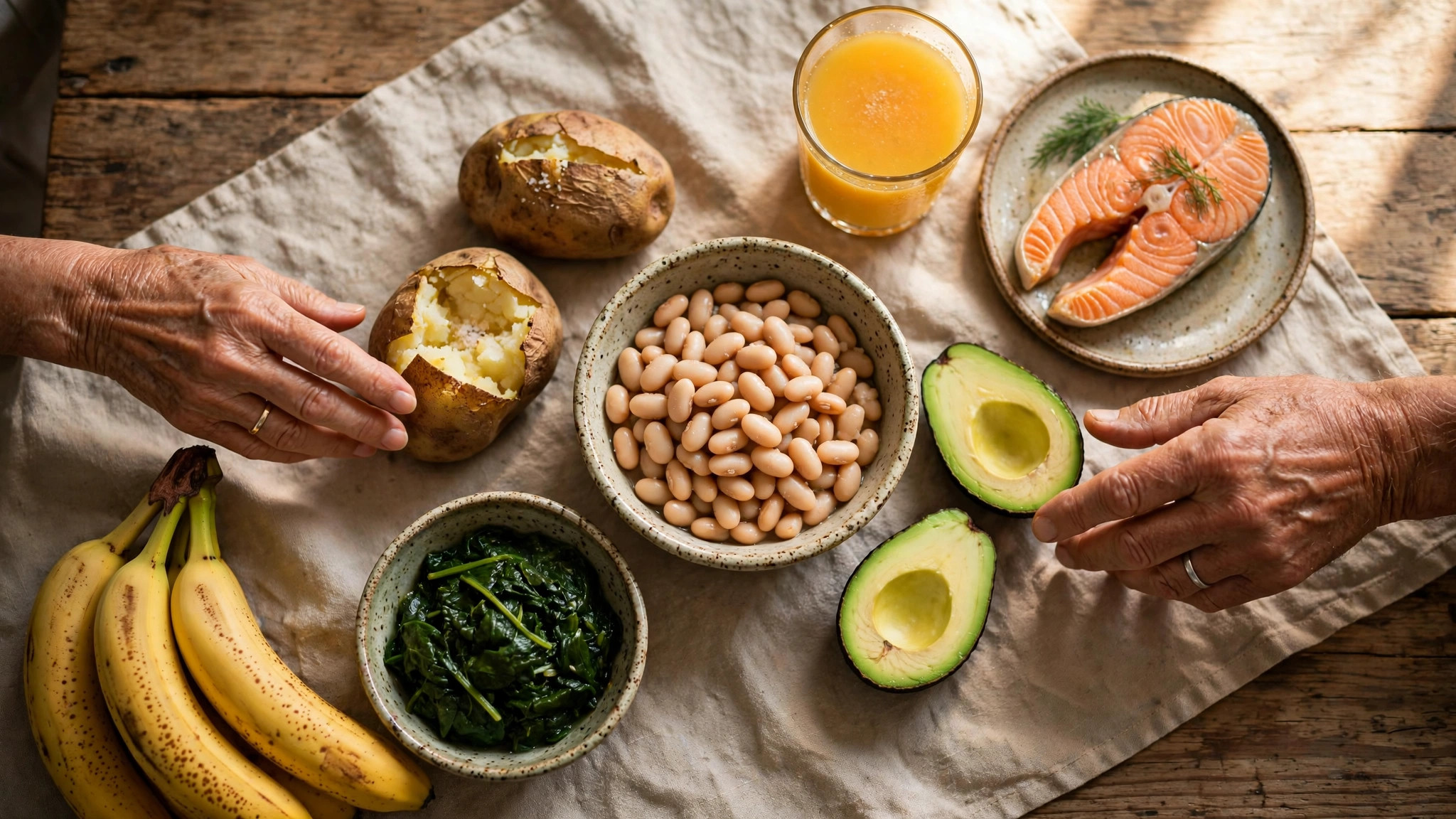
10 Potassium-Rich Foods That May Support Healthy Blood Pressure After 50
By James Carter, Health Writer & Editor
When most people hear “potassium,” they picture a banana. Bananas do provide potassium — but they are far from the richest source, and a banana alone will not move the needle on your blood pressure. Potassium works best as part of a bigger dietary pattern, and it turns out most of us are not getting nearly enough of it.
Potassium and sodium work as a team in your body. Sodium tends to raise blood pressure; potassium helps your body get rid of extra sodium through urine, and it may also help relax blood vessel walls. According to the National Institutes of Health, U.S. adults average only about 3,016 mg of potassium per day for men and 2,320 mg for women — well short of the World Health Organization’s practical target of roughly 3,510 mg per day. That shortfall is one reason diet researchers pay so much attention to this mineral.
Food-first is the safest strategy, especially after 50. The list below gives real portions with real potassium numbers, plus the kidney and medication cautions you need to know before changing anything.
1. Baked potato (with the skin)
About 940 mg per medium potato. The humble potato is the single richest potassium source on most American tables — and most of the potassium sits in and just under the skin, so bake it whole. Keep toppings simple: a little olive oil and herbs rather than loaded butter and sour cream, which add the sodium and saturated fat you are trying to offset.

2. Cooked spinach
About 840 mg per cup, cooked. Leafy greens are potassium powerhouses, and spinach also brings fiber, folate, and magnesium. Sauté it with garlic, wilt it into soups and pasta, or blend a handful into a smoothie. Frozen spinach works just as well as fresh.
3. Lentils
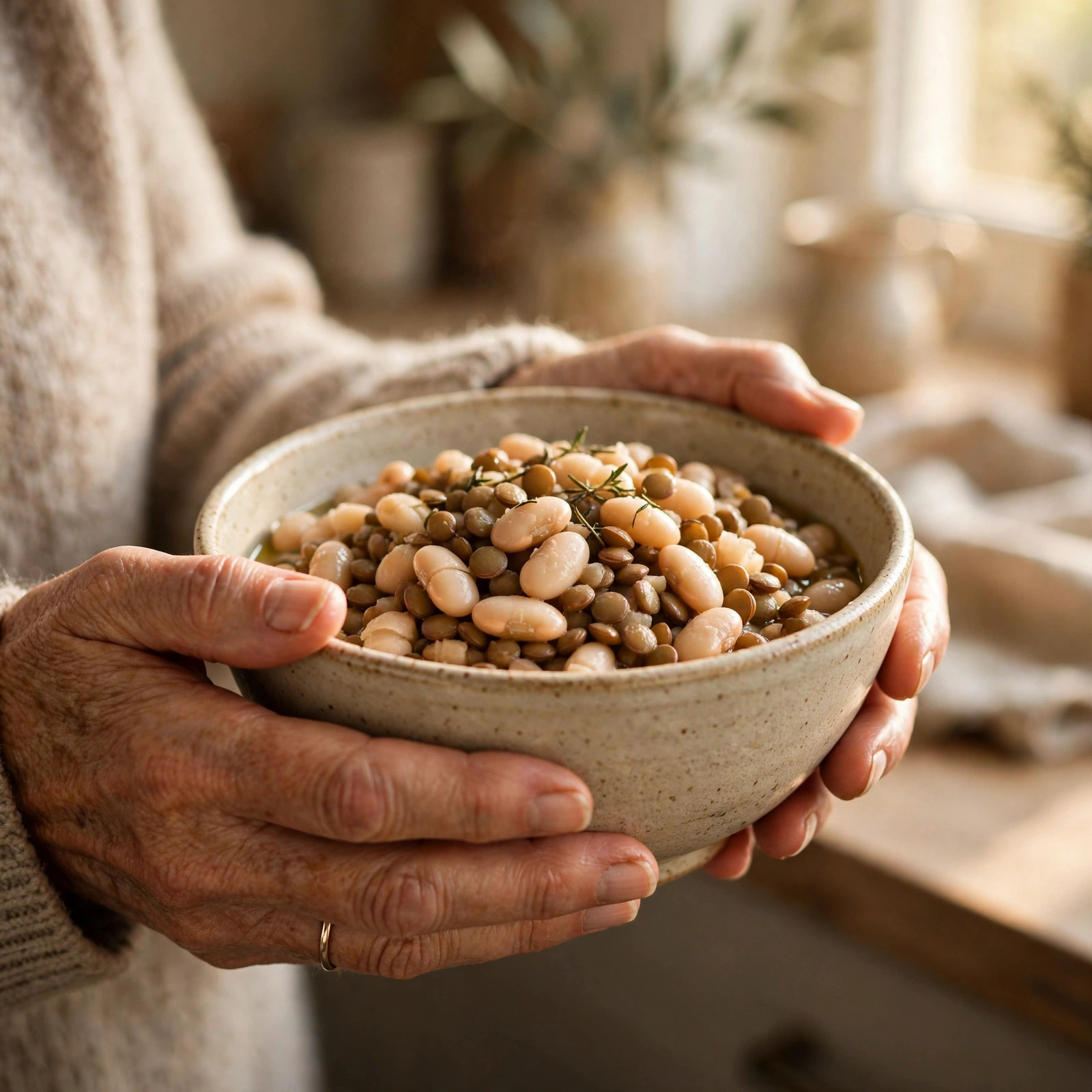
About 730 mg per cup, cooked. Lentils deserve a regular spot in your rotation: they are inexpensive, cook in about 20 minutes with no soaking, and pack plant protein and fiber alongside potassium. Red lentils melt into soups; green or brown lentils hold their shape in salads.
4. White beans
About 600 mg per half cup, cooked. Cannellini and navy beans are among the most potassium-dense foods you can buy. Rinse canned beans well to wash off much of the added sodium, then add them to stews, grain bowls, or a simple white-bean and tuna salad.
5. Orange juice
About 500 mg per cup. A glass of orange juice delivers a lot of potassium fast — but it also delivers a lot of sugar. If you drink it, keep it to one small glass, choose 100% juice with no added sugar, and remember that a whole orange gives you fiber along with the mineral. People watching blood sugar may do better with whole fruit.
6. Salmon
About 490 mg per 3-ounce cooked portion. Wild salmon is especially rich in potassium, and it brings heart-friendly omega-3 fats to the same plate. Canned salmon counts too — look for “no salt added” varieties. Aim for fish twice a week as part of an overall heart-healthy pattern.

7. Avocado
About 480 mg per half an avocado. Creamy, filling, and rich in monounsaturated fats, avocado is an easy add: sliced on toast, diced into salads, or blended into a smoothie for thickness. Half an avocado is a reasonable serving; a whole one is a lot of calories, so portion mindfully.
8. Banana
About 420 mg per medium banana. The classic for a reason — portable, cheap, and consistent. Bananas are a perfectly good potassium source; they just are not the champion people assume. Enjoy them, but do not stop here.

9. Plain yogurt
About 380 mg per 8 ounces. Plain yogurt is a solid everyday source, and it doubles as breakfast or a snack base. Choose plain over flavored (flavored varieties can carry a surprising amount of added sugar) and add your own fruit — a sliced banana on yogurt is a potassium double win.
10. Milk (low-fat)
About 366 mg per cup. Milk, yogurt, and dairy are among the top dietary potassium sources for U.S. adults, according to the NIH. If you tolerate dairy, a glass of low-fat milk with dinner is a simple way to top up your daily total.
What the research says about potassium and blood pressure
The connection between potassium and blood pressure is one of the better-studied stories in nutrition. A few recent findings are worth knowing about:
A 2026 pilot trial published in Contemporary Clinical Trials (PMID 41571229) tested a potassium-enriched salt substitute — about half sodium chloride and half potassium chloride — against regular salt in 60 adults with resistant high blood pressure, over 24 weeks. The salt-substitute group ended up with 24-hour systolic blood pressure about 2.47 mmHg lower than the regular-salt group — a small, borderline-significant difference — while urinary potassium rose. Importantly, in this carefully monitored setting there were no clinically relevant cases of high blood potassium (hyperkalemia) and no serious adverse events.
A contribution analysis of the large SSaSS trial, published in the Journal of Human Hypertension, estimated that its famous 3.3 mmHg systolic reduction came mostly from the extra potassium rather than the reduced sodium — the sodium fall was modeled to explain only 12 to 39 percent of the effect. That suggests the potassium side of the salt-substitute equation is doing real work.
An October 2025 network meta-analysis pooled 34 randomized trials with 37,063 participants across 15 countries (average age 62.3) and concluded that moderate-potassium, low-sodium salt substitutes (25–40% potassium chloride) probably lower systolic blood pressure by about 4.4 to 4.6 mmHg compared with regular salt, with moderate-to-high certainty. Present this as blood-pressure evidence — not proof of fewer heart attacks or longer life, which these trials were not designed to show.
The takeaway: potassium-rich whole foods are the foundation, and potassium-enriched salt substitutes show promise for people whose doctors approve them. Neither replaces prescribed blood pressure medication.
How much potassium should you aim for?
The WHO suggests about 90 mmol per day — roughly 3,510 mg — as an adequate intake for adults. U.S. guidelines set adequate intakes of 3,400 mg per day for men and 2,600 mg for women aged 51 and older. Treat 3,500 mg as a practical daily target if your doctor has no objection.
What does that look like on a plate? A realistic day could be: a baked potato with dinner (940 mg), a cup of cooked spinach (840 mg), half a cup of white beans at lunch (600 mg), a banana as a snack (420 mg), and an 8-ounce yogurt at breakfast (380 mg) — roughly 3,180 mg before counting everything else you eat. Hitting the target with whole foods is very doable.
The caution every adult over 50 needs to hear
Here is the part that matters most. For most healthy people, getting potassium from food is safe — the kidneys simply excrete what you do not need. But too much potassium in the blood (hyperkalemia) can cause dangerous heart rhythm problems, and some people cannot clear extra potassium normally:
- Chronic kidney disease reduces the kidneys’ ability to remove potassium. If your kidney function is impaired, large increases in potassium intake can be harmful.
- Certain blood pressure and heart medications raise potassium levels — including ACE inhibitors, ARBs (angiotensin receptor blockers), and potassium-sparing diuretics such as spironolactone.
- Potassium-based salt substitutes are far more concentrated than food: they range from about 440 to 2,800 mg of potassium per teaspoon, according to the NIH. Switching your salt shaker without medical advice is risky if you are in one of the groups above.
The food-first message is the safe one: get your potassium from whole foods, talk to your clinician before using salt substitutes or potassium supplements, and never stop or change prescribed blood pressure medication on the basis of diet. For gentle daily movement that pairs well with these dietary steps, see our guide on walking for heart health after 60, and for another mineral that works alongside potassium, read about calcium-rich foods after 50. Broader lifestyle habits that support healthy aging are covered in our roundup of science-backed healthy aging habits.
When to see a doctor
See your doctor promptly if you experience signs that could indicate high blood potassium — such as an irregular or slow heartbeat, muscle weakness, numbness or tingling, nausea, or fainting — especially if you have kidney disease or take any of the medications listed above. Also seek care if your home blood pressure readings stay high despite treatment, if you feel dizzy or short of breath, or if you notice chest discomfort. Know the red flags: heart attack warning signs in older adults can be subtle, and fast action saves lives. If you are considering a potassium salt substitute or supplement, discuss it with your clinician first — a simple blood test can check your potassium level.
Sources
- Pilot randomized trial of a potassium-enriched salt substitute in resistant hypertension — Contemporary Clinical Trials, 2026. https://pubmed.ncbi.nlm.nih.gov/41571229/
- Contribution analysis of sodium reduction vs. potassium increase in the SSaSS trial — Journal of Human Hypertension. https://nature.com/articles/s41371-024-00896-4
- National Institutes of Health, Office of Dietary Supplements — Potassium: Health Professional Fact Sheet (food sources, intakes, salt substitutes, supplement limits). https://ods.od.nih.gov/factsheets/Potassium-HealthProfessional/
- Centers for Disease Control and Prevention — Effects of Sodium and Potassium on blood pressure. https://www.cdc.gov/salt/potassium.htm
- American Heart Association (Go Red for Women) — How potassium can help control high blood pressure, including salt-substitute and kidney cautions. https://www.GoRedForWomen.org/en/health-topics/high-blood-pressure/changes-you-can-make-to-manage-high-blood-pressure/how-potassium-can-help-control-high-blood-pressure
The information in this article is for general educational purposes only and is not medical advice. Talk to your doctor or another qualified health professional before changing your diet, using salt substitutes or supplements, or adjusting any medication — especially if you have kidney disease, high blood pressure, or a heart condition.