
Stroke Warning Signs After 60: BE FAST, Then Act Faster
A stroke is the emergency where the clock matters most. During an untreated ischemic stroke — the kind caused by a blocked blood vessel — doctors estimate that nearly 2 million brain cells are lost every minute. That is why the first response to any suspected stroke is never “let’s wait and see.” It is “call for help now, and sort out the details later.”
After 60, the stakes are higher and the signs are easier to miss. Strokes strike more than 795,000 Americans every year, and stroke remains the fourth-leading cause of death in the US. The hopeful part, according to the CDC, is that an estimated 80% of strokes are preventable — and that new 2026 treatment guidelines give doctors a wider window to save brain tissue than ever before. This guide explains how to recognize a stroke, what the new 24-hour treatment window changes, the “mini-stroke” trap that fools thousands of people each year, and exactly what to do while help is on the way.
Why the signs after 60 deserve special attention
Strokes do not always look dramatic. A drooping face and slurred speech are the images most of us carry, but a stroke can also arrive as sudden dizziness, a moment of confusion, or trouble reading the television menu. In older adults, these quieter signs are often misread as fatigue, low blood sugar, or “just getting older” — and every minute spent misreading them is brain tissue that may not come back.
One more reason to stay alert: the same symptoms can flash briefly and vanish. That is a transient ischemic attack (TIA), often called a mini-stroke, and it is one of the strongest warnings the body ever gives. More on that below — because ignoring it is one of the most dangerous mistakes in all of stroke care.
BE FAST: the six signs that matter
The CDC-endorsed checklist is BE FAST — two letters longer than the old FAST, because balance and vision symptoms are part of the picture too. Print this, tape it to the fridge, and make sure everyone in your household knows it.
B — Balance: sudden loss of balance or coordination. A sudden stumble, dizziness, or the feeling the room is spinning, with no obvious cause. Key word: sudden. Gradual clumsiness over months is a different conversation; a brand-new inability to walk straight is an emergency.
E — Eyes: sudden vision trouble. Blurred vision, double vision, or loss of sight in one or both eyes that arrives abruptly. Some people describe a gray curtain falling over part of their vision. If it comes on in seconds, treat it as urgent.

F — Face: facial drooping. One side of the face droops or feels numb. Ask the person to smile — the smile will look uneven. This is one of the most photographed signs, and one of the most reliable.

A — Arms: weakness on one side. Ask the person to raise both arms. If one arm drifts downward, or one hand feels numb and heavy, that is a classic sign. One-sided weakness is the hallmark — stroke usually affects one side of the body.
S — Speech: slurred, strange, or absent. Slurred words, the wrong words coming out, or an inability to understand what you are saying. Ask the person to repeat a simple sentence (“the sky is blue”). If the words won’t come out right, do not wait.
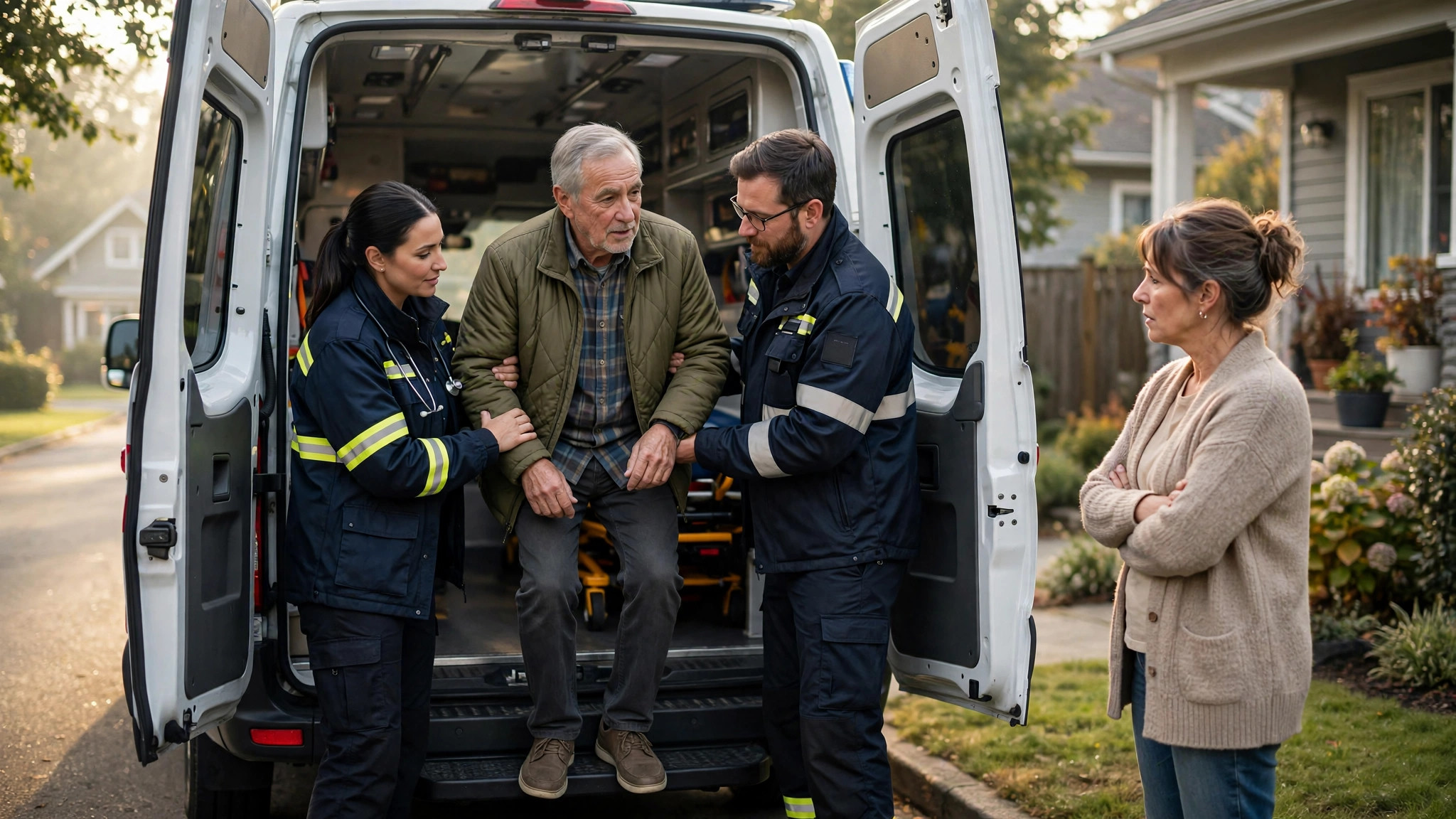
T — Time: call emergency services immediately. If you see even one of these signs, note the time they started and call 911 (or your local emergency number) right away. Do not drive the person yourself — paramedics can begin stroke care on the way and radio ahead so the hospital team is ready.

The headache flag. One sign stands outside the BE FAST letters but deserves a place here: a sudden, severe headache described as “the worst headache of my life.” This pattern can signal a hemorrhagic stroke — bleeding in the brain rather than a clot — and it is just as time-critical.
The new 24-hour treatment window (and why earlier still wins)
Here is the biggest change in stroke care in years. Under the 2026 Guideline for the Early Management of Patients with Acute Ischemic Stroke from the American Stroke Association, in effect from January 2026, doctors can now give the clot-busting drug up to 24 hours after an ischemic stroke — provided advanced imaging shows there is still salvageable brain tissue.
Why does this matter so much? Previously, people who woke up with stroke symptoms — strokes that happened during sleep, with no known start time — were usually denied clot-busting treatment because no one could prove they were inside the old, shorter window. Imaging can now identify who still has brain worth saving, and treatment can go ahead.
Be clear about what this does not mean. Earlier is still dramatically better: the drug’s benefits shrink and its risks grow with every passing hour. The guideline expands who can be helped; it does not relax the urgency. The message from every stroke authority remains the same: get to the hospital as fast as humanly possible. The 24-hour window is a second chance for people who would previously have had no chance at all — not an excuse to delay.
The TIA trap: when symptoms disappear
Now for the trap. Sometimes all of the signs above show up for a few minutes — then fade completely. You feel fine again. It is tempting to cancel the 911 call, finish your breakfast, and mention it to your doctor “sometime.”
That episode was most likely a transient ischemic attack (TIA) — a temporary blockage that cleared on its own. It feels like a false alarm. It is actually the opposite: one of the loudest alarms your body can sound. Here is what the evidence says about what follows an untreated TIA:
- More than one-third of people who have a TIA without treatment go on to have a major stroke within one year.
- About 10–15% have that major stroke within just three months.
- Of those subsequent strokes, roughly half happen within 48 hours of the TIA.
- Research highlighted by UNM Health found that about 12% of stroke patients had experienced such a warning mini-stroke in the 90 days before their major event.
Those numbers leave no room for “wait and see”: call emergency services even if the symptoms have fully resolved. Only imaging can tell a harmless episode from a brain at imminent risk, and hospitals now have prevention strategies — medication, monitoring, procedures — that can stop the big stroke from happening. A TIA that gets evaluated is a stroke that may never come.
What to do while waiting for help
You have called. Now make the waiting time count:
- Note the time. When did symptoms start, or when was the person last known to be normal? This is the single most useful piece of information you can give the medical team — it determines which treatments are available.
- Keep the person lying down and still. Do not let them walk around or drive. If they are vomiting or drowsy, roll them gently onto their side to keep the airway clear.
- Do not give food, drink, or aspirin. Swallowing may be impaired, and aspirin helps some strokes but harms others — the wrong call can be dangerous. Let the medical team decide.
- Do not drive them yourself. A personal car cannot provide care during the trip and cannot alert the stroke team in advance. An ambulance can do both.
- Unlock the door and gather medications. Have their current medication list and ID ready so the hospital team is not delayed.
If you live outside the US, replace 911 with your local emergency number — but the rule is universal: the emergency call comes first, everything else second.
When to see a doctor (and when not to wait for an appointment)
Let me be blunt, because this article is really about two different kinds of “seeing a doctor”:
Call emergency services immediately — do not book an appointment, do not “sleep on it” — for any sudden BE FAST sign, the worst-headache-of-your-life pattern, or any stroke-like symptom that faded (a possible TIA). These are emergencies in every guideline that exists.
Book a prompt follow-up appointment for the prevention side: a stroke risk review if you have high blood pressure, diabetes, atrial fibrillation, high cholesterol, or a history of smoking — the major risk factors the CDC links to stroke. If you are over 60, ask about blood-pressure targets, cholesterol checks, and whether your heart rhythm has ever been screened for atrial fibrillation. Since an estimated 80% of strokes are preventable, this appointment is where the real leverage is.
Sources
- American Stroke Association — 2026 Guideline for the Early Management of Patients with Acute Ischemic Stroke (guideline in effect from January 2026; clot-busting treatment up to 24 hours with salvageable tissue on advanced imaging). Reporting: https://www.explorejeffersonpa.com/healthy/2026/05/17/the-medical-minute-new-stroke-guidance-expands-treatment-window-saves-lives-175646/
- CDC — Stroke facts: more than 795,000 strokes per year in the US; stroke is the fourth-leading cause of death. https://www.cdc.gov/stroke/about/
- CDC — Stroke signs and symptoms: sudden numbness or weakness of face, arm, or leg; confusion; trouble speaking; vision problems; dizziness; severe headache. https://www.cdc.gov/stroke/signs-symptoms/
- CDC — TIA risks: more than one-third of people with an untreated TIA have a major stroke within one year; about half of those occur within 48 hours of the TIA. https://www.cdc.gov/stroke/about/about-transient-ischemic-attack-tia.html
- Mini-stroke (TIA) warning signs in older adults — 10–15% stroke risk within three months after a TIA; evidence reviews on recognizing transient episodes. https://magichouserecipes.com/articles/mini-stroke-warning-signs-older-adults
- American Stroke Association — stroke resources and BE FAST guidance for recognizing symptoms. https://www.stroke.org/
This article is for general information only and is not medical advice. If you or someone near you shows sudden stroke warning signs, call your local emergency number immediately. Always consult a qualified healthcare professional about any health concern.