Exercising in Cold Weather After 60: Staying Safe Outdoors
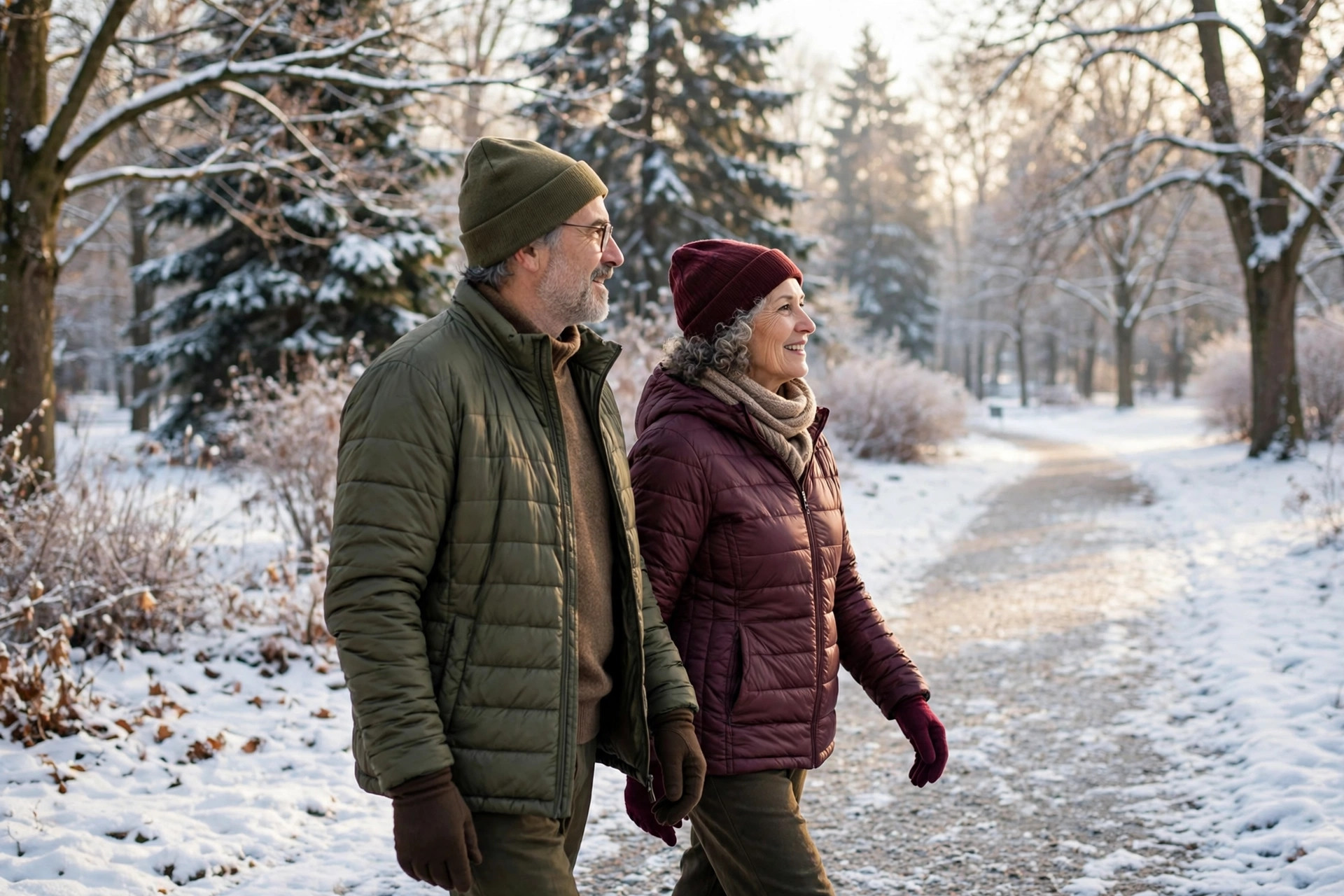
A crisp November morning can be one of the best times of year for a walk. The air feels fresh, the streets are quiet, and a brisk walk warms you from the inside out. For many people over 60, that morning walk is the backbone of the whole fitness routine. But cold weather changes the rules. After 60, your body loses heat faster, warms up more slowly, and reacts more strongly to sudden exertion. Your heart works harder, blood pressure tends to rise, and an icy patch can turn into a serious fall. None of this means staying indoors all winter — it means going out prepared.
Why cold weather changes the rules after 60
The National Institute on Aging (NIA) explains that older adults lose body heat faster than when they were younger. A big chill can become dangerous before the person even notices. Conditions such as diabetes, and some medicines, can weaken the body’s response to cold.
Three changes matter most. First, your heart works harder: cold air narrows blood vessels near the skin, raising blood pressure and forcing the heart to pump against more resistance. The American Heart Association notes that cold plus exertion increases the heart’s workload, and that even walking through heavy snow can strain it. Second, your balance is tested more: cold stiffens muscles and joints, reactions slow, and winter surfaces add ice and slush. Third, you may not feel the cold the way you used to, so you can be getting dangerously chilled without noticing. The NIA warns that hypothermia — a core body temperature of 95°F (35°C) or lower — can develop after relatively short exposure to cold.
Layering that actually works
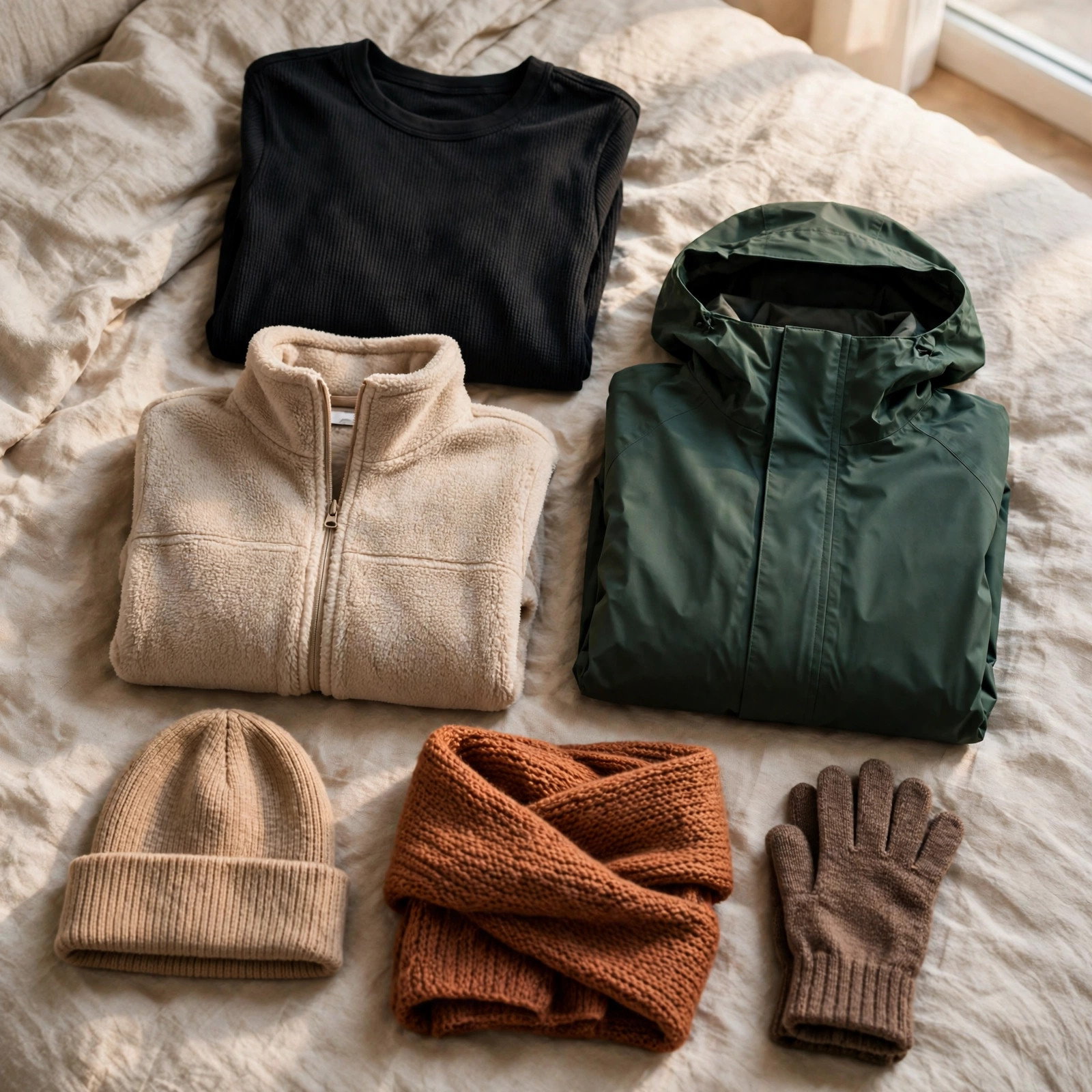
Layering is the most useful cold-weather skill, and the most common mistake is wearing one big heavy coat instead. Layers trap air between them, and trapped air is insulation. They also let you adjust as you warm up, which matters because exercise generates a lot of heat. The Mayo Clinic advises layers you can remove as soon as you start to sweat, and put back on as needed.
Start with a thin synthetic base layer, such as polypropylene, that draws sweat away from your skin. Avoid cotton next to the skin: it stays wet, and wet fabric steals heat fast. Add a fleece or wool sweater for insulation. Finish with a windproof, water-resistant outer jacket, because wind and wet strip heat fastest. In rain or snow, waterproof gear is essential.
Cover the extremities, because that is where frostbite starts: the CDC advises a hat, a scarf or knit mask, mittens or gloves, a water-resistant coat, and water-resistant boots. Dress as though it were about 20 degrees warmer than the actual temperature — you should feel slightly chilly when you first step outside.
Warming up properly
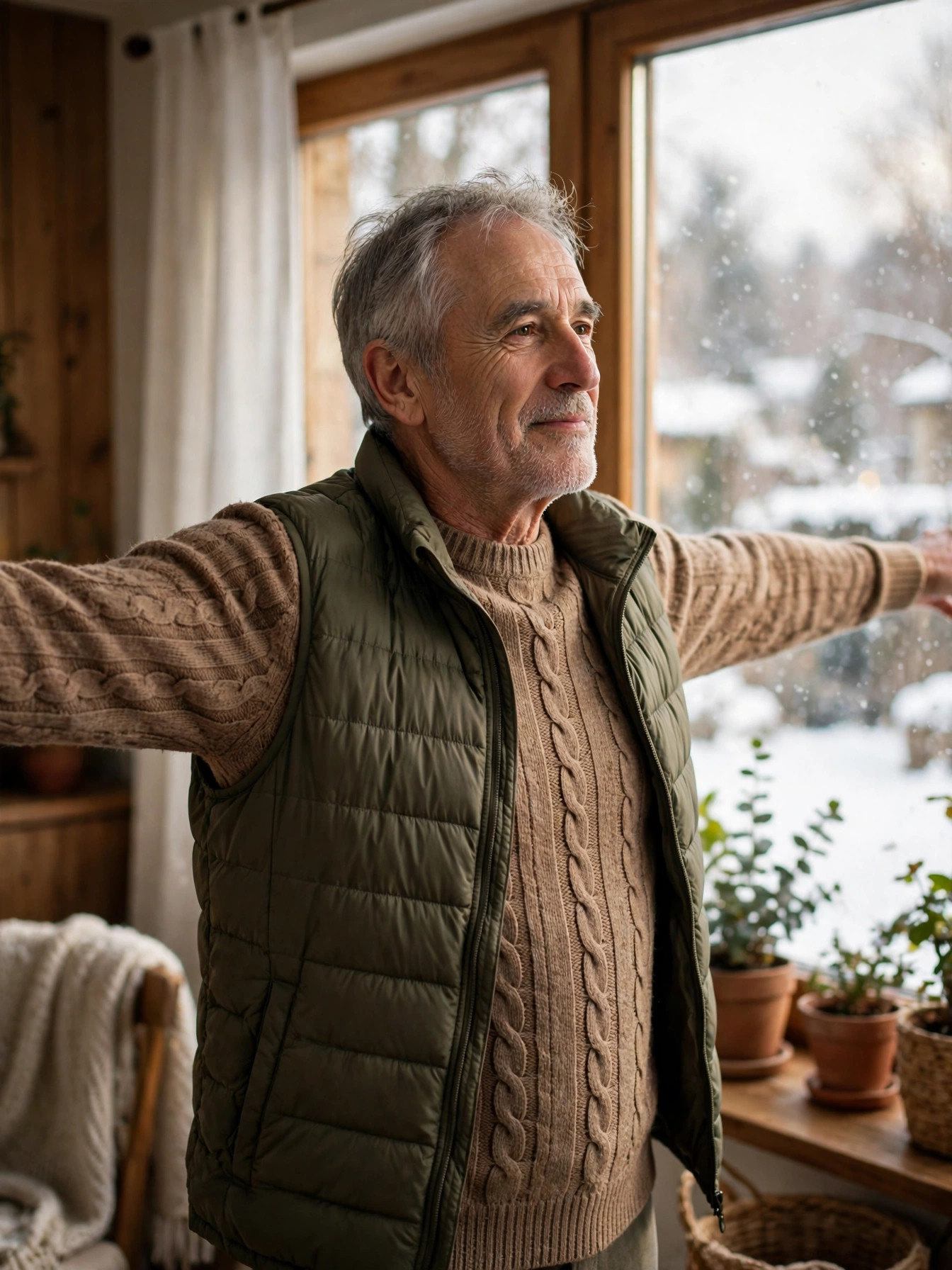
Cold muscles are stiffer muscles, and stiff muscles are easier to injure. Mayo Clinic specialists advise doubling your warm-up time in cold weather, and doing the aerobic part before any static stretching. Start indoors for five to ten minutes: march in place, do gentle arm circles, or walk up and down the stairs. Then step outside and walk at an easy pace for the first five to ten minutes before building up to your normal brisk pace. Finish the same way, with a few minutes of slower walking before you go back inside. If you have asthma, heart problems, or Raynaud’s disease, check with your doctor first about special precautions for cold-weather exercise.
Icy surfaces and footwear: the fall you can prevent
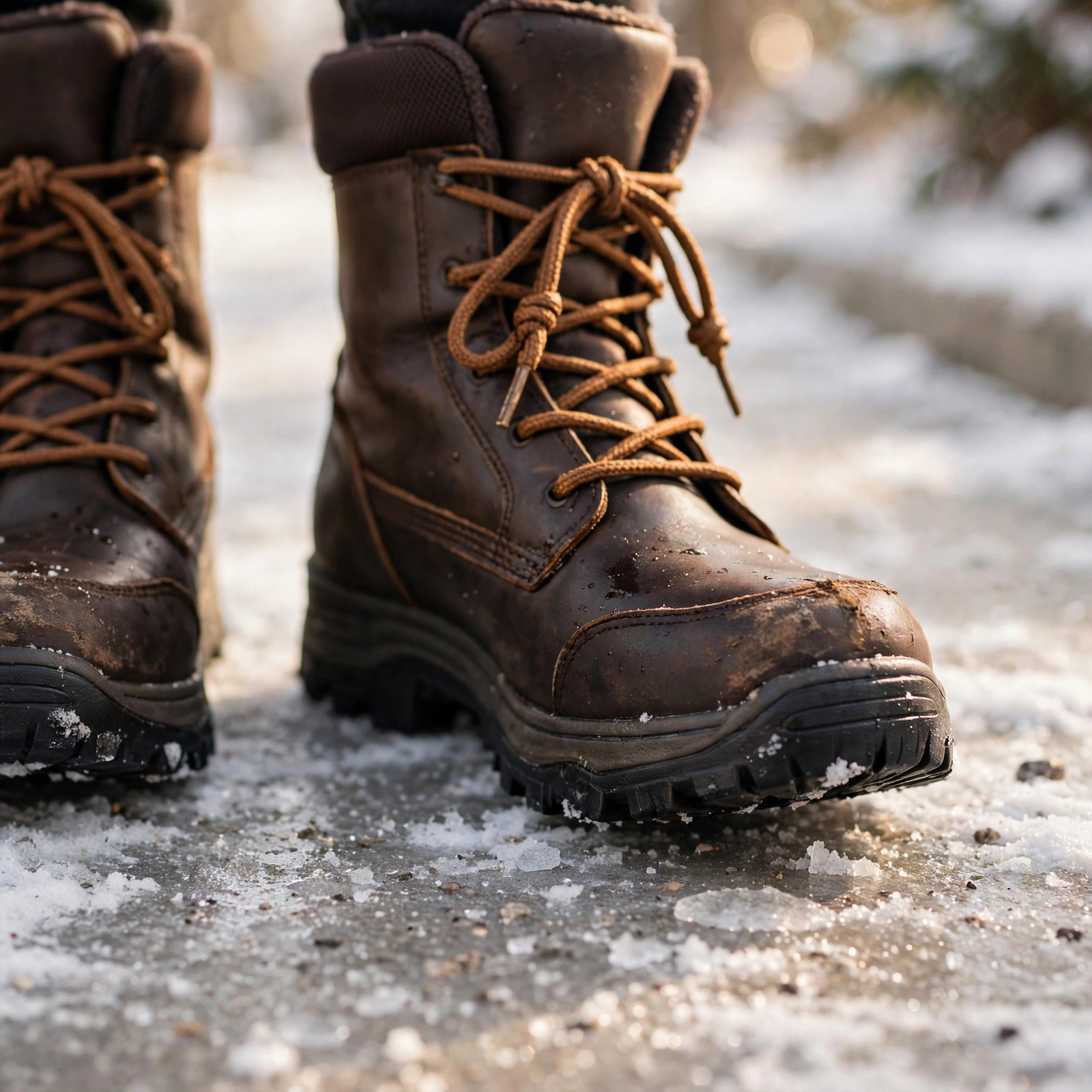
For most people over 60, ice is the single biggest danger of a winter walk — bigger than the cold itself. A fall on ice can mean a broken hip or wrist, and recovery takes far longer than the walk was worth. Most icy falls are preventable.
Walk on paths you know are cleared and treated, and favor routes with handrails or benches to steady yourself on. Avoid shortcuts across untreated pavements and car parks, where black ice hides. Wear shoes with real grip: the Mayo Clinic advises shoes with good traction so you do not slip and fall. Look for deep tread, a rubber sole that stays flexible in the cold, and a low heel with a wide base. On ice, take short, flat, shuffling steps with your weight centered over your feet. Keep your hands out of your pockets so you can catch yourself, and use a walking stick or poles if you have them. If the ground is a sheet of ice, do not cross it at all. Tell someone your route, and carry a charged phone in an inside pocket, where the battery stays warm. See our guide to balance exercises that prevent falls for more on staying steady, and our guide on what to do after a fall if a fall happens.
Wind chill and when it is too cold
Temperature alone does not tell the whole story. Wind chill — cold air plus wind — strips away the thin layer of warm air your body and clothing hold close to the skin, leaving exposed skin vulnerable to frostbite.
The Mayo Clinic gives two reference points worth knowing. The risk of frostbite is less than 5% when the air temperature is above 5°F (−15°C), but it rises as the wind chill falls. At wind chill levels below −18°F (−28°C), frostbite can occur on exposed skin in 30 minutes or less. If the temperature dips below 0°F (−18°C) or the wind chill is extreme, consider indoor exercise instead. Before you head out, check the temperature, the wind chill, and whether rain or snow is expected.
Watch for early frostbite signs: numbness, loss of feeling, or stinging on exposed cheeks, nose, or ears. Get out of the cold if you notice them, and warm the area slowly — do not rub it. Hypothermia can creep up quietly: the CDC lists shivering, exhaustion, confusion, fumbling hands, memory loss, slurred speech, and drowsiness as warning signs in adults. The CDC also notes that hypothermia can occur above 40°F if a person is wet from rain, sweat, or cold water and becomes chilled. If you or a walking partner shows these signs, get indoors and seek medical help promptly.
Heart and blood-pressure cautions during cold exertion
Cold-weather exercise is generally safe for healthy older adults, but the heart deserves special attention in winter. Cold narrows blood vessels and raises blood pressure, and exercise adds its own demand on top. The most dangerous version of this is sudden, heavy exertion by someone not used to it.
The clearest example is snow shoveling. The American Heart Association cautions that shoveling snow in extreme cold can be deadly — the strain may match a treadmill stress test. Shoveling is mostly arm work, which taxes the heart more than leg work, while the cold tightens blood vessels. If you have heart disease or risk factors such as a sedentary lifestyle, obesity, smoking, diabetes, high cholesterol, or high blood pressure, get someone else to do your snow removal. If you do shovel, take frequent breaks, use a small shovel, and push the snow instead of lifting it.
The same applies to winter exercise: build up gradually, and avoid sudden bursts such as sprinting for a bus or hauling heavy bags through snow. Stop early if you feel chest pain or pressure, unusual breathlessness, lightheadedness, or heart palpitations, and seek help. Learn the common signs of a heart attack — and if you are unsure, get checked anyway.
When to move the workout indoors
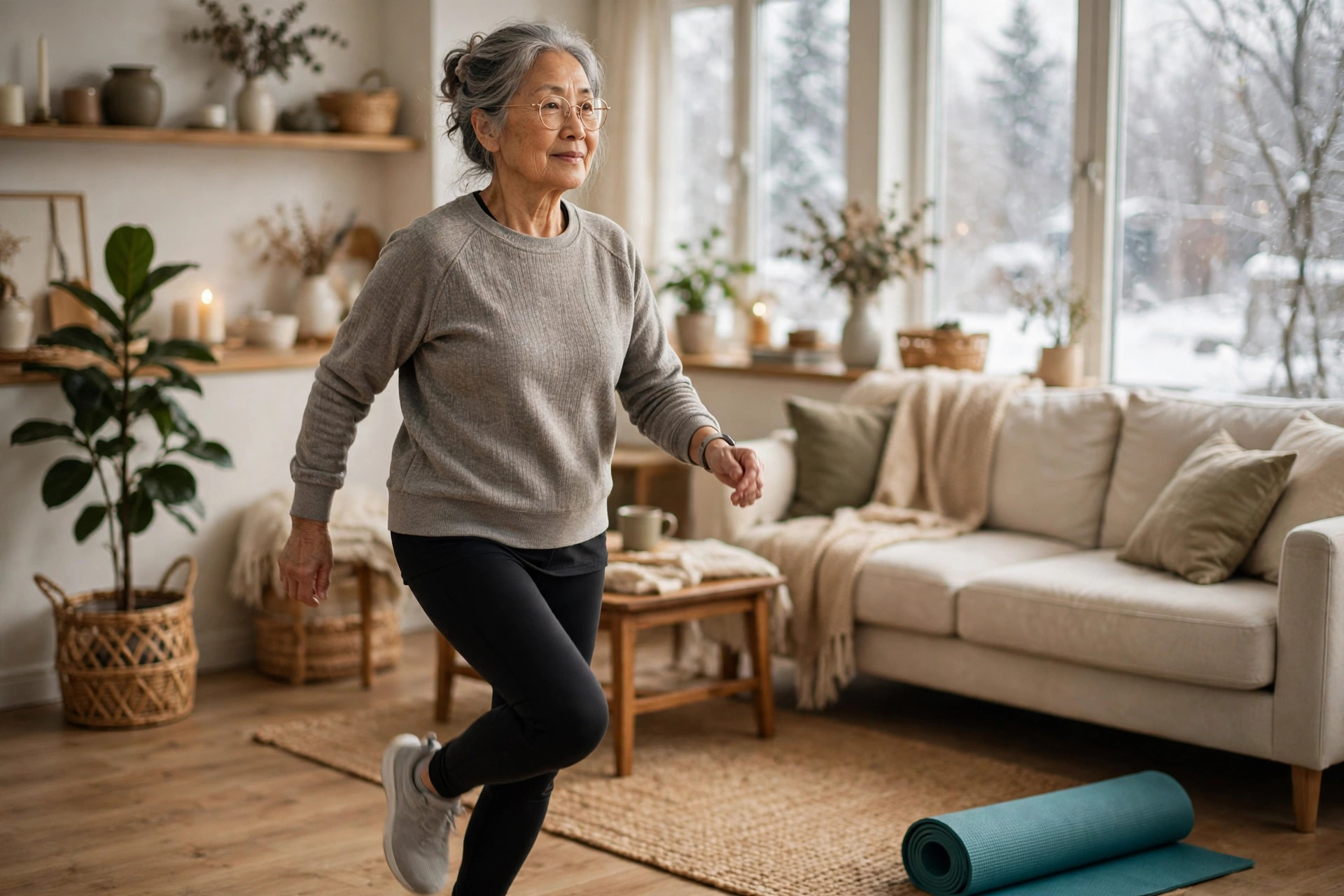
Some days, the right call is to stay inside — and that is not giving up on exercise. The American Heart Association says there is no reason to take a break from physical activity when the temperature drops: the weekly goal of at least 150 minutes of moderate-intensity aerobic exercise still applies in winter. Move the workout indoors when the temperature is below 0°F or the wind chill is extreme, when there is freezing rain, heavy snow, or untreated ice, or when you are recovering from illness. Walk indoors instead — a shopping mall, a community center, or laps around your home all count. For guidance on how much walking is enough, see walking after 70: how much is enough and how many steps per day after 60. Chair and balance exercises keep strength and stability without any weather risk, and stairs and housework are real physical activity too. Drink water before, during, and after your workout — you still sweat under layers in winter.
When to see a doctor
Get medical advice promptly if you notice any of the following: chest pain, pressure, or tightness during or after exertion in the cold, or pain spreading to the arm, jaw, or back; unusual breathlessness, wheezing, or a cough that starts with cold air and does not settle; dizziness, lightheadedness, fainting, or heart palpitations; numbness, pale or waxy skin, or blisters after cold exposure; shivering that will not stop, confusion, slurred speech, or unusual drowsiness after being out in the cold; or a fall on ice, even if you feel fine afterwards.
Before the coldest weather arrives, talk to your clinician if you have heart disease, high blood pressure, asthma, Raynaud’s disease, diabetes, or a balance problem, or if you take medicines that affect how your body handles cold. A short conversation can set safe limits for the whole winter — including whether snow shoveling is something you should be doing at all.
The bottom line
Winter does not have to end your outdoor exercise routine — it just asks more of you. Dress in layers with a wicking base, warm up indoors and build up slowly, choose cleared routes and grippy shoes, and check the wind chill before you go. On days too cold, windy, or icy, move the workout inside and keep the habit alive. The goal is not to prove you can handle the cold — it is to still be walking, strong and steady, when spring comes.
Sources
- National Institute on Aging, “Cold Weather Safety for Older Adults” — https://www.nia.nih.gov/health/safety/cold-weather-safety-older-adults
- Centers for Disease Control and Prevention, “Preventing Hypothermia” and “Preventing Frostbite” — https://www.cdc.gov/winter-weather/prevention/index.html
- Mayo Clinic, “Exercising outdoors in winter” — https://sportsmedicine.mayoclinic.org/news/exercising-outdoors-in-winter/
- American Heart Association, “How to Stay Active in Cold Weather” — https://www.heart.org/en/healthy-living/exercise-and-physical-activity/getting-active/how-to-stay-active-in-cold-weather
- UK Government / NHS England, “Keeping warm and well: staying safe in cold weather” — https://www.gov.uk/government/publications/keeping-warm-and-well-staying-safe-in-cold-weather/top-tips-for-keeping-warm-and-well-this-winter
This article is for general information only and is not medical advice. Talk to your clinician before starting or changing an exercise routine, especially if you have heart disease, high blood pressure, or a balance problem.