Normal Blood Pressure by Age: A Simple Chart
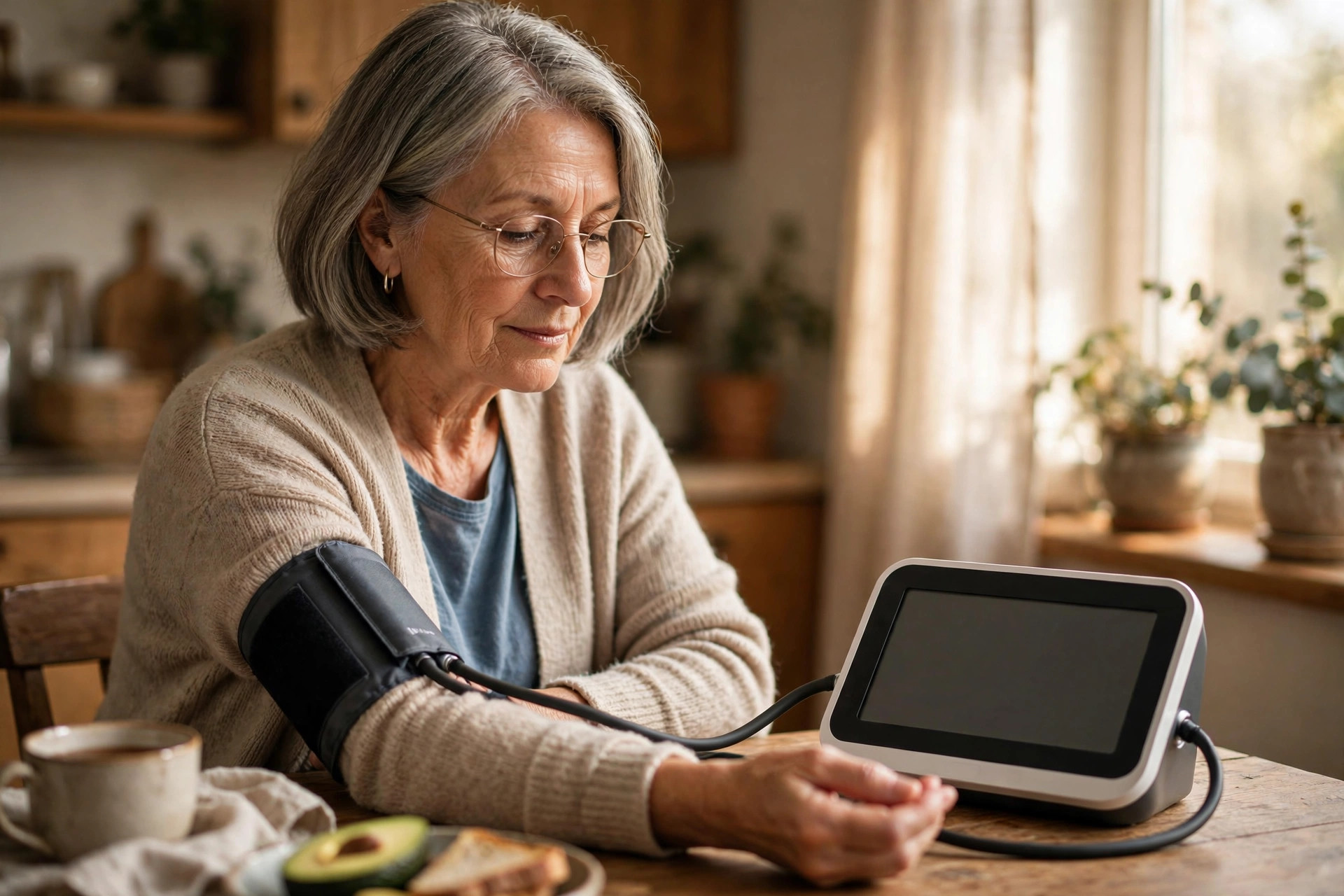
When you check your blood pressure — at the doctor’s office, at a pharmacy machine, or with a home cuff — you get two numbers, like 128/78. This guide gives you a clear blood pressure chart by age, explains what each number means, and shows when a reading deserves a call to your clinician.
How to read the two numbers
Blood pressure is measured in millimeters of mercury (mmHg) — think of each unit as a “point.” The reading always has two numbers:
- Systolic (the top number) — the pressure in your arteries when your heart beats and pushes blood out. This is the number that gets the most attention as we age.
- Diastolic (the bottom number) — the pressure when your heart rests between beats.
So 128/78 means systolic 128, diastolic 78. When either number sits above the normal range on a regular basis, it is called high blood pressure (hypertension).
The blood pressure chart by age
Here is the important distinction up front: the official categories for what counts as normal are the same for all adults. The American Heart Association and American College of Cardiology define them this way:
| Category | Systolic (top) | Diastolic (bottom) | |
|---|---|---|---|
| Normal | less than 120 | and | less than 80 |
| Elevated | 120–129 | and | less than 80 |
| Stage 1 hypertension | 130–139 | or | 80–89 |
| Stage 2 hypertension | 140 or higher | or | 90 or higher |
| Hypertensive crisis | higher than 180 | and/or | higher than 120 — seek emergency care if you have symptoms |
What changes with age is the typical average reading in the population. The table below shows the ranges population averages tend to fall into — descriptions of what is common, not personal targets. Only your clinician can set a target that fits your health history, medications, and other conditions.
| Age group | Typical average range (systolic / diastolic) | What to know |
|---|---|---|
| Under 40 | roughly 105–120 / 65–75 | Most young adults sit comfortably in the Normal category. High readings here are less common, which makes them more worth investigating. |
| 40–59 | roughly 115–130 / 70–85 | Averages drift upward. The target is still under 120/80 — not the expectation. |
| 60–79 | roughly 120–140 / 65–85 | Systolic keeps climbing while diastolic often levels off or eases down. A high top number with a normal bottom number is the classic over-60 pattern. |
| 80 and over | roughly 125–145 / 60–80 | Average systolic is highest here. Targets are individualized — your doctor balances the benefits of lowering pressure against risks like dizziness or falls. |
One pattern worth knowing: after about age 60, the gap between the two numbers (called pulse pressure) often widens — a high top number with a normal bottom number is the classic over-60 pattern.
How common is high blood pressure after 40? Very.
You are far from alone if your numbers are creeping up. Research from Oxford Population Health, published in September 2026, measured blood pressure in 1.4 million adults in England between 2022 and 2025:
- 37% of adults had hypertension by WHO criteria (a reading of 140/90 or higher, or being on blood pressure medication).
- The share rose steeply with age — from 15% at ages 18–39 up to 71% at age 80 and over.
- 59% of those with high blood pressure didn’t know they had it — it was picked up for the first time by the study.
That last point matters most. High blood pressure usually has no symptoms at all — you feel fine while it quietly strains your arteries, heart, and kidneys. A number on a cuff is worth more than a hunch about how you feel.
Sources: SciTechDaily summary of the Oxford Population Health study and Medical Xpress coverage.
Why blood pressure tends to rise with age
It is not a mystery, and it is not just lifestyle — though lifestyle plays its part. The main driver is physical change in the arteries themselves:
- Arteries stiffen. Young arteries are elastic; they stretch to absorb each heartbeat, which keeps pressure smooth and relatively low. With age, artery walls gradually lose elasticity and become more rigid. A stiffer pipe means more pressure is needed to push blood through — especially on the systolic side. This is the biggest reason systolic pressure rises with age, according to the National Heart, Lung, and Blood Institute (NHLBI).
- Other factors accumulate. Kidneys become slightly less efficient at handling sodium, excess weight accumulates over the years, physical activity often declines, and arteries can narrow where fatty deposits build up. Each adds a little; together they add a lot.
This is also why a high top number with a normal bottom number — isolated systolic hypertension — is the most common pattern in adults over 60. It carries the same cardiovascular risk, so doctors treat it the same way.
When the numbers on your cuff should prompt a call
A single high reading is almost never an emergency. Blood pressure fluctuates through the day — it rises with stress, caffeine, a full bladder, or rushing to the appointment. Hypertension is diagnosed from consistent patterns, not one-off numbers. That said:
- Call your doctor if your home readings are repeatedly at or above 130/80 over several days, especially if you were previously in the normal range. Bring your readings log (see the tips below) — patterns help your clinician far more than any single number.
- Seek emergency care if your reading is higher than 180 and/or higher than 120 and you have symptoms such as chest pain, shortness of breath, numbness or weakness, vision changes, or difficulty speaking. Per the American Heart Association, this combination needs immediate medical attention.
- A very high reading without symptoms (say, 185/95 with no chest pain or other symptoms) still warrants a prompt call to your doctor or an urgent-care visit the same day — but do not panic. Rest for five minutes, re-measure, and call for guidance.
Measuring at home: tips that actually matter
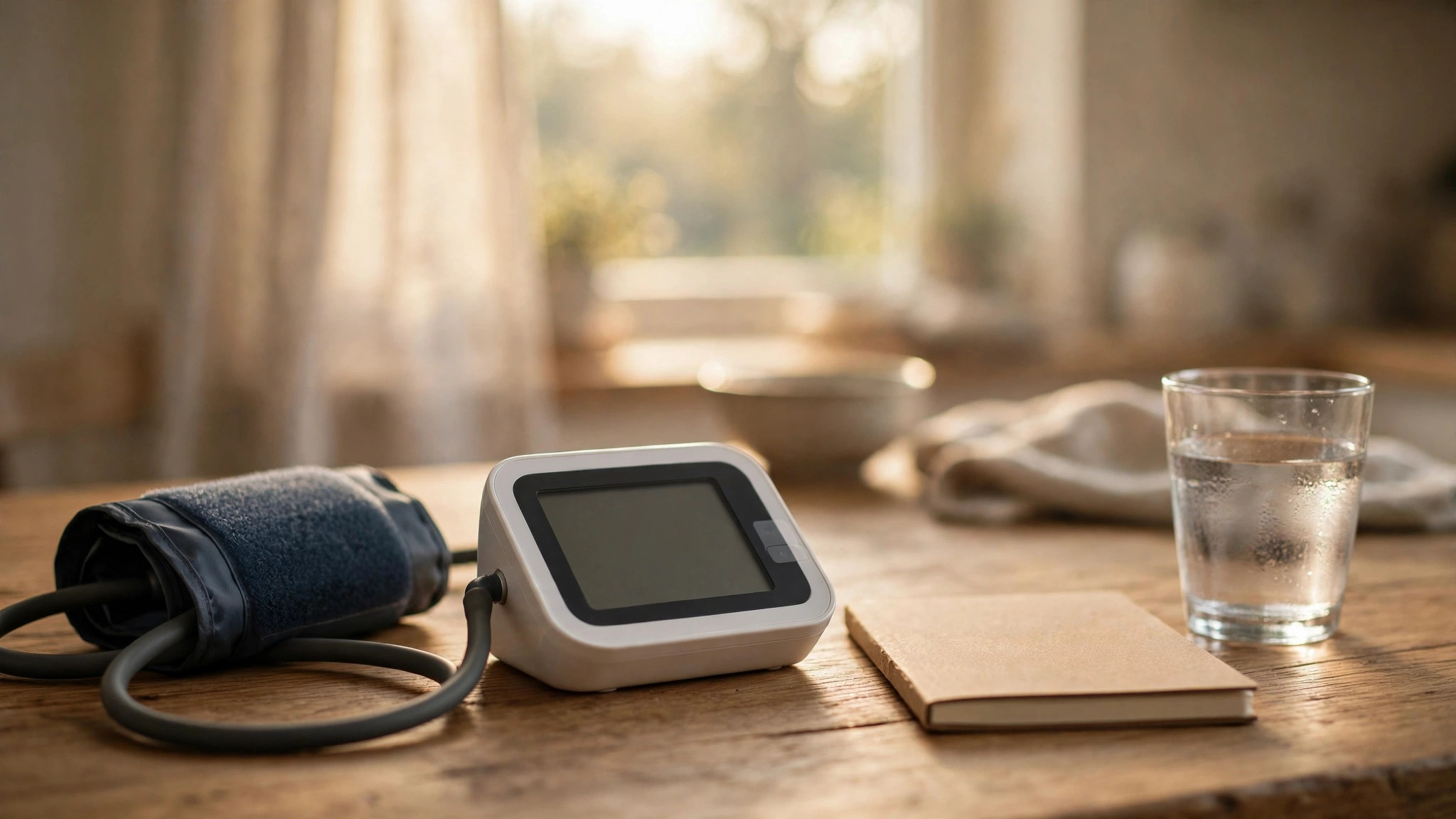
Home readings reflect everyday life and avoid “white coat” effects — nerves at the clinic pushing numbers up. But only if you measure properly. The American Heart Association and the Mayo Clinic agree on the basics:
- Use an upper-arm cuff, not a wrist device. Wrist monitors are less reliable.
- Get the cuff size right. A cuff that is too small can give falsely high readings. Measure around your upper arm and match it to the cuff’s sizing range.
- Sit correctly. Back supported, feet flat on the floor (not crossed), arm resting at heart level on a table.
- Rest first. Sit quietly for five minutes. Empty your bladder first, and avoid caffeine, exercise, and smoking for at least 30 minutes beforehand.
- Take two readings, a minute or two apart, and record both. Some monitors do this automatically.
- Measure at the same times each day — morning and evening, for example — and keep a log for a week or two before your appointment. Patterns over days tell the real story.
Bring the monitor to your doctor’s office once a year and compare its reading against the office device — home cuffs can drift.
Keeping your numbers in a healthy range

No chart matters more than what you do with it. The habits that support healthy blood pressure at any age work just as well after 50:

- Stay active. Regular aerobic activity helps keep arteries flexible and supports healthy weight. A practical starting point is a walking routine like the one in our guide to staying active after 60.
- Eat with your arteries in mind. Diets rich in vegetables, fruits, whole grains, and beans — and lower in sodium — are linked to healthier blood pressure. Fiber plays a supporting role; see our list of high-fiber foods that lower cholesterol.
- Limit alcohol and don’t smoke. Both raise blood pressure and damage artery walls over time.
- Keep a healthy weight. Even modest weight loss is linked to lower pressure in people carrying extra weight.
- Sleep well. Poor sleep is linked to higher blood pressure — see our guide to sleep changes after 50.
- Take prescribed medication as directed. If your doctor has prescribed blood pressure medication, skipping doses because you “feel fine” is a common mistake. Feeling fine is exactly what medication is supposed to feel like.
None of these is a quick fix — they work gradually, over weeks and months, alongside whatever your clinician recommends.
When to see a doctor
Your own numbers need a professional’s eyes. See your doctor if:
- Your home readings are repeatedly at or above 130/80, even though you feel fine
- You are already on blood pressure medication and your readings are drifting upward or becoming erratic
- You get frequent headaches, chest discomfort, shortness of breath, or vision changes — these need prompt evaluation, not an internet chart
- You want to start or change a treatment plan, a supplement, or an exercise routine for your blood pressure
And as noted above: readings above 180/120 with symptoms (chest pain, shortness of breath, numbness, vision changes, difficulty speaking) mean calling emergency services right away.
The bottom line
A blood pressure chart by age tells you what is typical — the official target of under 120/80 stays the same across adult ages, while average readings drift upward as arteries stiffen. The most valuable thing you can do is check your own numbers regularly, measure them properly, and let a clinician interpret them for you.
Sources
- American Heart Association, “Understanding Blood Pressure Readings” — https://www.heart.org/en/health-topics/high-blood-pressure/understanding-blood-pressure-readings
- National Heart, Lung, and Blood Institute (NHLBI), “High Blood Pressure” — https://www.nhlbi.nih.gov/health/high-blood-pressure
- National Institute on Aging (NIH), “High Blood Pressure and Older Adults” — https://www.nia.nih.gov/health/high-blood-pressure/high-blood-pressure-and-older-adults
- NHS (UK), “High blood pressure (hypertension)” — https://www.nhs.uk/conditions/high-blood-pressure-hypertension/
- Centers for Disease Control and Prevention (CDC), “High Blood Pressure” — https://www.cdc.gov/high-blood-pressure/
- SciTechDaily, “More Than 1 in 3 Adults Had High Blood Pressure — Most Didn’t Know It” (Sept 2026) — https://scitechdaily.com/more-than-1-in-3-adults-had-high-blood-pressure-most-didnt-know-it/
- Medical Xpress, “Two-thirds of UK adults have high blood pressure” (Sept 2026) — https://medicalxpress.com/news/2026-09-thirds-adults-uk-high-blood.html
This article is for general information only and is not medical advice. Talk to your doctor about your personal blood pressure targets and treatment.