
Golf After 60: Health Benefits and Staying Injury-Free
Golf has a quiet advantage over many sports: you can play it well into your 60s, 70s, and beyond, at your own pace, on a pleasant walk, with friends. You do not need to run, jump, or keep up with anyone else.
That gentle rhythm is why golf suits so many older adults — and why it can catch people out. A swing looks smooth, but it asks a lot of the lower back, shoulders, and wrists. Most golf-related aches follow a pattern: too much, too soon, with too little warm-up.
This guide covers what golf may offer your health after 60, the common injury spots, and habits that help you keep playing comfortably.
Why golf suits many adults over 60

Not every sport ages well. Golf does, for a few practical reasons:
- It is mainly walking. A round is a long, unhurried walk with a purpose — a destination, and a reason to come back next week.
- It is low impact. Unlike running, golf does not pound the knees and hips. The walking is on grass, at a comfortable pace, with frequent stops — helpful if your joints are stiff in the morning.
- It works on balance. Walking on uneven ground, shifting weight during a swing, and standing steady to putt all ask your balance system to stay alert. That may help everyday steadiness.
- It is social. A regular game with the same group gives the week structure and people to look forward to. That is often what keeps people playing.
- It is adjustable. Play nine holes instead of eighteen, ride in a cart on a hot day, use a push trolley instead of carrying a bag, or play a shorter course. Few sports let you scale the effort so easily.
Our guide to walking after 70 covers how much is enough.
The health benefits the evidence supports
Golf is moderate, enjoyable activity, not a complete fitness programme — the benefits work best as part of an active life.
Walking and heart health. The CDC and the NHS recommend older adults aim for around 150 minutes of moderate aerobic activity a week, plus muscle-strengthening activity twice a week. A round of golf counts towards that total, and regular moderate activity is linked to better heart health and blood pressure.
Balance and coordination. Golf asks you to shift your weight smoothly, rotate your trunk, and stay steady through the swing. That controlled weight shift, practised hole after hole, may help support balance. See our balance exercises for a companion routine.
Muscle use. Walking uses the leg muscles, and the swing uses the trunk, hips, and shoulders. It is no substitute for dedicated strength training, but it keeps those muscles working naturally. A little strength training at home on non-golf days helps support the swing.
Mood and thinking. Being outdoors, moving in daylight, and spending time with friends is a combination many people find lifts mood and clears the head. Evidence links regular activity to better mood and thinking skills in later life.
A reason to keep moving. The best exercise is the one you will actually keep doing. A weekly game you enjoy is far easier to stick with than a routine you dread. See our overview of staying active after 60.
The common injury spots — and why they happen
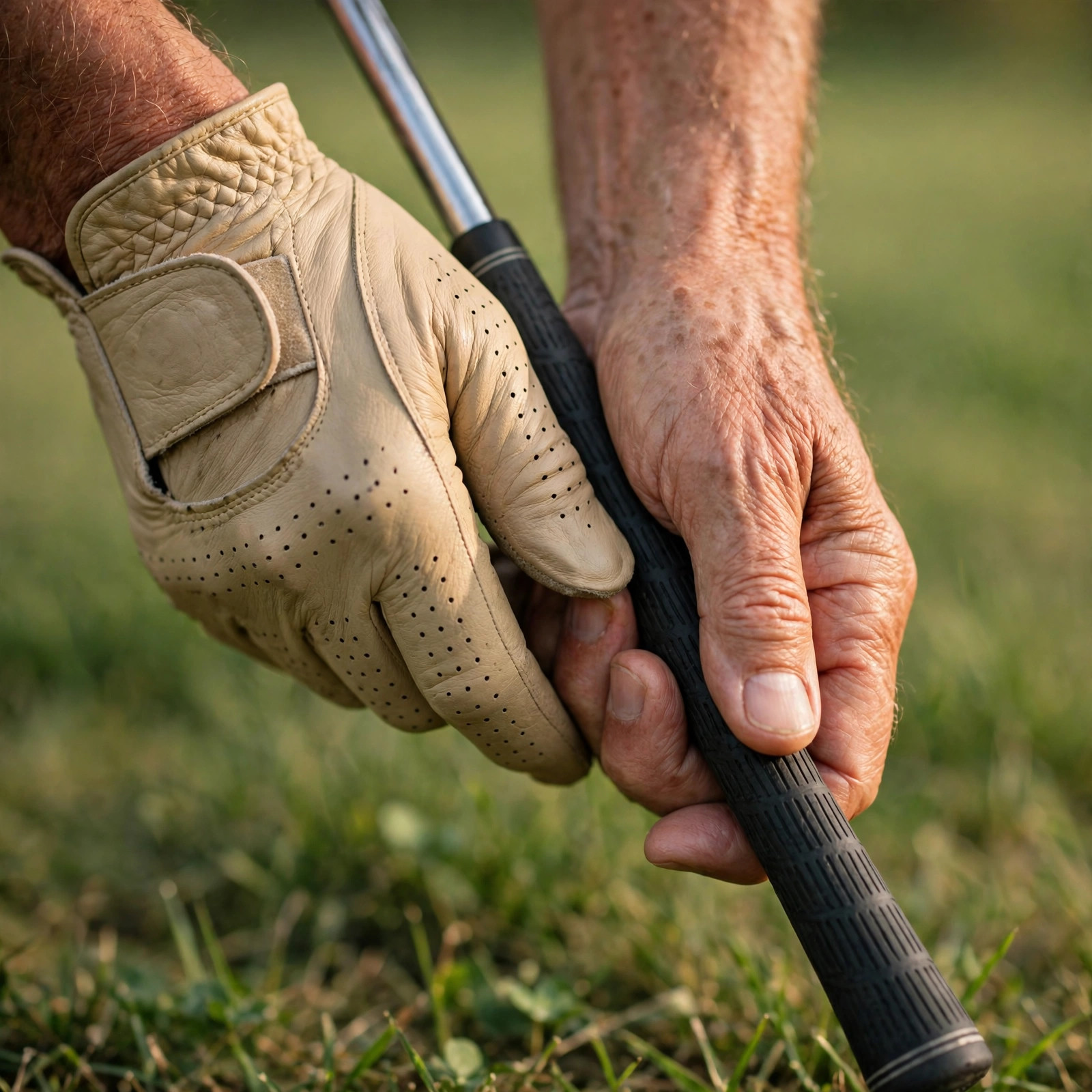
Most golf injuries in older players are overuse injuries: the same movement, repeated many times. Three areas come up most often.
Lower back. This is the most common complaint. The swing combines rotation with a forward bend, done quickly at the downswing. Stiff or weak trunk and hip muscles leave the lower back carrying more load than it should. Sitting all week, then swinging hard on Saturday without warming up, is a classic trigger.
Shoulder. The shoulder moves through a wide range, and the rotator cuff — the small muscles steadying the joint — can become irritated with repetition, especially if the swing is forced or the clubs are too heavy. Pain that keeps returning is a sign to change something rather than push through it. If shoulder pain is already regular, read our guide to shoulder pain after 50 before your next round.
Wrist and elbow. The wrists take a sharp jolt at impact, especially on a heavy shot from thick grass or sand. Gripping too tightly makes this worse, because tension travels straight up the forearm. Over a season, that jarring can irritate the tendons around the wrist and elbow — golfer’s elbow, or a wrist that aches the day after a round.
Risk rises with playing much more than usual after a break, a big range session, swinging as hard as possible, and skipping warm-up. Age itself is not the problem — sudden overload is.
A warm-up routine before a round

Ten minutes before you tee off can make a real difference. Arrive early enough to do it properly.
- Walk gently for five minutes — from the car park to the practice area, or a slow lap around the putting green. Easy walking loosens stiff joints.
- Loosen shoulders and neck. Roll your shoulders slowly backwards ten times, then forwards ten times. Turn your head gently side to side. Keep it slow — never force a stretch.
- Open up the trunk. Stand with feet shoulder-width apart, cross your arms over your chest, and rotate your upper body gently left and right, letting your hips follow. Ten times each side. This is the movement your swing needs most.
- Wake up hips and legs. March gently on the spot, lifting each knee a little higher, then do a few slow squats — only as deep as feels comfortable. Finish with ankle circles and a calf stretch against a wall.
- Take easy practice swings. Start with a short iron or wedge at about half your normal effort. Ten gentle swings, building to your normal tempo. Save the driver for the first tee.
If you only have five minutes, do the walking and the easy swings.
Equipment and course habits that protect your joints
Small choices on the course add up over eighteen holes.
- Carry, cart, or push trolley? Carrying a full bag is the hardest option for back and shoulders. A push trolley takes the weight off your body and is the kindest choice for most older golfers. A riding cart suits very hot days, hilly courses, or a sore back — but you walk much less.
- Check your clubs. Clubs that are too long, heavy, or stiff force you to work harder on every swing. A short fitting session at a golf shop can help — lighter shafts and grips that suit your hand size may reduce the jolt through wrists and elbows.
- Wear proper footwear. Golf shoes with good grip help you stay steady on slopes and wet grass, protecting ankles and knees from slips. Break them in before a long round.
- Pace yourself. Take your time between shots, sit down while others play, and drink water regularly. Nine holes played well beats eighteen struggled through.
- Play the shorter tees when it helps. Moving forward shortens the walk, takes pressure off the swing, and often makes the game more enjoyable. Many courses offer forward tees for senior players.
- Keep range sessions short. A bucket of balls can mean more swings in half an hour than a whole round. Take breaks between sets of ten balls, and stop when you feel tired.
When to rest, and when to play through soreness

Some muscle soreness the day after a round is normal, especially early in the season or after a long break. It should ease within a day or two and feel better with gentle movement.
Rest — and skip the next round — if pain is sharp rather than dull, soreness is still worsening after two days, pain wakes you at night, there is swelling or bruising, a joint is tender to touch, or you notice numbness or tingling. Pain that changes how you swing or walk is also a reason to stop.
Playing through it rarely helps: you change your swing to avoid the sore spot, loading another joint instead. A week off, with gentle walking and light stretching, is often enough for a mild overuse ache.
Returning after a break of several weeks? Build back gradually: nine holes first, then a full round, with short range sessions. Your swing will come back faster than your joints will, so let your body set the pace.
When to see a doctor
Golf is a gentle sport, but some symptoms should not be played through. See a clinician promptly for back pain shooting down one leg, weakness or numbness in a leg or foot, shoulder pain that stops you lifting your arm, pain that does not ease after a week or two of rest, or a joint that looks swollen.
Stop playing and seek urgent care for chest pain, unusual breathlessness, or dizziness during or after a round — and for any new pain after a fall on the course, or after a swing that felt like something gave way.
With a heart condition, high blood pressure, or a history of back or joint problems, talk to your clinician before starting or returning to golf.
The bottom line
Golf after 60 can be one of the most enjoyable ways to stay active: a long walk outdoors, gentle balance work, and a few hours of good company. The risks are real but manageable — warm up, do not overload a cold body, choose a trolley over a heavy bag, and rest when pain is sharp or persistent.
Play at your own pace, use the forward tees when they help, and let the game fit your body — a sport you can keep enjoying for many seasons.
Sources
- Centers for Disease Control and Prevention, “Physical Activity Basics for Older Adults” — https://www.cdc.gov/physicalactivity/basics/older_adults/index.htm
- National Health Service (UK), “Physical activity guidelines for older adults” — https://www.nhs.uk/live-well/exercise/physical-activity-guidelines-older-adults/
- National Institute on Aging, “Exercise and Physical Activity” — https://www.nia.nih.gov/health/exercise-and-physical-activity
- Mayo Clinic, “Exercise: 7 benefits of regular physical activity” — https://www.mayoclinic.org/healthy-lifestyle/fitness/in-depth/exercise/art-20048389
- Harvard Health Publishing, “5 surprising benefits of walking” — https://www.health.harvard.edu/staying-healthy/5-surprising-benefits-of-walking
This article is for general information only and is not medical advice. Talk to your clinician before starting a new exercise routine, especially if you have back, shoulder, or heart problems.