Best Vegetable Peelers for Seniors: Arthritis-Friendly Peeling
Peeling a potato should be a small, forgettable step in dinner prep. For many older adults with sore hands, it is the step that hurts the most: the thin handle digs into the palm, the thumb and forefinger pinch hard to steady the vegetable, and by the third carrot the wrist aches. The good news is that peelers are not all the same. A different shape, a wider handle, or a sharper blade can turn the same chore from painful to manageable. This guide covers the four main peeler types, what to look for, and the techniques hand therapists recommend.
Disclosure: As an Amazon Associate, we earn from qualifying purchases.
Why peeling gets painful
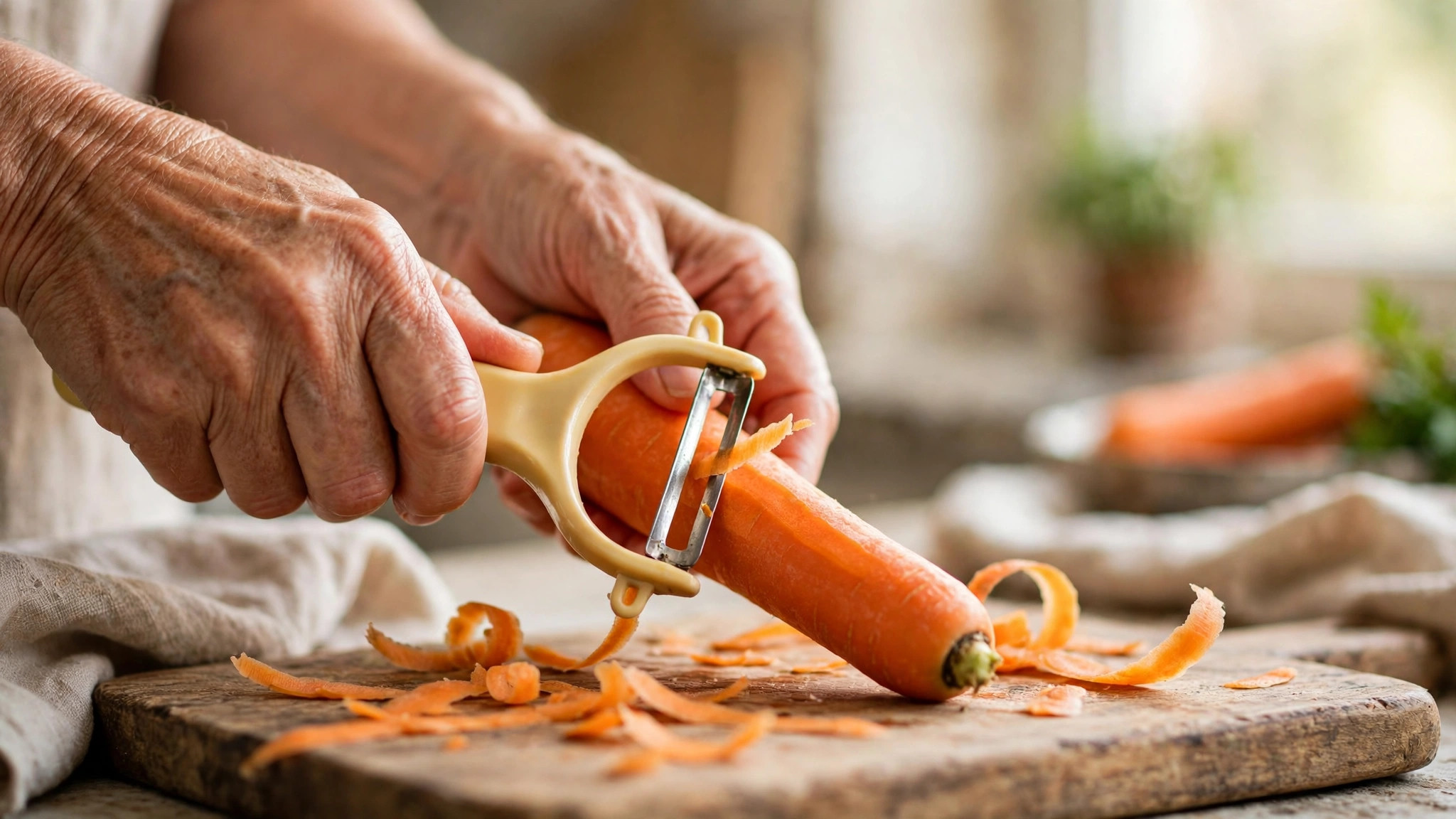
Peeling combines three movements that are tough on arthritic joints: a tight pinch grip to hold the vegetable, a firm squeeze on a narrow handle, and a repeated pulling motion that bends the wrist back and forth. Each one alone is minor; together, for several minutes at a time, they add up.
Osteoarthritis — the most common form of arthritis — frequently affects the hands. According to the Arthritis Foundation, it affects more than 32.5 million adults in the United States, typically showing up in the hands, knees, hips, lower back, and neck, with symptoms becoming more common after age 50. In the fingers it can cause swelling, tenderness, and pain at the base of the thumb — the joint that does most of the work when you grip a peeler. A 2024 report from the U.S. National Center for Health Statistics found diagnosed arthritis rises from 3.6% of adults aged 18–34 to 53.9% of adults aged 75 and older. Grip strength also tends to decline with age, and a dull blade makes it worse, forcing you to press harder and make more passes. Hand therapists call the answer “joint protection”: changing how a task is done to place less stress on painful joints.
The four peeler types
1. Straight (swivel) peeler
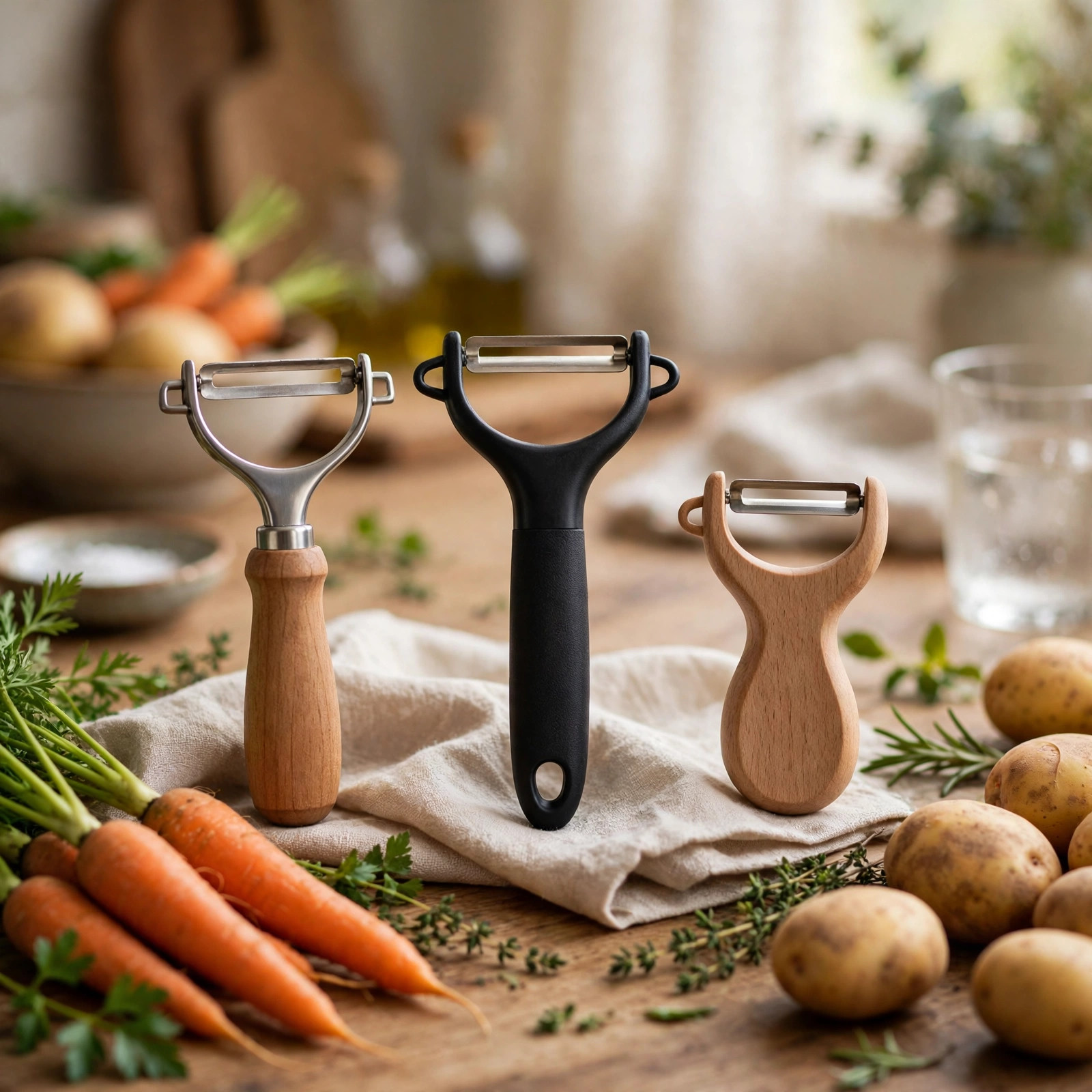
The classic design: a slim handle in line with a blade that swivels to follow the curve of the vegetable. You hold it like a pencil and pull it toward you. It suits curved vegetables like potatoes and carrots. The drawback is the handle — thin, hard handles concentrate pressure on a small area of the palm, and the pencil-style grip can strain the thumb joint. If you prefer this shape, choose a wide, cushioned handle.
2. Y-peeler
Shaped like the letter Y, with a wide blade across the top of a handle. You grip the handle in your whole hand and pull the blade across the vegetable, in a motion that keeps the wrist straighter. For many people with hand arthritis, this is the design to try first: the handle sits in the palm rather than between the fingers, so the grip is a whole-hand squeeze instead of a pinch, and the wide blade covers more surface with each stroke, which means fewer passes. It takes a little practice.
3. Palm peeler
A small ring-shaped peeler that slips over a finger or sits in the palm, blade facing outward — you peel by running your hand over the vegetable. It suits people who struggle to grip any handle at all, since there is almost nothing to hold. The trade-off is control: palm peelers are less steady on large vegetables like butternut squash, and they are often made for one hand only, so check handedness before buying.
4. Electric peeler
A small countertop or handheld device that rotates the vegetable or the blade and strips the skin with almost no hand effort. You place the vegetable in the device and press a button or hold it lightly in place. It is the best option when hands hurt too much for any manual peeling, or when you peel large quantities at once. The downsides are bulk and storage space, and they work best on regular-shaped vegetables.
One example worth a look if you want a comfortable, easy-grip peeler:

OXO Good Grips Swivel Peeler
The peeler that glides instead of drags. Soft grip, sharp blade, zero wrist strain.
What to look for when you buy
Handle width and cushioning. This is the single most important feature. Mayo Clinic’s guidance on joint protection notes that many kitchen tools can now be bought with larger handles, and that texture and cushioning can make a utensil easier to hold with less grip strength. The same guidance specifically names vegetable peelers with bigger handles as a way to ease pressure on the joints. Look for a handle at least as wide as your thumb, with a soft, textured, non-slip surface. Hold the peeler in the shop before buying if you can — comfort is personal.
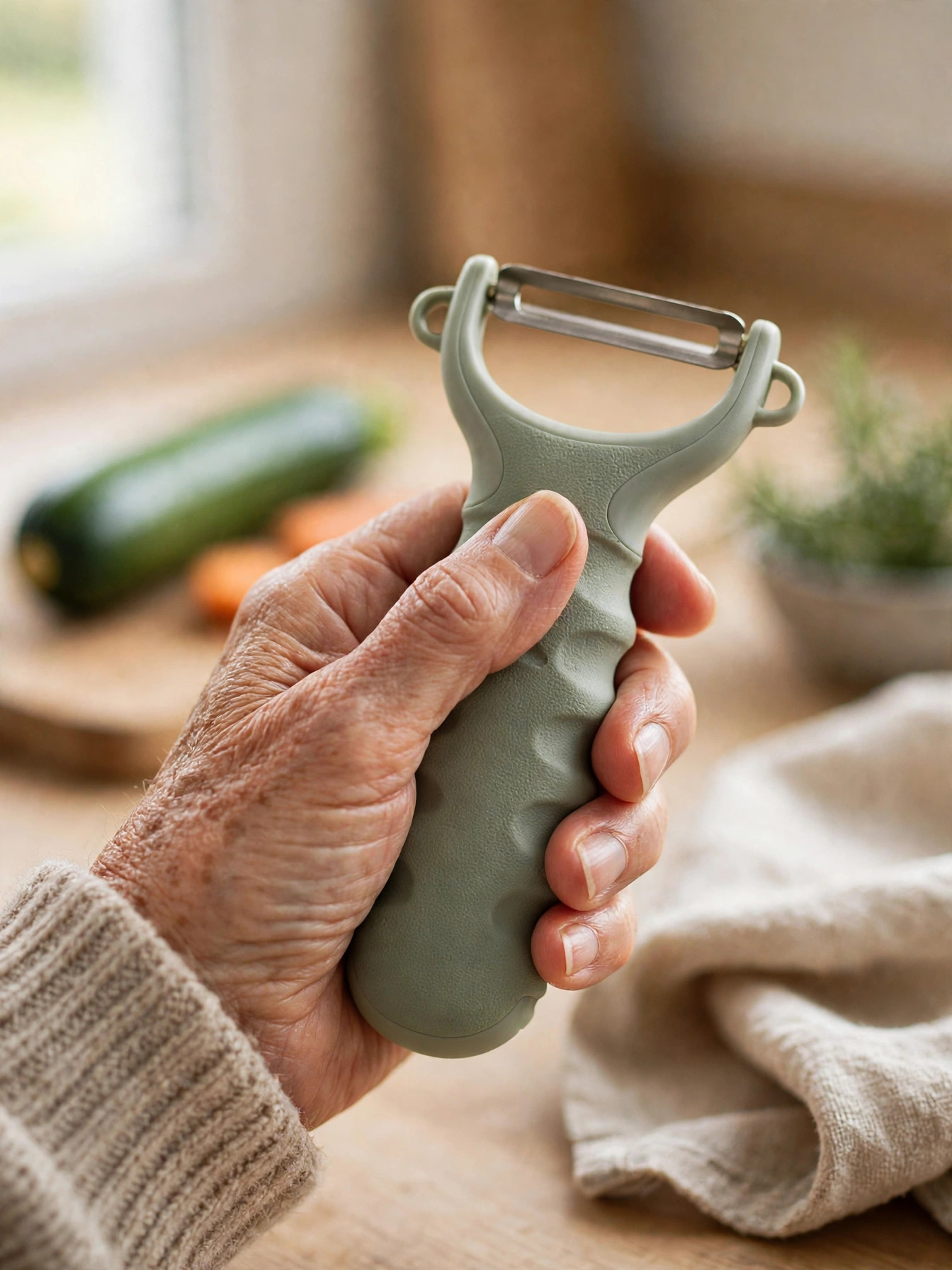
Blade material and sharpness. A sharp blade is a kindness to your hands. Stainless steel is the most common blade material: it resists rust, holds an edge well, and is easy to clean. Carbon steel can take a very keen edge but needs drying after every wash or it will rust. The test is simple: a good peeler removes a thin strip of skin with light pressure on the first pass. Replace a peeler when it starts to drag, not when it stops working altogether.
Handedness. Most straight peelers and many Y-peelers work for both hands, because the swivel blade flips to suit either direction. Some are made for right-handed users only, so if you are left-handed — or peel with your non-dominant hand because your dominant hand is the sore one — check before you buy.
Weight and balance. Lighter is usually better for sore hands, but very light can mean flimsy. The peeler should feel solid and balanced, with the weight sitting in the handle rather than at the blade end.
Technique tips that protect your hands and wrists
The right tool helps, but how you use it matters just as much. These tips come from the joint-protection principles hand therapists teach:
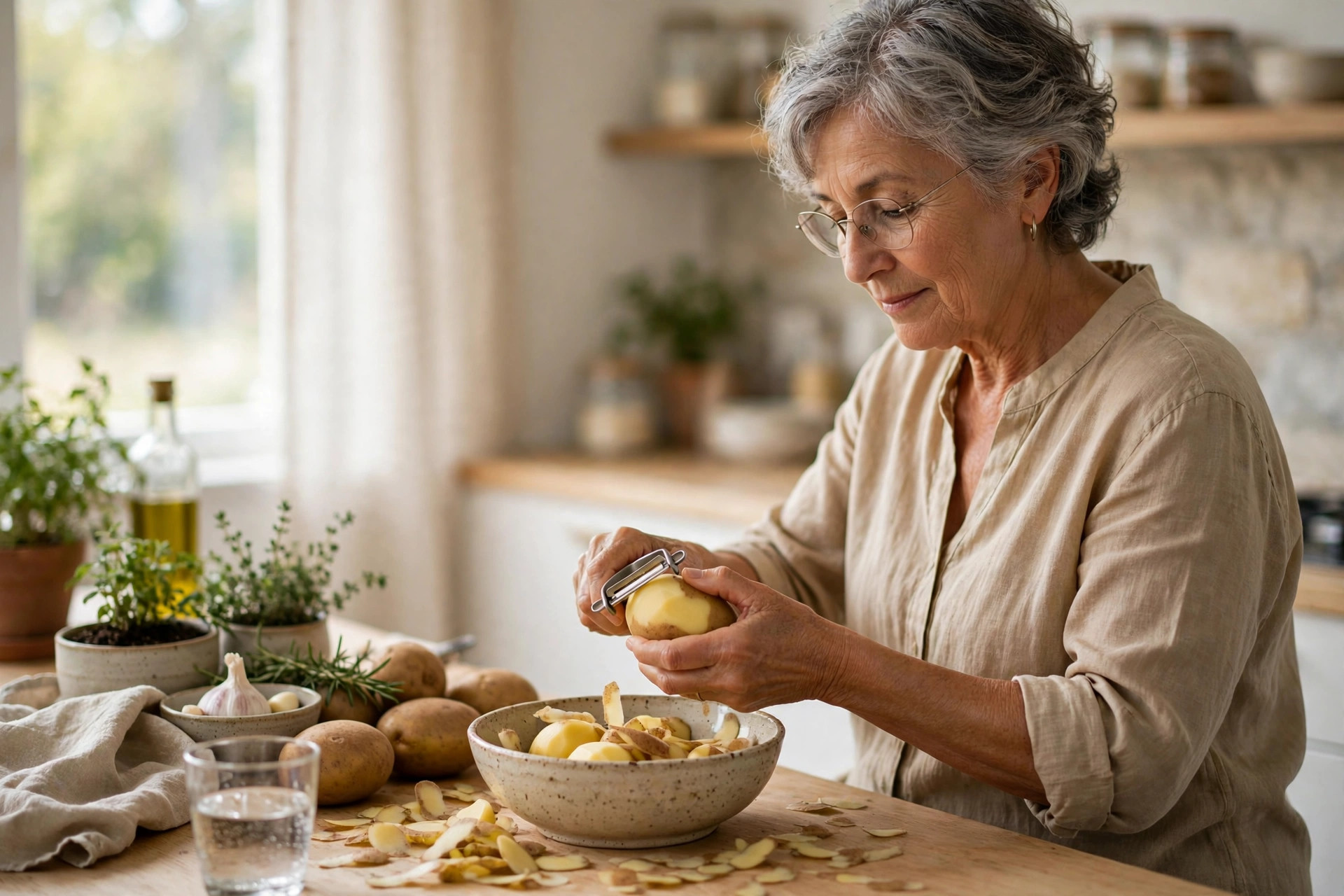
- Keep your wrist straight. Peel with the wrist in a neutral position, in line with the forearm. NHS hand therapy guidance advises keeping the wrist straight and the fingers in line with the wrist.
- Use your whole hand, not a pinch. Mayo Clinic notes that pinching between thumb and forefinger puts extra stress on already painful joints. Hold the vegetable in your palm or against a board instead.
- Let the blade do the work. Light pressure and a sharp blade beat heavy pressure and a dull one. If you are pressing hard, stop and check the blade.
- Anchor the vegetable. A damp cloth under a cutting board stops it sliding, and a board with a raised edge or spikes can hold a vegetable steady. Mayo Clinic describes the same idea for adaptive cutting boards: securing the food reduces the force your hand needs to apply.
- Pace yourself, and warm up first. NHS hand therapy leaflets advise avoiding tight grips and gripping for long periods. Peel in short bursts — a few vegetables, then rest. Pain lasting more than an hour after an activity usually means you did too much. Warm water or a warm shower first can ease morning stiffness.
Safety and cleaning
A sharp peeler is safer than a dull one, because it needs less force. Always peel away from your body and away from your fingers, and keep your fingertips curled back from the blade’s path. Never try to catch a slipping vegetable with the hand holding the blade. Store peelers blade-down in a utensil holder or with a blade guard, never loose in a drawer where a hand can find the edge first. Wash and dry peelers promptly after use to keep the blade sharper for longer. Check the blade regularly: a nicked or bent blade can catch and jump, which is when cuts happen. If a handle is cracked or the blade is loose, replace it.
When peeling is too hard: good alternatives
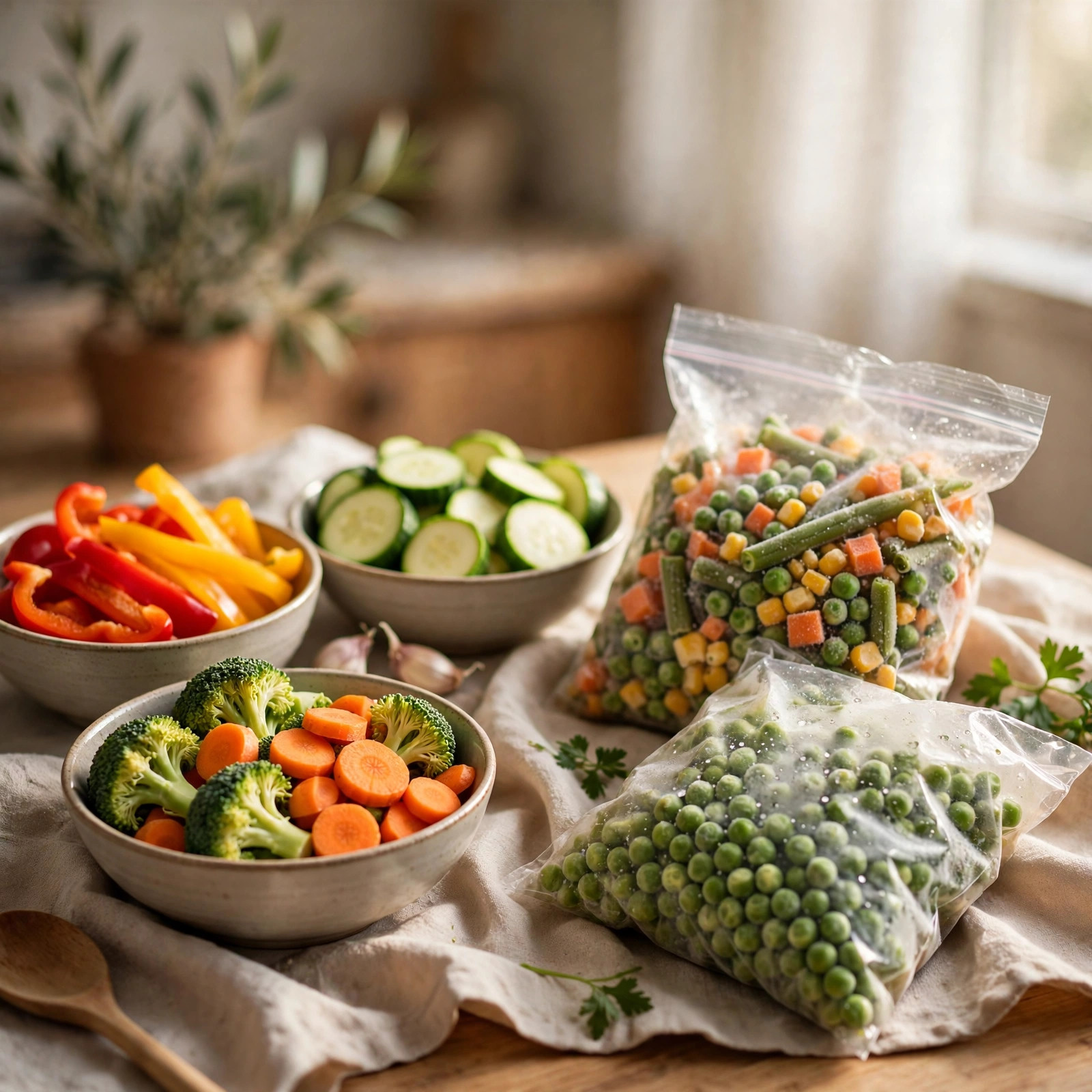
Some days the hands simply will not cooperate, and that is fine. Many supermarkets sell peeled and chopped carrots, potatoes, squash, and onions — they cost more, but on a bad-hand day they can be the difference between cooking and skipping vegetables. Frozen peas, green beans, broccoli, and mixed vegetables need no peeling at all and are nutritionally similar to fresh. Sweet potatoes, carrots, cucumbers, and zucchini can be scrubbed and cooked with the skin on, which also keeps the fibre just under the skin. For soups and stews, a small chopper does the hard work after a rough cut — our guide to best blenders for smoothies after 50 covers machines that can take over even more of the prep.
If cooking in general is getting harder, see our ergonomic kitchen tools buying guide, best kitchen gadgets for healthy cooking after 50, and best air fryers for seniors.
When to see a doctor
A better peeler can make cooking more comfortable, but it cannot diagnose or treat the cause of hand pain. See a clinician if you notice any of the following:
- Hand pain, swelling, or stiffness that is new, getting worse, or lasts more than a few weeks
- Pain that wakes you at night, or morning stiffness that does not ease within an hour
- Numbness, tingling, or weakness in the fingers or hand, or dropping things more often
- A joint that looks deformed, feels hot, or is red and swollen
- Difficulty with everyday tasks — buttoning clothes, opening jars, holding a cup — that keeps getting worse
These can be signs of arthritis, nerve compression such as carpal tunnel syndrome, or another condition that needs its own assessment. An occupational therapist can also help, with splints, exercises, and tools matched to your hands — Mayo Clinic notes that occupational therapy can help people do everyday tasks without putting extra stress on painful joints.
The bottom line
Peeling vegetables is a small task, but for hands with arthritis it can decide whether dinner gets cooked at home or not. The fix is rarely willpower — it is usually a better tool and a kinder technique. Start with a Y-peeler or a wide-handled straight peeler with a sharp stainless steel blade, keep your wrist straight, anchor the vegetable instead of pinching it, and take breaks before your hands tell you to. If hand pain is new, worsening, or comes with numbness or swelling, talk to your clinician.
Sources
- CDC, “Arthritis in Adults Age 18 and Older: United States, 2022” (NCHS Data Brief No. 497, Feb 2024) — https://www.cdc.gov/nchs/data/databriefs/db497.pdf
- Arthritis Foundation, “Osteoarthritis: Symptoms, Diagnosis, and Treatment” — https://www.arthritis.org/diseases/osteoarthritis
- Mayo Clinic, “Joint protection for people with hand arthritis” — https://www.mayoclinic.org/diseases-conditions/arthritis/in-depth/joint-protection/art-20546794
- Mayo Clinic, “Osteoarthritis: Diagnosis and treatment” — https://www.mayoclinic.org/diseases-conditions/osteoarthritis/diagnosis-treatment/drc-20351930
- NHS Sherwood Forest Hospitals, “Hand osteoarthritis (OA)” leaflet (July 2025) — https://www.sfh-tr.nhs.uk/media/dtbplev5/pil202507-01-ho-hand-therapy-hand-osteoarthritis.pdf
- NHS Dorset County Hospital, “Hand Osteoarthritis and Adaptive Devices” — https://dchft.nhs.uk/leaflets/hand-osteoarthritis-and-adaptive-devices/
This article is for general information only and is not medical advice. Talk to your doctor or an occupational therapist about your personal hand health.