
Staying Independent After 70: A Home Safety Checklist
For most of us, home is where we want to stay. The kitchen where we cook our favorite meals, the front porch where we wave to neighbors — these are the places that make life feel like ours. Aging in place is not just about where we live. It is about keeping the freedom to live on our own terms.
Staying independent at home is often about small, practical changes, not big renovations. Most falls happen at home, in rooms we walk through every day without thinking. A loose rug, a dark hallway, a slippery tub — these ordinary hazards are also ordinary to fix. This checklist walks you through your home room by room, so you can spot the risks and make simple changes that may help you stay safe and confident.
Why Home Safety Matters More After 70
Falls are common as we age, and they can change everything. According to the U.S. Centers for Disease Control and Prevention (CDC), more than one out of four people age 65 and older falls each year, and fewer than half tell their doctor about it. The CDC also reports about 3 million emergency department visits and about 1 million fall-related hospitalizations among older adults each year.
The encouraging news is that the National Institute on Aging (NIA) points out that many falls can be prevented. A home that is well lit and free of clutter works with you rather than against you. Walk through each room below with a notepad, check off what is already safe, and circle what needs attention. Start with the easiest fixes first.
The Entryway: Your First and Last Step
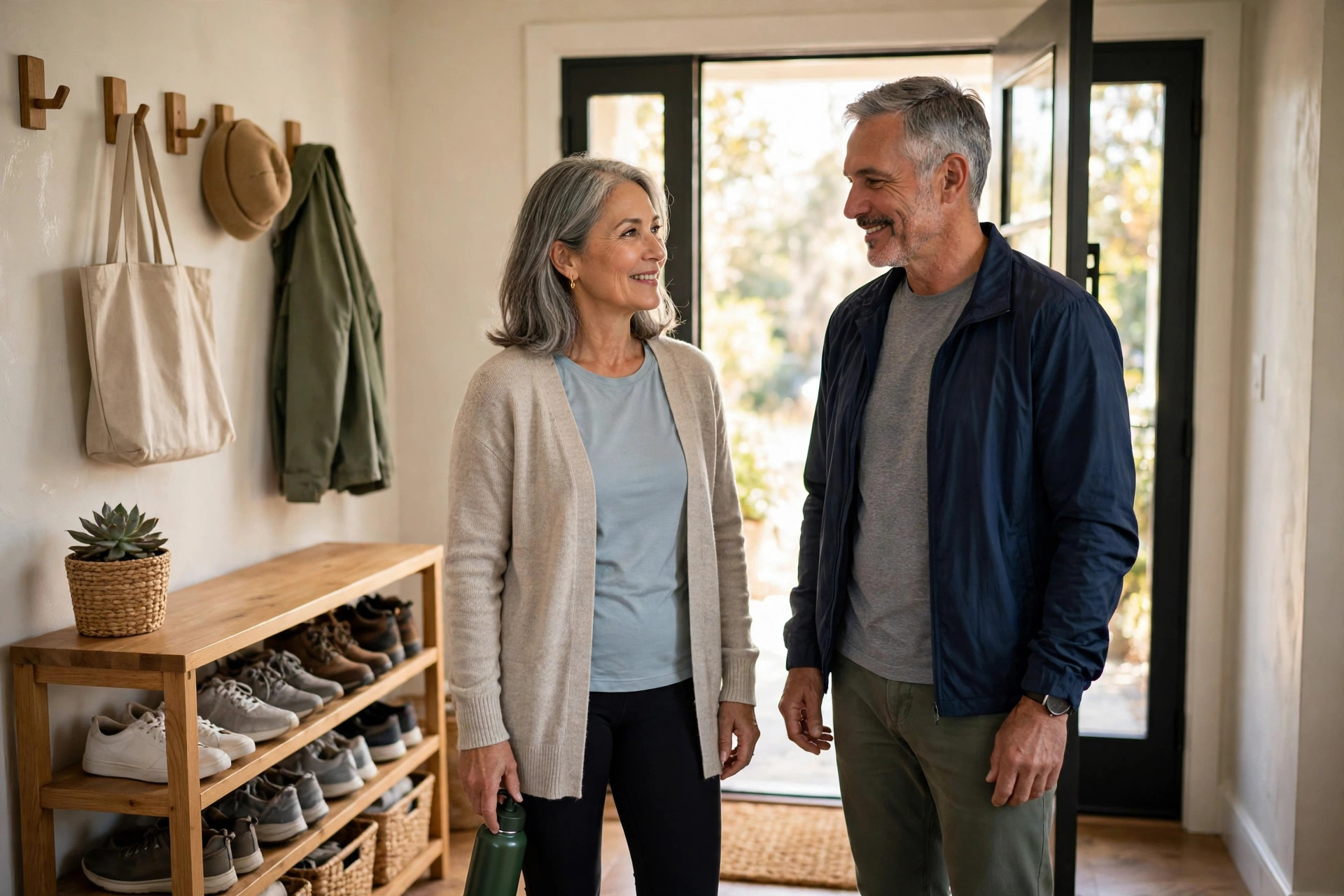
- Clear the path. Shoes, bags, and mail pile up by the door. Give everything a home — a shoe rack, a hook, a small table — so the walkway stays open.
- Fix the threshold. A raised door threshold or a loose doormat can catch a toe. Fasten mats with non-slip backing or double-sided tape, or remove them if they curl at the edges.
- Light it well. Make sure the porch light and the light just inside the door both work. A motion-sensor light outside means you never step into the dark with an armful of groceries.
- Keep a phone nearby. The NIA suggests carrying a charged mobile phone from room to room, so help is always within reach.
The Living Room: Where You Spend the Most Time
- Create wide, clear walkways. Arrange furniture so you can walk from the sofa to the kitchen or bathroom without weaving around tables and chairs.
- Remove or fasten down throw rugs. The NIA recommends not using throw rugs or small area rugs at all. If you love a rug, fix it firmly to the floor with non-slip backing or double-sided tape.
- Tape down cords. Lamp cords, phone chargers, and extension cords across the floor are a classic tripping hazard. Route cords along the wall or behind furniture.
- Choose a chair you can get out of easily. A firm chair with armrests at a comfortable height is much easier to stand up from than a low, soft sofa. A cushion that raises you a few inches may also help.
The Kitchen: The Busiest Room in the House
- Store daily items at waist or shoulder height. Keep the plates, glasses, and pans you use every day where you can reach them without a step stool or a stretch overhead. Step stools are a common cause of falls; if you must use one, choose a sturdy one with a handrail, and never stand on a chair.
- Clean up spills right away. A splash of water or a drop of oil on tile is easy to miss and easy to slip on, so wipe up spills as soon as they happen.
- Use non-slip mats and good light. Place a non-slip mat in front of the sink and the stove, where you stand longest. If the area over the stove or sink is shadowed, add an under-cabinet light.
- Mind the stove. Keep pot handles turned inward so they cannot be bumped, and set a kitchen timer every time you cook.
The Bathroom: The Highest-Risk Room
The bathroom combines hard surfaces, water, and the effort of sitting down and standing up. A few well-chosen supports make the biggest difference here.
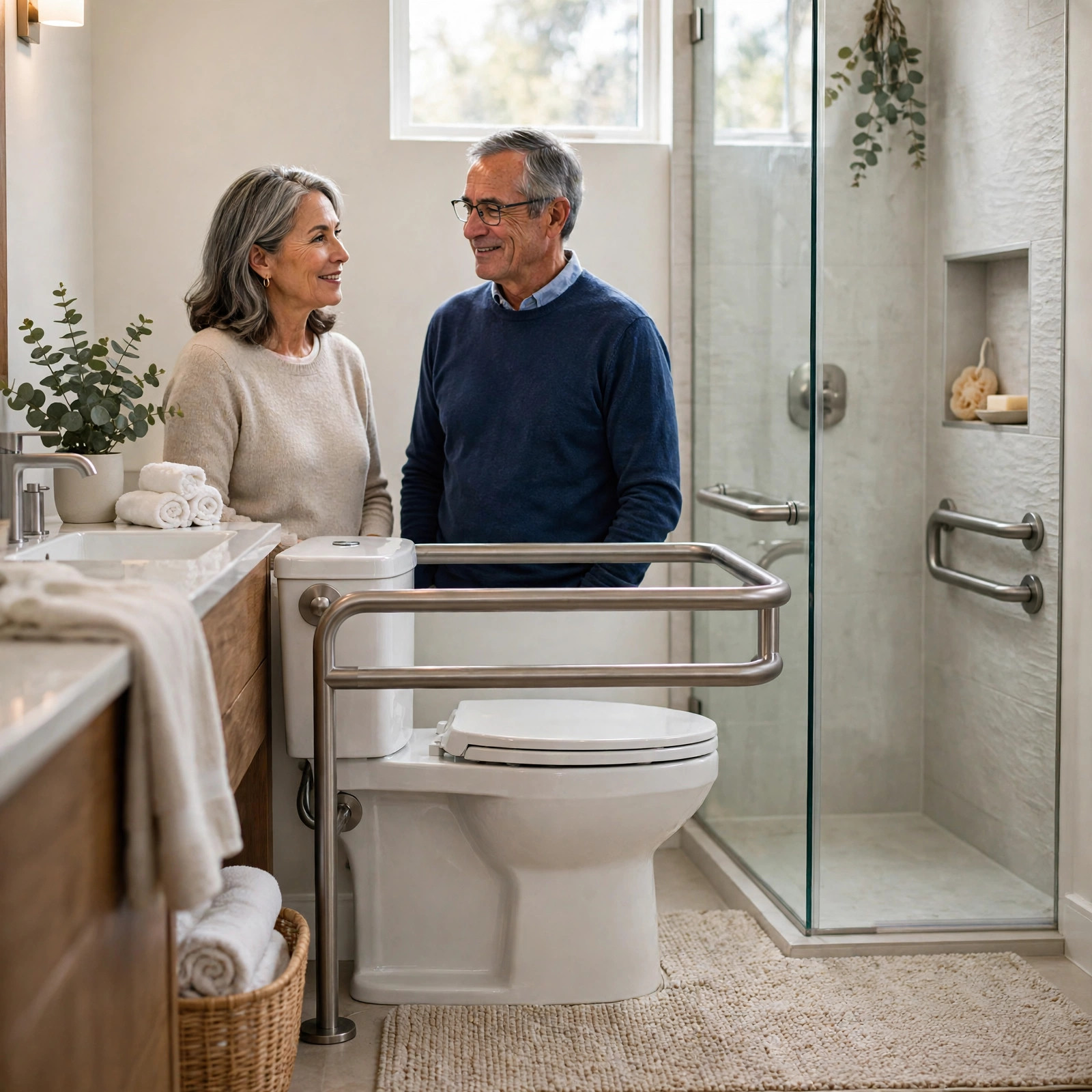
- Install grab bars. Mount grab bars next to the toilet and on both the inside and outside of the tub or shower, screwed into the wall studs so they can hold your full weight. A towel rail is not a substitute. Our guide explains how to choose and place grab bars for bathroom safety.
- Add non-slip surfaces. Place a non-slip mat or adhesive strips in the tub and on the shower floor, and a non-slip rug beside the tub.
- Consider a shower chair. If standing in the shower is tiring or unsteady, a shower chair lets you sit safely while you wash. Our shower chair buying guide for seniors walks through the options.
- Leave a night light on. A small automatic night light in the bathroom means you never have to cross a dark room at 2 a.m.
The Bedroom: A Safe Start and End to the Day
The path from bed to bathroom at night is one of the most common places for a fall.
- Put a lamp within reach of the bed, so you can turn on a light without getting up in the dark.
- Keep a flashlight by the bed. The NIA recommends keeping a flashlight at your bedside in case the power goes out.
- Clear the path to the bathroom. Make sure the route from your bed to the bathroom is free of shoes, books, laundry baskets, and loose cords. A night light along the way is a simple safeguard.
- Keep a phone at your bedside. A charged phone on the nightstand means you can call for help without getting up.
Stairs and Hallways: The Routes Between Rooms
- Handrails on both sides. Stairs should have sturdy handrails on both sides, running the full length and firmly fixed to the wall. Always hold the handrail, and never let what you are carrying block your view of the steps.
- Light switches at the top and bottom. You should never have to walk up or down stairs in the dark. If your stairs lack a switch at both ends, ask an electrician to add one.
- Keep stairs clear and lit. Never leave shoes, books, papers, or laundry on the stairs, even for a moment. Hallways, especially the one leading to the bathroom, should have a night light or a motion-sensor light that comes on automatically.

Lighting and Footwear: The Two Simplest Fixes
If you do only two things after reading this article, make them these.
Lighting. Our eyes need more light as we age, and dim corners hide hazards. Replace burned-out bulbs promptly and use the brightest bulb your fixtures allow, especially in hallways, stairwells, and the bathroom. Motion-sensor night lights along the path from the bedroom to the bathroom are inexpensive and take minutes to install.
Footwear. The CDC and the NIA both note that good shoes matter. Choose shoes that are closed-toe, low-heeled, and have non-slip soles. Avoid walking in socks alone, in backless slippers, or in shoes with smooth, worn soles. Keep a pair of supportive shoes by the bed.

Start This Weekend: Your Priority List
A whole-house checklist can feel overwhelming. Here is a shorter version — five things you can do this weekend, in order:
- Walk the house with fresh eyes and note every rug, cord, and cluttered corner in your main walking paths.
- Remove or fasten down the rugs. Take up throw rugs, or tape them down with non-slip backing.
- Light the night path. Put night lights in the bedroom, hallway, and bathroom.
- Clear the stairs and entryway. Remove everything from the stairs and the front door path.
- Put a phone and a flashlight by the bed. Two small items, right where you can reach them.
Once those five are done, tackle the bathroom: grab bars and non-slip mats are next. For steadier legs, our guide to balance exercises that may help prevent falls is a good place to start.
When to See a Doctor
Some fall risks come from the body, not the house — and those are worth a conversation with your clinician.
- Tell your doctor about any fall, even a minor one. The NIA advises mentioning every fall since your last check-up, even if you were not hurt. A fall can point to a new health problem or a medication side effect.
- Ask about a home safety assessment. If you have fallen, or you feel unsteady at home, your doctor may suggest that an occupational therapist, physical therapist, or nurse visit your home to look for hazards. In the United States, the Eldercare Locator (1-800-677-1116) can help you find local home modification programs.
- Review your medicines. Some medicines — including certain blood pressure drugs, sleep aids, and pain medicines — can cause dizziness or drowsiness. Ask your doctor or pharmacist to review your full list, including over-the-counter products.
- Seek urgent care after a fall with a head injury. If you fall and hit your head, feel confused, or have new pain, weakness, or numbness, seek medical attention promptly. If you are unsure what to do in the minutes after a fall, our guide on what to do after a fall walks through the steps.
A Home That Supports Your Independence
Staying independent after 70 is not about doing everything alone. It is about shaping your home so it supports the life you want to live — cooking your own meals, welcoming friends, and walking through your own front door with confidence.
You do not need to finish this checklist in a day. Pick one room, make one change, then pick another. A safer home is built one small, steady step at a time.
Sources
- Centers for Disease Control and Prevention. Facts About Falls. https://www.cdc.gov/falls/data-research/facts-stats/index.html
- National Institute on Aging. Preventing Falls at Home: Room by Room. https://www.nia.nih.gov/health/falls-and-falls-prevention/preventing-falls-home-room-room
- National Institute on Aging. Falls and Fractures in Older Adults: Causes and Prevention. https://www.nia.nih.gov/health/falls-and-falls-prevention/falls-and-fractures-older-adults-causes-and-prevention
- Centers for Disease Control and Prevention. Check for Safety: A Home Fall Prevention Checklist for Older Adults (STEADI). https://www.cdc.gov/steadi/pdf/STEADI-PocketGuide-508.pdf
- National Health Service (UK). Falls: Prevention. https://www.nhs.uk/conditions/falls/prevention/
This article is for general information only and is not medical advice. Talk to your clinician about any health concerns.