
Weighted Blankets for Seniors: Benefits, Safety, and How to Choose
You’ve probably seen them everywhere lately — heavy blankets that promise deeper, calmer sleep. Weighted blankets have moved from therapy offices into mainstream bedrooms, and many adults over 60 are wondering whether one could help with restless nights or a racing mind before bed.
The short answer: the science is promising but early. Weighted blankets may help with feelings of anxiety and, in some small studies, with sleep — but they aren’t a proven sleep treatment, and they aren’t right for everyone. Here’s what the evidence actually says, how to choose one safely, and when to talk to your doctor first.
What exactly is a weighted blanket?
A weighted blanket is simply a blanket filled with small, evenly distributed weights — usually glass beads or plastic pellets sewn into quilted squares — so it presses gently and evenly across your body. They typically weigh between 5 and 30 pounds, far more than a regular comforter.
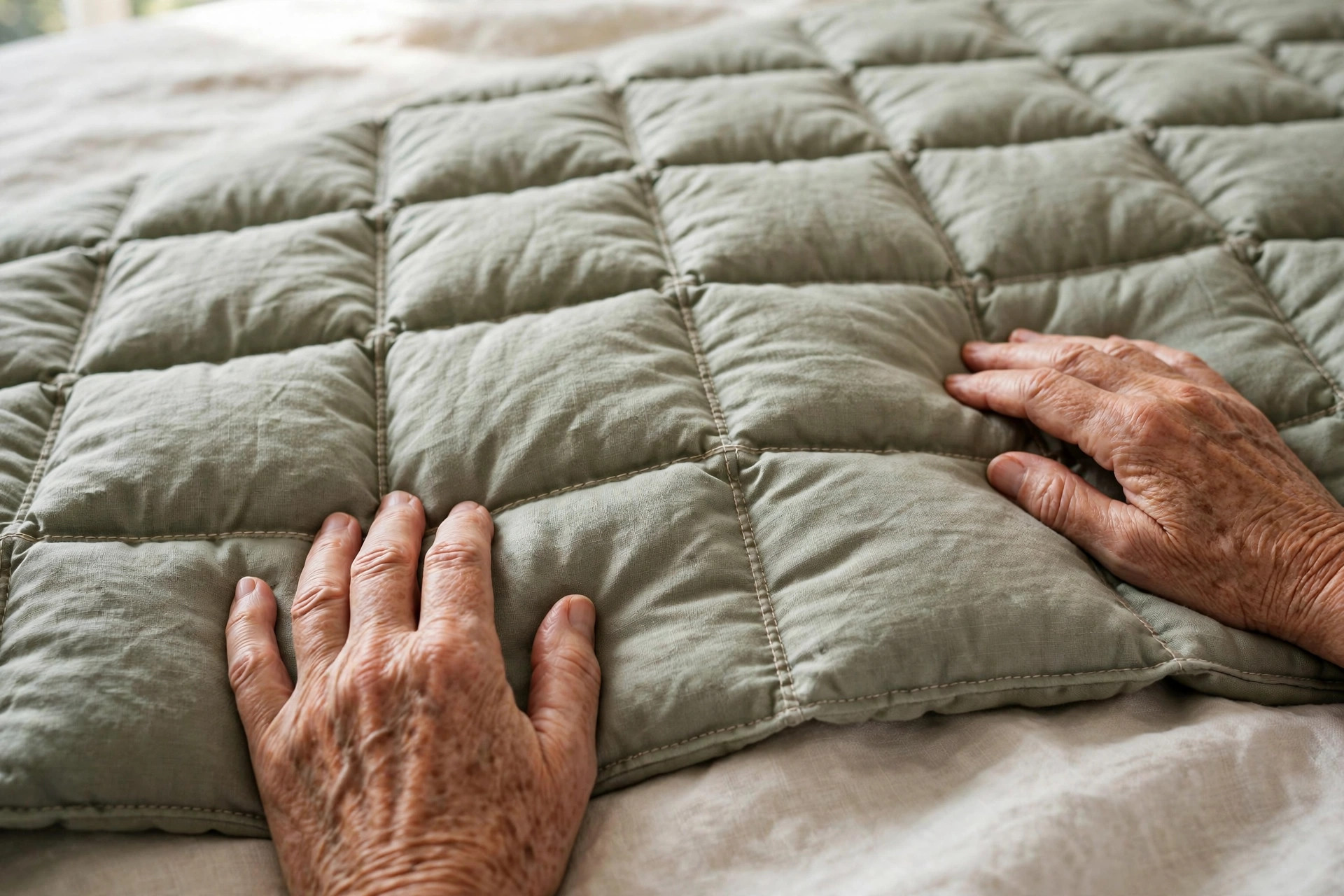
The idea behind them is called deep pressure stimulation: steady, firm pressure against the body, similar to a hug or a massage. Many people find that kind of pressure calming — researchers think it may help settle the nervous system — and these blankets have long been used in therapy and psychiatric-care settings.
What the research actually says: the honest picture
Let’s be straightforward: weighted blankets are popular, but the research behind them is still limited. Here’s a fair summary of what we know so far.
For anxiety, the evidence looks modestly encouraging. A 2020 systematic review of the available studies concluded that weighted blankets may be an appropriate tool for reducing anxiety — while also noting that the research base is sparse and more rigorous studies are needed. Separately, a small Swedish study found that using a weighted blanket at bedtime was linked to a roughly 32% larger rise in the body’s pre-sleep melatonin release compared with a light blanket, though it did not change how sleepy people felt or how long they slept, and the researchers cautioned that the therapeutic meaning of the finding is still unknown.
For insomnia and sleep quality, the picture is mixed. That same 2020 systematic review concluded there was not enough evidence to say weighted blankets help with insomnia. Since then, some newer small studies have been more positive: a 2024 pilot randomized trial of 102 adults with insomnia found that one month of weighted-blanket use improved sleep-quality scores more than a regular blanket, with improvements in daytime sleepiness, stress, and fatigue — though the authors stressed that larger studies are needed to confirm the effect. An even smaller study of four adults found reduced insomnia severity after two weeks of use.
What this means for you: there is real scientific interest and some encouraging signals, especially around relaxation and anxiety — but nothing close to a proven treatment for insomnia. If a weighted blanket appeals to you, think of it as a comfort tool to try alongside good sleep habits, not a replacement for them. And it does little good if your sleep problems come from a medical issue that needs attention.
The 10% rule: how heavy should it be?
The most commonly repeated guidance is to choose a blanket that weighs about 10% of your body weight — so someone weighing 150 pounds would look at roughly a 15-pound blanket. For many adults, that lands in the 15–20 pound range. Some sleep experts suggest starting on the lighter side and working up only if you like the feeling, and at least one research team used about 12% of body weight in their study.

A few important notes on this rule:
- It is a rule of thumb, not a medical prescription. There is no official medical standard for blanket weight.
- More weight is not more effective. A blanket that feels oppressive will hurt your sleep, not help it.
- You should be able to push the blanket off yourself easily, especially in the dark. If you can’t, it’s too heavy for you.
- Blanket size matters too: it should cover your body, not the whole bed. A blanket meant for one person that’s too large will drape off the sides and put extra strain on the neck and shoulders when you move.
If you’re between weights, the cautious choice is the lighter one.
Who should be cautious with a weighted blanket
Weighted blankets are generally considered low-risk for healthy adults, but a heavy blanket is still a physical weight on your body, and some conditions deserve extra caution. Check with your clinician before trying one if you have:
- Sleep apnea or other breathing problems. Extra weight on the chest can make breathing harder during sleep, and experts quoted by the Cleveland Clinic have advised people with respiratory conditions to avoid them.
- COPD, asthma, or serious heart conditions. Anything that restricts the chest or alters circulation during sleep needs medical input.
- Circulation problems or diabetes-related nerve issues. You may be less able to notice if pressure is causing numbness or discomfort.
- Claustrophobia. If tight, heavy coverings make you feel trapped, a weighted blanket will likely make bedtime worse, not better.
- Mobility or balance difficulties. A 15–20 pound blanket can make it harder to roll over, sit up, or get out of bed — a real consideration if you get up at night or are at risk of falls.
Note: weighted blankets have not been well studied in frail or elderly populations, so discussing it with your doctor first is the cautious move.
How to choose one: weight, size, fabric, washability
If you’ve decided to try one, a little thought up front makes a big difference:
- Start with the weight. Use the 10%-of-body-weight guideline as a starting point, then lean lighter rather than heavier. You can always try it in short sessions first.
- Get the right size. For one person, choose a blanket that covers your body (typically a “single” or “throw” size), not the whole bed. Oversized blankets bunch up and put uneven pressure on you.
- Think about temperature. Weighted blankets can trap heat. If you sleep warm, look for a breathable cover fabric like cotton, and consider whether the filling allows airflow.
- Check washability. A blanket that needs special care will eventually become a hygiene problem. Look for a removable, machine-washable cover at minimum.
- Consider the filling. Glass beads are the most common filling and tend to distribute weight evenly in a slimmer profile; some blankets use other pellets or fiber layers. There is little research comparing fillings, so comfort and practicality are the deciding factors.
How to try one safely
Don’t go straight to sleeping under it all night. Ease in:
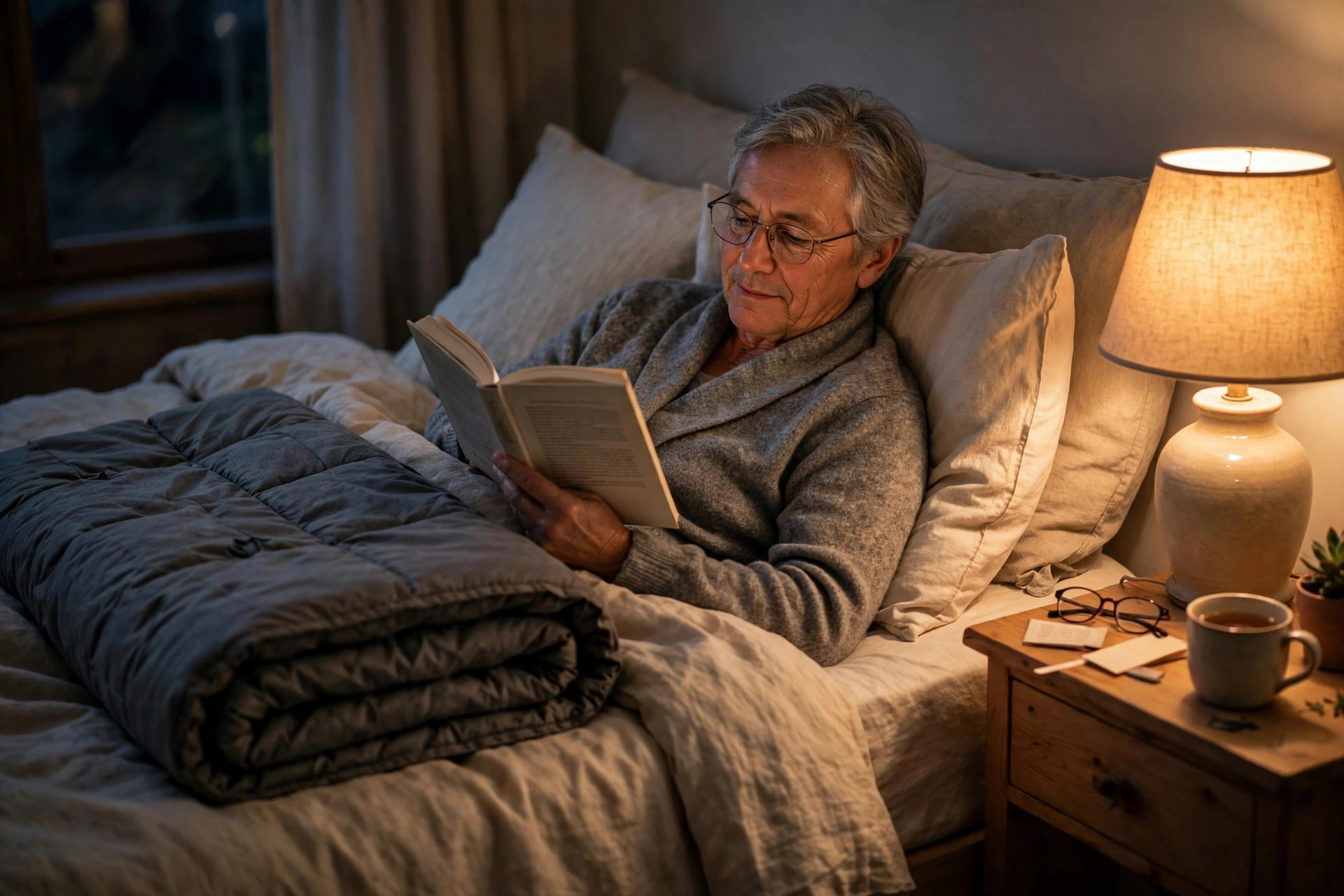
- Start with 20–30 minutes — reading in bed or relaxing on the couch — and see how it feels.
- Build up gradually to a few hours, then a full night, only if you’re comfortable.
- Make sure you can get out from under it easily before falling asleep under it. Test this while awake.
- Keep the bedroom cool and ventilated, since the extra layers can raise your body temperature.
- Pay attention to your joints and shoulders. If you wake up stiff or sore in a way that’s new, the blanket may be too heavy or too large.
- Keep your usual bedtime routine. A blanket works best alongside good sleep habits — a consistent schedule and a calm wind-down — which is why reviewing your evening habits is worth doing at the same time.
If a weighted blanket isn’t right for you
Not everyone likes the feeling of heavy pressure, and that’s perfectly fine. There are other evidence-informed ways to build the same sense of calm before bed:

- A warm bath or shower in the evening can help your body wind down.
- A lighter but cozy comforter with a pleasant texture can give some of the same comfort without the weight.
- A steady wind-down routine — dim lights, a book or gentle music, a consistent bedtime — remains the foundation of good sleep at any age.
- Relaxation techniques such as slow breathing or gentle stretching can ease the transition into sleep.
The goal is comfort and routine, not a specific product.
When to see a doctor
A weighted blanket is a comfort product, not a treatment for sleep disorders. Talk to your doctor if:
- You snore loudly, gasp, or pause in your breathing during sleep (possible sleep apnea).
- You regularly have trouble falling or staying asleep for more than a few weeks.
- You feel excessively sleepy during the day despite spending enough time in bed.
- You have any of the conditions listed above — respiratory, heart, or circulation problems — and are considering a weighted blanket.
- A new blanket or sleep change leads to morning stiffness, pain, or dizziness.
The National Institute on Aging notes that older adults need about the same amount of sleep as younger adults — seven to nine hours a night — but many don’t get it, often because of treatable problems like insomnia or sleep apnea. Persistent sleep trouble deserves a medical evaluation, not just a new blanket.
Sources
- National Institute on Aging. Sleep and Older Adults — older adults need about 7–9 hours of sleep per night; many older people don’t sleep well and may need to talk with a doctor. https://www.nia.nih.gov/health/sleep/sleep-and-older-adults
- Eron K, et al. Weighted Blanket Use: A Systematic Review (2020) — weighted blankets may be an appropriate therapeutic tool in reducing anxiety; not enough evidence to suggest they are helpful with insomnia. https://pubmed.ncbi.nlm.nih.gov/32204779/
- Yu J, et al. Effect of weighted blankets on sleep quality among adults with insomnia: a pilot randomized controlled trial (2024) — 102 adults with insomnia; weighted blanket improved sleep quality more than a normal blanket after one month; larger studies needed. https://pubmed.ncbi.nlm.nih.gov/39501163/
- Meth EMS, et al. A weighted blanket increases pre-sleep salivary concentrations of melatonin in young, healthy adults (2022) — 26 participants; blanket at ~12% of body weight linked to about 32% higher pre-sleep melatonin rise vs a light blanket; no difference in sleepiness or sleep duration; therapeutic relevance undetermined. https://pubmed.ncbi.nlm.nih.gov/36184925/
- Smith A, et al. The Impact of Weighted Blanket Use on Adults with Sensory Sensitivity and Insomnia (2024) — four adults with moderate-to-severe insomnia; all showed one-level reductions in insomnia severity and increased sleep quality; preliminary. https://pmc.ncbi.nlm.nih.gov/articles/PMC10752672/
This article is for informational purposes only and is not medical advice. Talk to your clinician before trying a weighted blanket if you have health conditions.