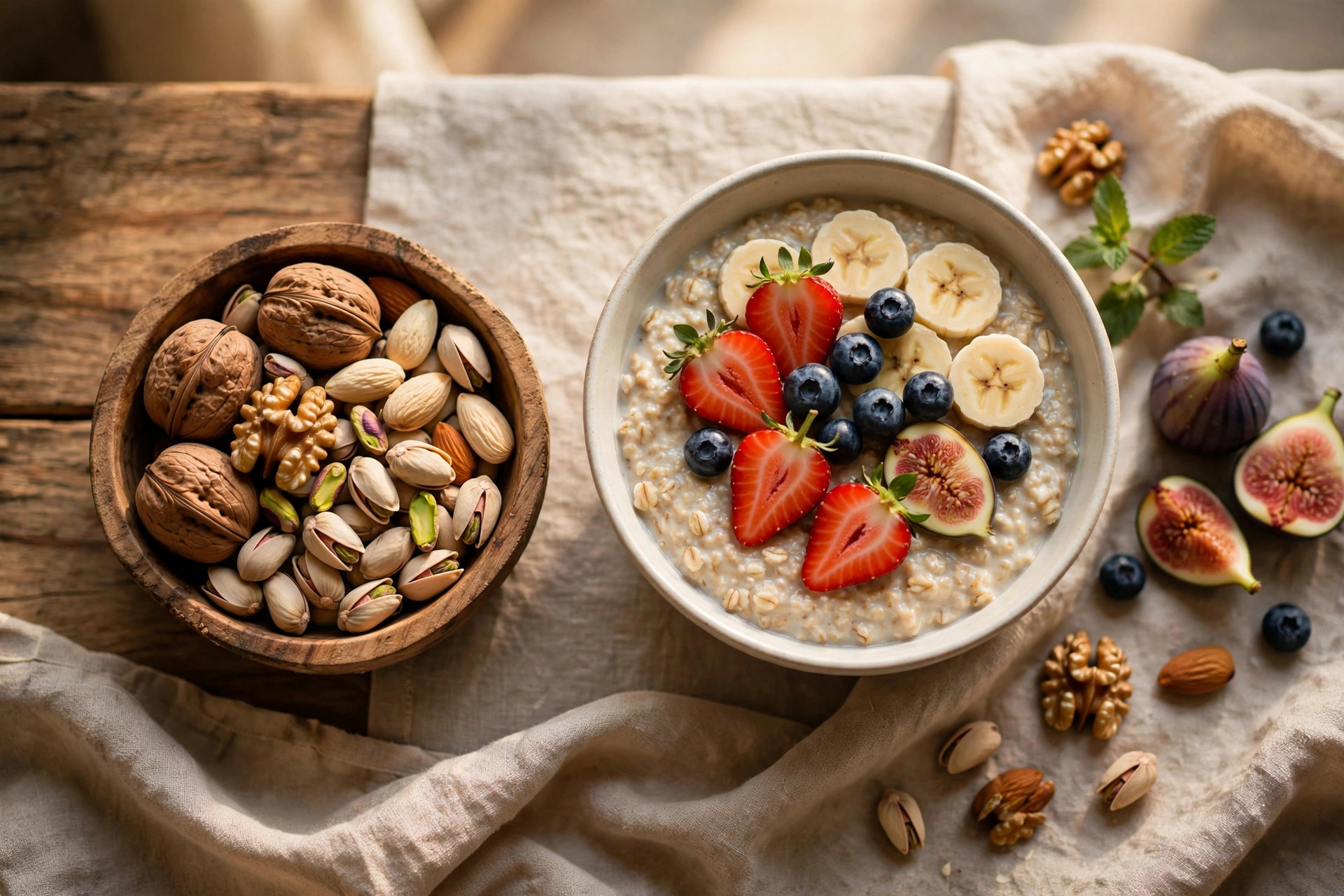
Best Nuts for Heart Health After 50: What the Evidence Says
Few foods have a better reputation among heart researchers than nuts. Large population studies have followed nut eaters for decades, controlled trials have tested them against blood-cholesterol readings, and the U.S. Food and Drug Administration has even issued a formal health claim for them. If you are past 50 and looking for one snack swap that the evidence consistently supports, a daily handful of nuts is a strong candidate.
Not all nuts have the same level of evidence behind them, though. Walnuts have been studied the most, almonds and pistachios have their own solid trial data, and humble peanuts carry more evidence than their price suggests. Here is what the research actually says about each — plus how much to eat and one label trap worth avoiding.
For context, nuts sit alongside vegetables, fish, and olive oil on most cardiologist-approved food lists — see our guide to heart-healthy foods cardiologists actually recommend.
The short answer: what the FDA and heart experts say
In 2003, the FDA authorized a qualified health claim for tree nuts: "scientific evidence suggests but does not prove that eating 1.5 ounces per day of most nuts, as part of a diet low in saturated fat and cholesterol, may reduce the risk of heart disease." The agency describes the evidence as supportive but not conclusive — an honest qualifier that is worth respecting.
The American Heart Association takes a similar position in its dietary guidance: it lists nuts among the preferred sources of unsaturated fats and recommends choosing unsalted, unoiled varieties, keeping saturated fat low (no more than 5–6% of calories) and sodium in check. Harvard researchers who analyzed decades of diet data from tens of thousands of health professionals found that people who ate nuts most often — roughly daily — had about a 29% lower risk of dying from heart disease than those who rarely ate them. That is observational evidence, not proof, but it lines up with what the trials show about cholesterol.
Walnuts: the best-studied nut for the heart
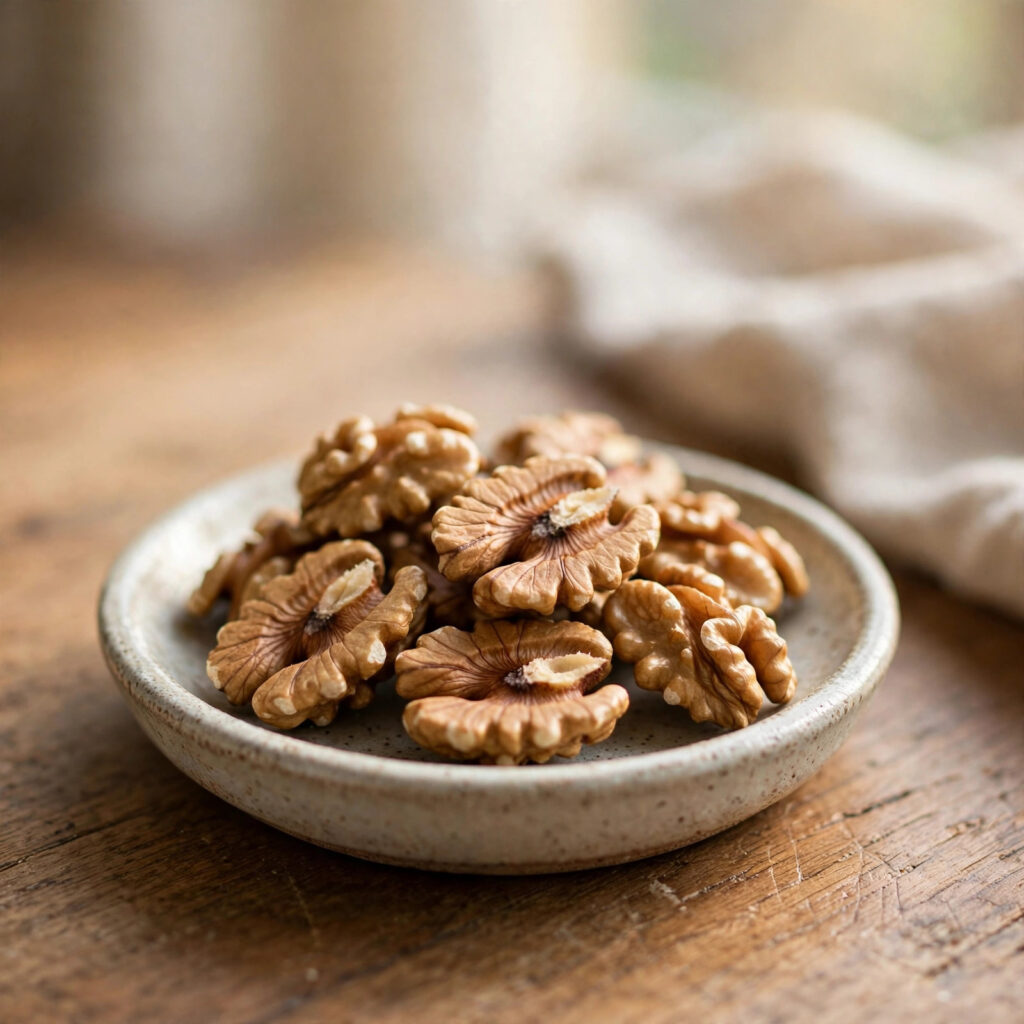
Walnuts are the nut with the strongest evidence base, and it comes down to one fat: alpha-linolenic acid (ALA), a plant-based omega-3 fatty acid. Our bodies convert some ALA into the longer-chain omega-3s found in fish, and dietary ALA intake is linked to a lower risk of heart attack and stroke.
In a two-year trial published in the American Heart Association journal Circulation, more than 700 healthy older adults (ages 63–69) who added about half a cup of walnuts a day to their diet saw modest reductions in LDL ("bad") cholesterol — and the quality of their LDL particles improved, with fewer of the small, dense particles most linked to artery-clogging plaque. A separate meta-analysis of 26 controlled trials found that walnut-enriched diets lowered total cholesterol, LDL cholesterol, and triglycerides. Notably, the walnut eaters in the two-year trial did not gain extra weight, despite the added calories.
Walnuts also tend to be eaten raw, which may preserve more of their antioxidant activity than roasting does.
Practical portion: about 10 walnut halves is roughly one ounce.
Almonds: vitamin E and steady cholesterol results
Almonds are the most consistently studied nut for cholesterol. Trials show that almond-enriched diets may lower LDL cholesterol, likely thanks to their mix of monounsaturated fats, fiber, plant sterols, and vitamin E — almonds are one of the richest food sources of vitamin E, an antioxidant linked to artery protection.
They are also unusually nutrient-dense for their calorie cost: about 6 grams of protein and 3–4 grams of fiber per ounce, plus magnesium and calcium. Mayo Clinic’s cholesterol guidance lists almonds among the foods that can improve blood-cholesterol numbers, and the FDA’s qualified health claim applies to them as well.
Practical portion: about 20–23 almonds is roughly one ounce.
Pistachios: small, satisfying, and well studied
Pistachios have more trial data than most people realize. Controlled studies suggest they may help lower LDL cholesterol and improve overall lipid patterns, and their fiber content (about 3 grams per ounce) is among the highest of the common nuts. They also contain lutein and zeaxanthin, plant pigments being studied for blood-vessel health.
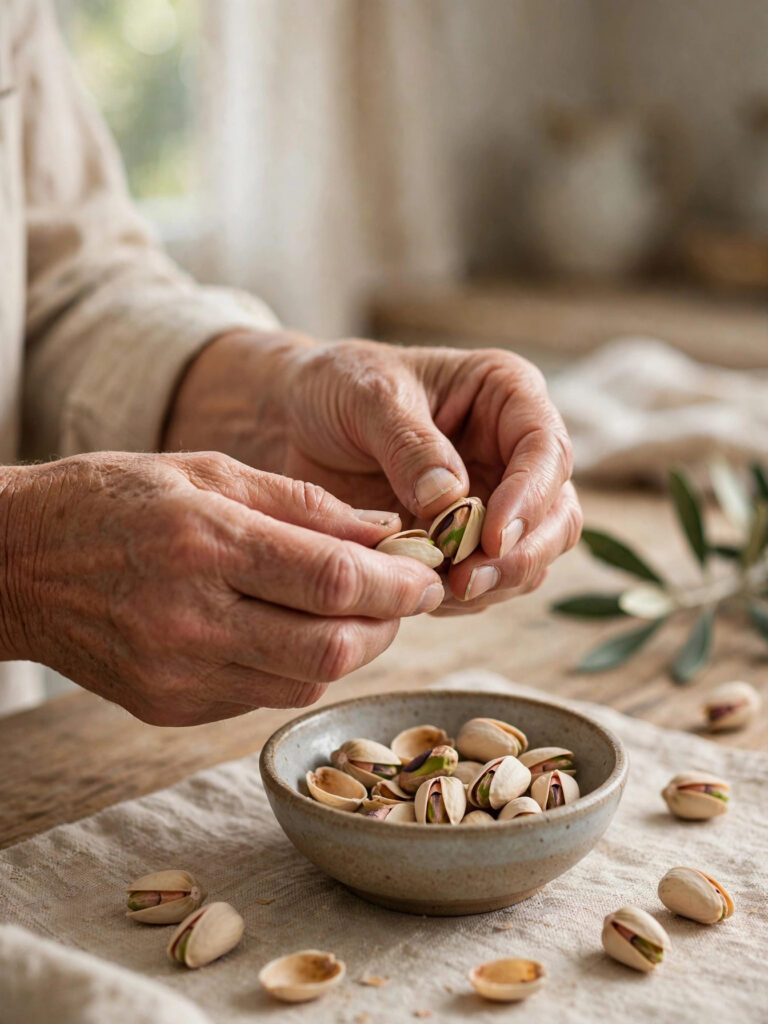
One built-in advantage for the 50-plus crowd: most pistachios are sold in the shell, which naturally slows you down and makes portion size visible. Researchers who study eating behavior have found that the pile of empty shells acts as a natural stopping cue.
Practical portion: about 49 shelled pistachios is roughly one ounce — a generous-looking handful, since they are small.
Peanuts: the budget pick with real evidence
Strictly speaking, peanuts are legumes, not tree nuts. Nutritionally, though, they behave like tree nuts — and the big Harvard cohort studies found that peanut eaters got essentially the same heart-related benefit as tree-nut eaters. They are rich in unsaturated fats, protein (about 7 grams per ounce), and B vitamins, and they cost a fraction of what tree nuts do.
That affordability matters: the healthiest nut is the one you can eat consistently. Choose dry-roasted or raw peanuts with no added salt, or a peanut butter made from just peanuts and salt. The FDA qualified health claim technically applies to tree nuts, but the AHA’s good-fats guidance covers peanuts too.
Practical portion: about a small handful, or roughly one ounce.
Hazelnuts and cashews: an honest assessment
Hazelnuts are rich in monounsaturated fats and vitamin E, similar to almonds, and featured in the nut mix used in the landmark PREDIMED Mediterranean-diet trial, where a nut-supplemented diet reduced cardiovascular events in older adults at high risk. They are simply less studied on their own than walnuts or almonds — evidence suggests benefit, but the trial record is thinner.
Cashews are the one nut where a small caution is fair: they contain somewhat more saturated fat than most other nuts (still far less than chips or cheese), so they work better as part of a rotation than as the only nut you eat. Their creamy texture makes them a genuinely useful substitute for dairy in cooking.
How many should you eat? The 1-ounce rule
The everyday sweet spot supported by both the research and heart associations:
- About 1 ounce (28 grams) a day — a small handful, or about a quarter cup. That is roughly 160–200 calories, with 3–7 grams of protein and 1–3 grams of fiber.
- The FDA’s qualified claim uses 1.5 ounces (~43 grams) as its reference amount, so anything in the 1-to-1.5-ounce range is defensible.
- The AHA’s long-standing suggestion is at least 4 servings of unsalted, unoiled nuts per week.
Two caveats that matter after 50. First, nuts are calorie-dense, so treat them as a substitution, not an addition: swap them for chips, crackers, or cheese rather than stacking them on top of your current snacks. Harvard’s nutrition team makes exactly this point — adjust your calories elsewhere. Second, if you take medications that affect potassium or have kidney disease, talk to your doctor before making nuts a daily habit, since they are relatively rich in potassium. For more on fitting small dietary changes into an overall pattern, see eating well after 45.
The sodium trap: salted, roasted, and flavored mixes
This is where a healthy habit quietly goes sideways. Roasting itself is fine, but many roasted and "flavored" nuts are salted, honey-glazed, or seasoned — and sodium adds up fast for anyone watching blood pressure. The AHA’s dietary guidance is explicit: choose foods low in sodium and be aware of hidden sodium in packaged foods.
Practical label rules:
- Best: ingredients list shows one word — "almonds," "walnuts," "peanuts."
- Fine: dry-roasted with no added salt.
- Think twice: salted, smoked, honey-roasted, wasabi or barbecue flavorings.
- Trail mixes: check for candy pieces and added sugars; a handful of plain nuts plus raisins does the same job.
Since high blood pressure affects a large share of adults over 60, this detail is worth getting right — see how to lower blood pressure naturally after 60.
Easy ways to add a daily handful
- Swap the afternoon chips for a small bag of unsalted mixed nuts.
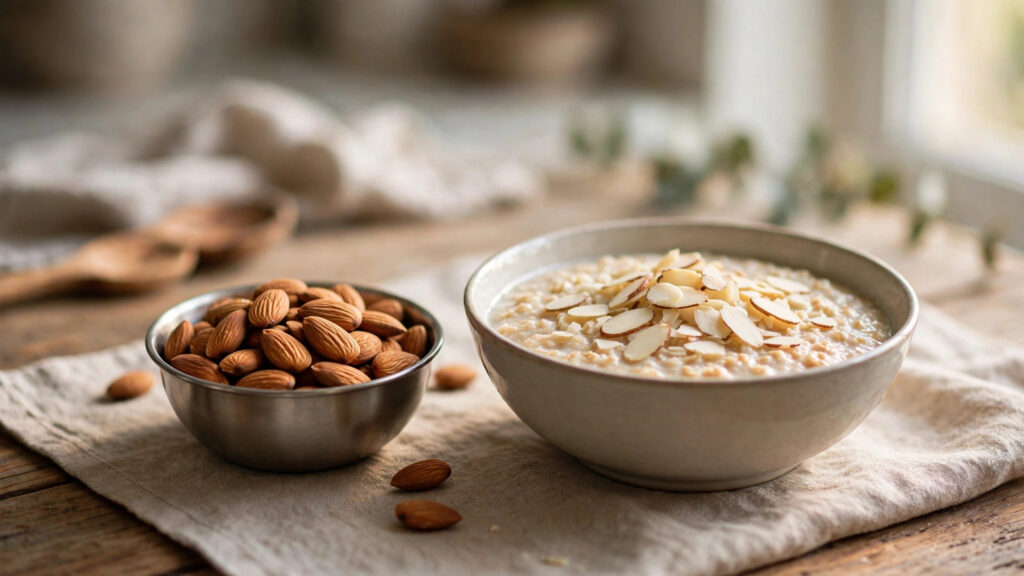
- Top oatmeal, yogurt, or a salad with a spoonful of chopped walnuts or sliced almonds.
- Use crushed pistachios on roasted vegetables instead of a salt-heavy seasoning.
- Keep a measured 1-ounce container at your desk; eating from the bag makes portions drift.
- Replace cheese with almonds on a salad, or butter with peanut butter on whole-grain toast.
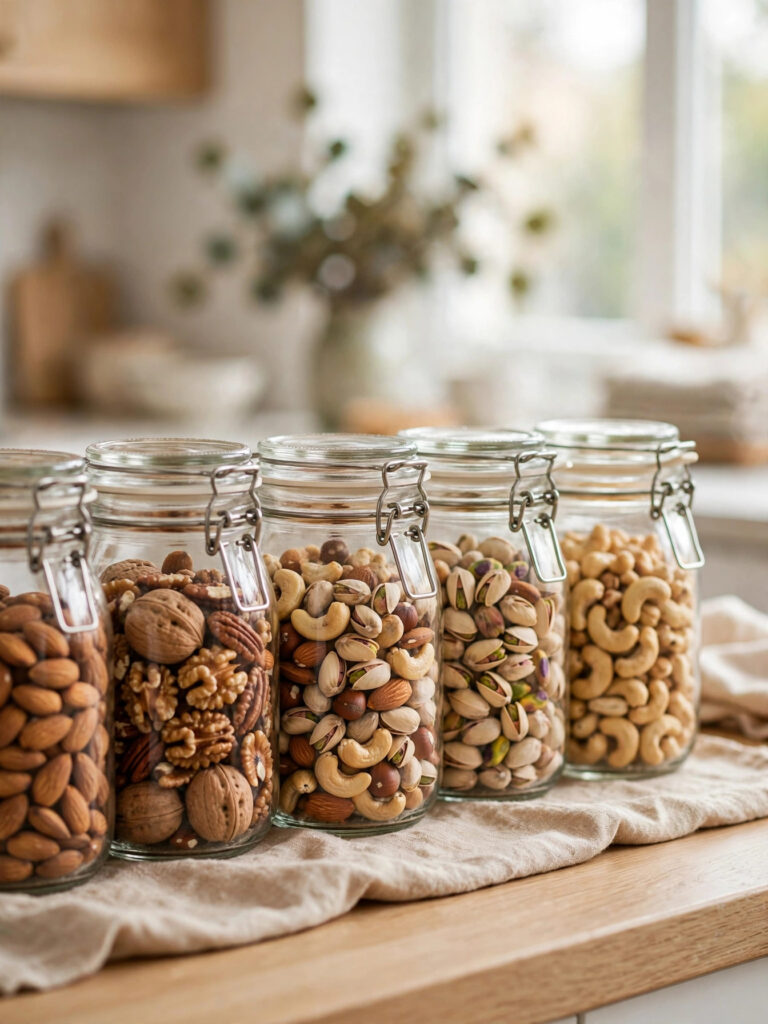
A note on storage: the unsaturated fats that make nuts heart-friendly also make them go stale faster. Keep them in an airtight container in the refrigerator or freezer, especially walnuts.
When to see a doctor
A daily handful of nuts is safe for most people, but see your doctor if:
- You have a nut or peanut allergy — even mild past reactions deserve medical guidance before regular consumption.
- You have kidney disease or take medications affecting potassium (some blood-pressure drugs), since nuts are potassium-rich.
- You notice chest pain, shortness of breath, or unexplained fatigue — diet helps, but these symptoms need prompt medical evaluation.
- You take blood thinners and are making major dietary changes; some nuts contain vitamin K in small amounts, and consistency matters.
The bottom line
Walnuts carry the strongest heart evidence, almonds and pistachios are close behind with solid trial data, and peanuts deliver much of the same benefit at a lower price. About one ounce a day — unsalted, substituting for less-healthy snacks — is the portion the research supports. No nut can replace medication or an overall heart-healthy eating pattern, but as part of that pattern, the evidence suggests they genuinely help.
Sources
- U.S. Food and Drug Administration, qualified health claim for tree nuts and reduced risk of coronary heart disease (authorized 2003): 1.5 oz of most tree nuts per day, as part of a diet low in saturated fat and cholesterol — evidence "supportive but not conclusive."
- Harvard Health Publishing, "Nuts: All they’re cracked up to be?" — http://health.harvard.edu/heart-health/nuts-all-theyre-cracked-up-to-be
- Harvard Health Publishing, "Walnuts: A worthy addition to your daily diet?" (covers the two-year Circulation trial of ~700 adults ages 63–69) — https://www.health.harvard.edu/blog/walnuts-a-worthy-addition-to-your-daily-diet-202111172640
- Harvard Health Publishing, "Quick-start guide to nuts and seeds" (one-ounce serving: 160–200 calories, 3–7 g protein) — https://www.health.harvard.edu/nutrition/quick-start-guide-to-nuts-and-seeds/
- Harvard Health Publishing, "Ask the doctor: Healthy nuts — how much should I eat?" (PREDIMED: 30 g nuts/day with Mediterranean diet; daily consumption appeared best) — https://www.health.harvard.edu/nutrition/ask-the-doctor-healthy-nuts-how-much-should-i-eat
- Mayo Clinic, "Cholesterol: Top foods to improve your numbers" (nuts and seeds as healthy fats that can help lower LDL cholesterol; almonds and tree nuts improve blood cholesterol; a handful a day) — https://www.mayoclinic.org/diseases-conditions/high-blood-cholesterol/in-depth/cholesterol/art-20045192
This article is for informational purposes only and is not a substitute for professional medical advice. Always talk to your doctor before changing your diet.