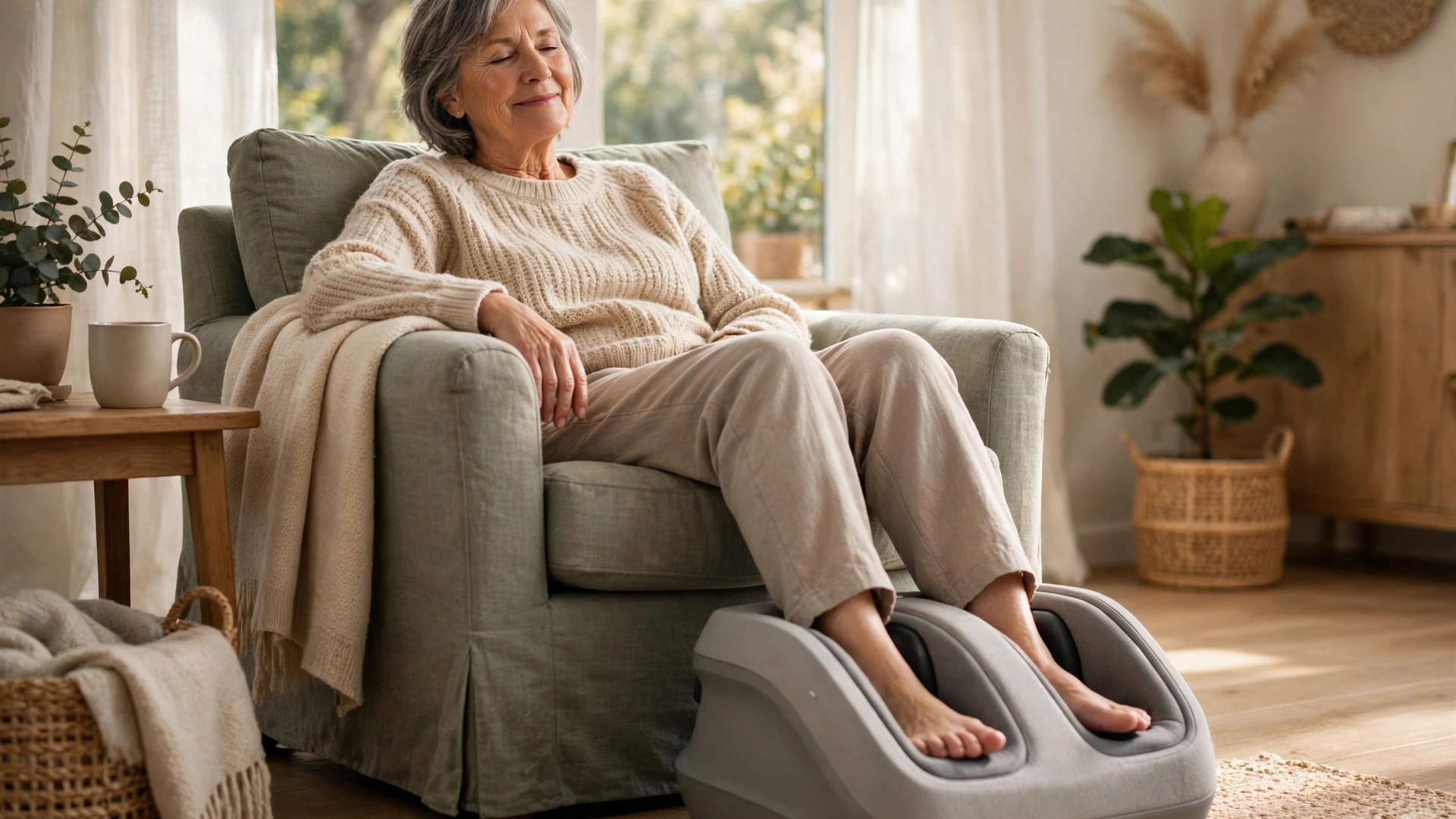
Best Foot Massagers for Seniors: Relief for Tired Feet
After a day on your feet — a morning walk, errands, an evening in the kitchen — tired, achy feet are familiar after 60. A foot massager will not fix why your feet hurt, but it can be a simple comfort at home: fifteen quiet minutes in a chair before bed.
This guide covers the four main types, heat, ease of use, and the safety checks that matter most.
As an Amazon Associate, we earn from qualifying purchases.
Why feet ache more after 60
Feet change with age: heel fat pads thin, arches stiffen, joints lose cushioning, and skin becomes thinner and slower to heal. Cleveland Clinic notes that plantar fasciitis — irritation of the tissue along the bottom of the foot — is the most common cause of heel pain, and our guide to foot pain after 60 covers the other common causes in more detail.
A massager is a comfort measure, like a warm soak — not a treatment. If your feet hurt most days, or the pain is new, sharp, or getting worse, get the cause checked.
The four main types
Most fall into four types, and many machines combine two or three. What matters is how each one feels.
Shiatsu and kneading. Small rotating heads press and roll along the soles, mimicking a hands-on knead. This is the deepest feeling of the four: firm on the arch and heel, wonderful on tired feet — or too intense on tender ones. Sensitive feet need several intensity levels, starting on the lowest.
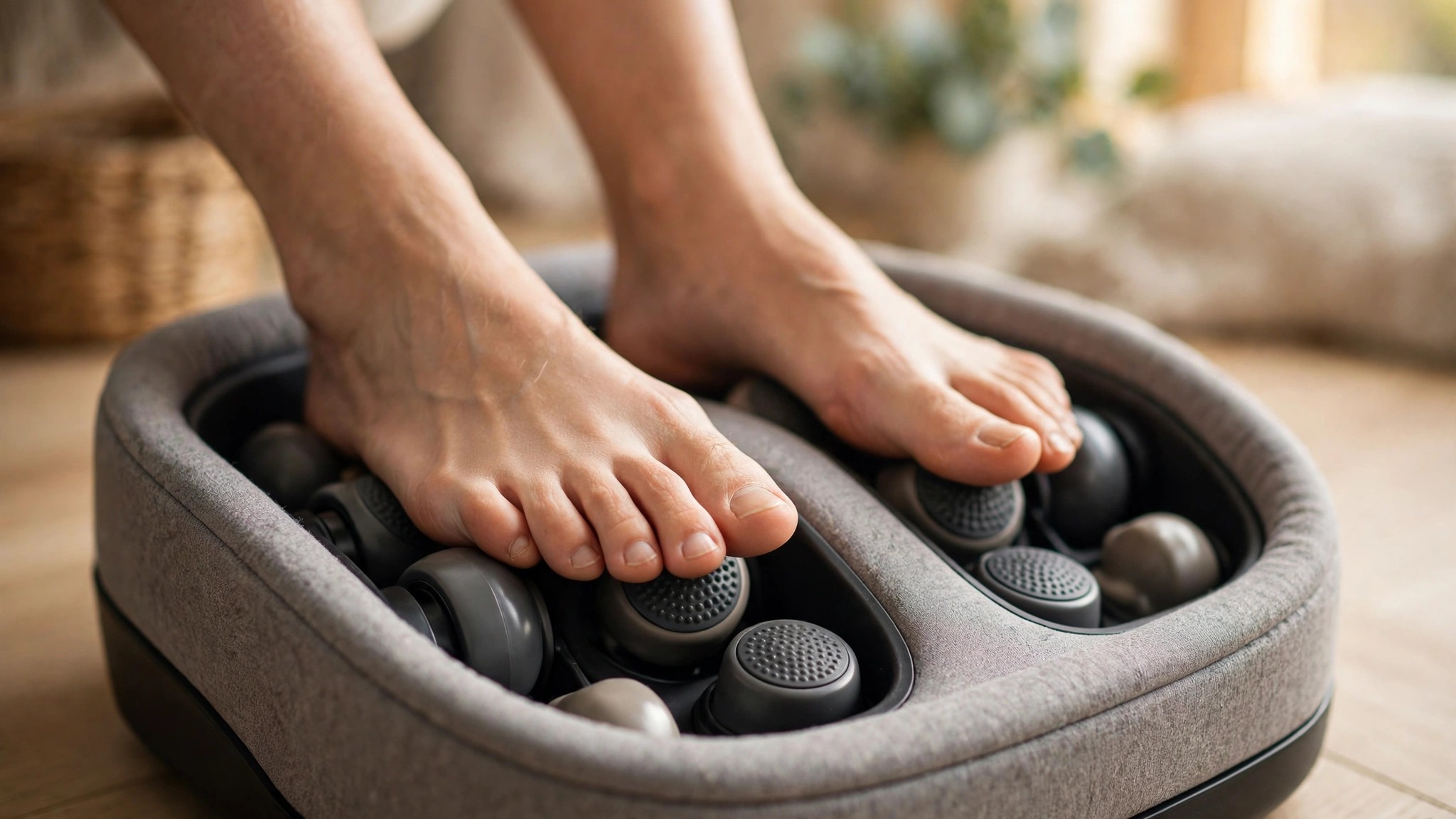
Vibration. A platform or foot wells buzz gently under your feet — a steady hum rather than a press, and the easiest type to tolerate. It suits people who find rollers too sharp, or who want relaxation rather than deep pressure.
Air compression. Airbags inflate and deflate around your feet, squeezing gently and releasing in a slow rhythm — a soft, even hug that covers the whole foot at once. Anyone with swelling, poor circulation, or a history of blood clots should ask their clinician first.
Heat. A warming element heats the foot wells gently, usually as a feature of a shiatsu or compression machine — the most popular extra, and the one that needs the most care, as the next section explains.

5. MIKO Foot Massager (MMF-03)
Shiatsu kneading + heat for tired feet – like a foot rub on demand.
Heat: who it helps, and who must avoid it
For healthy feet with normal feeling, gentle warmth makes a massage more relaxing.
But heat has the clearest “do not use” rule in this guide. If diabetes, neuropathy, or any condition reduces feeling in your feet, you may not tell when something is too hot. The NIDDK warns that nerve damage from diabetes can cause you to lose feeling in your feet — and that you may burn your feet and not know you did. MedlinePlus states plainly: do not use a heating pad or hot water bottle on your feet. The American Diabetes Association adds that nerve damage can lessen your ability to feel pain, heat, and cold.
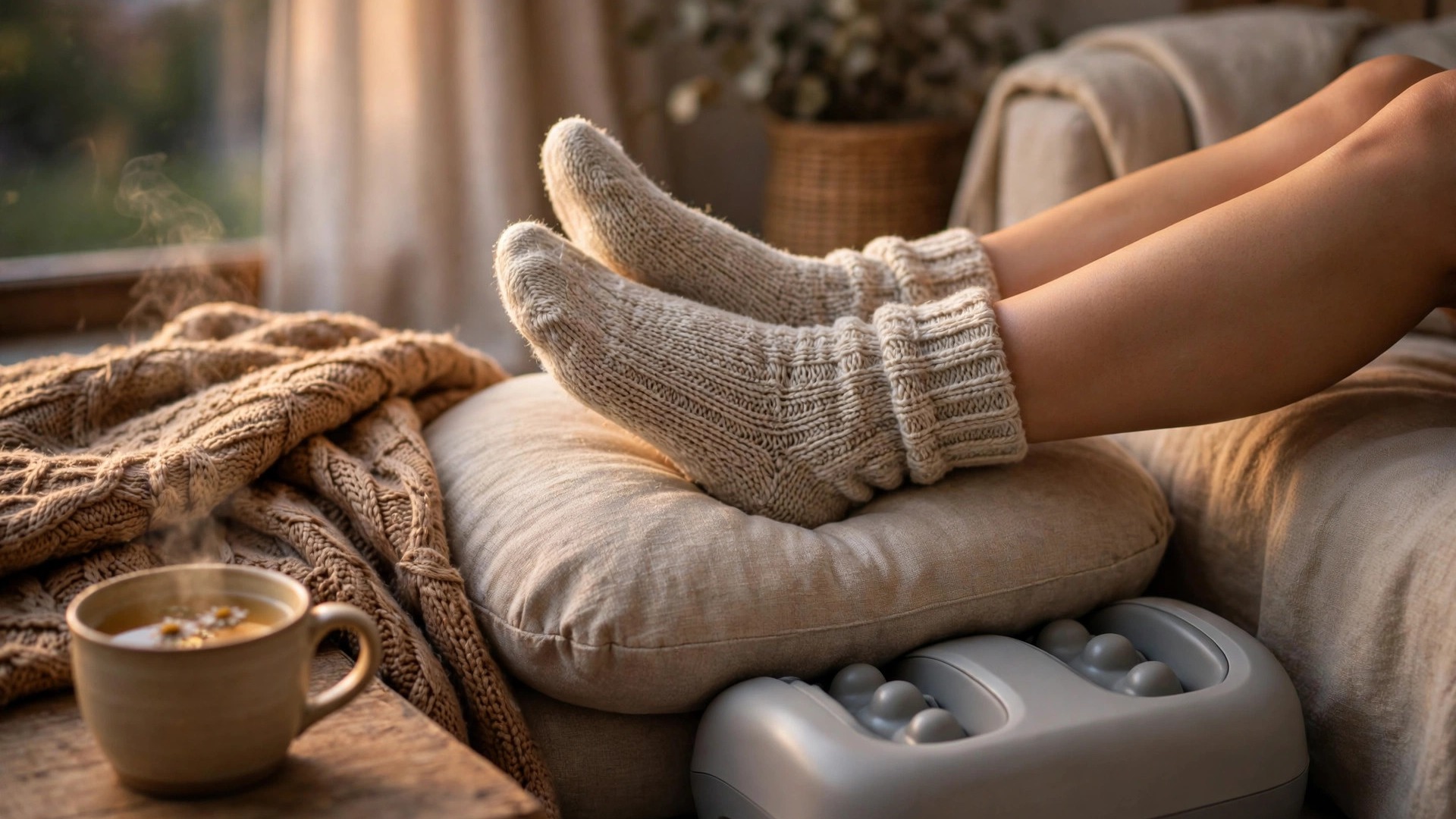
The same logic applies to a heated foot massager: the risk is heat plus feet that cannot feel it. If you have diabetes, neuropathy, or reduced feeling, choose a machine with no heat — or heat you can switch off completely — and talk to your clinician first. Warm socks are the safer way to warm cold feet. If your feet feel normally, use the lowest heat setting and stop if it feels more than comfortably warm.
Intensity control and ease of use
A foot massager lives on the floor: you reach it, switch it on, and change settings while sitting down — and for many people over 60, that decides whether it gets used or gathers dust.
Controls. Look for large, clearly labelled buttons — or better still a remote control — so you can change settings without bending down: one of the most useful features with back pain, stiff hips, or limited flexibility. Raised buttons with a clear click beat touch panels, which are hard to see and easy to press by accident.
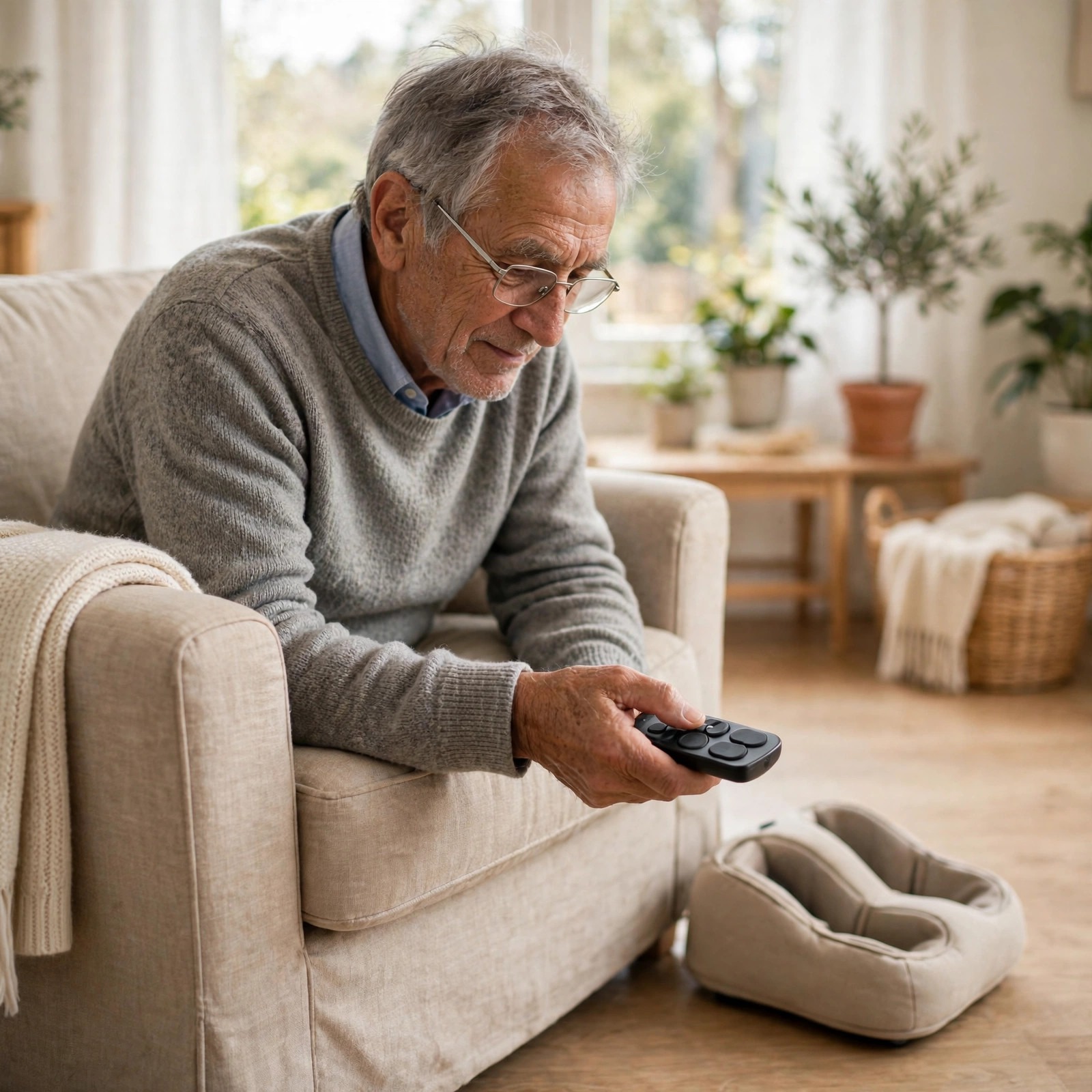
Simple settings. Three intensity levels and two or three modes are plenty. Check you can switch it off quickly, and that the heat has its own control.
Weight. Many machines weigh several pounds — if you will carry it between rooms, check the weight and look for a handle.
Washable covers and noise. Removable, washable foot covers are a real advantage — check they come off easily and go in the washing machine. Some kneading models compete with the television, so check reviews for noise.
What to look for — and what to avoid
Look for: several intensity levels, starting genuinely gentle; a remote control or large buttons; heat that switches off completely; an automatic shut-off timer; a size that fits your feet — check the maximum shoe size; washable foot covers; a cord long enough to reach your chair; non-slip feet on the base.
Avoid: only one intensity, especially “deep” or “powerful”; heat you cannot switch off; no automatic shut-off; a closed design that squeezes wide or swollen feet; tiny buttons or a display you cannot read from a chair; a machine too heavy to lift.
Open versus closed design. Closed machines enclose your feet in wells for a fuller knead — but they have a size limit and can feel tight on swollen feet. Open machines leave the top of your foot exposed: lighter, soles-only, no size limit, easier to get in and out of. Large shoe size, swollen feet, or dislike of enclosed spaces? Open is usually better.
Using it safely: session length, pressure, and feet checks
Start short. Begin with 10 to 15 minutes on the lowest intensity, heat off, and see how your feet feel over the next few hours. A short, gentle massage you enjoy beats a long, intense one.
The pressure rule. The massage should feel comfortable throughout — pleasant pressure, never pain. If it hurts, turn the intensity down or stop. Sharp pain, pinching, or burning are stop signs, not signs it is “working.” With any loss of feeling this matters most: if you cannot feel the pressure, you cannot judge whether it is too much.
Check your feet before and after. Any cut, blister, sore, red patch, or swelling means skip the massager that day. Check again afterwards for redness that does not fade, blisters, or sore spots. Sit in a stable chair, keep your feet clean and dry, and never use it while drowsy. Our foot care tips for older adults explain the daily foot check in full.
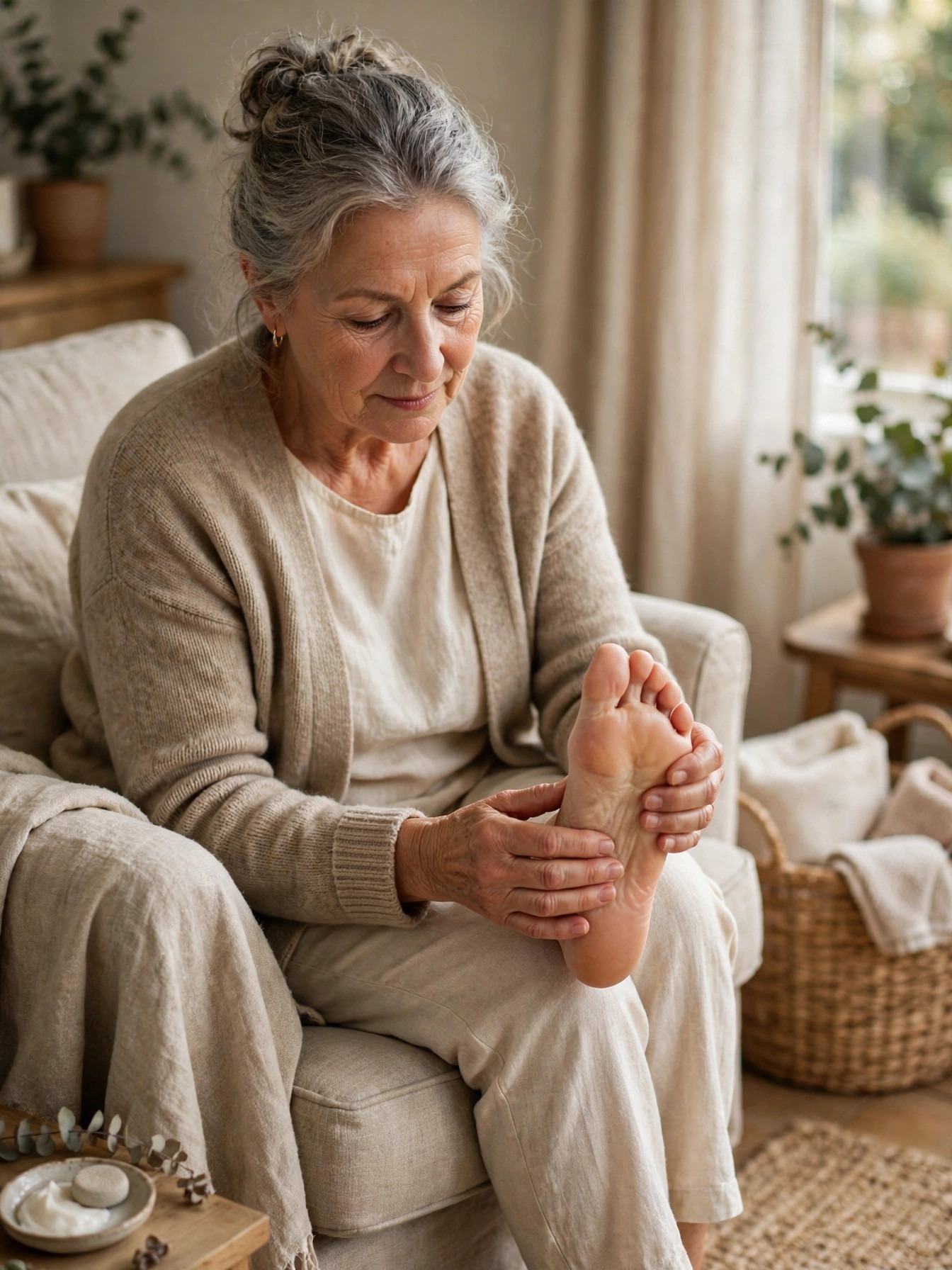
Safety first: who must ask a clinician before using one
A foot massager is a comfort device, not a treatment: it does not treat neuropathy, plantar fasciitis, or circulation problems, and it should never delay seeing a clinician about a foot problem. Mayo Clinic notes massage therapy is generally safe when done properly and research suggests it may help ease pain and muscle tension — but talk with your healthcare team first if you take blood-thinning medicine, have a bleeding disorder, a recent blood clot, burns, or severe osteoporosis.
Ask your clinician first if any of these apply to you:
- Diabetes, especially with neuropathy or reduced feeling — nerve damage can lessen your ability to feel pain, heat, and cold, so a burn or pressure injury can go unnoticed.
- Peripheral neuropathy from any cause — reduced sensation means you cannot reliably judge heat or pressure.
- Poor circulation in the legs or feet — reduced blood flow makes it harder for a sore or infection to heal.
- A history of blood clots or deep vein thrombosis (DVT) — pressure on the legs and feet deserves a clinician’s view first.
- Open sores, foot ulcers, cuts, or blisters — never use a massager over broken skin or on a foot with an ulcer.
- Swollen, red, hot, or infected areas, or varicose veins — do not massage over these areas.
- Blood-thinning medicine — vigorous pressure can cause bruising more easily.
- Recent foot or ankle surgery, a fracture, or a severe sprain — wait until your clinician says it is safe.
If none of these apply, a foot massager used gently and briefly is a low-risk comfort device. If any do, ask your clinician first — describe the type and whether it has heat, so the advice fits what you plan to buy. The same caution applies to related devices: our guide to massage guns for older adults covers similar safety ground for a stronger tool, and our foam roller guide offers a gentler alternative.
When to see a doctor
A foot massager is for comfort, not diagnosis — and some symptoms need a clinician promptly, not a device. See your doctor, or a podiatrist, if you notice: a cut, blister, or sore that does not start to heal within a few days, or any sign of infection — spreading redness, warmth, swelling, or discharge — especially with diabetes; new or worsening numbness, tingling, burning, or loss of feeling; foot pain that is severe, sudden, or getting worse, or stops you walking normally; a foot that is swollen, red, and hot, or very different from the other; a change in your foot’s shape, or pain on putting weight on it after an injury; or calf pain with swelling, warmth, or redness — a possible blood clot that needs urgent care. Do not use a foot massager to work through any of these — get a clinician’s opinion first.
The bottom line
The best foot massagers for seniors are the gentle, simple, safe ones: several intensity levels starting truly low, a remote control or big buttons, heat you can switch off, an automatic shut-off timer, a fit that suits your shoe size, washable covers. Shiatsu suits a firm knead; vibration suits sensitive feet; air compression suits an even squeeze; heat suits healthy feet that feel normally — and should be skipped entirely with diabetes, neuropathy, or reduced feeling.
Start short, keep the pressure comfortable, check your feet before and after — and ask your clinician first if anything above applies to you.
Sources
- National Institute of Diabetes and Digestive and Kidney Diseases (NIDDK), “Diabetes & Foot Problems” — https://www.niddk.nih.gov/health-information/diabetes/overview/preventing-problems/foot-problems
- NIDDK, “What Is Diabetic Neuropathy?” — https://www.niddk.nih.gov/health-information/diabetes/overview/preventing-problems/nerve-damage-diabetic-neuropathies/what-is-diabetic-neuropathy
- American Diabetes Association, “Diabetes & Your Feet” — https://diabetes.org/diabetes-and-your-feet
- MedlinePlus, “Diabetes – taking care of your feet” — https://www.medlineplus.gov/ency/patientinstructions/000081.htm
- Mayo Clinic, “Massage therapy” — https://www.mayoclinic.org/tests-procedures/massage-therapy/about/pac-20384595
- Cleveland Clinic, “Plantar Fasciitis: Symptoms, Causes & Treatment Options” — https://my.clevelandclinic.org/health/diseases/14709-plantar-fasciitis
This article is for general information only and is not medical advice. Talk to your clinician before using a foot massager, especially if you have diabetes, neuropathy, poor circulation, blood clots, or open sores on your feet.