
Foot Care Tips for Older Adults: 10 Ways to Keep Your Feet Healthy After 60
Your feet carry you everywhere, and after 60 they start asking for a little more attention. Skin gets thinner and drier, the cushioning fat pads under your soles wear down, toenails can thicken, and — most importantly — you may feel injuries less. That last change is the one that matters most: a small cut or blister you never notice can turn into a real problem if it goes unchecked.
The good news: most foot trouble is preventable with a daily routine that takes less than five minutes.
Why foot health matters more after 60
A few things change with age, and they add up:
- Thinner skin and drier feet. Aging skin makes less oil, so feet — especially heels — dry out and can crack. Cracks in the skin are open doors for infection.
- Less padding. The fat pads under your feet thin over the years, which is one reason standing and walking can hurt more than they used to.
- Slower healing and poorer circulation. Blood flow to the feet can decline with age, and some medications make swelling worse. Sores that would have closed in days at 40 can linger much longer at 70.
- Dulled sensation. Nerve changes — and diabetes in particular — can reduce feeling in the feet, so injuries go unnoticed. Health Canada’s foot-care infosheet for seniors notes that three out of four people develop serious foot problems as they age: sore feet lead to less walking, weaker muscles, and a higher risk of falls.
Healthy feet are not a cosmetic issue at this stage of life. They help you stay active, keep your balance, and stay independent.
1. Check your feet every single day
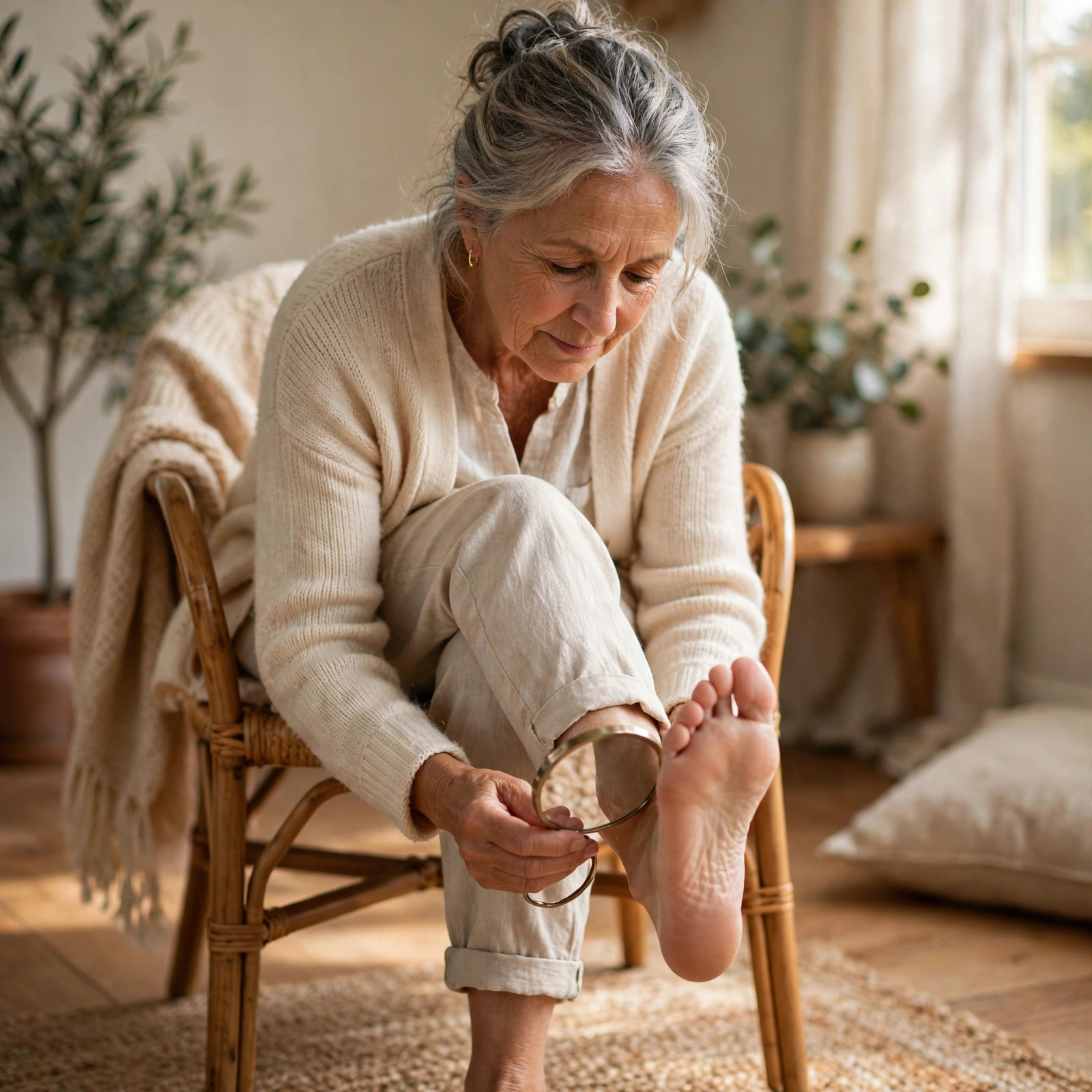
Make this your number-one habit. Once a day — a good moment is when you change your socks or get ready for bed — look at the tops, bottoms, and between your toes. You are looking for:
- cuts, scratches, or blisters
- red or hot areas, swelling, or bruising
- cracked or peeling skin, especially on the heels
- infected or ingrown toenails
If bending down is difficult, a small hand mirror on the floor works well for seeing the soles. If your vision makes inspection hard, ask a family member or caregiver to do it for you. Mayo Clinic also recommends a practical trick: run your hand inside your shoes before putting them on, to check for a pebble or rough seam you might not feel. Do not wait until your feet hurt to start checking — the point is to catch things early.
2. Wash daily, then dry thoroughly
Wash your feet every day with warm water and mild soap — never hot water, and do not soak them for long stretches (Health Canada’s guidance suggests no longer than about 10 minutes), since soaking dries the skin out and encourages cracking.
Then dry carefully with a soft towel, paying special attention to the area between your toes. Moisture trapped there encourages fungal infections such as athlete’s foot. If your feet sweat a lot, a light dusting of talcum powder can help keep the skin dry — Mayo Clinic’s foot-care advice mentions this as an option.
3. Moisturize — but not between the toes
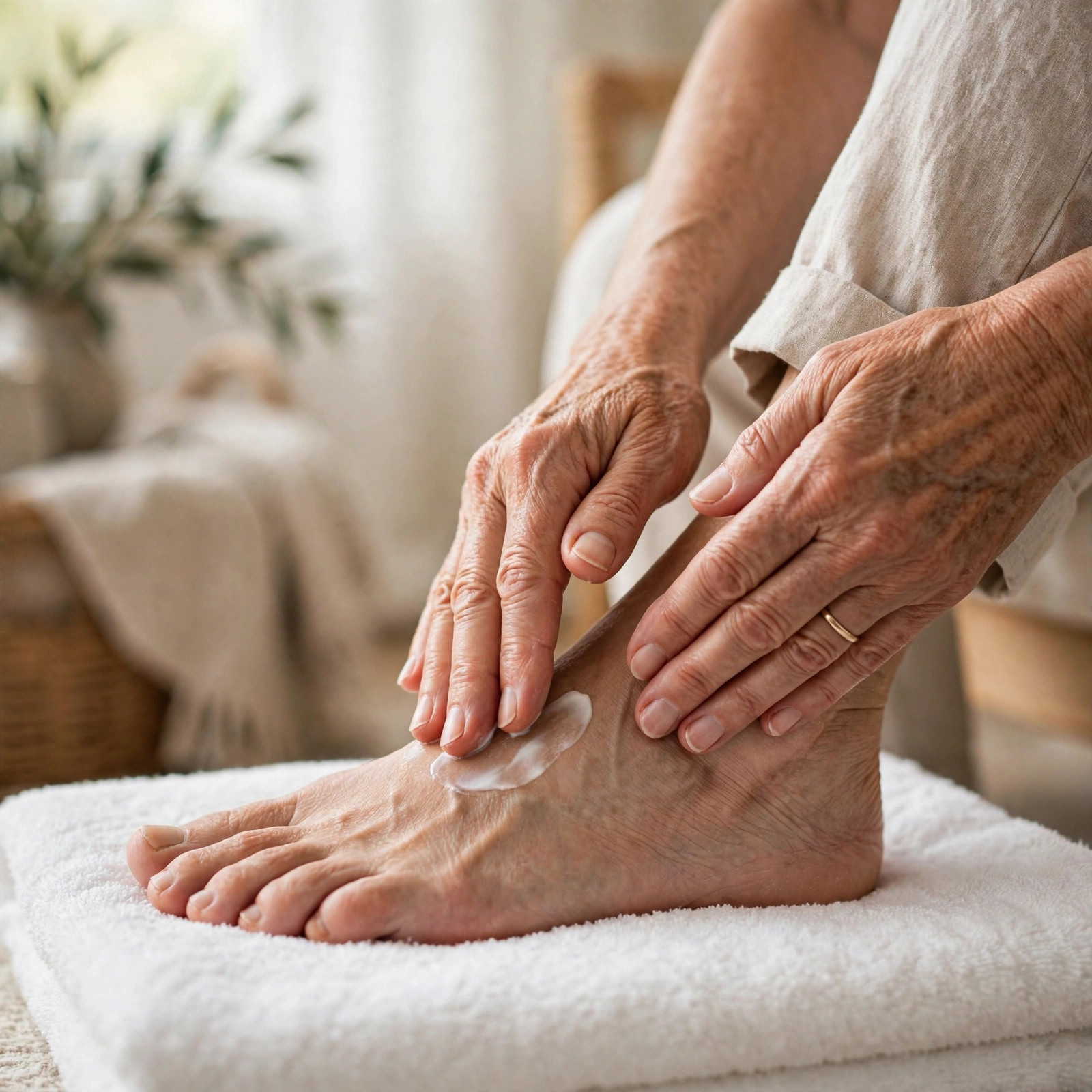
Dry skin cracks, and cracks invite infection. Rub a thin coat of plain, unscented moisturizing cream over the tops and bottoms of your feet every day. Keep it away from the skin between your toes, where trapped moisture can encourage fungal growth — standard advice in Mayo Clinic and NHS diabetes foot-care materials.
A simple rule of thumb: lotion where the skin is thick and dry (soles, heels, tops), never where it stays damp (between the toes).
4. Trim toenails straight across — and not too short
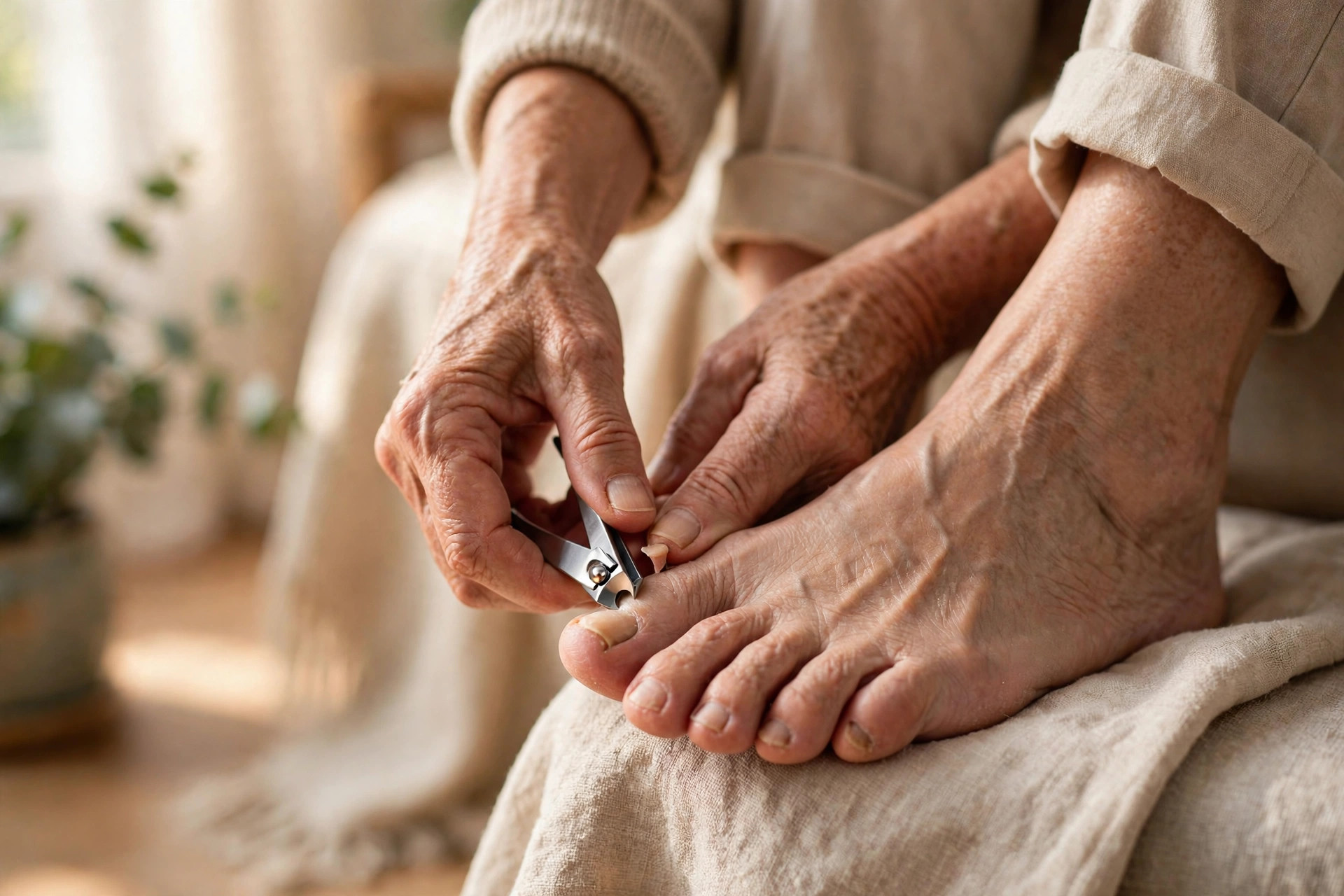
Ingrown toenails are one of the most common and most avoidable foot complaints in older adults. The technique:
- Use a proper nail clipper (not scissors) and cut each nail straight across, never rounding the corners.
- Do not cut them too short — leave the edge roughly level with the tip of the toe.
- Smooth any sharp corners gently with a nail file or emery board.
- Trim after a bath or shower if you can, when the nails are softer.
Two exceptions: if you have diabetes, poor circulation, or trouble seeing or reaching your feet, Mayo Clinic advises having a doctor, nurse, or podiatrist do the trimming. And never dig at ingrown nails or use sharp tools under them — you can open the door to infection.
5. Choose shoes that fit — and measure your feet

Badly fitting shoes cause a large share of foot trouble: blisters, corns, calluses, bunions, and heel pain. One study of older adults attending geriatric services found that most were wearing shoes that did not fit properly (O’Rourke et al., BMC Geriatrics, 2020). Feet can also change shape with age, so the size you wore at 40 may not fit at 65.
Practical shoe-buying rules, drawn from Health Canada’s senior foot-care guidance:
- Have both feet measured every time you buy shoes — the two often differ in size, so fit for the larger one.
- Shop late in the day, when feet are at their most swollen, so the shoes never end up too tight.
- Look for a wide toe box — toes should be able to wiggle, with no seam pressing against them.
- Prefer soft, breathable materials (like leather or canvas) with a smooth inside — no rough ridges that can rub.
- Leave about half an inch of space between your longest toe and the front of the shoe.
- Avoid pointed toes and high heels, and break in new shoes slowly rather than wearing them all day at once.
- If supportive shoes help with aches, also read our guide to supportive shoe features that can also ease knee pain.
6. Never go barefoot — even indoors
Wear shoes or supportive slippers even around the house. A stepped-on toy, a hot patio edge, or broken glass can injure a foot you may not fully feel — and if you have diabetes or circulation problems, that injury can be slow to heal. Change your socks daily so your feet start each day clean and dry.
7. Keep blood moving to your feet
Healthy circulation supports healing and keeps swelling down. You do not need anything dramatic:
- Wiggle your toes and rotate your ankles when you have been sitting for a while.
- Avoid sitting with your legs crossed for long periods, which can restrict blood flow to the feet.
- Prop your feet up on a stool or couch when resting to help reduce end-of-day swelling.
- Stay active — walking and other gentle movement support circulation. If stability is a concern, pair movement with simple balance exercises that help prevent falls.
- Do not smoke — nicotine narrows blood vessels and reduces blood flow to the feet, which slows healing and raises the risk of ulcers.
Watch for circulation warning signs — unusual coldness, numbness, or tingling; calf pain when you walk that eases when you rest; or a change in skin color — and bring these up with your doctor rather than waiting.
8. Handle corns and calluses with care
Corns and calluses are the body’s response to pressure and friction — often from shoes that do not fit. They are common, and usually not dangerous, but treat them gently: do not cut them off yourself with a blade, scissors, or nail clipper, and skip chemical corn removers, which can burn healthy skin. A pumice stone used gently on damp skin can smooth a callus. If they keep coming back, are painful, or crack, see a podiatrist. And if you have diabetes or poor circulation, the NHS advises having a clinician handle them rather than treating them yourself.
9. Diabetes and your feet: take small problems seriously
This section deserves extra emphasis, because diabetes changes the stakes. High blood sugar can damage the nerves in your feet, dulling sensation, and narrow the arteries, reducing blood flow. The result: you may not feel a cut or blister, and your body is slower to heal it. As Mayo Clinic’s health letter on diabetes foot care puts it, a small cut or blister on the foot is an open invitation for infection and potentially more serious complications, including amputation.
Your daily routine is your best protection:
- Never ignore a blister, cut, or sore — even a small one. Cover it, keep pressure off it, and watch it closely.
- See a clinician promptly if it does not start to improve within a day or two — or sooner with spreading redness, swelling, warmth, drainage, or a bad smell.
- Have your clinician check your feet at every diabetes visit, and ask whether you need special shoes or inserts.
- Do not use heating pads or hot water bottles on numb feet — you may not feel a burn.
None of this is meant to frighten you. Most people with diabetes never develop serious foot problems — but those who do almost always started with a small injury that was left alone. Catching things early is the whole game.
When to see a doctor
Foot problems rarely improve on their own in older adults, so do not adopt a wait-and-see approach with these signs — book a visit with your doctor or a podiatrist:
- a sore, cut, or blister not starting to heal after a day or two
- spreading redness, swelling, warmth, drainage, or a bad odor — possible infection
- numbness, tingling, burning, or loss of feeling in your feet
- unusual coldness in one or both feet, or a change in skin color
- a change in your foot’s shape, or new pain when walking
- thickened, yellow, or crumbling toenails, or an ingrown nail you cannot manage safely
- feet so swollen that shoes suddenly do not fit
If you have diabetes, treat every item on this list as urgent rather than routine — and if a wound shows signs of infection, seek care the same day.
The bottom line
Good foot care after 60 is not complicated: check your feet daily, wash and dry them well, moisturize (not between the toes), trim nails straight across, wear shoes that actually fit, and keep moving. If you have diabetes, add one more rule on top — never ignore a small problem, and see a clinician promptly when one appears. Your feet have carried you this far; five minutes a day is a fair exchange.
Sources
- Mayo Clinic, “Amputation and diabetes: How to protect your feet” — https://www.mayoclinic.org/diseases-conditions/diabetes/in-depth/amputation-and-diabetes/art-20048262?pg=2&p=1
- Mayo Clinic News Network, “With Diabetes, Daily Foot Care is Critically Important” — https://newsnetwork.mayoclinic.org/discussion/with-diabetes-daily-foot-care-is-critically-important/
- Chesterfield Royal Hospital NHS Foundation Trust, “Diabetes and Looking After Your Feet” — https://www.chesterfieldroyal.nhs.uk/application/files/9217/0239/5829/Diabetes_and_foot_care.pdf
- Health Canada, “Foot care: Infosheet for seniors” — https://publications.gc.ca/collections/Collection/H30-11-8-8E.pdf
- O’Rourke B, Walsh ME, Brophy R, et al., “Does the shoe really fit? Characterising ill-fitting footwear among community-dwelling older adults attending geriatric services.” BMC Geriatrics 2020;20:55.
This article is for general information only and is not medical advice. Talk to your doctor, nurse, or podiatrist about your personal foot care needs, especially if you have diabetes or circulation problems.