Best Shoes for Knee Pain After 60: Features That Actually Help
If every step reminds you of your knees, you are not alone. Knee osteoarthritis is one of the most common causes of chronic pain in adults over 60, and it can quietly shrink your world — shorter walks, avoided stairs, a favorite park trail left behind. Exercise, weight management, and medical treatment all have a role, but there is a simpler lever many people overlook: the shoes on your feet.
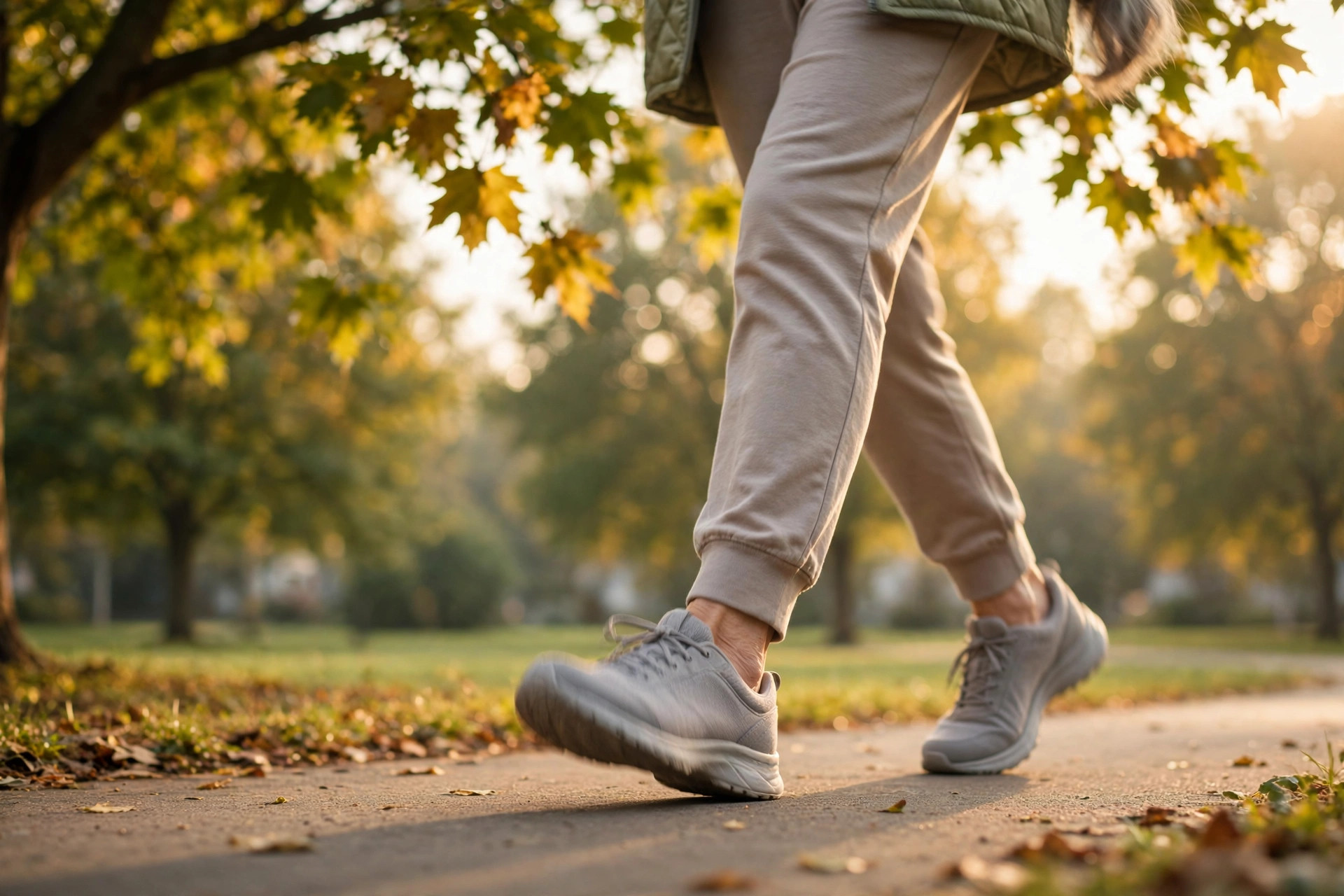
Your shoes change how force travels through your knee with every step. The right features can soften impact and steady your stride; the wrong pair can add strain to an already irritated joint. This guide breaks down the features that matter most — no brand names, no sales pitches — plus what recent research actually says about shoes and knee pain.
Why Shoes Matter for Knee Osteoarthritis
The knee is a load-bearing joint, and walking loads it with several times your body weight on every step. In knee osteoarthritis (OA), the cartilage cushioning the joint has thinned, so the bones and surrounding tissues feel more of that force.
Footwear influences this in two main ways:
- Shock absorption. A cushioned midsole softens the impact each time your heel strikes the ground, which may help reduce the jolt transmitted up to the knee.
- Alignment and stability. How your foot rolls and where pressure concentrates affects the angle and distribution of forces across the knee. Shoes that keep the foot reasonably stable may help the knee track more evenly.
Shoes manage comfort and loading — they do not treat osteoarthritis or change the disease itself. But for many people, the right shoe features mean less pain during daily walking, and that is a meaningful win. (For a broader overview of causes and home strategies, see Knee Pain After 60: Causes, Relief, and When to See a Doctor.)
Key Features to Look For
Think of shoe shopping as a feature checklist, not a brand hunt. Here are the features worth prioritizing:
1. Cushioning
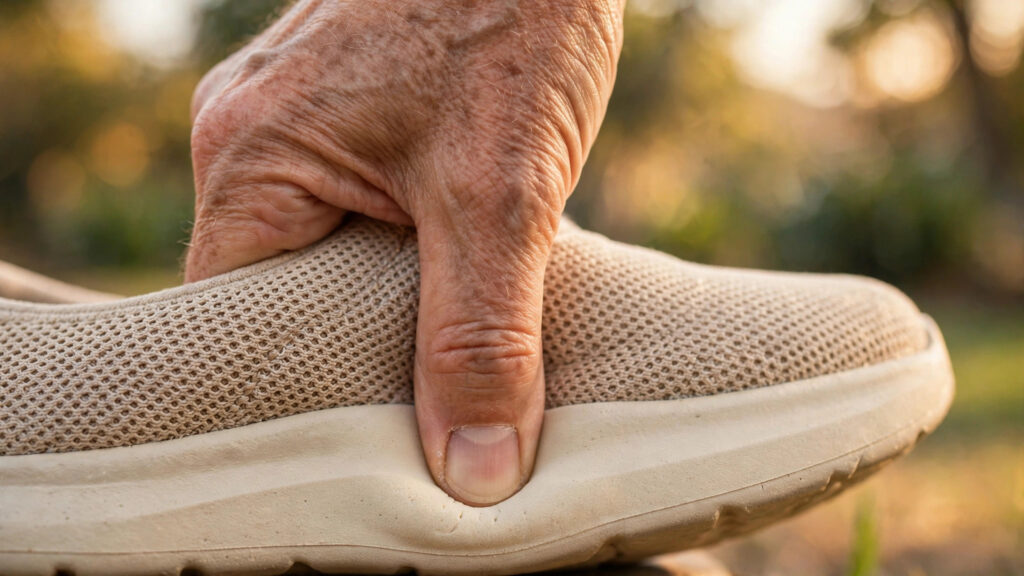
Look for a thick, soft midsole that you can feel compress slightly when you press it with your thumb. Adequate cushioning absorbs impact at heel strike, which is where the knee takes its biggest hit during walking. Very hard, thin soles transfer more shock upward.
That said, there is a balance. An extremely soft, unstable platform can feel wobbly, especially if your balance is already a concern. Aim for “soft but supportive” rather than “pillow-soft.”
2. Stability and Support
A stable shoe keeps your foot from rolling excessively inward or outward. Features to check:
- A firm heel counter (the cup around your heel) — squeeze it; it should not collapse easily.
- A torsionally stiff midfoot — try twisting the shoe; the middle should resist twisting.
- A supportive arch that matches your foot shape.
Research suggests that stable, supportive shoes perform well for knee pain (more on that below). If your feet roll inward noticeably when you walk, a moderate stability shoe may help your knees track more evenly.
3. Heel-to-Toe Drop
Heel-to-toe drop is the height difference between the heel and forefoot of a shoe. A moderate drop (roughly 8–12 mm in typical walking shoes) is a reasonable starting point for most adults over 60. Very flat shoes (zero drop) change ankle and knee mechanics significantly and may feel uncomfortable if you are not used to them, while very high heels shift your weight forward and increase pressure on the front of the knee — best avoided.
4. Fit and Width
Proper fit matters more than any technology. As we age, feet tend to widen and lengthen slightly. Choose shoes that:
- Offer a roomy toe box — your toes should wiggle freely without touching the front.
- Come in wide widths if your feet need them; cramped shoes alter your gait and can add knee strain.
- Feel comfortable immediately — do not expect a long “break-in” period.
Bring the socks you normally wear when trying shoes on, and shop in the late afternoon or evening when feet are at their largest.
5. Weight
Heavy shoes make your legs work harder and can increase fatigue, which often makes knee pain feel worse. Aim for a reasonably light shoe that still offers cushioning and stability. If you walk for 30 minutes or more, every extra ounce counts.
6. Rocker Soles
A rocker sole is a gently curved bottom that rolls from heel to toe, helping you through the step with less muscular effort at push-off. This can be particularly welcome if arthritis or cartilage damage makes the push-off phase painful. Try a subtle rocker first; an aggressive curve can feel unsteady until you adapt.
What the Research Says
The evidence on shoes and knee pain has grown notably in recent years, and some of it is genuinely encouraging.
A large JAMA trial (the BIOTOK trial, published May 2020). Researchers compared specially designed biomechanical footwear against visually identical control footwear in 220 people with knee osteoarthritis (average age about 65), over 24 weeks. Pain scores on the WOMAC scale (a standard knee OA questionnaire) fell from 4.3 to 1.3 in the biomechanical footwear group, compared with 4.0 to 2.6 in the control group — a between-group difference of about 1.3 points (p<0.001). Similar improvements showed up for knee function and stiffness, and nearly 97% of participants completed the full follow-up. This is one of the stronger trial results yet for footwear as a pain-management tool.
An important honest caveat: biomechanical footwear is a specialized, adjustable device calibrated by a clinician — not ordinary walking shoes off a shelf. So while the results are promising, they do not mean “go buy this shoe type.” They do suggest that how shoes interact with knee mechanics genuinely matters.
Stable vs. flat flexible shoes (Hinman/Bennell program). A 2021 randomized trial in 164 people with knee osteoarthritis found that stable, supportive shoes reduced knee pain while walking roughly 63% more than flat, flexible shoes over six months. Adverse events were also lower with stable supportive shoes (15% vs. 32%), with foot pain among the complications reported more often by people wearing flat flexible shoes. Interestingly, a separate 2026 trial in 120 people with hip OA found flat flexible shoes were no better than stable supportive shoes for hip pain — a reminder that knee and hip results can differ.
The biomechanical backstory is nuanced: laboratory studies suggest flat flexible shoes can lower knee forces by around 9%, yet real-world pain outcomes have favored support for knees. What feels mechanically ideal in a lab does not always translate to less pain on a sidewalk.
What this means for you. No shoe has been proven to treat or reverse osteoarthritis. But the evidence does suggest that stable, cushioned footwear may help reduce pain during walking — and for an active adult over 60, that is worth taking seriously. As always, weigh this information with your own clinician or podiatrist, who can consider your specific joint condition.
What to Avoid
Not every popular shoe choice is kind to arthritic knees:
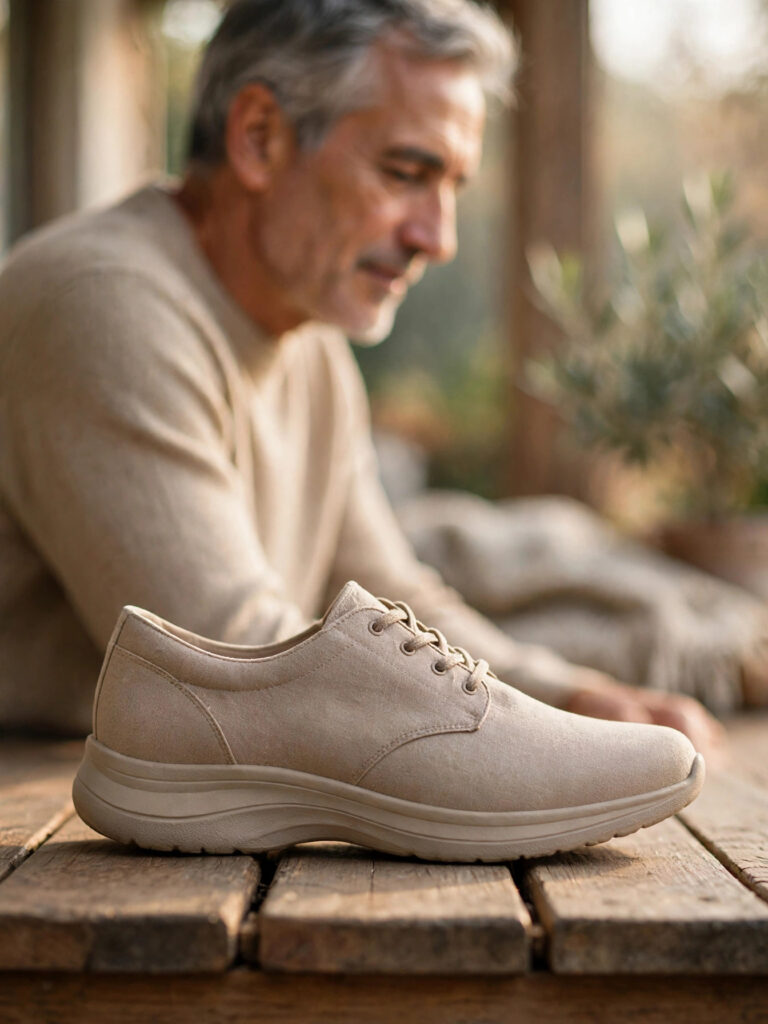
- Worn-out shoes. A dead midsole that no longer rebounds absorbs little shock. Most walking shoes need replacing every 300–500 miles, or roughly every 6–12 months of regular use.
- Completely flat, unsupportive footwear (thin ballet flats, worn flip-flops) for long walks — the research above found these less helpful for knee pain than stable supportive shoes.
- High heels — they shift weight forward and increase forces through the knee (one study found knee forces 23% higher in six-centimeter heels compared with barefoot walking) — best avoided.
- Overly soft, unstable platforms — if you feel wobbly, the shoe is working against your balance.
- Shoes that need breaking in. A shoe should feel good the day you buy it.
Shopping Tips That Make a Difference
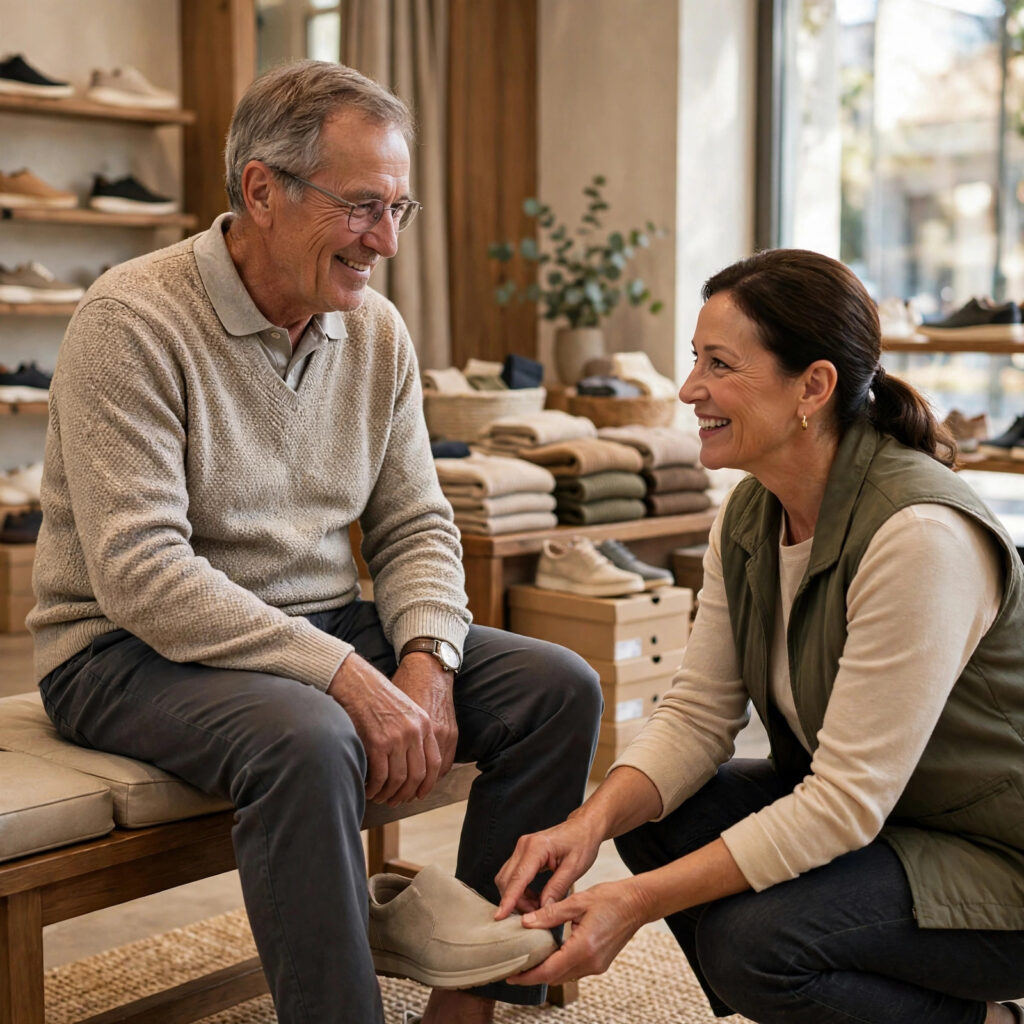
- Try shoes later in the day, when feet are slightly swollen to their normal size.
- Bring your usual socks and any insoles or orthotics you regularly use.
- Walk around the store for at least five minutes — including a few steps that mimic stairs if possible.
- Check the return policy. Pain sometimes only shows up after a few real-world walks; a generous return window lets you test honestly.
- Consider a fitting specialist. A good specialty shoe store can watch your gait and suggest features for your foot type — often more valuable than any brand recommendation.
- Replace on schedule. Mark your calendar: once the midsole feels flat or tread is worn smooth, the shoe is done protecting your knees.
Pairing better shoes with gentle movement helps too. Low-impact activities like walking, swimming, or cycling keep the muscles around the knee strong without hammering the joint — see Low-Impact Exercises for Bad Knees for ideas. And because hip mechanics and knee mechanics are connected, lingering hip discomfort is worth addressing as well: Hip Pain in Older Adults: Common Causes and Home Relief.
When to See a Doctor
Good shoes can ease symptoms, but they cannot diagnose or treat the underlying condition. See your clinician promptly if:
- Knee pain is severe, sudden, or follows an injury or fall.
- The knee is swollen, hot, red, or locks, buckles, or gives way.
- Pain wakes you at night or limits daily activities despite rest and supportive footwear.
- You notice a new lump, deformity, or the knee looks different from the other one.
- Pain persists or worsens over several weeks.
A clinician or podiatrist can assess whether your pain is from osteoarthritis or something else, and whether prescription orthotics, physical therapy, or other treatment is appropriate. If knee pain persists or worsens, do not wait — see your clinician.
Sources
- National Institute on Aging (NIA/NIH) — guidance on exercise, physical activity, and managing arthritis pain in older adults.
- Centers for Disease Control and Prevention (CDC) — osteoarthritis facts and management recommendations.
- Mayo Clinic — knee osteoarthritis symptoms, causes, and treatment overview.
- NHS (UK National Health Service) — osteoarthritis of the knee: symptoms, self-care, and when to seek help.
- Cleveland Clinic — footwear considerations and joint-protection strategies for arthritis.
- Biomechanical footwear trial in knee osteoarthritis (JAMA, published May 2020; n=220, 24 weeks) — reported via https://www.rheum-live.com/view/biomechanical-footwear-relieve-osteoarthritis-pain
- Hinman/Bennell stable vs. flat flexible footwear trials (2021 knee OA RCT; 2026 hip OA trial) — reported via https://healthmedicinet.com/http-localhost-2-2026-02-hip-knee-arthritis-science-html/
This article is for general information only and is not medical advice. If you have knee pain, talk to your own clinician or a qualified health professional before changing your footwear or treatment.