Hip Pain in Older Adults: Common Causes and Home Relief
Hip pain is one of the most common reasons adults over 50 start moving less — and moving less often makes it worse. The good news is that most hip pain in older adults comes from a small set of well-understood causes, many of which respond to simple home measures: activity changes, ice or heat, gentle movement, and attention to weight and sleep position.
This guide covers the four most common causes after 50, how to tell them apart, what you can try at home, and when it is time to see a doctor.
The four most common causes after 50
Nearly all persistent hip pain in older adults traces back to one of these. Understanding which one fits your symptoms is the first step toward relief.
1. Hip osteoarthritis (the most common)
Hip osteoarthritis is the wear of the cartilage that cushions the hip joint. It is the single most common cause of ongoing hip pain in older adults. The cartilage wears down over decades, and the underlying bone may develop small growths called osteophytes.
What it feels like: a deep, aching pain in the groin or the front of the thigh — not on the outside of the hip, which surprises many people. It is often worst first thing in the morning or after sitting for a while, eases a bit as you get moving, then returns after longer walks or activity. Stiffness, reduced range of motion (trouble putting on socks or getting in and out of a car), and a slight limp are typical companions.
Risk factors: age itself, family history of arthritis, a previous hip injury, excess body weight, and work or sports that heavily loaded the hip over the years.
2. Trochanteric bursitis (outer-hip pain)
Trochanteric bursitis is inflammation of the fluid-filled sacs (bursae) that cushion the outside of the hip, near a bony point called the greater trochanter. It is very common in adults over 50, especially in women.
What it feels like: a sharp or aching pain on the outer side of the hip or upper thigh. It tends to hurt when you lie on that side in bed, when you press on it, when you climb stairs, or after prolonged standing. Unlike osteoarthritis, the pain is rarely felt deep in the groin.
Triggers: often starts after a change in activity (a new walking routine, more stairs), minor trauma, long periods standing on hard floors, or weakness in the hip muscles.
3. Tendinitis and muscle strains around the hip
Tendinitis — irritation of the tendons that attach muscles around the hip — is another frequent culprit. The gluteal tendons on the outer hip and the hip flexor tendons at the front are the usual suspects.
What it feels like: similar to bursitis on the outside of the hip, or a pulling sensation at the front of the hip that worsens with movements like lifting the knee. It often comes on after overdoing it — gardening, a long walk, or exercise that was too much too soon.
4. Referred pain from the lower back
Not all “hip pain” starts at the hip. Problems in the lumbar spine — such as arthritis in the spinal joints, disc issues, or spinal stenosis — can send pain into the hip, buttock, or thigh. This is called referred pain.
What it feels like: pain in the buttock or back of the thigh that may come and go, sometimes with tingling or numbness down the leg. If the pain is mostly in the buttock or back of the leg rather than the groin or outer hip, the back is a strong suspect. Changing position — bending forward versus arching backward — often changes this pain noticeably.
For a broader look at how aging joints behave, see our guide on Joint Pain After 50: Causes, Relief, and When to See a Doctor.
How to tell them apart: a simple comparison
| Feature | Hip osteoarthritis | Trochanteric bursitis | Tendinitis | Referred back pain |
|---|---|---|---|---|
| Pain location | Groin, front of thigh | Outer hip / upper thigh | Outer or front hip | Buttock, back of thigh |
| Worst when | Morning, after sitting, long walks | Lying on that side, stairs, pressing the spot | Specific movements, after overuse | Certain back positions, standing upright long |
| Stiffness | Yes, especially morning | No | Mild | No |
| Numbness/tingling | No | No | No | Possible |
| Main relief | Gentle movement, warmth | Rest of the spot, ice | Rest, then gradual loading | Posture change, back care |
This table is a starting point, not a diagnosis. More than one condition can be present at once — an arthritic hip can coexist with bursitis, for example.
What you can do at home
Most mild-to-moderate hip pain can be eased with self-care. The right approach depends on the likely cause, but these measures help most people:
Adjust how you move, not just how much
- Break up long sitting. If stiffness dominates (typical of osteoarthritis), sitting for hours is the enemy. Get up and walk for a few minutes every 30–45 minutes.
- Ease off aggravating activities temporarily. If stairs or long walks flare outer-hip pain, shorten them for a week or two rather than stopping movement entirely.
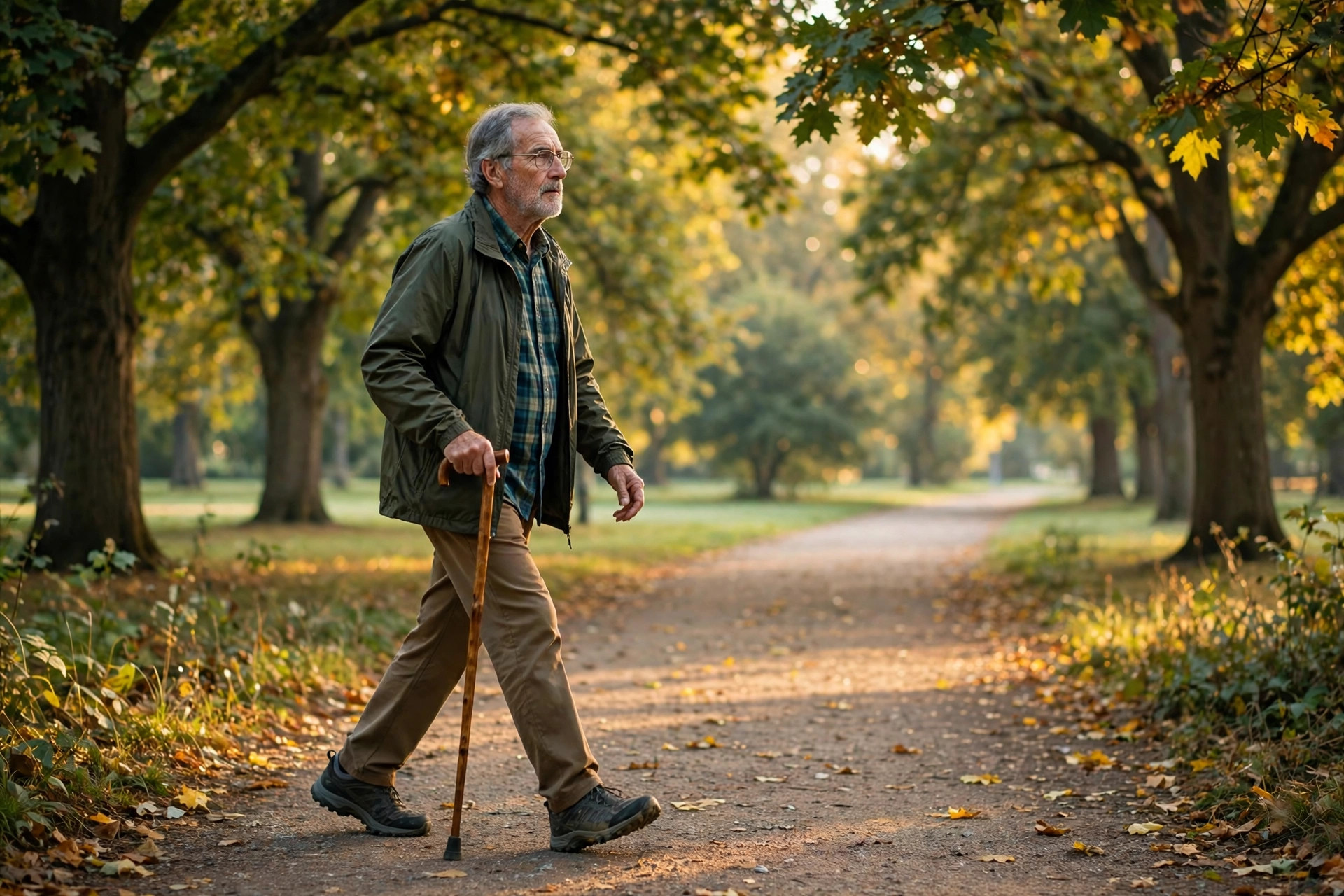
- Use a cane or walking stick on the opposite side if limping is your main problem — this can noticeably reduce joint load and help keep you active longer.
- Choose kinder surfaces and shoes. Supportive shoes and softer walking routes (park paths over concrete) reduce impact on the hip.
Ice or heat — which one?
Both help, for different problems:
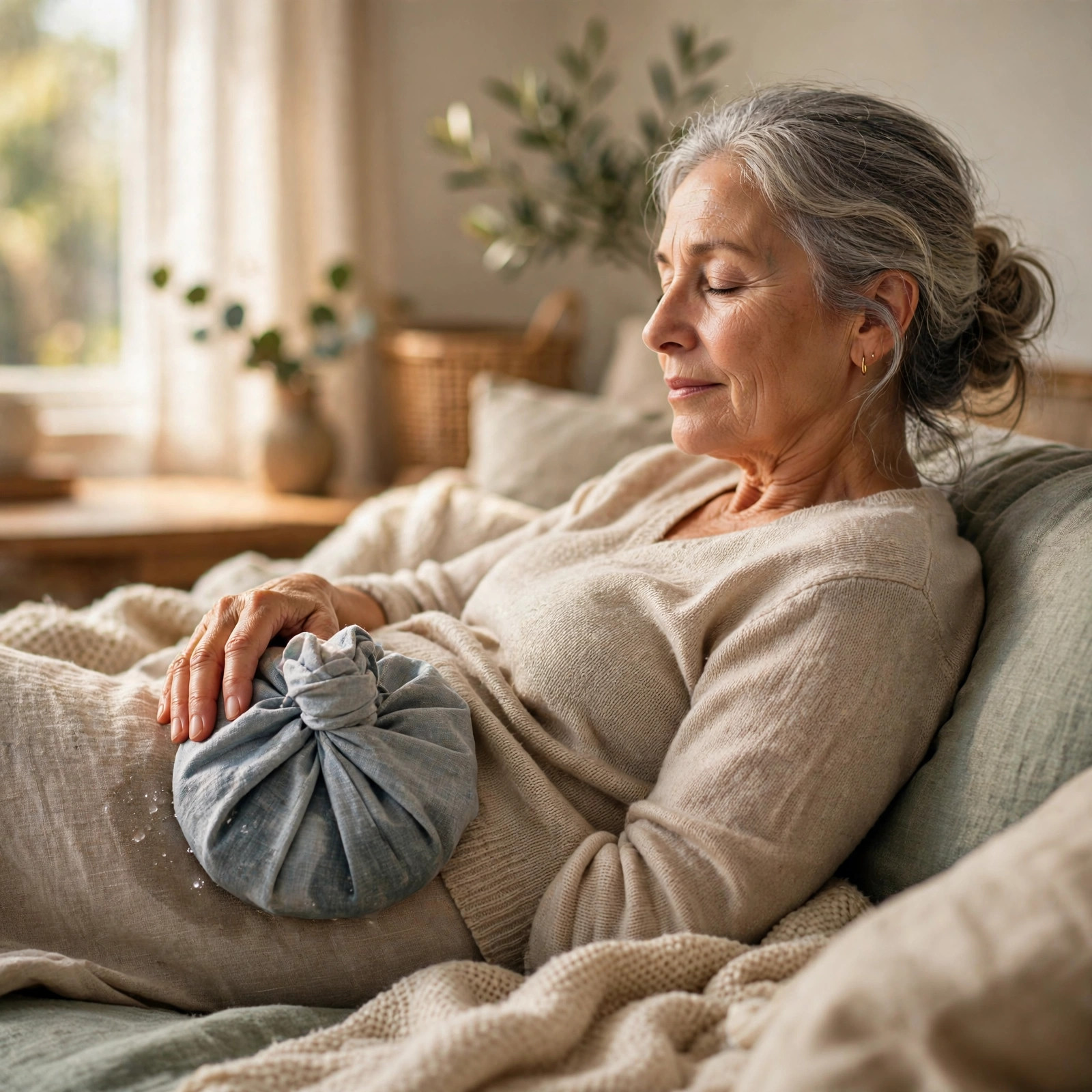
- Ice (15 minutes at a time, wrapped in a cloth) is best for bursitis and tendinitis — anywhere the pain feels hot, tender to touch, or clearly inflamed.
- Heat (a warm bath, hot pack, or heating pad) is usually better for the deep stiffness of osteoarthritis, especially in the morning.
Some people benefit from alternating. Try one for a few days and see which the hip prefers.
Gentle movement beats total rest
For osteoarthritis, regular gentle movement helps keep the joint nourished and flexible. Low-impact activities — walking, cycling, swimming, and water exercise — strengthen the muscles that support the hip without pounding it. Try these gentle moves:
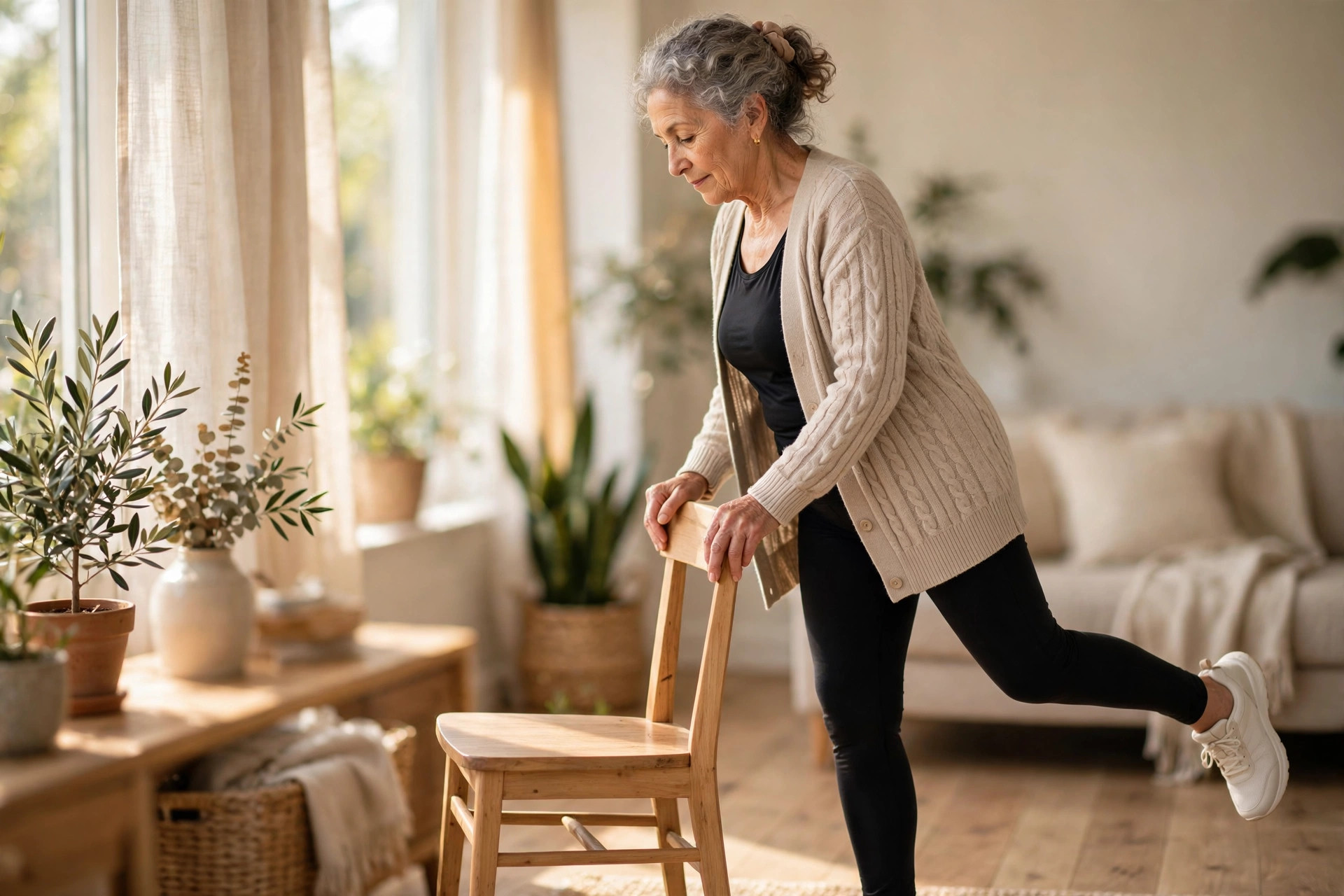
- Standing hip extension: hold a chair, lift one leg straight behind you a few inches, and slowly lower.
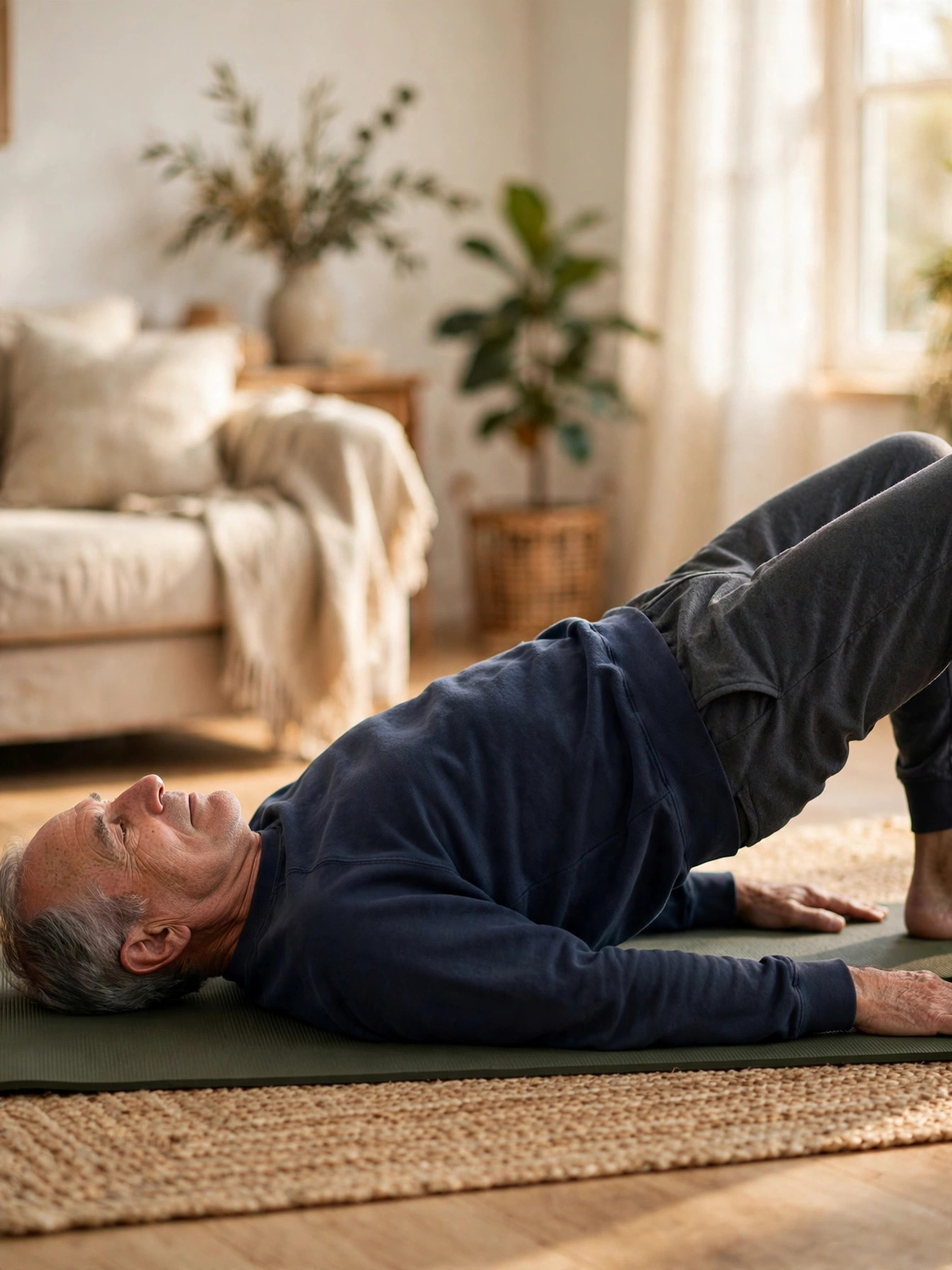
- Bridge: lie on your back, knees bent, lift the hips a few inches and hold for 5 seconds.
- Standing hip abduction: hold a chair, lift the leg sideways a few inches.
- Gentle hip flexor stretch: half-kneeling position, ease the hips forward slightly.
Start with a few repetitions once a day and build slowly. Mild discomfort during these is acceptable; sharp pain is a signal to stop.
Body weight matters — gently
Every extra kilogram you carry adds several kilograms of load to the hip joint with each step. For hip osteoarthritis especially, even modest weight loss — in the range of 5–10% of body weight — is linked to meaningful improvements in pain and function.
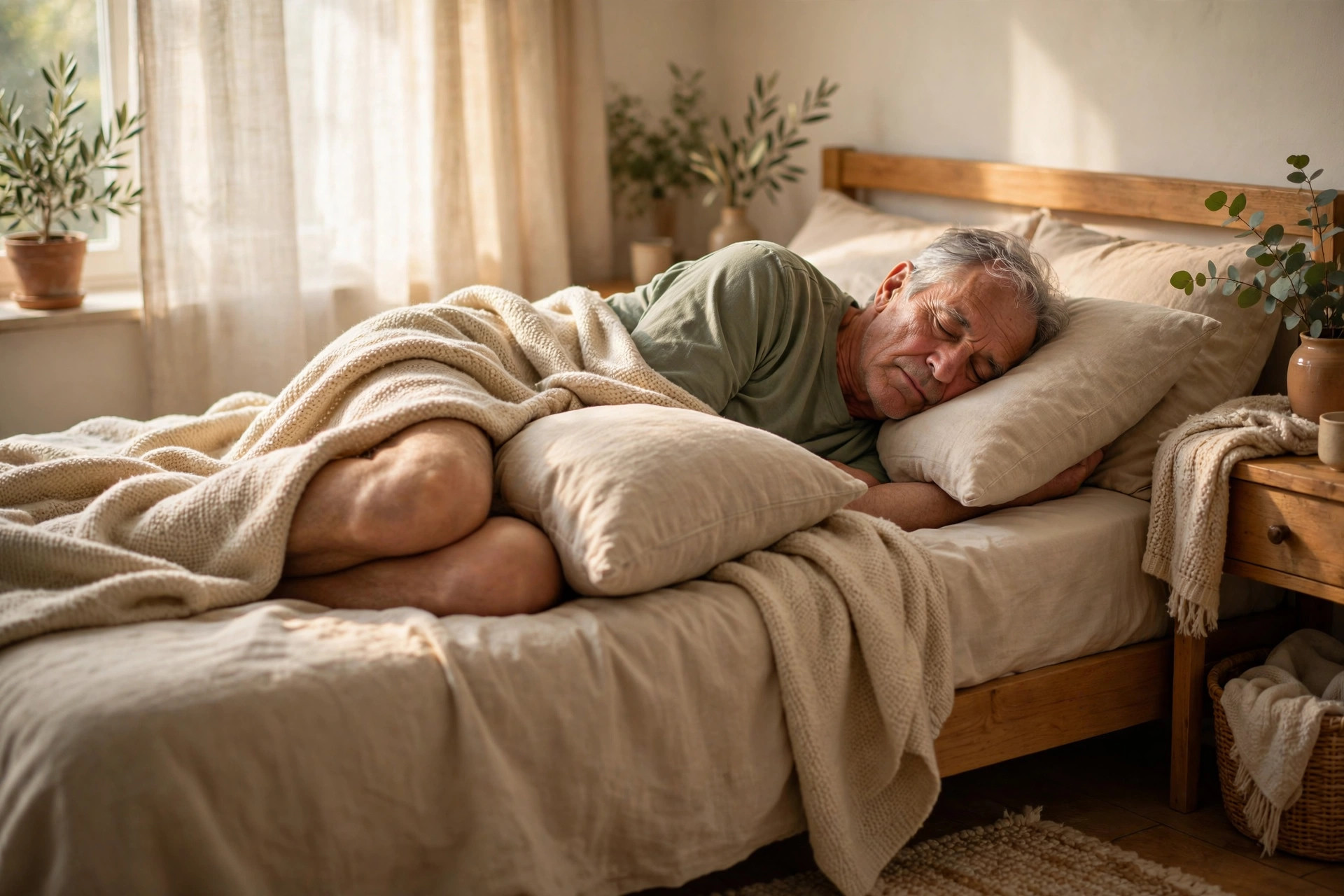
Fix your sleep position
Outer-hip pain often announces itself at night because lying on the painful side presses directly on the irritated area.
- Sleep on the other side with a pillow between your knees — this takes pressure off the painful spot and keeps the hips aligned.
- Back sleepers: a pillow under the knees can ease hip and back tension.
Over-the-counter options
Pain relievers such as acetaminophen/paracetamol or NSAIDs (for example ibuprofen or naproxen) may help short-term flares. Follow package directions, use the lowest effective dose for the shortest time, and check with your doctor or pharmacist first if you take other medications or have heart, kidney, or stomach problems.
What NOT to do
- Don’t push through sharp pain. “No pain, no gain” does not apply to aging hips. Gentle, graded activity helps; forcing through sharp or worsening pain can aggravate the problem.
- Don’t rest completely for weeks. Prolonged bed rest weakens the muscles that protect the hip and stiffens joints further. The goal is smart, modified activity — not the sofa.
- Don’t rely on heat for hot, inflamed pain. If the outer hip is red, warm, and tender, heat can make inflammation worse. Use ice there.
- Don’t self-diagnose with certainty. Home care is reasonable for mild pain that matches the descriptions above. But if the pain doesn’t fit, keeps changing character, or isn’t improving, get a professional assessment rather than guessing longer.
- Don’t ignore a fall. Hip pain that starts after a fall or heavy impact is different from gradual-onset pain — it needs medical evaluation (see red flags below).
When to see a doctor
Book an appointment if:
- Hip pain lasts more than a few weeks despite home measures
- Pain is steadily getting worse
- Limping becomes persistent, or you need a stick to walk normally
- Night pain regularly disrupts your sleep
Seek prompt or urgent care for these red flags:
- Pain after a fall or injury — a fractured hip is a real risk in older adults, even from what seems like a minor fall
- Inability to bear weight on the leg at all
- Fever along with hip pain, which can signal an infection in or around the joint
- Sudden, severe hip pain that appears out of nowhere
- A hip that looks deformed, or a leg that appears shorter or rotated after an injury
A doctor can usually clarify the cause with a physical exam and, when needed, an X-ray. Early assessment matters: many hip conditions respond best when they are addressed before months of inactivity set in.
The bottom line
Most hip pain after 50 comes down to four familiar causes: hip osteoarthritis, trochanteric bursitis, tendinitis, or pain referred from the back. Groin pain that stiffens in the morning points to arthritis; outer-hip pain that hurts to lie on points to bursitis; and pain that shifts with back positions may start at the spine. Home relief — modified activity, ice or heat, gentle movement, weight management, and better sleep positioning — helps most mild cases, while the red flags above mean it’s time to see a doctor promptly.
Sources
- National Institute on Aging, “Osteoarthritis” — https://www.nia.nih.gov/health/osteoarthritis
- Arthritis Foundation, “Hip Osteoarthritis” — https://www.arthritis.org/diseases/hip-osteoarthritis
- Mayo Clinic, “Bursitis” — https://www.mayoclinic.org/diseases-conditions/bursitis/symptoms-causes/syc-20353242
- NHS, “Hip pain” — https://www.nhs.uk/conditions/hip-pain/
- Cleveland Clinic, “Hip Pain” — https://my.clevelandclinic.org/health/symptoms/hip-pain
- Harvard Health Publishing, “What to do about that hip pain” — https://www.health.harvard.edu/pain/what-to-do-about-that-hip-pain
This article is for general information only and is not medical advice. Talk to your doctor or a qualified health professional about your personal situation.