Best Treadmills for Seniors: Walking Pads and Safe Choices
Walking is one of the simplest ways to stay active after 60: low impact, no special skill, and done at your own pace — see our guide to walking after 70 for how much is enough. But bad weather, uneven pavements, and dark evenings do not always cooperate. A home treadmill turns a rainy day into a walking day, on a flat, predictable surface, with something to hold on to.
As an Amazon Associate, we earn from qualifying purchases.
Most treadmills, though, are designed with younger runners in mind. This guide covers walking pads versus full treadmills, the safety features that matter most after 60, and how to choose a machine that fits your home and your body.
Walking pads vs. full treadmills: which one fits you?
The first decision is the type of machine — the two main options look similar, but they are built for different jobs.
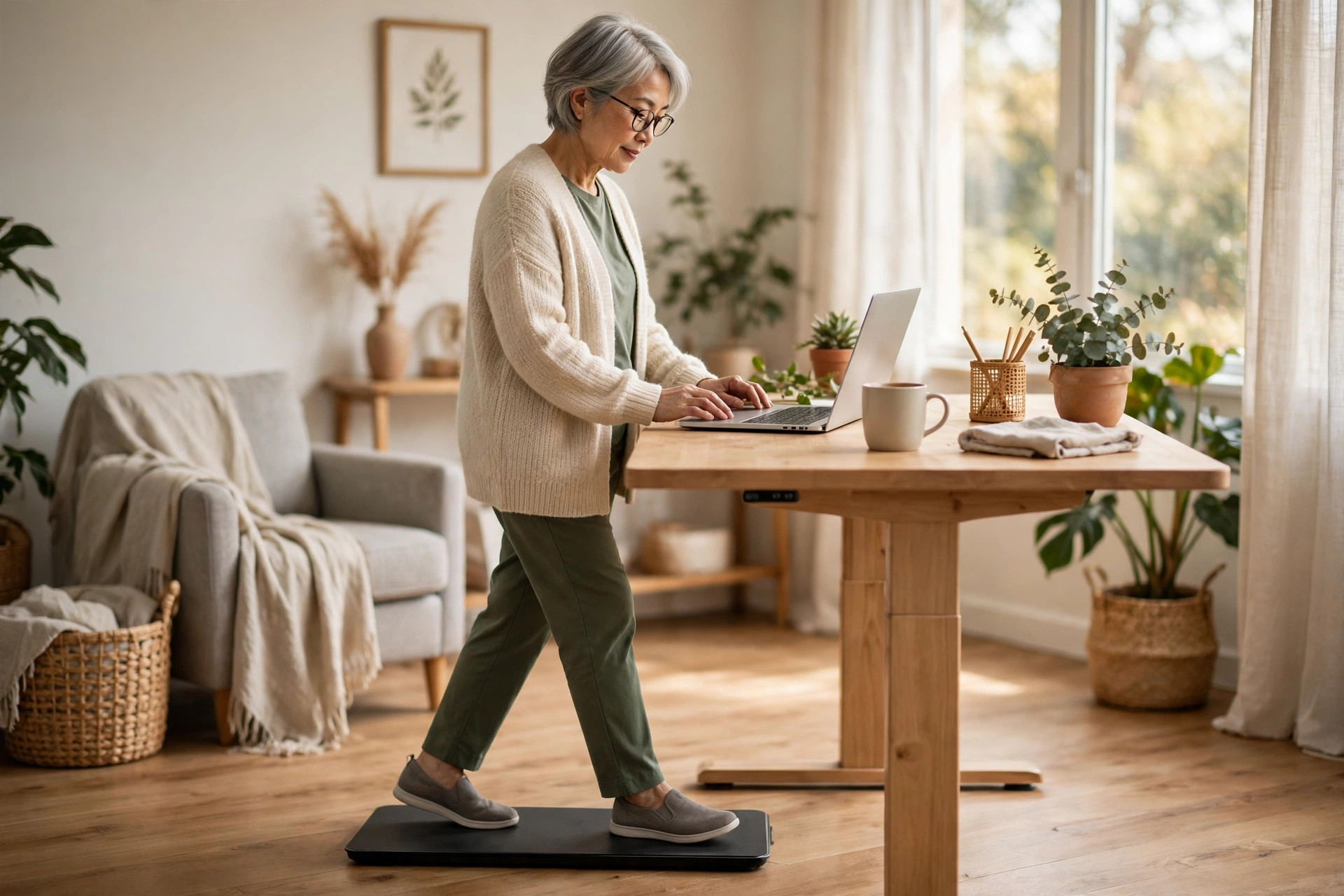
Walking pads are slim, flat machines with no console and usually no handrails, made for slow walking only and often controlled by a remote or phone app. Most slide under a bed or stand behind a door. They suit confident walkers with limited space.
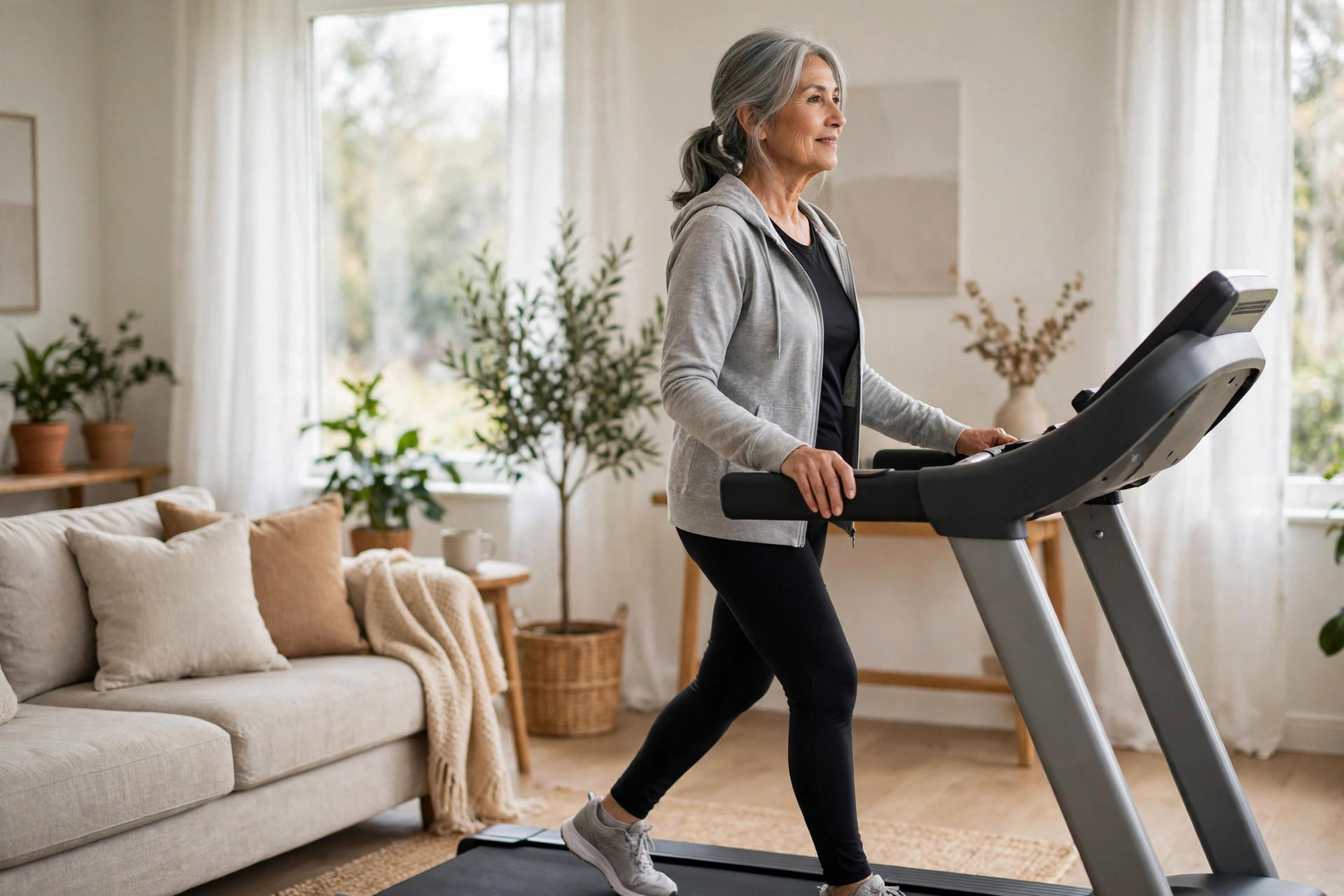
Full treadmills are the familiar upright machines with a console, side handrails, and a wider, longer belt. They take up more space and are heavier, but they offer the features that matter most for safety: rails to hold, a prominent emergency stop, and a readable display. They suit people who want support, are rebuilding confidence after a fall or inactivity, or share the machine with a partner.
| Feature | Walking pad | Full treadmill |
|---|---|---|
| Handrails | Usually none | Yes, full-length rails |
| Top speed | Slow walking only | Walking and light jogging |
| Footprint | Slim, stores under a bed | Larger, needs a dedicated spot |
| Display | Remote or app | Built-in console |
| Best for | Confident walkers | Walkers who want support |
If balance is a concern at all, a full treadmill with handrails is the safer starting point. A walking pad can be a good second step once confidence has improved. Buy for the walker you are today, not the one you hope to be in six months.

UREVO Auto Incline Walking Pad Treadmill (12% Incline)
12% auto incline under your desk – walk uphill while you work. Folds flat.
The safety features that matter most
Judge a treadmill for gentle walking by its safety features, not its top speed:
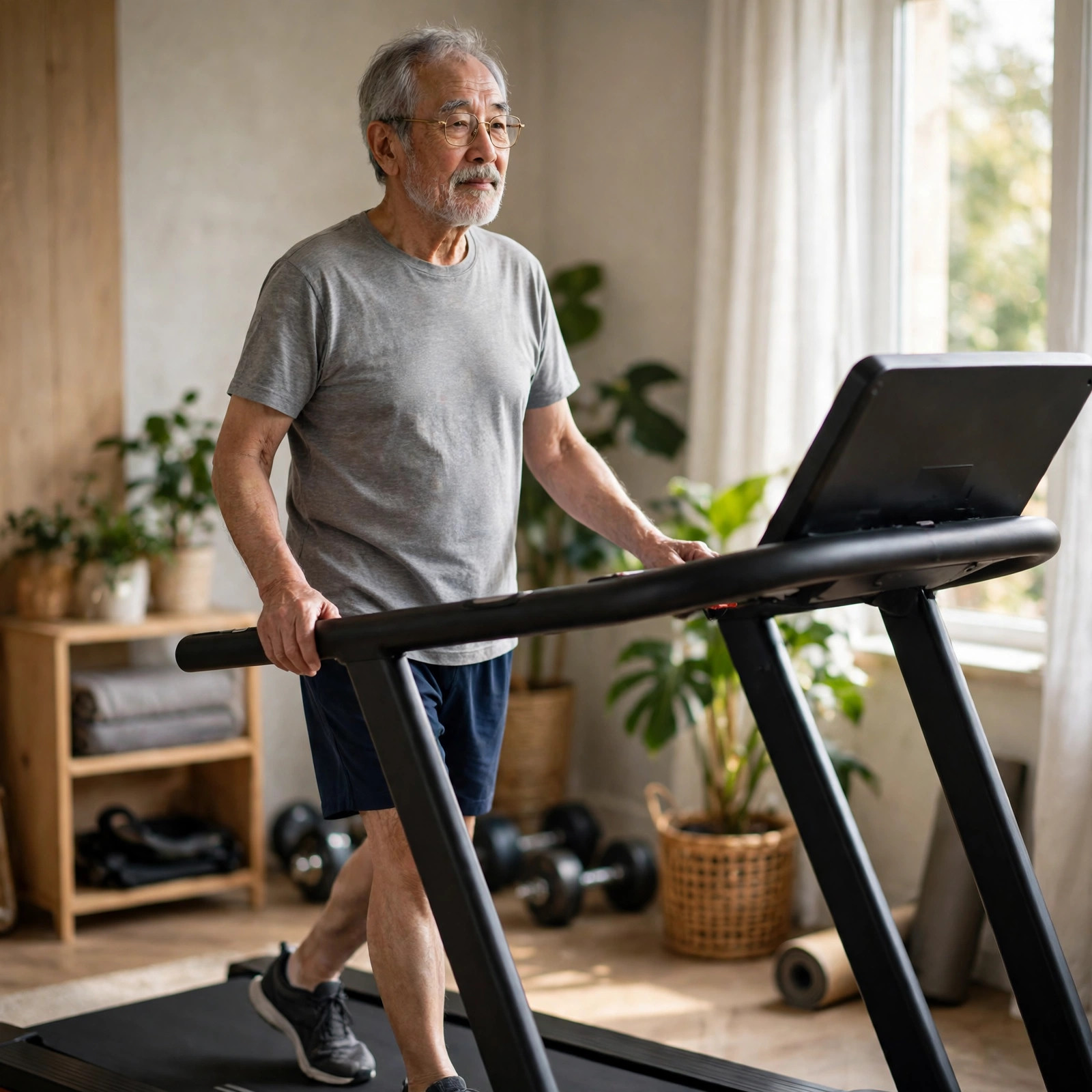
A low starting speed. The machine should start gently — many models begin at around 0.5 miles per hour — and increase in small steps. A machine that jumps straight to a brisk pace is a tripping hazard. Buttons should be large, clearly labelled, and easy to press without looking down.
Long, sturdy handrails. Handrails are the most important safety feature for older walkers. Look for rails that run the full length of the belt, feel solid, and sit at a comfortable height. Short front-only rails, or rails that wobble, are not good enough.
An emergency stop key. Every treadmill should come with a safety key — a magnetic clip on a cord that attaches to your clothing. If you stumble, the key pulls free and the belt stops at once. Test it on arrival: clip it on, start the belt, pull the key, and check the machine stops quickly. Never walk without it attached.
A wide, clearly marked belt. A wider belt gives you room to drift slightly without stepping off the edge — a margin that matters more as balance changes with age. Look for a belt around 20 inches wide, and a length that fits your stride. Belt edges should be clearly visible against the deck.
A readable display. You should be able to read speed, time, and distance at a glance, without glasses and without leaning forward. Large digits and good contrast beat a flashy touchscreen. A small or cluttered display becomes a distraction rather than a help.
A quiet, smooth motor. A motor that surges or hesitates can throw off your balance. Try it at your usual pace and listen for steady, even movement. A modest motor is enough for walking, but it should run smoothly at low speeds, where cheaper machines often struggle.
Sizing and weight capacity
A treadmill that fits your body is one you will use. Three numbers matter:
Belt length. Your stride determines the belt you need. As a rough guide, around 50 inches suits most walkers; taller people should look for more. If you can try the machine, walk at your normal pace — if you shorten your steps to stay on the belt, it is too short.
Belt width. Width is about confidence as much as comfort. A narrow belt forces you to watch your feet constantly, which is tiring and distracts from posture. A wider belt lets you walk naturally and look ahead. Around 20 inches is a good target for most people.
Weight capacity. Every machine lists a maximum user weight. Choose one rated comfortably above your weight — a margin of 20 to 30 pounds is a sensible buffer. A machine running near its limit tends to be noisier, less smooth, and wears out faster, while heavier frames are less likely to wobble.
Measure your space before you order. Allow clear space behind the machine, and room on either side to get on and off safely. A cramped corner with a wall inches from the back of the belt is a fall risk, not a home gym.
Folding and storage
If space is tight, folding matters — but designs differ.
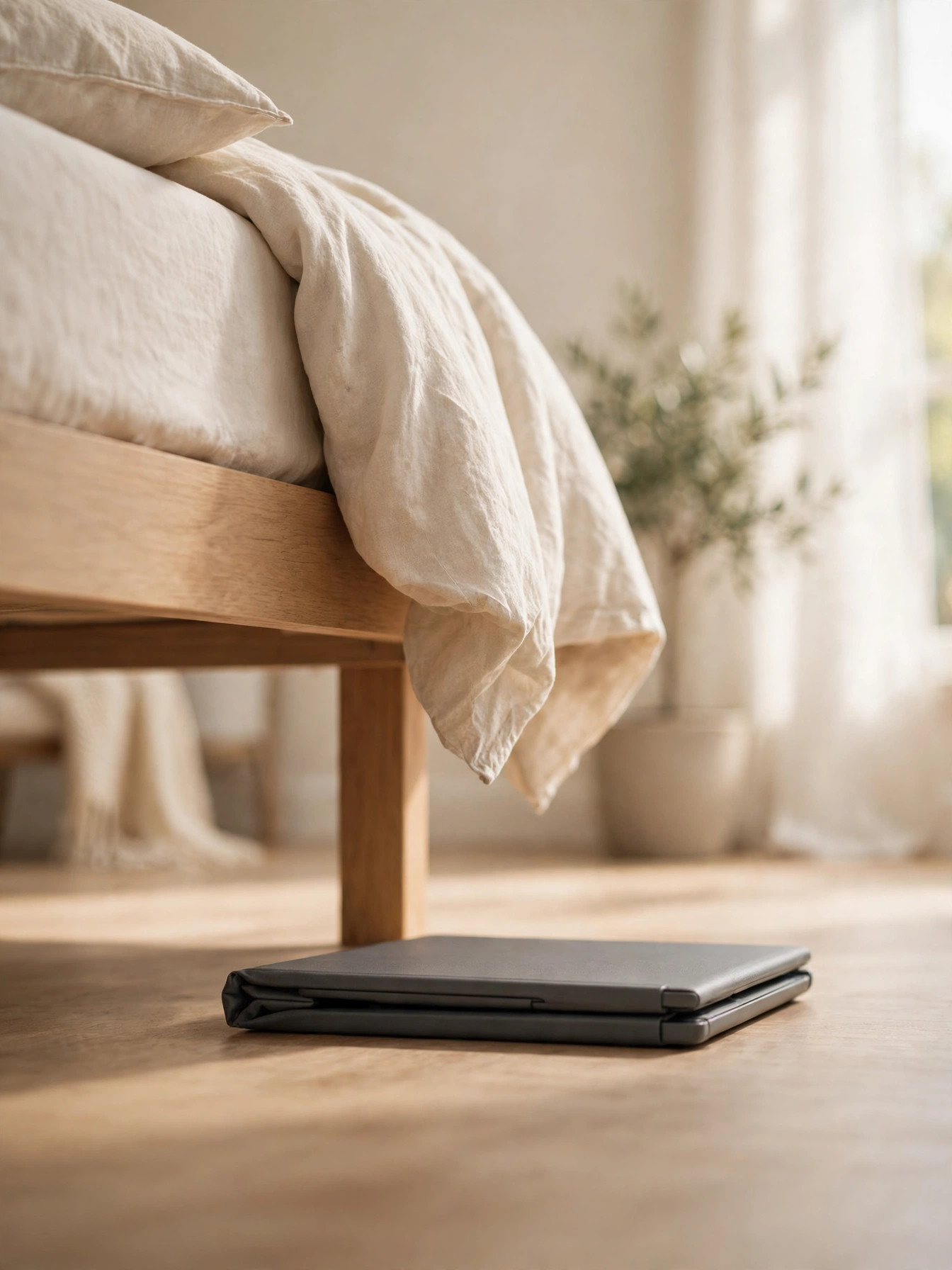
How it folds. Some fold up vertically with a hydraulic assist, so the deck lowers gently rather than dropping. Others fold flat for sliding under a bed. Check the mechanism: you should be able to fold and unfold it without straining your back or pinching your fingers.
How heavy it is to move. A folding treadmill is still heavy, often 50 pounds or more, and walking pads can be awkward to lift despite their slim shape. Transport wheels help, but test them on your own flooring — wheels that glide on a shop floor may drag on carpet. If you can leave the machine in one place, a non-folding model is often sturdier for the same money.
Where it will live. Under-bed storage works only if the machine is slim enough and the bed high enough — measure both. Upright storage needs a secure latch so the deck cannot fall forward, especially with grandchildren or pets visiting. Keep the area clear and the cord tucked away so nobody trips.
Using it safely day to day
The right machine is only half the story. The National Institute on Aging advises older adults to start slowly, warm up, and build up gradually.
Warm up first. Start at the slowest speed for a few minutes, holding the rails, until your legs feel loose and your balance settles. Only then ease up to your normal pace. Never step onto a moving belt — stand on the side rails, start the belt, then step on once it is moving slowly.
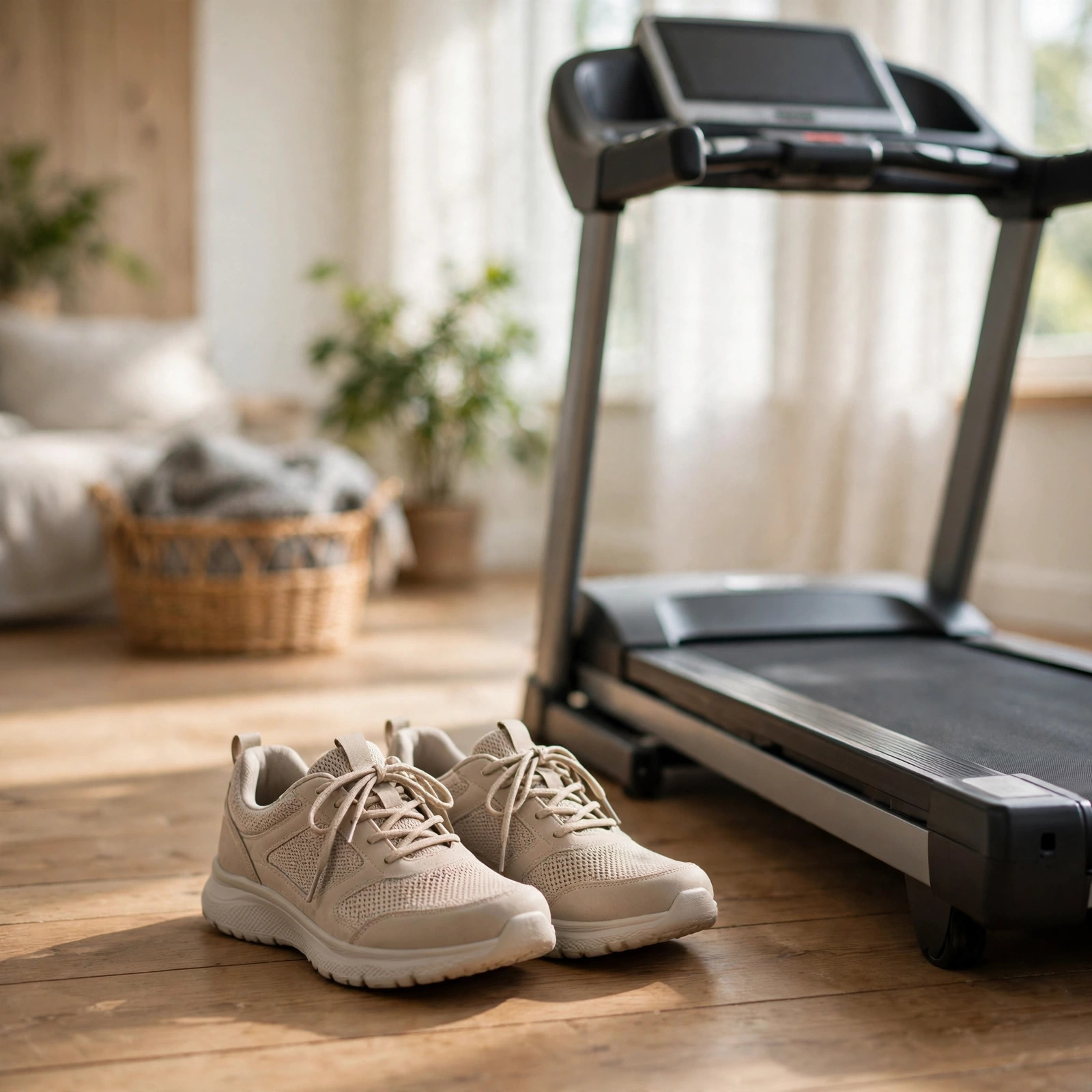
Wear proper shoes. Walk in supportive, closed-toe shoes with non-slip soles — the same shoes you would wear outdoors. Never use a treadmill in socks, slippers, or bare feet: you need grip, and loose footwear can catch on the belt. Tie laces securely and tuck them in.
Keep your posture upright. Look ahead, not down at your feet or the display. Keep your shoulders relaxed and your hands lightly on the rails, but try a natural arm swing once you feel steady. Gripping the rails tightly for a whole session can strain your shoulders and change your gait. If you cannot walk without a tight grip, slow down.
Build up gradually. New to regular walking? Start with short sessions — five or ten minutes is a fine beginning — and add a few minutes each week. The CDC advises adults to aim for at least 150 minutes of moderate-intensity aerobic activity per week, plus muscle-strengthening activities on two or more days a week. That is a target to build toward, not a starting point — our guide to how many steps per day after 60 explains how daily step counts fit in.
Stay focused. Keep the room well lit and the area clear. Avoid reading, watching videos, or reaching for objects while the belt is moving — distraction is a common cause of treadmill falls. If you like music or a podcast, use speakers or a single earbud so you can still hear the machine.
Know when to stop. Step off and rest if you feel chest pain or pressure, unusual shortness of breath, dizziness, or pain in your jaw or arm. These are warning signs to take seriously — stop the machine, sit down, and seek medical help if they do not pass quickly. The same applies to sharp new joint pain or unsteadiness that does not settle.
When to see a doctor
A treadmill is a tool for gentle exercise, not a treatment. Talk to your clinician before starting a walking program if you have a heart condition, uncontrolled high blood pressure, diabetes, severe arthritis, osteoporosis, a balance disorder, a history of falls, or recent surgery.
Seek care promptly for chest pain or pressure during exercise, fainting or near-fainting, severe shortness of breath, or pain that radiates to your arm or jaw. Also see your clinician if walking brings on new or worsening joint pain, numbness, or swelling that does not settle after rest. A clinician can help you set a safe pace and advise whether a treadmill fits you best.
The bottom line
The best treadmill for seniors is not the fastest or most expensive — it is the one you can step onto with confidence, hold on to comfortably, and store without a struggle. For most people over 60, that means a full treadmill with long handrails, a low starting speed, a working emergency stop key, and a belt wide enough to walk naturally. A walking pad can suit confident walkers in small homes, but it trades away the rails and stop key that make a treadmill safe.
Choose the machine that fits your balance, space, and stride today. Start slowly, build up a few minutes at a time, and keep the safety key clipped on every walk. The goal is not to walk fast — it is to walk tomorrow, and the day after that, too.
Sources
- Centers for Disease Control and Prevention, “Physical Activity Basics for Older Adults” — https://www.cdc.gov/physical-activity-basics/guidelines/adults.html
- National Institute on Aging, “Exercise and Physical Activity: Getting Fit for Life” — https://www.nia.nih.gov/health/exercise-and-physical-activity
- Mayo Clinic, “Walking: Trim your waistline, improve your health” — https://www.mayoclinic.org/healthy-lifestyle/fitness/in-depth/walking/art-20046261
- American Heart Association, “Walking” — https://www.heart.org/en/healthy-living/fitness/walking
- NHS, “Walking for health” — https://www.nhs.uk/live-well/exercise/running-and-aerobic-exercises/walking-for-health/
- Harvard Health Publishing, “Walking: Your steps to health” — https://www.health.harvard.edu/staying-healthy/walking-your-steps-to-health
This article is for general information only and is not medical advice. Talk to your doctor before starting a new exercise program or changing your physical activity routine.