
Best Breakfast for Blood Sugar After 60: Steady-Energy Mornings
Mornings set the tone for the whole day. After a night without food, your body is ready for fuel — and what you choose for breakfast can shape whether you feel steady and clear-headed until lunch, or tired and hungry again by mid-morning. If you are over 60, building a breakfast that supports steadier blood sugar is one of the simplest daily habits you can adopt, and it does not require fancy ingredients or complicated cooking.
This guide explains a practical formula — protein, fiber, and healthy fat — and shows how to turn it into breakfasts you will actually enjoy. It is general information only, not a personal meal plan. If you manage diabetes or take medication that affects blood sugar, talk to your doctor or a registered dietitian before changing how you eat.
Why Mornings Matter for Blood Sugar
After you wake up, your body has gone many hours without eating. Breakfast breaks that fast, and the foods you choose influence how quickly glucose enters your bloodstream and how long you stay satisfied afterward. Meals built mostly from refined carbohydrates and added sugar — think frosted cereal, white-bread toast with jam, or a large glass of juice — tend to digest quickly, which may leave you feeling hungry again soon after eating.
On the other hand, a breakfast that pairs a modest amount of slower-digesting carbohydrate with protein, fiber, and healthy fat tends to digest more gradually. Evidence suggests this combination may help you feel fuller for longer and avoid the sharp rise-and-fall pattern that leaves you reaching for a snack an hour later. That steadier feeling is the goal here — not perfection at every meal, but a pattern you can repeat most mornings.
Mornings also matter because routines are easier to keep when they are simple. A breakfast you can prepare in ten minutes, with foods you already like, is far more useful than an ideal menu you never make. Start with one or two changes, see how they feel, and build from there.
What a Steady-Energy Breakfast Looks Like

Think of a steady-energy breakfast as three building blocks on one plate:
1. Protein. Protein slows digestion and helps you feel full. Good morning sources include eggs, plain Greek yogurt, cottage cheese, tofu, or a small handful of nuts. Many older adults do not eat enough protein at breakfast, even though spreading protein across the day is linked to better muscle maintenance as we age. For more on this, see our guide to protein requirements for older adults.
2. Fiber. Fiber — especially the soluble fiber found in oats, beans, chia seeds, and fruit — slows the movement of food through the digestive system. That slower pace may help blunt the rise in blood sugar after a meal. Whole fruit is a better choice than juice here, because juice removes most of the fiber while concentrating the sugar.
3. Healthy fat. A little healthy fat — from nuts, seeds, avocado, or olive oil — adds staying power to a meal and makes it more satisfying. Fat also helps your body absorb certain nutrients from vegetables and fruit. You do not need much: a tablespoon of nut butter, a small handful of walnuts, or a quarter of an avocado is plenty.
The carbohydrate part of the meal matters too. Choose slower-digesting options when you can: steel-cut or rolled oats instead of instant flavored packets, whole-grain bread instead of white bread, and whole fruit instead of juice. Portion size counts as well — a moderate serving of carbohydrate, paired with protein and fat, usually works better than a very large serving on its own.
A useful mental check before you eat: does this breakfast have a protein, a fiber source, and a little healthy fat? If one is missing, add it. That single question can transform most breakfasts without a complete overhaul.
Example Breakfast Combinations
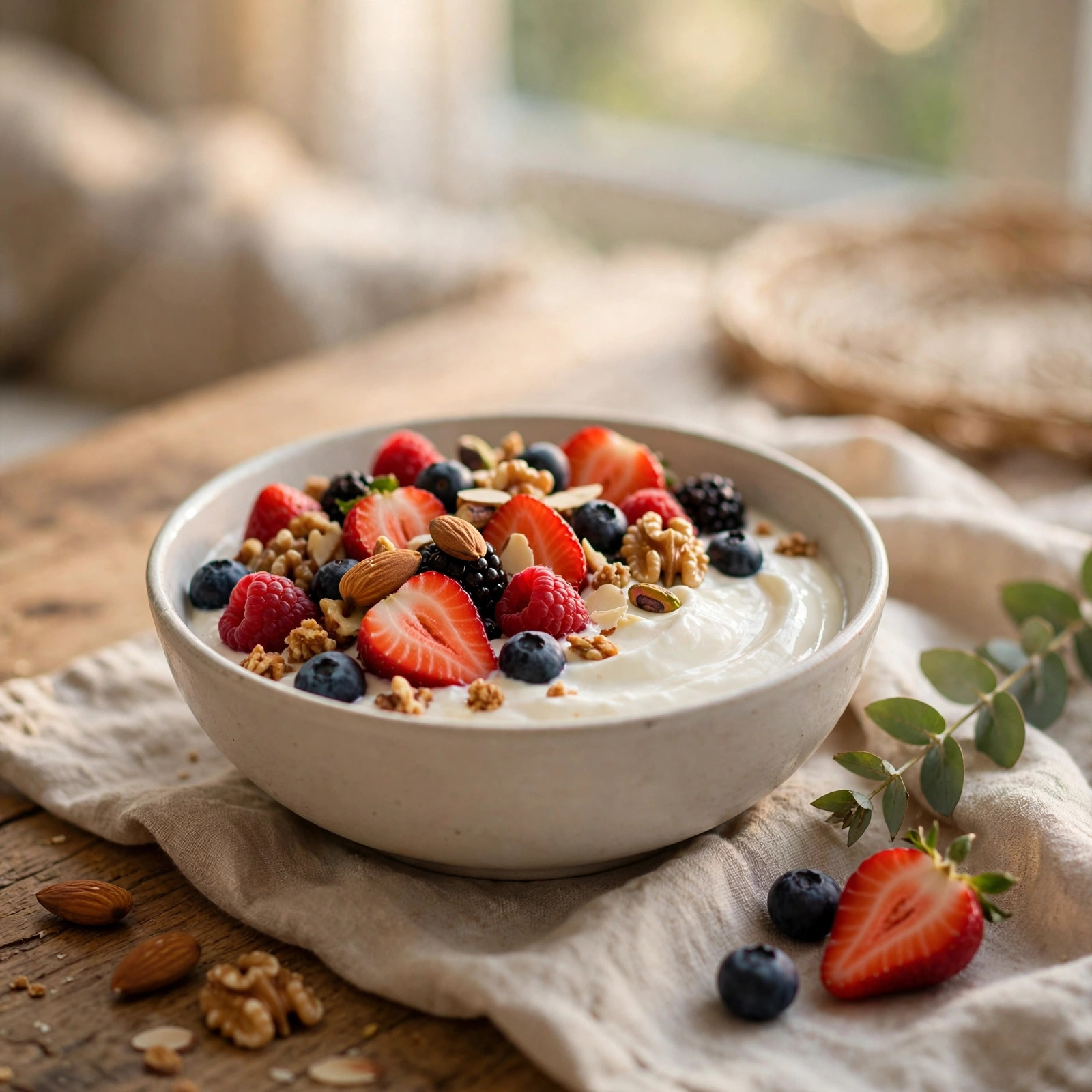
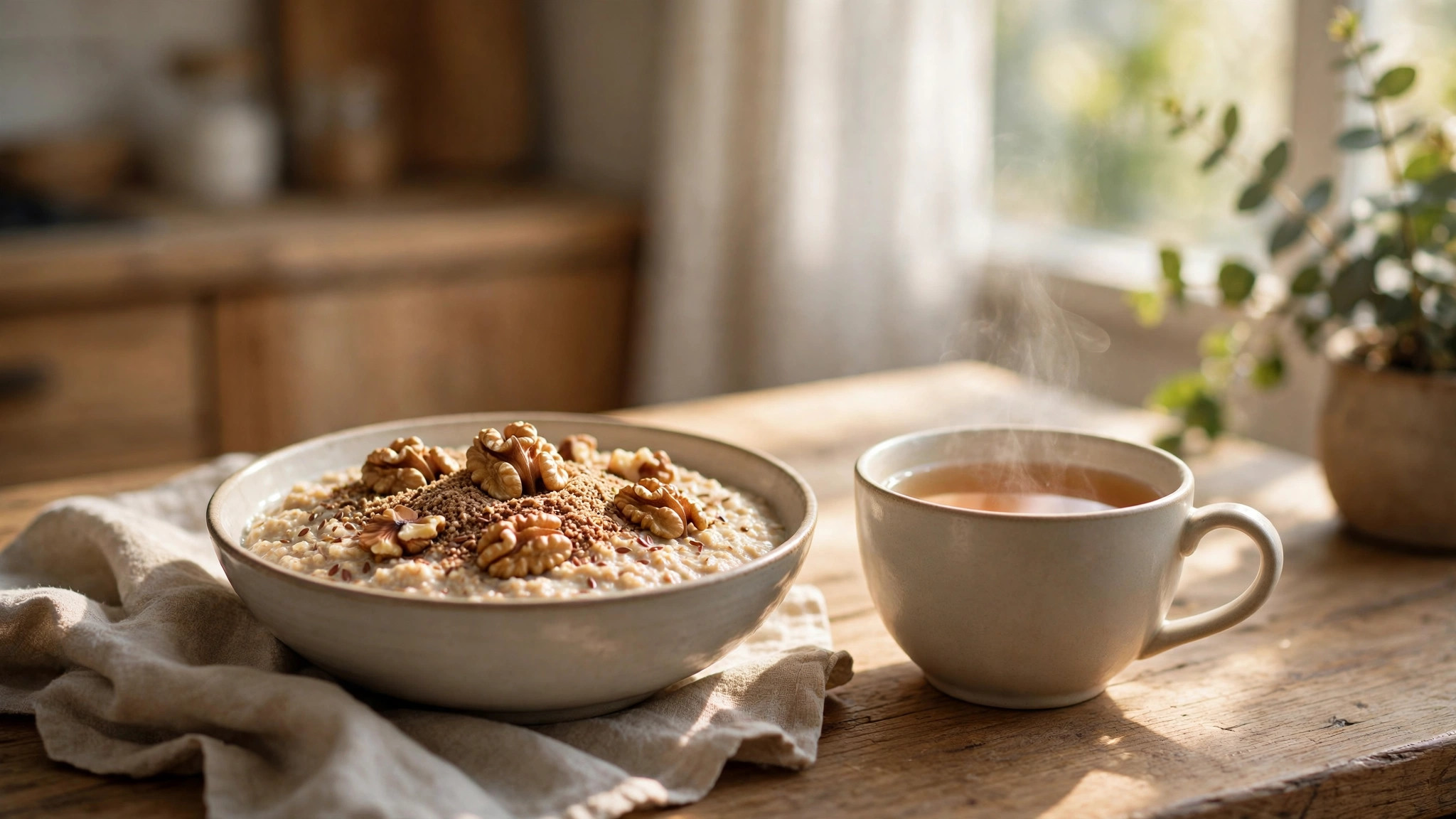
Here are five combinations that follow the protein, fiber, and healthy fat formula. Each takes ten minutes or less, and each can be adjusted to your taste, appetite, and any guidance your doctor has given you.
Oats with berries and nuts. Cooked rolled oats topped with a handful of berries, a spoonful of chia or ground flaxseed, and a small handful of chopped walnuts. The oats provide fiber, the seeds and nuts add healthy fat, and you can stir in a spoonful of plain Greek yogurt for extra protein. Choose plain oats rather than sweetened instant packets, and let the berries supply the sweetness.
Eggs with vegetables and whole-grain toast. Two eggs scrambled with spinach, mushrooms, and tomatoes, served with one slice of whole-grain toast. Eggs supply protein, vegetables add fiber and volume, and a drizzle of olive oil in the pan adds healthy fat. This savory option works well if sweet breakfasts do not appeal to you.
Greek yogurt bowl. Plain Greek yogurt with a small handful of berries, a tablespoon of almond butter, and a sprinkle of ground flaxseed. This is a good no-cook option for warm mornings or busy days. Check the label and choose plain yogurt — flavored varieties often contain a surprising amount of added sugar. If you want more on hidden sugars, read our article on how much sugar is safe after 60.
Cottage cheese with fruit and seeds. A serving of cottage cheese with sliced peaches or berries and a tablespoon of pumpkin seeds. Cottage cheese is rich in protein, fruit adds fiber, and seeds add healthy fat and crunch. This combination travels well if you eat breakfast away from home.
Avocado toast with an egg. Whole-grain toast topped with mashed avocado and a poached or boiled egg, plus a few tomato slices on the side. Avocado provides healthy fat and fiber, the egg adds protein, and the whole-grain toast supplies slower-digesting carbohydrate. For more morning inspiration with a different flavor focus, see our anti-inflammatory breakfast ideas.
Notice the pattern across all five: no single food does the work alone. It is the combination — protein plus fiber plus fat, with a moderate amount of carbohydrate — that may help you feel steady until lunch.
What to Limit at Breakfast
A few common breakfast foods are worth limiting, not because they are forbidden, but because they tend to work against steady energy:
- Sugary cereals and pastries. Frosted cereals, muffins, croissants, and sweet rolls are usually high in refined carbohydrate and added sugar with little fiber or protein to slow things down. They may taste satisfying for a few minutes and then leave you hungry again quickly.
- Fruit juice and sweetened drinks. Even unsweetened juice delivers the sugar of several pieces of fruit without the fiber. Whole fruit, water, unsweetened tea, or black coffee are steadier choices.
- Flavored instant oatmeal and sweetened yogurt. These often contain as much added sugar as a dessert. Plain oats and plain yogurt, sweetened with your own fruit, give you the same comfort with far more control.
- Very large portions of refined starch. A big bagel, a stack of pancakes, or several slices of white toast can deliver a large carbohydrate load at once. If you enjoy these foods, a smaller portion paired with protein — such as one pancake with eggs on the side — is a steadier approach.
Reading labels helps here. A quick check of added sugar and fiber on the nutrition panel can tell you a lot: lower added sugar and higher fiber usually point to the steadier choice.
Practical Tips for Steadier Mornings

Prep the night before. Overnight oats, hard-boiled eggs, and washed berries in the fridge remove the morning decision entirely. When breakfast is already waiting, you are far more likely to eat it.
Eat at a regular time. Eating breakfast at roughly the same time each day may help your appetite and energy settle into a steadier rhythm. If you are not hungry first thing, a small protein-rich snack within a couple of hours of waking is a reasonable start — talk to your doctor about timing if you take diabetes medication.
Drink water first. Many people wake up mildly dehydrated, which can feel like tiredness or hunger. A glass of water before or with breakfast is a simple habit that costs nothing.
Keep it enjoyable. The best breakfast for blood sugar is one you will actually eat. If you dislike oats, choose eggs. If you love fruit, keep it and add protein beside it. Small, sustainable changes beat dramatic overhauls that last a week.
Think beyond breakfast. A steady morning pairs well with the rest of your eating pattern. Our broader guide to eating well after 45 covers how breakfast fits into a balanced day of meals, movement, and rest.
When to See a Doctor
Most people can improve their breakfasts with the general ideas in this article. But some situations call for professional advice rather than self-guided changes:
- You have diabetes, prediabetes, or a history of low blood sugar episodes, and you want to change your meals or meal timing.
- You take insulin or other medication that affects blood sugar, and you are unsure how food or portion changes interact with your dose.
- You regularly feel shaky, sweaty, confused, or unusually tired after eating, or you notice frequent thirst and urination.
- You have kidney disease, heart disease, or another condition that affects which foods are appropriate for you.
- You have trouble swallowing, poor appetite, or unintentional weight loss that makes eating breakfast difficult.
A doctor or registered dietitian can look at your full health picture — medications, lab results, and personal preferences — and help you build a breakfast plan that fits you. Bring this article’s ideas to that conversation as a starting point, not as a substitute for it.
Sources
- National Institute of Diabetes and Digestive and Kidney Diseases (NIDDK), “Diabetes Diet, Eating, & Physical Activity”: https://www.niddk.nih.gov/health-information/diabetes/overview/diet-nutrition
- Centers for Disease Control and Prevention (CDC), “Healthy Eating” (Diabetes): https://www.cdc.gov/diabetes/healthy-eating/index.html
- Mayo Clinic, “Diabetes diet: Create your healthy-eating plan”: https://www.mayoclinic.org/diseases-conditions/diabetes/in-depth/diabetes-diet/art-20044295
- American Diabetes Association, “Food & Nutrition”: https://diabetes.org/food-nutrition
- National Health Service (NHS), “Food and keeping active” (Type 2 diabetes): https://www.nhs.uk/conditions/type-2-diabetes/food-and-keeping-active/
This article is for general information only and is not medical advice. Talk to your doctor or a registered dietitian before changing your diet, especially if you manage diabetes or take medication that affects blood sugar.