
Gout After 50: Symptoms, Diet, and Prevention
If you have ever woken up at 2 a.m. with a big toe that felt like it was on fire — swollen, red, and so tender that even the weight of a bedsheet hurt — you may have met gout. Often called the most painful form of arthritis, gout is surprisingly common in midlife and beyond: U.S. national survey data (NHANES) analyzed in Arthritis & Rheumatology estimate that about 4% of American adults — roughly 9 million people — live with gout, and the risk climbs with age.
The good news is that gout is one of the most manageable forms of arthritis. The right combination of diet habits, hydration, a healthy weight, and — when needed — medication can sharply reduce how often flares strike. What diet cannot do is cure gout. This article lays out what gout feels like after 50, why it shows up more often at this stage of life, and what the evidence actually supports.
What Gout Is — and Why It Becomes More Common After 50
Gout happens when the body has too much uric acid in the blood, a condition called hyperuricemia. Uric acid is a waste product formed when the body breaks down purines — natural substances found in your own cells and in many foods. Healthy kidneys filter uric acid out through urine. But when the body makes too much, or the kidneys clear too little, excess uric acid can form sharp, needle-like crystals that settle in joints and trigger sudden, intense inflammation.
Several age-related factors explain why gout flares become more frequent after 50, according to the National Institute of Arthritis and Musculoskeletal and Skin Diseases (NIAMS):
- Kidneys clear uric acid more slowly with age. Even healthy aging kidneys become less efficient, letting uric acid build up.
- Medications common in midlife raise uric acid. Diuretics (“water pills”) widely used for blood pressure, and even low-dose aspirin, can reduce how much uric acid the kidneys excrete.
- Body weight tends to rise. Extra weight is linked to higher uric acid production and lower clearance.
- Menopause changes the picture for women. Before menopause, estrogen helps the kidneys remove uric acid. After menopause that protection fades, and women’s gout risk rises — often with first flares appearing at 70 or later.
Gout Symptoms: What a Flare Feels Like
A classic gout attack arrives fast and without much warning. The hallmark signs, described consistently by the Mayo Clinic and the NHS, include:
- Intense, sudden joint pain — most often in the large joint of the big toe (called podagra), though ankles, knees, wrists, fingers, and elbows can be affected. Attacks frequently begin at night.
- Swelling, redness, and warmth over the joint. The skin may look red or purplish and feel hot to the touch.
- Extreme tenderness. The joint can become so sensitive that even a light sheet feels unbearable.
- Pain that peaks early, then lingers. The NHS notes that pain is often worst in the first 4 to 12 hours, then eases into a lingering ache and limited range of motion that can last days or weeks.
After 50, gout does not always follow the textbook script. In older adults, flares can involve several joints at once — particularly the small joints of the hands, wrists, and elbows — and may build more gradually with a duller, persistent ache rather than one explosive attack. Because of this, gout in seniors is sometimes mistaken for osteoarthritis or rheumatoid arthritis.
If gout goes unmanaged for years, urate crystals can form firm, painless lumps under the skin called tophi — around finger joints, elbows, or the outer ear. Tophi are a sign of chronic, uncontrolled gout and can damage joints over time. Uric acid crystals can also settle in the kidneys and form kidney stones.
One honest caveat: do not self-diagnose. The definitive test for gout is examining fluid drawn from the affected joint under a microscope for urate crystals. A blood test for uric acid helps, but levels can read normal during a flare — so a normal result does not rule gout out.
High-Purine Foods and Drinks to Be Careful With
Diet is not the whole story, but purine-rich foods and certain drinks can raise uric acid and trigger flares in susceptible people. The Mayo Clinic’s gout-diet guidance suggests being cautious with:
- Organ meats — liver, kidneys, and sweetbreads are among the highest-purine foods.
- Red meat and game — beef, lamb, pork, venison, and goose.
- Certain seafood — anchovies, sardines, herring, mussels, scallops, and tuna carry more purines than most other fish.
- Beer and spirits. Beer is a double problem: it contains purines from brewer’s yeast and alcohol slows uric acid excretion. Spirits and heavy drinking raise risk too; wine in small amounts appears less strongly linked, but moderation — or abstinence during flare-prone periods — is the safer bet.
- Sugary drinks and high-fructose corn syrup. Fructose metabolism produces uric acid as a byproduct, so sodas, sweetened juices, and energy drinks are worth limiting. Whole fruit is a different story (see below).
A useful nuance: purine-rich vegetables such as spinach, asparagus, mushrooms, and cauliflower do not appear to raise gout risk the way animal purines do. Studies have not linked them to more attacks, so there is no need to avoid vegetables out of gout fear.
Lean meats, poultry, and fish can still fit a gout-friendly diet in moderate portions. The goal is a sustainable pattern, not a joyless list of bans.
What the Evidence Suggests About Diet Help
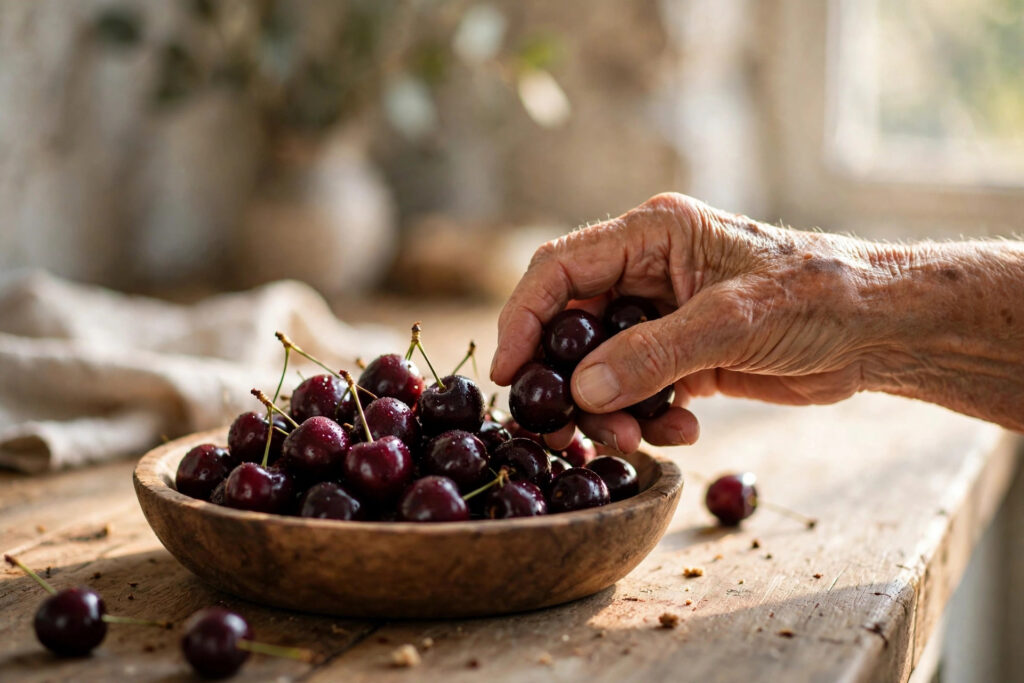
To be clear: dietary changes may help lower uric acid and reduce how often flares occur, but they do not cure gout, and many people still need medication. With that honesty in place, here is what institutional sources say is worth trying:
- Cherries. Observational research has linked cherry intake with a lower risk of gout attacks. The Arthritis Foundation lists cherries among the fruits worth including. Fresh, frozen, or tart cherry juice (without added sugar) are all reasonable options.
- Low-fat dairy. The Mayo Clinic notes that low-fat or fat-free dairy products — milk, yogurt — appear to lower the risk of gout, possibly by helping the kidneys excrete uric acid.
- Vitamin C. The Mayo Clinic reports that vitamin C may help lower uric acid levels and suggests talking to your doctor about whether a vitamin C supplement (around 500 mg) fits your diet and medication plan. Get it from whole fruit or a supplement rather than large glasses of orange juice, whose fructose can offset the benefit.
- Coffee. Some research links regular coffee drinking with lower uric acid levels — but this is an observational finding, and the effect is modest. There is no need to start drinking coffee if you don’t already.
Hydration and Weight Matter More Than Most People Think

Two of the strongest levers for gout are not on the purine list at all. Drinking enough water helps the kidneys flush uric acid, and Mayo Clinic advises people with gout to stay well hydrated — plain water is the best choice. During a flare, steady fluids matter even more.
Gradual weight loss helps too: research links excess weight with higher uric acid production, and slow, steady weight loss (not crash dieting, which can temporarily raise uric acid and trigger flares) may reduce the frequency of attacks. The Arthritis Foundation recommends aiming for a healthy weight through sustainable diet and activity changes.
Medication: Take It Daily, and Don’t Stop on Your Own

Diet alone rarely keeps gout fully quiet. For many people over 50, a daily urate-lowering medication such as allopurinol is what actually prevents flares over the long term — and adherence matters. These medicines work by keeping uric acid low consistently, but stopping them can trigger a rebound of painful flares.
Three rules worth remembering:
- Take it every day, even when you feel fine. Skipping doses or stopping during good stretches is one of the most common reasons flares return.
- Never stop abruptly without your doctor’s guidance. Medication changes during or after flares should be directed by your clinician.
- Keep your flare plan ready. Your doctor may prescribe a standby anti-inflammatory for the early hours of a flare — know what to take and when.
When to See a Doctor
New or worsening gout deserves a clinician’s attention — especially the first episode, which needs a proper diagnosis. See a doctor if:
- You have never been diagnosed with gout and develop sudden, severe joint pain — the first flare needs proper diagnosis, not guesswork
- Sudden, severe pain with fever — an infected joint is a medical emergency and can feel like gout
- Flares are becoming more frequent, lasting longer, or spreading to new joints
- You notice firm lumps under the skin (tophi) around finger joints, elbows, or ears
- You have kidney stones or kidney problems, which can accompany chronic gout
- You take medications that raise uric acid (like diuretics) and are experiencing flares — your clinician may adjust them
Do not try to ride out a first-ever gout attack at home. A clinician can confirm the diagnosis — sometimes with a joint-fluid test — prescribe fast-acting treatment, and set up a long-term plan that may include daily medication.
Sources
- Mayo Clinic — Gout diet: What’s allowed, what’s not: purine-rich foods to limit (organ meats, red meat, some seafood), cherries and low-fat dairy as helpful, vitamin C around 500 mg, coffee possibly lowering uric acid, weight loss and hydration guidance. https://www.mayoclinic.org/healthy-lifestyle/nutrition-and-healthy-eating/in-depth/gout-diet/art-20048524
- Mayo Clinic — Gout: symptoms (sudden intense pain, swelling, redness, extreme tenderness), joint-fluid test as definitive diagnosis, allopurinol as urate-lowering therapy. https://www.mayoclinic.org/diseases-conditions/gout/symptoms-causes/syc-20372897
- NHS (UK) — Gout: peak pain in the first 4 to 12 hours, lingering ache and limited motion for days to weeks, alcohol and sugary drinks as triggers, joint-fluid aspiration for diagnosis. https://www.nhs.uk/conditions/gout/
- NIAMS (NIH) — Gout: age-related factors raising uric acid (kidney efficiency, diuretics, weight, menopause). https://www.niams.nih.gov/health-topics/gout
- Arthritis Foundation — Healthy Eating for Gout: cherries among the fruits worth including, gradual weight loss recommendation, maintaining healthy weight through diet and activity. https://www.arthritis.org/health-wellness/healthy-living/nutrition/healthy-eating/healthy-eating-for-gout
- Cleveland Clinic — Gout: tophi as firm lumps from chronic uncontrolled gout; kidney stones from uric acid crystals; first flares often at 70+ in women. https://my.clevelandclinic.org/health/diseases/4755-gout
This article is for informational purposes only and is not medical advice. Talk to your clinician before making changes to your diet or medications.