

Glaucoma After 60: Silent Signs and Eye Pressure Checks
Imagine losing your side vision so slowly that you never notice — until one day you keep bumping into the doorframe. For many people over 60, that is how glaucoma announces itself: quietly, and far too late.
Glaucoma is a group of eye conditions that damage the optic nerve, which carries visual information from the eye to the brain. It is a leading cause of irreversible vision loss, often called the “silent thief of sight” because the most common form has no early symptoms. The National Eye Institute estimates about 3 million Americans ages 40 and older have glaucoma — yet only about half know they have it.
Caught early, glaucoma is usually manageable: treatment can often slow or stop further damage, though it cannot restore vision already lost. That is why the real story of glaucoma is the eye exam that finds it before you ever feel it.
What is glaucoma?
Your eye constantly makes a clear fluid called aqueous humor, which drains away through a tiny meshwork. Glaucoma develops when that fluid cannot drain properly: pressure builds up inside the eye and, over time, damages the optic nerve.
The optic nerve is made of more than a million nerve fibers, and once damaged, they do not grow back. Unlike cataracts, where surgery can often restore vision, glaucoma care is about finding it early and protecting the vision you still have.
The two main types: open-angle vs. angle-closure
Open-angle glaucoma is by far the most common form, accounting for about 90% of cases in the United States (National Eye Institute; Centers for Disease Control and Prevention). The eye’s drainage angle stays open, but the drainage meshwork gradually becomes less efficient. Fluid builds up slowly, pressure rises gradually, and the optic nerve is damaged a little at a time over years — usually with no pain and no obvious change in vision until the disease is advanced.
Angle-closure glaucoma is much less common but far more dramatic. The drainage angle becomes blocked — often suddenly — and eye pressure can rise sharply in hours. This type usually announces itself loudly, with severe eye pain, a red eye, blurred vision, halos around lights, headache, and nausea. It is a medical emergency and needs same-day care.
Why glaucoma is called the silent thief of sight

Most eye problems give you a warning. Cataracts cloud your vision; an infection hurts. Glaucoma, in its most common form, does neither. The damage begins at the edges of your visual field and creeps inward so slowly that your brain fills in the gaps, while your central vision — the part you use to read and recognize faces — often stays sharp until late in the disease.
That is why so many people are surprised by the diagnosis. They read fine and had no pain — yet an eye exam shows the optic nerve is already damaged and a meaningful part of their side vision is gone. The other eye can also compensate for a weak spot, masking the problem further.
The honest truth is that there is no reliable way to screen yourself for early glaucoma at home. Only a comprehensive eye exam can find it in time.
Signs and symptoms to watch for
Open-angle glaucoma usually has no early symptoms, so waiting for symptoms is not a plan. Still, these changes are worth noticing:
- Patchy blind spots in your side vision, often in both eyes — you may first notice them when you miss objects to your left or right
- Tunnel vision in advanced stages, as if you are looking through a narrowing tube
- Bumping into things — doorframes, furniture, or people approaching from the side
- Blurred vision or trouble with night driving that does not improve with a new glasses prescription
Symptoms of angle-closure glaucoma are different and urgent. Seek emergency care the same day if you notice:
- Sudden, severe eye pain
- A red eye with blurred vision
- Rainbow-colored halos around lights
- Headache, nausea, or vomiting along with eye pain
Who is at higher risk?
Anyone can develop glaucoma, but the risk is not spread evenly. You are at higher risk if you:
- Are over 60. Risk rises with age, and glaucoma is one of the leading causes of blindness for people over 60.
- Have a family history of glaucoma. If a parent or sibling has it, your risk is several times higher than average — some estimates put it at four to nine times higher.
- Are African American and over 40, or Hispanic or Latino and over 60. Open-angle glaucoma is three to four times more common in African Americans than in non-Hispanic whites.
- Have diabetes or high blood pressure.
- Are very nearsighted (high myopia), which is associated with open-angle glaucoma.
- Have used steroid medications long term, which may raise eye pressure in some people.
- Have had an eye injury or previous eye surgery.
If any of these apply to you, it does not mean glaucoma is inevitable — but tell your eye doctor about your family history so the exam can be tailored to your risk.
Eye-pressure checks: what they are and how often
The eye-pressure test, called tonometry, is quick, painless, and over in seconds. Your eye doctor may use a gentle puff of air, or a small probe that lightly touches the surface of your eye after numbing drops. Results are measured in millimeters of mercury (mmHg); readings of about 10 to 21 mmHg are often described as normal, though a safe pressure varies from person to person, and some people develop glaucoma even with readings in that range.
But an eye-pressure check alone is not a glaucoma test. A comprehensive dilated eye exam also looks at the optic nerve, tests your side vision, and may measure corneal thickness — that combination is what catches glaucoma early.
How often should you be checked? The American Academy of Ophthalmology recommends a comprehensive eye exam every 1 to 3 years for adults ages 55 to 64, and every 1 to 2 years for adults 65 and older, even with no symptoms. The National Eye Institute advises people at higher risk — including those with a family history, diabetes, or African American or Hispanic/Latino background — to have a comprehensive dilated eye exam every 1 to 2 years.
What happens at a glaucoma eye exam?

If you have never had a comprehensive dilated eye exam, it is simpler than it sounds. A typical visit takes about an hour, and it usually includes:
- A vision check — reading the eye chart and updating your glasses prescription if needed.
- Tonometry — the eye-pressure measurement described above.
- Dilating drops — drops that widen your pupils so the doctor can see the retina and optic nerve clearly. Your vision will be blurry and light-sensitive for a few hours, so bring sunglasses and arrange a ride home.
- An optic nerve examination — checking for the cupping or thinning that suggests glaucoma damage.
- A visual field test — you press a button each time you see a flash of light at the edge of your vision, mapping your side vision and revealing blind spots you never noticed.
None of these tests is painful. A borderline result is not a diagnosis — it is a reason to keep watching carefully.
Living with glaucoma: treatment basics
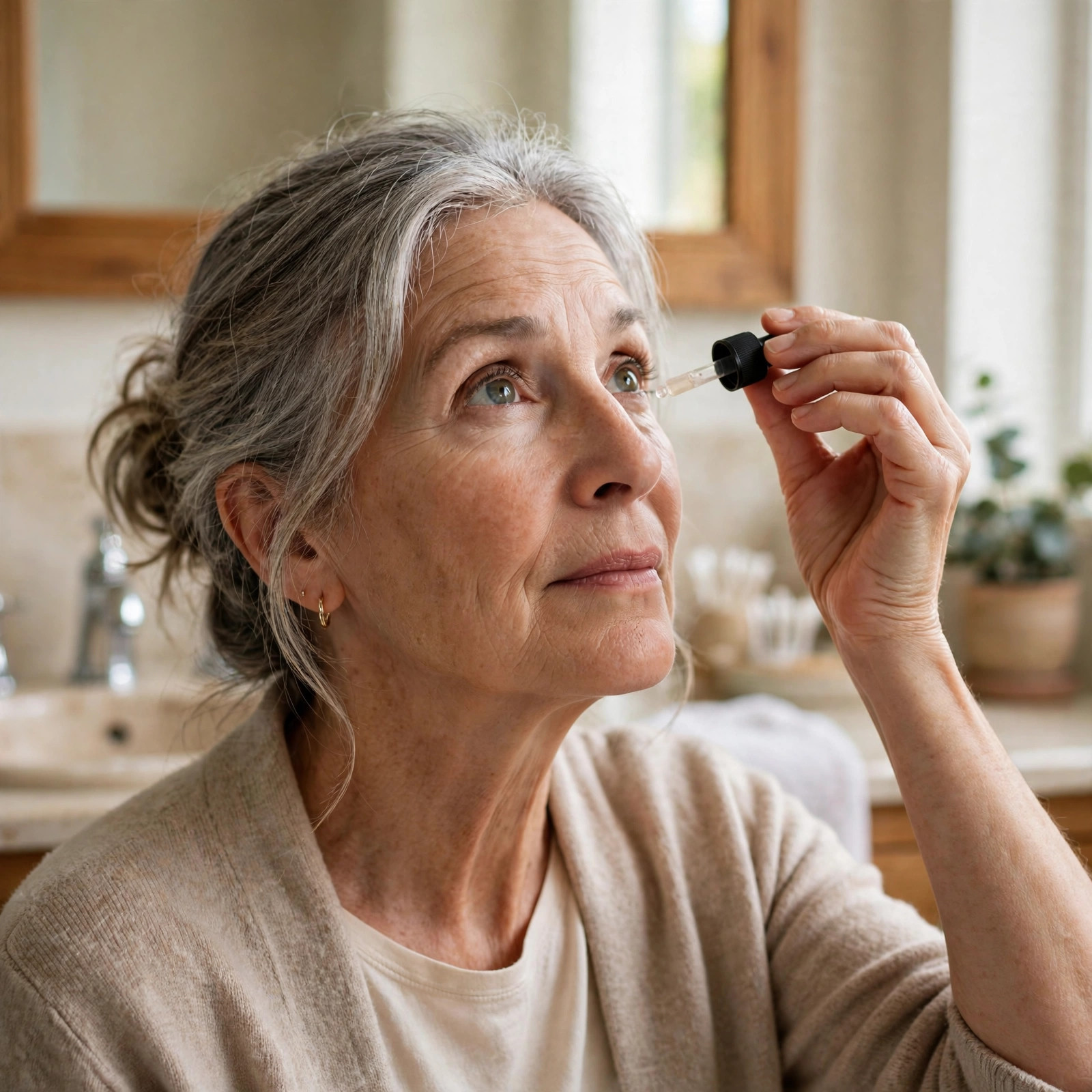
There is currently no way to restore vision lost to glaucoma. But treatment can often slow or stop further damage — and that is a meaningful goal: most people diagnosed early who follow their treatment plan keep useful vision for life.
Treatment works by lowering eye pressure to a level that is safer for your optic nerve. The main options are:
- Prescription eye drops. The most common first treatment. Some drops help fluid drain out of the eye more easily; others reduce how much fluid the eye makes. They only work if used every day, exactly as prescribed, so a daily routine helps.
- Laser treatment. For open-angle glaucoma, a laser procedure called trabeculoplasty can help fluid drain better. For angle-closure glaucoma, a laser can make a tiny opening in the iris so fluid can reach the drainage angle. Laser treatment is usually done in the office after numbing drops, and most people feel little or no pain.
- Surgery. If drops and laser do not control the pressure enough, your doctor may suggest surgery, such as a trabeculectomy (creating a small drainage opening), a tiny drainage implant, or minimally invasive glaucoma surgery (MIGS).
Everyday habits may also support eye health, though none replaces treatment: regular physical activity and protecting your eyes with glasses during sports or yard work. Never stop prescribed eye drops without talking to your eye doctor first — pressure can rise again quickly, and the damage happens silently.
When to see a doctor
Book a comprehensive eye exam soon — and mention glaucoma specifically — if you:
- Are 60 or older and have not had a dilated eye exam in the past two years
- Have a parent or sibling with glaucoma
- Have diabetes, high blood pressure, or are very nearsighted
- Notice patchy blind spots, tunnel vision, or that you keep bumping into things on one side
- Find it harder to see in dim light
Seek emergency care the same day if you develop sudden severe eye pain, a red eye with blurred vision, halos around lights, or eye pain with nausea or vomiting — fast treatment matters.
The bottom line

Glaucoma earns its nickname because it takes vision without asking permission. About 3 million Americans have it, and about half do not know. Yet the test that finds it is simple and painless, takes about an hour, and the treatments that protect your remaining vision work best when they start early.
If you are over 60, the single most useful step is also the simplest: put a comprehensive dilated eye exam on your calendar every one to two years. Your central vision may feel perfectly fine — and that is exactly why the check matters.
Sources
- National Eye Institute, “Glaucoma” (facts and figures) — https://www.nei.nih.gov/learn-about-eye-health/eye-conditions-and-diseases/glaucoma
- National Eye Institute, “Glaucoma Facts for Community Organizations” — https://www.nei.nih.gov/sites/default/files/2023-02/GlaucomaFactSheet_Community_Organizations_2015.pdf
- Centers for Disease Control and Prevention, “About Glaucoma” — https://www.cdc.gov/vision-health/about-eye-disorders/glaucoma.html
- American Academy of Ophthalmology, “Comprehensive Adult Medical Eye Evaluation PPP 2025” — https://www.aao.org/education/preferred-practice-pattern/comprehensive-adult-medical-eye-evaluation-ppp
- Mayo Clinic, “Glaucoma” — https://www.mayoclinic.org/diseases-conditions/glaucoma/symptoms-causes/syc-20372839
- Cleveland Clinic, “Glaucoma” — https://my.clevelandclinic.org/health/diseases/4212-glaucoma
This article is for general information only and is not medical advice. Talk to your doctor or an eye care professional about your personal eye health and screening schedule.