Water Aerobics After 60: Benefits, Research, and How to Start
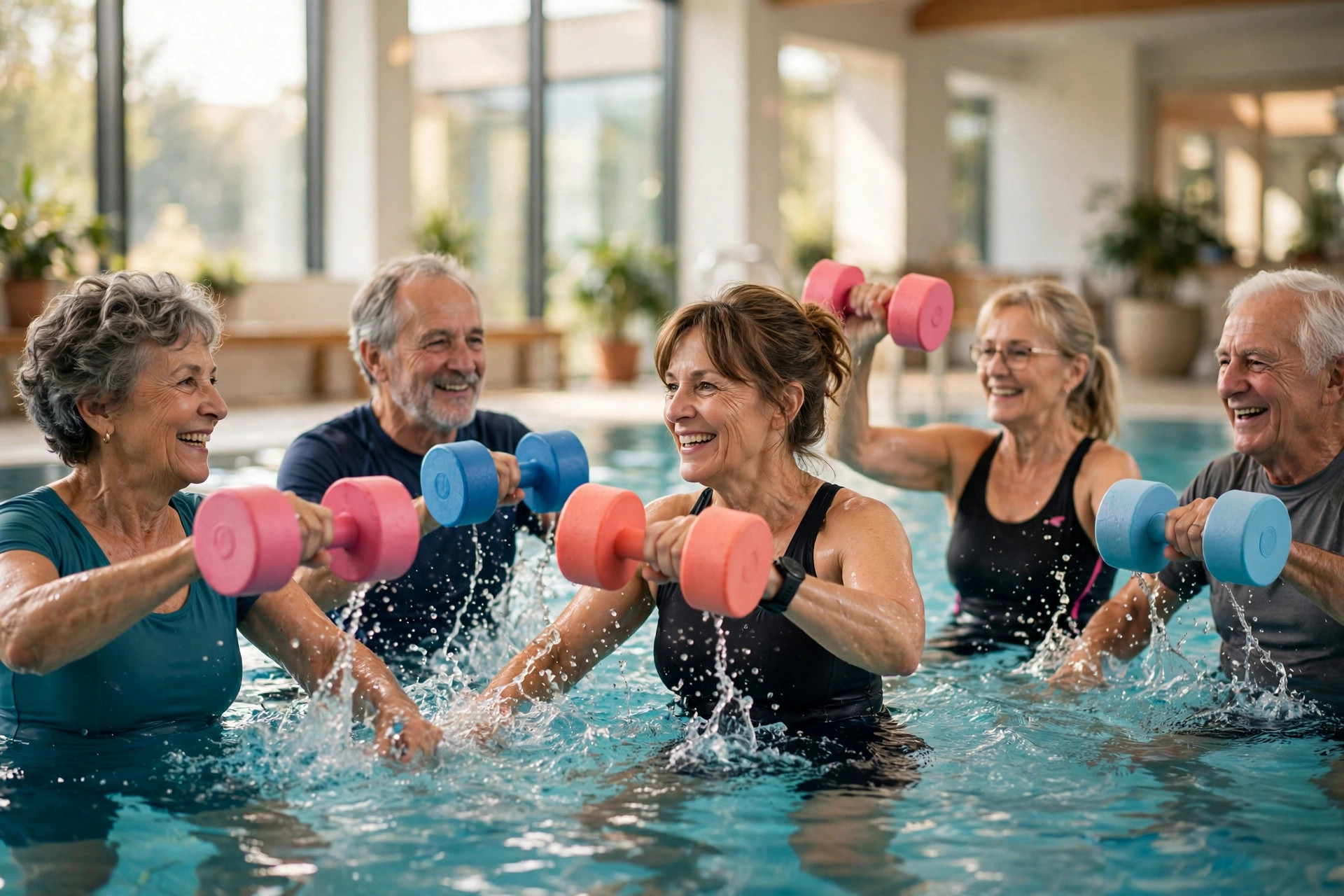
If your knees ache on the treadmill and walking the neighborhood feels harder than it used to, the pool may be the friendliest gym you’ll ever meet. Water aerobics — the group classes where adults move through choreographed exercises in waist- or chest-deep water — has quietly become one of the most popular fitness choices for people over 60. No swimming required, no pounding, no complicated machines. Just warm water, music, and a room full of people moving at their own pace.
Here’s what water aerobics is really like, what the research actually shows (honestly — including what it doesn’t), and how to start safely.
Why Water Works So Well for Aging Joints
Three physical properties of water do all the heavy lifting, literally:
- Buoyancy offloads your joints. In waist-deep water you carry roughly half your body weight; in chest-deep water, even less. That means every step, squat, and leg lift happens with far less compressive force on knees, hips, and ankles than the same move on land.
- Resistance is built in. Water resists every movement you make, in every direction. Simply walking forward, lifting a leg, or swinging your arms becomes a strength exercise — the faster you move, the harder the workout gets. No dumbbells required (though foam “water weights” can add challenge).
- Hydrostatic pressure supports the body. Water pressing evenly against your skin is linked to reduced swelling in the lower legs and may help circulation. Many people with arthritis find the gentle compression genuinely soothing.
Warmth adds a fourth advantage: arthritis-focused classes are often taught in warm water (typically 83–88°F / 28–31°C), which helps loosen stiff joints at the start of a session. It’s a small thing that makes a real difference on a cold morning.
What the Research Actually Shows (Honest Version)
Water exercise has been studied in older adults for years, with a solid body of randomized trials in people with osteoarthritis. Here’s the fair summary:
Pain and stiffness improve. A systematic review published in Healthcare (MDPI) in 2024, updated in November 2024, pooled 12 randomized controlled trials — each with 35 to 312 participants, all aged 60 or older with osteoarthritis — and found that aquatic exercise significantly improved balance, joint stiffness, pain, and walking ability compared with non-exercise control groups (p < 0.05 for all outcomes).
Pain relief holds up in meta-analysis. A separate meta-analysis (published in Retos, accepted January 2026) pooled 8 randomized trials with 423 osteoarthritis patients and found aquatic therapy significantly reduced joint stiffness (SMD −0.39, p = 0.05) and pain (SMD −0.61, p < 0.001). Range of motion and physical function improved in the right direction but did not reach statistical significance — an honest caveat worth knowing.
Balance and walking get better, too. A 2025 randomized trial in older women with knee osteoarthritis found that eight weeks of aquatic therapy improved knee proprioception (the body’s sense of joint position) and gait speed. The authors described it as “a safe and effective intervention” for people who can’t tolerate high-impact land exercise.
Strength and body composition improve with regular practice. A 2025 review of Brazilian older-adult exercise data found consistent improvements in body composition, muscle strength, and balance from water aerobics and resistance training. One study in the review (Vieira et al., 2025) even found that prolonged water aerobics increased handgrip strength in older women — a nice bonus, since grip strength is linked to overall health in later life.
The honest caveat: water isn’t proven better than land exercise. In that 12-trial review, when aquatic exercise was compared head-to-head with land-based exercise, only one study found significant differences. So water exercise is not proven superior — but its comfort, feasibility, and high adherence make it, in the reviewers’ words, “a recommendable option for older people with OA.” Put plainly: it works because people actually keep doing it, not because it outperforms other exercise.
What a Class Is Really Like
Forget the image of Olympic swimmers. A typical class runs 45 to 60 minutes in chest-deep warm water, with 15 or so participants following an instructor — who often demonstrates from the pool deck or right in the water with you. A standard session follows a predictable rhythm:
- Warm-up (5–10 minutes): gentle water walking, arm circles, and range-of-motion moves to loosen joints.
- Cardio segment (20–30 minutes): water walking, jogging in place, knee lifts, side steps, and choreographed routines set to upbeat music.
- Resistance segment (10–15 minutes): foam dumbbells, pool noodles, or kickboards for arms, legs, and core — or simply pushing harder against the water’s resistance.
- Cool-down (5–10 minutes): slower movements and gentle stretches, often holding the pool wall.
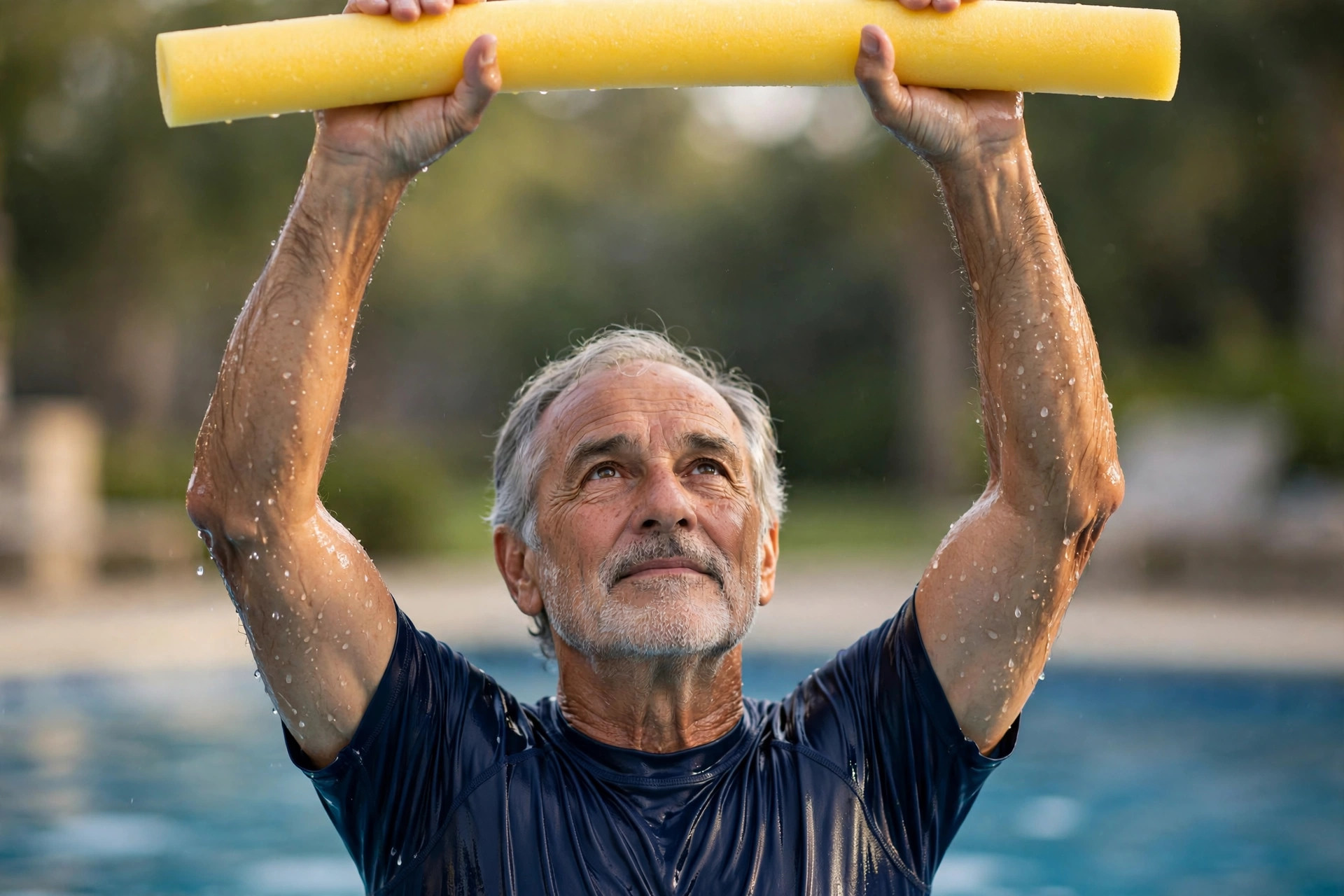
Here’s what surprises many newcomers: you do not need to know how to swim. Classes take place standing in shallow water, and flotation belts or foam noodles are common for anyone who wants extra support. You set your own intensity — do bigger movements or move faster for more challenge, or stay gentle on days your joints are cranky. Nobody is watching your form the way they might in a land class, and the water hides a multitude of sins, which first-timers tend to appreciate.

Many communities also offer arthritis-specific aquatic programs (the Arthritis Foundation’s aquatic programs are a well-known example) that keep water warm and routines deliberately low-impact — a good entry point if joint pain is your main concern.
How to Start (and What to Bring)
Find a class. Check your local YMCA, community center, public pool, or gym with a heated pool. Many offer “senior,” “arthritis-friendly,” or “low-impact” sessions. Some Medicare Advantage fitness benefits (like SilverSneakers) include access to participating pools, which can make classes free or cheap.
Start with one or two sessions per week, then build up. The CDC recommends at least 150 minutes of moderate aerobic activity per week for adults 65 and older, and water aerobics counts fully toward that goal.
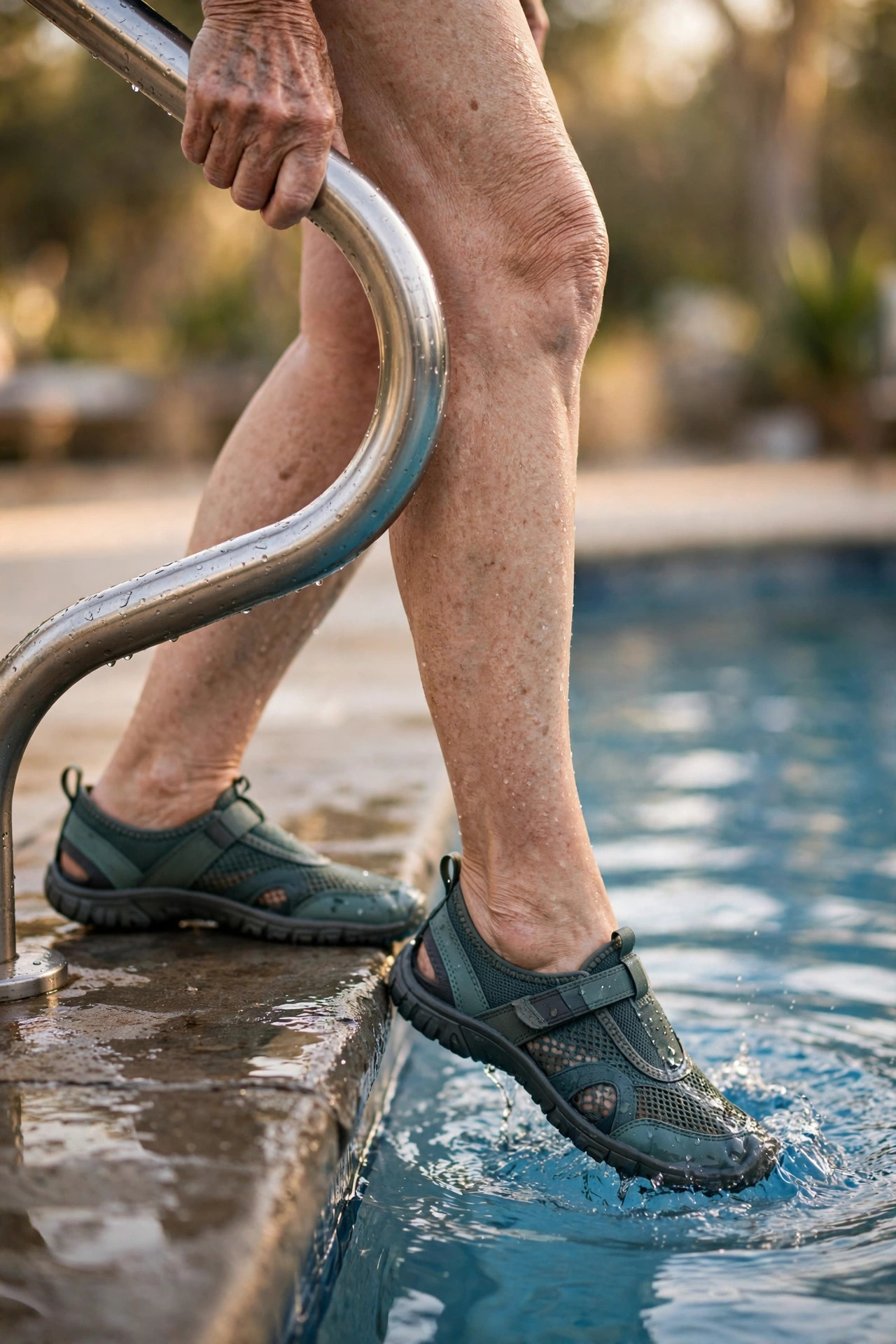
Bring the basics: a swimsuit, a towel, water shoes or aqua socks (pool decks get slippery), and a water bottle. You still sweat in the pool, and hydration matters. Many pools supply the foam dumbbells and noodles, but you can buy your own once you’re hooked.
Talk to the instructor before your first class. Tell them about your joints, your balance, and any surgery history. A good instructor will show you modifications — smaller steps, shallower water, an arm instead of a leg move — and point you to the pool’s entry ladder or ramp.
Safety Caveats Worth Knowing
Water exercise is gentle, but the pool environment has its own rules:
- Wet decks are slippery. Wear water shoes and use handrails on ladders and ramps.
- Chlorine sensitivity is real. If you react to pool chemicals, ask whether the facility has saltwater or ozone-treated options. Shower before and after every session — it protects your skin and the pool’s water chemistry.
- Open wounds, catheters, or uncontrolled incontinence are reasons to check with your clinician before joining a group class — most facilities have policies about these, too.
- Don’t go alone if your balance is poor. A friend, or an instructor who knows your situation, is smart insurance.
- Clear it with your doctor first if you have a heart condition, severe osteoporosis, or recent surgery before starting any new exercise program — water aerobics included. The exertion may feel easy, but it’s real exercise.
When to See a Doctor
Water aerobics is one of the safest exercise options available, but see your doctor or clinician if:
- You experience chest pain, unusual shortness of breath, or dizziness during or after a class.
- A joint swells significantly or your pain worsens in the days after exercise instead of easing.
- You have an uncontrolled heart condition, uncontrolled high blood pressure, or are recovering from recent surgery — get clearance before starting.
- You have open wounds, a catheter, or incontinence issues you haven’t discussed with your clinician.
- You take blood thinners or medications that affect blood pressure or heart rate and aren’t sure how exercise changes the picture.
Water exercise manages comfort and function — it does not treat arthritis. Keep your medical treatment and checkups on their usual schedule.
Sources
- Waller B, et al. (2024, updated Nov 2024). Effects of aquatic exercise on osteoarthritis symptoms in older adults: systematic review of 12 RCTs. Healthcare (MDPI). https://www.mdpi.com/2308-3417/10/1/12
- Retos (accepted Jan 2026). Meta-analysis of 8 RCTs (423 OA patients) on aquatic therapy for joint stiffness and pain.
- Brieflands / Middle East Journal of Rehabilitation and Health Studies (2025). Eight-week aquatic therapy for knee proprioception and gait speed in older women with knee osteoarthritis. https://brieflands.com/articles/mejrh-157053.pdf
- Research, Society and Development, v. 14, n. 10 (2025). Water aerobics, body composition, muscle strength, and balance in older adults. https://www.rsdjournal.org/rsd/article/download/49672/39003
- CDC. Physical activity guidelines for adults 65 and older (150 minutes/week moderate aerobic activity plus muscle-strengthening). https://www.cdc.gov/physicalactivity/basics/older_adults/
- Arthritis Foundation. Aquatic programs for arthritis. https://www.arthritis.org/health-wellness/exercise/other-exercises/walking/walking-for-arthritis
This article is for general information and is not medical advice. Talk to your own doctor or a qualified health professional before starting a new exercise program or changing how you manage a health condition.