Best Yoga Mats for Seniors: Thickness, Grip, and Fall-Safety
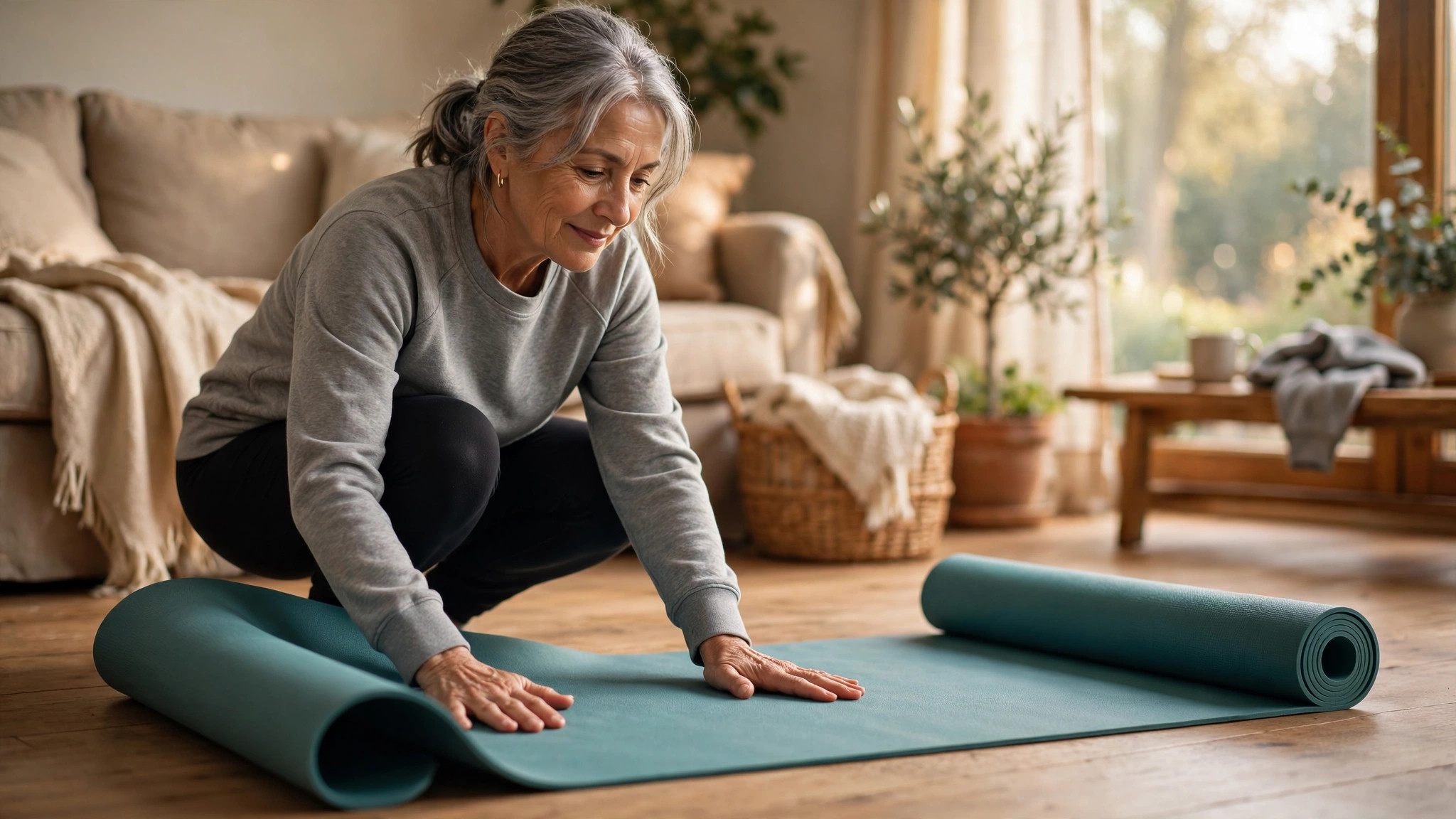
Starting yoga after 45 is one of the smartest moves you can make for your joints, balance, and mood — and the mat you practice on matters more than most beginners expect. Too thin, and your knees will ache after the first session. Too soft and squishy, and your ankles may wobble during standing poses.
This guide walks you through exactly what to look for in a yoga mat if you’re a beginner in your 50s, 60s, or beyond: the right thickness, why density matters more than thickness alone, how grip and size affect safety, and the one fall-safety truth no mat manufacturer will tell you.
For a gentle introduction to the poses themselves, see our Yoga for Seniors: A Gentle Beginner Guide.
What makes a mat “senior-friendly”
A good mat for an older beginner is not simply a thicker version of a standard studio mat. It is a small comfort system with five parts that need to work together.
Thickness. Standard yoga mats run 3–4 mm (about 1/8 inch), and manufacturers describe this as the “Goldilocks” range — enough cushion for most joints while staying firm enough for balance work (Hugger Mugger thickness guide). Thicker mats of 5–6 mm (about 1/4 inch) are commonly recommended for senior practitioners and people with joint sensitivity, because they cushion knees and the spine during floor work. Keep in mind that thickness is only the first half of the story.
Density. This is the rule most shoppers miss, and it is arguably the most important one for older adults: prioritize density over pure thickness. A dense, firm 6 mm mat can support standing balance poses far better than a soft, squishy foam pad an inch thick — the soft pad lets ankles sink and wobble, which is uncomfortable at best and a genuine fall hazard at worst. If you press your thumb into a mat and it barely springs back, it is probably too soft for standing work, no matter how thick it is.
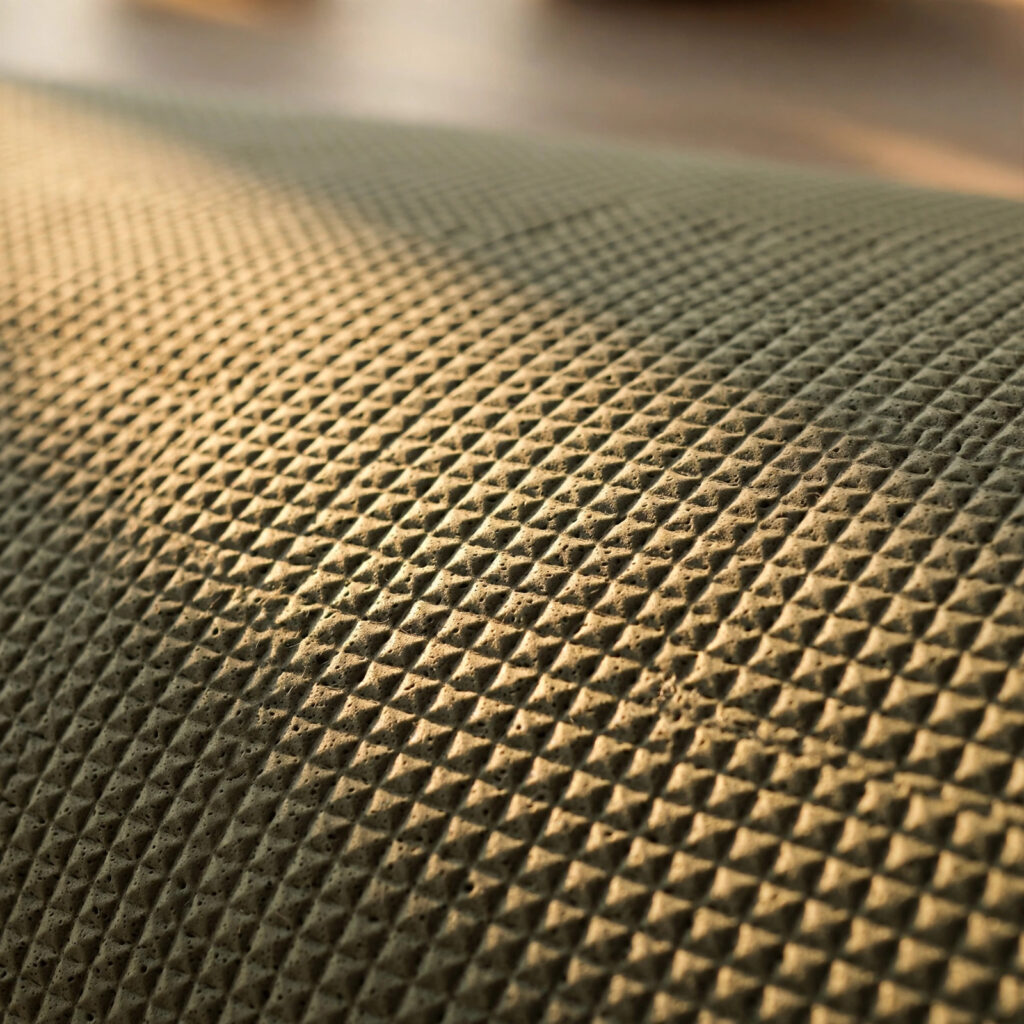
Grip. Look for texture on both sides. The top surface keeps hands and feet from sliding during poses, and a non-slip underside keeps the whole mat anchored on slick hardwood or tile — the two most common home practice surfaces.
Size. Standard mats are about 68 inches long and 24 inches wide. If you are tall or like extra room when lying back, look for an extra-long or extra-wide option.
Weight and portability. Thicker, denser mats are heavier — typically 3 to 5 pounds for a standard 6 mm mat, and more for very dense models. If you will practice only at home, weight hardly matters. If you plan to carry your mat to a class, a lighter mat (or one with a carry strap) is worth the trade-off.
The thickness-vs-stability trade-off (what the evidence suggests)
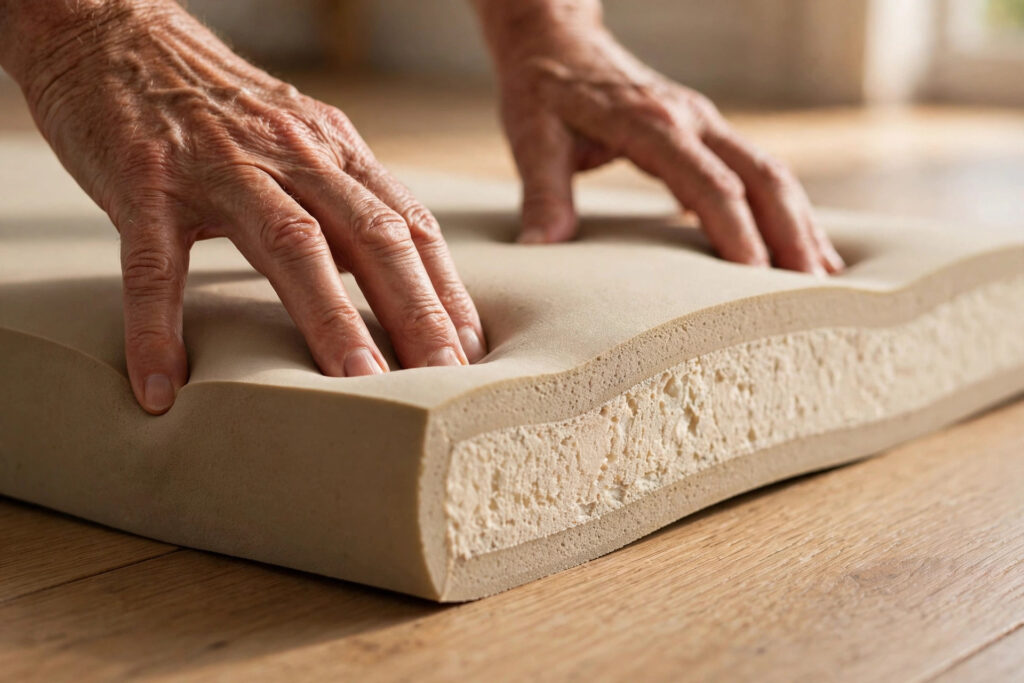
Here is the central tension of mat shopping for older adults: the cushioning that protects your joints can also undermine your balance. Understanding the trade-off helps you land in the sweet spot.
On one side, cushioning genuinely helps. Industry guidance points 5–6 mm mats at restorative practice, senior practitioners, and people with joint sensitivity, noting superior cushioning for knees and the spine (Hugger Mugger). During long-held floor poses, a thin mat on a hard floor can make joints ache enough that you cut the session short. A thicker, denser mat may help you stay comfortable and practice longer, which is where the real benefit of yoga comes from: consistency.
On the other side, thickness without density costs you stability. The same industry guidance cautions that 5–6 mm mats are heavier and can feel slightly less stable during standing balance poses. The senior-specific rule is sharper: very thick soft mats can raise fall risk during standing poses, because the ankle never finds a firm platform. This is not a theoretical concern for adults over 60 — it is the exact age group for whom falls carry the highest consequences.
The practical answer for most older beginners is a dense 5–6 mm mat: firm enough to stand on confidently, thick enough to kneel on comfortably. A small dedicated knee pad helps on days when even a good mat is not quite enough cushion.
The fall-safety truth about yoga mats
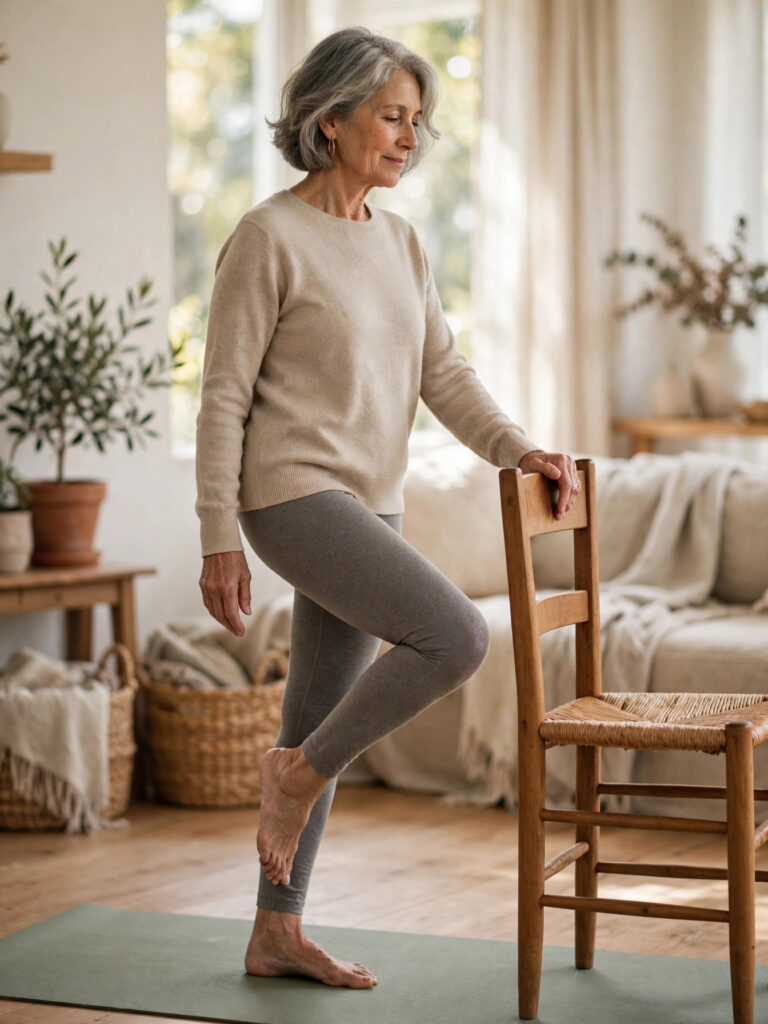
Let us be blunt: a yoga mat is comfort equipment, not safety equipment. It does not prevent falls, and it does not treat joint disease.
This point matters because the research on yoga and falls in older adults carries a real caution. In the SAGE trial (The Lancet Healthy Longevity, 2025), a standing-posture-emphasized yoga program produced about a third more falls over 12 months than a seated relaxation control among adults 60 and over (injurious falls did not differ). The lesson is not that yoga is dangerous — it is that how you practice matters enormously. A wobbly soft mat under a standing balance pose is the wrong combination; a dense, grippy mat paired with a sturdy chair for support is the right one.
So pair your mat with these fall-safety habits:
- Use chair support for standing poses. Keep a sturdy, non-wheeled chair within arm’s reach, exactly as shown in our Chair Exercises for Seniors: A 15-Minute Daily Routine.
- Anchor the mat on hard floors. A double-sided non-slip mat, or a mat placed on carpet rather than slick tile, reduces the chance of the mat sliding out from under you.
- Learn from a qualified instructor — ideally one experienced with older adults — before practicing balance poses on your own.
- Build balance separately. Dedicated practice is linked to steadier footing over time; our guide to 10 Balance Exercises to Prevent Falls After 65 is a good companion to any yoga routine.
Never let a mat — however thick or grippy — give you the confidence to attempt poses your balance is not ready for. The chair is your safety equipment; the mat is your comfort.
Materials and allergies
Most yoga mats are made from PVC, TPE (thermoplastic elastomer), natural rubber, or occasionally cork or jute. For older beginners, three considerations matter:
- Odor. Cheaper PVC mats can smell strongly when new. Air the mat flat for a day or two before use, or lean toward TPE or natural rubber.
- Latex allergy. Natural rubber mats contain latex. If you have a latex allergy, choose TPE or PVC instead — and check the product description, since “eco-friendly rubber” usually means natural rubber.
- Cleaning. Closed-cell mats (most PVC and TPE) resist moisture and wipe clean with a damp cloth and mild soap. Open-cell natural rubber absorbs more sweat and needs gentler care.
Cleaning and storage tips
A mat lasts longer with a little routine care:
- After each session, wipe the mat down with a damp cloth and a drop of mild soap, then let it air-dry flat before rolling. Rolling a damp mat traps moisture and odor.
- Deep clean monthly with diluted mild soap, rinsed and air-dried fully.
- Never machine-wash or tumble-dry a yoga mat unless the manufacturer explicitly says you can.
- Store rolled, not folded, with the top side facing outward — this helps the edges lie flat when you unroll it. Keep it out of prolonged direct sunlight.
- If the mat slides on your floor, try flipping it over or placing it on a rug or carpet rather than bare tile.
Common mistakes older beginners make
Buying the softest, thickest mat available. Maximum squish feels wonderful when you press it in the store, but a soft 1-inch foam pad is a poor platform for standing poses. Dense and supportive beats soft and thick for anyone working on balance.
Choosing a mat that is too short. If your head or feet hang off the ends during lying poses, you will spend the session adjusting instead of relaxing. When in doubt, size up.
Ignoring the underside. A mat with a grippy top but a slick bottom will travel across a hardwood floor during practice. Check both sides, or test the mat on your actual floor before committing.
Skipping the chair. The most common safety mistake has nothing to do with the mat: attempting standing balance poses without support nearby. A sturdy chair costs nothing and changes the risk equation completely.
Expecting the mat to fix joint pain. A good mat makes practice more comfortable, which may help you stay consistent — and consistency is linked to better mobility over time. If joint pain limits your movement, that is a conversation for your clinician, not your shopping cart.
When to see a doctor
Yoga is gentle, but “gentle” is relative — and after 45, a quick check-in is simply good sense. Talk to your clinician before starting a new exercise program if any of these apply:
- You have osteoporosis, a joint replacement, or a diagnosed balance disorder.
- You take blood thinners or medications that affect balance, blood pressure, or blood sugar.
- You have uncontrolled high blood pressure, heart disease, or a history of stroke.
- You experience dizziness, chest pain, or unusual shortness of breath during activity.
- A joint is swollen, hot, or painful at rest — practice can wait until you know what is going on.
Bring your mat plans to the appointment if you like; a clinician or physical therapist can tell you in minutes whether floor work, kneeling, or standing poses need modifying for your situation. And if you fall during exercise — even without injury — mention it.
Sources
- Hugger Mugger — “How Thick Should Your Yoga Mat Be? For Every Practice Type” (thickness guidance: 3–4 mm standard “Goldilocks” range; 5–6 mm for senior practitioners and joint sensitivity; stability trade-off). https://www.huggermugger.com/blogs/yoga-gear/how-thick-should-your-yoga-mat-be-for-every-practice-type
- “Aging at Ease” / Medium — “Best Yoga Mats for Seniors: Extra Thick and Non-Slip for Joint Protection” (Sept 2026; senior-specific density-over-thickness rule; double-sided non-slip texture). https://medium.com/@dimalessirucom/best-yoga-mats-for-seniors-extra-thick-and-non-slip-for-joint-protection-59e89a0d6f65
- National Institute on Aging (NIA) — “Exercise and Physical Activity: Getting Fit for Life” (older-adult exercise guidance). https://www.nia.nih.gov/health/exercise-and-physical-activity
- Centers for Disease Control and Prevention (CDC) — “STEADI: Older Adult Fall Prevention” (fall risk factors and prevention in adults 65+). https://www.cdc.gov/steadi/
- Mayo Clinic — “Yoga: Fight stress and find serenity” (benefits and precautions of yoga practice). https://www.mayoclinic.org/healthy-lifestyle/stress-management/in-depth/yoga/art-20044733
- Cleveland Clinic — “Yoga for Seniors: How to Get Started” (starting yoga safely as an older adult). https://health.clevelandclinic.org/yoga-for-seniors/
- Oliveira JS et al. “The effect of an Iyengar yoga-based exercise programme versus a seated yoga relaxation programme on falls in people aged 60 years and older (SAGE): a pragmatic, two-arm, parallel randomised controlled trial.” The Lancet Healthy Longevity. 2025. https://thelancet.com/journals/lanhl/article/PIIS2666-7568(25)00068-6/fulltext
This article is for general information only and is not medical advice. Talk to your clinician before starting a new exercise program.