
Loneliness After 60: How It Affects Health (and What Helps)
Retirement parties end. Children build their own busy lives. The daily rhythm that once came from work, school runs, or a full house quietly fades. And for many adults over 60, a new companion arrives — one nobody invited: loneliness.
Health authorities now describe loneliness in older adults as a genuine public-health concern, not just a sad feeling. Yet it is still rarely talked about, partly because it can feel like a personal failing. It isn’t. Loneliness is a human signal, much like hunger: it tells you that something in your life needs attention, not that anything is wrong with you.
This article looks at what researchers are learning about how loneliness and health are connected after 60 — including two notable studies from 2026 — what the evidence can and cannot prove, and, most importantly, gentle, low-pressure ways to rebuild connection at your own pace.
Loneliness vs. social isolation: what’s the difference?
The two terms sound alike, but researchers measure them separately — and the distinction matters.

Loneliness is a feeling: the sense that your social connections aren’t meeting your needs. You can feel lonely in a crowded room, in a long marriage, or surrounded by grandchildren. Social isolation, on the other hand, is objective: a measurable lack of social contact — living alone, rarely seeing friends, having few regular interactions.
You can be isolated without feeling lonely, and you can feel deeply lonely without being isolated. But the two often travel together, and the combination may be the hardest on health — a major 2026 study, described below, specifically looked at people experiencing both and found they lost more healthy years than those facing either one alone.
Understanding which one you’re feeling can shape what helps. If you’re isolated but content, you may not need fixing. If you feel lonely despite having people around, the answer may be deeper connection, not just more contact.
Why loneliness tends to deepen after 60
Loneliness can strike at any age, but the years after 60 bring a cluster of changes that make it more likely:
- Retirement removes daily contact with colleagues — often our largest source of casual, easy conversation.
- Bereavement takes partners, siblings, and close friends. Grief and loneliness are different, but they frequently arrive together.
- Health changes and reduced mobility can shrink your world: fewer outings, fewer invitations accepted, fewer spontaneous encounters.
- Relocation — downsizing, moving closer to family, or moving into senior housing — can cut long-standing neighborhood ties.
- Caregiving for a spouse or parent can be profoundly isolating, even though it’s done out of love.
There can also be a quiet spiral. Loneliness is linked to low mood and fatigue, and fatigue keeps you home — which deepens the loneliness. If exhaustion feels constant rather than occasional, it may be worth reading about warning signs of extreme fatigue in older adults to know when tiredness deserves a check-up.
What researchers link loneliness to
Health agencies have been tracking this topic for years, and their findings deserve attention — with the important reminder that these are associations, not proof of cause and effect.
The U.S. Centers for Disease Control and Prevention (CDC) reports that social isolation in older adults is associated with about a 50% increased risk of dementia, a 29% increased risk of heart disease, and a 32% increased risk of stroke. Loneliness, the CDC notes, is associated with higher risks of depression, heart disease, and dementia.
The National Institute on Aging (NIA) adds that loneliness is linked to higher rates of depression, anxiety, and even suicidal thoughts — and that among people with heart failure, loneliness was associated with a markedly higher risk of hospitalization and death.
Harvard Health, summarizing a 2026 analysis, reports that loneliness is linked to both cognitive decline and earlier death — with the important nuance, discussed below, that these are observational findings. Researchers see the pattern clearly; they cannot yet prove that loneliness causes these outcomes. Other factors — poorer sleep, less physical activity, chronic stress — may share the blame.
What the latest research says
Two studies published in 2026 sharpened the picture considerably.
Fewer healthy years — and the mental toll is larger
A large study published in Nature Communications in 2026 (Wang et al.) followed 277,489 adults aged 40 to 69, all free of seven major chronic conditions at the start.
The results were striking. Compared with people experiencing neither, those facing both loneliness and isolation lived fewer disease-free years: about 2.4 fewer years for women and about 1.7 fewer for men. But the mental-health toll was even larger: roughly 3.7 fewer years free of mental disorders for women and about 5.8 fewer for men.
Perhaps the most useful finding was the nuance. A healthier lifestyle — better diet, regular exercise, good sleep, not smoking — narrowed the loss of physical-disease-free years, but it did not significantly reduce loneliness’s added mental-health risk. In other words, eating well and staying active may help protect the body, but they don’t substitute for connection when it comes to the mind. The two conditions appear to need different kinds of care.
Loneliness and the aging brain
A separate analysis published in the Journal of Personality and Social Psychology in July 2026 (summarized by Harvard Health) pooled 11 long-term aging studies covering 175,070 adults aged 50 and older across 18 countries. It found that a 10% increase in a person’s loneliness score was linked to an 8–9% higher risk of moving from normal cognition to mild cognitive impairment — and a similarly higher risk of progressing to severe impairment.
One detail stood out: feeling connected mattered more than the raw number of social contacts. A person with three close relationships they trusted could fare better than someone with dozens of acquaintances but no one to confide in. Quality, it seems, outweighs quantity.
Both studies are observational — they show that loneliness and poorer health travel together, not that one causes the other. Still, the consistency of the pattern across hundreds of thousands of people is hard to ignore.
What this means — and what it doesn’t
It would be easy to read these findings as a frightening warning: be lonely and you’ll get sick. That would be both unfair and inaccurate. Here’s a calmer way to hold the evidence:
- Think of connection as one part of healthy aging — alongside movement, sleep, and nutrition — not as a magic shield. No study suggests that having friends will keep you alive on its own.
- Lifestyle still matters. The Nature Communications study showed that healthy habits genuinely softened the physical toll. Good food, regular movement, and solid rest remain worth your effort — why sleep changes after 50 is a good place to start if restless nights are part of the picture.
- Mental health needs its own attention. If loneliness is weighing on your mood, exercise alone may not lift it — and that’s not a failure. It may simply mean the remedy lies in connection, conversation, or professional support.
- Small steps count. You don’t need a packed social calendar. Research suggests that feeling genuinely connected to even one or two people matters more than being surrounded by many.
Above all: this is information, not a prescription. No one should feel guilty for being lonely, and no one should feel pressured to “fix” it overnight.
Gentle, low-pressure ways to reconnect
Rebuilding connection after 60 doesn’t require becoming an extrovert or filling every evening. The most sustainable approaches are small, regular, and — crucially — enjoyable enough that you’ll actually keep doing them.
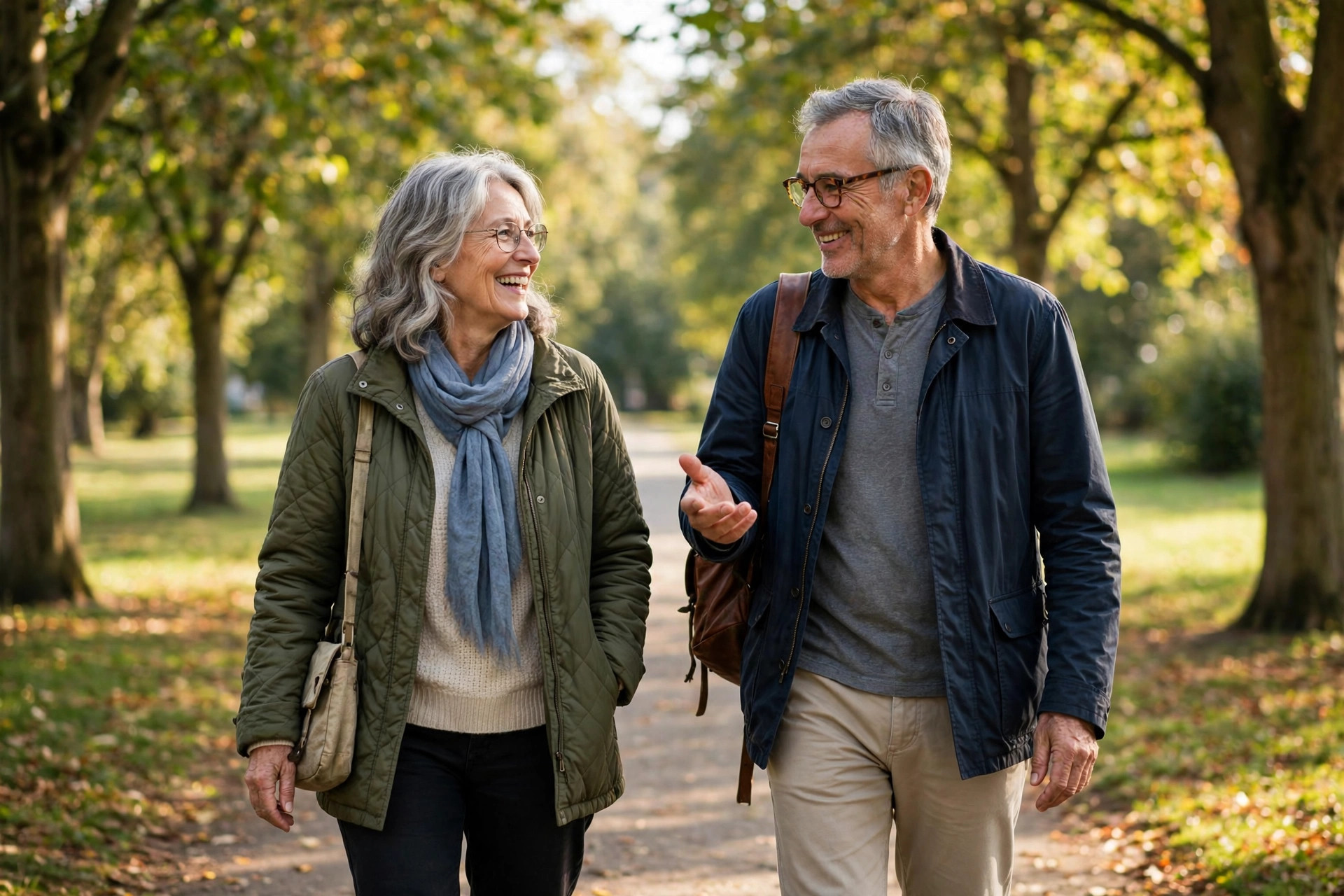
Start with one small ritual. Regularity beats intensity. A weekly phone call with a friend or sibling, a standing coffee date, a short walk with a neighbor every Sunday — predictable rhythms give both of you something to look forward to.
Consider volunteering. Community kitchens, libraries, charity shops, and local museums often welcome older volunteers. Working side by side on something meaningful tends to build bonds naturally, without the pressure of making conversation from scratch.
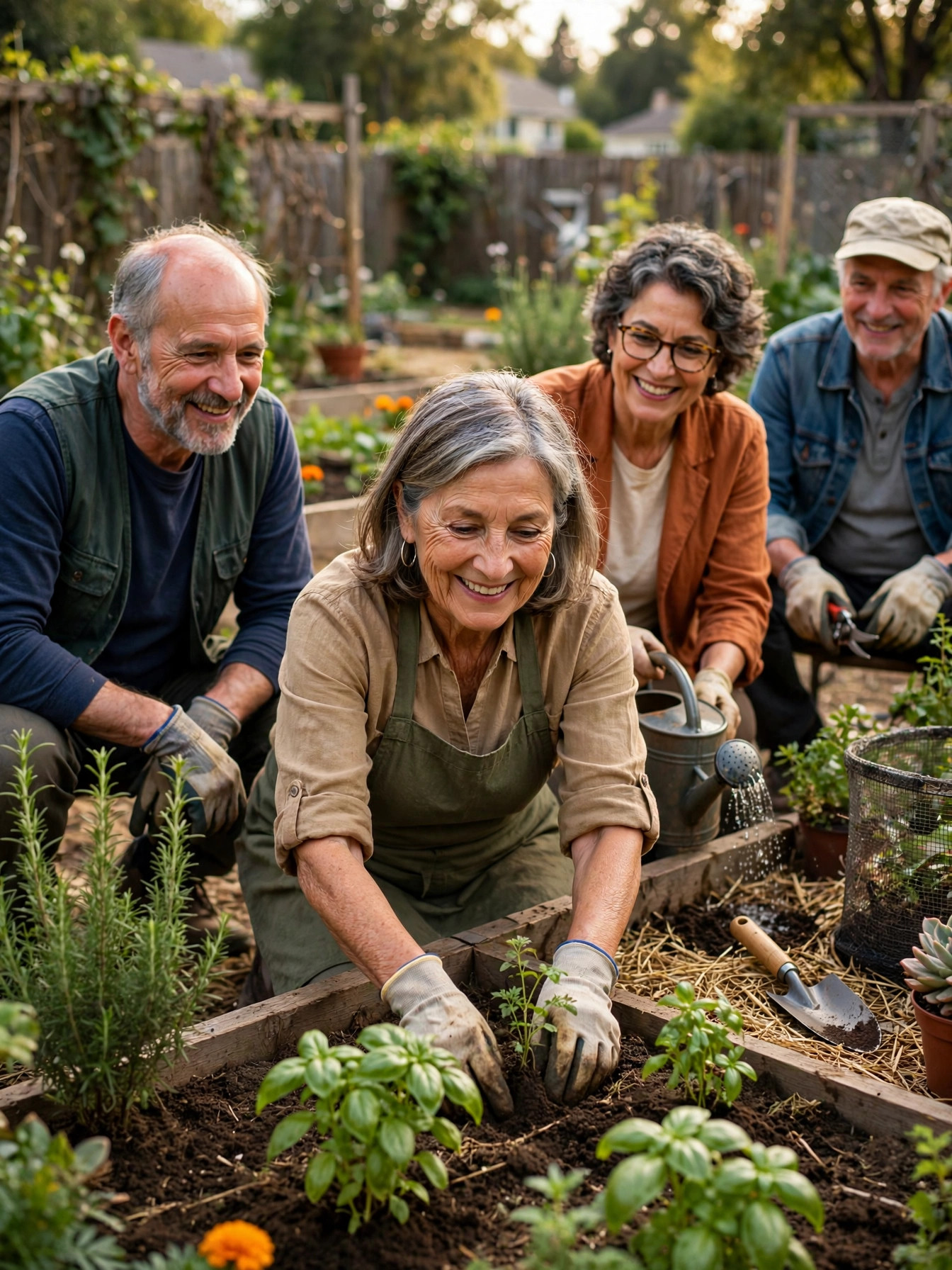
Join a walking group or community class. Libraries, community centers, and places of worship frequently run low-cost classes — tai chi, gentle dance, art, book clubs — designed for older adults. If steadiness on your feet is a concern, start with a slow-paced group and keep these steps on what to do after a fall in mind so you can walk with confidence.
Reconnect with faith or community groups. For many people, spiritual or cultural communities are the most natural source of belonging. If you drifted away, most groups welcome returners warmly — you don’t need to explain your absence.
Check on a neighbor. Connection doesn’t have to be organized. A brief chat over the fence, offering to pick up groceries, or simply asking “how are you, really?” can grow into something meaningful.
Give it time — and be kind to yourself. New friendships at 65 form more slowly than at 25, and that’s normal. If the first group doesn’t feel right, try another. One genuine connection is worth more than a dozen polite acquaintances.
When to see a doctor
Loneliness itself is not a medical diagnosis, and this article can’t diagnose anything. But loneliness sometimes travels with conditions that do deserve professional care. Consider talking to your clinician or a counselor if you notice:
- Persistent low mood, sadness, or a sense of hopelessness that doesn’t lift
- Losing interest in things you used to enjoy
- Noticeable changes in sleep or appetite
- Withdrawing from people far more than usual, or finding contact exhausting rather than comforting
- Thoughts of harming yourself — in which case, please reach out to your clinician, a trusted person, or a local crisis helpline right away
There is no shame in asking for help. Counselors and therapists work with loneliness and low mood every day, and many offer group programs specifically for older adults — connection and help at the same time.
Sources
- Wang et al. (2026). Loneliness, social isolation, and disease-free and mental-disorder-free life expectancy. Nature Communications. https://doi.org/10.1038/s41467-026-74498-8
- Harvard Health Publishing (2026). Loneliness linked to cognitive decline and early death — summary of the July 2026 Journal of Personality and Social Psychology analysis of 11 longitudinal aging studies. https://www.health.harvard.edu/healthy-aging-and-longevity/loneliness-linked-to-cognitive-decline-and-early-death
- Centers for Disease Control and Prevention. Loneliness and Social Isolation Linked to Serious Health Conditions. https://www.cdc.gov/aging/publications/features/lonely-older-adults.html
- National Institute on Aging. Loneliness and Social Isolation — Tips for Staying Connected. https://www.nia.nih.gov/health/loneliness-and-social-isolation-tips-staying-connected
- National Health Service (UK). Feeling lonely. https://www.nhs.uk/mental-health/feelings-symptoms-behaviours/feelings-and-symptoms/feeling-lonely/
This article is for informational purposes only and is not medical advice. If you feel persistently lonely, low, or hopeless, talk to your clinician or a counselor.