

Vitamin D After 50: Signs of Deficiency and Safe Ways to Get More
Vitamin D has a nickname — the sunshine vitamin — that makes it sound effortless. Step outside, soak up some rays, done.
After 50, it’s rarely that simple. Your skin makes less of it from sunlight, you may spend less time outdoors, and very few foods contain meaningful amounts. The result: low vitamin D is one of the most common nutrient shortfalls in older adults — and its signs are so vague that most people never connect them.
This article covers why deficiency gets more likely with age, what it can feel like, how to know for sure, and how to fix it without overdoing it.
Why vitamin D gets harder to maintain after 50
Five things shift against you, all at once:
- Your skin makes less from sunlight. The skin’s ability to produce vitamin D from UVB light declines with age. The same sun exposure that kept a 25-year-old topped up produces noticeably less in a 65-year-old.
- You may get less sun overall. More time indoors, more sun protection (which is good for skin cancer prevention — but it reduces vitamin D production), and winter months in northern latitudes all cut supply.
- Food barely helps. Very few foods are naturally rich in vitamin D — fatty fish, egg yolks, and UV-exposed mushrooms are the main ones. Fortified milk and cereals add some, but diet alone rarely closes the gap.
- Your kidneys activate it less efficiently. Vitamin D from sun and food isn’t usable until the liver and then the kidneys convert it into its active form. Kidney function naturally declines with age, which can reduce that conversion.
- Body fat can trap it. Vitamin D is fat-soluble, and in people with higher body fat, more of it gets stored in fat tissue instead of circulating in the blood. Since body fat tends to increase with age, this quietly lowers blood levels.
None of these is a crisis on its own. Together, they explain why deficiency is so widespread in this age group.
Signs that may suggest a deficiency
Here’s the honest catch: vitamin D deficiency doesn’t have a signature symptom. The signs below are real, but each of them has many other causes — so treat them as reasons to check, not as a diagnosis.
- Persistent fatigue — feeling tired despite sleeping enough is the most commonly reported symptom, and also the least specific.
- Bone pain or aching — especially a deep ache in the back, ribs, or legs. Vitamin D is essential for calcium absorption, and chronic low levels are linked to bone demineralization.
- Muscle weakness or cramps — trouble climbing stairs or rising from a chair, more frequent muscle aches. Low vitamin D is linked to weaker proximal muscles, which is one reason it’s also tied to a higher risk of falls.
- More frequent illness — some research links low vitamin D to weaker immune responses, though the cause-and-effect picture is still being worked out.
- Low mood — observational studies have found low vitamin D levels more often in people with depression, but it’s not clear which comes first. Don’t treat vitamin D as an antidepressant.
A useful rule of thumb: one vague symptom proves nothing, but persistent bone or muscle complaints plus several risk factors from the next section are a good reason to get tested.

Who is at higher risk
Deficiency can affect anyone, but it’s more likely if you:
- Spend most of your time indoors, are homebound, or live in a northern latitude with long winters
- Have darker skin — melanin reduces vitamin D production from sunlight, so more exposure is needed for the same result
- Always cover up or use sunscreen diligently (great for skin, reduces synthesis)
- Have a digestive condition that impairs fat absorption — celiac disease, Crohn’s, or a history of bariatric surgery
- Take certain medications long-term, such as some anti-seizure drugs or glucocorticoids (steroids), which can interfere with vitamin D metabolism
- Have chronic kidney or liver disease
- Carry significant excess weight
If three or more of these apply to you, testing is worth discussing with your doctor rather than guessing with supplements.
How to know for sure: the blood test
Symptoms can’t diagnose deficiency — only a blood test can. Ask your doctor for a 25-hydroxyvitamin D (25(OH)D) test; it’s the standard measure of vitamin D status.
How to read the result (cutoffs vary slightly between labs and guidelines, but the widely used bands are):
- Below 20 ng/mL (50 nmol/L): deficient
- 20–30 ng/mL (50–75 nmol/L): insufficient
- Above 30 ng/mL (75 nmol/L): generally considered sufficient
If your level is low, your doctor can recommend a dose and — importantly — a retest after a few months to confirm it’s working. That follow-up is what separates a plan from a guess.
How much do you actually need?
The NIH Office of Dietary Supplements sets the recommended dietary allowance at 600 IU (15 mcg) per day up to age 70, and 800 IU (20 mcg) per day after 70.
Just as important is the ceiling: the tolerable upper intake level for adults is 4,000 IU (100 mcg) per day. Staying at or below that from all sources combined (food + sun + supplements) is considered safe for long-term use. Higher doses are sometimes prescribed short-term to correct a deficiency — but that’s a doctor’s call, not a DIY project.
Safe ways to get more
1. Sensible sun exposure — with the trade-off in mind
Brief, regular sun on skin without sunscreen — arms and legs, a few times a week around midday — is the most natural source. How long “brief” means depends on your latitude, season, and skin tone, so there’s no universal minute count; the goal is regular exposure without ever burning.
The trade-off is real: unprotected sun exposure raises skin cancer risk, which is also higher after decades of accumulated exposure. A pragmatic balance most dermatologists accept: short unprotected periods for vitamin D, sunscreen for anything longer. If you’ve had skin cancer, skip this strategy and rely on diet and supplements — talk to your dermatologist.

2. Food — helpful, but rarely enough alone
The best dietary sources:
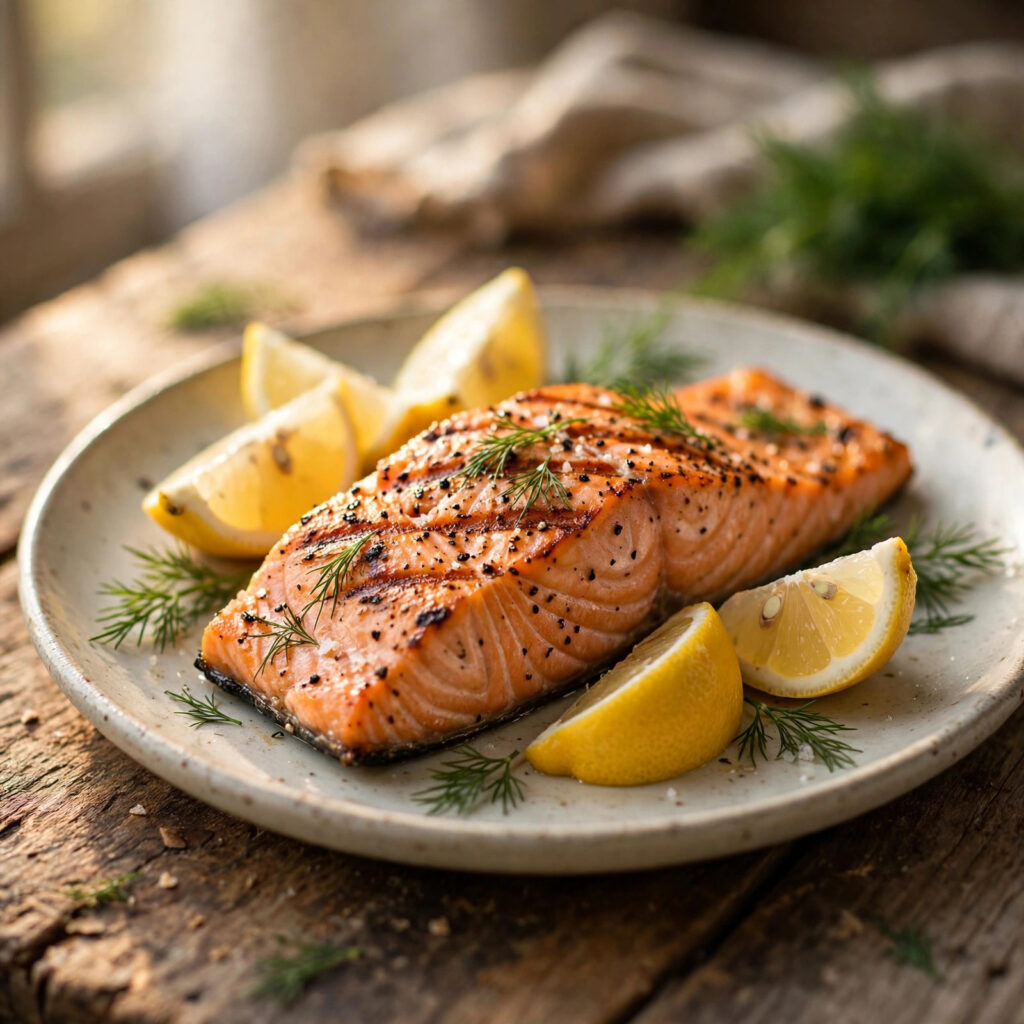
- Fatty fish: salmon, sardines, mackerel, tuna — the richest natural source by far
- UV-exposed mushrooms — the only meaningful plant source
- Egg yolks — modest amounts
- Fortified foods: milk and many plant milks, some orange juices, and fortified cereals (check labels — fortification varies by country and brand)
Realistically, food covers only part of the need for most older adults. Think of it as a foundation, not the whole fix.
3. Supplements — the practical workhorse
For many adults over 50, especially in winter or with limited sun, a daily supplement is the most reliable way to maintain levels. What to know:
- D3 vs. D2: evidence suggests vitamin D3 (cholecalciferol) raises and maintains blood levels more effectively than D2 (ergocalciferol). Most experts default to D3.
- Typical daily doses in over-the-counter products range from 1,000 to 2,000 IU — well within the 4,000 IU upper limit for most people.
- Take it with food containing some fat. Vitamin D is fat-soluble, and absorption improves noticeably with a meal that includes fat — breakfast with
- eggs or yogurt, for example.
- If you’re deficient, doctors often prescribe a higher dose for 8–12 weeks, then drop to a maintenance dose and retest. Follow that plan exactly; don’t extend the high dose on your own.
- Magnesium and calcium work alongside vitamin D in bone metabolism, which is why adequate overall nutrition matters more than any single pill.

What not to do
- Don’t megadose. Vitamin D toxicity is rare, but it’s real — and it comes from supplements, never from sun or food. Excess builds up and can cause high blood calcium: nausea, confusion, excessive thirst, and kidney stones. Stay at or below 4,000 IU/day unless a doctor prescribes more.
- Don’t use tanning beds for vitamin D. The skin cancer risk far outweighs any vitamin D benefit.
- Don’t assume more is always better. Levels well above sufficient haven’t been shown to add benefits — and pushing them higher only adds risk.
- Don’t skip the test if symptoms persist. Months of guessing with supplements, without knowing your starting level or whether it’s rising, is the most common way people waste time and money.
Quick answers to common questions
Can I get enough from food alone? For most older adults, no — unless you eat fatty fish several times a week and get regular sun. Food helps, but it’s usually one leg of a three-legged stool (sun, food, supplements).
Is D3 really better than D2? Evidence suggests D3 raises blood levels more and keeps them up longer. It’s also what your skin makes. Unless you have a specific reason to take D2 (some vegan formulations), D3 is the usual choice.
Can I get too much vitamin D from the sun? No. Your skin self-regulates production, so sun exposure can’t cause toxicity. Overdose happens only through excessive supplements.
Should every adult over 50 just take a supplement? Not automatically. It depends on your sun exposure, diet, skin tone, and latitude. Many clinicians consider a daily 1,000–2,000 IU supplement reasonable in winter or with limited sun — but a blood test, or at least a conversation with your doctor, is better than a blanket rule.
How long before my levels improve? With consistent daily supplementation, blood levels typically rise meaningfully within 8–12 weeks. That’s why doctors retest around the three-month mark rather than sooner.
When to see a doctor
Book an appointment if:
- You have persistent bone pain, muscle weakness, or have fallen more than once recently
- You’ve had a fracture from minor trauma — that deserves a full bone-health workup, not just vitamin D
- You have kidney disease or liver disease — dosing and monitoring need professional oversight
- You take medications that affect vitamin D (steroids, some anti-seizure drugs, certain cholesterol or weight-loss drugs)
- You’re considering doses above 4,000 IU/day for any reason
- Fatigue, aches, or weakness persist despite sensible sun, diet, and a standard supplement — the cause may be something else entirely
The bottom line
After 50, low vitamin D is common, its signs are easy to miss, and guessing is a poor strategy. The reliable path is short: notice persistent symptoms plus risk factors → get the 25(OH)D blood test → fix it with sensible sun, vitamin-D-rich food, and usually a D3 supplement → retest in a few months. Stay at or below 4,000 IU a day unless your doctor says otherwise, and remember that toxicity comes from pills, never from sunshine.
Sources
- National Institutes of Health, Office of Dietary Supplements, “Vitamin D — Fact Sheet for Health Professionals” — https://ods.od.nih.gov/factsheets/VitaminD-HealthProfessional/
- Mayo Clinic, “Vitamin D” (drugs & supplements guide) — https://www.mayoclinic.org/drugs-supplements-vitamin-d/art-20363792
- Cleveland Clinic, “Vitamin D Deficiency” — https://my.clevelandclinic.org/health/diseases/15050-vitamin-d-vitamin-d-deficiency
- NHS, “Vitamin D” (vitamins and minerals guide) — https://www.nhs.uk/conditions/vitamins-and-minerals/vitamin-d/
- Harvard T.H. Chan School of Public Health, The Nutrition Source, “Vitamin D” — https://nutritionsource.hsph.harvard.edu/vitamin-d/
This article is for general information only and is not medical advice. Talk to your doctor about testing and supplementation that’s right for you.