Eating Well After 45: Protein, Fiber, and the Nutrients You Actually Miss
After 45, food starts working differently in your body. Your appetite may shrink while your need for certain nutrients actually grows. Muscle becomes harder to keep, bones lose density a little faster each year, and your gut absorbs some vitamins less efficiently than it used to.
The encouraging part: you don’t need a total diet overhaul. For most people, a few specific adjustments — more protein at breakfast, more fiber through the day, and attention to three or four key vitamins and minerals — cover most of the gap. This guide walks through what changes, what the evidence says you need, and how to get it from ordinary food.
Why your nutrition needs shift after 45
Three things change with age, and they all point in the same direction:
- Muscle gets harder to maintain. Studies estimate adults lose roughly 3–8% of muscle mass per decade after age 30, and the pace quickens after 60. Less muscle means less strength, worse balance, and a slower metabolism.
- Appetite often drops. Smaller meals make every bite count more — there is simply less room for calories that carry no nutrients.
- Absorption declines. The stomach produces less acid with age, which makes it harder to absorb vitamin B12 from food. Skin becomes less efficient at making vitamin D from sunlight. Bones gradually lose more calcium than they rebuild.
None of this is a reason to panic. It is a reason to be a bit more deliberate.
Protein: you probably need more than you think
This is the single biggest nutrition gap for adults over 45. The standard recommended allowance — 0.8 grams of protein per kilogram of body weight per day — was calculated from studies of young, healthy adults. Expert groups that specifically studied aging say it is not enough for older people.
The PROT-AGE Study Group, an international panel on protein and aging, recommends 1.0 to 1.2 grams per kilogram per day for healthy older adults — and 1.2 to 1.5 grams for those who are ill or recovering. The European Society for Clinical Nutrition and Metabolism (ESPEN) reached a similar conclusion.
What does that look like in practice? Multiply your weight in kilograms by 1.1:
- 65 kg (143 lb) → about 70 g of protein a day
- 75 kg (165 lb) → about 82 g a day
- 85 kg (187 lb) → about 93 g a day
Two details matter as much as the total:
- Spread it across meals. Research suggests that 25–30 grams of protein per meal supports muscle maintenance better than saving it all for dinner — and breakfast is where most people fall short.
- Choose foods that are easy to eat. Appetite and chewing ability can both decline. Eggs, Greek yogurt, fish, lentils, soft-cooked chicken, and tofu deliver a lot of protein without demanding a lot of chewing or volume.
One caution: if you have kidney disease, check with your doctor before increasing protein — higher intakes are not appropriate for everyone.
What 25–30 g of protein actually looks like
| Meal idea | Protein (approx.) |
| 2 eggs + 1 cup Greek yogurt | ~29 g |
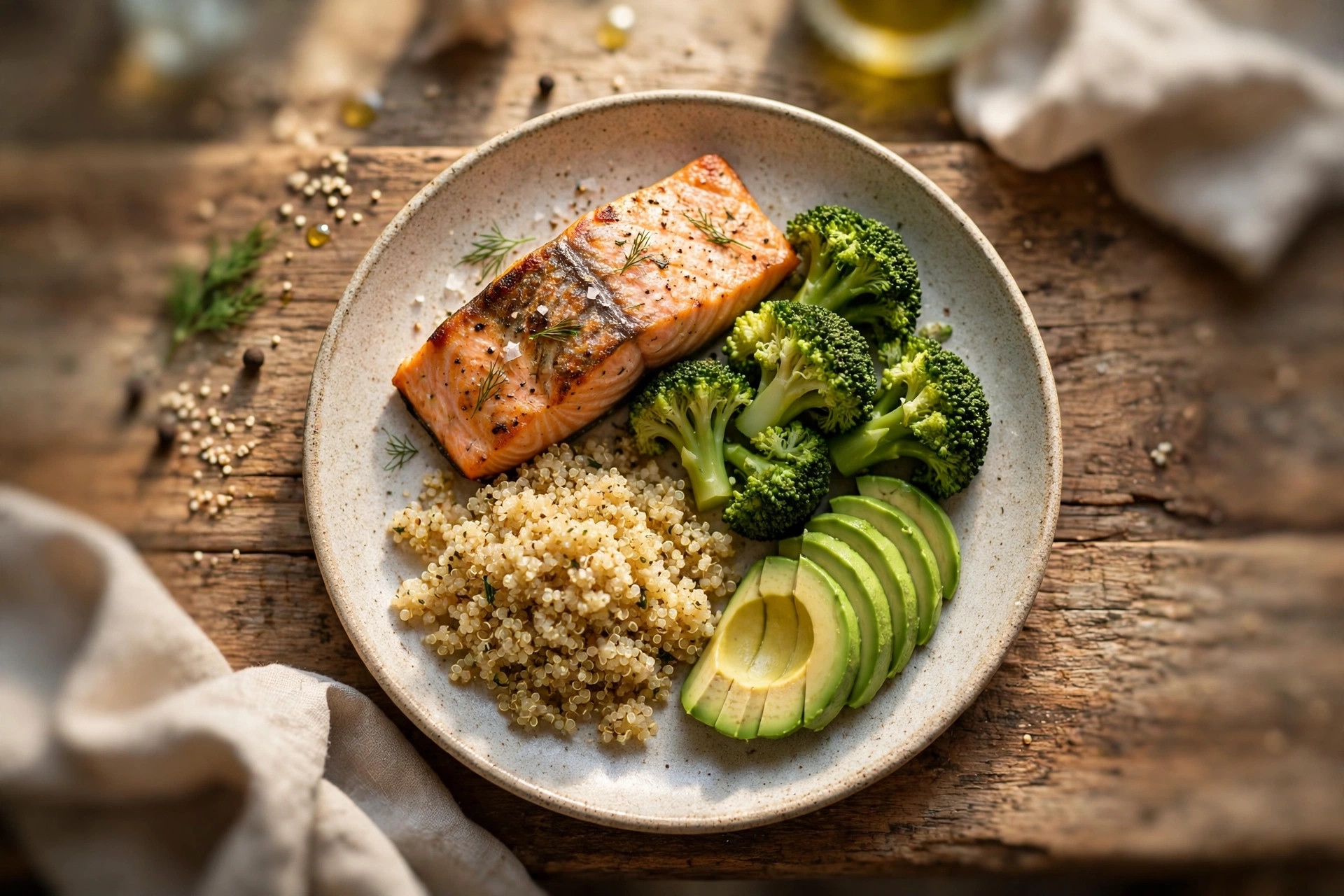
| 100 g baked salmon + vegetables | ~25 g |
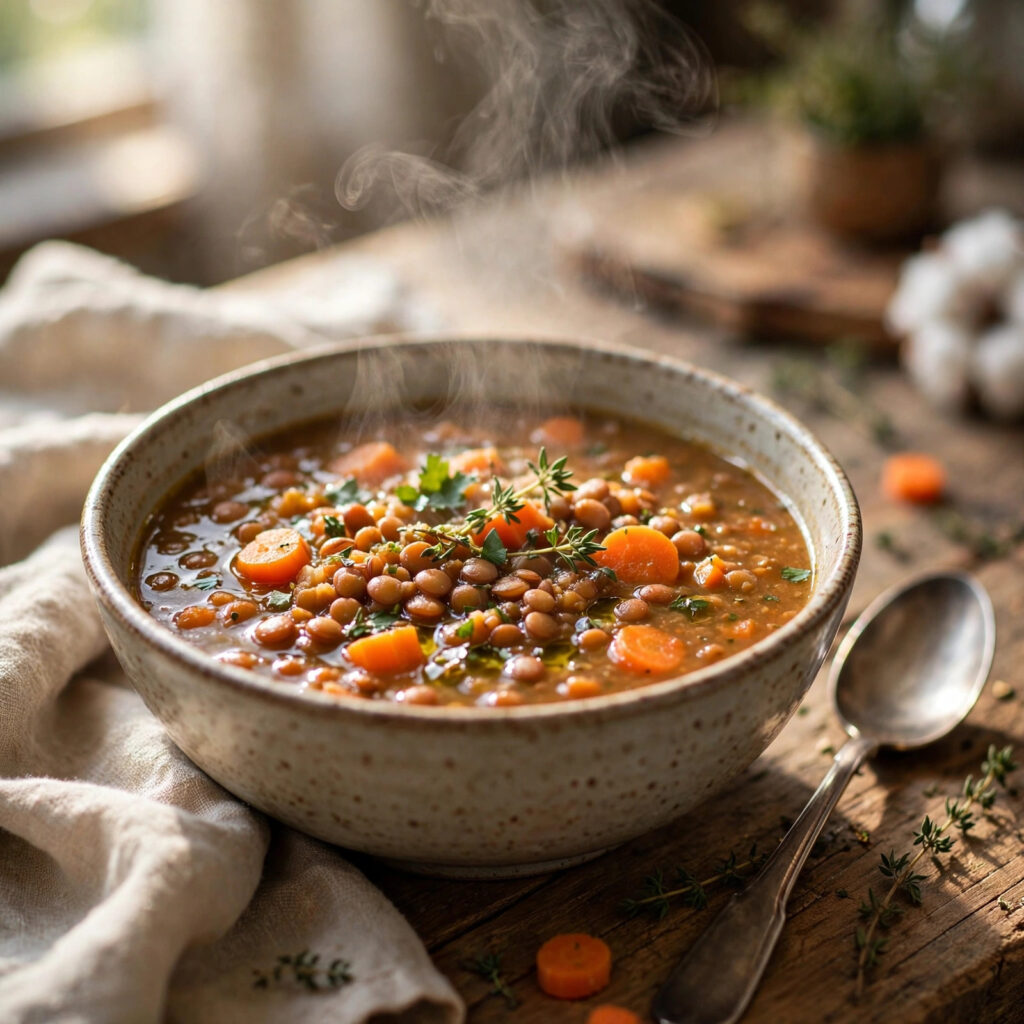
| 1.5 cups cooked lentils in soup or curry | ~27 g |
| Chicken breast sandwich (100 g chicken) on whole-grain bread | ~35 g |
| Tofu stir-fry (200 g firm tofu) with rice | ~20 g |
Mix and match across the day and you will land in the right range without counting every gram.
3 mistakes people make after 50
1. A protein-free breakfast. Toast and coffee, or just fruit, is the most common pattern — and the worst for muscle maintenance, because the overnight fast is longest. Adding eggs, yogurt, or even peanut butter on that toast changes the whole day’s math.
2. Supplementing instead of eating. A cabinet full of pills feels productive, but no multivitamin reproduces what a lentil soup or a piece of salmon delivers — fiber, protein, and minerals in forms your body absorbs well. Fix the plate first; use supplements for the specific gaps.
3. Cutting a food group without replacing it. Dropping dairy because of mild lactose intolerance, for example, quietly removes your main calcium and protein source. If you cut something out, deliberately put something back in — fortified plant milk for dairy, lentils or fish for meat.
Fiber: the quiet workhorse
Fiber rarely gets the attention protein does, but it may matter just as much after 50. It helps with three problems that become more common with age: constipation (digestion slows, and some medications add to it), cholesterol, and blood-sugar control.
Most adults get only about half of what they should. Reasonable targets:
- US guidelines: about 22 grams a day for women over 50, 28 grams for men over 50
- UK guidelines: 30 grams a day for all adults
A practical rule of thumb: aim for 25–30 grams a day, and add it gradually — a sudden jump can cause bloating. Drink water alongside it; fiber works best with fluids.
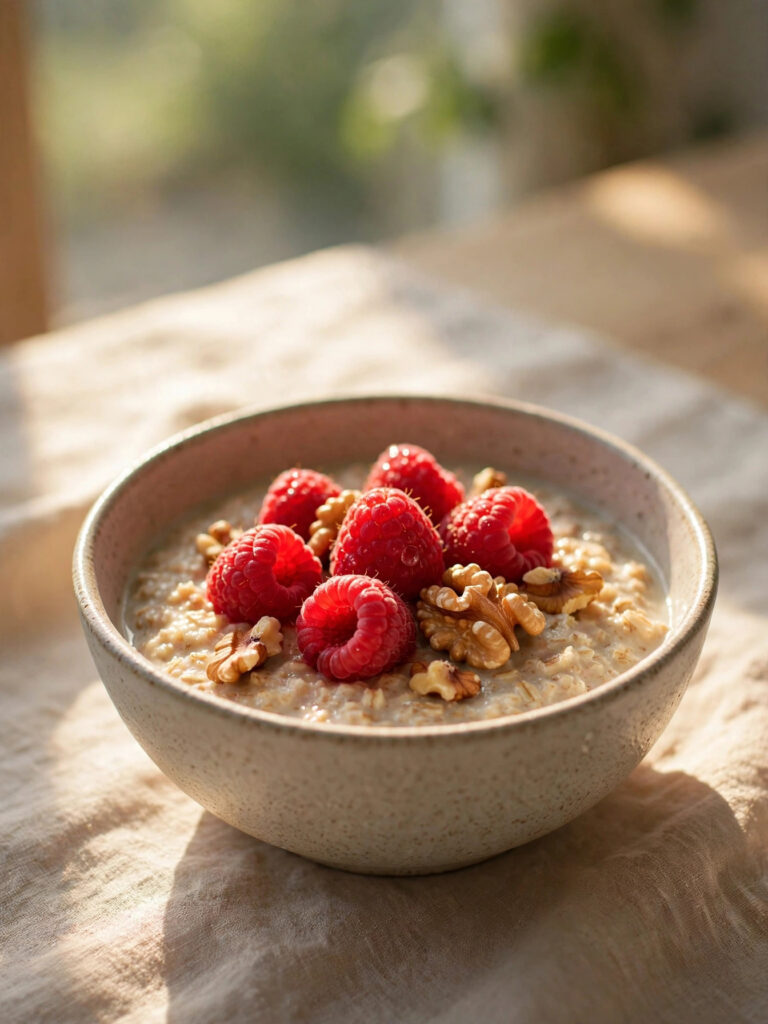
Easy wins: a bowl of oatmeal (about 4 g), a cup of lentils (about 15 g), a handful of raspberries (about 8 g) — or simply leaving the skin on vegetables and choosing whole grains over refined ones. Small swaps add up fast.
Vitamin D: the sunshine vitamin gets harder to make
Vitamin D helps your body absorb calcium, and low levels are linked to weaker bones and more falls. The catch: as skin ages, it becomes less efficient at making vitamin D from sunlight — and many of us spend less time outdoors anyway.
US guidance, via the National Institute on Aging:
- Ages 51–70: at least 600 IU (15 mcg) a day
- Over 70: at least 800 IU (20 mcg) a day
- Upper limit: 4,000 IU a day, unless a doctor advises otherwise
Food sources are limited but real: fatty fish (salmon, sardines, mackerel), fortified milk and cereals, and fish liver oils. If you live in a northern climate, spend winters mostly indoors, or always use strong sun protection, ask your doctor about checking your level — deficiency is common and easy to test for.

Calcium: your bones are spending more than they save
After 50, bones gradually lose more calcium than they rebuild — especially for women after menopause. Getting enough calcium from food is one of the simplest things you can do for long-term bone strength.
US guidance, via the National Institute on Aging:
- Women 51 and older: 1,200 mg a day
- Men 51–70: 1,000 mg a day; men over 70: 1,200 mg a day
- Upper limit: 2,000 mg a day
A cup of milk or fortified plant milk has roughly 300 mg, so two to three servings of dairy or fortified alternatives across the day gets most people close. Other good sources: yogurt, cheese, canned sardines or salmon with bones, calcium-set tofu, and dark leafy greens.
Important: calcium needs vitamin D to be absorbed properly, which is why the two are so often discussed together. If your diet consistently falls short, a modest supplement (around 500 mg) may make sense — but check with your doctor or pharmacist first, especially if you take other medications.
Vitamin B12: the absorption problem
Here is a subtle one. The amount of B12 you need doesn’t change with age — 2.4 micrograms a day — but your body’s ability to absorb it from food often declines, because the stomach makes less acid. Some common medications for acid reflux can add to the problem.
Low B12 can cause fatigue, tingling in the hands and feet, and problems with memory or thinking — symptoms that are easy to mistake for “just getting older.” The reassuring part: it is a simple blood test, and it is very treatable.
What helps:
- Fortified foods: many cereals and plant milks have B12 added in a form that is easier to absorb.
- Supplements: often sensible for older adults, and especially for vegetarians and vegans (B12 occurs naturally only in animal foods).
- Talk to your doctor if you take acid-reflux medication long term — you may need a different form of B12.
A related B vitamin worth knowing: B6 (1.7 mg a day for men, 1.5 mg for women over 50), found in poultry, fish, potatoes, and fortified cereals.
A few more worth a look
- Potassium supports healthy blood pressure — beans, bananas, potatoes, and leafy greens are rich sources. (If you have kidney disease or take certain blood-pressure drugs, check with your doctor first.)
- Magnesium — nuts, seeds, and whole grains.
- Omega-3 fats — two servings of fatty fish a week is the classic guidance; the evidence for heart health is reasonably strong.
You don’t need to memorize this list. Eat mostly whole foods, and most of it takes care of itself.
Putting it on a plate: a simple day
Theory is fine; here is what it can look like:
- Breakfast: Greek yogurt (15–20 g protein) with oatmeal, berries, and a sprinkle of nuts — protein plus about 8 g of fiber before 9 a.m.
- Lunch: lentil soup or a chicken-and-bean salad with whole-grain bread — another 20–25 g of protein and 10+ g of fiber.

- Dinner: baked salmon, roasted vegetables, and brown rice or quinoa — protein, omega-3s, and more fiber.
- Snacks (if hungry): a piece of fruit, a small handful of almonds, or cheese with whole-grain crackers.
And water: the sensation of thirst dulls with age, so don’t wait until you’re thirsty. A glass with each meal plus a few through the day is a good baseline — more in heat or with activity.
Supplements: when food isn’t enough
The National Institute on Aging’s advice is straightforward: aim to get nutrients from food first, and consider supplements for specific gaps. The most common sensible candidates after 50 are vitamin D (if sun exposure is low), B12 (if absorption is a concern), and calcium (if diet falls short).
Three rules:
- More is not better. Vitamins D and calcium both have upper limits; exceeding them can cause harm.
- Check interactions. Supplements can interfere with prescription drugs — a pharmacist can review yours in minutes.
- Talk to your doctor first if you have a chronic condition or take regular medication.
Quick answers to common questions
Do I need protein powder after 50?
Usually not. Most people can hit 1.0–1.2 g/kg from food — the examples above show how. Powder is a convenience tool, not a requirement; if appetite is very low or chewing is difficult, it can be a practical fallback. Choose plain varieties without added sugars.
Can I get enough vitamin D from sun alone?
Possibly in summer if you spend time outdoors, but it becomes less reliable with age: older skin synthesizes less, and sunscreen, clothing, and latitude all reduce production. That is why guidelines give a daily intake number rather than relying on sun.
Does coffee hurt calcium absorption?
Moderate coffee drinking (one to two cups a day) is generally not a concern. Very high caffeine intakes may slightly reduce calcium absorption, so heavy coffee drinkers should make sure their calcium intake is solid.
Are multivitamins worth it after 50?
The evidence that multivitamins prevent major diseases in otherwise well-nourished people is limited. They can be reasonable as an inexpensive safety net, but they don’t replace the specific nutrients above — check whether yours actually contains meaningful amounts of vitamin D, calcium, and B12.
When to see a doctor
Nutrition articles can only go so far — see a clinician if you notice:
- Unintentional weight loss over weeks or months
- Persistent fatigue, weakness, or tingling/numbness in hands or feet
- Ongoing digestive problems (constipation, diarrhea, stomach pain)
- You’re considering a major diet change and have diabetes, kidney disease, heart failure, or take multiple medications
These can be signs of deficiencies or conditions that need more than dietary tweaks.
The bottom line
After 45, the nutrition game changes from “eat enough” to “eat deliberately”: a bit more protein than the old guidelines suggest, plenty of fiber, and attention to vitamin D, calcium, and B12. None of it requires exotic foods or expensive supplements — just a few consistent habits built around ordinary meals.
Sources
- National Institute on Aging, “Vitamins and Minerals for Older Adults” — https://nia.nih.gov/health/vitamins-and-supplements/vitamins-and-minerals-older-adults
- National Institute on Aging, “Dietary Supplements for Older Adults” — https://nia.nih.gov/health/vitamins-and-supplements/dietary-supplements-older-adults
- Bauer J. et al., PROT-AGE Study Group, “Evidence-based recommendations for optimal dietary protein intake in older people,” JAMDA 2013 — https://www.jamda.com/article/S1525-8610(13)00326-5/fulltext
- Deutz N.E.P. et al., ESPEN Expert Group, “Protein intake and exercise for optimal muscle function with aging,” Clinical Nutrition, 2014
- U.S. Department of Agriculture & U.S. Department of Health and Human Services, Dietary Guidelines for Americans, 2020–2025
- Dawson-Hughes B. (Tufts University) on calcium and vitamin D for older adults, via HealthDay, Dec 2025 — https://www.drugs.com/news/older-adults-should-know-calcium-vitamin-d-128053.html
This article is for general information only and is not medical advice. Talk to your doctor or a registered dietitian about your personal nutrition needs.