
Eating Well on a Fixed Budget After 60
Eating well after 60 matters more than ever — and for many people, it has to happen on a fixed income. Retirement, rising food prices, and medical bills can make the grocery budget feel tighter every year. The good news is that a healthy diet does not require expensive specialty foods, organic labels, or a long list of supplements. Some of the most nutritious foods in any store are also among the cheapest.
This guide focuses on practical, realistic strategies: building meals around affordable staples, using frozen and canned foods wisely, cooking in batches, and cutting food waste. No shame, no unrealistic shopping lists — just approaches that work for real kitchens and real budgets.
Why Eating Well Gets Harder on a Fixed Income
Food costs have risen sharply in recent years, and older adults often face additional pressures. Prescription costs, housing expenses, and transportation can all squeeze the grocery budget. At the same time, nutritional needs shift with age: older adults generally need more protein to help maintain muscle, more calcium and vitamin D for bone health, and more fiber for digestion — while often needing fewer total calories.
That combination — higher nutritional needs and a tighter budget — can feel discouraging. But guidance from institutions such as the National Institute on Aging suggests that the overall pattern of eating matters more than any single food. A diet built around vegetables, fruits, whole grains, lean proteins, and healthy fats is linked to better health outcomes, and that pattern can be assembled from inexpensive ingredients.
Cost barriers are common, not a personal failing. The goal is not perfection; it is making the healthiest choices possible within the budget you actually have.
The Budget-Friendly Pantry: Start With Staples
A well-stocked pantry is the foundation of affordable eating. When staples are on hand, you are less likely to reach for expensive convenience foods or takeout. Focus on versatile, long-lasting items:
- Dried and canned beans and lentils. Beans, chickpeas, and lentils are inexpensive, rich in fiber and plant protein, and keep for months. Rinsing canned beans under water can reduce their sodium content.
- Whole grains. Brown rice, oats, whole-wheat pasta, and barley cost little per serving and provide steady energy and fiber.
- Eggs. Eggs are one of the most affordable sources of high-quality protein, and they work for breakfast, lunch, or dinner.
- Canned tuna or sardines. These provide protein and, in the case of oily fish, omega-3 fats. Choose varieties packed in water and watch sodium levels.
- Store-brand basics. Store-brand oats, canned tomatoes, frozen vegetables, and cooking oils are typically the same quality as name brands at a lower price.
- Herbs, spices, and condiments. A small collection of dried herbs, garlic, vinegar, and mustard can make simple ingredients taste like a real meal without adding much cost.
Buying these staples in larger sizes when they are on sale — and when you have storage space — can lower the cost per meal further. Just avoid stockpiling perishables you cannot use before they spoil.
Frozen and Canned Produce: Nutrition Without the Price Tag
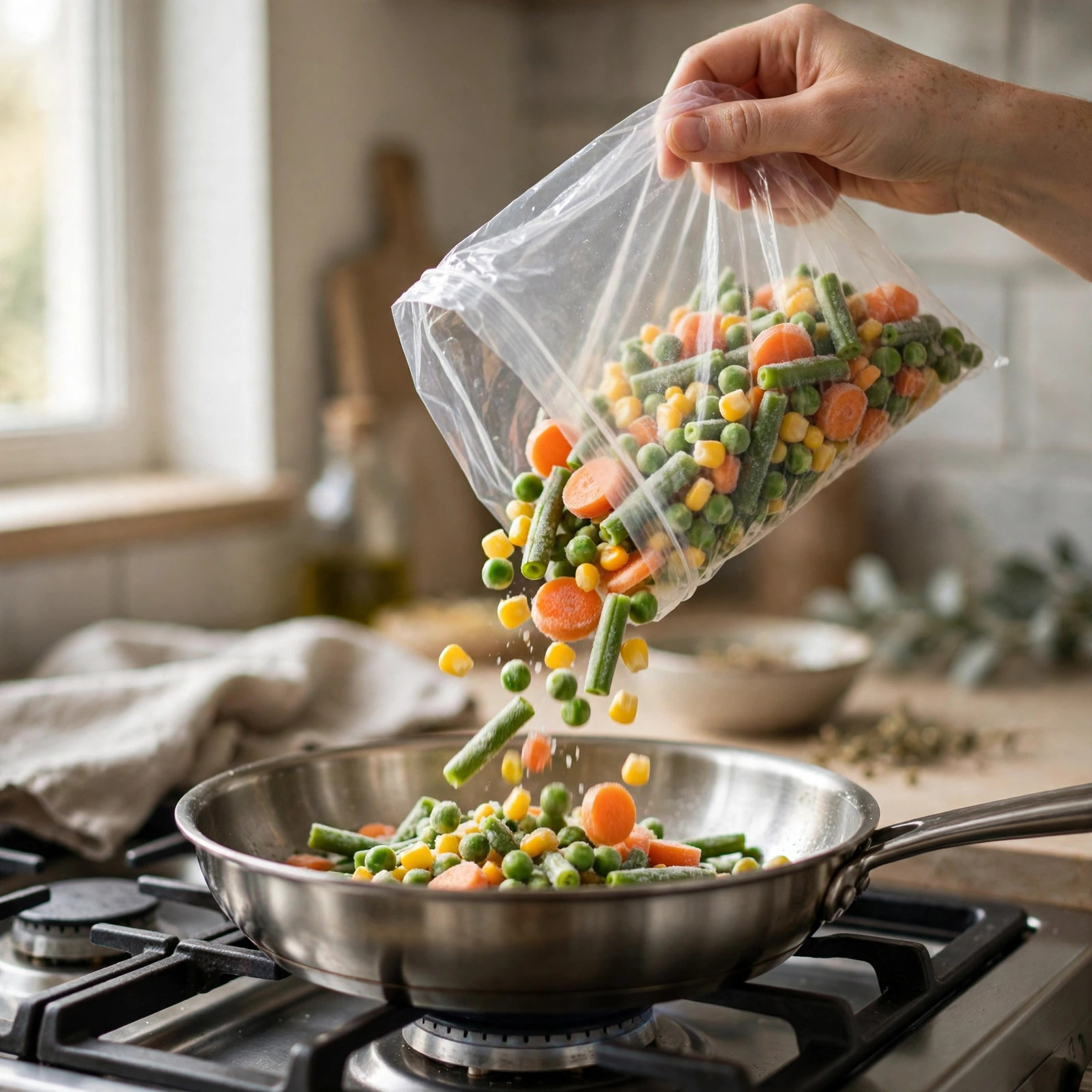
Fresh produce is wonderful, but it is also the category where shoppers waste the most money. Vegetables spoil quickly, and out-of-season fresh fruit can be expensive. Frozen and canned options solve both problems.
Frozen vegetables are typically picked and frozen at peak ripeness, which helps preserve their nutrients. They cost less per serving than fresh, last for months in the freezer, and let you use exactly the amount you need. Frozen berries, peas, broccoli, green beans, and mixed vegetables are all strong choices. Look for plain varieties without added sauces, butter, or salt.
Canned vegetables and fruit can also be useful. Choose vegetables canned in water with no added salt when possible, and fruit canned in water or its own juice rather than heavy syrup. Canned tomatoes are a pantry workhorse — useful for soups, stews, sauces, and bean dishes.
Build Meals Around Cheap Protein
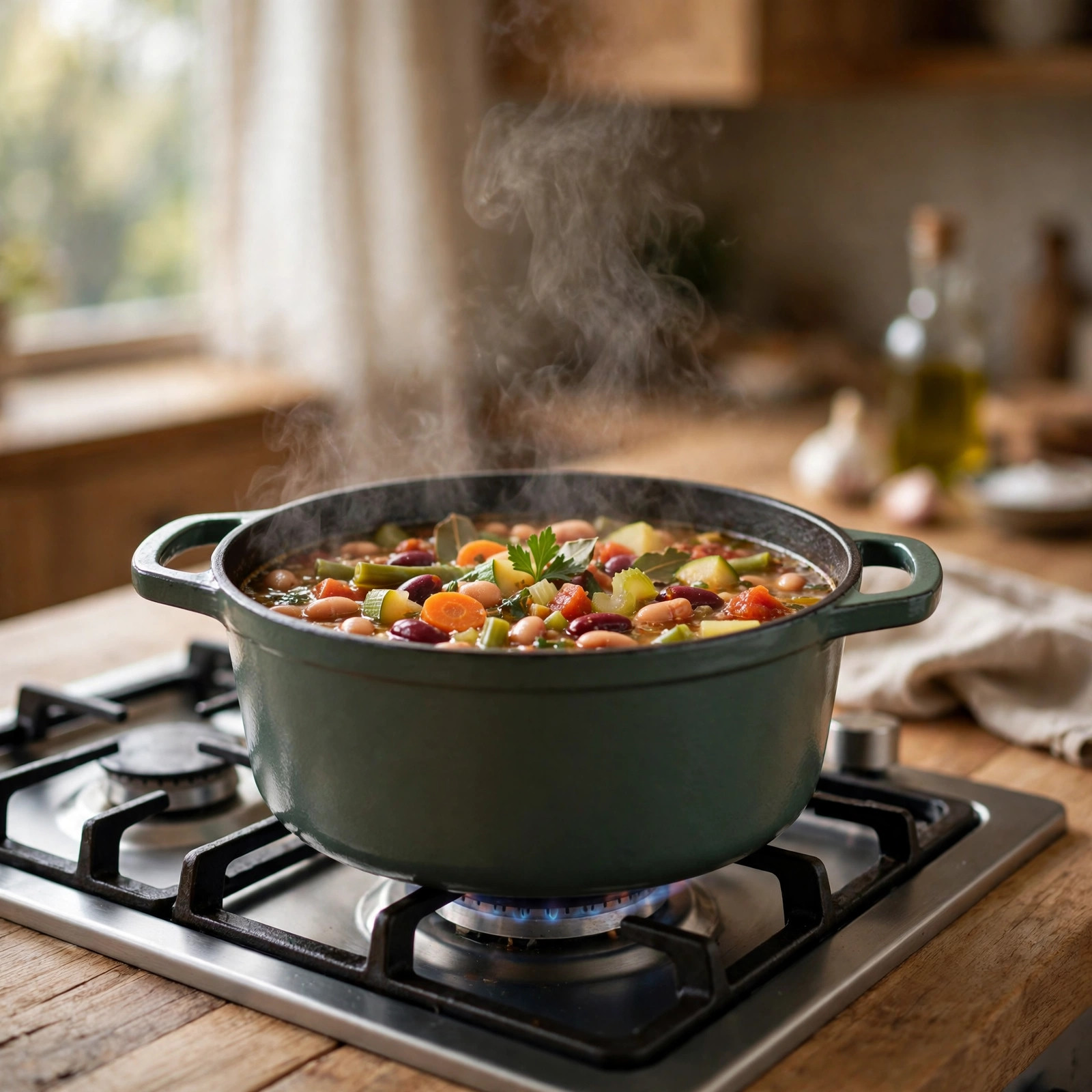
Protein helps maintain muscle strength as we age, but meat is often the most expensive item in the cart. Shifting some meals toward lower-cost proteins can free up a surprising amount of budget:
- Beans and lentils in soups, stews, tacos, and salads.
- Eggs — scrambled with vegetables, baked into a frittata, or hard-boiled for snacks.
- Tofu, which is generally inexpensive and absorbs the flavors of whatever it is cooked with.
- Chicken thighs or drumsticks, which tend to cost less than boneless breasts.
- Canned fish for sandwiches, pasta, and salads.
You do not need to give up meat entirely. Using smaller portions of meat alongside beans, grains, and vegetables — for example, a stew that is mostly beans and vegetables with some chicken — stretches the budget while keeping meals satisfying.
Batch Cooking: Cook Once, Eat Several Times
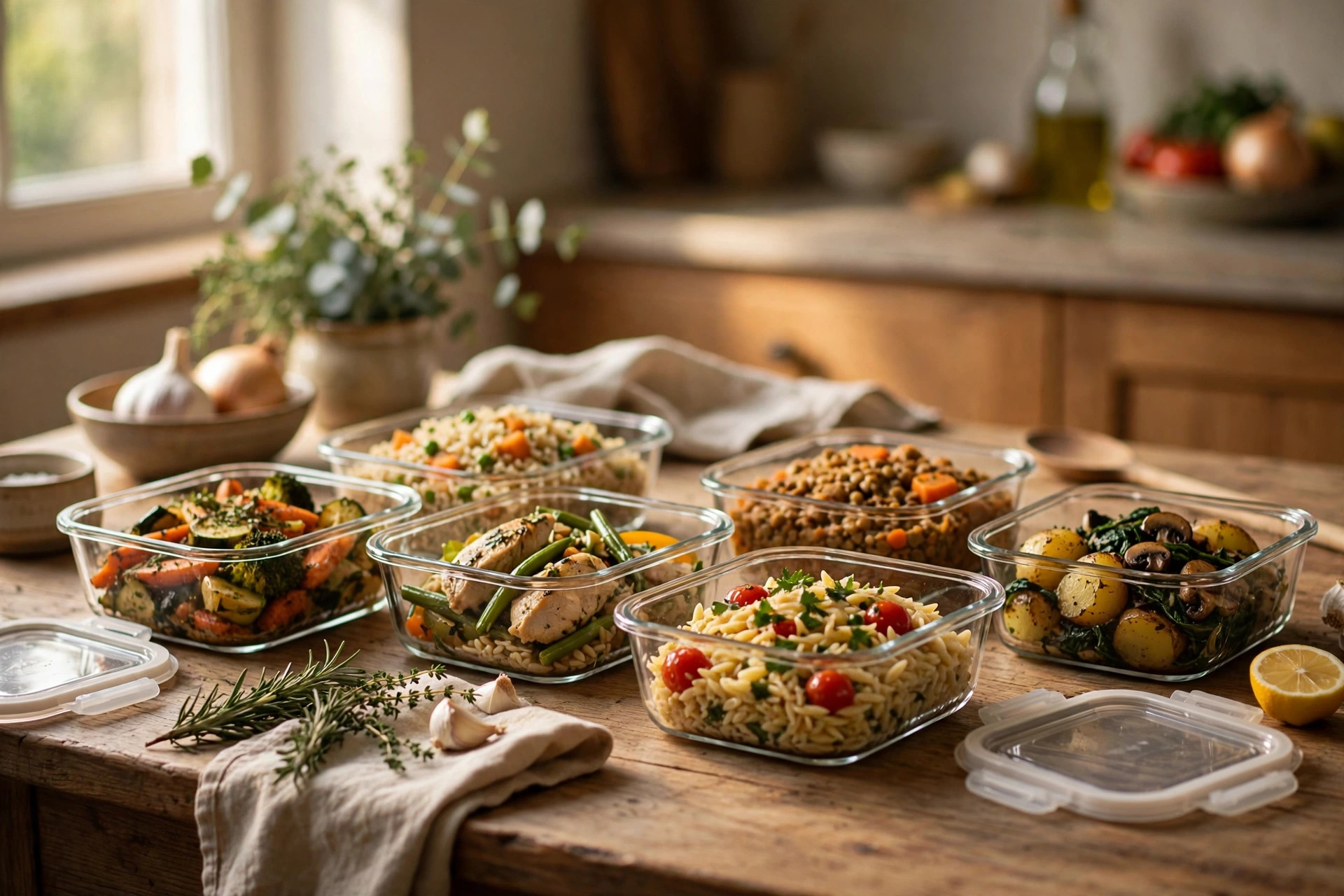
Batch cooking is one of the most effective budget strategies, and it saves time and energy as well. When you cook, make a larger quantity, then portion the extras for later in the week or freeze them for future meals.
Good batch-cooking candidates include:
- Soups and stews made with beans, lentils, vegetables, and grains.
- Casseroles built around whole grains, vegetables, and a modest amount of protein.
- Cooked grains — a large pot of brown rice or barley can anchor several meals.
- Roasted vegetables, which keep well in the refrigerator and can be added to salads, wraps, or grain bowls.
Label containers with the date, and use refrigerated leftovers within a few days. Frozen portions can last much longer. Having ready meals on hand also reduces the temptation to order takeout on tired evenings, which is often where food budgets quietly disappear.
Cutting Food Waste Saves Real Money
Reducing food waste is one of the easiest ways to stretch a grocery budget. A significant share of household food spending is lost when food spoils before it is eaten. A few habits can make a big difference:
- Plan meals before shopping. A short list based on what you already have prevents impulse buys and duplicate purchases.
- Shop with a list — and stick to it. Stores are designed to encourage extra purchases; a list is your defense.
- Use perishables in order. Eat fresh items that spoil fastest first, and save frozen or canned options for later in the week.
- Repurpose leftovers. Leftover roasted vegetables can become soup; leftover rice can become fried rice with egg and frozen vegetables.
Smart Shopping Habits

Beyond the pantry and the kitchen, a few shopping habits can lower costs without lowering nutrition:
- Compare unit prices. The shelf label often shows the price per ounce or per pound — the larger package is not always the better deal.
- Buy seasonal produce. Fruits and vegetables in season tend to be cheaper and taste better. A farmers market near closing time can also offer discounts.
- Check store loyalty programs and senior discounts. Many stores offer weekly specials, digital coupons, or a senior discount day.
- Consider store brands first. For staples like oats, rice, canned goods, and frozen vegetables, store brands are usually nutritionally equivalent to name brands.
- Limit ultra-processed convenience foods. Pre-cut, pre-seasoned, and ready-to-eat items carry a markup. Buying basic ingredients and doing a little preparation at home usually costs less and gives you more control over sodium and added sugars.
If transportation is a challenge, check whether your area offers grocery delivery, senior transportation services, or community food programs. Many communities have food banks, meal programs, and nutrition assistance that are designed for older adults — using them is sensible, not shameful.
A Sample Day of Budget-Friendly Eating
To show how these ideas fit together, here is an example of a day built entirely from affordable staples:
- Breakfast: Oatmeal made with water or milk, topped with frozen berries and a spoonful of peanut butter.
- Lunch: Lentil soup with canned tomatoes, frozen vegetables, and whole-grain bread.
- Snack: A hard-boiled egg or a piece of fruit.
- Dinner: Brown rice with beans, frozen stir-fry vegetables, and a small portion of chicken or tofu, seasoned with garlic, soy sauce, and ginger.
None of these meals requires specialty ingredients, and each one is built around foods that are inexpensive, filling, and rich in nutrients. Adjust portions and ingredients to your tastes, health needs, and what is available near you.
When to See a Doctor
Good nutrition is important, but it is not a substitute for medical care. Talk to your doctor or a registered dietitian if:
- You are losing weight without trying, or your appetite has dropped noticeably.
- Cost pressures are forcing you to skip meals or cut back on prescribed medicines.
- You have trouble chewing, swallowing, or digesting certain foods.
- You have a condition such as diabetes, kidney disease, or heart disease that requires a specific diet.
- You are considering supplements, since some can interact with medications.
- You feel dizzy, fatigued, or unusually weak, which can have many causes worth checking.
If cost is affecting your medicines, tell your doctor or pharmacist directly. They may be able to suggest lower-cost alternatives, assistance programs, or a different prescribing plan. You should never stop a prescribed medicine because of cost without discussing it first.
The Bottom Line
Eating well on a fixed income after 60 is absolutely possible. It starts with affordable staples — beans, lentils, eggs, oats, whole grains, and frozen vegetables — and builds from there with batch cooking, smart shopping, and less food waste. The healthiest diet is not the most expensive one; it is the one you can actually sustain, week after week, within the budget you have.
Start small: pick one strategy from this guide — perhaps stocking up on beans and frozen vegetables, or cooking a double batch of soup this weekend — and build from there. Over time, those small choices add up to a way of eating that supports your health without straining your wallet.
Sources
- National Institute on Aging — Healthy Eating As You Age: https://www.nia.nih.gov/health/healthy-eating-nutrition-and-diet/healthy-eating-you-age
- Centers for Disease Control and Prevention — Healthy Eating for Older Adults: https://www.cdc.gov/nutrition/php/resources/healthy-eating-older-adults.html
- Mayo Clinic — Nutrition for Older Adults: https://www.mayoclinic.org/healthy-lifestyle/nutrition-and-healthy-eating/in-depth/healthy-eating/art-20044600
- Harvard T.H. Chan School of Public Health — The Nutrition Source: https://nutritionsource.hsph.harvard.edu/
- Cleveland Clinic — Eating Healthy on a Budget: https://health.clevelandclinic.org/eating-healthy-on-a-budget
This article is for general information only and is not medical advice. Talk to your doctor or a registered dietitian before making changes to your diet.