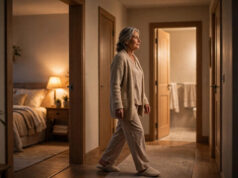
Morning Light and Sleep After 60: Resetting Your Body Clock
If you find yourself wide awake at 4 a.m. and drowsy by 8 p.m., you are not imagining the change. Many adults over 60 notice that their sleep shifts earlier, feels lighter, and breaks up more easily during the night. One of the simplest tools for steadier sleep may already be waiting outside your front door: morning daylight.
Your body clock shifts with age
Deep inside the brain sits a small cluster of cells that acts as the body’s master clock. It runs on a roughly 24-hour cycle and helps decide when you feel alert and when you feel sleepy. Light reaching the eyes is the strongest signal that sets this clock. Morning light tells the brain that the day has begun, which helps suppress melatonin, the hormone linked to sleepiness, and supports daytime alertness. As evening approaches and light fades, the pattern reverses, and the body prepares for rest.
With age, this rhythm often shifts earlier. The National Institute on Aging (NIA) notes that older adults tend to go to sleep earlier and wake up earlier than they did when they were younger, and that older adults need about the same amount of sleep as all adults — roughly 7 to 9 hours each night. Sleep may also become lighter and more broken, which is one reason a small change in routine can feel like a big change in rest.
This earlier shift is common, and it is not a personal failing. It simply means the clock is running a little ahead of the schedule the rest of the world keeps. Morning light is one way to give that clock a clear, consistent daily anchor.
Why morning light matters more than afternoon light
All daylight helps the body clock, but morning light carries special weight. Early in the day, the clock is most responsive to light signals, and a strong morning signal helps set the timing of sleepiness many hours later. Cleveland Clinic sleep specialists describe morning sunlight as one of the most important things you can do to reset your clock, calling sunlight a “zeitgeber,” or clock setter, for sleep.
Think of it this way: your body clock needs a clear contrast between day and night. A day spent mostly indoors under ordinary room lighting, followed by bright screens late at night, sends a muddled message. The clock gets a weak “it is daytime” signal and a confusing “it is still daytime” signal at bedtime.
Morning light exposure may help in a few related ways. Evidence suggests it supports a steadier sleep-wake rhythm, which may make it easier to feel sleepy at a regular bedtime rather than at odd hours. It may also support daytime alertness, which matters because feeling genuinely awake during the day often goes hand in hand with feeling genuinely sleepy at night. Like any routine, the benefit builds with consistency over days and weeks.
How to get morning light in real life
You do not need special equipment, a long hike, or a perfect sunrise. The goal is simply to let natural daylight reach your eyes — with your eyes open, but never staring directly at the sun — fairly soon after you wake up, and to do it most days.


Step outside for a short morning walk. This is the simplest option and the one most experts point to first. A walk around the block, a few minutes in the garden, or a slow stroll to pick up the newspaper all count. Walking adds gentle movement to the light exposure, and regular daytime activity is itself linked to better sleep. If walking is difficult, sitting on a porch, balcony, or bench in daylight works too.
Sit near a bright window. On rainy or cold mornings, time near a large, bright window is a reasonable substitute. Open the curtains wide and sit close to the glass while you have breakfast or read the paper. Window glass filters some light, so this is not identical to being outdoors, but it is far brighter than sitting deep inside a dim room.
Keep the timing consistent. Try to get your morning light at roughly the same time each day, including weekends. A steady wake time plus steady morning light gives the clock two matching signals, which is more powerful than either one alone.
Pair light with your existing routine. Habits stick when they ride on top of something you already do. Have your coffee by the window instead of in a dark kitchen, take the dog out a little earlier, or read the morning news outside when the weather allows.
Keep evenings dim. Morning light works best as part of a full day-night pattern. In the evening, dim the lights and step away from bright screens an hour or so before bed. The contrast between a bright morning and a dim evening is what teaches the clock where the day ends. For more on evening habits that can quietly work against sleep, see our guide to evening habits that ruin sleep.
What about cloudy days and winter?
Cloudy daylight is still daylight. Even on an overcast morning, outdoor light is typically much brighter than indoor lighting, so a cloudy walk still counts. Winter is the harder season: days are shorter, mornings are darker, and cold weather keeps many people indoors. That is exactly when the habit matters most.
On dark winter mornings, try to get outside as soon as there is daylight, even if it is later than your usual time. Sit by the brightest window you have, and keep indoor lights on during the day rather than sitting in a dim room. If winter mornings regularly leave you feeling low as well as poorly rested, mention it to your doctor — low mood in darker months is a recognized pattern, and it deserves proper attention rather than a do-it-yourself fix.
Light-therapy devices: not the same as daylight
You may have seen lamps sold as light-therapy boxes. These devices are a different matter from stepping outside, and they should not be treated as a simple substitute for daylight. Mayo Clinic notes that light therapy for seasonal affective disorder typically uses a 10,000-lux box for about 20 to 30 minutes in the morning — but that guidance is for a specific condition, under clinical advice, not a general sleep recommendation for everyone over 60.
For most people, ordinary morning daylight is the safer starting point: it is free, it comes with fresh air and movement, and it does not require learning a device protocol. If daylight alone does not help after several consistent weeks, that is useful information to take to your doctor, not a reason to buy a brighter lamp on your own.
Cautions for aging eyes
Morning daylight is gentle by nature — you are simply going about your day outdoors — but a few cautions are worth keeping in mind. Never look directly at the sun, even briefly. If you have cataracts, macular degeneration, glaucoma, or any diagnosed eye condition, ask your eye doctor whether extra bright-light exposure is appropriate for you and whether sunglasses or a hat change the advice. Cloudy lenses from cataracts can reduce the amount of light reaching the retina, which is one more reason regular eye checkups matter after 60.

Also be honest about medicines. Some medicines increase sensitivity to light, and if you notice headaches, eye strain, or unusual discomfort after spending time in bright light, stop and mention it to your doctor. Morning light should feel pleasant and ordinary, not painful or straining.
Building a steadier rhythm, week by week
It helps to think of morning light as one piece of a broader sleep routine rather than a single trick. The NIA recommends keeping a regular sleep schedule, avoiding late-afternoon or evening naps when possible, and developing a relaxing bedtime routine. Morning light fits naturally alongside those habits: a steady wake time, light soon after waking, activity during the day, and dim evenings.

Give the routine time. Sleep researchers often note that body-clock changes take days to weeks, not a single morning. Keep a simple note of your bedtime, wake time, and how rested you feel, and look for a trend over two or three weeks rather than judging any single night.
It is also worth remembering that sleep changes after 60 have many possible causes. Pain, medicines, breathing problems during sleep, and worry can all disturb rest, and no amount of morning light will resolve those on its own. If you often wake up around 3 a.m. or struggle with napping during the day, those patterns may point to something worth discussing with your doctor. You can read more about how sleep itself changes with age in our guide to sleep changes after 50.
When to see a doctor
Morning light is a healthy habit, not a treatment, and it is no substitute for medical advice. See your doctor if you notice any of the following:
- Trouble falling asleep or staying asleep most nights for more than a few weeks
- Waking up feeling unrefreshed nearly every day, despite a regular schedule
- Loud snoring, pauses in breathing during sleep, or gasping awake at night
- Daytime sleepiness that affects driving, balance, or daily activities
- Persistent low mood, especially in darker months
- New or worsening eye pain, vision changes, or discomfort in bright light
- Sleep problems that began after starting a new medicine
Bring your simple sleep notes to the appointment. A record of bedtimes, wake times, and morning-light habits gives your doctor something concrete to work with, and it can help distinguish a shifted body clock from a sleep disorder that needs its own evaluation.
The bottom line
After 60, your body clock tends to run earlier and your sleep tends to lighten — but the clock still listens to light. A short morning walk, time by a bright window, and a consistent wake time give it the clearest possible signal that the day has begun. Paired with dim evenings and a steady routine, morning light exposure may help steady your sleep-wake timing and support more restful nights.
Sources
- National Institute on Aging, “A Good Night’s Sleep” — https://permanent.fdlp.gov/gpo117298/a_good_nights_sleep.pdf
- Centers for Disease Control and Prevention, “FastStats: Sleep in Adults” — https://www.cdc.gov/sleep/data-research/facts-stats/adults-sleep-facts-and-stats.html?CDC_AAref_Val=https%3A%2F%2Fwww.cdc.gov%2Fsleep%2Fdata-and-statistics%2Fadults.html
- Mayo Clinic News Network, “Mayo Clinic Minute: Light therapy can help with seasonal affective disorder” — https://newsnetwork.mayoclinic.org/discussion/mayo-clinic-minute-light-therapy-can-help-with-seasonal-affective-disorder/?utm_source=twitter&utm_medium=sm&utm_content=post&utm_campaign=mayoclinic&geo=national&placementsite=enterprise&mc_id=us&cauid=100503&linkId=145225432
- Cleveland Clinic Newsroom, “How Daylight Saving Time Affects Sleep” — https://newsroom.clevelandclinic.org/2026/02/25/how-daylight-saving-time-affects-our-sleep
This article is for general information only and is not medical advice. If you have a health concern, talk to your doctor or another qualified health professional.