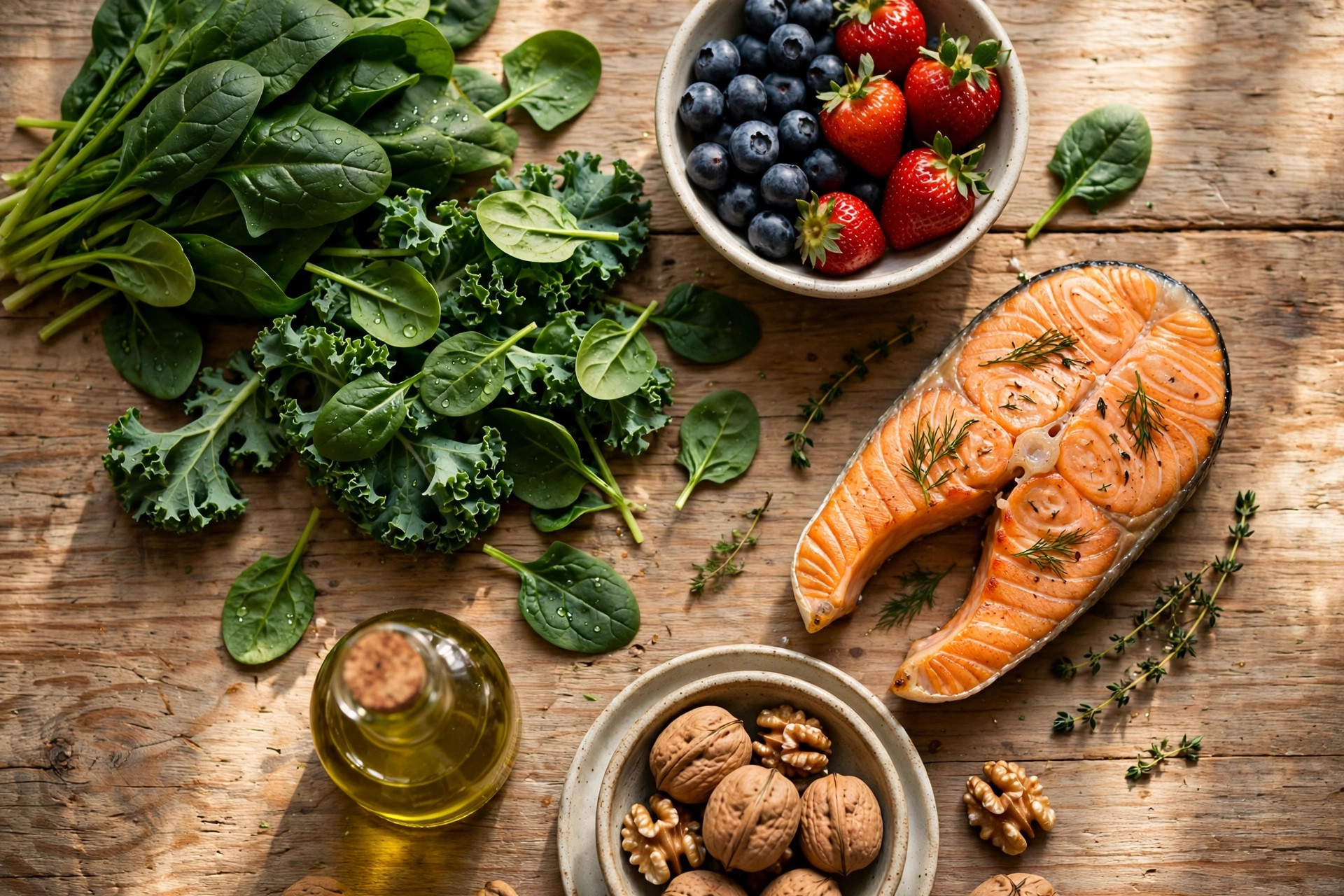
Brain Foods: What the Evidence Actually Says
Search for “brain foods” online and you will find bold promises: eat blueberries and your memory sharpens. The honest version: there is no single food that protects your brain, but there is real evidence that overall eating patterns — and a handful of foods within them — are linked to better brain aging.
The evidence is uneven: large observational studies (useful, but they can’t prove cause and effect) and a few randomized trials with humbler results than the headlines suggest. Below: what the research actually shows, food by food, with the evidence graded honestly.
How to read food-brain research
Two kinds of studies matter here: observational studies (large, long, but can only show association — berry eaters also tend to exercise more and smoke less) and randomized trials (closer to cause and effect, but expensive and usually short). When I say a food is “linked to” better brain health, that’s observational; when I say a trial “found” something, that’s stronger — and I’ll also tell you when a trial found nothing.
The trial that cooled the hype: a 3-year test of the MIND diet
The MIND diet — a hybrid of the Mediterranean and DASH diets designed for brain health — was the great hope of nutritional neuroscience. In observational studies, people who followed it most closely had substantially lower rates of Alzheimer’s disease. So researchers put it to the real test.
In a 2023 randomized trial published in the New England Journal of Medicine, 604 adults aged 65 and older (all with a family history of dementia and a suboptimal diet) were assigned to either the MIND diet or a control diet — both with mild calorie restriction — for three years. The result: no significant difference in cognitive change between the groups (p=0.23), and brain MRI measures were also similar.
That null result deserves honest interpretation: both groups improved — scores rose slightly and both lost weight, since the control group also improved its diet and got counseling. One intervention over three years is a modest, slow lever; starting earlier probably matters most.
Leafy greens: the most consistent signal
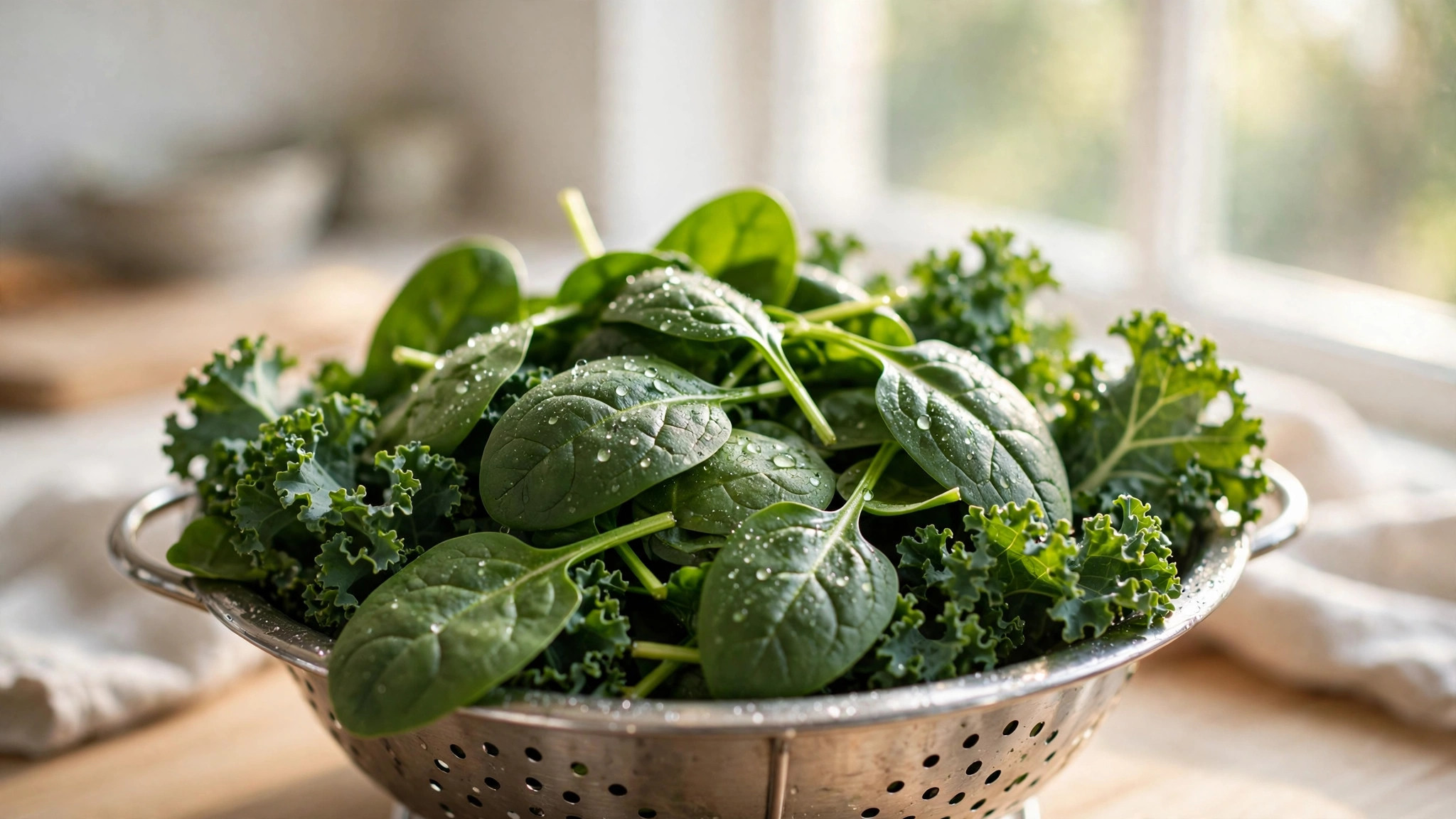
Strength of evidence: observational, but repeated across large studies.
If one food group appears in nearly every brain-healthy eating study, it is leafy greens: spinach, kale, collards, broccoli, arugula, romaine. Harvard Health notes they are rich in vitamin K, lutein, folate, and beta carotene, and that research suggests they may help slow cognitive decline.
The classic finding comes from the Rush Memory and Aging Project: older adults who ate about one daily serving of leafy greens showed measurably slower cognitive decline than those who ate them rarely. In MIND-diet observational research, leafy greens were one of the strongest contributors to the diet’s brain associations.
No trial has proven that leafy greens preserve cognition on their own. But they’re cheap, low-calorie, easy to add to meals, and appear in every dietary pattern linked to better brain outcomes. “Greens most days” is one of the lowest-risk habits in this article.
Berries: promising, but read the fine print
Strength of evidence: mixed observational — positive in a large women’s study, neutral in a Framingham cohort, supported by recent brain-imaging research.
Berries get their deep colors from flavonoids, plant pigments that appear to protect blood vessels and reduce oxidative stress. But the human evidence is genuinely mixed:
- Positive: In the Nurses’ Health Study of more than 16,000 older women, two or more weekly servings of strawberries and blueberries was associated with memory decline arriving up to 2.5 years later.
- Neutral: A long-term Framingham Offspring cohort study that specifically examined flavonoid intake and cognitive change found no statistically significant associations. Not every population shows the link.
- Supportive: In a recent Framingham MRI study of ~1,647 adults, higher berry intake was associated with slower ventricle enlargement — a marker of less tissue loss. (Full breakdown here.)
Honest grade: a reasonable bet, not a proven therapy. Two servings a week is easy and low-risk — just don’t expect berries to rescue an otherwise poor diet.
Fatty fish and omega-3s: food beats pills here
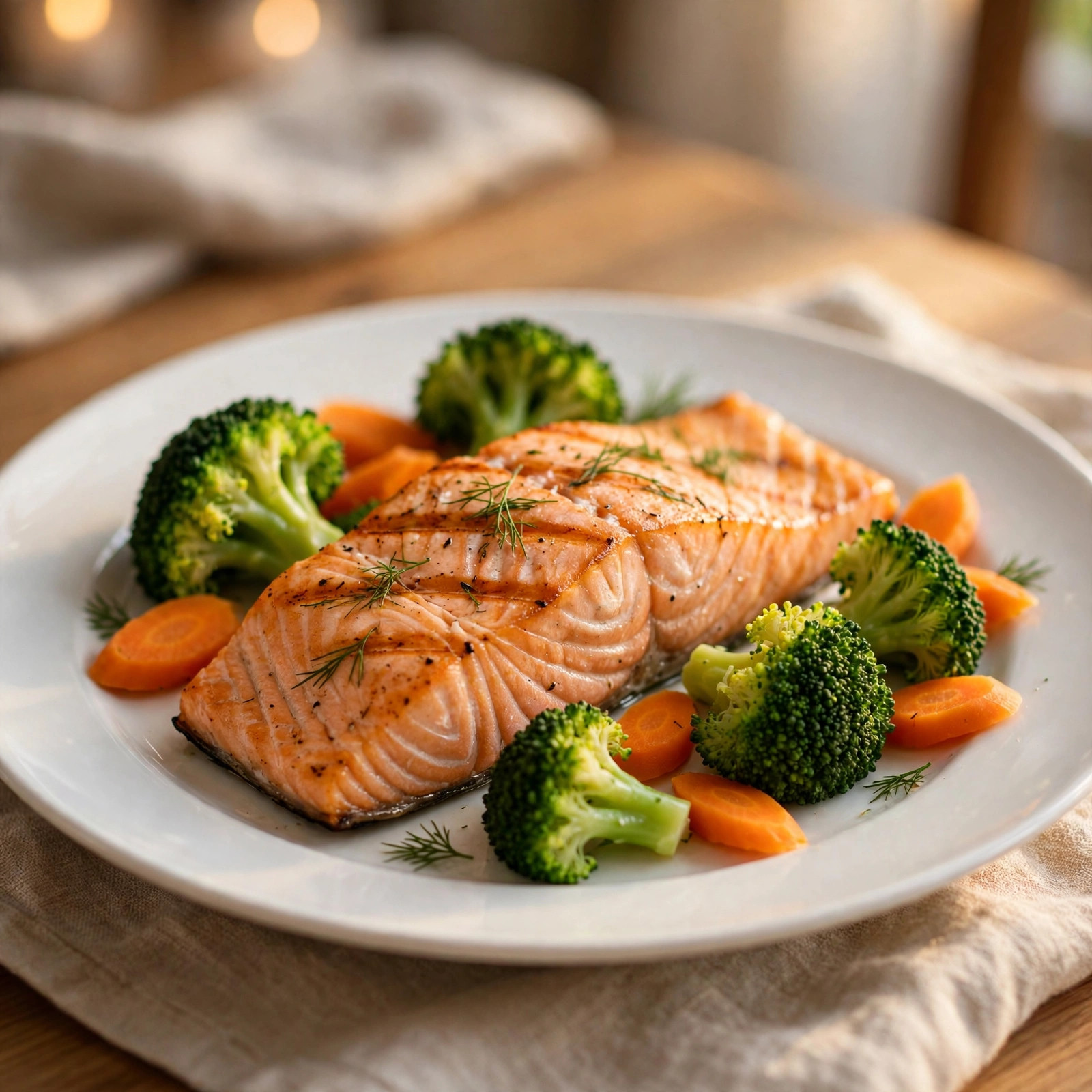
Strength of evidence: observational for fish; trials of supplements are disappointing.
Fatty fish — salmon, sardines, mackerel, trout — are the richest sources of omega-3s (DHA and EPA). Harvard Health notes these fats have been linked to lower blood levels of beta-amyloid — the protein that clumps in the brains of people with Alzheimer’s — and recommends fish at least twice a week (choosing lower-mercury varieties like salmon, cod, canned light tuna, and pollock).
But omega-3 capsules have not delivered. Mayo Clinic states that supplements — including vitamins, minerals, and fish oil — are not associated with reduced dementia risk and are not recommended; large trials of DHA/EPA in older adults have generally found no clear cognitive benefit.
Why the difference? Possibly the whole package — protein, vitamin D, selenium, and replacing red meat — matters more than one fatty acid. Practical takeaway: eat fish twice a week; skip expensive fish-oil capsules unless your doctor recommends them for something else.
Nuts: small handful, real signal
Strength of evidence: observational, plus one small randomized sub-study.
Nuts are dense in unsaturated fats, vitamin E, and plant compounds. In research tracking more than 16,000 women aged 70 and older, those who ate nuts at least five times a week were less likely to experience cognitive decline (per Mayo Clinic Press).
There is also modest trial evidence: in the PREDIMED Mediterranean-diet trial, a 447-person cognitive sub-study found more favorable changes in selected cognitive measures among those assigned a Mediterranean diet plus olive oil or mixed nuts than in the control group. Cognition was a sub-study, not the main outcome — encouraging, not conclusive.
A small handful of walnuts or almonds most days is cheap, portable, and filling — and keeps you from snacking on something worse.
Whole grains and beans: the supporting cast
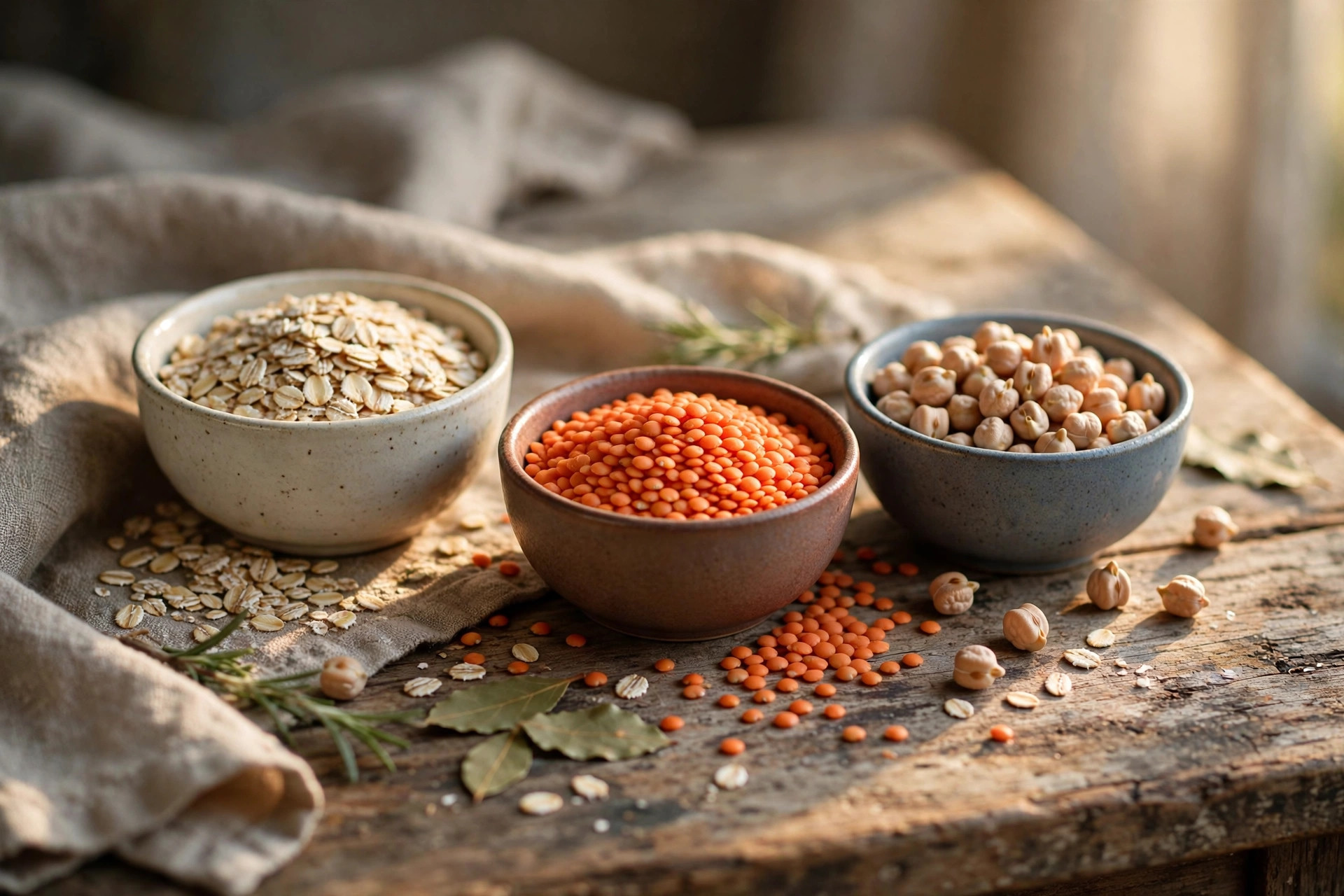
Strength of evidence: pattern-level observational.
Whole grains and beans rarely get their own brain studies. Instead, they are staples in every dietary pattern linked to better brain aging — Mediterranean, DASH, and MIND all emphasize them.
The mechanism is probably vascular: fiber supports healthy cholesterol and blood sugar, and per Mayo Clinic, blood-vessel health is critical to brain health — damaged vessels can’t deliver nutrients and oxygen to nerve cells. Since high blood pressure, high cholesterol, and diabetes are dementia risk factors, fiber-rich foods that help manage them plausibly protect the brain indirectly.
This is second-order reasoning, not direct proof — eat them for the overall pattern, not as a brain hack.
Olive oil: more than a cooking fat
Strength of evidence: observational, plus the PREDIMED randomized trial.
Olive oil is the backbone fat of the Mediterranean and MIND diets, used instead of butter and margarine. In the PREDIMED cognitive sub-study, the group assigned a Mediterranean diet plus extra-virgin olive oil showed favorable cognitive changes versus the control group.
Observationally, a 28-year study found about 7 grams of olive oil daily — roughly half a tablespoon — associated with a lower risk of dementia-related death (per Mayo Clinic Press).
The simplest change is substitution: use olive oil as your primary cooking and dressing oil instead of butter or stick margarine. You’re upgrading the fat already in the meal.
Foods to limit: the honest other half
Brain-healthy diets are defined just as much by what they limit:
- Added sugars and sweets. In the recent Framingham imaging study, sweets were tied to faster ventricle enlargement and hippocampal shrinkage; Mayo Clinic keeps sugar to a minimum in its recommended patterns. A cookie won’t ruin your brain — daily sugary snacks are simply a drag in the wrong direction.
- Fried fast food. The same Framingham study linked fried fast food to greater hippocampal decline — and it’s also high in salt and saturated fat, which work against the vascular health your brain depends on.
- Processed meats (bacon, sausage, deli meats). Some observational research links higher intake with higher dementia risk, but the evidence is early — “plausibly unhelpful, worth moderating” is the honest grade.
- Heavy alcohol. Clearer evidence here: Mayo Clinic notes excessive drinking is strongly linked to increased dementia risk. Keep it moderate at most.
Putting it together: a practical week

Forget perfection — aim for the pattern:
- Leafy greens most days — spinach in eggs or soup, a side salad at lunch. (See our anti-inflammatory breakfast ideas for easy mornings.)
- Berries two or more times a week — frozen is just as good and far cheaper.
- Fish twice a week — salmon, sardines, or mackerel; canned fish counts.
- A small handful of nuts, beans, and whole grains most days.
- Olive oil as your default fat — instead of butter.
- Keep sweets, fried fast food, processed meats, and heavy drinking occasional.
And diet is one lever among several: exercise, good sleep, healthy blood pressure and cholesterol, social connection, and mental activity all carry their own evidence.
When to see a doctor
Diet articles have limits. Talk to your clinician if you notice:
- New or worsening memory problems that affect daily life — forgetting appointments, getting lost in familiar places, repeating questions often
- Confusion, personality changes, or worsening word-finding problems over weeks or months
- Signs of vitamin B12 deficiency — fatigue, tingling in hands or feet, and memory or thinking problems are classic, and very treatable. See our guide on B12 and calcium after 50.
- You take multiple medications and plan a big dietary change — some foods interact with blood thinners, diabetes, and blood-pressure drugs
A dietitian can help build an eating pattern that fits your conditions, budget, and preferences.
The bottom line
The honest summary: no food protects your brain on its own, and the MIND-diet trial found no clear cognitive advantage over three years. Still, decades of observational research point one way — leafy greens, berries, fish, nuts, whole grains, beans, and olive oil as the backbone of your diet, with sugary, fried, and heavily processed foods kept occasional. Not a quick fix: a sensible, low-risk pattern.
Related reading: Memory After 60: Normal Aging vs. Warning Signs
Sources
- Liu X. et al., “Trial of the MIND Diet for Prevention of Cognitive Decline in Older Persons,” New England Journal of Medicine, 2023 — https://www.nejm.org/doi/full/10.1056/nejmoa2302368
- Harvard Health Publishing, “Foods linked to better brainpower” — https://www.health.harvard.edu/healthbeat/foods-linked-to-better-brainpower
- Mayo Clinic, “Preventing dementia: Risk factors you can control” — https://www.mayoclinic.org/connected-care/preventing-dementia-risk-factors-you-can-control/cpt-20470960?&p=1
- Mayo Clinic Press, “The best foods for reducing dementia risk” — http://mcpress.mayoclinic.org/healthy-aging/the-best-foods-for-reducing-dementia-risk/
- “Long-term dietary flavonoid intake and change in cognitive function in the Framingham Offspring cohort,” Public Health Nutrition (Cambridge Core) — https://resolve.cambridge.org/core/journals/public-health-nutrition/article/longterm-dietary-flavonoid-intake-and-change-in-cognitive-function-in-the-framingham-offspring-cohort/A1B67A6875B9984D8085502863D4BC45
- “MIND Diet May Slow Brain Aging by 2.5 Years” (reporting the Framingham brain-imaging study, Journal of Neurology, Neurosurgery & Psychiatry) — https://knowridge.com/2026/10/mind-diet-may-slow-brain-aging-by-2-5-years/
This article is for general information only and is not medical advice. Talk to your doctor or a dietitian about changes to your diet.