
Best Foods for Eye Health After 60
After age 60, vision changes become one of the most common health concerns. The lens of the eye thickens, the pupil adapts to light more slowly, and conditions like age-related macular degeneration (AMD) and cataracts become more likely. According to the National Eye Institute, AMD is a leading cause of visual impairment and blindness in Americans 65 years and older. While no diet can stop aging, research suggests that certain foods supply the nutrients your eyes rely on to stay resilient.
This guide covers the nutrients with the strongest evidence behind them and the everyday foods that provide them, based on findings from the National Eye Institute’s Age-Related Eye Disease Studies (AREDS and AREDS2).
What the Research Actually Shows
The original AREDS trial, sponsored by the National Eye Institute, followed 4,757 participants aged 55 to 80. Researchers found that people at high risk of developing advanced AMD — those with intermediate AMD, or advanced AMD in one eye — lowered their risk of progressing to advanced AMD by about 25 percent when taking a high-dose combination of vitamin C (500 mg), vitamin E (400 IU), beta-carotene (15 mg), and zinc (80 mg as zinc oxide, plus 2 mg copper). The same nutrients reduced the risk of vision loss caused by advanced AMD by about 19 percent.
A follow-up study, AREDS2, began in 2006 and tested a revised formula. Beta-carotene was found to increase the risk of lung cancer in people who had ever smoked — nearly doubling it, according to a 2022 NIH news release on the 10-year follow-up data. Researchers replaced beta-carotene with 10 mg of lutein and 2 mg of zeaxanthin, and this new formula reduced the risk of AMD progression by about 26 percent, with no increased lung cancer risk.
Two important caveats deserve emphasis. First, these benefits were seen only in people already at high risk for advanced AMD; for people with no AMD or early AMD, the nutrients showed no apparent benefit. Second, AREDS found that the same nutrients had no significant effect on the development or progression of cataracts. Foods support eye health, but they are not a treatment for diagnosed eye disease.
Key Nutrients That Support Aging Eyes
Lutein and Zeaxanthin
These two carotenoid antioxidants concentrate in the macula, the part of the retina responsible for sharp central vision. Observational research cited by the NEI suggests that people whose diets are rich in green, leafy vegetables — the main food sources of lutein and zeaxanthin — have a lower risk of developing AMD. These pigments are thought to help filter high-energy light and protect retinal cells from oxidative damage.
Vitamins C and E
Vitamin C and vitamin E are antioxidants that help protect cells from oxidative stress. They were core components of the AREDS formula tested for AMD. Vitamin C is concentrated in citrus fruits, berries, and peppers, while vitamin E is found in nuts, seeds, and some oils.
Zinc
Zinc is found in high concentrations in the retina and plays a role in enzyme function in the eyes. Zinc helped slow AMD progression in the AREDS trial at high doses, though the study doses far exceeded what food alone provides. Food sources include meat, poultry, seafood, beans, nuts, and whole grains.
Omega-3 Fatty Acids
DHA and EPA, omega-3 fats found in fatty fish, are structural components of the retina. It is worth noting that in the AREDS2 trial, adding omega-3 fatty acids to the supplement formula showed no additional benefit for AMD progression. Still, fatty fish remains a recommended part of a healthy eating pattern, and these fats are linked to general cardiovascular health, which supports the small blood vessels that nourish the eyes.
8 Foods to Eat More Often for Your Eyes
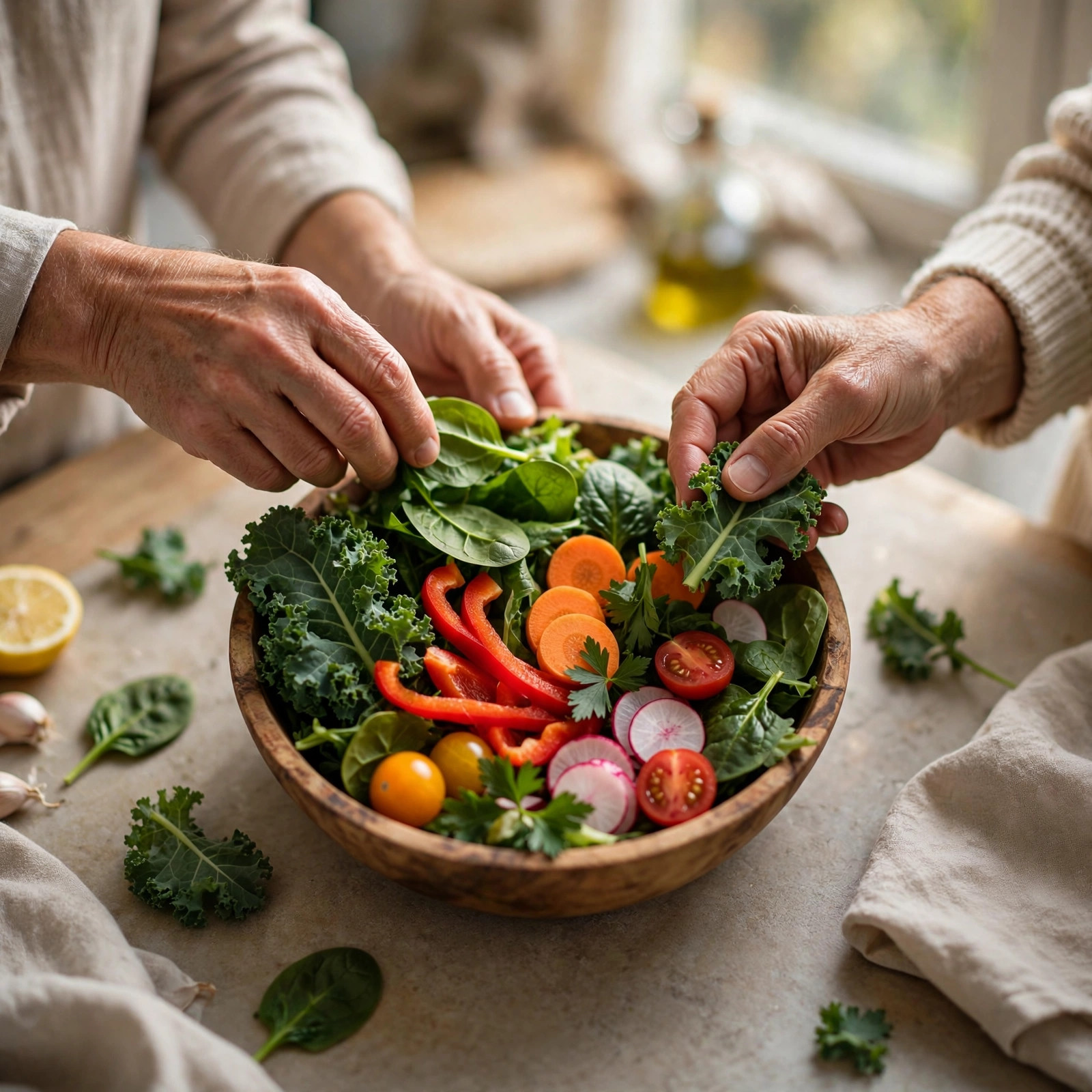
1. Spinach, Kale, and Collard Greens
Dark leafy greens are the richest food sources of lutein and zeaxanthin. The NEI has pointed to diets high in green, leafy vegetables as being linked to a lower risk of developing AMD. Cooking the greens lightly and adding a little olive oil or avocado can help your body absorb these fat-soluble compounds more efficiently. Aim to include a serving of leafy greens most days of the week.
2. Egg Yolks
Egg yolks provide lutein and zeaxanthin in a form that is relatively easy for the body to absorb, along with some zinc. Eggs are also a convenient source of protein for older adults. One or two eggs most days can fit comfortably into a heart-healthy eating pattern.
3. Salmon, Sardines, and Mackerel

Fatty fish supply DHA and EPA omega-3 fatty acids that are part of the retina’s structure. The American Heart Association’s broader guidance of eating fish at least twice a week also covers the eyes: populations that eat more fish have been linked in observational studies to lower rates of AMD. Canned sardines and salmon are affordable, shelf-stable options.
4. Oranges, Bell Peppers, and Berries
Vitamin C is essential for maintaining healthy tissues throughout the body, including the eyes. One orange, a handful of strawberries, or half a bell pepper delivers a generous amount. Bell peppers have the added advantage of also containing zeaxanthin and vitamin A.
5. Almonds and Sunflower Seeds
A small handful of almonds (about 23 nuts) is one of the best food sources of vitamin E, an antioxidant included in the AREDS formula. Sunflower seeds, hazelnuts, and peanuts are good alternatives. Because nuts are calorie-dense, a one-ounce portion is a sensible daily amount.
6. Beans, Chickpeas, and Lean Poultry
For people who do not eat much red meat or oysters — the two richest zinc sources — beans, chickpeas, lentils, poultry, and nuts provide useful amounts of zinc. These foods also add fiber and protein, which support healthy blood sugar, and blood sugar control matters for eye health since diabetes can damage the blood vessels of the retina.
7. Sweet Potatoes and Carrots
Beta-carotene, the orange pigment in sweet potatoes, carrots, and winter squash, converts in the body to vitamin A, which is needed for normal vision including low-light vision. Note that the high-dose beta-carotene tested in AREDS came from supplements, not food, and beta-carotene supplements are not recommended for people who smoke or have smoked because of the lung cancer risk seen in the trials. Food sources do not carry that concern.
8. Broccoli, Peas, and Corn
Beyond the headline greens, broccoli, green peas, and corn also provide lutein and zeaxanthin, along with vitamin C and fiber. Variety matters: a colorful plate of vegetables supplies a broader range of protective compounds than any single “superfood” could.
Putting It Together: An Eye-Friendly Eating Pattern

Rather than chasing individual nutrients, it may help to adopt an overall eating pattern that naturally delivers them. The Mediterranean-style diet — rich in vegetables, legumes, fish, fruits, nuts, whole grains, and olive oil — has been linked in multiple studies to lower rates of AMD, cataracts, and other age-related conditions. A simple daily template looks like this:
- Breakfast: eggs with sautéed spinach, or oatmeal topped with berries and a spoonful of sunflower seeds.
- Lunch: a large salad of kale or spinach with chickpeas, orange bell pepper, and olive oil dressing.
- Dinner: baked salmon or sardines, roasted sweet potatoes, and steamed broccoli.
- Snacks: almonds, an orange, or carrot sticks.
Small habits add up: cooking greens in a little oil, pairing peppers with beans, and keeping fish on the menu twice a week.
What About Eye Supplements?
AREDS2-style supplements are available over the counter, but the NEI’s findings apply specifically to people at high risk of advanced AMD — those with intermediate AMD or advanced AMD in one eye. For everyone else, including people with no AMD or early AMD, the trials showed no apparent benefit. High doses of zinc can cause side effects such as stomach upset, and zinc above the tolerable upper limit should be balanced with copper. Talk with your eye doctor before starting any high-dose eye supplement, especially if you have a history of smoking.
Don’t Skip the Eye Exam
Food is only part of the picture. Many common eye diseases, including early AMD and glaucoma, cause no symptoms at first. The CDC recommends that adults over 60 get a comprehensive dilated eye exam every 1 to 2 years; the National Institute on Aging similarly advises a dilated exam every year or two after age 60. During a dilated exam, the eye care professional uses drops to widen the pupils and inspect the retina and optic nerve — the only way to catch some conditions while they are still easy to treat.
When to see a doctor
Schedule an eye exam promptly if you notice any of the following:
- Sudden or gradual blurring of central vision, or straight lines appearing wavy
- A dark or empty area in the center of your vision
- Sudden flashes of light, new floaters, or a shadow over part of your vision
- Increasing difficulty seeing at night or in dim light
- Eye pain, redness that does not clear, or double vision
Some of these symptoms can signal retinal problems that need urgent care. Do not try to manage vision loss with diet or supplements alone — get examined.
Sources
- National Eye Institute. “Antioxidant Vitamins and Zinc Reduce Risk of Vision Loss from Age-Related Macular Degeneration.” https://www.nei.nih.gov/research-and-training/research-news/antioxidant-vitamins-and-zinc-reduce-risk-vision-loss-age-related-macular-degeneration
- National Institutes of Health. “NIH Study Confirms Benefit of Supplements for Slowing Age-Related Macular Degeneration.” https://www.nih.gov/news-events/news-releases/nih-study-confirms-benefit-supplements-slowing-age-related-macular-degeneration
- Centers for Disease Control and Prevention. “Taking Care of Your Eyes.” https://www.cdc.gov/vision-health/prevention/taking-care-of-your-eyes.html
- National Institute on Aging. “Aging and Your Eyes.” https://nia.nih.gov/health/vision-and-vision-loss/aging-and-your-eyes
This article is for general information only and is not medical advice. Talk to your doctor or a registered dietitian about your personal needs.